
Technology
Sports betting industry braces for Trump’s ‘Big, Beautiful Bill’

0:06 spk_0
Welcome to Yahoo Finance Sports Report, a unique look at the business of sports brought to you by Yahoo Finance and Yahoo Sports. I’m your host, Joe Popriano, and I’m here to coach you through the financial game. Today, we’ve got Yahoo Sports senior writer Jake Mintz coming on the show to discuss all things baseball, and British boxing promoter Eddie Hearn joining us to discuss Mattroom’s growing business around the world. Let’s huddle up and get right into it.We are kicking off this week with POM’s Playbook, where I take a look at some of the biggest headlines in sports that you and your portfolio need to know. First up, the recently passed One Big Beautiful Bill Act includes a tax provision that could quietly destroy professional gambling in the United States. Right now, gamblers can offset 100% of their losses against winnings. However, starting in 2026, that deduction will be capped at 90%.That means if you win $100,000 in a year and also lose $100,000 in the same year, you’ll be taxed as if you made $10,000 in profit, despite the fact that you really didn’t make any money.This seemingly small change could collapse the foundation of legal sports betting. Professional gamblers who help set efficient lines and fund prize pools will flee to offshore markets. Without their volume, sports books will reduce contests, wide odds, and raise fees on casual players. Daily fantasy sports prize pools will shrink, betting markets will get less.And legal gambling will start to spiral. Ironically, some sports books may welcome this. Professional gamblers eat into their profits, and this bill could push them out of the system entirely. But state governments stand to lose the most. They build big budgets around gambling revenue. If activity goes offshore, tax revenue dries up, not just federally but locally too.This isn’t the first time excessive gambling taxes backfired. It happened in the US in 1951 in the UK before the 2000s. So, unless Congress steps in to fix it, we could see history repeat itself.Next up, Texas Tech just pulled off one of the biggest recruiting wins in college football history, and it comes with a massive payday. On the 4th of July, 5-star offensive tackle Felix Ojo, the #6 overall player in the 2026 class and the top recruit in Texas, committed to Texas Tech over Blue Bloods like Texas, Oklahoma, and Ohio State.But this wasn’t just a football decision, it was a business one too. According to reports, Ojo signed a fully guaranteed revenue sharing deal with Texas Tech worth $5.1 million over three years. About half of that is guaranteed, with the rest tied to incentives and renegotiation clauses. He’s set to earn $1.2 million in year 1 $1.6 million in year two, and $2.1 million in year three. Numbers previously unheard of for an offensive lineman at the.level. This all became possible thanks to the House for NCAA settlement, which took effect on July 1st and officially allows schools to share revenue directly with athletes. Texas Tech has already been making waves in the transfer portal, but this solidifies their emergence as a serious national player. Ojo becomes the highest rated commitment in school history and headlines would shaping up to be a top 25 class. It’s a new era in college football, and Texas Tech is wasting no time jumping in headfirst.And last on PO’s playbook today is news that ESPN just landed a major win with NFL analyst Dan Orlowski set to stay with the network for several more years. After weeks of speculation, Front Office Sports is reporting that Orlowski and ESPN have agreed to a long-term contract extension. The former NFL quarterback is set to continue on his roles on NFL Live, SportsCenter, First Take, GetUp, and as lead analyst for the ESPN’s #2 Monday Night Football broadcast team along Chris Fowler and Lewis Reddick.This deal brings stability with the NFL preseason just around the corner and shuts down any potential move to CBS, where Dan Lawsky was reportedly on tap as a top candidate for the college football coverage. His popularity has even sparked coaching rumors with reports that he’s spoken to NFL teams and expressed interest in a future on the sidelines. But for now, ESPN gets to keep one of its rising stars just in time for what’s shaping up to be a big 2025 season.All right, everyone, let’s talk baseball. July is a big month for Major League Baseball. We’re halfway through the season. The All-Star game is a week away, and the trade deadline is set for July 31st. So today we’re bringing on Yahoo sports writer Jake Mintz to cover all the bases. Pun absolutely intended. Jake, welcome to the show. Thank you so much for joining us today. Let’s start with just what your top storylines for MLB so far this year are.
4:20 spk_1
Hm, good question. Uh, I think it is the Los Angeles Dodgers versus the world, just the staggering amount of money that that organization has decided to spend on players, uh, is really overwhelming.They have kind of, you know, been sleepwalking through what has been a dominant first half. They are up by a comfortable margin in the National League West, uh, and the storyline moving forward is can anybody challenge them come playoff time, and then in Newand the Big Apple, you have the Yankees and the Mets, two other big market teams, kind of scuffling a little bit through June, starting to maybe find their footing as they move towards the trade deadline, which will be a good opportunity for them to reinforce their rosters.
5:07 spk_0
Yeah, as a Yankees fan, the last couple of weeks have been tough, especially with pitching injuries and everything else, but hopefully they clean that up. I mean, the Dodgers have had some injuries too, so, uh, the fact that they’re, they’re doing so well is is uh quite impressive. But let’s talk about, uh, the CBA. One of the things that I think is fascinating is that the, um, the CBA is going to be renegotiated, I think in uh at the start of 2026, it’s up and need to sign a new deal.One of the things that keeps popping up is that uh the idea of a salary cap. Now, this has been talked about for a long time, owners obviously would like it, uh, players do not want it. What do you see happening here? Will there be a lockout? Do you think it’ll actually get approved, or do they just kind of go business as usual and keep things status quo?
5:47 spk_1
So, everything that I’ve heard rumblings about the next round of CBA negotiations is that it’s going to be pretty adversarial, and there is an expectation that some games may be missed, um, hopefully a full lockout is avoided. I do think you’re right that the salary cap is going to be a major issue.Next time that the CBA gets negotiated, the union will not agree to a salary cap without a salary floor would be my assumption. I think that the spending that the Dodgers have undergone over the last few years has made a salary cap a more interesting proposition for fans.And so you’re seeing more of a push for that from the public side. How that actually impacts negotiations remains to be seen.
6:37 spk_0
Are there anything else, uh, within the CBA that you’re hearing would be of interest to either the owners of the players that might be sort of like a um uh a point of emphasis that could cause a lockout or something like that?
6:49 spk_1
Um, I think the, the last CBA negotiation, the big conversation was about competitive balance and incentivizing small market teams to spend, right? What the union wants is for the owners of these teams to see their uh ownership.stewardship, as an investment in a local institution, and not necessarily as some something that makes money for the sake of making money, that there are other, you know, areas and avenues for these business people to go ahead and do that. And I think Steve Cohen, the owner of the Mets, hasMaybe, uh, not created some discord within the group of owners, but showed that there’s kind of a different way. Like he is spending money on the Mets because he grew up a Mets fan and he wants them to win the World Series, and I think that is what fans want to see owners acting like instead of a larger kind of, you know, investment group coming in and using the organization as more of a, you know, an an investment opportunity.
7:45 spk_0
And lastly, I’d love to just get your opinion quickly on uh just the state of Major League Baseball. I mean, the year started with ESPN backing out of its deal with MLB. I think maybe they might even regret that to a degree. The numbers are obviously really good this year and the sports appears to be doing rather healthy. There’s a lot of young stars, etc. Like, what is your general impression of where baseball is today versus where it was maybe 5 years ago?
8:07 spk_1
The rule changes that Commissioner Rob Manfred implemented a couple years ago have been very successful, most notably the pitch clock. The games move faster, they end earlier, and for a younger generation that is more distracted than ever, that is a big deal. Numbers are up in terms of viewership, numbers are up in terms of attendance, but when itcomes to the national stage, it is still a very localized sport, more than any other sport in our country, and that is part of the hold up with the negotiations with ESPN, right? ESPN would like more of a local focus in that package, because that’s where the viewership numbers are. I believe 25%.Around uh of the total revenue comes from these local TV packages across the entire league. Um, and so ESPN is a little bit less interested in the national stuff during the regular season, because it doesn’t really move the needle. Local is king when it comes to baseball. But as far as the sport is concerned as a whole, I do think it’s in a really healthy spot compared to where it was 5 years ago.
9:09 spk_0
Yep, I’ve really been enjoying this season so far. Jake, thank you so much for joining us.
9:13 spk_1
It’s a pleasure. Thank you for having me. All
9:15 spk_0
right, we’ve got to take a quick break, but coming up we’ve got an inside look at the man turning boxing matches into blockbuster events, not just in the US or UK but all over the world.Welcome back to Yahoo Finance Sports Report. I’m your host, Joe Pompeiano, and for today’s one on one, I’m joined by one of the most powerful men in boxing. He’s promoted more than 1000 fights, filled stadiums around the world, and never turns down a microphone. This week we’re talking to Mattroom Sport chairman Eddie Hearn. Eddie, thank you so much for joining the show today. For people that are listening to this show that maybe aren’t as familiar with boxing as a sport or you in general, uh, can you just explain a little bit about what Mattroom does specifically?
10:05 spk_2
Yeah well, Metrom is a, a big sports global promotional company. So we are delivering sports events globally around the world across a multitude of sports. Boxing probably the most famous of those, and certainly with the highest profile as well. Um, trying to explain boxing is very difficult. Uh, trying to explain a sport with no barriers to entry, um, you know, all these different governing bodies, all these different promoters, all these different networks, all these different.Uh, platforms is very difficult, but essentially boxing is, you know, the, the prize fighting sport that spans back decades with, you know, steeps of history and a huge amount of hype and noise every time there’s a major event and.Through the peaks and troughs of the sport of boxing, one thing remains, the, the desire of platforms and broadcasters and, and money men and fans to become involved in the major events, and right now, boxing’s seeing a major boom in the market.
11:06 spk_0
Yeah, one of the things that we’ve noticed over the years specifically is, uh, the type of boxing has changed, right? I think in America specifically, we’ve become accustomed to some of these more celebrity driven fights where uh the boxers themselves have become celebrities, but we’ve seen crossovers from UFC uh with Conor McGregor. We’ve seen some of the YouTube personalities start to box as well. What makes like a good fight in your opinion, to where you’re gonna be able to draw a good viewership number?
11:30 spk_2
I think really it’s about narrative, you know, it’s about the promotion, and one of the reasons that these crossover fights work is because of the.Uh, profile and the self-promotional ability of those individuals. I mean, Conor McGregor’s a great example. Jake Paul is obviously another example as well. So it’s really about the, you know, the, the drawing power of the individual, the followers that they have, and the narrative that they can sell. For us, we’re a pure boxing promotional company. I, I probably started the YouTube mess by doing KSI against Logan Paul 2 in in Staples Center. We made a lot of money, but I really didn’t enjoy it because it was just not.You know, I’m a, I’m a hardcore boxing fan, you know, so we’re trying to bring the great fights back. And I think what Is the big event, of course, is a great product, which is a great fight, but also great storytelling, great narrative, and, and, you know, that’s when you know you’ve got a great fight and you can build a huge audience. So, yeah, right now the boxing world, you know, like I said, sometimes it’s a little bit like the wild west in terms of the, the product itself.Um, but certainly the key for me in driving a big event is pre-event hype, build up, and a great narrative, great storytelling, and really that’s my job as a promoter, to tell the fan base the story of this fight.
12:44 spk_0
And I’m sure you’ve been asked about this a million times, but you mentioned earlier how kind of, uh, segregated boxing is, right? There’s no barrier to entry. There’s all these different organizational bodies, and it’s really difficult to comprehend for new fans. One of the things that I think American sports fans have probably heard of over the last few months is, uh, the new entity that is now popping up to sort of be like a traditional sports league for boxing between TKO Group, Saudi, Turkey, etc. What is your overall just opinion on what that looks like and its chances of success?
13:12 spk_2
I think it’s great for boxing, you know, I mean, firstly, you have to ask yourself why is Dana White trying to enter the space? The answer is right now, I think boxing he is much hotter than MMA, you know, for, for a long period of time, it hasn’t had the big events, it hasn’t had the profile, it hasn’t had the hype, and now you’re seeing that with promoters stepping up with Turkey la Sheikh and Saudi Arabia investing a huge amount of money in the sport. For Dana and those guys, I think they’re gonna find it very difficult in boxing because they’re a business that’s built out of control.And for me, boxing is actually out of control, which in a sense makes it quite fun. But, you know, I think their plan is to go in and try and build young talent and and those middle line prospects and kind of create that ownership where you fight whoever you’re told to fight. And in boxing, probably to the detriment of the sport, sometimes you’re individually negotiating every single fight of a multi-fight contract.And that’s something you’re not doing in UFC. You sign a, you know, you sign a contract, you’re told when you’re fighting, your purse is already set. The UFC had complete control over the fighter, the talent, and that’s what they’ll be trying to do in boxing, and I don’t think that’s necessarily going to wash. It’s definitely not gonna wash with the big guys, because I think, you know, every fighter has a manager, a lawyer, an advisor.And they want to navigate the career correctly, ultimately their job is to take the easiest fights for the most amount of money.And the promoter’s job is to pay the fighter the right money for the biggest fights possible.
14:43 spk_0
I think that’s a very fair way to look at it. Those people are obviously very uh smart and have done a great job with the UFC, but you can’t just simply take that model and move it over to boxing, right? Even if you look at the UFC, the most popular fighters that would be able to demand the most money, they’ve had a lot of issues with those fighters, right? Because you get to a point where those fighters don’t want to be told who to fight, when to fight for this amount of money. They want to be able to negotiate their own.Deals and they know their values. So, uh, I’m totally aligned on that. But one of the things that I think Matchroom specifically has uh done that’s interesting is, uh, from a streaming perspective. I know that you guys have this broader partnership with the global streamer Dione, and you were one of the first global promoters to really dive into that from a linear TV to a streaming perspective. Why did you decide to do that initially and how do you think it has gone so far? And what do you think the future looks like for that versus uh linear television goingforward?
15:30 spk_2
I just think we noticed that the, you know, the habits of the viewer were changing, you know, from that of traditional linear TV to streaming. I mean, you know, obviously the, the growth of Netflix and and other apps like that is, is easy to, to identify. But from a sports perspective, I, I just think that people now, they want variation and they want the ability, because I think their attention span is drifting and they’re multitasking during during viewership.And I think really we wanted the ability to stream direct to mobile phones, to tablets, and we saw that growth many years ago, and our deal with the zone started 6 years ago, and it’s incredible the rise. I mean, people don’t necessarily understand in America, perhaps the size of the zone.Globally, in terms of the multitude of sports rights that it acquires. In America, really, you know, I know they’ve got the FIFA Club World Cup, of course, and, and other products as well. But it’s, it’s notoriously known as a boxing service, and it is now the global home of boxing. But, you know, Joe, when I launched with the Zone 6 years ago, I was going to these fighters pitching them and trying to have a conversation to explain that it’s time to leave HBO or Showtime because they’ll be leaving the space and you need to go with a streaming partner.You know, I laugh now at the conversation, so, so you’re telling me it’s an app. I’m like, yeah, it’s an app. But I, you know, this is the future of broadcast and it’s the future of boxing, and they’ve got there now, they’re in a tremendous place. I mean, I think it’s over 80 odd shows a year on the zone. Every major fight is on the platform. And we got ridiculed for a long time from our rival promoters.You know, calling the, the app or what’s the fight, who wants to fight on an app, you know, it’s dead zone, it’s not the zone, trying to make sure the fighters didn’t.Migrate there. Now those same promoters are phoning up the platform trying to get a rights deal with the platform and trying to place their product there. So it’s been a huge success and luckily we got that one right, you know, with with with streaming. And it was a long while back, it was a big move, cos we went from our traditional broadcasters like Sky Sports and HBO who I had a deal with at the time in America, and made the move globally to Dizone. And what was important with that was as well.Every market we had an individual rights deal with, and it’s a very mixed message. So when I’m out across social media trying to explain to the global fight fan where you can find the product, you know, it’s on Sky Sports in the UK it’s on HBO in America, it’s on Fox in Australia, it’s, it’s on via sat in Scandinavia. Now there’s one place where you can find Mattro’s product, globally, anywhere in the world, and that’s on the zone, and it’s been a, been a big success for our business.
18:09 spk_0
Yeah, very interesting and certainly the right decision. Last question for you, Eddie, is around uh just global expansion. I know Matchroom is expanding globally, US, UK, etc. but Saudi Arabia and the Middle East specifically has become a major player in boxing over the last number of years. Is this something that you think is sustainable or is it more of a short term kind of a gold rush?
18:29 spk_2
Yeah, for us individually, I mean, we’re the only global promotional company in the world, and what I mean by that is we’re the only promotional company that is the lead promoter in all these different territories. So we have major rights deals of course in the UK, in the US, in Mexico, 6 shows a year, 6 shows a year in Australia, Italy, Spain, um, and of course Saudi Arabia, Uzbekistan throughout Eastern Europe. I mean we’re everywhere.And that’s been great for us. The growth in Saudi Arabia has been very interesting. I mean, they’re probably, they’re coming up to 2 years deep now in boxing. A lot of people felt that they would have left by now, but Turkey al Sheikh has a very good vision and is also very intelligent as well. And they are spending a huge amount of money, and I mean, I think it’s really benefiting the sport cos we’re seeing the big fights being made, but they certainly.Showing no signs of slowing down. Also, their partnership with us, their partnership with the zone. You know what I mean, this weekend you’ve got a Ring magazine card coming up uh in New York, fantastic card next weekend. We’re in Texas with Jesse Vargas, so, uh, Jesse Rodriguez. Last week we’re in Manchester. It’s like a global tour with the zone and the Saudis are really, really investing in the sport, not just in terms of paying up for, for, for the fights, but investing in the promotion.You know, Turkeyala Sheikh’s acquisition of the Ring Magazine as well, making that a very powerful platform for the sport. So that’s helped the profile of boxing, and as I said, it’s made, in my opinion, boxing now much bigger than MMA and it’s even made the guys in MMMA Michaelri it over to boxing. So I think at the moment, the property is red hot, the zone is red hot and uh long may it continue.
20:09 spk_0
Very interesting. Yeah, boxing doesn’t seem to be slowing down at all, especially in Saudi Arabia or anywhere else. Eddie, thank you so much for joining the show today.Thanks, Joe.The clock is running down here, but we have just enough time for some final buzz. So let’s talk about the business behind the Tour de France. It all started in 1903 when French newspaper Elato created the tour as a marketing sun to boost circulation, and it worked with sales doubling immediately. Today, it’s owned by Amari sport organization, or ASO, a private company that also runs the Dakar Rally and other events, but the Tour de France is their crown jewel, accounting for more than half of ASO’s annual revenue.So how does it bring in that kind of money? Well, first is sponsorships. Roughly 50% of tour revenue comes from corporate sponsors. There are over 40 official partners, including LCL Bank and Continental. Even the iconic jerseys, the yellow, green, polka dot, and white, each have their own dedicated sponsor.Next up is meteorites. The tour is broadcast in over 190 countries and attracts up to 3.5 billion cumulative viewers. ASO reportedly earns more than $80 million annually from global broadcasting deals. Then there are hosting fees. Towns pay between $70,000 and $120,000 to host the stage start or finish. Why? Well, because the tour draws tens of thousands of tours, global media attention and priceless.Marketing value. ASO then uses that money to fund the race’s prize pool. The total purse is around $2.5 million with the winner taking home about $540,000. But unlike other sports, riders usually split that money with their entire team, including mechanics, chefs, support staff, and other riders on their team. That’s why most riders rely on salaries and sponsorships more than prize money. Top cyclists can earn between$2 million.05 million dollars annually through team deals and endorsements. In simple terms, the Tour de France is much more than a bike race. It’s a three-week traveling roadshow with 4500 staff members, team buses, helicopters, and production crews coordinating a new city each day. It’s also a global marketing platform. Sponsors don’t just put their logos on jerseys, they set up villages, run caravans, and interact with millions of fans lining the roads.So, next time you see a pack of riders charging up a mountain, remember behind every pedal stroke is a century old business model that’s still spinning out profits.We’re all out of time, so it’s officially game over for this week. Thank you so much to Jake, Eddie, and for all of you for joining us. Please make sure to scan the QR code below to follow Yahoo Finance podcast for more videos and expert insight and catch us every Friday wherever you get your podcast. I’m your host, Joe Pompeiano. See you next
22:38 spk_3
time.This content was not intended to be financial advice and should not be used as a substitute for professional financial services.

Technology
Gaming brand ROG unveils a range of next-generation gaming innovative products at CES 2026! Wi-Fi 8 router that presents new value, innovative 240Hz AR glasses, and more!

ASUS, the Republic of Gamers (ROG) gaming brand, announced its next generation gaming innovations at the CES 2026 ROG – Dare to Innovate virtual launch event on Tuesday, January 6, 2026 at CES 2026. Innovate “, a virtual launch event at CES 2026 on Tuesday, January 6, 2012! The products included the ROG NeoCore Wi-Fi 8-concept router, AR gaming glasses that will transform the gaming experience, and the ROG Falchion Ace 75 HE keyboard with ultra-fast and highly accurate keystrokes.
ASUS announces the next generation of gaming innovations from ROG! New Experiences with the Latest Technology
ASUS announced a range of innovative new products from ROG at the CES 2026 ROG – Dare to Innovate virtual launch event on Tuesday, January 6, 2026 at CES 2026. The new product line was unveiled at the “CES 2026 ROG – Dare to Innovate” virtual launch event. The following products were presented at the event
- ROG NeoCore” Wi-Fi 8 concept router and Wi-Fi 8 real-world throughput testing
- ROG XREAL R1, a 240Hz micro OLED FHD (1920 x 1080) AR gaming glasses
- ROG Kithara” headset with high-quality audio
- ROG Falchion Ace 75 HE” layout gaming keyboard with ultra-fast and precise keystrokes
The products introduced at the event consisted of products for the global market and concept products in development, including products that are not yet available in Japan. For further information and details, please visit the official X (@ASUSROGJP ).
ROG NeoCore” Wi-Fi 8 Concept Router Dawns the Technology Era!

ROG
The ROG NeoCore Wi-Fi 8 router not only delivers a significant improvement in throughput compared to Wi-Fi 7, but also up to twice the medium-range throughput, twice the IoT coverage, and up to one-sixth the P99 latency. This virtually eliminates latency, making it ideal for cloud streaming, real-time voice communication, multi-device team play, and a wide range of other situations. With the launch of ROG NeoCore and the world’s first Wi-Fi 8 real-world throughput tests, we are once again demonstrating our leadership in next-generation Wi-Fi innovation. The first Wi-Fi 8 home router will be available globally in 2026, and will not be available in Japan until further notice.
ROG XREAL R1″ AR gaming glasses for an immersive and realistic gaming experience

ROG XREAL

ROG
Developed in partnership with XREAL, the award-winning AR Smart Glasses for the general public, the XREAL R1 features a 240Hz micro OLED FHD (1920 x 1080) display and is compatible with PCs and other consoles via the ROG Control Dock. The ROG Control Dock provides high connectivity and compatibility with PCs and other consoles. Designed to be optimized for ROG’s portable gaming console, ROG Ally, the headset features a wide 57° viewing angle, native 3-DOFs with 3-axis head movement detection, electrochromic dimming technology, and premium sound audio by Bose. Wear them wherever you go and enjoy the high performance and stunning visual experience that only ROG can deliver.
ROG and HIFIMAN have collaborated to develop the “ROG Kithara” headset for gamers.
ROG and the high-end audio brand HIFIMAN have jointly developed the ” ROG Kithara ” headset for gamers! The headset features an open-back acoustic design and ROG’s customized HIFIMAN 100mm planar field drivers for crisp, realistic, and lifelike sound. A balanced headphone cable with interchangeable plugs and a USB-C adapter are included to ensure high compatibility with a wide range of devices and uncompromised sound quality. The headset is also equipped with a full-band MEMS boom microphone optimized for competitive situations and designed for gamers who demand true hi-fi sound for accurate and clear in-game communication.
ROG Falchion Ace 75 HE 75% Layout Gaming Keyboard with Rapid Trigger

ROG Falchion


PR TIMES


PR TIMES
The ” ROG Falchion Ace 75 HE ” builds on the technology of its predecessor, the “ROG Falchion Ace HFX”. It features a more spacious 75% layout than all models, upgraded ROG HFX V2 magnetic switches, and the newly developed ROG Hall sensor. In addition, a new sensitivity adjustment wheel has been introduced for easy adjustment on the unit, and the multi-function buttons, interactive touch panel, and popular Rapid Trigger toggle continue to be included. In addition, an ultra-fast polling rate of 8000 Hz provides ultra-fast and highly accurate key input. A convenient carrying case is also included, making it easy to take the device outside! The product will be available in Japan around February 2026.
Technology
Gaming brand ROG unveils a range of next-generation gaming innovative products at CES 2026! Wi-Fi 8 router that presents new value, innovative 240Hz AR glasses, and more!
ASUS, the Republic of Gamers (ROG) gaming brand, announced its next generation gaming innovations at the CES 2026 ROG – Dare to Innovate virtual launch event on Tuesday, January 6, 2026 at CES 2026. Innovate “, a virtual launch event at CES 2026 on Tuesday, January 6, 2012! The products included the ROG NeoCore Wi-Fi 8-concept router, AR gaming glasses that will transform the gaming experience, and the ROG Falchion Ace 75 HE keyboard with ultra-fast and highly accurate keystrokes.
ASUS announces the next generation of gaming innovations from ROG! New Experiences with the Latest Technology
ASUS announced a range of innovative new products from ROG at the CES 2026 ROG – Dare to Innovate virtual launch event on Tuesday, January 6, 2026 at CES 2026. The new product line was unveiled at the “CES 2026 ROG – Dare to Innovate” virtual launch event. The following products were presented at the event
- ROG NeoCore” Wi-Fi 8 concept router and Wi-Fi 8 real-world throughput testing
- ROG XREAL R1, a 240Hz micro OLED FHD (1920 x 1080) AR gaming glasses
- ROG Kithara” headset with high-quality audio
- ROG Falchion Ace 75 HE” layout gaming keyboard with ultra-fast and precise keystrokes
The products introduced at the event consisted of products for the global market and concept products in development, including products that are not yet available in Japan. For further information and details, please visit the official X (@ASUSROGJP ).
ROG NeoCore” Wi-Fi 8 Concept Router Dawns the Technology Era!
ROG
The ROG NeoCore Wi-Fi 8 router not only delivers a significant improvement in throughput compared to Wi-Fi 7, but also up to twice the medium-range throughput, twice the IoT coverage, and up to one-sixth the P99 latency. This virtually eliminates latency, making it ideal for cloud streaming, real-time voice communication, multi-device team play, and a wide range of other situations. With the launch of ROG NeoCore and the world’s first Wi-Fi 8 real-world throughput tests, we are once again demonstrating our leadership in next-generation Wi-Fi innovation. The first Wi-Fi 8 home router will be available globally in 2026, and will not be available in Japan until further notice.
ROG XREAL R1″ AR gaming glasses for an immersive and realistic gaming experience
ROG XREAL
ROG
Developed in partnership with XREAL, the award-winning AR Smart Glasses for the general public, the XREAL R1 features a 240Hz micro OLED FHD (1920 x 1080) display and is compatible with PCs and other consoles via the ROG Control Dock. The ROG Control Dock provides high connectivity and compatibility with PCs and other consoles. Designed to be optimized for ROG’s portable gaming console, ROG Ally, the headset features a wide 57° viewing angle, native 3-DOFs with 3-axis head movement detection, electrochromic dimming technology, and premium sound audio by Bose. Wear them wherever you go and enjoy the high performance and stunning visual experience that only ROG can deliver.
ROG and HIFIMAN have collaborated to develop the “ROG Kithara” headset for gamers.
ROG and the high-end audio brand HIFIMAN have jointly developed the ” ROG Kithara ” headset for gamers! The headset features an open-back acoustic design and ROG’s customized HIFIMAN 100mm planar field drivers for crisp, realistic, and lifelike sound. A balanced headphone cable with interchangeable plugs and a USB-C adapter are included to ensure high compatibility with a wide range of devices and uncompromised sound quality. The headset is also equipped with a full-band MEMS boom microphone optimized for competitive situations and designed for gamers who demand true hi-fi sound for accurate and clear in-game communication.
ROG Falchion Ace 75 HE 75% Layout Gaming Keyboard with Rapid Trigger
ROG Falchion
PR TIMES
PR TIMES
The ” ROG Falchion Ace 75 HE ” builds on the technology of its predecessor, the “ROG Falchion Ace HFX”. It features a more spacious 75% layout than all models, upgraded ROG HFX V2 magnetic switches, and the newly developed ROG Hall sensor. In addition, a new sensitivity adjustment wheel has been introduced for easy adjustment on the unit, and the multi-function buttons, interactive touch panel, and popular Rapid Trigger toggle continue to be included. In addition, an ultra-fast polling rate of 8000 Hz provides ultra-fast and highly accurate key input. A convenient carrying case is also included, making it easy to take the device outside! The product will be available in Japan around February 2026.
Technology
🎮Gaming brand ROG unveils a range of next-generation gaming innovative products at CES 2026! Wi-Fi 8 router that presents new value, innovative 240Hz AR glasses, and more!
ASUS, the Republic of Gamers (ROG) gaming brand, announced its next generation gaming innovations at the CES 2026 ROG – Dare to Innovate virtual launch event on Tuesday, January 6, 2026 at CES 2026. Innovate “, a virtual launch event at CES 2026 on Tuesday, January 6, 2012! The products included the ROG NeoCore Wi-Fi 8-concept router, AR gaming glasses that will transform the gaming experience, and the ROG Falchion Ace 75 HE keyboard with ultra-fast and highly accurate keystrokes.
ASUS announces the next generation of gaming innovations from ROG! New Experiences with the Latest Technology
ASUS announced a range of innovative new products from ROG at the CES 2026 ROG – Dare to Innovate virtual launch event on Tuesday, January 6, 2026 at CES 2026. The new product line was unveiled at the “CES 2026 ROG – Dare to Innovate” virtual launch event. The following products were presented at the event
- ROG NeoCore” Wi-Fi 8 concept router and Wi-Fi 8 real-world throughput testing
- ROG XREAL R1, a 240Hz micro OLED FHD (1920 x 1080) AR gaming glasses
- ROG Kithara” headset with high-quality audio
- ROG Falchion Ace 75 HE” layout gaming keyboard with ultra-fast and precise keystrokes
The products introduced at the event consisted of products for the global market and concept products in development, including products that are not yet available in Japan. For further information and details, please visit the official X (@ASUSROGJP ).
ROG NeoCore” Wi-Fi 8 Concept Router Dawns the Technology Era!


ROG
The ROG NeoCore Wi-Fi 8 router not only delivers a significant improvement in throughput compared to Wi-Fi 7, but also up to twice the medium-range throughput, twice the IoT coverage, and up to one-sixth the P99 latency. This virtually eliminates latency, making it ideal for cloud streaming, real-time voice communication, multi-device team play, and a wide range of other situations. With the launch of ROG NeoCore and the world’s first Wi-Fi 8 real-world throughput tests, we are once again demonstrating our leadership in next-generation Wi-Fi innovation. The first Wi-Fi 8 home router will be available globally in 2026, and will not be available in Japan until further notice.
ROG XREAL R1″ AR gaming glasses for an immersive and realistic gaming experience


ROG XREAL


ROG
Developed in partnership with XREAL, the award-winning AR Smart Glasses for the general public, the XREAL R1 features a 240Hz micro OLED FHD (1920 x 1080) display and is compatible with PCs and other consoles via the ROG Control Dock. The ROG Control Dock provides high connectivity and compatibility with PCs and other consoles. Designed to be optimized for ROG’s portable gaming console, ROG Ally, the headset features a wide 57° viewing angle, native 3-DOFs with 3-axis head movement detection, electrochromic dimming technology, and premium sound audio by Bose. Wear them wherever you go and enjoy the high performance and stunning visual experience that only ROG can deliver.
ROG and HIFIMAN have collaborated to develop the “ROG Kithara” headset for gamers.
ROG and the high-end audio brand HIFIMAN have jointly developed the ” ROG Kithara ” headset for gamers! The headset features an open-back acoustic design and ROG’s customized HIFIMAN 100mm planar field drivers for crisp, realistic, and lifelike sound. A balanced headphone cable with interchangeable plugs and a USB-C adapter are included to ensure high compatibility with a wide range of devices and uncompromised sound quality. The headset is also equipped with a full-band MEMS boom microphone optimized for competitive situations and designed for gamers who demand true hi-fi sound for accurate and clear in-game communication.
ROG Falchion Ace 75 HE 75% Layout Gaming Keyboard with Rapid Trigger


ROG Falchion
PR TIMES PR TIMES
The ” ROG Falchion Ace 75 HE ” builds on the technology of its predecessor, the “ROG Falchion Ace HFX”. It features a more spacious 75% layout than all models, upgraded ROG HFX V2 magnetic switches, and the newly developed ROG Hall sensor. In addition, a new sensitivity adjustment wheel has been introduced for easy adjustment on the unit, and the multi-function buttons, interactive touch panel, and popular Rapid Trigger toggle continue to be included. In addition, an ultra-fast polling rate of 8000 Hz provides ultra-fast and highly accurate key input. A convenient carrying case is also included, making it easy to take the device outside! The product will be available in Japan around February 2026.
©ASUSTeK Computer Inc. All rights reserved.

Revolutionary Gaming Innovation
Arcade Arena represents a paradigm shift in immersive entertainment, pioneering a concept where the venue itself functions as a living gaming console. Step into a revolutionary entertainment venue where cutting-edge technology transforms video games into immersive, real-world experiences. Just as a gaming console comes to life with each new cartridge, the Arcade Arena morphs to host different interactive attractions that put you at the heart of the action.
Game On! – Cutting-Edge Technology & Competitive Socialising
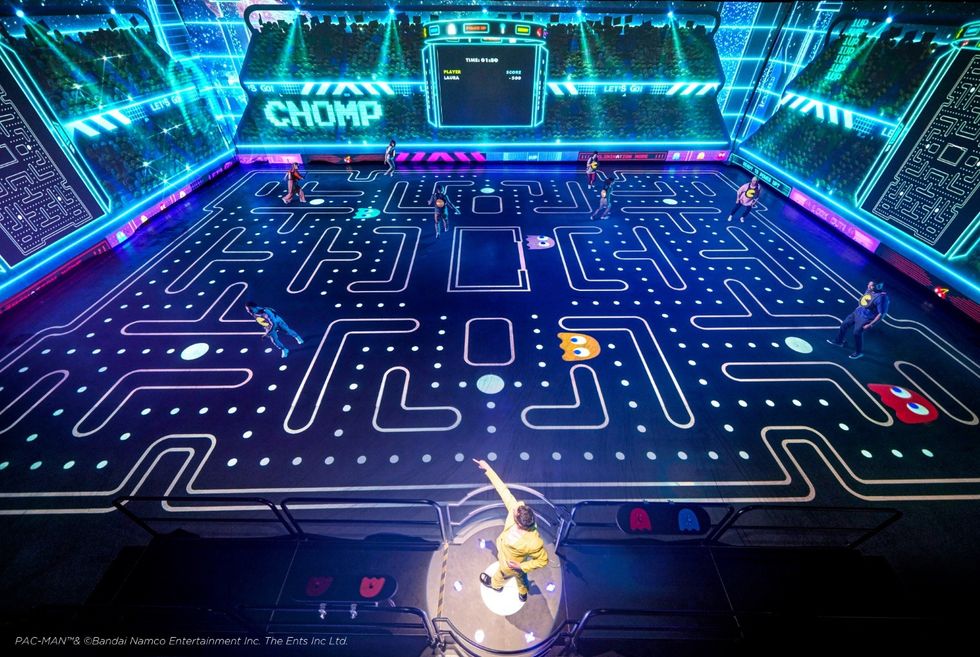
The PAC-MAN LIVE EXPERIENCE showcases the latest innovations in immersive gaming technology, powered by proprietary, in-house systems developed through rapid prototyping. Players wear high-tech PAC-Vests equipped with advanced tracking technology that transforms them into the iconic yellow Chomper in this live gaming experience. This groundbreaking attraction invites participants to step into a life-sized, interactive PAC-MAN Maze, blending physical activity with augmented reality for a fun, multi-sensory adventure.
The technical innovation extends beyond wearable tech. Custom-built tracking systems monitor each player’s position in real-time, while display technology projects two massive PAC-MAN Mazes onto the floor. Live graphics dynamically respond to gameplay, displaying player names, scores, and game states while stunning visuals engulf the walls, instantly transporting participants into the heart of the arcade world. Haptic feedback and spatial audio create a fully immersive sensory experience, with players feeling and hearing every pellet collected and Ghost encounter.
This represents a breakthrough in competitive socialising – moving beyond traditional VR headsets to create shared, physical gaming spaces where teams compete in real-time within the game world itself. Unlike isolated VR experiences, this technology enables true collaborative gameplay. PAC-MAN LIVE EXPERIENCE is the ultimate team activity, offering an unforgettable experience that brings friends, families and colleagues together like never before. The advanced projection mapping and tracking systems create a seamless blend of digital and physical interaction that redefines competitive gaming.
Brand Realisation – Bringing Iconic IP to Life
PAC-MAN LIVE EXPERIENCE represents the gold standard in IP transformation, taking one of gaming’s most recognisable brands and reimagining it for the physical world. Step into gaming history as you become the legendary yellow Chomper in this groundbreaking immersive attraction. It’s the arcade classic you know and love, reimagined at human scale with the player at the centre of the action.
This isn’t merely themed decoration – it’s authentic brand realisation that combines digital innovation with theatrical storytelling. Players embark on a performative journey guided by live actors who bring the PAC-MAN universe to life through theatrical reveals and interactive storytelling. The physical set design transforms the space into an immersive PAC-MAN world, while performers enhance the experience with dynamic interactions that bridge the digital and physical realms.
Every element of the original PAC-MAN experience has been thoughtfully translated: the Maze navigation, Ghost-dodging tension, Pellet-collecting strategy, and competitive scoring. With thrilling mazes, sneaky Ghosts, and state-of-the-art projection technology, PAC-MAN LIVE EXPERIENCE recreates the game’s core mechanics while adding new dimensions of physical movement and team collaboration. Brand new bonus rounds, exclusive to the live experience, have been designed to enhance gameplay.
The innovation lies in respecting the source material while expanding its possibilities. Players don’t just watch PAC-MAN or control him remotely – they become him, experiencing the game from within its world through this theatrical immersive journey. This represents a revolutionary approach to IP adaptation that maintains brand authenticity while creating entirely new engagement opportunities.
The Future of Entertainment
Manchester’s Arcade Arena is pioneering in the world of Live Video-Game attractions, operated by Little Lion Entertainment, the UK’s premier immersive attractions company. The venue’s transformative nature – demonstrated by how it shifts from hosting racing experiences to becoming the PAC-MAN universe – establishes a new category of entertainment where beloved digital worlds become tangible, social adventures that honour their origins while pushing the boundaries of what’s possible.
Partners
- Bandai Namco Entertainment Inc. – IP Partner
- Make Reel – Immersive technology content partner
Technology
Razer AI Gaming Investment: Company Invests $600 Million in Artificial Intelligence Gaming Innovation

Razer AI Gaming Investment: Strategy and Scope
Although Razer is best known for its gaming mouse, keyboards, and laptops, its expansion into artificial intelligence represents a significant strategic shift. The Razer $600 million investment will be implemented across devices, developer tools, and ecosystem infrastructure. Additionally, it will also enable the company to engage approximately 150 AI scientists over the next few years to develop solutions that combine artificial intelligence and core gaming experiences, thus putting it at the forefront of the evolving AI gaming scene.
Reportedly, this step is part of Razer’s bigger AI gaming investment strategy, which aims to redefine how players interact with games and technology. Its key priorities will include AI-native hardware with breakthroughs such as Project Motoko. Powered by Qualcomm Snapdragon technology, the device, Project Motoko, is an AI-enabled wearable headset that provides real-time visual and audio processing, with the goal of redefining immersive gaming and interactive experiences.

The gaming controller market is a vital component of the global interactive entertainment ecosystem, supporting console, PC, and mobile gaming platforms. The market was valued at USD 4.23 billion in 2025 and is expected to reach approximately USD 8.66 billion by 2036, expanding at a compound annual growth rate (CAGR) of 6.75% during the forecast period from 2026 to 2036. Market expansion is supported by the steady growth of the global gaming population, rising esports engagement, and continuous innovation in controller design and connectivity.
Gaming Controller Industry Demand
The gaming controller market comprises handheld input devices designed to interact with gaming platforms, allowing players to control in-game actions with precision and responsiveness. These controllers are compatible with consoles, PCs, smartphones, and cloud gaming platforms, and are available in various configurations tailored to different gaming genres and user preferences.
Industry demand is driven by the cost-effectiveness of gaming controllers compared to high-end gaming peripherals, their ease of use and quick setup across multiple platforms, and their long operational life, supported by durable materials and modular component designs. The growing popularity of competitive gaming, casual mobile gaming, and immersive gameplay experiences continues to fuel demand across both consumer and professional segments.
Request Sample@ https://www.researchnester.com/sample-request-8329
Gaming Controller Market: Growth Drivers & Key Restraint
Growth Drivers
• Expansion of the Global Gaming and Esports Ecosystem
The rapid growth of console, PC, and mobile gaming—along with the rise of esports and streaming platforms—has significantly increased demand for high-performance and specialized gaming controllers.
• Technological Advancements in Controller Design
Innovations such as adaptive triggers, haptic feedback, motion sensing, ergonomic layouts, and cross-platform compatibility enhance user experience and drive replacement and upgrade cycles.
• Cost-Effective Manufacturing and Outsourcing Trends
Manufacturers increasingly rely on outsourced production and component sourcing to reduce costs while maintaining quality, enabling competitive pricing and wider market penetration.
Restraint
• Compatibility and Standardization Challenges
Differences in platform ecosystems, operating systems, and device specifications can limit universal compatibility, creating barriers for consumers seeking multi-platform solutions.
Gaming Controller Market: Segment Analysis
Segment Analysis by Type
• GamePad: The most widely adopted controller type, favored for versatility across console, PC, and mobile gaming.
• Joystick: Preferred in simulation and flight-based games, offering precise directional control.
• Trackball: Used in niche gaming and accessibility applications.
• Steering Wheel: Strongly associated with racing and driving simulation games, emphasizing realism.
• Throttle Quadrant: Common in advanced flight simulators and professional setups.
• Others: Include specialized and customizable controllers designed for accessibility and professional esports use.
Each product type contributes to market demand based on gaming genre popularity and user preferences.
Segment Analysis by Connectivity
• Wired Controllers: Valued for low latency, reliability, and competitive gaming performance.
• Wireless Controllers: Experiencing growing adoption due to convenience, mobility, and advancements in wireless technology.
Connectivity options significantly influence consumer choice and product differentiation.
Segment Analysis by Material Component
• Plastic / Polymer-Based Housing: Dominates due to lightweight design, durability, and cost efficiency.
• Metal Components: Enhance structural strength and premium feel in high-end controllers.
• Rubber / Silicon Parts: Improve grip, comfort, and extended usage performance.
• Advanced Materials: Include carbon fiber and specialized coatings used to enhance durability, aesthetics, and heat resistance.
Material selection plays a critical role in product quality, pricing, and user comfort.
Segment Analysis by Distribution Channel
• Offline: Includes specialty electronics retailers and gaming stores that allow hands-on product experience.
• Online: Rapidly expanding channel driven by convenience, broader product availability, and direct-to-consumer sales models.
Distribution strategies significantly influence brand visibility and market reach.
Segment Analysis by End User
• Individual Gamers: Represent the largest consumer base, spanning casual to professional players.
• Console Gamers: Drive demand for platform-specific and officially licensed controllers.
• Mobile Gamers: Increasingly adopt compact and wireless controllers to enhance gameplay experience.
Gaming Controller Market: Regional Insights
North America
North America represents a mature and innovation-driven market, supported by a large gaming population, strong esports culture, and high adoption of premium gaming accessories. Continuous hardware upgrades and content creation further stimulate demand.
Europe
Europe benefits from a diverse gaming community, growing esports events, and strong demand for ergonomic and high-quality peripherals. The region also shows rising interest in sustainable and durable gaming accessories.
Asia-Pacific (APAC)
APAC is the fastest-growing region, driven by massive mobile gaming adoption, expanding esports ecosystems, and a strong manufacturing base. Increasing disposable income and technological innovation further accelerate regional demand.
Top Players in the Gaming Controller Market
The gaming controller market is highly competitive, featuring a mix of global electronics brands and specialized gaming accessory manufacturers. Key players include ACCO Brands Corporation (U.S.), AndGAMER Co., Ltd. (China), Backbone (U.S.), ByoWave Proteus Controller (Ireland), EasySMX Co., Limited (China), Extremerate Limited (China), GameSir (China), Guillemot Corporation S.A. (France), GULI TECH CO., LTD (China), Logitech International S.A. (Switzerland), Mad Catz Global Limited (China), Microsoft Corporation (U.S.), NACON (France), Nintendo Co., Ltd. (Japan), Razer Inc. (U.S.), Sabrent (U.S.), Shenzhen Ipega Electronic Technology Co., Ltd. (China), and Sony Group Corporation (Japan), all of which drive market growth through innovation, brand strength, and global distribution networks.
Access Detailed Report@ https://www.researchnester.com/reports/gaming-controller-market/8329
Contact for more Info:
AJ Daniel
Email: [email protected]
U.S. Phone: +1 646 586 9123
U.K. Phone: +44 203 608 5919

NASCAR insider reveals seven expected cars vying for remaining Daytona 500 open spots

Mark Cuban makes donation to Indiana for 2026 transfer portal cycle, claims Hoosiers are ‘happier this year’

ESPN predicts outcomes of both College Football Playoff Semifinal games

NHL Winter Classic 2027 game will be held in Utah at Rice-Eccles Stadium

Capital University to upgrade its fieldhouse for fall
Is NIL and the transfer portal good for college football?

Calallen’s Aubrey Navarro signs to run D1 track at SFA

Three major college football programs battling for former 5-star recruit

Catch up with Trevor Johnson, AISD Press Conference and Iron Plains Youth Football League

Short-Handed Cougars Fall to Wildcats

Gaming brand ROG unveils a range of next-generation gaming innovative products at CES 2026! Wi-Fi 8 router that presents new value, innovative 240Hz AR glasses, and more!

What’s new at the Water Tower Recreation Center

$2.1 million QB turns down ‘lucrative NIL packages’ to enter transfer portal
Gaming brand ROG unveils a range of next-generation gaming innovative products at CES 2026! Wi-Fi 8 router that presents new value, innovative 240Hz AR glasses, and more!

Ole Miss turns into an unlikely college football powerhouse

SoundGear Named Entitlement Sponsor of Spears CARS Tour Southwest Opener

DeSantis Talks College Football, Calls for Reforms to NIL and Transfer Portal · The Floridian

#11 Volleyball Practices, Then Meets Media Prior to #2 Kentucky Match

Stempien to seek opening for Branch County Circuit Court Judge | WTVB | 1590 AM · 95.5 FM

Maine wraps up Fall Semester with a win in Black Bear Invitational

Ross Brawn to receive Autosport Gold Medal Award at 2026 Autosport Awards, Honouring a Lifetime Shaping Modern F1

Nascar legal saga ends as 23XI, Front Row secure settlement

Princeton Area Community Foundation awards more than $1.3 million to 40 local nonprofits ⋆ Princeton, NJ local news %

Sunoco to sponsor No. 8 Ganassi Honda IndyCar in multi-year deal

Downtown Athletic Club of Hawaiʻi gives $300K to Boost the ’Bows NIL fund

North Florida Motorsports Park led by Indy 500 Champion and motorsports legend Bobby Rahal Nassau County, FL

WNBA’s Caitlin Clark, Angel Reese and Paige Bueckers in NC, making debut for national team at USA camp at Duke
NASCAR, 23XI Racing, Front Row Motorsports announce settlement of US monopoly suit | MLex

Woods, Ogunribido Named CCIW Women’s Indoor Track & Field Student-Athletes of the Week

Hope College Tops MIAA Commissioner’s Cup Fall Update





-
 Rec Sports3 weeks ago
Princeton Area Community Foundation awards more than $1.3 million to 40 local nonprofits ⋆ Princeton, NJ local news %
-

 Sports2 weeks ago
Badgers news: Wisconsin lands 2nd commitment from transfer portal
-

 Rec Sports6 days ago
Five Youth Sports Trends We’re Watching in 2026
-

 Sports3 weeks ago
Is women’s volleyball the SEC’s next big sport? How Kentucky, Texas A&M broke through
-

 Rec Sports2 weeks ago
NBA, Global Basketball Community Unite for World Basketball Day Celebration
-
 Rec Sports3 weeks ago
Youth Sports Business in 2025: The Year the Industry Grew Up
-
 Sports2 weeks ago
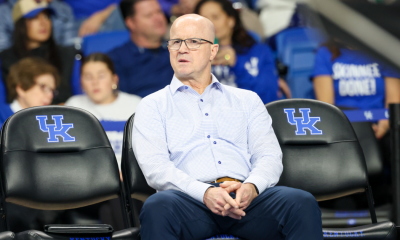
Kentucky VB adds an All-American honorable mention, loses Brooke Bultema to portal
-
Rec Sports3 weeks ago
Inside the NWSL’s first combine: Can the league create a more robust pathway for American talent development?
-

 Motorsports3 weeks ago
NASCAR, IndyCar, and F1 Share These Race Days in 2026
-
 NIL3 weeks ago
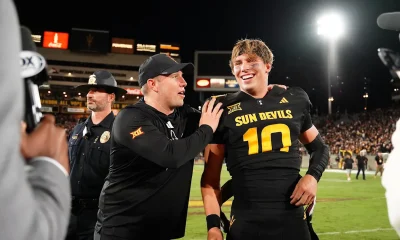
$2.1 million transfer portal QB predicted to join College Football Playoff team