

The Sherrone Moore era is over at Michigan after two short years, and for good reason. Now that he’s in the rearview mirror, we can begin to assess the overall job he did as Michigan’s head football coach.
NIL
Texas Tech Red Raiders – Official Athletics Website

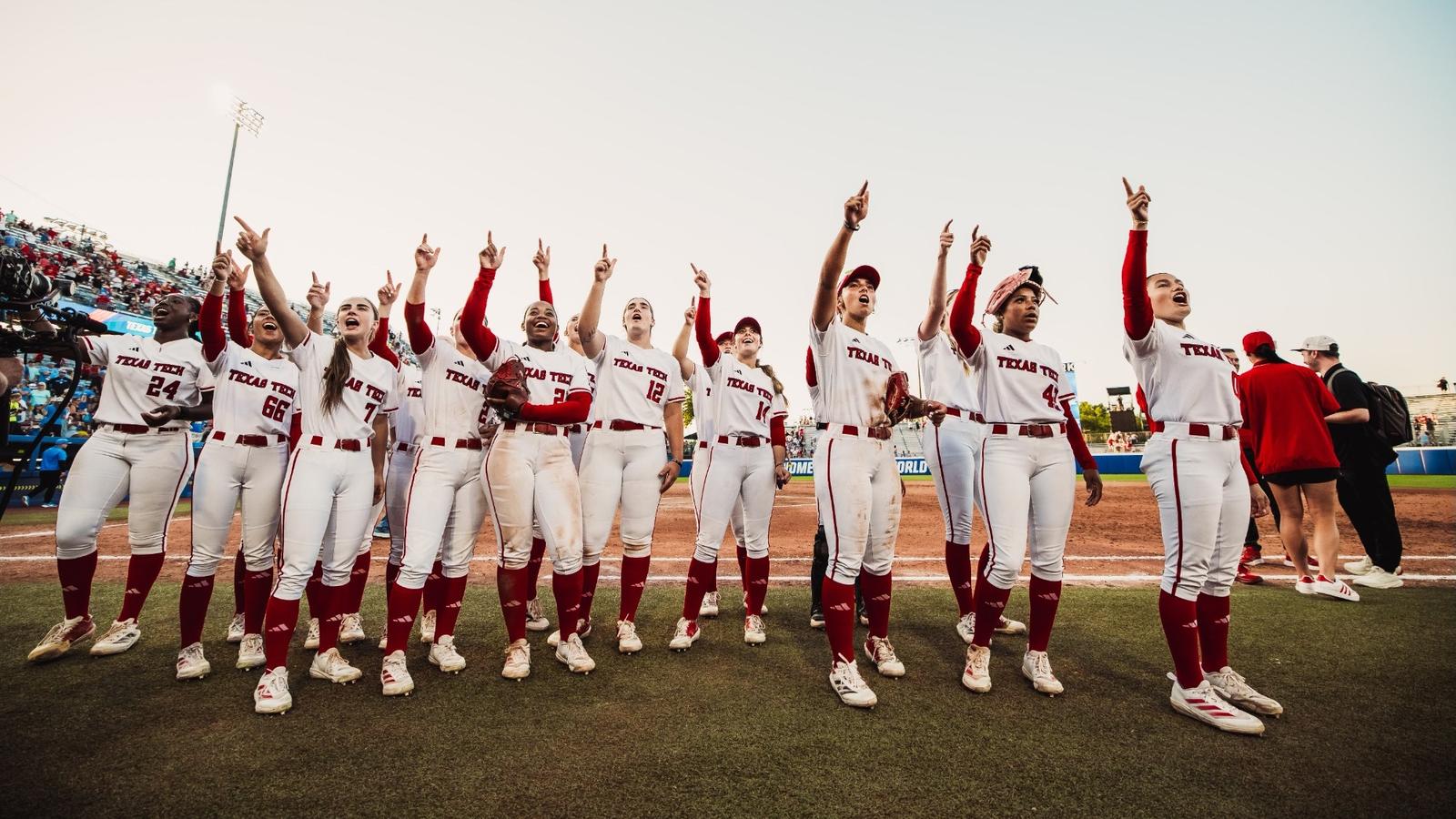
OKLAHOMA CITY, Okla. – Texas Tech’s historic season seems to add another monumental chapter each day with the latest being the Red Raiders’ 3-1 victory Saturday night over UCLA to advance to the semifinals of the Women’s College World Series.
The Red Raiders will await the winner of Sunday evening’s elimination game between No. 2 seed Oklahoma and No. 16 Oregon with the winner facing Texas Tech at 6 p.m. Monday evening on ESPN. Until then, here’s a look at where the Red Raiders stand in the history books and a look ahead at Monday’s potential matchup.
WHERE THIS RUN RANKS IN TEXAS TECH HISTORY
It’s well known the Red Raiders are making their first-ever appearance in the Women’s College World Series, placing the 2025 edition of the Red Raider softball program among the best teams in Texas Tech history (all sports). The Red Raiders will be looking to secure the fourth team national title in program history as Texas Tech previously cut down the nets for the 1993 women’s basketball national title and won two national championships in men’s track and field at the 2019 outdoor meet and most recently at the 2024 indoor championships.
Texas Tech’s run in Oklahoma City builds upon the athletics department’s recent success as softball is already the ninth program to finish among the top-eight teams in the country for their respective sports since 2015. In addition to the two recent men’s track and field national titles, Texas Tech finished in the semifinals of the Men’s College World Series in 2019, advanced to the National Championship Game for men’s basketball earlier that same year and has competed in the match play portion of the NCAA Golf Championships three times (men twice, women once) during that span. The track and field program, has finished among the top eight teams an impressive 11 times between its men’s and women’s programs over the last decade.
Texas Tech has secured a school record eight Big 12 trophies this season, including two from the softball program after the Red Raiders won both the regular season and tournament titles. Texas Tech also claimed the regular season and tournament titles in women’s tennis and has won all four Big 12 track and field championships with both the men’s and women’s teams sweeping the indoor and outdoor meets. That list doesn’t include success in football as the Red Raiders advanced to their fourth-consecutive bowl appearance, while the men’s basketball program moved on to the Elite Eight of the NCAA Tournament, falling late to eventual national champion Florida.

GLASCO IN RARE COMPANY IN WCWS HISTORY
Much has been said about Gerry Glasco‘s impact since being named Texas Tech’s head coach last summer, taking the Red Raiders from the fringes of the NCAA postseason all the way to Oklahoma City in less than a calendar year. Glasco quickly transformed Texas Tech’s roster, holding on to important pieces like outfielder Demi Elder and the nation’s top recruiting class while adding mainstays in the lineup in All-American pitcher NiJaree Canady and All-Big 12 first team honorees Mihyia Davis and Alana Johnson, among others.
That roster has gelled into one of the nation’s top teams, especially late in the season as Texas Tech enters the WCWS semifinals riding an 11-game winning streak that dates back to its final Big 12 series at BYU. Texas Tech already completed a series of “firsts” after earning a national seed for the first time, hosting the NCAA Lubbock Regional for the first time and advancing to its first-ever NCAA Super Regional where the Red Raiders went on the road to sweep Florida State over two games.
Texas Tech’s two wins already this week in Oklahoma City have accomplished another “first,” this time for Glasco, marking the first time a first-year head coach has advanced to the WCWS semifinals since Hall of Fame coach Yvette Girouard at LSU in 2001. Like Glasco, Girouard departed a successful Louisiana program for a new opportunity as she took the Tigers to four-consecutive WCWS appearances to start her tenure in Baton Rouge. LSU had to overcome an opening-game loss to Stanford to advance to the 2001 semifinals, however, rebounding to top Iowa and Oklahoma before falling to UCLA in 13 innings to end its season.
In total, Glasco is only the sixth first-year head coach to advance to the semifinals since the first WCWS in 1982. That list also includes a pair of Nebraska head coaches in Wayne Daigle (1984) and Ron Wolforth (1987) as well as Lou Piel at South Carolina (1983) and UCLA’s Sue Enquist, who led the Bruins to nine WCWS appearances with three titles in her own Hall of Fame career.
Of the head coaches who advanced to the WCWS semifinals in their first year, Glasco and Enquist are the only two to do so by winning their first two games in Oklahoma City. UCLA, with Enquist as its co-head coach alongside Sharron Backus, went 5-0 in Oklahoma City en route to winning the 1989 national championship, its second in a three-year run of hoisting the trophy.

A HIGHLIGHT WORTHY PLAY
Texas Tech took over social media Saturday night with its daring move to steal home with two outs in the fifth inning. In less than 24 hours since, Lubbock native Makayla Garcia’s game-opening run has been widely seen across every social media platform as Texas Tech’s softball accounts have generated more than 3.2 million impressions since Saturday. That does not include the additional interactions the Red Raiders have received thanks to the play being shared by the likes of ESPN, Major League Baseball and the NCAA Softball account, among others.
ARE YOU KIDDING ME??
??ESPN | https://t.co/5fj3lk6mhr https://t.co/fUXhDAlxVM pic.twitter.com/RSyNV3N9Ea
— Texas Tech Softball (@TexasTechSB) June 1, 2025
OKLAHOMA CITY HAS BEEN GREAT TO THE RED RAIDERS
Texas Tech improved to 5-0 at Devon Field in Oklahoma City this season Saturday night following its 3-1 victory over UCLA. The Red Raiders appear more than comfortable in the neutral-site environment as Texas Tech has combined to outscore its opponents, 30-1, this season in Oklahoma City. UCLA’s lone run Saturday on a leadoff home run from Kaniya Bragg to start the fifth snapped a streak of 30.0 consecutive shutout innings at Devon Field this season for the Red Raiders, who previously downed Baylor (4-0), Arizona State (18-0, 5 innings) and Arizona (4-0) in the Big 12 Tournament and then Ole Miss (1-0) in their WCWS opener.

WHO WILL IT BE? INSIDE THE POTENTIAL OREGON OR OKLAHOMA MATCHUP
Thanks to its 2-0 start to the Women’s College World Series, Texas Tech will only need to beat either Oklahoma or Oregon in one of two potential opportunities Monday night to advance to the championship series. Here’s a look at each of those series histories entering Monday night’s semifinals.
Oregon – The Red Raiders are only 3-7 all-time against the Ducks as the two schools have mainly faced each other historically in early-season tournaments and never in postseason play. Texas Tech has won the last two meetings against the Ducks after a 4-3 victory in 2010 at the season-opening Arizona State Kajikawa Classic and then a 5-0 shutout in 2019 at the Mary Nutter Collegiate Classic. Each of the 10 previous meetings in the series have come at a neutral site, similar to what Monday’s potential matchup would be at Devon Field.
Oklahoma – Texas Tech has a vast history against the Sooners after the two schools were Big 12 Conference members from 1996 until this season when Oklahoma departed for the SEC. If the Sooners were to get past the Ducks, Texas Tech will need to reverse recent history in order to advance to the championship series as Oklahoma has won 36-consecutive games against the Red Raiders. Texas Tech’s last win in the series actually came in the state of Oklahoma as the Red Raiders delivered a 5-4 victory on April 6, 2012, in the second game of a three-game conference series. Ashley Hamada scored the game-winning run in the seventh after stealing third base and then racing home on an errant throw to left field. The one-run lead was enough for Cara Custer to retire 5th-ranked Oklahoma in order in the bottom half as she needed only three pitches to deliver Texas Tech’s first victory over a top-five ranked team at the time since defeating Texas A&M, 6-2, on April 29, 2007.
Continue Reading
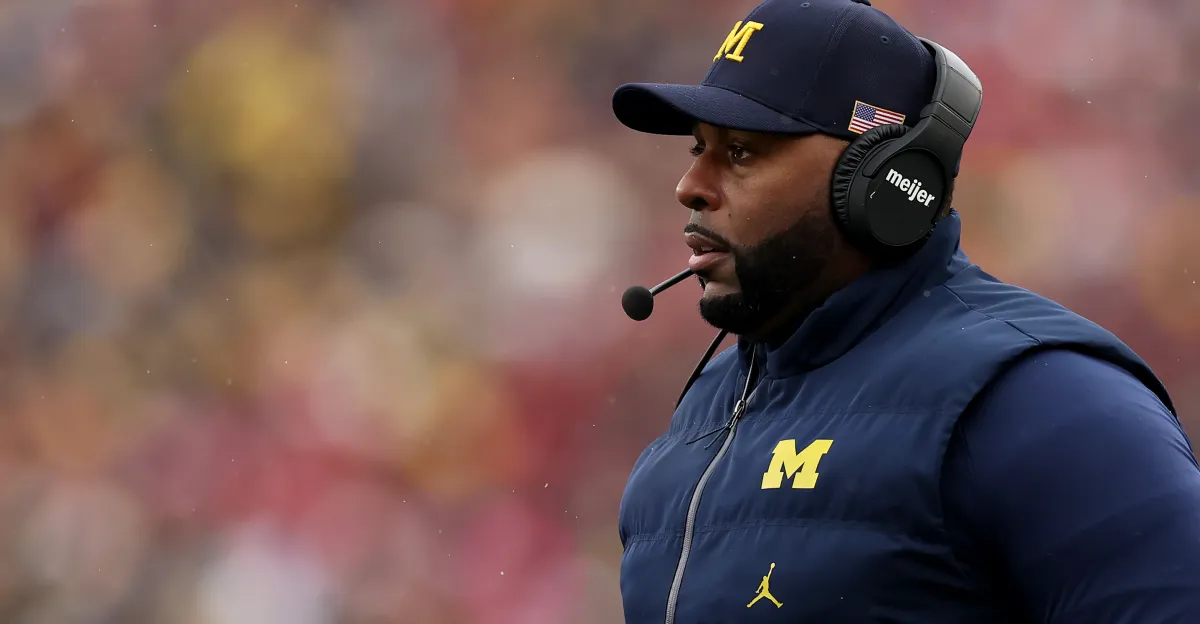
Today, we broke down a few of the key qualities of a football coach and assessed how he performed as Michigan’s leading man.
Following Jim Harbaugh’s departure, Moore had to rapidly fill out a staff as Harbaugh took most of Michigan’s assistants with him to the NFL. Moore hired Kirk Campbell to be his offensive coordinator, Wink Martindale to be the defensive coordinator, and J.B. Brown to be the special teams coordinator. Swing and a miss. Campbell and Brown were abject disasters, with Campbell being let go after just one season while Brown made it two yeaes before being fired. Martindale was well on his way to needing to find a new job as well.
As for position coaches, Moore does get credit for bringing in defensive line coach Lou Esposito and running backs coach Tony Alford. However, the rest of the staff has been disappointing to various degrees. Alford and Esposito prevent this from being an F, but Moore was pretty close to flunking this department.
High School Recruitment: A-
Moore did well on the recruiting trail. The 2026 class was a borderline Top-10 class and included two five-stars in running back Savion Hiter and edge rusher Carter Meadows. But since his firing, two members of the class in four-star tight end Matt Ludwig and three-star offensive lineman Bear McWhorter have already left. However, it’s okay to give Moore some credit for putting together very good classes. Don’t forget the class of 2025 also included two five-stars in Bryce Underwood and Andrew Babalola.
Transfer Portal Management: B
In the transfer portal era, it’s unfair to define this category based on quantity as back-ups move around at their own pleasure now. However, we have to look at the quality of players in and out. Michigan lost a small handful of notable players in Keon Sabb, DJ Waller Jr. and Matthew Hibner after winning Harbaugh left and Moore was hired. However, Moore then brought in Jaishawn Barham, Josh Priebe and Dominic Zvada, to name a few, that same offseason. At worst, he broke even that season.
Before his second year, he was able to bring in Justice Haynes, Donaven McCulley, Damon Payne Jr. and Tre Williams, to name a few. The transfers out were plentiful, but very few made an impact at their respective new schools. It’s safe to say Moore brought in more talent than he lost in each of his two years. However, there were a few glaring holes each offseason that he did not address (quarterback in 2024, punter in 2025, etc.).
It’s hard to give Moore anything other than an A in this category, as he essentially got NIL off the ground at Michigan. Harbaugh’s famous “transformational, not transactional” model was destined to be dead-to-rights. Moore was able to retain players such as Mason Graham, Will Johnson, Kenneth Grant and Colston Loveland thanks to NIL deals, and he also played a role in Underwood signing with the Wolverines. Say what you will about Moore’s tenure at Michigan, but this was one of his legitimate strengths.
To me, this is the single most-damning category for Moore. He seemed to have no clue what he was doing when it came to clock-management and his use of timeouts. The 2024 Indiana game is the best example, as it quite literally cost the Wolverines a chance at winning. However, alternative examples are numerous and there were no signs of improvement. Under his watch, Michigan routinely challenged obviously correct calls, failed to challenge obviously incorrect calls, and played an all-around undisciplined brand of football. This category is easily an F.
When Moore was first promoted, his main mantas quickly became “SMASH” and “Team over Me.” At the time, most fans were optimistic about these, as Moore was the former offensive line coach and had developed three stellar offensive lines from 2021-23. But that quickly deteriorated, as the 2024 and 2025 offensive lines were average at best.
However, the main reason we are giving this an F is the events of the past few weeks. The fact players and staffers in the program were aware of the inappropriate relationship between Moore and the staffer but were seemingly too afraid to speak up tells you all you need to know. The culture appears to be significantly worse now than what it was when Moore took over, prompting an easy F in this field.
NIL
Missouri DE Damon Wilson II sues Georgia, setting up landmark player vs. school NIL legal battle

Former Georgia defensive end Damon Wilson II has sued the school’s athletic association, escalating one of the messiest player-school disputes of the NIL and transfer portal era.
In a 42-page complaint filed Tuesday morning in Boone County, Mo., Wilson’s attorneys allege a civil conspiracy involving the Bulldogs and Georgia’s collective to try to “penalize Wilson for his decision to transfer.” The suit alleges that they interfered with his ability to enter the portal and lied about his NIL buyout. The former five-star recruit spent this season at Missouri.
The move is a counter to Georgia earlier seeking to go to arbitration to get $390,000 from Wilson, alleging damages after the player signed an agreement to return to Athens for his junior season before entering the transfer portal a month later.
It’s also believed to be the first time a player and school have taken each other to court over an NIL dispute. The resolution could hinge on Wilson’s argument that the NIL agreement with Georgia’s collective was a binding contract.
“Georgia appears intent on making an example of someone, they just picked the wrong person,” said Jeff Jensen, one of Wilson’s attorneys. “Damon never had a contract with them. I don’t see how Georgia thinks intimidation and litigation will help their recruitment efforts — maybe players could bring lawyers with them to practice.”
“As this matter involves pending litigation, we will have no additional comment at this time and refer you to our previous statement,” University of Georgia Athletic Association spokesman Steven Drummond said.
The backstory
Wilson appeared in 26 games at Georgia from 2023 to ‘24 and was expected to be a significant contributor this season when he signed an NIL agreement last December with Georgia’s Classic City Collective. The terms sheet called for him to receive $30,000 per month from December 2024 through January 2026.
A month after signing the deal, he transferred to Missouri, where he led the Tigers with nine sacks. Because the agreement was contingent upon his staying at Georgia, the collective ended the deal.
In October, the UGAAA filed an application to compel arbitration in Athens-Clarke County, Ga. It alleged Wilson owed $390,000 — the unpaid amount on the deal — in liquidated damages, as spelled out in the terms sheet.
What Wilson’s suit argues
The suit alleges Georgia staffers falsely told multiple unnamed Power 4 programs that Wilson would owe the Bulldogs $1.2 million if he left. That action was “an effort to prevent (other schools) from offering Wilson an NIL agreement, thereby impeding his ability to obtain an NIL agreement from a competing program that was the product of free and open competition for his athletic services and NIL licensing rights.”
It also contends the Bulldogs didn’t immediately put his name in the portal but instead launched an “all-out offensive” to try to keep him at Georgia. Those acts were part of what the suit called a “civil conspiracy” to interfere with Wilson’s business endeavors by the suit’s defendants: UGA’s athletic association, the collective and its two now-former CEOs, Matt Hibbs and Tanner Potts.
The suit also includes a count of interfering with Wilson’s business opportunities and accuses UGA’s athletic association of violating the confidentiality provision of the terms sheet by sharing its contents, including through a public court filing.
Much of the complaint addresses the NIL deal itself. The suit said Wilson and several other teammates were simply told by a Bulldogs employee to go upstairs at the football building to sign the agreement during preparations for the College Football Playoff. Wilson’s filing argues the deal is not enforceable because it says its terms would “be used to create a legally binding document.” That document was not created. The filing also notes that the terms sheet encouraged Wilson to “seek legal counsel” before finalizing a full agreement. If Wilson’s reading is correct, he would not owe the $390,000 the Bulldogs claim he does.
Finally, the suit includes a count of defamation over a line from a Bulldogs spokesperson about expecting athletes to honor commitments. The statement, the complaint said, implies that Wilson was dishonest, which hurts his reputation.
Wilson lost out on endorsement opportunities and NIL revenue and suffered emotional and mental distress caused by the Bulldogs’ false claims, his attorneys allege. He’s seeking a “fair and reasonable amount of damages” for the “financial and reputational harm he has suffered” along with legal fees.
Why this case is important
Georgia’s filing against Wilson this fall was the first known instance of a school taking a current/former player to court over an NIL buyout. And this complaint appears to be the first time a player has sued a school regarding an NIL deal.
The closest comparison is one-time Florida signee Jaden Rashada’s pending lawsuit over a $13.85 million dispute. But he filed that against three individuals involved (including now-former Florida coach Billy Napier) and a booster’s private company; the Gators have not been named as a party in the case.
As the player compensation space evolves in the first year of direct revenue sharing between schools and athletes, disputes will continue to arise. Whether contracts are binding is, to some degree, an open question and affects whether players can essentially act as free agents every year. This case is one of the first, best looks into how the issue might be resolved.
Updated Dec. 22, 2025, 10:57 p.m. ET
Quarterback Nico Iamaleava is returning to UCLA football for a second season to play under new coach Bob Chesney, the team announced Dec. 22.
The former Tennessee quarterback had transferred to UCLA in April. The Bruins went 3-9 this past season, during which DeShaun Foster was fired after an 0-3 start.
Iamaleava completed 64.4% of his passes for 1,928 yards and 13 touchdowns, with seven interceptions in 11 games. He also rushed for 505 yards and four touchdowns. He did not play at Ohio State in November due to a concussion.
Nico Iamaleava spent two seasons with Tennessee football before exit
Iamaleava played 18 games in two seasons at Tennessee, and started all 13 games during UT’s College Football Playoff run in 2024.

The QB threw for 2,616 yards with 19 touchdowns and five interceptions in 2024, but was less efficient in SEC play. He threw nine touchdowns in eight conference games, but four of those were against Vanderbilt in the regular-season finale.
In his UT career, he completed 241 of 379 passes for 2,930 yards with 21 touchdowns and five interceptions. He redshirted in 2023 behind starter Joe Milton.
Why did Nico Iamaleava and Tennessee football split?
Tennessee coach Josh Heupel informed the Vols that Iamaleava was no longer a member of the team prior to the April 12 spring game, ending the relationship between UT and Iamaleava amid an apparent NIL dispute.
Iamaleava skipped the Vols’ final spring practice on April 11, the morning after On3’s Pete Nakos reported ongoing negotiations between Iamaleava and UT. His NIL deal reportedly paid him more than $2 million per year.
ESPN’s Chris Low, citing sources, reported that Iamaleava’s representatives wanted his NIL pay increased to $4 million per year. The family used the possibility of him entering the transfer portal as leverage.
Mike Wilson covers University of Tennessee athletics. Email him at michael.wilson@knoxnews.com and follow him on X @ByMikeWilson. If you enjoy Mike’s coverage, consider a digital subscription that will allow you access to all of it.
Dec. 23, 2025, 5:35 a.m. ET
If you watched any part of Ole Miss’ 41-10 blowout of Tulane, the one common theme you felt was that the absence of former head coach Lane “Benedict” Kiffin was not acknowledged by the home fans; they even appeared to embrace it. It took a while for Rebel Nation to realize it but Kiffin simply was never “one of them” and, while he built the program, he did not measure up to the “Ole Miss family.” Most Rebel fans would probably tell you now they’d rather lose without him than win with him. Kiffin has now been fully exposed and St. Nick (Saban, now known as Mr. Hypocrite) and Pete Carroll, his self-proclaimed advisers, should be ashamed for their comments supporting the manner in which he tried to negotiate his way to both coaching one team and recruiting for another simultaneously. One is the GOAT who ran away from NIL and the transfer portal while the other is a recognized cheater by many. The best part is Kiffin’s LSU Tigers play at Mississippi next year. Good riddance!
Dec. 23, 2025, 6:07 a.m. ET
Arizona State football coach Kenny Dillingham says he was never offered the Michigan job. Never got to that point.
This, of course, isn’t the story nor the takeaway from Dillingham’s dalliance with the Wolverines.
The irony of the state of Arizona’s highest-paid public employee begging for private donations to compete at the highest level of college football is where this bizarre story begins.
“We live in Phoenix, Arizona. You’re telling me there’s not one person who could stroke a $20 million check right now?” Dillingham said after agreeing to a new contract worth more than $37 million over the next five years.
That’s right, the guy whose future could never be more secure, sees the immediate horizon line for the Arizona State football program. And frankly, it’s financially unstable at best — and a house of cards at worst.

It’s Arizona State today, but could be Kansas State or Colorado or North Carolina State or Virginia Tech or Boise State — or any of the other 100-plus Bowl Subdivision teams not protected by the golden parachute of the Big Ten and SEC.
Coaches at those 34 schools in the two big conferences — many of those institutions born on third base from long-term association with the leagues before the financial boom of television media rights — aren’t publicly calling out dignitaries and alums associated with their schools.
They’re not standing during a media availability and pleading for the next Cody Campbell to please step up. Or else.

Dillingham made it very clear that college football is about those who wish to spend money, and those who don’t. This isn’t about revenue sharing between schools and players, this is all about private NIL funding.
This is about the dirty underbelly of the sport that can’t be legally controlled. A growing vice that doubles and triples the obstacles faced by conferences chasing the Big Ten and SEC.
It’s bad enough that mega media rights deals give the Big Ten and SEC a huge competitive advantage over the rest of college football. It’s downright sinister that those same schools have deep pocket boosters willing to spend tens of millions in private NIL deals to eliminate all doubt.
Sam Leavitt led Arizona State to the Big 12 title and the College Football Playoff in 2024, and returned to Tempe this season for another run. A foot injury ended his season early, and now he’s headed to the transfer portal looking for a new home.
Not because he doesn’t think he can win big with the Sun Devils — he already proved that. He’s in the portal, like so many other players, to strike when its hot and score a deal before moving onto the NFL.
What are the odds he signs with a Big Ten or SEC school? A program which has boosters that can pay him an outrageous salary through a private NIL deal.
Do you really blame Leavitt?
Do you really blame Campbell, Texas Tech’s billionaire booster, who built a championship-level team with a $25 million roster — and the Red Raiders responded by winning the Big 12 and earning a first round bye in the CFP?
They’re just following the rules, and until a different set of rules is in place, they’ll take advantage of it.
That’s why Dillingham sounded like a panhandler last weekend, begging — literally begging someone, anyone, in The Valley to jump on board and throw money at the program. He even specifically called out school alums Phil Mickelson and Jon Rahm.
Hey, Kenny, while you’re at it, why not place a call to the sheiks in Saudi Arabia? See if their Public Investment Fund (PIF) is interested in sports washing with the second-most popular sport in America.
Because if you’re reaching out to Mickelson and Rahm, you’re reaching out to the Saudis — who own LIV Golf — by proxy. The only difference between the PIF and Utah’s new $500 million agreement with Otro Capital is one group of investors has a long line of human rights violations.
The other is a financial shark, whose only goal is to make money.
Any way they can.
“College football is absolutely chaotic right now,” Dillingham said. “You’ve got to be able to have a plan to be aggressive in this thing for three, four, five years down the road. If you don’t have that, you’re a ticking time bomb for failure.”
This nonsense isn’t going to end until players are considered employees, and players collectively bargain their best deal. Until FBS conferences go to market as one, and sell their games to make double or more than the current market value of $4 billion-plus annually.
That move will allow universities to restrict player movement through multi-year contracts, and find a fair and equitable postseason for all. One that doesn’t include charity for the Group of Five conferences, who have no business in a playoff unless invited based on merit (see: Boise State, 2024).
But that move also means players would go from earning about 20 percent of media rights revenue to likely 45-50 percent. NFL players currently make 48 percent of the media rights.
That’s why the Big Ten and SEC don’t want players collectively bargaining. It has nothing to do with the pollyanna idea sold by conference commissioners that players, “don’t want to be employees.”
If they’re going to earn 20 percent, who wants to deal with the headache of collectively bargaining? Move that number to 45-50 percent, and watch how many players say they’re all in.
Then maybe their coaches wouldn’t have to shamelessly beg for cash, mere hours after signing a new $37 million dollar contract. Or else.
Matt Hayes is the senior national college football writer for USA TODAY Sports. Follow him on X at @MattHayesCFB.

NIL21 minutes ago
Grading the Sherrone Moore era at Michigan

Sports26 minutes ago
Kiki Granberry Signs with Volleyball Program

Sports43 minutes ago
David Nguyen named head coach of North Dakota volleyball program

Sports52 minutes ago
Springfield College Announces 2026 Athletic Hall of Fame Class

Sports59 minutes ago
Outside hitter Eva Travis signs with Wisconsin volleyball

NIL1 hour ago
Missouri DE Damon Wilson II sues Georgia, setting up landmark player vs. school NIL legal battle

Sports1 hour ago
Kentucky Volleyball Gained New Fans in Special Season That Ends Short of a Title

Sports2 hours ago
Thomas Earns First ASUN Honors
Motorsports2 hours ago
Wisconsin racing in 2026 at Road America, Mile, Slinger, Outaws, more
Rec Sports2 hours ago
Challenger division coming to Plymouth Youth Baseball

Rec Sports2 hours ago
It’s Time for the Ravens to Draft a Young QB Behind Lamar Jackson
Sports2 hours ago
Gainesville High’s Rowan Kage is the 2025 Big School Volleyball POY

Motorsports2 hours ago
BangShift.com Racing With Heavy Hearts…..The KSR Crew Heads To Bradenton Motorsports Park’s Christmas Tree Drags 2025!
Technology2 hours ago
Abu Dhabi to Showcase Its Esports and Motorsports Excellence: Gran Turismo World Series 2026 Kicks Off in the UAE

Motorsports2 hours ago
Chase Elliott 2025 season in review: Two wins, Round of 8 appearance highlight big year for the 9 team

Rec Sports4 weeks ago
First Tee Winter Registration is open

Rec Sports4 weeks ago
Fargo girl, 13, dies after collapsing during school basketball game – Grand Forks Herald

Motorsports4 weeks ago
CPG Brands Like Allegra Are Betting on F1 for the First Time

Motorsports4 weeks ago
F1 Las Vegas: Verstappen win, Norris and Piastri DQ tighten 2025 title fight

Sports4 weeks ago
Sycamores unveil 2026 track and field schedule

Sports4 weeks ago
Two Pro Volleyball Leagues Serve Up Plans for Minnesota Teams

Sports4 weeks ago
Utah State Announces 2025-26 Indoor Track & Field Schedule

Motorsports2 weeks ago
SoundGear Named Entitlement Sponsor of Spears CARS Tour Southwest Opener

Motorsports3 weeks ago
Jo Shimoda Undergoes Back Surgery

Motorsports4 weeks ago
Redemption Means First Pro Stock World Championship for Dallas Glenn

NIL3 weeks ago
Bowl Projections: ESPN predicts 12-team College Football Playoff bracket, full bowl slate after Week 14

Sports4 weeks ago
Texas volleyball vs Kentucky game score: Live SEC tournament updates

Rec Sports3 weeks ago
Black Bear Revises Recording Policies After Rulebook Language Surfaces via Lever

Rec Sports4 weeks ago
How this startup (and a KC sports icon) turned young players into card-carrying legends overnight

Rec Sports3 weeks ago
Robert “Bobby” Lewis Hardin, 56






-
 Motorsports2 weeks ago
SoundGear Named Entitlement Sponsor of Spears CARS Tour Southwest Opener
-
 Rec Sports3 weeks ago
Black Bear Revises Recording Policies After Rulebook Language Surfaces via Lever
-
 Motorsports2 weeks ago
Donny Schatz finds new home for 2026, inks full-time deal with CJB Motorsports – InForum
-
 Rec Sports3 weeks ago
How Donald Trump became FIFA’s ‘soccer president’ long before World Cup draw
-
 Rec Sports2 weeks ago
David Blitzer, Harris Blitzer Sports & Entertainment
-
 Motorsports2 weeks ago
JR Motorsports Confirms Death Of NASCAR Veteran Michael Annett At Age 39
-
Sports2 weeks ago
Elliot and Thuotte Highlight Men’s Indoor Track and Field Season Opener
-
 Motorsports2 weeks ago
Rick Ware Racing switching to Chevrolet for 2026
-
Sports2 weeks ago
West Fargo volleyball coach Kelsey Titus resigns after four seasons – InForum
-
 Sports2 weeks ago
#11 Volleyball Practices, Then Meets Media Prior to #2 Kentucky Match