
NIL
'That's not normal'



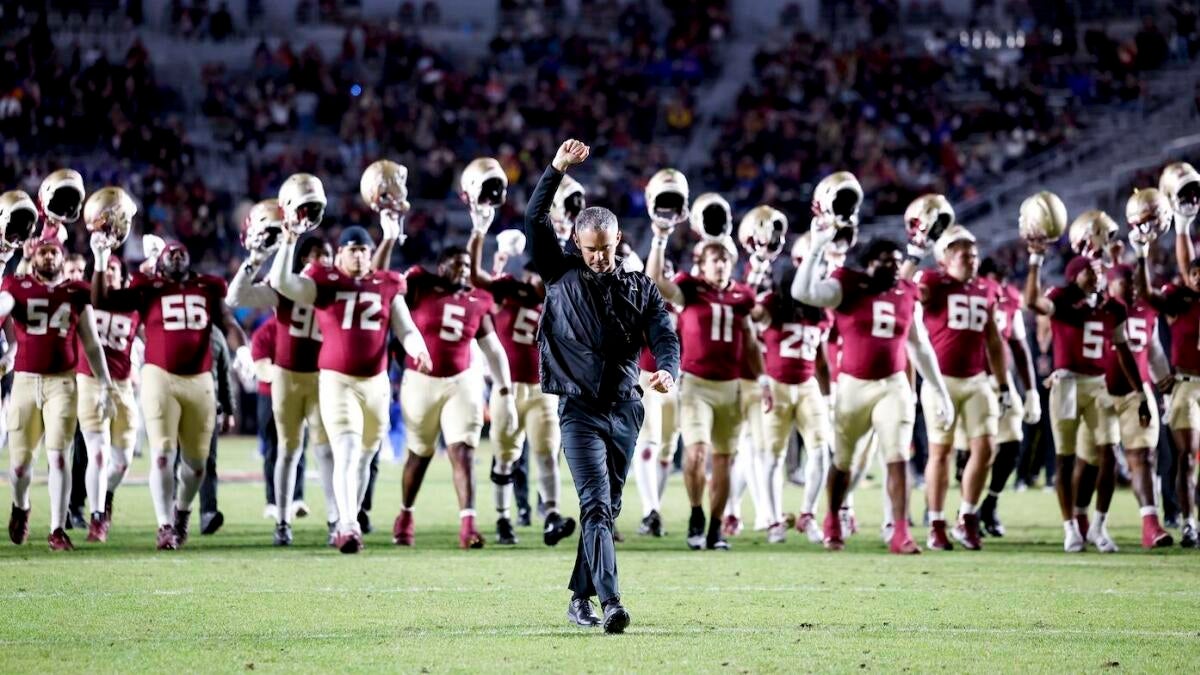
As college football races toward the start of the revenue-sharing era on July 1, a new battle is unfolding — not on the field, but in the fine print. Schools and player agents are clashing behind the scenes over the language of contracts, with some universities pushing aggressive terms that raise eyebrows across the industry.
While some players received front-loaded payments ahead of July 1, many are now encountering multi-page agreements drafted by school lawyers, packed with provisions that attempt to lock in control, minimize financial risk, and, in some cases, limit players’ rights.
“Since this is new and uncharted territory, they’re trying to put in as many things as they can think of and protect that university and see what they get push back on and what they don’t,” Mit Winter, an attorney who works heavily in the NIL space told CBS Sports.
Put another way by an NIL agent: “They’re throwing everything they can and the kitchen sink.”
That sink?
It’s appearing quite often in Tallahassee, according to multiple agent sources who have at least one player on the Florida State roster.
The Seminoles have included what those agents describe as aggressive language in their rev share contracts, which cover a broad range of issues and are issued directly by the school.
One clause, which CBS Sports has seen a copy of, allows the team to extend a player at the end of their contract unilaterally without having to negotiate with the player. Another section on team rules — common in most NIL or rev share deals — includes a maximum $2,500 fine on the first offense if a player loses team equipment such as a pair of cleats. The max fine for using a controlled substance for the first time is $1,000.
There’s another clause about things that would constitute a breach of contract. Among them is “illness or injury which is serious enough to affect the value of rights granted to the school.” The way it’s written allows Florida State to renegotiate or even cancel a player’s contract at its discretion after any sort of injury — among other potential liquidated damages provisions included as part of the contract — including those that happen on the football field.
There’s also a provision that, depending on how it’s interpreted, could limit an athlete’s right to counsel during any future negotiations.
“Some of the concepts are pretty standard,” an agent who represents at least one Florida State player said; they were granted anonymity to allow them to speak freely. “But FSU is going about this far more aggressively than any school I’ve seen. I’m disappointed by the adversarial nature of these contracts.”
It’s not just agents who take exception with the way FSU is attempting to write its rev share contracts. CBS Sports contacted at least one general manager from every Power Four conference to understand if some of Florida State’s provisions are considered normal.
Said one Big Ten general manager of the three stipulations above: “That’s not normal.”
Said a GM from the Big 12: “I do understand they have all the leverage, but f***.”
Still, other agents contacted by CBS Sports said while Florida State is contentious with its reworked rev share agreements, the pushy and controlling language isn’t exactly uncommon.
“I don’t think Florida State is the worst at all in this business,” said an agent with a player on FSU’s roster. “There are schools I trust less.”
Florida State, when reached for comment, offered this statement via a spokesperson in response to questions about some of the provisions CBS Sports highlights in this piece.
“As we enter into a new age of collegiate athletics, Florida State has put together an agreement that provides deliverables and expectations for all parties. Each individual situation will be unique and the hypotheticals are impossible to predict. However, we are committed to continuing to provide an elite experience for our student-athletes in all aspects of their collegiate career. Florida State is looking forward to the mutually beneficial partnerships with our student-athletes in this new era.”
All of this comes at an unstable time in college athletics where schools are attempting to balance what is essentially a pay-for-play model wrapped in the guise of a payment system still built around a school’s access to a player’s name, image and likeness.
That push and pull is something Sports and Higher Education Attorney James Nussbaum, of Church, Church Hittle + Antrim, which consults and works with double-digit D-I programs, said is creating unsteady language in which negotiating agents want things similar to employee protections while schools want as much flexibility as possible if a player’s NIL value tanks due to something like an injury.
“Everybody knows that you have to participate in athletics for your name, image and likeness to be worth anything to the schools you’re going to,” Nussbaum said. “At the same time, we’re trying to continue under this framework where we’re saying this isn’t pay for play.
“Part of why I think it’s difficult to negotiate is because of the framework where we’re not able to compensate you directly for your participation. … There’s a lot of grey area between those two poles.”
Not every Florida State player has been delivered their revenue sharing contract at this point. CBS Sports contacted the agents of several of the top transfer additions for Florida State this offseason — shoe-in starters and borderline top 10 players on the roster — and their money was mostly front-loaded ahead of July 1. They’re expected to see their rev sharing contracts in the coming days.
But a lot of players will have their payout split between the collective dollars and rev share. Some programs allow the terms of their collective contracts to carry over to their rev share deals. Florida State, however, had some players sign a memorandum of understanding, a one-page document that lays out the intended terms between two parties. Others were merely assured their collective deals would carry over into the rev share.
Florida State, like many other programs nationally, was only able to send out the full version of its rev share agreements once the House Settlement was approved on June 6.
In conversations with three agents who represent at least one Florida State player who has been sent their full rev share contract in recent weeks, the Seminoles seem to have settled on a standard contract for its roster. Big Ten and SEC schools generally work off a standardized contract the conference provides to its school. The ACC does not have a contract baseline for its programs.
That lack of universal standard in the ACC has led to some unique language from the Seminoles.
The option to extend
“[school] shall have, until the end of Student-Athlete’s NCAA eligibility, dependent, successive options to extend the Term under the same terms and conditions as the existing Term, unless the Parties mutually agree in writing to a change in such terms and conditions, for additional periods of one year by providing written notice of such extension (e-mail is sufficient) to Student- Athlete no later than twenty (20) days prior to the expiration of the then-current Term of the Agreement. Under such an extension option, the Total Compensation payable to Student-Athlete for the one-year extension period shall be a pro rata, annualized portion of the compensation set for the initial term.
That language, which allows Florida State to extend a student-athlete’s deal pretty much at will by the end of their contract, is considered uncommon when talking with agent and general manger sources across the country.
“That locks a kid in for the rest of his eligibility with no ability to negotiate,” said the agent who shared the contract draft language.
Many schools provide players a window to negotiate after every regular season. Other programs, like in the SEC, have begun writing in a “first right of refusal” clause, which allows them to match a higher offer if they receive one from another school.
But sources CBS Sports spoke to consider Florida State’s extension clause unusually one-sided.
“I’ve never seen that before,” Winter said. “I would say that’s not a usual provision.”
A lot of Florida State players will have multi-year deals as part of the wave of initial revenue sharing contracts, so that language won’t always apply. But it is language that would come up for those on one-year deals or in the future if an athlete reaches the end of their agreed contract length.
A FSU source said players are also able to ask for a renegotiation of terms at the end of a contract if both sides desire an extension. That source indicated the school’s intent is to negotiate in good faith.
Injury and breach of contract
“In addition to a breach of any specific provision of this Agreement, the following circumstances create a breach of contract by Student-Athlete:
1. Illness or Injury Impacting Value of NIL Rights. Student-Athlete experiences any illness or injury which is serious enough to affect the value of the rights granted to [school] under this Agreement; provided, however, that nothing herein shall affect or limit [school]’s obligations to provide Student-Athletes with medical coverage of injuries sustained as a result of participation in [school] Athletics as required by Section 16.4 of the NCAA Division I Bylaws, where applicable.”
A few schools CBS Sports spoke with for this story have language or have considered adding language that allows them to cancel or alter a player’s dollar amount if they suffer an off-field injury doing an unsanctioned activity. Florida State features that language within its rev share contract drafts that it’s sent to players and their representation.
But nobody CBS spoke with considered the way Florida State wrote the above injury provision as normal if the injury occurred in a football context.
“That’s excessive,” said an ACC Director of Player Personnel.
It’s different from the NFL where athletes are employees and there are injury protections for players if they were hurt in organized activities and a stated process for medical second opinions and injury settlements.
And while an agent CBS spoke with expects Florida State to ultimately remove that stipulation from the contract, the way it’s currently written gives FSU full control to adjust a player’s salary when any injury occurs.
“It’s the first time I’ve ever seen something like that with an injury,” another agent said. “The way they’re going about it, they’re having it all in writing where at their discretion they can renegotiate at any time. Guys get injured all the time. The terms are very friendly to them.”
There’s no telling how, or would, Florida State actually enforce the injury provision for breach of contract as written. But those who have seen the contract in the agent space worried that Florida State felt the need to include it in the first place to have that leverage over its athletes.
Team rules
It is common for teams to put program rules in contracts. A SEC GM CBS spoke with said they have a fine system, usually related to things like failed drug tests or weight violations.
A pair of Syracuse freshmen, offensive tackle Byron Washington and defensive back Demetres Samuel Jr., recently revealed on the “State of Orange” podcast the fine structure the Orange use for team violations.
“We get fines for missing more than two absences in class,” Samuel said. “We got class checkers. If you don’t have your jug or your tablet for like …”
Chimed in Washington:”That’s $50.”
Samuel said later in the interview that if players don’t meet weight for a third time in a week it can cost them a quarter of their monthly check.
Florida State has multiple pages of team rules included in their revenue sharing contract. They range from small — a maximum $100 on the first offense for things like tardiness to team events ($50 for academic activities) — to large with a maximum $2,500 reduction in compensation if a player loses any team gear or technology.
The substance abuse fines — be it steroids, marijuana or another substance — scale quickly. The first offense is a maximum of $1,000 reduction from total compensation. The second offense is a maximum 10% of the compensation. A third offense? It’s 50% and a possible dismissal at the head coach’s discretion.
“They’re a bit arbitrary,” an agent said. “One thing I pushed FSU athletics on is this language needs to tie to a policy, right? I have a player in the NFL and his contract has things like showing up to meetings, drug testing but it’s a rigid codified process. The way (FSU’s) policies are written in the contract they could effectively line up three cups, have a kid pee, say it’s a failure and come back in 20 minutes, do it two more times, call it three failures and that penalty for that is his contract value. … And there’s no appeals process.”
That agent also emphasized there’s no functional appeals process for an athlete or burden of proof the team must reach. They said the only recourse an athlete has to challenge a fine is arbitration, where the athlete will likely go up against a school’s general counsel office with infinitely more resources.
A push and pull between schools and agents
Winter had previously come across Florida State’s rev share agreement before talking with CBS Sports. His thought after reading it: “Jesus Christ, this one goes far.”
It’s not uncommon for schools to push the boundaries of what’s considered normal with contracts. Often schools will put many stipulations in deals they’re willing to take out if an agent raises a concern. That has already happened with a few provisions at Florida State, per sources, but many of the above tension points remain and others are set to arise as more of these contracts are sent out.
As for what gets taken out, it can often depend on the leverage a particular athlete has or the importance of the individual clause to the school.
To Nussbaum, this is a period of uncertainty given that schools don’t exactly know how enforcement will play out under the new NIL GO landscape, where schools are attempting to create maximum flexibility. He said it’s up to the school to set priorities for what they deem important within the contracts.
“This is where you really have to have some of these hard conversations with your board and president and say, ‘What are our goals here?'” Nussbaum said. “If it’s simply coming up with the most money we can to compensate these student athletes. That’s one approach. But I don’t think any school is taking that approach.
“Yeah, you’re coming up with something that has some precedential value that’s necessary in a competitive industry like this … I think schools are aware and don’t want to tie themselves down unnecessarily in the future but at the same time want to be competitive and recruit in a way that will set them up for the future.”
And it’s not as if aggressive or controversial language is limited to the rev share era.
CBS spoke to one agent earlier this summer who said one of his clients at another school initially received a contract that allowed a school to terminate for any “alleged” criminal activity with no stipulations for due process. Another school attempted to put in language for damages that if a player left the program before the end of his contract term, he’d need to pay back all money included in the contract, including “unearned money.”
“That’s problematic,” the agent said. “You haven’t made it yet. We understand there’s damages, but a lot of these contracts were back-loaded for when revenue share kicked in.”
Schools are trying to protect themselves from players consistently transferring following a cycle in which more than 4,000 FBS players entered the portal. That’s where aggressive liquidated damages and new buyout language included in many rev share comes from.
But in a sport without an employee-employer relationship or collective bargaining, schools and players are left on an island to negotiate deals, which is where the barrage of restrictive language comes from on the school’s side.
One of the agents CBS spoke to for this story would push back on the idea that’s all Florida State is doing.
While the contested language may end up being removed from the contract its presence, they said, it seems to go beyond a mere negotiating tactic.
“If that were truly their intent, they would write it like that and it’s only useful in cases of emergency,” the agent said. “For example, if they’re only trying to go for a catastrophic injury or when a kid can’t play for the rest of the season, why does the injury clause account for any injury that has an impact on NIL value? They had smart attorneys write these things. They would have written it that way. If you want it for only break glass in case of emergency, you have to put the glass in front of the lever”


The 2025 Heisman Trophy ceremony wrapped up at the Jazz at Lincoln Center’s Appel Room in New York City on Saturday night.
Indiana quarterback Fernando Mendoza was selected as the 91st recipient of the Heisman Trophy. Mendoza received the award over Vanderbilt quarterback Diego Pavia, Notre Dame running back Jeremiyah Love and Ohio State quarterback Julian Sayin.
With the 2025 Heisman Trophy race in the rearview mirror, the next question about the award is who can win it in 2026. There are many star players from the 2025 season who could find themselves in the mix next season.
Below is a look at the top five players who are most likely to win the award in 2026.
No. 5- QB Trinidad Chambliss, Ole Miss

Year: Senior
2025 stats: 3,016 passing yards, 18 pass touchdowns, three interceptions, 470 rush yards, six rush touchdowns
If Diego Pavia can successfully sue his way to another season of eligibility for his 2025 Heisman campaign, Trinidad Chambliss should be able to do the same for 2026.
Chambliss’ career at Ole Miss began with him being thrust into action in the third game of the season with the injury to Austin Simmons. The adaptability Chambliss demonstrated midseason will be critical once again as offensive controls shift from Lane Kiffin to John David Baker.
No. 4- QB Marcel Reed, Texas A&M
Year: Redshirt junior
2025 stats: 2,932 pass yards, 25 passing touchdowns, 10 interceptions, 466 rush yards, six rush touchdowns
Marcel Reed entered 2025 as an intriguing dual-threat quarterback who needed to hone his passing skills. Fast forward to the end of the 2025 season, and Reed has increased his production in the air substantially and is primed to make another jump in 2026.
The biggest challenge for Reed in 2026 will be working with a new offensive coordinator following Collin Klein’s departure. But any capable offensive mind should be able to do good work with an athlete like Reed.
No. 3- QB Arch Manning, Texas

Year: Redshirt junior
2025 stats: 2,942 pass yards, 24 passing touchdowns, seven interceptions, 244 rush yards, eight rush touchdowns
Arch Manning’s start to the 2025 season shuts down any and all preseason Heisman conversations by the end of September. But the way he ended the 2025 season has the college football landscape giving him a second look.
A faulty offensive line should be much improved in 2026 for Manning’s protection. If he can ride off the momentum of performances against quality competition like Vanderbilt and Texas A&M into 2026, watch out.
No. 2- QB Gunner Stockton, Georgia
Year- Senior
2025 stats: 2,691 passing yards, 23 touchdowns, five interceptions, 442 rush yards, eight rush touchdowns
Gunner Stockton proved a lot of doubters wrong with his heroics for the Bulldogs in 2025. His ability to make plays with his feet is a big reason why he will be in consideration for a Heisman Trophy in 2026.
Stetson Bennett IV will always receive the most attention for winning two national titles, but Stockton may be the most complete quarterback Georgia has fielded under Kirby Smart
No. 1- WR Jeremiah Smith, Ohio State

Year: Junior
2025 stats: 80 receptions, 1,086 receiving yards, 11 receiving touchdowns, 20 rush yards, one rush touchdown
Very rarely is there a wide receiver who is capable of competing with the best quarterbacks in college football for a Heisman Trophy. Jeremiah Smith is one of those wide receivers.
The run he put together as a freshman in the 2024 College Football Playoff would have the NFL considering him as the best receiver in the 2025 draft had he been eligible. Another run like that in the 2025 College Football Playoff would firmly insert him into the 2026 Heisman conversation.
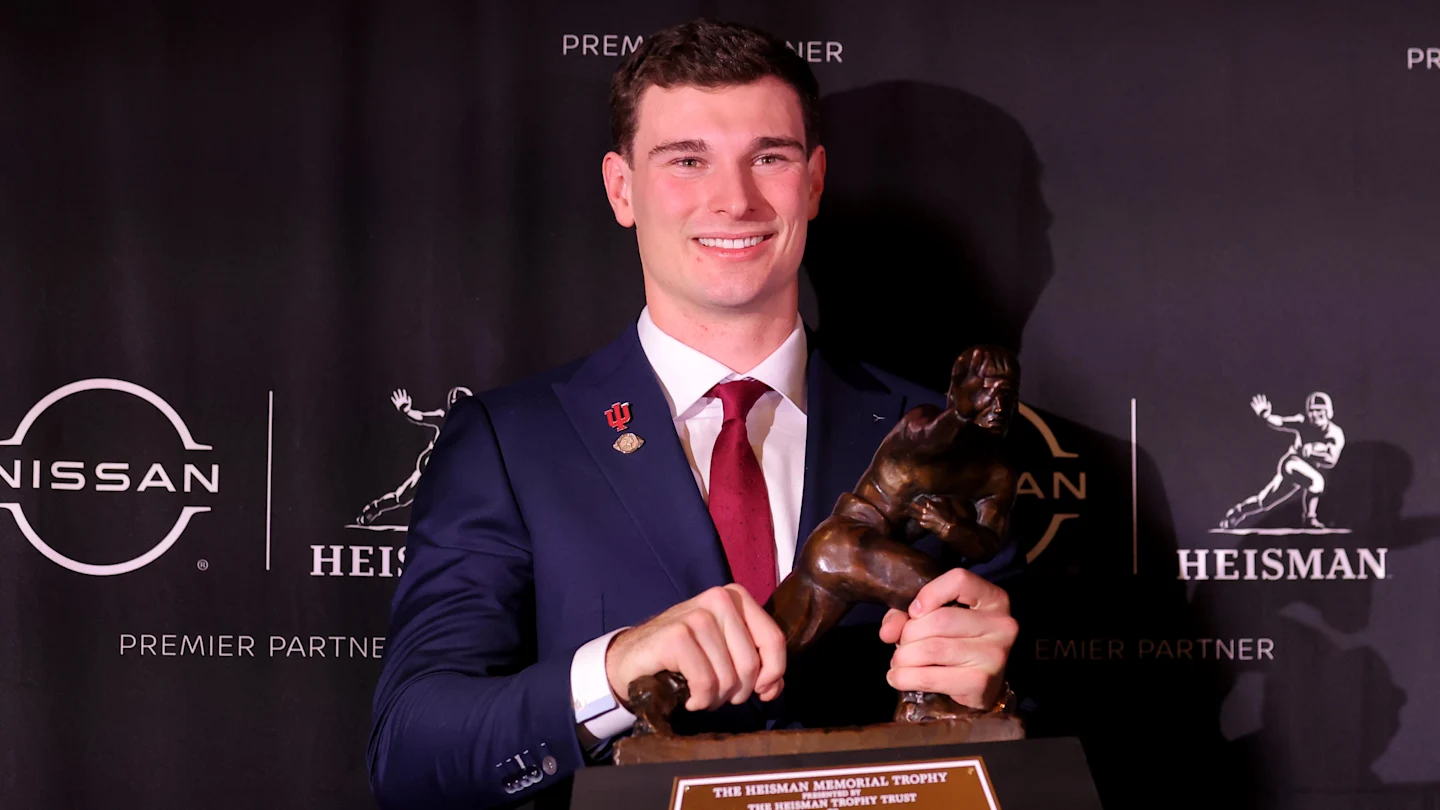
Indiana quarterback Fernando Mendoza swept to an easy Heisman Trophy victory on Saturday, but everyone wasn’t convinced of his credentials. Count long-time sports personality Skip Bayless among those who aren’t on board with the pick. Bayless, who spent years with FOX Sports and ESPN, took to social media with his take on the Heisman win.
Heisman Results
It’s worth noting that Mendoza not only easily won the award, with 643 first-place votes to 189 for the second-place finisher, Vanderbilt QB Diego Pavia. He also comfortably won the voting from all six geographic regions into which voting is divided. The fan vote for the Heisman went to neither Mendoza nor Pavia, but to Texas Tech LB Jacob Rodriguez. But Bayless’s take went a different direction.
Skip Bayless’s Take
Congrats to Fernando Mendoza… nice memorized, rehearsed speech… but Diego Pavia deserved this award for his performance on the field, even if his swagger and edge rubbed some voters and viewers the wrong way.
Skip Bayless
Pavia’s Case
Pavia put together an impressive campaign, leading Vanderilt to 10 wins for the first time in program history. He passed for 3,192 yards and 27 touchdowns while rushing for 826 yards and nine more touchdowns. A season ago, Pavia led Vanderbilt to seven wins, including an upset of then-No. 1 Alabama that spring-boarded the program to national relevance. Of course, Skip Bayless happened to graduate from Vanderbilt.
Pavia likely was hurt by a season in which he lacked a marquee win– Vandy’s best win on the season based on the current polls was over No. 25 Missouri. He also didn’t play especially well against top competition– throwing for six touchdowns and four interceptions against winning FBS teams. Of course, Vanderbilt came up just shy of the College Football Playoff.
Mendoza’s Case
Mendoza, on the other hand, led Indiana to an undefeated season and a No. 1 ranking. Mendoza has passed for 2,980 yards and 33 touchdowns and rushed for another 240 yards and six scores. He did take advantage of some big-game moments in a comeback win over Penn State and the upset of Ohio State in the Big Ten title game. Mendoza passed for 13 touchdowns and three interceptions against winning FBS teams.
Critics note that Mendoza’s big moment came against a Penn State team that fired its coach and struggled to a 6-6 season. His resume includes just two wins over currently ranked teams, although both Oregon and Ohio State are in the fop five. Mendoza threw for just two touchdowns total in those two wins (which were essentially defensive battles). But most voters clearly disagreed with Bayless’s take and were comfortable with Mendoza’s Heisman claim.


Being the head coach who replaces a legend is one of the toughest gigs in college football, but having to step into the shoes of the all-time winner of national championships is quite another task.
And despite being on the right side of most metrics, Kalen DeBoer could be facing more than embarrassment if Alabama doesn’t beat Oklahoma in the first-round College Football Playoff game this coming week.
Former Alabama running back Damien Harris thinks his place at the school is in jeopardy.
Is Kalen DeBoer’s job at risk?
“In my opinion, I think his job is on the line with this game, and I think there’s a lot of reasons why,” Harris said on CBS Sports.
“We’ve seen how hard it is to beat a team twice in college football, and if we look at this Alabama team, and say you showed no improvement from the first time you played Oklahoma to the second time, you weren’t able to make adjustments to flip the script of that game, and you can’t win that football game [after] luckily getting into the playoffs, that’s going to be a problem.”
Oklahoma has Alabama’s number
DeBoer is already 0-2 against Oklahoma during his two-year tenure at Alabama and now they return to Norman for a rematch against one of the best defenses in the country.
Dropping to 0-3 would put DeBoer’s place in some peril, Harris argues, especially given some of the talk around other schools reportedly being interested in him, talk that increased after Michigan came open suddenly last week.
That’s not good enough
“Listen, this isn’t the tradition, this isn’t the history that Alabama fans are used to. This isn’t the standard of excellence that’s used to being had in Tuscaloosa at the University of Alabama. People are still talking about that,” Harris said.
“I know it’s Year Two. I know we’re talking about needing to give coaches time, but when we’re talking about the University of Alabama and the legacy that needs to be set, Kalen DeBoer needs to put his own DNA on that.”
So far, he hasn’t.
“We’re not seeing that right now. We’re seeing a team that’s full of a lot of potential, has a lot of talent, a lot of resources, but they just haven’t lived up to the billing quite yet during the Kalen DeBoer tenure,” he said.
“All that being said, I think Kalen DeBoer’s job will be in a little bit of jeopardy going into next season if they don’t win this football game.”
But is any of this true?
Speaking frankly, no.
Alabama knew the stakes of finding the right person to replace Nick Saban, the man who defined college football in the 21st century, perhaps for all time, and took great care to find his successor.
DeBoer has been a proven winner, and even despite his relative struggles and losses in two years with the Crimson Tide, is still ahead of the game and has the program in the national title field.
More to it, all of the insider reporting around the coach suggests that he is more than happy being at Alabama, and is entirely focused on leading the school into the future.
And while Michigan is still a seductive opportunity given its prestige, the condition of the athletic department is a genuine concern, before and after the shocking dismissal of Sherrone Moore, who was fired for an alleged improper relationship and landed in jail on multiple charges.
Facing a bevy of negative headlines since the Jim Harbaugh era, whether it be around Covid-era recruiting violations, the Connor Stalions scandal and sign-stealing allegations, and the sudden shocking developments around Moore, even the school itself seems concerned, launching an investigation into itself and its culture.
That would not be an ideal landing spot for a coach who already has one of the top five positions in college football, is in the playoff, and likes where he is. Win or lose this week.
(Harris)
Read more from College Football HQ

Kalen DeBoer isn’t heading to Michigan.
The Alabama coach decided to release a statement Sunday via Yea Alabama, the university’s NIL collective.
“I have not spoken and have no interest in speaking with anyone else about any other job,” the statement from DeBoer read. “I am fully committed to this program and look forward to continuing as the head football coach at the University of Alabama.”
DeBoer said he and his family “are very happy in Tuscaloosa” and are grateful for the support of UA president Peter Mohler, athletics director Greg Byrne, the UA System Board of Trustees “and so many others.”
“We have an incredible opportunity in front of us, so my sole focus is on Alabama football and our preparations to play Oklahoma in the College Football Playoff,” read the statement from DeBoer.
DeBoer was immediately highlighted as a top candidate to watch to coach the Wolverines once Michigan fired head coach Sherrone Moore for cause on Wednesday. DeBoer had also been mentioned as a candidate for the Penn State job before he shut down those rumors ahead of the SEC Championship Game.
DeBoer and the Crimson Tide are preparing for the College Football Playoff. No. 9 Alabama will face No. 8 Oklahoma on Friday, Dec. 19 in Norman, Oklahoma in the first round of the 12-team playoff. The winner will advance to the Rose Bowl to face No. 1 Indiana.
“We are proud to have Coach DeBoer leading our football program at The University of Alabama,” Alabama athletics director Greg Byrne posted to social media. “He is an incredible coach and does an excellent job with the development of our student-athletes, both on and off the field. Just as he is committed to this team, we are committed to him, and we look forward to taking the field Friday in the first round of the College Football Playoff.”
The game will mark the first for DeBoer as part of the 12-team playoff but his second playoff appearance overall. DeBoer led the Washington Huskies to the national championship game in 2023. Then he agreed to replace Nick Saban at Alabama ahead of the 2024 season.
In 2024, he finished 9-4 and missed the College Football Playoff. Then Alabama improved in his second season, finishing 10-2 in the regular season to reach the SEC Championship Game. The Crimson Tide lost to Georgia in Atlanta. As a result, Alabama heads into the playoff with a 10-3 record.
Heading into the playoff, DeBoer holds an 18-5 record in games against AP top 25 opponents over his time at Alabama, Washington and Fresno State.

Troy Aikman is joining a growing list of major voices calling out the direction of college football.
The Hall of Fame quarterback made the comments during Monday’s episode of “Sports Media with Richard Deitsch,” where he said the current landscape has become a “wild west” with very few meaningful rules.
Aikman made the remark during a discussion about Lane Kiffin’s abrupt departure from Ole Miss and vowed never again to contribute under the current name, image, and likeness rules.
Host Richard Deitsch asked whether Ole Miss should have allowed Kiffin to finish the season even though he was leaving for LSU.
The school blocked Kiffin from doing so.
Aikman answered by turning to the larger problems affecting college football.
He said the chaos surrounding coaching moves, player movement, and money all point to a system without any real structure.
He then shared a story of his own experience with NIL.
Aikman revealed that he personally contributed money to help a UCLA football player. He said he had never met the player and had only donated once.
According to Aikman, the player stayed for only a single season before transferring to another school.
Troy Aikman on NIL:
“I gave money to a kid, I won’t mention who. I’ve done it one time at UCLA, never met the young man. He was there a year, he left after the year. I wrote a sizable check, and he went to another school. I didn’t even get so much as a thank you note. So, it’s… pic.twitter.com/HqkRIHZUkY
— College Sports Only (@CSOonX) December 9, 2025
Aikman said he never even received a thank you note after writing what he described as a large check.
That experience led Aikman to vow never again to contribute his own cash to his alma mater.
Calls for the NCAA to impose stricter guidelines on transfers and payments have grown throughout this season. Many want limits on NIL, a structured transfer system, and clearer rules about when coaches and players can leave a program.
This year’s coaching carousel intensified those concerns.
Kiffin left a playoff-bound Ole Miss squad for LSU.
Players can also transfer as many times as they want, and they can do so while earning unlimited NIL compensation.
The sudden shift has completely upended norms that defined the sport for more than a century.
For decades, players risked punishment for something as minor as accepting the wrong meal from the wrong person.
Now, the system allows widespread payments to entire rosters with almost no restrictions.
Despite the negatives, the new rules have helped historically bad programs become relevant.
Perennial cellar dweller Indiana ended the 2025 regular season ranked number 1.

Advertise with The Western Journal and reach millions of highly engaged readers, while supporting our work. Advertise Today.

Alabama coach Kalen DeBoer ended all speculation Sunday afternoon alluding to potential interest in the Michigan vacancy with the Crimson Tide set to Oklahoma in the first round of the College Football Playoff next week. DeBoer was considered among the best fits for the Wolverines soon after Sherrone Moore’s firing earlier this week.
DeBoer was scheduled to meet with media on Monday, but released a statement ahead of that appearance.
“My family and I are very happy in Tuscaloosa and remain extremely grateful for the support of President Mohler, Greg Byrne, the board and so many others,” DeBoer said through Yea Alabama, the Crimson Tide’s NIL collective. “We have an incredible opportunity in front of us, so my sole focus is on Alabama football and our preparations to play Oklahoma in the College Football Playoff. I have not spoken and have no interest in speaking with anyone else about any other job. I am fully committed to this program and look forward to continuing as the head football coach at the University of Alabama.”
In his second season with the Crimson Tide after taking Washington to the 2023 national championship game, DeBoer is 19-7 at Alabama, which faces Oklahoma in the first round of the College Football Playoff on Friday night.
“We are proud to have Coach DeBoer leading our football program at The University of Alabama,” Crimson Tide athletic director Greg Byrne said in a statement. “He is an incredible coach and does an excellent job with the development of our student-athletes, both on and off the field. Just as he is committed to this team, we are committed to him, and we look forward to taking the field Friday in the first round of the College Football Playoff.”
DeBoer’s statement came after Ryan Williams and other players mentioned rumors on social media being difficult to avoid.
“Yeah, of course we see it on TV, but I mean, he’s gave his best effort here,” Williams said Friday. “Focused on playing against Oklahoma, we’re not really worried about it. … I mean, at the end of the day, he serves us 100% and that’s our coach, so we’re going to play for him. External noise is external noise, so we just focus on the internal.”
This isn’t the first job opening this cycle where DeBoer’s name immediately emerged. DeBoer denied previous speculation about the Penn State vacancy prior to the Nittany Lions’ hiring of Matt Campbell, but had not addressed the Michigan situation until Sunday.
DeBoer and the Crimson Tide’s chief focus can now be on the Sooners after a previous loss to Oklahoma last month put Alabama in several playoff elimination games down the stretch. The Crimson Tide suffered three giveaways during that 23-21 setback in Tuscaloosa despite doubling Oklahoma in total yardage and largely dominating the contest.
The Alabama-Oklahoma winner plays unbeaten and top-seeded Indiana at the Rose Bowl in the quarterfinals.

How to Watch NCAA Tournament, Regional Final: Texas vs Wisconsin

Way-too-early favorites for college football’s top award

Season Ends for No. 1 Nebraska Volleyball with Five-Set Loss to No. 3 Texas A&M

Page not found | Racine County Eye

Young WNBA stars bring a youth movement to USA Basketball camp

Barnaby Runs Fastest NAIA 60m Dash of the Season at Spokane Invitational

Badgers news: Game Thread vs. No. 1 Texas Longhorns

Skip Bayless says Fernando Mendoza didn’t deserve to win the Heisman Trophy

Georgia lands 21 cross country and track signees | Georgia Sports

Nebraska suffers first loss of season, denied NCAA Volleyball Final Four berth

Four Husker seniors play final game for Nebraska

Major college football coach’s job is on the line this week, analyst claims

Wisconsin volleyball finally gets the better of Texas, advances to Final Four | Top Stories

Hooked on a feeling: Badgers punch ticket to Kansas City

NASCAR Settles Landmark Antitrust Lawsuit

First Tee Winter Registration is open

Fargo girl, 13, dies after collapsing during school basketball game – Grand Forks Herald

CPG Brands Like Allegra Are Betting on F1 for the First Time

F1 Las Vegas: Verstappen win, Norris and Piastri DQ tighten 2025 title fight

Volleyball Recaps – November 18

Two Pro Volleyball Leagues Serve Up Plans for Minnesota Teams

Utah State Announces 2025-26 Indoor Track & Field Schedule

Sycamores unveil 2026 track and field schedule

Redemption Means First Pro Stock World Championship for Dallas Glenn

Texas volleyball vs Kentucky game score: Live SEC tournament updates

Jo Shimoda Undergoes Back Surgery

Robert “Bobby” Lewis Hardin, 56

Bowl Projections: ESPN predicts 12-team College Football Playoff bracket, full bowl slate after Week 14

How this startup (and a KC sports icon) turned young players into card-carrying legends overnight

Pohlman admits ‘there might be some spats’ as he pushes to get Kyle Busch winning again

 NBA Legend Michael Jordan to Join NBC Sports as Special Contributor
 Why a rising mid-major power with an NCAA Tournament team opted out of revenue-sharing — and advertised it
 Falcons mailbag
 Portal Update – Basketball and Gymnastics Take Hits
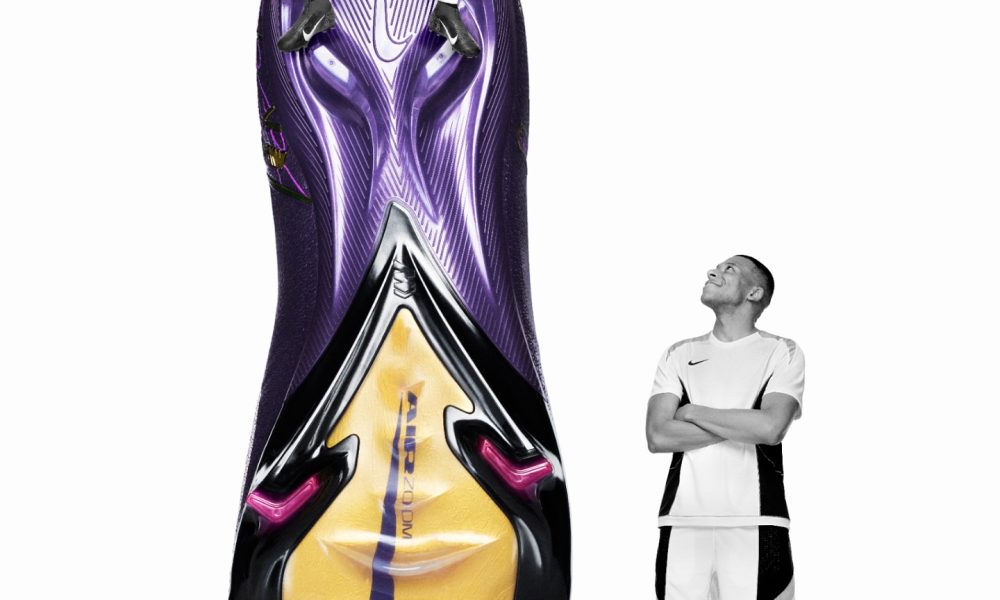 has always dreamed in Mercurial. Now his initials are on the boots.
The new Kyl…
has always dreamed in Mercurial. Now his initials are on the boots.
The new Kyl…
-
 Rec Sports3 weeks ago
Fargo girl, 13, dies after collapsing during school basketball game – Grand Forks Herald
-
 Motorsports3 weeks ago
CPG Brands Like Allegra Are Betting on F1 for the First Time
-
 Sports3 weeks ago
Two Pro Volleyball Leagues Serve Up Plans for Minnesota Teams
-
 Sports3 weeks ago
Utah State Announces 2025-26 Indoor Track & Field Schedule
-
 Sports3 weeks ago
Sycamores unveil 2026 track and field schedule
-
 Motorsports3 weeks ago
Redemption Means First Pro Stock World Championship for Dallas Glenn
-
 Sports3 weeks ago
Texas volleyball vs Kentucky game score: Live SEC tournament updates
-
 Motorsports2 weeks ago
Jo Shimoda Undergoes Back Surgery
-
 NIL2 weeks ago
Bowl Projections: ESPN predicts 12-team College Football Playoff bracket, full bowl slate after Week 14
-
 Rec Sports2 weeks ago
Robert “Bobby” Lewis Hardin, 56