
NIL
'That's not normal'



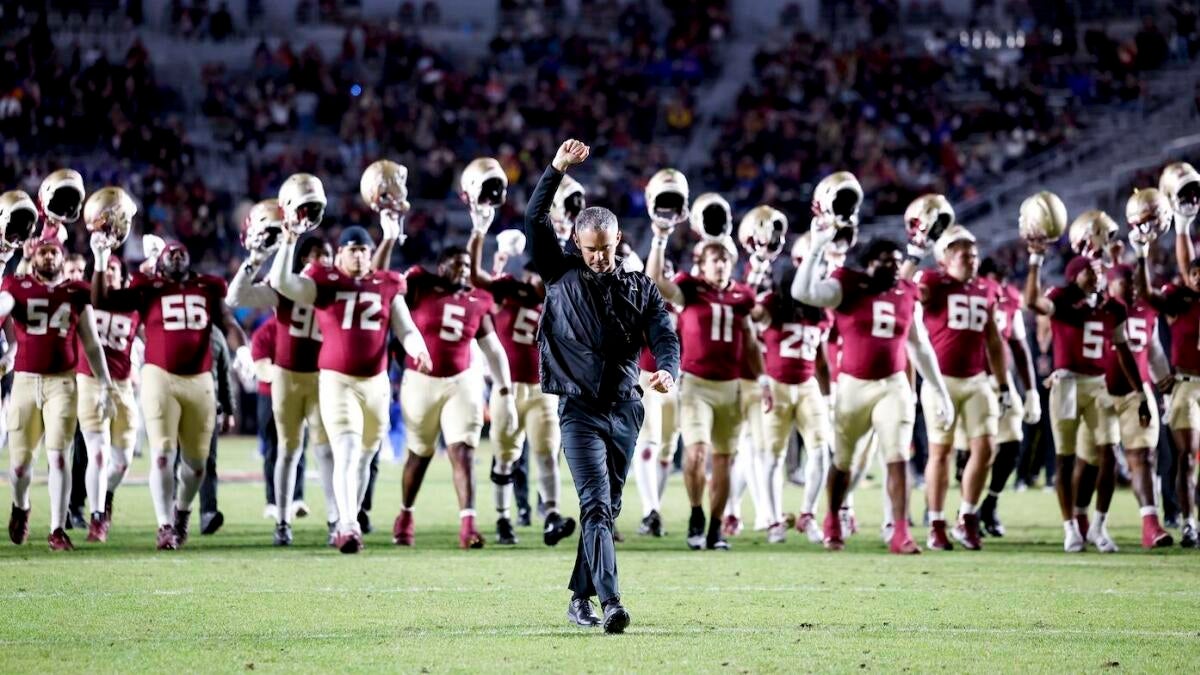
As college football races toward the start of the revenue-sharing era on July 1, a new battle is unfolding — not on the field, but in the fine print. Schools and player agents are clashing behind the scenes over the language of contracts, with some universities pushing aggressive terms that raise eyebrows across the industry.
While some players received front-loaded payments ahead of July 1, many are now encountering multi-page agreements drafted by school lawyers, packed with provisions that attempt to lock in control, minimize financial risk, and, in some cases, limit players’ rights.
“Since this is new and uncharted territory, they’re trying to put in as many things as they can think of and protect that university and see what they get push back on and what they don’t,” Mit Winter, an attorney who works heavily in the NIL space told CBS Sports.
Put another way by an NIL agent: “They’re throwing everything they can and the kitchen sink.”
That sink?
It’s appearing quite often in Tallahassee, according to multiple agent sources who have at least one player on the Florida State roster.
The Seminoles have included what those agents describe as aggressive language in their rev share contracts, which cover a broad range of issues and are issued directly by the school.
One clause, which CBS Sports has seen a copy of, allows the team to extend a player at the end of their contract unilaterally without having to negotiate with the player. Another section on team rules — common in most NIL or rev share deals — includes a maximum $2,500 fine on the first offense if a player loses team equipment such as a pair of cleats. The max fine for using a controlled substance for the first time is $1,000.
There’s another clause about things that would constitute a breach of contract. Among them is “illness or injury which is serious enough to affect the value of rights granted to the school.” The way it’s written allows Florida State to renegotiate or even cancel a player’s contract at its discretion after any sort of injury — among other potential liquidated damages provisions included as part of the contract — including those that happen on the football field.
There’s also a provision that, depending on how it’s interpreted, could limit an athlete’s right to counsel during any future negotiations.
“Some of the concepts are pretty standard,” an agent who represents at least one Florida State player said; they were granted anonymity to allow them to speak freely. “But FSU is going about this far more aggressively than any school I’ve seen. I’m disappointed by the adversarial nature of these contracts.”
It’s not just agents who take exception with the way FSU is attempting to write its rev share contracts. CBS Sports contacted at least one general manager from every Power Four conference to understand if some of Florida State’s provisions are considered normal.
Said one Big Ten general manager of the three stipulations above: “That’s not normal.”
Said a GM from the Big 12: “I do understand they have all the leverage, but f***.”
Still, other agents contacted by CBS Sports said while Florida State is contentious with its reworked rev share agreements, the pushy and controlling language isn’t exactly uncommon.
“I don’t think Florida State is the worst at all in this business,” said an agent with a player on FSU’s roster. “There are schools I trust less.”
Florida State, when reached for comment, offered this statement via a spokesperson in response to questions about some of the provisions CBS Sports highlights in this piece.
“As we enter into a new age of collegiate athletics, Florida State has put together an agreement that provides deliverables and expectations for all parties. Each individual situation will be unique and the hypotheticals are impossible to predict. However, we are committed to continuing to provide an elite experience for our student-athletes in all aspects of their collegiate career. Florida State is looking forward to the mutually beneficial partnerships with our student-athletes in this new era.”
All of this comes at an unstable time in college athletics where schools are attempting to balance what is essentially a pay-for-play model wrapped in the guise of a payment system still built around a school’s access to a player’s name, image and likeness.
That push and pull is something Sports and Higher Education Attorney James Nussbaum, of Church, Church Hittle + Antrim, which consults and works with double-digit D-I programs, said is creating unsteady language in which negotiating agents want things similar to employee protections while schools want as much flexibility as possible if a player’s NIL value tanks due to something like an injury.
“Everybody knows that you have to participate in athletics for your name, image and likeness to be worth anything to the schools you’re going to,” Nussbaum said. “At the same time, we’re trying to continue under this framework where we’re saying this isn’t pay for play.
“Part of why I think it’s difficult to negotiate is because of the framework where we’re not able to compensate you directly for your participation. … There’s a lot of grey area between those two poles.”
Not every Florida State player has been delivered their revenue sharing contract at this point. CBS Sports contacted the agents of several of the top transfer additions for Florida State this offseason — shoe-in starters and borderline top 10 players on the roster — and their money was mostly front-loaded ahead of July 1. They’re expected to see their rev sharing contracts in the coming days.
But a lot of players will have their payout split between the collective dollars and rev share. Some programs allow the terms of their collective contracts to carry over to their rev share deals. Florida State, however, had some players sign a memorandum of understanding, a one-page document that lays out the intended terms between two parties. Others were merely assured their collective deals would carry over into the rev share.
Florida State, like many other programs nationally, was only able to send out the full version of its rev share agreements once the House Settlement was approved on June 6.
In conversations with three agents who represent at least one Florida State player who has been sent their full rev share contract in recent weeks, the Seminoles seem to have settled on a standard contract for its roster. Big Ten and SEC schools generally work off a standardized contract the conference provides to its school. The ACC does not have a contract baseline for its programs.
That lack of universal standard in the ACC has led to some unique language from the Seminoles.
The option to extend
“[school] shall have, until the end of Student-Athlete’s NCAA eligibility, dependent, successive options to extend the Term under the same terms and conditions as the existing Term, unless the Parties mutually agree in writing to a change in such terms and conditions, for additional periods of one year by providing written notice of such extension (e-mail is sufficient) to Student- Athlete no later than twenty (20) days prior to the expiration of the then-current Term of the Agreement. Under such an extension option, the Total Compensation payable to Student-Athlete for the one-year extension period shall be a pro rata, annualized portion of the compensation set for the initial term.
That language, which allows Florida State to extend a student-athlete’s deal pretty much at will by the end of their contract, is considered uncommon when talking with agent and general manger sources across the country.
“That locks a kid in for the rest of his eligibility with no ability to negotiate,” said the agent who shared the contract draft language.
Many schools provide players a window to negotiate after every regular season. Other programs, like in the SEC, have begun writing in a “first right of refusal” clause, which allows them to match a higher offer if they receive one from another school.
But sources CBS Sports spoke to consider Florida State’s extension clause unusually one-sided.
“I’ve never seen that before,” Winter said. “I would say that’s not a usual provision.”
A lot of Florida State players will have multi-year deals as part of the wave of initial revenue sharing contracts, so that language won’t always apply. But it is language that would come up for those on one-year deals or in the future if an athlete reaches the end of their agreed contract length.
A FSU source said players are also able to ask for a renegotiation of terms at the end of a contract if both sides desire an extension. That source indicated the school’s intent is to negotiate in good faith.
Injury and breach of contract
“In addition to a breach of any specific provision of this Agreement, the following circumstances create a breach of contract by Student-Athlete:
1. Illness or Injury Impacting Value of NIL Rights. Student-Athlete experiences any illness or injury which is serious enough to affect the value of the rights granted to [school] under this Agreement; provided, however, that nothing herein shall affect or limit [school]’s obligations to provide Student-Athletes with medical coverage of injuries sustained as a result of participation in [school] Athletics as required by Section 16.4 of the NCAA Division I Bylaws, where applicable.”
A few schools CBS Sports spoke with for this story have language or have considered adding language that allows them to cancel or alter a player’s dollar amount if they suffer an off-field injury doing an unsanctioned activity. Florida State features that language within its rev share contract drafts that it’s sent to players and their representation.
But nobody CBS spoke with considered the way Florida State wrote the above injury provision as normal if the injury occurred in a football context.
“That’s excessive,” said an ACC Director of Player Personnel.
It’s different from the NFL where athletes are employees and there are injury protections for players if they were hurt in organized activities and a stated process for medical second opinions and injury settlements.
And while an agent CBS spoke with expects Florida State to ultimately remove that stipulation from the contract, the way it’s currently written gives FSU full control to adjust a player’s salary when any injury occurs.
“It’s the first time I’ve ever seen something like that with an injury,” another agent said. “The way they’re going about it, they’re having it all in writing where at their discretion they can renegotiate at any time. Guys get injured all the time. The terms are very friendly to them.”
There’s no telling how, or would, Florida State actually enforce the injury provision for breach of contract as written. But those who have seen the contract in the agent space worried that Florida State felt the need to include it in the first place to have that leverage over its athletes.
Team rules
It is common for teams to put program rules in contracts. A SEC GM CBS spoke with said they have a fine system, usually related to things like failed drug tests or weight violations.
A pair of Syracuse freshmen, offensive tackle Byron Washington and defensive back Demetres Samuel Jr., recently revealed on the “State of Orange” podcast the fine structure the Orange use for team violations.
“We get fines for missing more than two absences in class,” Samuel said. “We got class checkers. If you don’t have your jug or your tablet for like …”
Chimed in Washington:”That’s $50.”
Samuel said later in the interview that if players don’t meet weight for a third time in a week it can cost them a quarter of their monthly check.
Florida State has multiple pages of team rules included in their revenue sharing contract. They range from small — a maximum $100 on the first offense for things like tardiness to team events ($50 for academic activities) — to large with a maximum $2,500 reduction in compensation if a player loses any team gear or technology.
The substance abuse fines — be it steroids, marijuana or another substance — scale quickly. The first offense is a maximum of $1,000 reduction from total compensation. The second offense is a maximum 10% of the compensation. A third offense? It’s 50% and a possible dismissal at the head coach’s discretion.
“They’re a bit arbitrary,” an agent said. “One thing I pushed FSU athletics on is this language needs to tie to a policy, right? I have a player in the NFL and his contract has things like showing up to meetings, drug testing but it’s a rigid codified process. The way (FSU’s) policies are written in the contract they could effectively line up three cups, have a kid pee, say it’s a failure and come back in 20 minutes, do it two more times, call it three failures and that penalty for that is his contract value. … And there’s no appeals process.”
That agent also emphasized there’s no functional appeals process for an athlete or burden of proof the team must reach. They said the only recourse an athlete has to challenge a fine is arbitration, where the athlete will likely go up against a school’s general counsel office with infinitely more resources.
A push and pull between schools and agents
Winter had previously come across Florida State’s rev share agreement before talking with CBS Sports. His thought after reading it: “Jesus Christ, this one goes far.”
It’s not uncommon for schools to push the boundaries of what’s considered normal with contracts. Often schools will put many stipulations in deals they’re willing to take out if an agent raises a concern. That has already happened with a few provisions at Florida State, per sources, but many of the above tension points remain and others are set to arise as more of these contracts are sent out.
As for what gets taken out, it can often depend on the leverage a particular athlete has or the importance of the individual clause to the school.
To Nussbaum, this is a period of uncertainty given that schools don’t exactly know how enforcement will play out under the new NIL GO landscape, where schools are attempting to create maximum flexibility. He said it’s up to the school to set priorities for what they deem important within the contracts.
“This is where you really have to have some of these hard conversations with your board and president and say, ‘What are our goals here?'” Nussbaum said. “If it’s simply coming up with the most money we can to compensate these student athletes. That’s one approach. But I don’t think any school is taking that approach.
“Yeah, you’re coming up with something that has some precedential value that’s necessary in a competitive industry like this … I think schools are aware and don’t want to tie themselves down unnecessarily in the future but at the same time want to be competitive and recruit in a way that will set them up for the future.”
And it’s not as if aggressive or controversial language is limited to the rev share era.
CBS spoke to one agent earlier this summer who said one of his clients at another school initially received a contract that allowed a school to terminate for any “alleged” criminal activity with no stipulations for due process. Another school attempted to put in language for damages that if a player left the program before the end of his contract term, he’d need to pay back all money included in the contract, including “unearned money.”
“That’s problematic,” the agent said. “You haven’t made it yet. We understand there’s damages, but a lot of these contracts were back-loaded for when revenue share kicked in.”
Schools are trying to protect themselves from players consistently transferring following a cycle in which more than 4,000 FBS players entered the portal. That’s where aggressive liquidated damages and new buyout language included in many rev share comes from.
But in a sport without an employee-employer relationship or collective bargaining, schools and players are left on an island to negotiate deals, which is where the barrage of restrictive language comes from on the school’s side.
One of the agents CBS spoke to for this story would push back on the idea that’s all Florida State is doing.
While the contested language may end up being removed from the contract its presence, they said, it seems to go beyond a mere negotiating tactic.
“If that were truly their intent, they would write it like that and it’s only useful in cases of emergency,” the agent said. “For example, if they’re only trying to go for a catastrophic injury or when a kid can’t play for the rest of the season, why does the injury clause account for any injury that has an impact on NIL value? They had smart attorneys write these things. They would have written it that way. If you want it for only break glass in case of emergency, you have to put the glass in front of the lever”


The 2025 College Football Playoff field has settled into a 12-team bracket with Indiana (13-0), Ohio State (12-1), and Georgia (12-1) occupying the top seeds and a strong mix of Power Five contenders below them.
Other programs include No. 9 Alabama and No. 8 Oklahoma, who will meet Friday night in Norman, along with No. 10 Miami (set to face No. 7 Texas A&M), No. 6 Ole Miss (matching up with No. 11 Tulane), and No. 5 Oregon (to play No. 12 James Madison).
Interestingly, three teams featured in the CFP bracket are also reportedly in the mix for the class of 2027’s top-ranked running back, Kemon Spell.
Spell recently told Rivals’ Hayes Fawcett that his recruitment is officially down to five finalists: Georgia, Ohio State, Miami, USC, and Notre Dame.
Spell, listed at 5-10, 210 lbs, is the consensus No. 1 running back in the 2027 cycle across major services and a top-10 overall prospect on industry composites.
He exploded onto the national radar as a younger prospect, recording a breakout 2024 sophomore campaign in which he rushed for 1681 yards and 24 TDs on 157 carries (10.7 yards per carry).
He verbally committed to Penn State in August 2024 but decommitted after Penn State’s dismissal of James Franklin in October 2025, reopening a wide national scramble.
Multiple outlets and evaluators now list him as a top prize for contenders across the Big Ten, SEC, and independent power programs.
Spell reportedly told Fawcett that he plans to take official visits to each before deciding.

For CFP contenders, a back like Spell helps sustain drives, convert third downs, and control the clock in pivotal late-season or championship matchups.
With no clear decision timeline, Spell’s eventual choice could meaningfully shift recruiting momentum, and each program’s postseason run could influence the outcome.
However, despite not being in the College Football Playoff, Notre Dame can point to RB Jeremiyah Love’s Heisman-caliber season as tangible proof of its ability to develop elite running backs, a factor that could carry weight with the class of 2027’s top recruit.
Read More at College Football HQ
- Jim Harbaugh issues statement on Sherrone Moore’s firing from Michigan
- $64.5 million college football coach among top candidates to replace Sherrone Moore at Michigan
- College football QB enters transfer portal after 3,000-yard season
- $3 million college football QB benefits from head coach firing: per Insider

Data provided by Student Athlete Score
(Dec. 15th, 2025) — From Power Five basketball programs to Olympic sports and emerging brand partnerships, last week’s NIL activity underscored just how broad and sophisticated the athlete economy has become. This edition of the NIL Deals Recap features men’s and women’s basketball, football, baseball, gymnastics, and track & field athletes partnering with national brands like C4 Energy, Motorola, SONIC Drive-In, MET-Rx, and DripDrop. As schools like Michigan, Texas, Oklahoma, and LSU continue to generate consistent NIL momentum, these deals highlight how brands are strategically activating across sports, markets, and athlete profiles.
For a full, searchable archive of past deals, visit our NIL Deal Tracker.

The search for the next leader of the Michigan Wolverines is officially underway following the dismissal of Sherrone Moore earlier this week. With a search firm actively vetting potential replacements and a committee forming to evaluate candidates, the process is expected to move quickly to secure a hire before the transfer portal window closes.
While no consensus favorite has emerged, speculation is heating up regarding who might take the reins of the college football powerhouse.
The vacancy in Ann Arbor has been described as a unique opportunity, with analysts noting the program’s massive potential despite recent turmoil. On a recent episode of Josh Pate’s College Football Show, the host likened the Michigan job to an “oil field” that hasn’t been properly drilled, suggesting that the right hire could unlock immense resources and passion.
“I’m just telling you, from a passion, energy, and resource standpoint in the new age, no one’s really drilled deep at Michigan yet,” Pate said. “When you do, money is flying all over the place. It’s there.”
As the vetting process continues, different factions within the university likely have their preferred options. Pate noted that while there is a rush to find a replacement, the administration is focused on getting the decision right rather than simply filling the position. “I don’t think there’s a favorite for this job yet,” Pate said. “What that doesn’t mean is there may not be factions or pockets of people that have their preferred candidate.”
Josh Pate identifies SEC coach as candidate to watch
While high-profile names often dominate the headlines, Pate pointed to Missouri Tigers head coach Eli Drinkwitz as a name to monitor closely. “Eli Drinkwitz, I think, is a dark-horse name,” Pate said, suggesting the 42-year-old coach could be a surprising but logical fit for the Wolverines.
Drinkwitz has built a steady winner in the Southeastern Conference, accumulating a 46-28 record over six seasons in Columbia, including 29 wins in his last three years.
The suggestion comes despite Drinkwitz recently signing a significant extension with Missouri. On Nov. 28, he agreed to a six-year, $64.5 million contract that raised his salary to $10.75 million annually.

However, the allure of the Michigan job could prove difficult to ignore. According to a recent report from the Associated Press, the search firm retained by Michigan has already contacted representatives for Drinkwitz, signaling genuine interest from the Big Ten program.
Pate argued that looking back, Michigan fans would likely view such a hire as a major victory. “Translation: when the dust settles and you’ve hired your new coach and he gets his staff in there and you’ve got your roster for 2026, you’re going to look at it and say, ‘Yep, I much rather take this than whatever the alternative was,'” he said.
During this conversation about the Michigan job, Pate also highlighted Arizona State Sun Devils head coach Kenny Dillingham as his favorite choice for the position.
Read more on College Football HQ

Last updated Dec. 15, 2025
JACOB RODRIGUEZ, #10, LINEBACKER, SENIOR
National Awards
- Chuck Bednarik Award Winner
- Presented to the best defensive player in college football
- Lombardi Trophy Winner
- Honors the nation’s top college linemen and linebackers who reflect Lombardi’s enduring principles of leadership, integrity, and perseverance
- Bronko Nagurski Trophy Winner
- Presented to the National Defensive Player of the Year
- Pony Express Award Winner (w/ David Bailey)
- Honors college football’s most-outstanding teammate duo, regardless of position
- Butkus Award Winner
- Presented each year to the most impactful linebacker in college football
- Walter Camp National Player of the Year Finalist
- The only defensive player among the five finalists tabbed for the player of the year award
- Heisman Trophy Top 10
- Finished fifth on the Heisman ballot; owned top finish among all defensive players and held fourth-most first-place votes
All-America Teams
- Associated Press All-America First Team
- Walter Camp All-America First Team
- USA TODAY Sports CFB All-America First Team
- On3 All-America First Team
- The Athletic All-America First Team
- Sporting Illustrated All-American: First Team
- CBS Sports College Football All-America First Team
- PFF All-America Team
Additional Honors
- Associated Press All-Big 12 First Team
- Associated Press Big 12 Defensive Player of the Year
- PFF Big 12 Defensive Player of the Year
- PFF All-Big 12 Team
- Dave Cambell’s Texas Football Defensive Player of the Year
- Dave Cambell’s Texas Football All-Texas College First Team
- Panini Senior Bowl Game Invitee
- Big 12 Championship Defensive Player of the Game
- Big 12 Defensive Player of the Year
- All-Big 12 First Team
- Chuck Bednarik Award Finalist
- Butkus Award Finalist
- Lott IMPACT Trophy Finalist
- Bronko Nagurski Finalist
- Lombardi Award™ Finalist
- Walter Camp National Player of the Year Semifinalist
- Bednarik Award Semifinalist
- Walter Camp National Defensive Player of the Week (Nov. 11)
- Bronko Nagurski National Defensive Player of the Week (Nov. 11)
- Chuck Bednarik Player of the Week (Nov. 11)
- Lott IMPACT Trophy Semifinalist
- Big 12 Defensive Player of the Week (Nov. 10)
- Senior Bowl Defensive Player of the Week (Nov. 10)
- Shrine Bowl Defensive Player of the Week (Nov. 10)
- Butkus Award Semifinalist
- Lombardi Award™ Semifinalist
- Big 12 Defensive Player of the Week (Nov. 3)
- The Athletic Midseason All-America Team
- Sporting Illustrated Midseason All-America Team
- Sporting News Midseason All-America Team
- Lombardi Award™ Midseason Watch List
- Jason Witten Collegiate Man of the Year Semifinalist
- First-Team Midseason DCTF All-Texas CFB Team
- CBS Sports Midseason All-America Team
- William V. Campbell Trophy Semifinalist
- Lott IMPACT Trophy Player of the Week (Sept. 24)
- Walter Camp National Defensive Player of the Week (Sept. 23)
- Bronko Nagurski National Defensive Player of the Week (Sept. 23)
- Senior Bowl National Defensive Player of the Week (Sept. 23)
- Big 12 Defensive Player of the Week (Sept. 22)
- Big 12 Preseason Defensive Player of the Year
- Preseason All-Big 12 Football Team
DAVID BAILEY, #31, OLB, SENIOR
National Awards
- Pony Express Award Winner (w/ Jacob Rodriguez)
- Honors college football’s most-outstanding teammate duo, regardless of position
- Lombardi Trophy Finalist
- Honors the nation’s top college linemen and linebackers who reflect Lombardi’s enduring principles of leadership, integrity, and perseverance
- Chuck Bednarik Award Semifinalist
- Presented to the best defensive player in college football
All-America Teams
- Associated Press All-America First Team
- Walter Camp All-America First Team
- USA TODAY Sports CFB All-America First Team
- Sporting Illustrated All-American: First Team
- On3 All-America First Team
- The Athletic All-America First Team
- CBS Sports College Football All-America First Team
- PFF All-America Team
Additional Honors
- Associated Press Big 12 First-Year Transfer of the Year
- Associated Press All-Big 12 First Team
- PFF All-Big 12 Team
- Dave Cambell’s Texas Football All-Texas College First Team
- Panini Senior Bowl Game Invitee
- Big 12 Defensive Newcomer of the Year
- Big 12 Defensive Lineman of the Year
- All-Big 12 First Team
- PFF National Team of the Week, EDGE (Nov. 10)
- Lombardi Award™ Semifinalist
- The Athletic Midseason All-America Team
- Sporting Illustrated Midseason All-America Team
- Lombardi Award™ Midseason Watch List
- Midseason DCTF Defensive Player of the Year
- First-Team Midseason DCTF All-Texas CFB Team
- CBS Sports Midseason All-America Team
- PFF Pass Rusher of the Week (Oct. 13)
- PFF Defensive Player of the Week (Oct. 13)
- PFF National Team of the Week, EDGE (Oct. 13)
- Big 12 Defensive Player of the Week (Oct. 13)
- Preseason All-Big 12 Football Team
TERRANCE CARTER JR., #7, TE, JUNIOR
DAVION CARTER, #56, OL, SENIOR
- Associated Press All-Big 12 Second Team
- All-Big 12 Honorable Mention
- Bruce Feldman’s College Football Freaks List (No. 88)
JOHN CURRY, #6, LB, SOPHOMORE
- All-Big 12 Honorable Mention
CAMERON DICKEY, #8, RB, SOPHOMORE
- Associated Press All-Big 12 First Team
- Dave Cambell’s Texas Football All-Texas College First Team
- All-Big 12 Second Team
- Doak Walker Award Semifinalist
- Earl Campbell Tyler Rose Award, Player of the Week (Nov. 11)
- Big 12 Offensive Player of the Week (Nov. 10)
- Walter Camp National Offensive Player of Week, Wk. 7 (Oct. 14)
- Doak Walker National Running Back of the Week, Wk. 7 (Oct. 14)
- Earl Campbell Tyler Rose Award, Player of the Week (Oct. 14)
- First-Team Midseason DCTF All-Texas CFB Team (Oct. 13)
- PFF National Team of the Week, RB (Oct. 13)
- Big 12 Offensive Player of the Week (Oct. 13)
CALEB DOUGLAS, #5, WR, SENIOR
- Panini Senior Bowl Game Invitee
- All-Big 12 Second Team
- East-West Shrine Bowl Breakout Off. Player of the Week (Nov. 3)
COY EAKIN, #3, WR, JUNIOR
- Big 12 Championship Offensive Player of the Game (Dec. 6)
- All-Big 12 Honorable Mention
TRISTIAN GENTRY, #21, WR, FRESHMAN
- PFF All-Freshman Team, Return Specialist
STONE HARRINGTON, #48, K, JUNIOR
- Associated Press All-Big 12 First Team
- All-Big 12 First Team
- Lou Groza Award Semifinalist
- Lou Groza Award Week 11 Star of the Week (Nov. 11)
- Big 12 Special Teams Player of the Week (Nov. 10)
- Burlsworth Trophy Nominee (Nov. 4)
- Big 12 Special Teams Player of the Week (Nov. 3)
- Big 12 Special Teams Player of the Week (Oct. 6)
ROMELLO HEIGHT, #9, OLB, SENIOR
- Associated Press All-Big 12 Second Team
- PFF All-Big 12 Team
- Dave Cambell’s Texas Football All-Texas College Second Team
- Panini Senior Bowl Game Invitee
- All-Big 12 First Team
- Sporting Illustrated Midseason All-America Team
- First-Team Midseason DCTF All-Texas CFB Team
- PFF National Team of the Week, EDGE (Oct. 13)
A.J. HOLMES JR., #33, DL, JUNIOR
All-America Teams
- Associated Press All-America Second Team
- On3 All-America Second Team
- PFF All-America Team
Additional Honors
- Associated Press All-Big 12 First Team
- PFF All-Big 12 Team
- All-Big 12 Third Team
LEE HUNTER, #2, DL, SENIOR
All-America Teams
- Associated Press All-America Third Team
- USA TODAY Sports CFB All-America Second Team
- Sporting Illustrated All-American: Second Team
- The Athletic All-America First Team
- CBS Sports College Football All-America Second Team
Additional Honors
- Associated Press All-Big 12 First Team
- PFF All-Big 12 Team
- Dave Cambell’s Texas Football All-Texas College First Team
- Panini Senior Bowl Game Invitee
- All-Big 12 First Team
- The Athletic Midseason All-America Team
- CBS Sports Midseason All-America Team
- First-Team Midseason DCTF All-Texas CFB Team
- Preseason All-Big 12 Football Team
BEHREN MORTON, #2, QB, SENIOR
- All-Big 12 Honorable Mention
- Davey O’Brien Great 8: Week 3 Performace
- Allstate AFCA Good Works Team Nominee
BRICE POLLOCK, #14, DB, JUNIOR
- Associated Press All-Big 12 First Team
- PFF All-Big 12 Team
- Dave Cambell’s Texas Football All-Texas College First Team
- All-Big 12 First Team
- Second-Team Midseason DCTF All-Texas CFB Team
- Big 12 Defensive Player of the Week (Sept. 15)
JACOB PONTON, #70, OL, REDSHIRT FRESHMAN
- The Athletic: Freshman All-America Team
- All-Big 12 Honorable Mention
- Second-Team Midseason DCTF All-Texas CFB Team
BRYCE RAMIREZ, #3, LB, SENIOR
- All-Big 12 Third Team-Specialist
BEN ROBERTS, #13, LB, JUNIOR
- Big 12 Championship Game – Most Outstanding Player (Dec. 6)
- All-Big 12 Third Team
HOWARD SAMPSON, #79, OL, JUNIOR
- PFF All-Big 12 Team
- Dave Cambell’s Texas Football All-Texas College First Team
- All-Big 12 Third Team
- Bruce Feldman’s College Football Freaks List (No. 80)
REGGIE VIRGIL, #1, WR, SENIOR
- Panini Senior Bowl Game Invitee
- All-Big 12 Honorable Mention
J’KOBY WILLIAMS, #20, RB, SOPHOMORE
National Awards
- Paul Hornung Award Finalist
- Presented annually to the most versatile player in major college football
Additional Honors
- PFF All-Big 12 Team
- Dave Cambell’s Texas Football All-Texas College Second Team
- All-Big 12 Third Team-Returner
- All-Big 12 Honorable Mention-Running Back
- Week 9 Paul Hornung Award Honor Roll (Oct. 28)
- Big 12 Special Teams Player of the Week (Oct. 27)
SHERIDAN WILSON, #76, OL, JUNIOR
COLE WISNIEWSKI, #5, DB, SENIOR
- All-Big 12 Honorable Mention
- Comeback Player of the Year Award Semifinalist

Oregon State athletics’ NIL management deal with Blueprint Sports has been terminated, the university confirmed to The Oregonian/OregonLive on Monday.
The controversial deal — the terms of which faced scrutiny from media and fans amid the resignation of Brent Blaylock, the former OSU deputy athletic director who negotiated it — was mutually agreed to be terminated effective Dec. 8.
“Blueprint will retain the $280,000 management fee that OSU paid for the 2025-2026 contract year, but OSU will not make any additional payments to the company,” a university spokesperson said in a written statement to The Oregonian/OregonLive. “Within 30 days of termination, Blueprint will transfer to OSU all net proceeds stemming from NIL activity under the contract, including 100% of net revenues from memberships and/or subscriptions. Those proceeds will be placed in OSU Athletics’ revenue sharing account to benefit Beaver student-athletes.”
Effective with the termination, Dam Nation — acquired by Blueprint as part of the deal — will no longer serve as OSU’s NIL collective and won’t have any official affiliation with the school, OSU said. But all donations made to Dam Nation under Blueprint’s control are required to be surrendered back to OSU by Blueprint under the terms of the contract.
After news of the Blueprint deal being wound down, Dam Nation co-founder and former Oregon State athletics general manager Kyle Bjornstad re-filed the LLC’s annual report on Nov. 5 in order to prevent its administrative dissolution, he said. His plans going forward with the name are as of yet unclear.
“The LLC’s annual report, which all Oregon LLCs must file, was due in September,” Bjornstad told The Oregonian/OregonLive. “Because the transfer of the ‘Dam Nation Collective’ name was not — and has not been — completed, I filed the annual report to prevent administrative dissolution of the LLC. While my LLC still has the ‘Dam Nation Collective’ name, it is not involved in providing NIL opportunities to Oregon State student-athletes.”
OSU athletics said fans can continue to support individual OSU athletes through the Woodshop Exchange, and Oregon State Athletics through gifts to Our Beaver Nation.
“Moving forward, we will continue to pursue revenue sharing and NIL efforts within the department and through the OSU Foundation and Beaver Sports Properties,” OSU’s statement reads. “More details – including a possible new option for fans interested in membership subscriptions – will be forthcoming in the next few months.”
Whatever OSU ends up deciding in terms of NIL-related memberships for everyday fans, NIL will make up a smaller piece of the pie when it comes to compensating student-athletes. OSU athletic director Scott Barnes said in an October Q&A with The Oregonian/OregonLive that revenue sharing — for which OSU can raise up to a $20.5 million cap as determined by the House settlement — is the far bigger pot to draw from.
The Beavers are unlikely to come close to the cap, however. Their revenue sharing budget is not publicly known. This is not unique to OSU, as most schools including the biggest spenders like Oregon do not disclose their revenue share and NIL budgets.
OSU is set to bring in former Alabama assistant director of player personnel Eron Hodges to manage NIL deals and recruiting specifically for football. His exact title and responsibilities have not been made public, nor have OSU’s specific plans for allocating athlete payments toward other sports.
Dec. 15, 2025, 3:17 p.m. CT
- Ole Miss quarterback Trinidad Chambliss is awaiting a decision on a waiver for an additional year of eligibility.
- Chambliss, a transfer from Division II, finished eighth in Heisman Trophy voting in 2025.
- If the waiver is approved, he would consider all options, including the transfer portal or the NFL.
- Chambliss believes another year in college would help his development for a potential NFL career.
OXFORD − Ole Miss football quarterback Trinidad Chambliss is in the middle of an important situation that is out of his control.
As Ole Miss (11-1) prepares to host Tulane (11-2) on Dec. 20 (2:30 p.m., TNT) in the College Football Playoff, Chambliss is getting closer to finding out about his future.
Chambliss is a senior transfer from Division II Ferris State. He applied for a waiver to get one last year of eligibility for the 2026 season. It hinges on getting a retroactive redshirt for a season in Division II when he was the backup quarterback. He hasn’t been updated on its status.

“As of right now, no,” Chambliss said Dec. 15. “But I think I’ll get an answer this week.”
Chambliss finished No. 8 in Heisman Trophy voting after taking the SEC by storm in 2025. Getting one more season in college football would afford him significant NIL opportunities.
Chambliss said he would consider all options for 2026 if his waiver is approved. That includes, presumably, weighing the benefits of entering the transfer portal and reuniting with former coach Lane Kiffin at LSU.
“I’d have to consider what the best situation is for me,” Chambliss said. “What I feel most comfortable with. Who I trust the most. Just get a feel for every possibility really. There’s a lot that goes into that.”
The NFL is also on Chambliss’ mind. He said another year in college football would be beneficial to prepare him for the NFL. He said he has talked to some people with NFL connections about how he is viewed, but he is ultimately focused on the CFP.
Chambliss said he is leaning on his faith throughout the uncertainty.
“I feel like it would be great to get another year to develop in college football,” Chambliss said. “I obviously was playing Division II ball a lot in my college career. Transitioning to the NFL, playing in a conference like the SEC would benefit me at the next level. It is kind of tough. It’s been kind of stressing me out recently.”
Trinidad Chambliss NFL draft projections
Chambliss is eligible for the 2026 NFL Draft. If his waiver is denied and he can’t return to college football, he is projected to get a shot at the next level. He’ll probably be drafted in in the middle of the draft, according to experts.
Chambliss was ranked as the No. 7 quarterback prospect on Mel Kiper of ESPN’s 2026 NFL Draft preview written Dec. 11.
An ESPN preview published Dec. 1 said Chambliss is not one of the quarterbacks with a first-round grade. None of the four ESPN draft analysts − Kiper, Matt Miller, Jordan Reid or Steve Muench − listed Chambliss as a top-five quarterback.
Sam Hutchens covers Ole Miss for the Clarion Ledger. Email him at Shutchens@gannett.com or reach him on X at @Sam_Hutchens_

FA YOUTH CUP REPORT | Liverpool 2 Charlton 3

Nebraska volleyball’s perfect season ends in Elite Eight heartbreaker

Registration for the Olympic Games LA28 ticket draw opens on 14 January 2026

Former Detroit Tiger Brandon Inge opens new training facility

Events and athlete quota for Dolomiti Valtellina 2028 announced

Historic college football programs surging for nation’s No. 1 running back

Cherie Johnson announces run for MN Senate District 26

Canadian Tire Motorsport Park Changes Ownership
Donald E. Olsommer, Sr. Obituary

MRI confirms Micah Parsons tore his ACL in loss to Broncos

Earnhardt Jr. knows what NASCAR settlement means for him – Motorsport – Sports

Park City Council to consider Clark Ranch Conservation Easement at final meeting of 2025

Central Indiana communities provide resources for those needing shelter from extreme cold

Badgers news: Wisconsin upsets Texas, to play Kentucky in Final Four

Charlotte Motor Speedway Sells Land To Hendrick Motorsports

First Tee Winter Registration is open

Fargo girl, 13, dies after collapsing during school basketball game – Grand Forks Herald

CPG Brands Like Allegra Are Betting on F1 for the First Time

Volleyball Recaps – November 18

F1 Las Vegas: Verstappen win, Norris and Piastri DQ tighten 2025 title fight

Utah State Announces 2025-26 Indoor Track & Field Schedule

Two Pro Volleyball Leagues Serve Up Plans for Minnesota Teams

Sycamores unveil 2026 track and field schedule

Redemption Means First Pro Stock World Championship for Dallas Glenn

Texas volleyball vs Kentucky game score: Live SEC tournament updates

Jo Shimoda Undergoes Back Surgery

Bowl Projections: ESPN predicts 12-team College Football Playoff bracket, full bowl slate after Week 14

Robert “Bobby” Lewis Hardin, 56

How this startup (and a KC sports icon) turned young players into card-carrying legends overnight

SoundGear Named Entitlement Sponsor of Spears CARS Tour Southwest Opener

 NBA Legend Michael Jordan to Join NBC Sports as Special Contributor
 Why a rising mid-major power with an NCAA Tournament team opted out of revenue-sharing — and advertised it
 Falcons mailbag
 Portal Update – Basketball and Gymnastics Take Hits
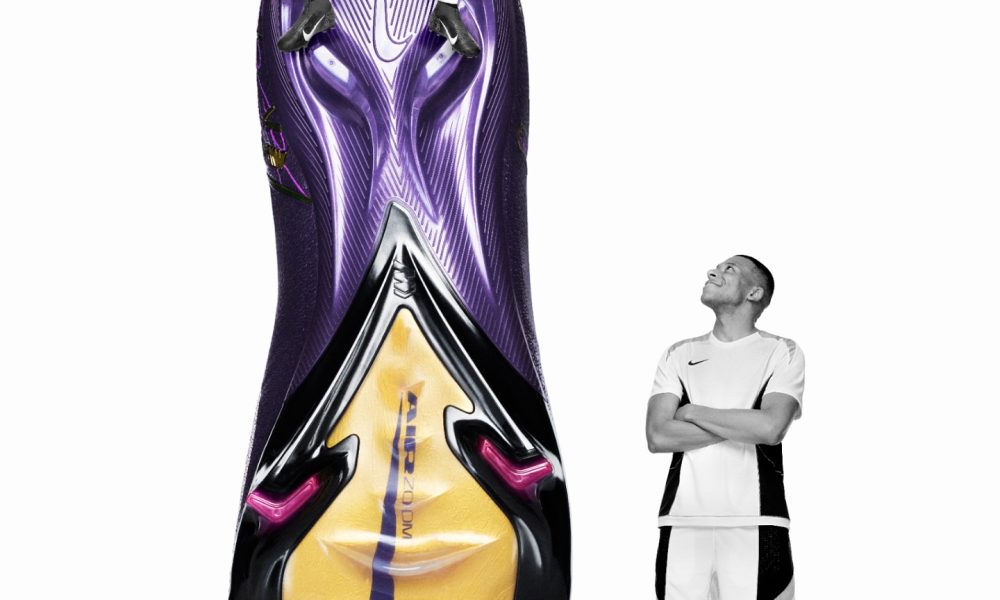 has always dreamed in Mercurial. Now his initials are on the boots.
The new Kyl…
has always dreamed in Mercurial. Now his initials are on the boots.
The new Kyl…
-
 Rec Sports3 weeks ago
Fargo girl, 13, dies after collapsing during school basketball game – Grand Forks Herald
-
 Sports3 weeks ago
Texas volleyball vs Kentucky game score: Live SEC tournament updates
-
 Motorsports3 weeks ago
Redemption Means First Pro Stock World Championship for Dallas Glenn
-
 Motorsports2 weeks ago
Jo Shimoda Undergoes Back Surgery
-
 NIL2 weeks ago
Bowl Projections: ESPN predicts 12-team College Football Playoff bracket, full bowl slate after Week 14
-
 Rec Sports2 weeks ago
Robert “Bobby” Lewis Hardin, 56
-
 Rec Sports2 weeks ago
How this startup (and a KC sports icon) turned young players into card-carrying legends overnight
-
 Motorsports5 days ago
SoundGear Named Entitlement Sponsor of Spears CARS Tour Southwest Opener
-
 NIL3 weeks ago
Indiana’s rapid ascent and its impact across college football
-

 Motorsports2 weeks ago
Pohlman admits ‘there might be some spats’ as he pushes to get Kyle Busch winning again