


NIL
The 10 Highest Paid Quarterbacks In College Football


Getty Image / iStockphoto

Audio By Carbonatix
In the NIL Era of college football, you’d better be willing to spend big if you’re a program looking to have a star quarterback calling the shots.
But just how much does it cost to acquire and keep one of those big-time QBs these days? Pete Nakos of On3 Sports has been ahead of the curve throughout the offseason, tracking down the answer to that question.
The result is a list of the highest-paid signal callers in college football, highlighted by some of the sport’s biggest stars, as well as some names you may not have expected.
10 Highest-Paid Quarterbacks In College Football
By now, everyone has heard about the massive NIL deal the Michigan Wolverines handed five-star freshman quarterback Bryce Underwood, backed by billionaire Larry Ellison
But Underwood doesn’t top the list of highest-paid signal callers. In fact, this average annual value falls right in line with some of the other top quarterbacks in the country.
In this list, we take a look at Underwood as well as nine other field generals who make up the 10 highest-paid QBs in the nation.
10) Josh Hoover – TCU
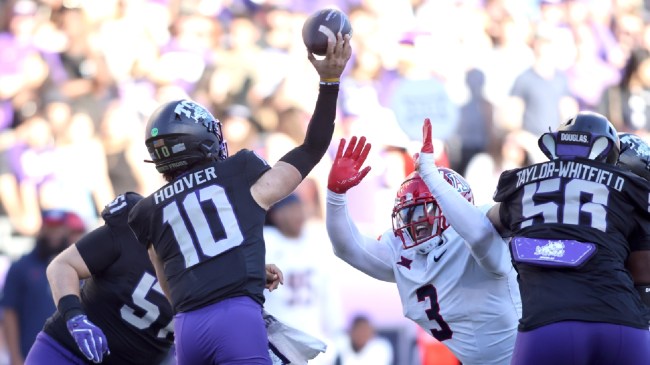
© Tim Heitman-Imagn Images
The first quarterback on our list is perhaps the least well-known. But don’t sleep on TCU redshirt junior Josh Hoover.
According to Nakos, Hoover is in line to make $1.75 million this year after the Horned Frogs fended off inquiries from Tennessee to get Hoover into the transfer portal.
That’s money well-earned, too. Last season, Hoover completed 66.5 percent of his passes for 3,949 yards, 27 touchdowns, and 11 interceptions. If Hoover can cut down on the turnovers in his third year as a starter for head coach Sonny Dykes, the Horned Frogs could well be a contender to win the Big 12 and make the College Football Playoff.
9) LaNorris Sellers – South Carolina
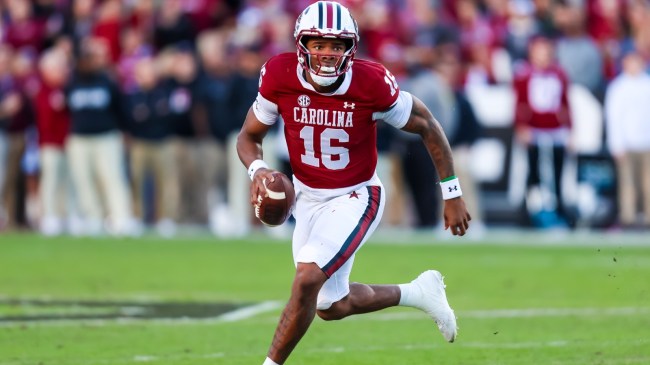
© Jeff Blake-Imagn Images
South Carolina quarterback LaNorris Sellers is everything that NFL scouts dream of. He’s big, strong, athletic, and intelligent. Which is exactly why Sellers is set to make around $1.8 million this year in hopes of leading the Gamecocks to the College Football Playoff.
Sellers was inconsistent as a redshirt freshman in 2024, but his good was very good. The Florence, South Carolina native threw for 2,534 yards, 18 touchdowns, and just seven interceptions while adding a further 674 yards and seven scores on the ground.
There’s a feeling around some in the college football world that he may not have even scratched the surface of his potential. If that’s true, Sellers could well more than repay the sizable payday he’s getting from the Gamecocks and their boosters.
8) Avery Johnson – Kansas State
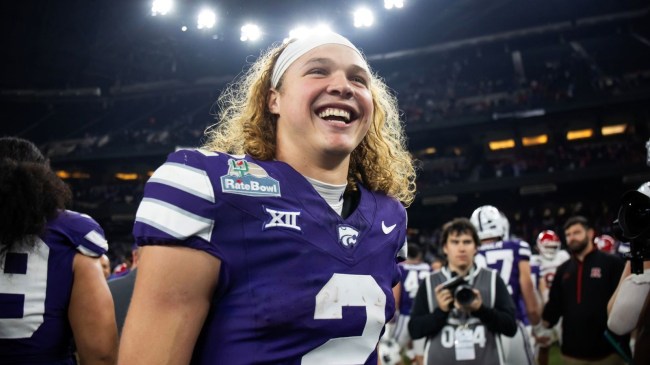
© Mark J. Rebilas/Imagn
Much like Sellers, Avery Johnson is an elite athlete who is still learning to use all of his tools. He came into Kansas State as a highly touted recruit and immediately saw the field as a true freshman.
Last year, Johnson took the starting job after Will Howard left Manhattan for Ohio State. He proceeded to throw for 2,712 yards, 25 touchdowns, and 10 interceptions with a further 605 yards and seven touchdowns on the ground.
There’s an expectation that he could be due for a big breakout in 2025, which is why the Wildcats are reportedly paying the star quarterback north of $2 million.
7) Diego Pavia – Vanderbilt
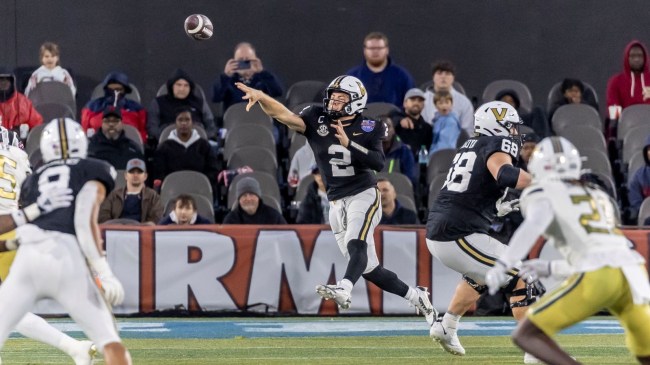
© Vasha Hunt/Imagn
Diego Pavia became the breakout star of the college football world a year ago when he led the Vanderbilt Commodores to their first win over Alabama in four decades.
Now, after winning a court battle with the NCAA, Pavia returns for what is, presumably, his final year of college football.
Like Johnson, the former JuCo product is set to make just north of $2 million this year, and the Commodores are hoping he can build upon a strong 2024 season, where he threw for 2,293 yards, 20 touchdowns, and four interceptions in addition to 801 rushing yards and eight scores.
6) John Mateer – Oklahoma
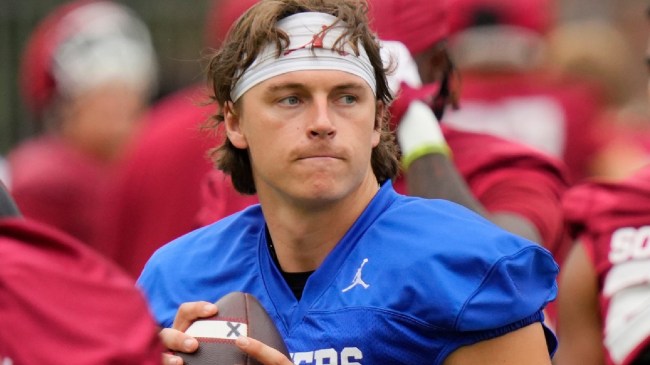
© DOUG HOKE/THE OKLAHOMAN / USA TODAY NETWORK via Imagn Images
According to Nakos, the Oklahoma Sooners are set to pay Mateer anywhere from $2.5 million to $3 million in 2025 after prying him away from Washington State.
Mateer, like offensive coordinator Ben Arbuckle, comes over from Pullman after lighting it up for 3,139 yards, 29 touchdowns, and seven interceptions a year ago.
The Texas native is now tasked with saving a Sooner program that has floundered a bit since Lincoln Riley left for USC. If he can have a big year, it may just keep head coach Brent Venables in a job and keep Oklahoma among the elites in college football.
5) Drew Allar – Penn State
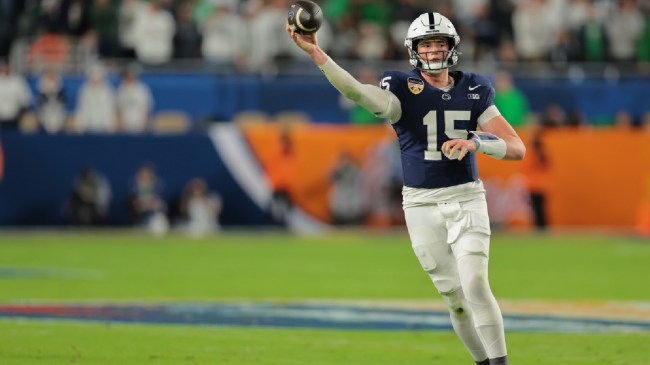
© Sam Navarro-Imagn Images
The lasting memory of Drew Allar for many fans nationally is the late interception he threw in a College Football Playoff semifinal loss to Notre Dame. But in two seasons at the helm for Penn State, Allar has thrown for 5,958 yards, 49 touchdowns, and just 10 interceptions.
Had he entered the NFL Draft earlier this year, there’s a good chance the former five-star would’ve been selected in the top 10.
Instead, he returned to the Nittany Lions and received at least a $3 million payday to do so. Allar and Penn State, who welcomed three transfer wide receivers to the fold in the offseason in hopes of fixing a previously broken position group, begin the season ranked No. 2 in the AP Poll and with serious national title aspirations.
4) Dylan Raiola – Nebraska
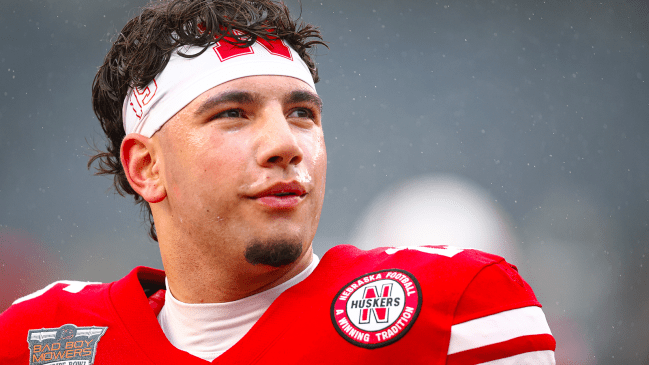
© Vincent Carchietta-Imagn Images
By now, every college football fan knows the name Dylan Raiola. The former five-star recruit was committed to Ohio State, then Georgia, before eventually signing with the Nebraska Cornhuskers on a deal that will see him make north of $3 million this season.
Raiola flashed at times as a true freshman starter for the Huskers. He threw for 2,819 yards, 13 touchdowns and 11 interceptions. But head coach Matt Rhule and the Nebraska faithful will be hoping for much more from him in year two, especially when he’s paid like one of the best quarterbacks in the nation.
Maybe the fact that Raiola stopped trying to look like Patrick Mahomes in the offseason will help him play more like Mahomes on the field.
3) Carson Beck – Miami
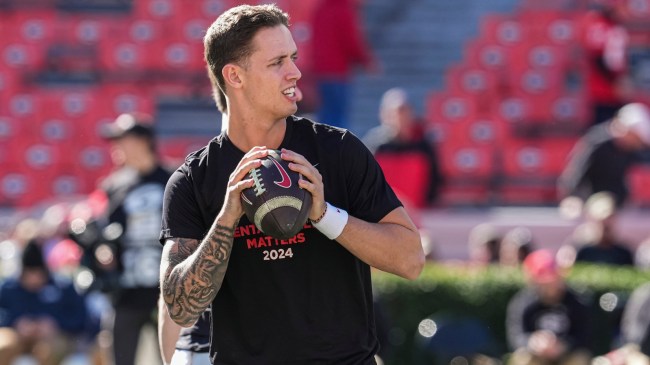
© Dale Zanine-Imagn Images
This time last year, Carson Beck was the starting quarterback for the Georgia Bulldogs, a Heisman Trophy favorite, and the leader of a team that many felt would win the national championship.
Instead, Beck and the Bulldogs struggled, capped by the quarterback tearing the UCL in his throwing arm in the SEC Championship Game. Gunnar Stockton then took over, and one month later, Beck was in the transfer portal.
The Miami Hurricanes then stepped in and over Beck a deal worth in the range of $3-3.2 million in 2025, with incentives that could reportedly take that number far higher. Will Beck live up to that investment? Only time will tell.
2) Bryce Underwood – Michigan
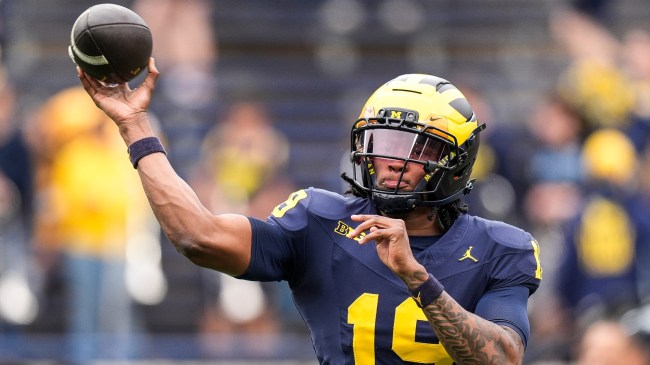
© Junfu Han/Imagn
The aforementioned prince who was promised, Bryce Underwood, is set to earn upwards of $3 million this season as part of a four-year deal he signed with the Michigan Wolverines.
The five-star recruit and Michigan native is currently locked in a battle with Fresno State transfer Mikey Keene to determine the Wolverines’ week one starter.
Underwood is as highly touted as they come at the quarterback position despite being extremely young for his class. If he comes anywhere close to living up to expectations in Ann Arbor, it will be money well spent.
1) Darian Mensah – Duke
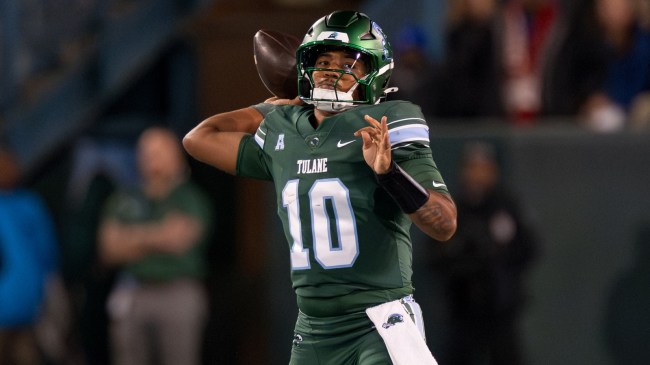
© Matthew Hinton-Imagn Images
Of course, as everybody expected, the highest-paid quarterback in college football in 2025 goes to…Duke?
That’s right. Mensah joins the Blue Devils and head coach Manny Diaz after a breakout redshirt freshman campaign for Tulane. The California native threw for 2,723 yards, 22 touchdowns, and six interceptions for a Green Wave team that spent most of the season on the fringes of the Top 25.
Mensah then signed one of the highest-paying NIL deals in the sport, which will pay him a minimum of $4 million over the next two seasons and up to $5 million per year with incentives.
By comparison, Oregon State is set to pay Maalik Murphy, whom Mensah is replacing, $1.5 million to be their starting quarterback in 2025. Murphy threw for 2,933 yards, 26 touchdowns, and 12 interceptions for the Blue Devils last season.
Continue Reading
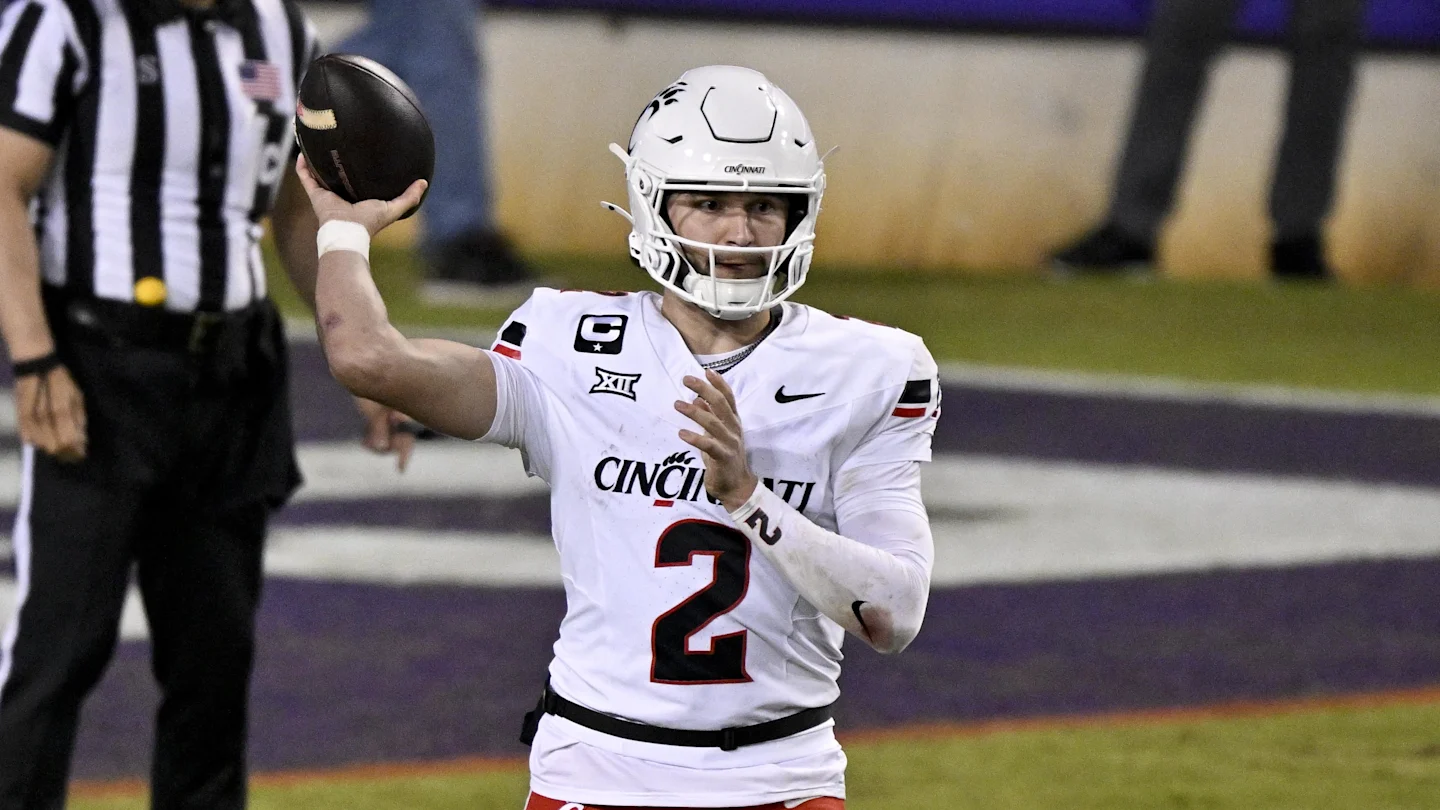
Texas Tech is quickly re-tooling as it looks to makes another College Football Playoff run in 2026. After falling in the quarterfinals too Oregon, the Red Raiders have already locked down a big win in the transfer portal, receiving a commitment from arguably the best available quarterback in the nation.
According to multiple reports, Texas Tech is expected to land Cincinnati transfer quarterback Brendan Sorsby in the portal. Sorsby was reportedly mulling between LSU and Texas Tech, and in the end it seems he was lured to Lubbock, opting to join Joey McGuire over the new-look, Lane Kiffin-led Tigers.
Related: Transfer Portal Tracker: Where Top Players in College Football Are Heading This Winter
Sorsby has been the Bearcats’ starting quarterback for the last two seasons. In 2025, he threw for 27 touchdowns and five interceptions while completing 61.6% of his passes for 2,800 yards. He also rushed for 580 yards and nine touchdowns this year.
Prior to his two-year stint at Cincinnati, Sorsby was at Indiana, where he started as a redshirt freshman in 2023. That year, he had 1,587 yards, 15 touchdowns and five interceptions.
With Behren Morton set to graduate, the Red Raiders had an immediate need at quarterback as they look to make a push for a national championship, thanks to a bevy of NIL funding. Morton’s departure opened the door for Sorsby to join one of college football’s most complete teams. With Sorsby under center, Texas Tech will likely be favorites to win the Big 12 again next season.
More College Football on Sports Illustrated


HOUSTON, TEXAS – OCTOBER 04: Behren Morton #2 of the Texas Tech Red Raiders celebrates after throwing a touchdown in the second quarter against the Houston Cougars at TDECU Stadium on October 04, 2025 in Houston, Texas. (Photo by Kenneth Richmond/Getty Images)
Getty Images
The college football transfer portal is in its winter 15-day window, and over 3,700 players – roughly one third of all college football players – have indicated that they might be on the move. While players will consider many aspects when deciding on their new team, expect taxes to be one of those considerations. This article discusses the tax treatment for NIL and how state income tax law is already becoming a factor.
NIL Tax Treatment
Section 61 of the Internal Revenue Code states that “gross income means all income from whatever source derived.” This income definition stretches all the way from baristas making coffee at their shop to small business owners producing goods and services to corporate executives making millions of dollars each year in salaries, bonuses, and equity compensation.
Section 61 also applies to college athletes earning income from their NIL. This income can span anywhere from actual cash payments received for NIL, all the way to payment in kind. For instance, an athlete who receives a free car lease will recognize the value of that car lease as income, even though no money was exchanged.
While all athletes will be required to pay taxes at the Federal level with a tax rate of up to 37%, athletes will face varying tax effects at the state level. Nine states in total – Alaska, Florida, Nevada, New Hampshire, North Dakota, Tennessee, Texas, Washington, Wyoming – do not impose a tax on income. Furthermore, as I discuss in a Forbes contributor article, Arkansas taxes income but provides a statutory exemption from state income taxation on NIL earnings, a policy designed to attract athletes to its state.
Importantly, NIL income is generally taxed based on where the income was earned, rather than where the player plays their games or practices. This notion differs from pro sports athletes, who are subject to the jock tax, which taxes the athletes based on the location of their duty days. While some college athletes will be subject to tax in varying jurisdictions because of their home domicile or where specific income was earned (i.e., a player who shoots a commercial in a different state), the vast majority of college athletes will primarily pay state income taxes in their school state jurisdiction.
College athletes face differing tax consequences if they were to play for a team in a low or no-tax jurisdiction versus a high-tax jurisdiction. As I detail in a Forbes contributor article, two highly touted players from the 2025 football season – Carson Beck of Miami and Jeremiah Smith of Ohio State – had an NIL valuation of $4.3 million and $4.2 million, respectively. Despite being only $100 thousand difference in compensation, Beck, the higher compensated player, actually pays less in taxes than Smith because Beck is not subject to state income taxes in Florida. Meanwhile, Smith must pay an estimated $145,534 in state income taxes for his NIL income.
Because of these nuances in the way states tax income, now that players can be compensated for their NIL, there are clear advantages to players choosing to play for a school in a low or no-income tax state versus a high-income tax state. This tax liability is even more impactful for players like Arch Manning, who, as I discuss in a Forbes contributor article, is the highest compensated college athlete as estimated by On3 NIL valuation and has tremendous tax benefits for playing for the University of Texas, since they are making millions of dollars. Thus, a few percentage points of their income going to pay for state income taxes can represent hundreds of thousands of dollars of tax liabilities.
Taxes Are Already Impacting The Transfer Portal Via NIL
As reported by Yahoo!Sports, over 3,700 college football players are in the transfer portal. Given that there are only about 10,000 college football players, this movement means that approximately one in three players will continue their college football careers for a different team.
Taxes are unlikely to be the primary reason why a player chooses a specific school. Furthermore, there are not enough roster spots on teams in the ten states that do not tax income for every single college football player to transfer to a team in a no-state income tax jurisdiction. Lastly, if donors in a high-state income tax jurisdiction want better players, they could simply donate more to compensate the players for having additional tax costs.
However, several key decisions have already unfolded that suggest that taxes could already be playing a role. For instance, the number one player in the transfer portal, according to ESPN, Brendan Sorsby, has chosen to take his talents to Texas Tech University, which is located in a state that does not tax income. Quarterback Josh Hoover and wide receiver Nick Marsh are transferring to Indiana University. While Indiana taxes income at the state level, the top rate is only 3%, which is among the lowest among states that tax income. Similarly, Rocco Becht, a quarterback who previously played for Iowa State, will now be playing for Penn State. Like Indiana, Pennsylvania imposes a very low state income tax rate of 3.07%.
These three examples are illustrative and do not necessarily imply that taxes were the reason why they chose those locations. Furthermore, other top players are transferring to states that are not low or no-income-tax-rate jurisdictions, such as Oklahoma State University. What is seemingly absent from this list are players who are choosing to go to high-tax rate jurisdictions like California, New York, or New Jersey.
As this record-breaking transfer portal continues to unfold, the era of NIL appears to have made its mark. Assuming taxes continue to be a significant factor in determining players’ locational decisions, we can expect to see many of the top NIL earners flock to these low or no-income tax rate jurisdictions. On the flip side, players who are still quality players but not earning the same amount of NIL income might end up at schools that were not previously available to them. Regardless of the outcome, the NIL-era appears to have dramatically reshaped college football, and it is unfolding right in front of us during this January transfer portal window.
Good morning, and thanks for spending part of your day with Extra Points. I hope you all had a wonderful and restful winter holiday season!
We’ve got several announcements of our own to make over the next few weeks, but there’s one I’d like to quickly mention now. We will be at this year’s NCAA convention! Both I and my colleague at NIL Wire, Kyle Rowland, will be in D.C. from Jan. 13-15. I’ve already made a few commitments to speak to graduate classes while I’m there, but if you’ll be in town and would like to catch up, drop me an email! We’ll see you there!
There will be plenty of time to talk about bylaw changes, collective bargaining, revenue generation and a whole bunch of administrative stuff. But today, I’d like to quickly talk about the Indiana Hoosiers.
Made in Chicago: Custom, Licensed Luggage Tags for Your Student Athletes
Elevate your team’s travel gear with a partner you can trust. Desert Cactus is an officially licensed licensee for over 625 colleges and universities, meaning we already know your brand standards. We produce high-quality, durable acrylic luggage tags right here in the Chicagoland area.
Perfect for student-athlete backpacks and travel bags, our tags are fully customizable with athlete names, jersey numbers, and specific sport designations. Get the professional look your program deserves from a proven industry partner.
For more information on bulk-order discounts, please contact Brad Schweitzer.
Because this isn’t supposed to be happening.
A theory from my pal Bud Elliott over at CBS could almost completely predict success in the four-team playoff era. It’s called the Blue Chip Theory, and it states that teams that win championships must have signed more four- and five-star recruits out of high school than three-star guys.
Almost every team to even make the four-team playoff field over the past decade recruited at that level, and every champion did.
And in the first year of the expanded College Football Playoff, the theory mostly held up. Ohio State (an elite recruiting program) defeated Notre Dame (another elite recruiting program), and late-round playoff spots went to teams like Oregon, Texas, Penn State and Georgia. A few teams that didn’t recruit at that level — like Indiana, SMU and Boise State — made the field, but they didn’t make it far.
But this year? The bracket looks different.
Before the season, CBS identified the 18 teams that recruited at an elite enough clip to have a Blue Chip Ratio over 50 percent. Those teams? Alabama, Ohio State, Georgia, Texas A&M, Oregon, Texas, LSU, Notre Dame, Oklahoma, Penn State, Miami, Florida, Auburn, Michigan, USC, Clemson, Tennessee and Florida State. Just short of that bar were South Carolina and Ole Miss.
At the time (July of 2025), here’s what Bud said about a team potentially beating that model:
❝
Will someone eventually bust the model?
At some point … probably?. A team with a high-40s BCR, a transcendent quarterback and a lot of health luck will probably win it all. It almost happened with Oregon and Marcus Mariota in 2014.
But who might it be this season? Ole Miss? South Carolina? Louisville? Utah? See, this is getting a little silly. The top 13 teams in the Vegas odds to win the national title are all BCR members.
Now, there were a lot of elite teams on that BCR list. Seven of them made the playoff, and two, Oregon and Miami, are in the quarterfinals. Ole Miss is just outside that range.
But Indiana is nowhere close. The Hoosiers signed just one blue-chip high school player in 2025, and just one more in 2024, well behind programs like Purdue, Minnesota and Rutgers. In terms of team talent composite, which adds up the recruiting ranking of everybody on the roster (including transfers), Indiana has just seven blue-chip players. Its roster rating is 72, behind teams including Boston College, Tulane, UTSA, Oregon State and Purdue.
Teams with those sorts of rosters, historically, battle for spots in the Little Caesar’s Bowl, not the College Football Playoff.
And Indiana didn’t just sneak into its spot in the Peach Bowl. It flat-out kicked the shit out of Alabama in the Rose Bowl after earning the top seed in the field. The Hoosiers are undefeated, with wins over Oregon and Ohio State.
So how is this possible? I freely admit I am not enough of a Certified Ball Knower to offer a completely conclusive answer, and I don’t think we have quite enough data to totally throw out the Blue Chip Ratio as a predictive tool. But I do have a few theories.
Indiana is old.
The Hoosiers have just one underclassman in their starting offensive 11 (a redshirt freshman) and two sophomores on defense. Many of the team’s most important players are redshirt juniors and seniors … dudes who have been in college weight programs and training systems for four or five years.
That last point is significant. I don’t think having a bunch of dudes who are 21, 22, 23, etc. on the roster matters as much as it does to have a team whose players have played a lot of college football. BYU never enjoyed much of bonus for having one of the oldest rosters in the country over the 2000s, because spending two years dodging Malaria in northern Brazil as a missionary doesn’t actually make you a better football player. But spending two years in the weight room, in the film room and on the training table can.
The concept of getting a roster “old” has been a college basketball buzzword for several years. If you’re a mid-major, the thinking went that it would be better to have five guys who aren’t as athletically gifted but are smart, disciplined and experienced than to have five guys who can jump out of the gym but have only been actually coached for, like, two months. When major upsets happened in March, the Cinderella often followed that profile: a scrappy team full of seniors.
Historically, that’s been more difficult to assemble in college football. But there may be some real truth to it. I wrote last year that the engine of Ohio State’s 2024 national title wasn’t so much transfers or elite underclassmen (although those both helped) as it was spending NIL money to bring back a lot of experienced players. It’s why Penn State was such a trendy national title pick this year too.
Indiana’s coaching staff really is just that much better than everybody else.
College football coaches have come out of nowhere to quickly bring lousy teams into contention. Bill Snyder at Kansas State, LaVell Edwards at BYU, Barry Alvarez at Wisconsin and Randy Walker at Northwestern have all done variations of this before …but what Curt Cignetti has done at Indiana is arguably the most impressive turnaround job in college football history.
How is he pulling this off? Well, for one, he’s been doing it a while. Cignetti isn’t a hotshot offensive wizard who looks like he’s barely old enough to buy a beer. He’s 64 years old. He’s coached QBs at NC State (including some dude named Phillip Rivers) and wideouts at Alabama under Nick Saban. Then, he’s won everywhere he’s been a head coach, from Division II IUP to Elon to James Madison.
To the extent there’s a Cignetti blueprint? It appears to be based on a relentless focus on the fundamentals, dramatically improving existing players and being elite at scouting and identifying potential. Via the Athletic:
❝
Cignetti chose experienced, productive transfers to join his James Madison players, and many adopted Cignetti’s mindset. Of the Hoosiers’ 34 core players on offense and defense, 23 are former transfers. The holdovers, long tired of Indiana’s losing history, happily bought in.
“There’s a certain kind of guy that I just won’t take,” Cignetti said. “A guy’s gotta love ball and have some ankle, knee, hip flexibility, and a certain level of athleticism. And then habits are important. How bad does he want it? … You’ve got a role in helping him develop. He’s got to be coachable, too.”
On the field, my read of what has made Indiana so dang good is that the players just don’t make mistakes. The Hoosiers are top in FBS in turnover margin, top in third down conversion percentage, third in penalty yards and seventh in yards per play. If you have experienced guys who are capable of making good decisions again and again and again … you’re going to always be in a position to win.
Or, as my pal Richard Johnson described it over at CBS:
❝
Indiana’s success is boring by design and, like all teams, a reflection of its head coach. It’s deliberate. It’s competent. The Hoosiers block, tackle and execute. They are vegetables in a society obsessed with the fast-food version of success
I think it’s a little bit of a misnomer to just say Indiana is the product of Cignetti taking all of his old James Madison players, as there are key contributors who came from other programs, like Maryland, Notre Dame and Cal. And the idea of “having an advantage by taking a bunch of Sun Belt dudes” only works if you’re really good at identifying and developing guys at a Sun Belt school.
I think two other factors are at play here: money and transfer portal evaluations.
Without public data, we can’t really say for sure, but I have yet to hear from an athletic director, reporter or industry person I trust that Indiana is rocking a team payroll anywhere near those of Ohio State, Oregon, Texas, Texas Tech or any other top spender. In On3’s preseason survey about team payrolls, Indiana didn’t get a single vote.
But Indiana has made meaningful investments elsewhere. According to FY24’s MFRS reports (obtained and organized by the Extra Points Library), Indiana reported over $61 million in total operational expenses for football. That’s 13th in the country among public schools, more than Auburn, Oklahoma and Oregon.

Indiana spent big to keep Cignetti and his assistants, and it’s about to do it again. When the dust settles after this season, Cignetti and his staff will be among the very highest paid in the entire country. Couple that with what Indiana has invested in operations and staff, and you have a school that is just as committed to football success as the others on that top-15 list … even if it might not have a $30 million payroll.
I also suspect there is something to the idea that recruiting out of the transfer portal is really hard.
High school recruiting rankings are not perfect, but they’ve been highly predictive for the past 15 years, especially on the aggregate. High school recruiting rankings are a great way to see if a particular athlete has the physical measurables of a potential NFL draft pick and a good projection of how strong a college player he might become.
But transfer rankings? They’re a bit different.
If you have a kid who had high four-star measurables as a 17-year-old, but he hasn’t demonstrated those at the college level in two seasons, how do you evaluate his potential? Is he still a four-star? How much do you “ding” him for not meeting his previous development curve? And how do you project a very productive player at a lower level who is a few inches shorter and a few steps slower than the guys at the all-American camps?
Here’s an example. Let’s take last year’s transfer rankings. The No. 1 recruit, a “five star” on the 247 top transfer board, was Nico Iamaleava, who went from Tennessee to UCLA, and was … fine. (UCLA was not.) Fernando Mendoza, the guy who just won the dang Heisman Trophy, was fourth. But you could also find very productive Power 4 starters in the low 20s … and lots of guys who didn’t play much in between. That’s true at nearly every position group.

My hunch is that over time, the transfer rankings will become predictive. But if you have a coach who really is better at talent evaluation than his peers, it’ll show up in the portal compared to high school recruiting, where everybody has more data and more time. My gut is Indiana has that.
And also, Homefield Apparel.
That was probably worth at least three wins a season, right?
Play the Daily Challenge
|
CLUE #1 |
Despite being one of the most successful teams in FBS history, this program has a historical losing record against Duke, Indiana, Minnesota, Washington State and the Carlisle Indian School |
Get your next clue…or solve the puzzle!
NIL
College football transfer portal tracker: Trinidad Chambliss returning to Ole Miss if granted waiver

After a year at Wisconsin, Billy Edwards is heading back east.
The former Badger and Maryland Terrapin is signing with North Carolina. Edwards was Wisconsin’s Week 1 starter in 2025 but suffered a knee injury in the opener and made just one more appearance the rest of the season.
In 2024, Edwards was 273-of-420 passing for 2,881 yards, 15 TDs and nine interceptions.
Belichick and UNC added former South Alabama QB Gio Lopez via the transfer portal in the spring and, with Lopez expected to stay in Chapel Hill, he’ll compete with Edwards for the starting job.
Updated Jan. 4, 2026, 8:04 p.m. ET
The Florida football 2025 roster remains a work in progress.
Coming off a 4-8 season, changes are in store as the Florida Gators enter a new era under first-year coach Jon Sumrall.
Already, more than 20 Florida players have announced their intentions to enter the portal, including starting quarterback DJ Lagway, starting wide receiver Eugene Wilson III, starting tight end Hayden Hansen, starting safety Jordan Castell and starting defensive tackle Michai Boireau.
The FBS transfer portal opened Friday, January 2, and runs through Friday, January 16, a window in which players can officially be in contact with other schools. Florida players who are in the portal can re-sign with UF during that time or choose to sign with other schools.
Florida will likely be in the market for at least one more quarterback, along with help to fill holes on the offensive and defensive lines, at punter and kicker and in the secondary.
Transfer players Florida football is eyeing or has added from the portal
Baylor DB DJ Coleman
Coleman committed to Florida after his weekend visit on Sunday, January 4. A junior, the 6-1, 210-pound Coleman has posted 89 total tackles, 8 tackles for loss, 2 interceptions, 9 pass breakups, and one forced fumble in three seasons at Baylor.
Georgia Tech QB Aaron Philo
Philo is expected to commit to Florida after a weekend visit, according to multiple reports. He announced his intentions to enter the transfer portal on December 17 and has a connection with new UF offensive coordinator Buster Faulkner, having played under Faulkner for two seasons with the Yellow Jackets. The 6-foot-2, 220-pound Philo has thrown for 938 yards with 2 TDs to 3 interceptions over two seasons while rushing for 95 yards and 1 TD as the backup to starting Georgia Tech quarterback Haynes King. Philo plans to visit Florida this weekend according to Tyler Harden of 247Sports.
Georgia Tech WR Bailey Stockton
The 5-11, 185-pound Stockton plans to visit Florida this weekend with Georgia Tech teammate Aaron Philo, according to Tyler Harden of 247Sports. A sophomore, Stockton had 21 catches for 233 yards and 0 TDs last season.
Penn State OT Eagan Boyer
Florida is hosting Boyer on an official visit, according to Alan Trieu of 247Sports. The 6-foot-8, 300-pound Boyer appeared in eight games for the Nittany Lions in 2025, making one start. A redshirt freshman, Boyer has three years of eligibility remaining and has a connection with new UF offensive line coach Phil Trautwein, who coached at Penn State.
Penn State OL T.J. Shanahan Jr.
Shanahan is expected to visit Florida this weekend, according to a report from Tyler Harden of 247Sports. A redshirt sophomore with two years of eligibility remaining, the 6-4, 316-pound Shanahan began his career at Texas A&M before transferring to Penn State. An Orlando native, Shanahan was coached last season by former PSU and current Florida offensive line coach Phil Trautwein.
James Madison TE Lacota Dippre
Florida is hosting Dippre on an official visit on Saturday, Jan. 3, according to a report from 247Sports. A redshirt sophomore with three years of eligibility remaining, the 6-4, 253-pound Dippre had 17 catches for 192 yards and 3 TDs with JMU in 2025.
Georgia Tech C Harrison Moore
Moore entered the transfer portal on Saturday, January 3 and is considered a Florida target based on his relationship with new UF offensive coordinator Buster Faulkner. A sophomore, the 6-5, 300-pound Moore started eight games for the Yellow Jackets last season and hasn’t allowed a sack in 866 career snaps
Kentucky S Cam Dooley
The 6-2, 208-pound Dooley entered the transfer portal on Sunday, January 4. A sophomore with two seasons of eligibility remaining, Dooley appeared in 12 games with three starts for the Wildcats in 2025, recording 20 tackles, 1 forced fumble and 1 interception. He’s considered a Florida target based on his relationship with former UK turned Florida defensive coordinator Brad White and former UK turned Florida safeties coach Chris Collins.
Jacksonville State DE Emmanuel Oyebadejo
The 6-7, 295-pound Oyebadejo is set to visit UF’s campus this weekend, according to 247Sports. A redshirt junior, Oyebadejo posted 6.5 tackles for loss, 4.5 sacks and 2 forced fumbles for Jacksonville State in 2025.
New Mexico TE Dorian Thomas
The 6-foot-4, 239-pound Thomas is expected to visit UF’s campus, according to a report from Matt Zenitz of CBS Sports. A sophomore, Thomas finished the 2025 season with 56 catches for 560 yards and 4 TDs. He’s rated as the number two tight end in the 2026 transfer portal class by various recruiting websites.
Baylor DT DK Kalu
The 6-4, 309-pound Kalu is expected to visit UF’s campus this weekend, per a report from On3’s Corey Bender. A redshirt freshman, Kalu has appeared in three games and made one career start in two seasons at Baylor, recording a tackle against Air Force.
Cincinnati RB Evan Pryor
The 5-9, 195-pound Pryor is set to visit UF’s campus on Monday, per multiple reports. Pryor, a redshirt junior, rushed for 522 yards on 6.9 yards per carry with 3 TDs for the Bearcats last season.
Miami (Ohio) LB/DE Adam Trick
The 6-4, 242-pound Trick is set to visit Florida on Sunday, January 4, per a report from 247Sports. Trick posted 25 tackles, 8.5 sacks, 3 forced fumbles and an interception for the Red Hawks in 2025.
Wake Forest WR Micah Mays Jr.
The 6-2, 196-pound Mays is set to visit Florida this weekend, according to multiple reports. A former four-star recruit from The Benjiman School in North Palm Beach, Mays has recorded 34 catches for 520 yards and 4 TDs in two seasons with the Demon Deacons. A sophomore, Mays has two years of eligibility remaining.
Florida football players who have announced their return to UF for 2026
Florida football QB Tramell Jones Jr.
Jones announced his intentions to return to UF in a social media post on December 30. The 6-foot-0, 203-pound Jones appeared in two games for UF, completing 21 of 35 passes for 191 yards and 2 TDs. Jones will enter 2026 as a redshirt freshman with four years of eligibility remaining.
Florida football WR Dallas Wilson
Wilson announced his intentions to return in a social media post on December 31, citing a “revenge season.” In four games, the 6-2, 213-pound Wilson recorded 12 catches for 174 yards and 3 TDs in a season that was cut short due to a broken foot.
Florida football WR Vernell Brown III
Brown announced his intentions to return for his sophomore season in a social media post on December 26. The 5-foot-11, 178-pound Brown appeared in 10 games with six starts as a true freshman in 2025, earning freshman All-SEC honors with a team-high 40 receptions for 512 yards. Brown also proved valuable on special teams, adding 261 yards on punt and kickoff returns with a punt return long of 40 yards.
Florida football LB Myles Graham
Graham was one of the first UF players to announce his intentions to come back to Florida Victorious on Dec. 16. The 6-1, 228-pound Graham led UF in tackles (76) and tackles for loss (7) in 2025.
Florida football DB Cormani McClain
McClain announced his intentions to return to UF in a social media post on December 31. A redshirt sophomore and former 5-star recruit from Lakeland who transferred in from Colorado, McClain has recorded two career interceptions at UF, including one returned for a TD.
Florida football EDGE LJ McCray
McCray announced his intentions to return to UF to Florida Victorious on December 30. The 6-foot-6, 268-pound McCray, a former five-star recruit from Mainland High in Daytona Beach, appeared in just one game in 2025 before being sidelined with a broken foot. In 14 career games, McCray has recorded six quarterback hurries and half a sack. McCray will enter the 2026 season as a redshirt sophomore with three years of eligibility remaining.
Florida football LB Aaron Chiles
Chiles announced his intentions to return to Florida in a social media post on December 24. The 6-foot-3, 244-pound Chiles appeared in 25 games over two seasons with 3.5 career tackles for loss and 1.5 sacks. A sophomore and former Under Armour All-American, Chiles has two years of eligibility remaining.
Florida football DB Dijon Johnson
Johnson announced his decision to return to UF in a social media post on December 24. The 6-1 204-pound Johnson has made nine career starts over three seasons with three career pass breakups and one interception. A redshirt sophomore, Johnson has two years of eligibility remaining.
Florida football EDGE Kam James
James announced his decision to return to UF in a social media post on December 30. A junior with one year of eligibility remaining, the 6-6, 270-pound James has posted 7.5 career tackles for loss and 4.5 career sacks.
Florida football S Bryce Thornton
Thornton announced his intentions to return in a social media post on December 31. A junior, the 5-10, 213-pound Thornton has started 22 games over three seasons, recording four career interceptions and a fumble recovery returned for a TD.
Florida football LB Jaden Robinson
Robinson announced his intentions to return to UF in a social media post on January 1. A junior from Lake City, the 6-0, 226-pound Robinson has started 17 games over three seasons, recording 7.5 career tackles for loss and 5.5 career sacks.
Florida football OL Knijeah Harris
Harris has re-singed with Florida, according to a report from On3’s Pete Nakos. A junior, the 6-3, 313-pound Harris has started UF’s last 25 games at left guard. In 2025, Harris posted Pro Football Focus (PFF) pass blocking grade of 74.2 in 25 starts.
Florida football OL Roderick Kearney
Kearney announced his decision to return in a social media post on December 26. A former Under Armour All-American, the 6-foot-4, 310-pound Kearney appeared in seven games on offense and special teams last season. A redshirt sophomore, Kearney has two years of eligibility remaining and will have an opportunity to compete for the starting job at right guard vacated due to the departure of three-year starter Damieon George Jr.
Florida football WR TJ Abrams
Abrams announced his decision to return to Florida in a social media post on December 18. A redshirt freshman from Fort Myers, the 5-foot-10, 196-pound Abrams appeared in 10 games with one start in 2025, catching 13 passes for 201 yards.
Florida football DT Joseph Mbatchou
Mbatchou signed an NIL deal to return to Florida on December 24. As a true freshman last season, the 6-5, 300-pound Mbatchou appeared in eight games, making 11 tackles, including one tackle for loss.
Florida football OT Caden Jones
Jones signed an NIL deal to return to Florida on December 31. The 6-8, 333-pound Jones started 10 games at right tackle for the Gators in 2025.
Florida football players who have entered the transfer portal
Florida football DB Aaron Gates
In three seasons, Gates appeared in 18 games and recorded 34 tackles, four tackles for loss, four pass deflections, three fumble recoveries and an interception. The redshirt sophomore had a promising 2024 season, but suffered a season-ending shoulder injury against Miami this year.
Florida football EDGE Jayden Woods
Jayden Woods, the true freshman edge rusher, who earned All-Freshman SEC honors, plans to enter the portal, according to a report by On3sports. The 6-foot-3, 248-pounder appeared in all 12 games for Florida this season, which featured him totaling 28 tackles, five tackles for loss, 2.5 sacks and one interception. Woods, who has three years of eligibility remaining, was the first Gator true freshman to lead or co-lead in sacks since 1992.
Florida football DB Sharif Denson
The 5-foot-11, 195-pound Denson announced his intentions to enter the transfer portal in a social media post on Friday, December 26. A former Under Armour All-American from Bartram Trail High in Jacksonville, Denson made 17 starts in 36 games over three seasons at UF, recording 97 tackles, 6.5 tackles for loss, 2 sacks and 1 interception. A junior, Denson has one year of eligibility remaining. Denson announced his commitment to Ole Miss on Sunday, January 4.
Florida football WR Eugene Wilson III
The 5-10, 194-pound Wilson announced his intentions to enter the portal in a social media post on Wednesday, December 24. Wilson finished his UF career with 107 catches for 1,043 yards and 10 TDs. A redshirt sophomore, Wilson has two years of eligibility remaining. Wilson plans to visit Texas A&M and LSU, per a report from 247 Sports.
Florida football WR Naeshaun Montgomery
The 6-1, 189-pound Montgomery plans to enter the portal, according to a report from On3s Pete Nakos. A former Under Armour All-American, Montgomery appeared in four games for UF, making three catches for 26 yards. Montgomery preserved his redshirt by appearing in just four games and has four years of eligibility remaining.
Florida football DT Michai Boireau
The 6-foot-5, 349-pound Boireau announced his intentions to enter the portal in a social media post on Thursday, Dec. 18. Boireau appeared in 21 games with nine starts for UF over two seasons, recording 35 tackles, 2 sacks and a game-winning interception against Mississippi State.
A sophomore, Boireau has two years of eligibility remaining. According to CBS Sport’s Matt Zenitz, Boireau plans to visit Ole Miss, Arkansas, Georgia Tech and Kentucky.
Florida football TE Hayden Hansen
The 6-8, 269-pound Hansen announced his intentions to enter the transfer portal in a social media post on Thursday, Dec. 18,
Hansen made 34 starts over the last three seasons at UF, recording 57 catches for 611 yards and 5 TDs. This past season, Hansen had 30 catches for 254 yards and 2 TDs. A redshirt junior, Hansen has one year of eligibility left. Hansen announced his commitment to Oklahoma on Sunday, January 4.
Florida football LB Grayson ‘Pup’ Howard
The 6-4, 236-pound Howard announced his intentions to transfer in a social media post on Wednesday, Dec. 17. Howard appeared in 12 games over two seasons for UF, totaling 41 tackles, 2 tackles for loss, 2 fumble recoveries and 1 fumble recovery. He started nine games in 2024 but appeared in just three games in 2025 due to an ankle injury. A redshirt junior, Howard has just one year of eligibility remaining.
Florida football WR Tank Hawkins
The 5-10, 178-pound Hawkins announced he’s entering the transfer portal in a social media post on Wednesday, Dec. 17.
Hawkins appeared in 11 games over two seasons for UF, recording 12 catches for 116 yards and 1 TD. He opted out of UF’s final four games of the 2025 season to preserve his redshirt and as a redshirt freshman has three years of eligibility remaining.
Florida football WR Aidan Mizell
Florida redshirt sophomore wide receiver Aidan Mizell announced his intentions to enter the portal in a social media post on Tuesday, Dec. 16.
The 6-2, 185-pound Mizell, from Boone High in Orlando, appeared in 21 games over three seasons with three starts, finishing with 36 catches for 379 yards and 3 TDs. He has two years of eligibility remaining.
Florida football QB DJ Lagway
Lagway announced his intentions to transfer on Monday, Dec. 15, in a social media post. A 2023 Gatorade High School player of the year from Willis High School in Willis, Texas, the 6-3, 247-pound Lagway went 10-9 as a starter for Florida, passed for 4,179 yards over two seasons with 28 TDs to 23 interceptions. Lagway also rushed for 237 yards and 1 TD for UF in two seasons.
A sophomore, Lagway has two seasons of eligibility remaining. Per CBS Sports’s Matt Zenitz, Lagway is expected to visit Baylor, Missouri, Louisville and Virginia.
Florida football S Jordan Castell
Castell announced his intentions to enter the portal in a social media post on Monday, Dec. 15. A three-year starter at safety for UF, the 6-2, 213-pound Castell recorded 168 career tackles, 12 pass breakups, 3 interceptions and 1 sack.
Florida football RB KD Daniels
Daniels announced his intentions to transfer in a social media post on Monday, Dec. 15. A redshirt freshman, the 6-0, 203-pound Daniels rushed for 185 yards on 39 carries with 2 TDs over two seasons at UF.
A former 5A Mississippi Mr. Football from West Point, Mississippi, Daniels has three years of eligibility remaining.
Florida football WR Muizz Tounkara
Tounkara announced his intentions to enter the transfer portal shortly after UF’s season ended on Nov. 29. As a 6-3, 208-pound true freshman receiver from League City, Texas, Tounkara appeared in eight games for UF in 2025, finishing the year with two catches for 12 yards.
Florida football TE Amir Jackson
Florida football tight end Amir Jackson announced his intentions to enter the transfer portal, according to a social media post. A redshirt freshman, the 6-5, 235-pound Jackson appeared in 12 games for UF in 2025, finishing with three catches for 29 yards and a TD. He has three years of eligibility left. According to reports, Jackson was expected to re-sign with UF once the portal opens.
Florida football DL Tarvorise Brown
A JUCO transfer, Brown announced his intentions to enter the transfer portal on Dec. 10. The 6-foot-7, 296-pound Brown provided depth on UF’s defensive line over the last two seasons, appearing in six games.
Florida football WR Mike Peterson Jr.
A freshman walk-on and son of UF edge rushers coach Mike Peterson, the 6-1, 164-pound Peterson didn’t appear in any games this season. A three-star recruit, Peterson had 24 catches for 258 yards and 4 TDs at Fort White High during his senior season in 2024.
Florida football S Josiah Davis
Florida football redshirt freshman safety Josiah Davis announced his intentions to enter the portal in a social media post on Monday, Dec. 15.
The 6-0, 200-pound Davis appeared in five games over two seasons on defense and special teams for UF. He has three years of eligibility remaining.
Florida football DB Teddy Foster
The 6-1, 188-pound Foster announced his intentions to transfer in a social media post on Tuesday, Dec. 16. Foster appeared in 11 games on defense and special teams over two seasons at Florida, recording five tackles.
A redshirt freshman, Foster has three years of eligibility remaining.
Florida football OL Marcus Mascoll
The 6-5, 308-pound Mascoll announced his intentions to transfer in a social media post on Wednesday, Dec. 17. Mascoll did not appear in any games over two seasons at Florida. A four-star recruit from Snellville, Ga., Mascoll has three years of eligibility remaining following his redshirt freshman season.
Florida football CB Jamroc Grimlsey
The 6-2, 198-pound Grimsley announced his intentions to enter the portal in a social media post on Wednesday, Dec. 17.
Grimsley appeared in five games over two seasons, making one start and recording one tackle. A redshirt freshman, Grimsley has three years of eligibility remaining.
Florida football WR Jackson Wade
The 5-11, 185-pound Wade, a walk-on and special teams contributor, announced his decision to enter the portal in a social media post on Monday, December 22. Wade appeared in 16 games over two seasons for UF, making one catch for 10 yards. A redshirt sophomore, Wade has two years of eligibility remaining.
Florida football OL Noel Portnjagin
The 6-foot-5, 306-pound Portnjagin, from Karlsruhe, Germany, announced his intentions to enter the transfer portal in a social media post on Tuesday, December 23. A redshirt freshman, Portnjagin appeared in one game in two seasons at UF, playing five snaps in the 2024 Gasparilla Bowl against Tulane. A redshirt freshman, Portnjagin has four years of eligibility remaining.
Florida football K Evan Noel
Noel announced his intentions to enter the transfer portal in a social media post on December 31. Coming out of Bay St. Louis, Miss., with a five-star kicking rating, Noel spent his freshman season in 2025 backing up Trey Smack and did not appear in any games for UF in 2025.
Florida football RB Treyaun Webb
Webb announced his decision to enter the transfer portal in a social media post on December 31. The 5-11, 217-pound Webb has missed most of the last two seasons with a hamstring injury. In 15 career games at UF, Webb rushed for 256 yards on 47 carries with 3 TDs.
Florida football OL Enoch Wagnoy
A former top 50 offensive tackle recruit, the 6-7, 333-pound Wagnoy didn’t appear in a game in two seasons at UF. A redshirt freshman, Wagnoy has three years of eligibility remaining.
Florida football RB Ja’Kobi Jackson
Jackson announced he’s entering the portal after receiving a waiver to play for the 2026 season. In two seasons at UF, Jackson rushed for 618 yards and 7 TDs. He was limited to just four games in 2025 due to injury, rushing for 98 yards on 27 carries.
Florida football P Hayden Craig
Craig has entered the portal, according to a report from 247Sports. As a true freshman last season, Craig backed up Florida starting punter Tommy Doman. A five-star punter per Kohls kicking camp, the 6-1, 208-pound Craig has four years of eligibility remaining.
Florida football LS Mack Mulhern
Mulhern has entered the portal, according to a report from 247Sports. As a true freshman last season, the 6-1, 225-pound Mulhern backed up starting long snapper Rocco Underwood. Rated the number two long snapper in the country as a high school senior by Kohls kicking camp, Mulhern has four years of eligibility remaining.
Kevin Brockway is The Gainesville Sun’s Florida beat writer. Contact him at kbrockway@gannett.com. Follow him on X @KevinBrockwayG1. Read his coverage of the Gators’ national championship basketball season in “CHOMP-IONS!” — a hardcover coffee-table collector’s book from The Sun. Details at Florida.ChampsBook.com
This story was updated with new information
Georgia’s premature exit from the College Football Playoff wasn’t the conclusion any of us wanted for the 2025 season. For a third straight year, the Bulldogs will miss the national semifinals.
That qualifies as a bit of a slide for a program that previously won back-to-back national championships.
How does UGA prevent further regression? I think the remaining teams in the College Football Playoff provide clues.
Ole Miss, which beat UGA in the Sugar Bowl, is arguably the SEC’s most aggressive team when it comes to the transfer portal. It’s also been a prodigious NIL fundraiser. Given those facts, it’s probably not a coincidence the Rebels are having their best season in modern history.
Same goes for two of the other remaining CFP teams — Miami and Oregon, each of whom have become well-known in the NIL era for outbidding the competition for top players. Some say they’re trying to buy their way to a championship, but whatever they’re doing is working.
And when it comes to winning national championships, which is always the goal at Georgia, whatever the Bulldogs are doing isn’t working as well as it used to.
Would Kirby Smart consider marshaling the forces around UGA to be as aggressive with NIL and the transfer portal as some of the teams still alive for a national championship? We may be about to find out.
Check out the rest of our coverage below.
Trivia time
How many times has Georgia basketball scored at least 100 points this season?
Answer is at the bottom of the newsletter.
Georgia lands first transfer portal commitment
Georgia has made an addition to the 2026 roster, adding safety Khalil Barnes via the transfer portal.
Barnes took a visit to Georgia on Saturday. He will have one year of eligibility remaining.
The Clemson transfer was a multiyear starter for the Tigers. What’s more, Barnes played at North Oconee High School in Bogart. The Bulldogs have signed wide receiver Landon Roldan and outside linebacker Khamari Brooks in recent classes.
In three seasons at Clemson, Barnes notched 139 tackles, 7 interceptions and 6.5 tackles for loss. Ole Miss was the other program vying to sign Barnes in the transfer portal.
Georgia will see safety JaCorey Thomas move on to the NFL after this season. The Bulldogs also saw safety Kyron Jones miss the final eight games of the 2025 season because of a foot injury.
The Bulldogs bring back sophomore safety KJ Bolden. Georgia signed six defensive backs as a part of the 2026 recruiting cycle, with Jordan Smith, Zech Fort and Blake Stewart projecting as safeties.
Georgia football 2026 roster tracker
Committed from transfer portal
Entered transfer portal
Declared for NFL Draft
Season-long strengths play key role in ending Georgia’s season
From a statistical standpoint, the two things Georgia did best were convert on fourth down and score touchdowns in the red zone. Entering the Ole Miss game, the Bulldogs ranked first nationally in the former category and second in the latter.
But those two areas would go on to play a large role in ending Georgia’s season in the 39-34 loss to the Rebels.
The decision to go for it when facing a fourth-and-2 from its own 33-yard line in the fourth quarter was a disaster.
Center Malachi Toliver snapped the ball after the offense had rushed on the field to replace the Georgia punt team. It was a play that Georgia had run multiple times this season, including successfully against Mississippi State and Texas.
One key difference, though, was that Drew Bobo was the center in those wins. Toliver was starting in place of Bobo after the All-SEC center suffered a foot injury against Georgia Tech.
“The ball was not supposed to be snapped in that situation,” Smart said. “But that was on us as coaches. It was on me and our guys. It’s not on the players. And Gunner (Stockton) and those guys did a nice job executing it. But we did feel like we had lost momentum at that point, and the book says we needed to go for it.
Photo of the day

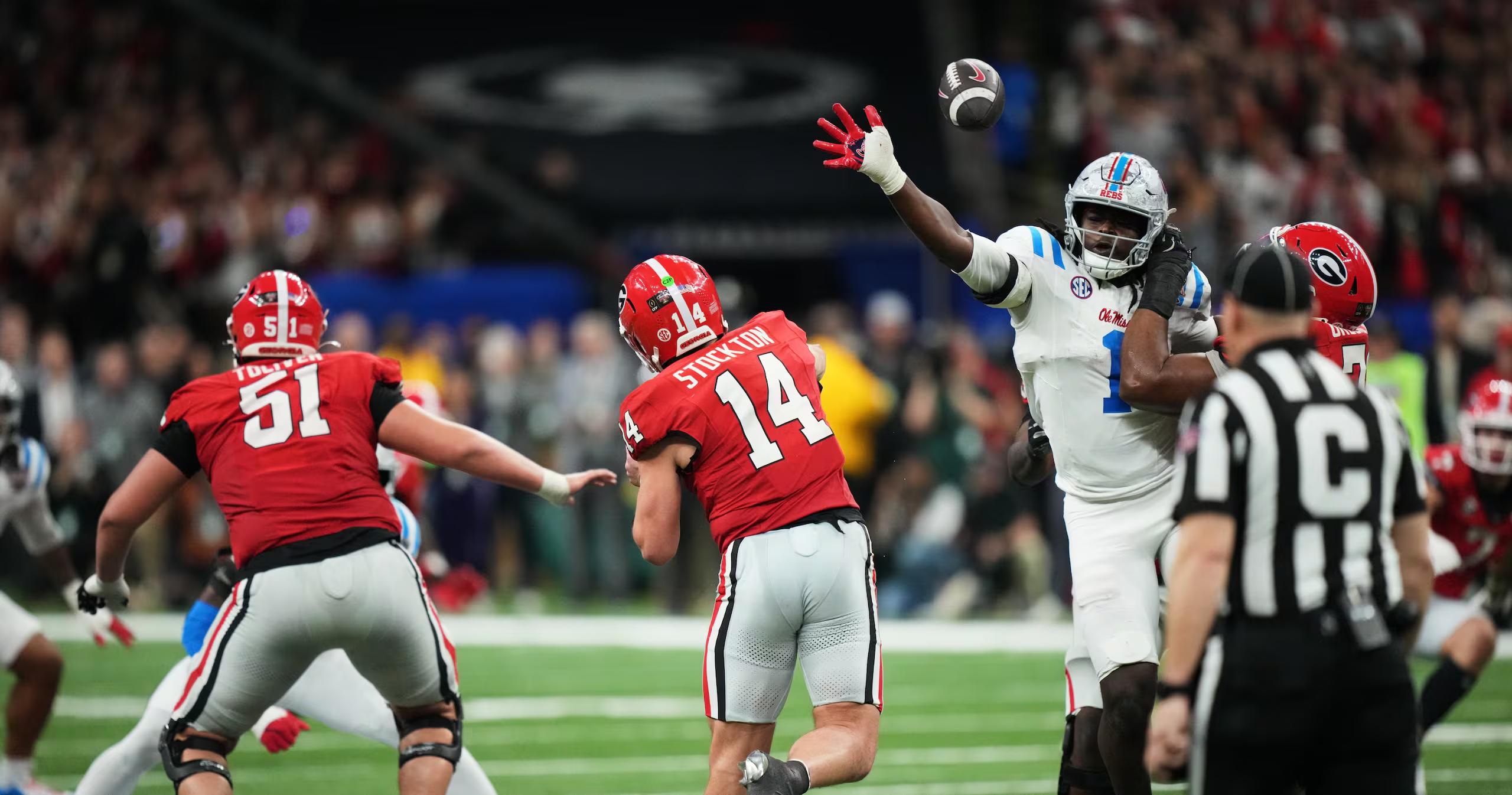
Georgia quarterback Gunner Stockton (center) passes under pressure from Ole Miss linebacker Princewill Umanmielen. (Mathew Hinton/Associated Press Photo Stream)
Quote of the day
Smart on the Sugar Bowl:
“It was an incredible college football game. It’s what the CFP was built for, to have battles like that.”
Georgia basketball validates hot start with SEC-opening OT win over Auburn
Georgia basketball dunked on its doubters by taking down Auburn 104-100 in overtime Saturday.
The No. 23-ranked Bulldogs improved to 13-1 overall with the win in the SEC opener against a battle-tested Auburn team.
But even more, Georgia validated the up-tempo style coach Mike White has shifted to this season, and the transfer players he brought in to run it.
White, in his fourth season as UGA’s head coach, said as much about a game he said he’ll “remember forever.”
Georgia won’t have to wait long to have a shot at topping it and earning more validation, as a trip to play defending national champion Florida (7 p.m., Tuesday) is on deck.
The Bulldogs will travel to Gainesville with an edge; winning the SEC opener against an Auburn program that had beaten UGA five times in a row and eight of the past 10 carries weight.
Trivia answer
Seven

Sports2 minutes ago
Pacific Beats Pepperdine to Remain Unbeaten at Home
Motorsports4 minutes ago
Fire destroys Jackson Township business Off the Grid Motorsports

Sports17 minutes ago
Committed to empower youth through power of sports: Lieutenant Governor

Sports19 minutes ago
Hawaii men’s volleyball team sweeps New Jersey Institute of Technology

Motorsports20 minutes ago
Frank Flud Moves To The Top Of The JST Motorsports Finish Following Post-Race Disqualification Of Yantis – Speedway Digest

Sports32 minutes ago
Erisman going to familiar Columbia College for track

Sports35 minutes ago
Firebirds Picked to Defend Title as 2026 CCIW Men’s Volleyball Favorite

Motorsports36 minutes ago
Defending Champ Larson Getting Refreshed Valvoline Scheme for 2026

Rec Sports37 minutes ago
How 3 girls’ teams captured state championships in 2025 – AAPS District News

NIL38 minutes ago
Texas Tech Lands Cincinnati Transfer QB Brendan Sorsby in Portal

Sports49 minutes ago
CIAA ANNOUNCES 2026 JOHN B. MCLENDON HALL OF FAME CLASS

Sports50 minutes ago
Wildcats of the Week: December 29-January 4

Motorsports51 minutes ago
Four NASCAR stars on drivers council named as new appointment made – Motorsport – Sports

Sports1 hour ago
Registration Open for 2026 Duke Track & Field and Cross Country Camp

Sports1 hour ago
BRYANT VOLLEYBALL SIGNS KALIA ALVARADO TO CLASS OF 2030

Motorsports4 weeks ago
SoundGear Named Entitlement Sponsor of Spears CARS Tour Southwest Opener

Motorsports4 weeks ago
Donny Schatz finds new home for 2026, inks full-time deal with CJB Motorsports – InForum

Rec Sports4 weeks ago
David Blitzer, Harris Blitzer Sports & Entertainment

NIL4 weeks ago
DeSantis Talks College Football, Calls for Reforms to NIL and Transfer Portal · The Floridian
Sports4 weeks ago
Elliot and Thuotte Highlight Men’s Indoor Track and Field Season Opener

Motorsports4 weeks ago
JR Motorsports Confirms Death Of NASCAR Veteran Michael Annett At Age 39

Sports3 weeks ago
#11 Volleyball Practices, Then Meets Media Prior to #2 Kentucky Match

Motorsports4 weeks ago
Rick Ware Racing switching to Chevrolet for 2026

NIL4 weeks ago
Colleges ponying up in support of football coaches, programs
Sports4 weeks ago
West Fargo volleyball coach Kelsey Titus resigns after four seasons – InForum

Motorsports3 weeks ago
Nascar legal saga ends as 23XI, Front Row secure settlement

Sports3 weeks ago
Maine wraps up Fall Semester with a win in Black Bear Invitational

Motorsports3 weeks ago
Ross Brawn to receive Autosport Gold Medal Award at 2026 Autosport Awards, Honouring a Lifetime Shaping Modern F1

Motorsports3 weeks ago
Sunoco to sponsor No. 8 Ganassi Honda IndyCar in multi-year deal

Sports4 weeks ago
Women’s track and field athletes win three events at Utica Holiday Classic





-
 Motorsports3 weeks ago
Ross Brawn to receive Autosport Gold Medal Award at 2026 Autosport Awards, Honouring a Lifetime Shaping Modern F1
-

 Rec Sports2 weeks ago
Princeton Area Community Foundation awards more than $1.3 million to 40 local nonprofits ⋆ Princeton, NJ local news %
-
 NIL3 weeks ago
Downtown Athletic Club of Hawaiʻi gives $300K to Boost the ’Bows NIL fund
-
 NIL3 weeks ago
Kentucky AD explains NIL, JMI partnership and cap rules
-
 Sports3 weeks ago
Three Clarkson Volleyball Players Named to CSC Academic All-District List
-
 Sports3 weeks ago
Young People Are Driving a Surge in Triathlon Sign-Ups
-

 Sports3 weeks ago
Beach Volleyball Unveils 2026 Spring Schedule – University of South Carolina Athletics
-
 NIL3 weeks ago
Why the NIL era will continue to force more QB transfers
-

 Sports2 weeks ago
Badgers news: Wisconsin lands 2nd commitment from transfer portal
-

 Sports2 weeks ago
Is women’s volleyball the SEC’s next big sport? How Kentucky, Texas A&M broke through