Wrestling is different from most youth sports. There’s no teammate to share the moment with, no lineup to blend into, no one else on the mat when the whistle blows. Every win and every loss belongs to the athlete alone.
Because of that, wrestling parents often feel results more deeply. When another child is winning matches and their own child isn’t, it’s easy to start comparing — and even easier to assume that struggling means it’s time to try a different sport.
But in wrestling, early results are one of the least reliable indicators of long-term success.
Wrestling Exposes Development Gaps Early
In team sports, size, speed, or early maturity can be masked by teammates. In wrestling, they can’t. A stronger or more physically mature child often has a huge advantage at young ages. That doesn’t mean they’re more talented — it means they’re further along in development.
Many wrestlers who struggle early simply haven’t hit their physical or emotional growth phase yet. Strength, coordination, confidence, and mat awareness all come at different times. Comparing two wrestlers at age 9 or 11 ignores the fact that they may be years apart developmentally.
Early Wins in Wrestling Can Be Misleading
It’s common to see youth wrestlers dominate early — often because they’re bigger, stronger, or more aggressive. But wrestling evolves quickly. As athletes grow, competition tightens, technique matters more, and effort alone isn’t enough.
Many early “stars” plateau when physical advantages disappear. Meanwhile, wrestlers who struggled early often surge once their bodies and minds catch up — if they’re still in the sport.
Wrestling rewards persistence more than early success.
Why Parents Misread Losing in Wrestling
Because wrestling is one-on-one, losing can feel like a personal failure instead of part of development. Parents see their child’s hand not being raised and assume:
They’re not good at wrestling
They’re falling behind others
Another sport might suit them better
But losing in wrestling often means a child is learning hard lessons: how to handle pressure, how to problem-solve mid-match, how to keep competing when things don’t go their way. Those lessons don’t show up on a bracket — but they shape better wrestlers long-term.
Switching Sports Because of Losses Sends the Wrong Message
Changing sports solely because a child isn’t winning in wrestling teaches an unintended lesson: that struggle means failure, and that success should come quickly.
Wrestling is supposed to be hard. It’s supposed to challenge kids mentally and physically. Avoiding that challenge doesn’t build confidence — working through it does.
When kids are allowed to stay, improve, and grow at their own pace, they develop resilience that carries far beyond the mat.
What Wrestling Kids Need From Parents
Wrestlers don’t need comparisons — they already feel enough pressure stepping on the mat alone.
They need:
Encouragement after losses
Praise for effort and improvement
Patience during long learning curves
Support regardless of the result
When parents shift the focus from wins to growth, kids stay engaged. And wrestlers who stay engaged almost always improve.
The Truth About Wrestling Success
Wrestling success is rarely immediate. It’s built through repetition, patience, and perseverance. Some of the best wrestlers were not youth standouts — they were kids who stayed in the room, stayed coachable, and trusted the process.
Before assuming your child should quit wrestling because others are winning, remember this:
In a one-on-one sport, development matters more than early results.
If a wrestler is showing up, working hard, and still willing to compete — they’re exactly where they should be.
Apparently, this is becoming the standard at Hershey Bears games.
Published•Updated
We may have just seen the hockey fight of the year — and it didn’t even happen at an NHL game.
During an AHL match between the Hershey Bears and Cleveland Monsters on Saturday, youth players hit the ice at intermission for a quick mites game. But the crowd at the Giant Center got more than they bargained for.
At one point during the game, a fight broke out between two of the kiddos. The boys threw multiple haymakers as if they were auditioning for a role in a Slap Shot remake. After the player in blue wrestled the player in red to the ground, teammates got involved — attempting to push the blue player off their fallen comrade. That is until another blue player came in and body slammed the pile.
That’s when all hell broke loose. Suddenly, it was an all-out brawl of miniature hockey players punching and tackling each other onto the ice. At one point, a blue player got lost in the moment and started swinging on his own teammate.
Even a goalie got involved!
WATCH:
Not a referee in sight.
Here’s another angle, in case you can’t get enough:
I see promising hockey careers and a lot of missing teeth in their future.
Apparently, though, these sorts of brawls have become commonplace at Hershey Bears mites games. Check out this fight from Dec. 20.
In case you cared about the actual AHL game Saturday, the Bears got the win, 3-2, breaking a tie in the third period while short-handed.
But that’s not what any of the fans were buzzing about when they left the arena.
Youth artists who live in households or receive housing-related services managed by the Cullman Housing Authority are invited to take part in the National Association of Housing and Redevelopment Officials (NAHRO) “What Home Means to Me” poster contest. (Cullman Housing Authority)
CULLMAN, Ala. – Youth artists who live in households or receive housing-related services managed by the Cullman Housing Authority are invited to take part in the National Association of Housing and Redevelopment Officials (NAHRO) “What Home Means to Me” poster contest.
The contest is open to youth ages 5–18 and is part of a national program sponsored by NAHRO.
Since 2008, the competition has highlighted the artwork of children living in affordable housing, encouraging young artists to express what home means to them through original poster designs.
The contest is conducted in multiple rounds, beginning at the regional level. A total of 24 regional winners advance to the national competition, where 12 national winners are selected.
National winners have their artwork featured in NAHRO’s “What Home Means to Me” calendar the following year. Select winners also receive cash prizes and a trip to Washington, D.C.
Cullman Housing Authority officials encourage eligible youth and families interested in participating to visit the Cullman Housing Authority office at 408 Cleveland Ave. SW, Cullman, or call 256-734-6171 for complete contest guidelines and submission deadlines.
LEONARDTOWN, Md. — Student artists across Southern Maryland will soon have the chance to see their creativity displayed on gallery walls as the St. Mary’s County Arts Council prepares for Youth Art Month 2026, a celebration of young talent and arts education.
Youth Art Month, held each March, highlights the importance of visual arts in schools and gives children and teens an opportunity to showcase their work in a professional gallery setting. The annual exhibition is open to artists 18 and under who live in St. Mary’s, Calvert or Charles counties.
Organizers say Youth Art Month is designed to do more than display artwork; it aims to boost confidence, encourage self-expression and highlight the role of arts education in student development. The exhibit allows young artists to share their unique perspectives while engaging with the local arts community.
Submitted artwork must meet exhibition guidelines, including size limitations and family-friendly content. Students will be notified when artwork is ready for pickup following the close of the exhibition in early April.
The St. Mary’s County Arts Council, which hosts the event annually, works with educators, volunteers and community partners to support arts programming throughout the region and to ensure young artists have opportunities to learn, grow and be seen.
More information about submission requirements and scheduling appointments is available on the St. Mary’s County Arts Council Calls for Art website.
Related
Sophia Blackwell is a Lexington Park–based journalist who has called Southern Maryland home since 2011. A graduate of the University of Maryland, Baltimore County, she discovered her passion for journalism…
More by Sophia Blackwell
One of the wildest fights of the hockey season may have occurred during the intermission of an American Hockey League game between the Hershey Bears and the Cleveland Monsters.
The Bears’ “Mites on Ice” segment features youth hockey players competing against each other during intermission. However, competitive play turned into an all-out brawl involving players from the Central Penn Panthers Youth Ice Hockey Club.
CLICK HERE FOR MORE SPORTS COVERAGE ON FOXNEWS.COM
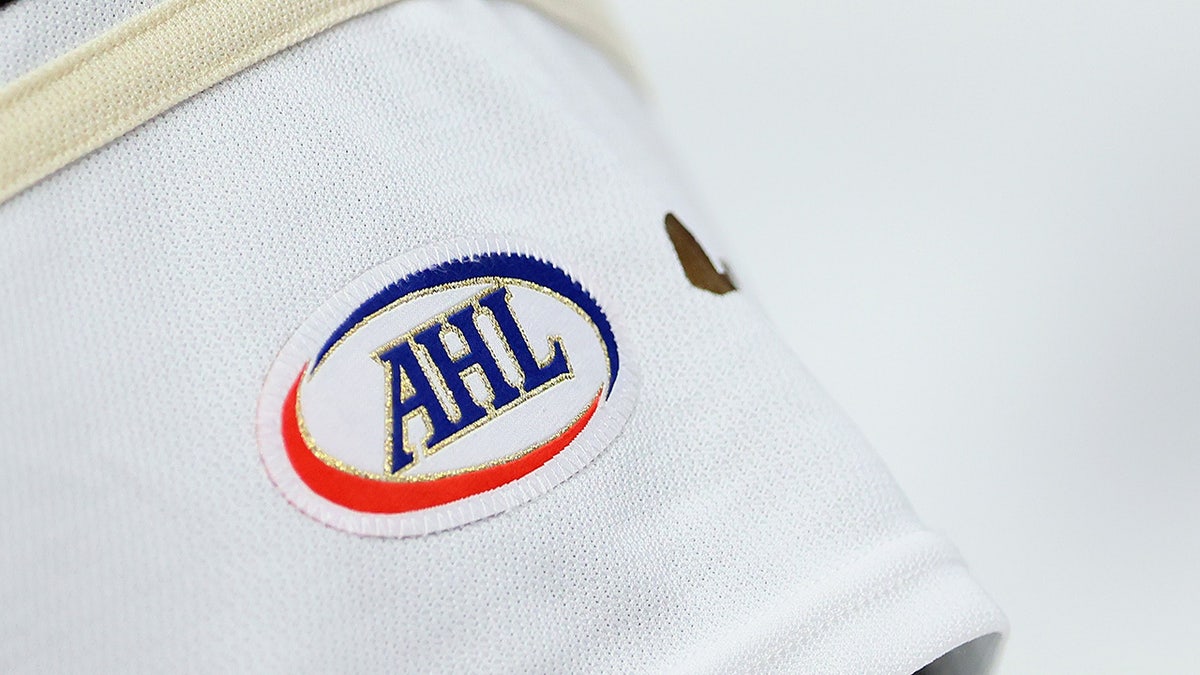
A closeup of an American Hockey League logo during the game between the Hershey Bears and the Rockford IceHogs at the Giant Center on Jan. 4, 2026 in Hershey, Pennsylvania.(Bruce Bennett/Getty Images)
The club said Sunday it was investigating the events that occurred leading up to the brawl.
“We have been made aware of an incident that occurred last night during the ‘Mites on Ice’ event between periods of the Hershey Bears game,” the organization said. “The safety, well-being, and positive experience of all participants—especially our young players—are of the utmost importance.
NHL’S SEATTLE KRAKEN RECEIVE MIXED REACTIONS TO PRIDE-THEMED LOGO AND JERSEYS
The Hershey Bears celebrate a goal by Louie Belpedio #7 which triggered the tossing of stuffed animals at the Giant Center on Jan. 4, 2026 in Hershey, Pennsylvania(Bruce Bennett/Getty Images)
“We are currently conducting an internal review to fully understand the circumstances surrounding the incident. This review will include gathering information from all relevant parties and assessing the situation thoroughly and responsibly.”
The club said it didn’t want to draw conclusions until the investigation was complete.
“At this time, we believe it is important to allow this process to take place before drawing conclusions. We appreciate the patience and understanding of our families, partners, and community as we work through this matter.”
It’s not the first time this season the Bears have had a “Mites on Ice” fight.
The Hersey Bears hoist the Calder Cup on June 24, 2024.(Travis Boyd/Special to the Daily News/USA TODAY NETWORK)
CLICK HERE TO DOWNLOAD THE FOX NEWS APP
Another brawl took place on Dec. 20 between youth hockey players. It didn’t appear anyone was injured.
Follow Fox News Digital’ssports coverage on X and subscribe to the Fox News Sports Huddle newsletter.
Ryan Gaydos is a senior editor for Fox News Digital.
Some of Chris Gorrell’s earliest memories are of snow, skiers and service.
Chris, the son of the late Paul Gorrell, accompanied his father decades ago when Paul helped grow Special Olympics Iowa’s annual Winter Games in Dubuque from a handful of participants to hundreds.
“When (the Dubuque-based games) first started, I was young — I was in grade school,” Chris said. “My earliest memories are of Mom and Dad taking me out of school so we would spend the day out at Sundown (Mountain Resort), just helping out with whatever they needed help with it.”
Special Olympics athletes, coaches and supporters return to Dubuque this week for the two-day Winter Games, held Monday and Tuesday, Jan. 12-13, at Sundown.
Special Olympics provides sports training and competition opportunities for children and adults with intellectual disabilities. This week, athletes will compete in alpine skiing, cross-country skiing and snowshoe racing. The annual gathering also includes ceremonies, a dance and parties.
“Our events provide a physical aspect (of development), and there also is a lot of socialization,” said Sydney Sloan, vice president of programs for Special Olympics Iowa.
After those initial years helping his father, Chris would grow up to join the Dubuque Police Department. He would help carry the torch that lights the flaming cauldron marking the start of the annual event.
“I always thought that I would have some involvement in (Special Olympics),” Chris said. “I knew I personally would probably never have the same level of involvement as my father.”
Paul Gorrell died in 2017 at age 64. He was posthumously inducted into the Special Olympics Iowa Hall of Fame a year ago, in recognition of his devotion to the Dubuque event.
Paul spent more than 25 years supporting the Dubuque-based winter games, helping the event grow from a few dozen participants the first year to more than 300 in the years before the COVID-19 pandemic.
“My dad would be the first to admit that, while he was framed as the face of the Winter Games, (each year’s event) was only (accomplished) with a great team around him,” Chris said.
Paul also served on the Special Olympics Iowa board of directors and was president of the board when the first Special Olympics USA National Games came to Iowa in 2006.
“When you get investment from people in the community like the Gorrell (family), it is very impactful,” Sloan said. “We’re largely a volunteer-based organization. We couldn’t hold our events without our volunteers.”
Chris said that during his early years of volunteering, he didn’t completely grasp Special Olympics’ role in expanding opportunities to people with disabilities.
“I was pretty young,” he said. “But as the years progressed, and you went out there (to Sundown to volunteer) you got to develop a connection with the athletes, the coaches and the other volunteers.”
Chris maintains Special Olympics connections built across decades.
“Lifelong bonds are formed with the athletes and the coaches,” he said. “Even now, I will be out shopping and I run into athletes that come up and give me a hug. They might share a story or two about Dad.”
Chris continues to advocate for supporting Special Olympics.
“The biggest thing I would tell people is if you if you want to do something that’s going to bring a smile to your face, helping with Special Olympics Iowa will do that,” he said.