
Sports
The competitive esports physiological, affective, and video dataset



Abstract
Background & Summary
PubMed
Google Scholar
MAPI Research Institute. Generalized Anxiety Disorder – 7 (GAD-7). Available at: https://eprovide.mapi-trust.org/instruments/generalized-anxiety-disorder-7 (accessed July 2023).Dweck, C. S. Mindset: The New Psychology of Success. Random House (2006).
-
1)
Crum, A. J., Salovey, P. & Achor, S. Rethinking stress: the role of mindsets in determining the stress response. J. Pers. Soc. Psychol. 104, 716 (2013).
- 2)
- 3)
-
4)
Bailey, H. Open Broadcasting Software. Retrieved from https://obsproject.com/ (2018).
Received:
Methods
MATH
Google Scholar
Participants
De France, K. & Hollenstein, T. Assessing emotion regulation repertoires: The regulation of emotion systems survey. Pers. Individ. Differ. 119, 204–215 (2017).
Ethics Information
The physiological and behavioral data, in a CSV format, constitute 366 GB of space32. The files are grouped into eight subcomponents with a maximum size of 50 GB due to OSF storage restrictions. The component’s name indicates for which study stage (S1 vs S3) and participants and which person they refer to. For instance, the name ‘Physio_S3_225_300’ indicates that the component included psychophysiological and behavioral data from Stage 3 for participants from 225 to 300. The component contains a set of CSV files for particular subjects. All psychophysiological and behavioral signals recorded during the experiment for each individual are available in a single CSV datafile named “S < stage_id > _P < participant_id >,” where “S” stands for study stage, “P” for participants, e.g., S1_P10.csv, or S3_P224.csv. The “< particpant_id >” is a natural number identifying a participant.
Procedure
Article
PubMed
PubMed Central
Google Scholar
Stage 1
Internal/external validity: our study offered a unique blend of internal and external validity through the use of controlled experiments paired with real-world outcomes. It included a thorough evaluation of affective and physiological dynamics and implemented a robust, theory-driven intervention.
Zhang, Z. et al. Multimodal spontaneous emotion corpus for human behavior analysis. In IEEE Conf. Comput. Vision Pattern Recognit. 3438–3446 (2016).Article
PubMed
Google Scholar
Stage 2
Article
MATH
Google Scholar
Article
PubMed
Google Scholar
Stage 3
Epel, E. S. et al. More than a feeling: A unified view of stress measurement for population science. Front. Neuroendocrinol. 49, 146–169 (2018).Kroenke, K., Spitzer, R. L. & Williams, J. B. The Patient Health Questionnaire-2: validity of a two-item depression screener. Med. Care 41, 1284–1292 (2003).Some information about our study is detailed in the published registered report6 – which presents hypothesis testing related to the effects of the Synergistic Mindsets Intervention – including a comprehensive description of the sampling procedures, study procedure, questionnaires, and physiological data. In this paper, we provide additional details on open-text responses, video recordings, and behavioral data. Furthermore, we include new information regarding data quality and present how the measures changed over the course of laboratory visits. Finally, to enhance the usability of the CEPAV dataset, we standardized and merged the physiological and behavioral data collected from three different devices (each with distinct data formats and sampling rates) and uploaded the resulting user-friendly files instead of the raw data.
Measures
Questionnaires
Article
PubMed
MATH
Google Scholar
Open-Text answers
You can also search for this author in
PubMed Google Scholar
Other self-reports
Demographics
Article
CAS
PubMed
PubMed Central
MATH
Google Scholar
Performance
Brytek-Matera, A. & Kozieł, A. The body self-awareness among women practicing fitness: a preliminary study. Pol. Psychol. Bull. 46, 104–111 (2015).
Video data
Video recordings
Crum, A. J., Akinola, M., Martin, A. & Fath, S. The role of stress mindset in shaping cognitive, emotional, and physiological responses to challenging and threatening stress. Anxiety Stress Coping 30, 379–395 (2017).
Gameplay recordings
Article
CAS
PubMed
PubMed Central
Google Scholar
Physiological measures
Impedance cardiography and electrocardiography
Article
CAS
PubMed
MATH
Google Scholar
Blood pressure
Shui, X. et al. A dataset of daily ambulatory psychological and physiological recording for emotion research. Sci. Data 8, 161 (2021).
Behavioral measures
Kroenke, K., Spitzer, R. L., Williams, J. B., Monahan, P. O. & Löwe, B. Anxiety disorders in primary care: prevalence, impairment, comorbidity, and detection. Ann. Intern. Med. 146, 317–325 (2007).
Data preprocessing
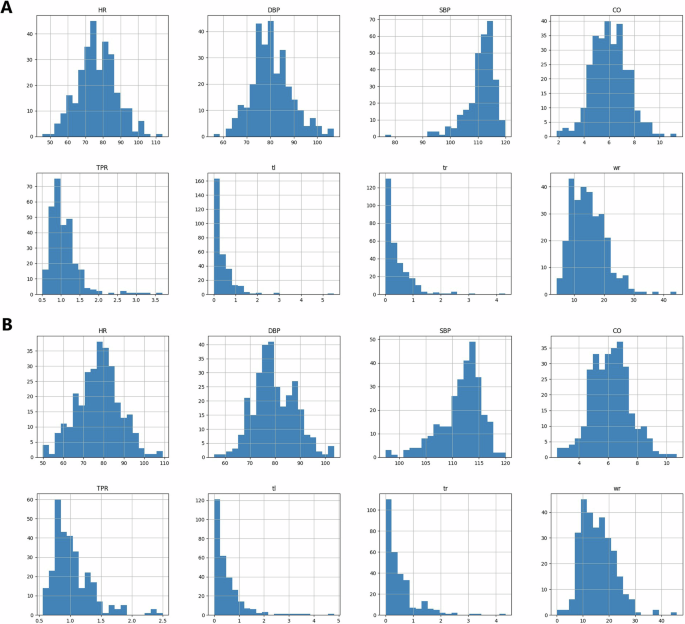
Koelstra, S. et al. Deap: A database for emotion analysis; using physiological signals. IEEE Trans. Affective Comput. 3, 18–31 (2011).Histograms Presenting Ranges of Means of Collected Signals. Panel A presents data from Stage 1; Panel presents data from Stage 3. HR – Heart rate, bpm, SBP – Systolic Pressure, mmHg; DBP – Diastolic Pressure mmHg; SV – Stroke Volume, ml; LVET – Left Ventricular Ejection Time, ms; PI- Pulse Interval, ms; MS – Maximum Slope; mmHg/s; CO – Cardiac Output; l/min; TPR – Total Peripheral Resistance Medical Unit, mmHg.min/l; TPRCGS – Total Peripheral Resistance CGS; dyn.s/cm5; wr – right wrist movement, custom units; tl – left thigh movement, custom units; tr – right thigh movement, custom units.Article
PubMed
PubMed Central
MATH
Google Scholar
PubMed Google Scholar
Maciej Behnke, Wadim Krzyżaniak, Patrycja Chwiłkowska, Szymon Jęśko Białek, Maciej Kłoskowski, Patryk Maciejewski & Kacper Szymański
Data Records
Dataset Structure
Self-reports and metadata
Ab. Aziz, N. A. K. T. et al. Asian affective and emotional state (A2ES) dataset of ECG and PPG for affective computing research. Algorithms 16, 130 (2023).
Video data
Melhart, D., Liapis, A. & Yannakakis, G. N. The arousal video game annotation (AGAIN) dataset. IEEE Trans. Affective Comput. 13, 2171–2184 (2022).
Physiological and behavioral data
Jankowski, K. S. Is the shift in chronotype associated with an alteration in well-being? Biol. Rhythm Res. 46, 237–248 (2015).
Single physiological file structure
Technical Validation
Missing data
Questionnaires reliability
Koldijk, S., Sappelli, M., Verberne, S., Neerincx, M. A. & Kraaij, W. The swell knowledge work dataset for stress and user modeling research. In Multimodal Interaction (2014).
Physiological data – qualitative validation
Physiological data – quantitative validation
Article
MATH
Google Scholar
Yeager, D. S. et al. A synergistic mindsets intervention protects adolescents from stress. Nature 607, 512–520 (2022).Li, J. Psychometric properties of Ten-Item Personality Inventory in China. Chin. J. Health Psychol. 21, 1688–1692 (2013).
Summary of previously completed analyses
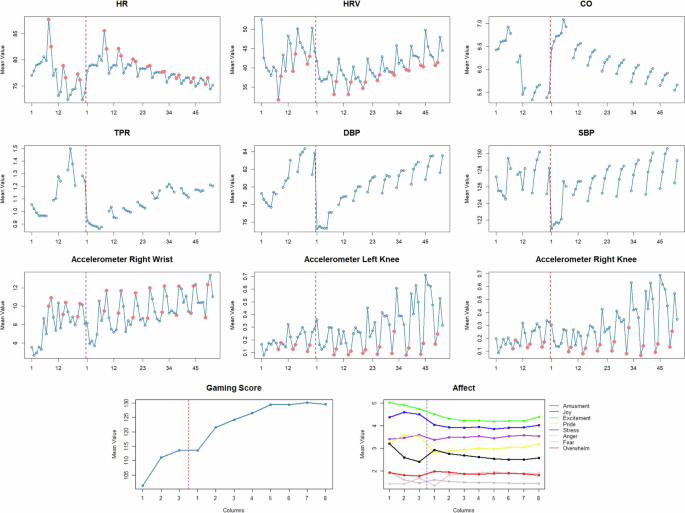
Summary of the physiological, affective, and behavioral activity during the competitive esports
Usage Notes
PubMed
Google Scholar
Declaration of Generative AI and AI-assisted technologies in the writing process
Christy, A. G., Schlegel, R. J. & Cimpian, A. Why do people believe in a “true self”? The role of essentialist reasoning about personal identity and the self. J. Pers. Soc. Psychol. 117, 386–416 (2019).
References
- Article
PubMed
Google Scholar - Article
PubMed
Google Scholar - Department of Psychology, Stanford University, Stanford, USAGosling, S. D., Rentfrow, P. J. & Swann, W. B. Jr. A very brief measure of the Big-Five personality domains. J. Res. Pers. 37, 504–528 (2003).
- Robins, R. W., Hendin, H. M. & Trzesniewski, K. H. Measuring global self-esteem: Construct validation of a single-item measure and the Rosenberg Self-Esteem Scale. Pers. Soc. Psychol. Bull. 27, 151–161 (2001).Moore, L. J., Vine, S. J., Wilson, M. R. & Freeman, P. The effect of challenge and threat states on performance: An examination of potential mechanisms. Psychophysiology 49, 1417–1425 (2012).
- Kroenke, K., Spitzer, R. L. & Williams, J. B. W. The PHQ-9: Validity of a brief depression severity measure. J. Gen. Intern. Med. 16, 606–613 (2001).Markova, V., Ganchev, T. & Kalinkov, K. Clas: A database for cognitive load, affect, and stress recognition. In Biomed. Innov. Appl. (2019).
- Article
Google Scholar
Other psychophysiological datasets related to affective manipulations exist (see Tables 1–3), but these datasets are usually related to one of the data types included in CEPAV. We reviewed existing openly available datasets of physiological responses to affective manipulations. Compared to the CEPAV strengths, we found that only four databases included physiological, behavioral, and video data along with individual differences measures8,9,10,11. Seven databases included data collected on multiple occasions10,12,13,14,15,16,17. Only one database included more participants than the CEPAV18 dataset. Finally, we found five datasets that included gaming, including simple labyrinth games9, racing games19,20 shooter games platform games19, FIFA21, and League of Legends16. Only one dataset included data on participants’ performance16, while other datasets used gaming as a situational context for the study. - Crucianelli, L., Enmalm, A. & Ehrsson, H. H. Interoception as independent cardiac, thermosensory, nociceptive, and affective touch perceptual submodalities. Biol. Psychol. 172, 108355 (2022).Hsu, Y. L., Wang, J. S., Chiang, W. C. & Hung, C. H. Automatic ECG-based emotion recognition in music listening. IEEE Trans. Affective Comput. 11, 85–99 (2017).
- De France, K. & Hollenstein, T. Emotion regulation and relations to well-being across the lifespan. Dev. Psychol. 55, 1768–1778 (2019).
- The upper-body recordings in an MP4 format, full HD resolution (1920 × 1080) constitute 820 GB of space31. The files are grouped into 19 components with a maximum size of 50 GB due to OSF storage restrictions. The component’s name indicates for which study stage (S1 vs S3) and participants and which person they refer to. For instance, the name ‘Video_S3_255_280’ indicates that the component included a video record from Stage 3 for participants from 255 to 280. To ease the video data analysis, we included the time intervals for each experimental epoch in the “CEPAV_data/video_timing” sheet24 (e.g., for Stage 1 for Participant 8, the baseline starts at 1:17 minutes of video).Article
CAS
PubMed
PubMed Central
Google Scholar - Hughes, B. M., Lü, W. & Howard, S. Cardiovascular stress-response adaptation: Conceptual basis, empirical findings, and implications for disease processes. Int. J. Psychophysiol. 131, 4–12 (2018).The CEPAV dataset is publicly available at the Open Science Framework (OSF) repository1.
- Article
PubMed
Google Scholar
You can also search for this author in
PubMed Google Scholar - Subramanian, R. et al. ASCERTAIN: Emotion and personality recognition using commercial sensors. IEEE Trans. Affective Comput. 9, 147–160 (2016).We evaluated the quality of the signal with the Signal to Noise Ratio (SNR). In order to calculate SNR across the diverse physiological signals, we used an algorithm based on the autocorrelation function of the signal, using the second-order polynomial for fitting the autocorrelation function curve34. We used this approach in our previous project18. The script we used for calculating SNR is available in the Code Component30 and project’s GitHub repository (https://github.com/psychosensing/CEPAV). The SNR coefficients for all channels for Stages 1 and 3 are available in the “CEPAV_data/SNR” sheet24.
- Article
MATH
Google Scholar
Soleymani, M., Lichtenauer, J., Pun, T. & Pantic, M. A multimodal database for affect recognition and implicit tagging. IEEE Trans. Affective Comput. 3, 42–55 (2011). - Abbey, J. D. & Meloy, M. G. Attention bydesign: Using attention checks to detect inattentive respondentsand improve data quality. J. Oper. Manag. 53, 63–70 (2017).
- Article
CAS
PubMed
PubMed Central
Google Scholar
Article
PubMed
Google Scholar - Article
CAS
PubMed
PubMed Central
Google Scholar - Schleider, J. L., Mullarkey, M. C. & Weisz, J. R. Virtual reality and web-based growth mindset interventions for adolescent depression: Protocol for a three-arm randomized trial. JMIR Res. Protoc. 8, e13368 (2019).Wylie, M. S. et al. Momentary emotion regulation strategy use and success: Testing the influences of emotion intensity and habitual strategy use. Emotion 22, 83–95 (2022).
- Given the expense associated with assembling comprehensive multimodal datasets, there is growing interest in reusing existing datasets, a practice that remains underutilized due to the scarcity of openly shared raw data. For data reuse, it is particularly important to share the raw data rather than the pre-processed data used for analysis, as raw data are needed in order to fully replicate analyses and harness the full potential of the data. This is particularly critical in fields like affective computing, where developing algorithms capable of understanding and adapting to human emotions relies on access to diverse and detailed descriptors of emotional responses. Such openness and transparency not only enhance the potential for interdisciplinary collaboration but also significantly enrich the resources available for affective science. By providing raw, unprocessed data, researchers enable more nuanced analysis, fostering advancements in understanding the complexities of affective phenomena.Ware, J. E. Jr. & Sherbourne, C. D. The MOS 36-item short-form health survey (SF-36): I. Conceptual framework and item selection. Med. Care 30, 473–483 (1992).
- You can also search for this author in
PubMed Google ScholarCorrespondence to
Maciej Behnke. - Behnke, M. et al. CEPAV Dataset, Raw_Physio Component. Open Science Framework https://doi.org/10.17605/OSF.IO/HKDUY (2024).Physiological and behavioral data were exported from the acquisition formats by the first author (MB). We used different acquisition software; therefore, the exported data had to be integrated into a common format. The exported TXT and CSV files were preprocessed using Python28,29 scientific libraries (e.g., pandas 2.2.2, numpy 1.26.4; see Code Availability, for detailed information). In addition to scripts for processing the typical data, we also added scripts for handling problematic cases and exceptions.
- In our initial publication, we tested the effects of the Synergistic Mindsets Intervention (SMI) compared to a control intervention6. The SMI was positively received, leading participants to adopt more advantageous stress mindsets, more favourable appraisals of the esports tournament, and an increased application of reappraisal strategies for emotion regulation. Despite these positive outcomes, the high-stakes nature of the esports competition was perceived as an enjoyable challenge rather than a negative stressor, reducing the potential for the SMI to significantly influence affective and physiological reactions. The absence of a negative physiological stress response meant there was very little for the intervention to modulate. Consequently, no significant changes were noted in affective responses or gaming performance due to the intervention. Access to the research code, dataset, and findings can be found elsewhere6.
- We converted the raw acquired data (obtained with proprietary acquisition software) into a consistent format and saved it in CSV files. All signals were resampled to 1 kHz, using the previous neighbor interpolation method. Signals from different devices were time-synchronized using synchronization markers generated by VU-AMS and Finometer devices during experiments. We marked the baselines, matches, and recoveries within the files. Finally, data across studies were exported to normalized form, consisting of a header, predefined file structure, and standardized subject naming convention. The description of labels used for tagging specific epochs is available in the “CEPAV_data” file24, the “epoch_name” sheet.
- You can also search for this author in
PubMed Google Scholar - Roksa, J. & Kinsley, P. The role of family support in facilitating academic success of low-income students. Res. High. Educ. 60, 415–436 (2019).
- Esports refers to competitive video gaming where individuals compete against each other in organized tournaments for prize money. Here, we present the Competitive Esports Physiological, Affective, and Video (CEPAV) dataset, in which 300 male Counter Strike: Global Offensive gamers participated in a study aimed at optimizing affect during esports tournament1. The CEPAV dataset includes (1) physiological data, capturing the player’s cardiovascular responses from before, during, and after over 3000 CS: GO matches; (2) self-reported affective data, detailing the affective states experienced before gameplay; and (3) video data, providing a visual record of 552 in-laboratory gaming sessions. We also collected (affect-related) individual differences measures (e.g., well-being, ill-being) across six weeks in three waves. The self-reported affective data also includes gamers’ natural language descriptions of gaming affective situations. The CEPAV dataset provides a comprehensive resource for researchers and analysts seeking to understand the complex interplay of physiological, affective, and behavioral factors in esports and other performance contexts.
- Saganowski, S. et al. Emognition dataset: Emotion recognition with self-reports, facial expressions, and physiology using wearables. Sci. Data 9, 158 (2022).Moore, L. J., Vine, S. J., Wilson, M. R. & Freeman, P. Reappraising threat: How to optimize performance under pressure. J. Sport Exerc. Psychol. 37, 339–343 (2015).
- MAPI Research Institute. Patient Health Questionnaire (PHQ). Available at: https://eprovide.mapi-trust.org/instruments/patient-health-questionnaire (accessed July 2023).van Lien, R., Neijts, M., Willemsen, G. & de Geus, E. J. Ambulatory measurement of the ECG T‐wave amplitude. Psychophysiology 52, 225–237 (2015).
- Wang, Z. et al. Reliability and validity of the Chinese version of Beck Depression Inventory-II among depression patients. Chin. Ment. Health J. 25, 476–480 (2011).
- MATH
Google Scholar
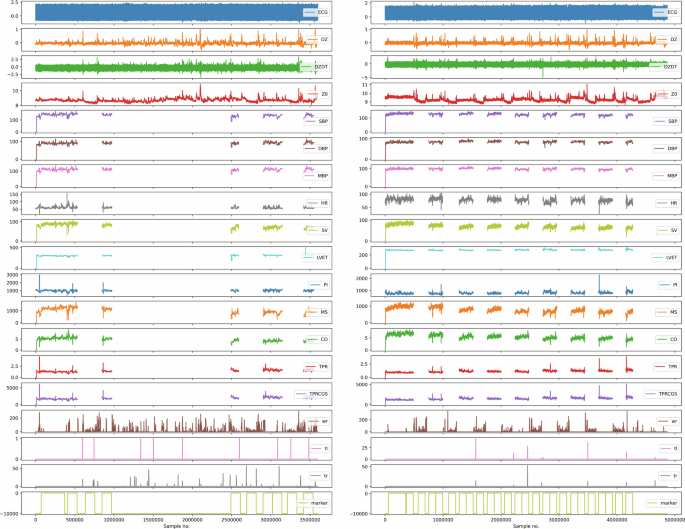
Visualization Single Physiological File Structure for Stage 1 (left panel) and 3 (right panel). ECG- electrocardiogram, mV; Z0 – Average thorax impedance, ohm; dZ – Change in impedance due to respiration and heartbeat, ohm; dZ/dt – Impedance CardioGram, ohm/s; SBP – Systolic Pressure, mmHg; DBP – Diastolic Pressure, mmHg; MAP- Mean Pressure, mmHg; HR – Heart rate, bpm; SV – Stroke Volume, ml; LVET – Left Ventricular Ejection Time, ms; PI- Pulse Interval, ms; MS – Maximum Slope; mmHg/s; CO – Cardiac Output; l/min; TPR – Total Peripheral Resistance Medical Unit, mmHg.min/l; TPRCGS – Total Peripheral Resistance CGS; dyn.s/cm5; wr – right wrist movement, custom units; tl – left thigh movement, custom units; tr – right thigh movement, custom units. - Ringeval, F., Sonderegger, A., Sauer, J. & Lalanne, D. Introducing the RECOLA multimodal corpus of remote collaborative and affective interactions. In Face Gesture Recognit. (2013).
- Article
PubMed
PubMed Central
MATH
Google Scholar - Meade, A. W. & Craig, S. B. Identifying carelessresponses in survey data. Psychol. Methods 17, 437–455 (2012).
- Article
CAS
PubMed
MATH
Google Scholar
Shifts in Mean Levels of Affective Measures. Red line separates Stage 1 and Stage 3 laboratory visits. HR – Heart rate, bpm, SBP – Systolic Pressure, mmHg; DBP – Diastolic Pressure mmHg; CO – Cardiac Output; l/min; TPR – Total Peripheral Resistance Medical Unit, mmHg.min/l. - O’Brien, S. T. et al. SEMA3: A free smartphone platform for daily life surveys. Behav. Res. Methods 1–16 (2024).Carstensen, L. L., Shavit, Y. Z. & Barnes, J. T. Age advantages in emotional experience persist even under threat from the COVID-19 pandemic. Psychol. Sci. 31, 1374–1385 (2020).
- Article
Google Scholar
Beili, Z. Introduction to the POMS scale and the short-form Chinese norm. J. Tianjin Sports Inst. 35–37 (1995). - Article
PubMed
Google Scholar
Article
Google Scholar - Raheel, A., Majid, M. & Anwar, S. M. DEAR-MULSEMEDIA: Dataset for emotion analysis and recognition in response to multiple sensorial media. Inf. Fusion 65, 37–49 (2021).
- Article
MATH
Google Scholar
Article
Google Scholar - During the preparation of this work, the authors used Grammarly and ChatGPT4.0 to improve the readability and language. After using this tool/service, the authors reviewed and edited the content as needed and take full responsibility for the publication’s content.Costa, P. & McCrae, R. Revised NEO Personality Inventory (NEO-PI-R) and NEO Five Factor Inventory (NEO-FFI). Professional manual. Psychological Assessment Resources (1992).
- Article
PubMed
MATH
Google Scholar
Moore, L. J., Wilson, M. R., Vine, S. J., Coussens, A. H. & Freeman, P. Champ or chump?: Challenge and threat states during pressurized competition. J. Sport Exerc. Psychol. 35, 551–562 (2013). - DOI: https://doi.org/10.1038/s41597-024-04364-z
- Behnke, M. et al. CEPAV Dataset, Videos Component. Open Science Framework https://doi.org/10.17605/OSF.IO/QKD5B (2024).
- Article
PubMed
MATH
Google Scholar
Fredrickson, B. L. Positive emotions broaden and build. Adv. Exp. Soc. Psychol. 47, 1–53 (2013). - You can also search for this author in
PubMed Google ScholarCudo, A., Montag, C. & Pontes, H. M. Psychometric assessment and gender invariance of the Polish version of the Gaming Disorder Test. Int. J. Ment. Health Addict. 1–24 (2022). - Schleider, J. L. et al. Acceptability and utility of an open-access, online single-session intervention platform for adolescent mental health. JMIR Ment. Health 7, e20513 (2020).
- Smerdov, A. et al. Collection and validation of psychophysiological data from professional and amateur players: A multimodal esports dataset. arXiv preprint arXiv:2011.00958 (2020).
- Kutt, K. et al. BIRAFFE2: A multimodal dataset for emotion-based personalization in rich affective game environments. Sci. Data 9, 274 (2022).Open Access This article is licensed under a Creative Commons Attribution 4.0 International License, which permits use, sharing, adaptation, distribution and reproduction in any medium or format, as long as you give appropriate credit to the original author(s) and the source, provide a link to the Creative Commons licence, and indicate if changes were made. The images or other third party material in this article are included in the article’s Creative Commons licence, unless indicated otherwise in a credit line to the material. If material is not included in the article’s Creative Commons licence and your intended use is not permitted by statutory regulation or exceeds the permitted use, you will need to obtain permission directly from the copyright holder. To view a copy of this licence, visit http://creativecommons.org/licenses/by/4.0/.
- Article
PubMed
MATH
Google Scholar
For open-text responses, we initially reviewed and corrected any typographical and spelling mistakes. Subsequently, we translated these responses into English using DeepL Translator (DeepL GmbH, Cologne, Germany). Two judges (KS, MB, MK, or SJB) then compared the English translations to the original Polish texts, making adjustments for any clear translation errors. Three judges deliberated on more complex issues and resolved them through consensus. - Article
CAS
PubMed
PubMed Central
MATH
Google Scholar
You can also search for this author in
PubMed Google Scholar - Article
PubMed
PubMed Central
Google Scholar
Thong, J. T. L., Sim, K. S. & Phang, J. C. H. Single‐image signal‐to‐noise ratio estimation. Scanning 23, 328–336 (2001). - Zamariola, G. et al. Relationship between interoceptive accuracy, interoceptive sensibility, and alexithymia. Pers. Individ. Differ. 125, 14–20 (2018).You can also search for this author in
PubMed Google Scholar - We collected the number of kills, kills’ assists, and deaths and the match scores as determined by the Counter-Strike: Global Offensive scoring system, which factors in the difficulty of the weapon used and the points earned for each enemy bot eliminated. A higher score reflects superior performance. Gamers’ tournament performance was primarily evaluated based on their total score, making it the main performance index. However, other metrics—kills, assists, and deaths—can provide insight into the participant’s strategy. For instance, a high total score paired with a high number of deaths may indicate a risk-taking approach. Analyzing which strategies proved optimal or suited individual gamers could be valuable for esports coaches, helping them tailor training and game plans effectively. In Stage 2, participants were asked to log their daily match scores, simulating the conditions of the upcoming tournament.Download references
- However, the dataset comes with certain limitations. First, this dataset cannot be employed to investigate differences between sexes, ethnicities, or between the group ages, as all participants were male Caucasian young adults. Second, our investigation was confined to affective reactions within a single esports (Counter Strike: Global Offensive) context. Third, as noted in the missing data section, the dataset lacks some data due to technical constraints (e.g., ICG missing due to electrode detachment), lack of consent to share data, and human errors (e.g., not starting data collection for accelerometers). Lastly, the dataset represents a secondary use of data initially collected for a previously published independent study.Accepted:
- We present questionnaires, open-text, other self-reported data, and auxiliary information about the participants in the “CEPAV_data” spreadsheet24. The file includes participants’ ID, sex, age, height, weight, experimental conditions, and questionnaire responses (the “self_reports” sheet). To make it easier to use the database, we also included averages for physiological and behavioral data from selected moments of the study in the file, which were used for the Summary of the Physiological, Affective, and Behavioral Activity During the Competitive Esports (Technical Validation section) and presented in Fig. 5 (the “physio_behav” sheet)24.Uusberg, A. et al. Appraisal shifts during reappraisal. Emotion 23, 1985–2001 (2023).
- Participant movement was non-invasively tracked using three tri-axial accelerometers (model wGT3X-BT, Actigraph, USA), placed on the thighs (thigh left and thigh right; TL & TR) next to the knee and the right wrist (WR), allowing for the continuous observation of physical activity and gestures during gameplay. All accelerometers were initialized before the participant’s arrival to collect raw acceleration data at 30 Hz with the same start time using ActiLife software (version 6.13.4). We used the measure of the vector magnitude for the given accelerometer for each 1-second interval extracted with the ActiLife software.Behnke, M., Krzyżaniak, W., Nowak, J. et al. The competitive esports physiological, affective, and video dataset.
Sci Data 12, 56 (2025). https://doi.org/10.1038/s41597-024-04364-z - Article
PubMed
MATH
Google Scholar - Park, C. Y. et al. K-EmoCon: A multimodal sensor dataset for continuous emotion recognition in naturalistic conversations. Sci. Data 7, 293 (2020).Cohn, M. A., Fredrickson, B. L., Brown, S. L., Mikels, J. A. & Conway, A. M. Happiness unpacked: Positive emotions increase life satisfaction by building resilience. Emotion 9, 361–368 (2009).
- Prospective Studies Collaboration. Age-specific relevance of usual blood pressure to vascular mortality: A meta-analysis of individual data for one million adults in 61 prospective studies. The Lancet 360, 1903–1913 (2002).Gualano, M. R., Lo Moro, G., Voglino, G., Bert, F. & Siliquini, R. Effects of Covid-19 lockdown on mental health and sleep disturbances in Italy. Int. J. Environ. Res. Public Health 17, 4779 (2020).
- Katsigiannis, S. & Ramzan, N. DREAMER: A database for emotion recognition through EEG and ECG signals from wireless low-cost off-the-shelf devices. IEEE J. Biomed. Health Inform. 22, 98–107 (2017).Goldberg, D. P. & Hillier, V. F. A scaled version of the general health questionnaire. Psychol. Med. 9, 139–145 (1979).
- Human-Technology Interaction, Eindhoven University of Technology, Eindhoven, The NetherlandsLawes, M., Hetschko, C., Schöb, R., Stephan, G. & Eid, M. The impact of unemployment on cognitive, affective, and eudaimonic well-being facets: Investigating immediate effects and short-term adaptation. J. Pers. Soc. Psychol. 124, 659–681 (2023).
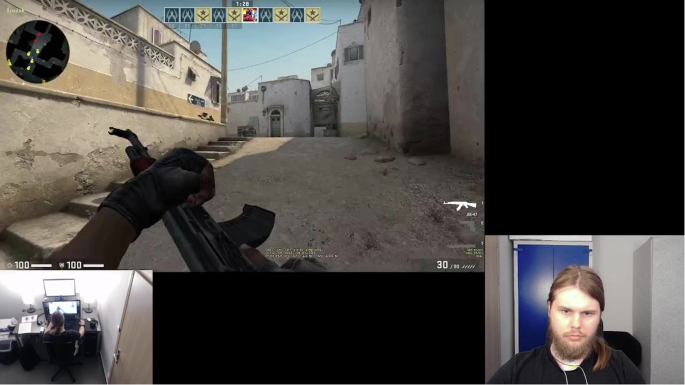
- Participants’ upper bodies were continuously captured on video using an HD camera positioned in between the monitors, utilizing the Open Broadcaster Software25. The camera was set approximately 65 cm away from the participants’ heads, with a recording at 30 FPS. We also captured the back view of the experimental view with the camera near the ceiling (Fig. 2). These recordings were primarily used to monitor the study’s progress and ensure participant safety.Medland, H., De France, K., Hollenstein, T., Mussoff, D. & Koval, P. Regulating emotion systems in everyday life: Reliability and validity of the RESS-EMA scale. Eur. J. Psychol. Assess. 36, 437 (2020).
- Article
Google Scholar
Affective science is an interdisciplinary field that draws upon methods and findings from psychology, cognitive science, neuroscience, computer science, biology, and other related fields to understand the complexities of affective phenomena and to determine how they influence human behavior. Multimodal data are needed to thoroughly investigate affective phenomena. Different scientific backgrounds equip researchers with unique skills for data collection. For example, psychologists excel in experimental designs, computer scientists excel in data mining from digital platforms, and biomedical researchers excel in collecting biological samples. Interdisciplinary teams leverage these diverse methodologies to approach research questions by collecting comprehensive multi-modal datasets. - Diener, E., Emmons, R. A., Larsen, R. J. & Griffin, S. The Satisfaction with Life Scale. J. Pers. Assess. 49, 71–75 (1985).Article
Google Scholar - The physiological data quality was assured by following recommendations in affective science33. First, the data were collected by experimenters who completed at least 30 hours of training in psychophysiological research provided by MB. Second, prior to performing preprocessing, the first author (MB) visually inspected all physiological signals. Before inclusion in the database, MB manually double-checked all datasets for missing or corrupted data.
Reprints and permissionsPanzeri, A. et al. Factors impacting resilience as a result of exposure to COVID-19: The ecological resilience model. PLoS One 16, e0256041 (2021).
Google Scholar
Article
PubMed
PubMed Central
Google Scholar
MATH
Google Scholar
Majka, E. A., Guenther, M. F. & Raimondi, S. L. Science bootcamp goes virtual: A compressed, interdisciplinary online CURE promotes psychosocial gains in STEM transfer students. J. Microbiol. Biol. Educ. 22, 10–1128 (2021).
CAS
PubMed
MATH
Google Scholar
PubMed Google ScholarArticle
MATH
Google Scholar
MATH
Google Scholar
PubMed Google ScholarPreece, D. A. et al. The Perth Alexithymia Questionnaire-Short form (PAQ-S): A 6-item measure of alexithymia. J. Affect. Disord. 325, 493–501 (2023).
PubMed
PubMed Central
MATH
Google Scholar
Article
MATH
Google Scholar
Google Scholar
Article
PubMed
PubMed Central
Google Scholar
PubMed
PubMed Central
MATH
Google Scholar
Ranganathan, H., Chakraborty, S. & Panchanathan, S. Multimodal emotion recognition using deep learning architectures. In Winter Conf. Appl. Comput. Vision (2016).
Google Scholar
Article
CAS
PubMed
MATH
Google Scholar
PubMed
PubMed Central
MATH
Google Scholar
Article
CAS
PubMed
MATH
Google Scholar
Google Scholar
Article
MATH
Google Scholar
Google Scholar
PubMed
MATH
Google Scholar
PubMed
Google Scholar
PubMed
Google Scholar
Fingerman, K. L. et al. Living alone during COVID-19: Social contact and emotional well-being among older adults. J. Gerontol. B 76, e116–e121 (2021).
Google Scholar
Gross, J. J. & John, O. P. Individual differences in two emotion regulation processes: Implications for affect, relationships, and well-being. J. Pers. Soc. Psychol. 85, 348–362 (2003).
MATH
Google Scholar
Article
PubMed
PubMed Central
MATH
Google Scholar
PubMed
PubMed Central
Google Scholar
CAS
MATH
Google Scholar
CAS
PubMed
PubMed Central
Google Scholar
PubMed
Google Scholar
Steger, M. F., Frazier, P., Oishi, S. & Kaler, M. The meaning in life questionnaire. J. Couns. Psychol. 53, 80–93 (2015).
PubMed
PubMed Central
Google Scholar
Becerra, R., Preece, D. A. & Gross, J. J. Assessing beliefs about emotions: Development and validation of the Emotion Beliefs Questionnaire. PLoS One 15, e0231395 (2020).
PubMed
MATH
Google Scholar
The sample consisted of 300 male players of Counter-Strike: Global Offensive (CS: GO), aged between 18 and 32 years, with a mean age of 21.95 years (SD = 2.29). Competitive experience varied within the group: 200 players (67%) had no experience, 76 (25%) had competed in local tournaments, 17 (6%) had participated nationally, and six (2%) had taken part in international competitions. One participant did not disclose his competitive background. Esports provided an additional income source for 17 participants, while the rest did not earn money through gaming. On average, participants had been playing CS: GO for 9.13 years (SD = 5.22), with a mean total gameplay time of 2225.69 hours (SD = 1980.55) as recorded in their Steam Library (Valve Corp., SA). The number of participants varied across CS: GO ranks, with 9 participants ranked as Silver I, 2 as Silver III, 7 as Silver IV, 4 as Silver Elite, 4 as Silver Elite Master, 10 as Gold Nova I, 14 as Gold Nova II, 12 as Gold Nova III, 11 as Gold Nova Master, 28 as Master Guardian I, 21 as Master Guardian II, 26 as Master Guardian Elite, 27 as Distinguished Master Guardian, 29 as Legendary Eagle, 32 as Legendary Eagle Master, 19 as Supreme Master First Class, 44 as Global Elite. Details related to inclusion and exclusion criteria and the process of sample size determination are described elsewhere6.
PubMed Google Scholar
ADS
CAS
PubMed
PubMed Central
MATH
Google Scholar
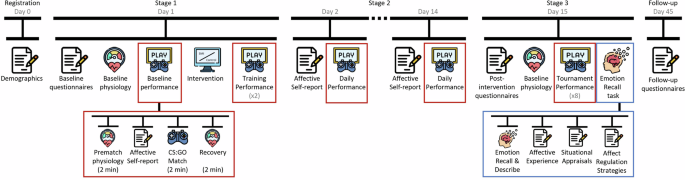
Project and Match Procedures. The red frames represent a procedure for all performances (to simplify the figure, we depicted it in detail only for baseline performance), namely prematch physiology, affective experience, Counter-Strike: Global Offensive match, and recovery. Baseline and post-intervention questionnaires include negative prior mindsets, positive and negative affective experiences, affect regulation strategies, well-being, ill-being, alexithymia, and emotion belief measures. Affective self-report includes affective experience and demands and resources evaluation. Emotion recall tasks include recalling and describing situations from the tournament that elicited positive and negative affective experiences and evaluating them using affective experience, situational appraisals and affect regulation strategies measures. One month after Stage 3, participants were asked to fill in follow-up questionnaires, the same set as at baseline and post-intervention. Figure reproduced from our previous article6, used under a CC BY license.
Google Scholar
MATH
Google Scholar
The calculated SNR indicated the high quality of all collected signals35, with mean SNR ranging from 21.90 dB to 68.05 dB depending on the physiological signal and study. We identified outliers with the median absolute deviation, with a cutoff of 3, as recommended by Leys et al.36,37, resulting in 416 signals (3.94% of all calculated SNR values) identified as SNR outliers. Next, the first author (MB) visually inspected all flagged data to determine whether the signal should be deleted and classified as an artifact, resulting in 17 signals being identified as artifacts. Outlying signals are marked with yellow color in the “SNR” sheet with additional comments from the first author on reasons that potentially influenced the outlying values (e.g., disconnecting ECG and ICG electrodes after the study while the signals were still being recorded).
PubMed Google ScholarTomaka, J., Blascovich, J., Kelsey, R. M. & Leitten, C. L. Subjective, physiological, and behavioral effects of threat and challenge appraisal. J. Pers. Soc. Psychol. 65, 248–260 (1993).
PubMed
PubMed Central
MATH
Google Scholar
PubMed
PubMed Central
Google Scholar
MATH
Google Scholar
PubMed
MATH
Google Scholar
MATH
Google Scholar
Google Scholar
Participants played Counter-Strike: Global Offensive (CS: GO) in a deathmatch mode on the Dust II map, competing against the highest difficulty level of computer-generated opponents (bots) without random weapons. All matches were structured into prematch baseline measurements (2 minutes), gaming (2 minutes), and recovery (2 minutes) (Fig. 1). During all match phases, we collected cardiovascular, behavioral, and video data. Before each match, participants also shared their affective experience and provided demands and resources evaluations.
PubMed
Google Scholar
PubMed
PubMed Central
MATH
Google Scholar
Google Scholar
Leys, C., Delacre, M., Mora, Y. L., Lakens, D. & Ley, C. How to classify, detect, and manage univariate and multivariate outliers, with emphasis on pre-registration. Int. Rev. Soc. Psychol. 32, (2019).
PubMed
Google Scholar
Sibley, C. G. et al. Effects of the COVID-19 pandemic and nationwide lockdown on trust, attitudes toward government, and well-being. Am. Psychol. 75, 618–630 (2020).
Acknowledgements
Author information
Authors and Affiliations
Contributions
Sample size: 300 participants.
Corresponding author
Klussman, K., Lindeman, M. I. H., Nichols, A. L. & Langer, J. Fostering stress resilience among business students: The role of stress mindset and self-connection. Psychol. Rep. 124, 1462–1480 (2021).
Ethics declarations
Competing interests
Eysenck, H. J. & Eysenck, S. B. G. Manual of the Eysenck Personality Questionnaire (Junior & Adult). Hodder and Stoughton Educational (1975).
Additional information
Rights and permissions
Article
PubMed
MATH
Google Scholar
About this article

Cite this article
MATH
Google Scholar
Google Scholar
- Here, we present the Competitive Esports Physiological, Affective, and Video (CEPAV) dataset1. Esports represents a rapidly growing field in which well-trained individuals – gamers – compete using video games. In esports, gamers compete while seated in front of a screen, creating an ideal environment to study affective responses, including emotional experiences and real-time cardiovascular reactions to performance2,3,4,5. This setting allows for the examination of high-stakes performance with continuous real-time monitoring of affective responses at multiple levels. Using esports as a model allowed us to gain insights into the interplay between emotional states and physiological responses during intense gameplay sessions.
- Behnke, M., Gross, J. J. & Kaczmarek, L. D. The role of emotions in esports performance. Emotion 22, 1059–1070 (2022).
- Benet-Martínez, V. & John, O. P. Los Cinco Grandes across cultures and ethnic groups: Multitrait-multimethod analyses of the Big Five in Spanish and English. J. Pers. Soc. Psychol. 75, 729–750 (1998).
- Article
PubMed
MATH
Google Scholar









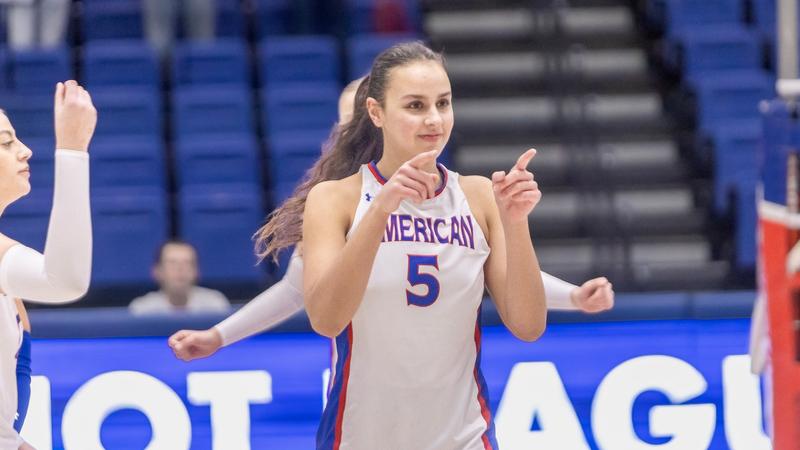
WASHINGTON – Deniz Dakak adds an AVCA All-American honorable mention selection to her outstanding sophomore season, announced on Wednesday morning by the American Volleyball Coaches Association. She is the ninth player in program history to receive the honor in addition to her All-Region selection on Dec. 9.
Dakak’s young career was put into the spotlight this season after she led the Patriot League in assists each week of the 2025 campaign. She was the quarterback of AU’s offense, which put up staggering numbers. The Eagles hit .294 at the end of the regular season, ranking 12th in the country before they hit a Patriot League Tournament record .500 in the conference championship match.
The Istanbul, Turkey native averaged 10.53 assists per set this year, and finished the season with over 1,028 after the NCAA Tournament. Dakak was named the Patriot League Player and Setter of the Year, just the third player to ever earn both awards. With two seasons left, Dakak is on pace to finish in the top 10 of AU’s all-time assists list.
AVCA All-American Awards
Keep up With Us
- For the latest on American University Volleyball, stay tuned to AUEagles.com and follow the team on Twitter (@AU_Volleyball), Facebook (/AU.Volleyball) and Instagram (@au_volleyball).

In Thursday night’s NCAA Volleyball national semifinals, two coaches who are very familiar with one another will square off in the night’s second match. Kentucky head coach Craig Skinner and Wisconsin skipper Kelly Sheffield have a relationship that goes back decades.
Skinner and Sheffield are both from the Muncie, Indiana, area. In 1990, they led a Muncie Burris High School junior varsity team to an undefeated record.
Skinner and Sheffield would go their separate ways before both eventually became Division I head coaches. Skinner was named the head coach at Kentucky in 2004, while Sheffield was the head coach at Albany and Dayton before landing the Wisconsin job in 2012.
The UK head coach had nothing but praise for his counterpart in Thursday’s match.
“Kelly has earned everything he’s gotten,” Skinner said. “He’s come from humble beginnings, both in school and in coaching. He’s been on — coached and packed his car in an evening, had to be in Houston 20 hours later to start his first coaching job probably making about $10,000 a year. I have a lot of respect for someone that earned their way to this point in time.”
Skinner is also appreciative of the Muncie roots that both he and Sheffield have.
“You have to give a lot of credit to the Shondell family and Don Shondell for starting the Ball State program,” Skinner said. “Steve Shondell, the oldest Shondell son, played in and started the Muncie Burris program and Munciana Volleyball Club. When I started coming through Ball State, yeah, I’ll try this coaching thing. I just fell in love with what they were about.
“Ball State University started as a teacher’s college. Coaching is teaching,” Skinner said. “The joy and passion and interest in helping players do something better than they have ever have before. You really felt the essence of what coaching is.”
Skinner believes that his early beginnings showed him just how much he really wanted to be a coach.
“I tried to get away from coaching for a while,” Skinner said. “I had an accounting degree, got into banking. It sucked me back in because I love the competition and the teaching aspect. That started in Muncie, Indiana, in 1988 or ‘89 for me.”
For those who want to get into to coaching, starting off the way Skinner and Sheffield did is not rare. But Skinner knows that it has to be something you love.
“I always tell people that if you’re going to get into coaching, don’t get in it because you like it and you can make some money,” he said. “Get into it because you have a passion for helping people go above and beyond where they are. Kelly has demonstrated that for a long time.”
Two coaches who once coached a high school junior varsity team together square off in Thursday’s national semifinals when Kentucky plays Wisconsin. It’s a lesson in how much hard work and dedication can pay off.
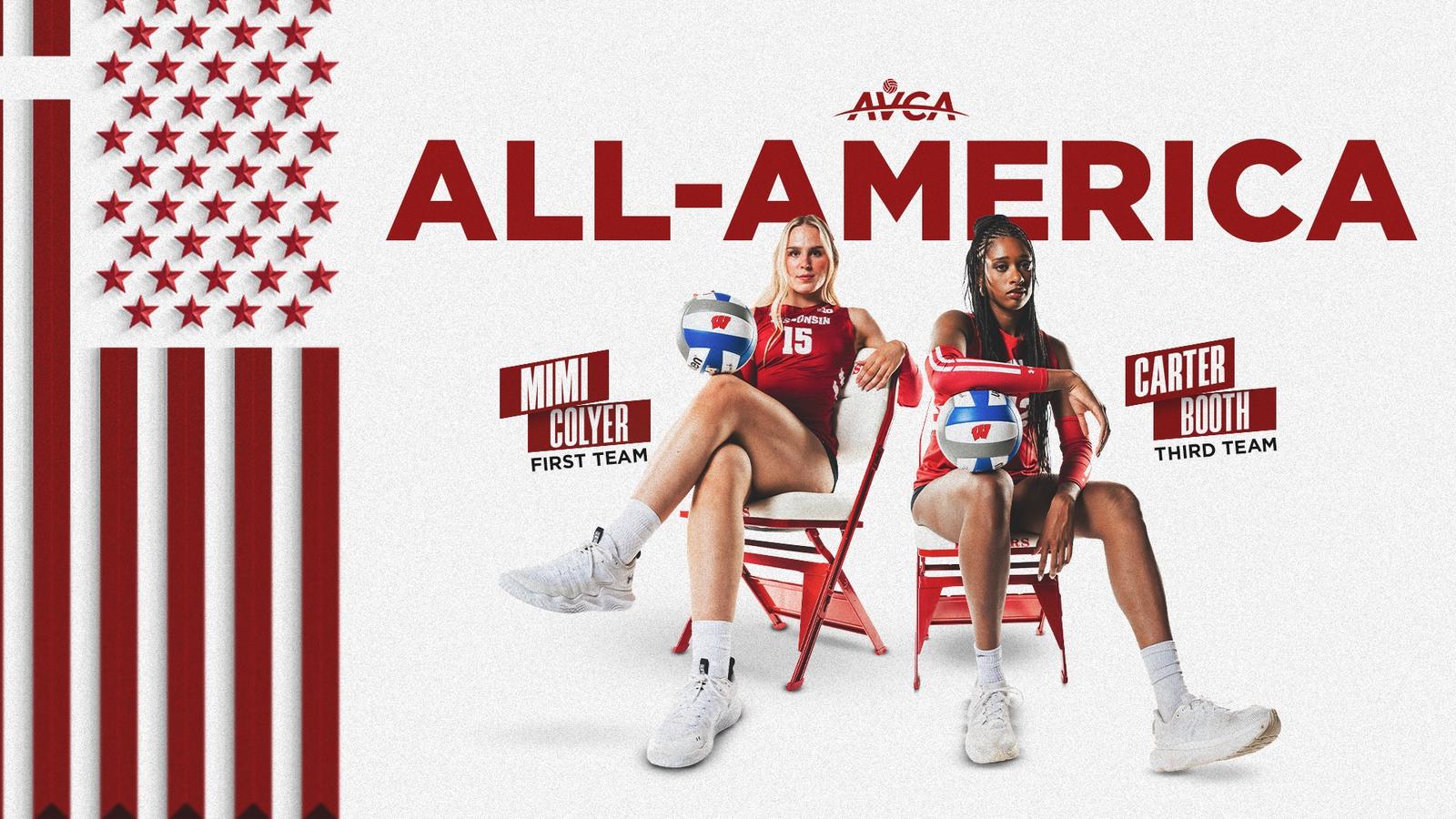
Colyer led the way with a First Team All-American award at outside hitter, followed by Booth with a Third Team All-American nomination at the middle blocker position. In head coach Kelly Sheffield‘s tenure, 21 individual athletes have garnered 47 separate All-American honors in 13 seasons.
Colyer joined that group of athletes, putting together one of the most impressive individual seasons in UW history en route to her fourth All-American award of her career. The Lincoln, California, native recently eclipsed the 2,000-kill mark in her career against No. 2 Stanford in the NCAA Regional Semifinal—combining for 50 kills over the Badgers’ pair of matches in Austin, Texas.
The outside hitter broke the school record for most kills in a season, as she enters this week’s National Semifinals with 566. Colyer has accumulated double-digit kill totals in every match except for one this season, as she currently holds a 19-match streak of 10 or more kills, good for the second-longest streak in program history.
In the national ranks, Colyer places third in kills per set at 5.39. No other Badger in the Rally Scoring Era (since 2008) has finished the season with over five kills per set. She also ranks third in points per set at 5.97.
In leading the Badgers to a second-place finish in the Big Ten Conference, Colyer broke the school record for most kills at 345. Sarah Franklin was the only other athlete at UW to surpass 300 kills in the 20-match span.
Colyer excelled on the defensive end as well, recently surpassing the 1,000-dig mark in her storied career. The senior accumulated nine double-doubles in digs and kills in the 2025 season.
Right by her side, Booth strung together another impressive campaign for the Badgers—notching her second-career All-American award.
Offensively, the 6-foot-7 middle blocker has been efficient in her attack, as she is currently on pace to shatter UW’s record for highest hitting percentage in a single season. Booth sits at .454 entering the National Semifinal match, good for second-highest in the country. She has turned in zero errors in 11 matches this year.
The Denver, Colorado, native recently put together her strongest weekend of the season, highlighted by a .700 (14 – 0 – 20) swinging percentage turned in against No. 2 Stanford. Her 14 kills tied a career-best, as she followed it up with 11 more versus No. 1 Texas to help punch the Badgers’ ticket to Kansas City.
The 6-foot-7 middle blocker currently leads the team in blocks (123) and blocks per set (1.17) as well—showcasing her continued physical presence at the net.
Booth and Colyer are set to be teammates next season for the Dallas Pulse of Major League Volleyball, as they were recently selected in the draft less than a month ago.
Badger fans can catch both All-Americans in action on Thursday, Dec. 18, as UW will look to continue their postseason run. The Badgers are slated to face No. 1 Kentucky at the T-Mobile Center in Kansas City, as first serve will take place 30 minutes after the conclusion of the first National Semifinal between No. 3 Texas A&M and No. 1 Pittsburgh, which is set to start at 5:30 p.m. CT. Both matches will be televised on ESPN.
Updated Dec. 17, 2025, 11:38 p.m. ET
KANSAS CITY, MO ― Upon arriving at last year’s NCAA volleyball Final Four in Louisville, Kentucky, Pittsburgh Panthers head coach Dan Fisher received several commemorative Louisville Slugger bats.
Throughout the 2025 season, they would sit in his office in special holders, serving as a reminder of what could have been. Last December, Pitt’s title push ended shy of the championship game. After making four consecutive Final Four appearances without winning a trophy, the No. 1 overall seed fell short ― again. The Panthers lost 3-1 to the Louisville Cardinals in the semifinals and went home empty-handed.
On Wednesday, Fisher, well aware that Pitt let a potential chance at a championship slip away, reflected on the disappointment he felt.
“I can simultaneously be proud of making the Final Four and disappointed we didn’t advance,” he said. “I can hold those two thoughts at once.”

The balancing act of holding space for pride and disappointment has likely been something the Panthers coach and his team have been silently juggling all season. At some point, it probably had to become a small part of what fueled them to get back to volleyball’s biggest stage and return for a fifth straight Final Four ― even if they may never admit it out loud. Multiple opportunities to win a championship don’t happen often, and when a team can’t bring home any hardware, the questions about winning inevitably become louder.
Will Pitt ever be the “bride” and not the “bridesmaid”? Is this the year the Panthers finally put it all together?
Six total players at the 2025 Final Four have experience playing at this level. Fisher’s roster has five of the six Final Four veterans. Pitt opposite Olivia Babcock and middle blocker Bre Kelley have been to two prior Final Fours. Several other Panthers players have been to at least one. Wisconsin Badgers middle blocker Carter Booth, with one appearance, is the remaining player. With so many young and new faces on all four tournament rosters, Pitt’s experience could prove valuable if it wants to reach the national championship on Sunday. Babcock addressed the potential advantage during Wednesday’s Panthers press conference.
“Since so many people have been here before, we were able to prepare the newer players coming into this experience what to expect,” Babcock said. “We’re also able to just remind them constantly that even though there will be a lot of media ― things there wouldn’t typically be ― stay locked in at the goal at hand. It is very easy to get distracted. I think those players are going to help our newer players be able to hone in on the task.”
Babcock stressed that it’s an honor to be on the Final Four stage. Still, she says the Panthers are focused. Their preparation has been better, including how they practice and scout opponents and visualize matches. Kelley shed a bit more light on how the Panthers are staying grounded as they approach Thursday’s semifinal match.
“In the past, I feel like we’ve always made it a point that we have to win the Final Four. This year, we have really emphasized, especially with our sports psychologist, to play ball,” Kelley said. “Obviously, we’re trying to embrace this moment and be where our feet are. This game is supposed to be fun. It’s not supposed to be severely taxing on your mind and body.”
The Panthers revealed that the team has broken down every intense matchup, as far back as a September regular-season sweep against the No. 1 Kentucky Wildcats, to just one point at a time. The team said even in a dominant 3-0 win like that one, the focus this year has been on being “good” after getting to 20 points in a set. Once the Panthers get to that point, Babcock says they are “able to flip a switch”. Then, it becomes a matter of which team gets to 25 first. She believes that if Pitt is playing “the best points of (their lives)”, they’ll find a lot of success. Fisher seemed to be in lockstep with that thought process.
“The main message is just to stay in the moment,” he said. “Along with that, we were touching on it earlier about what’s different about this team, and I think when we’re playing our best, we’re really good. So just knowing that we don’t know what the outcome will be, but we certainly know how good we can be…”
Pitt takes on No. 3 Texas A&M during the 2025 NCAA volleyball Final Four at 6:30 p.m. ET Thursday on ESPN.
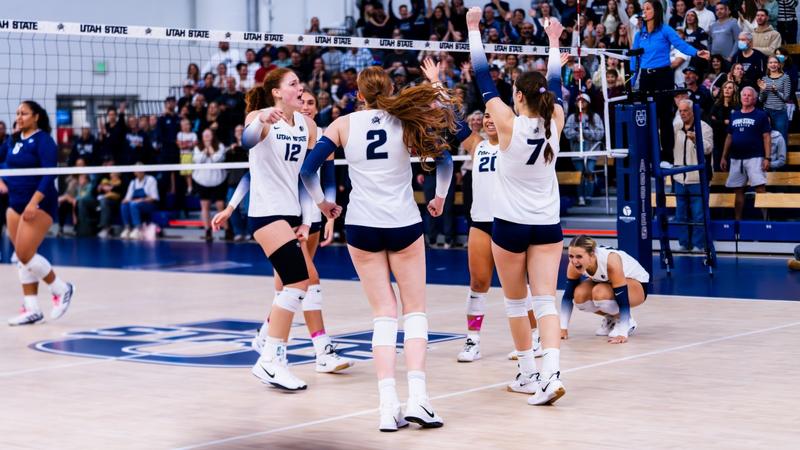
Kofe earned the distinction via a 3.81 GPA while majoring in marketing and leading the Aggie offense to a program-record .274 hitting percentage this season, ranking third in the nation with 11.08 assists per set and also earning Mountain West Player of the Year honors. Kofe is the only player in the nation with three matches of 60 or more assists. Her 1,330 total assists this season ranks fifth all-time at USU while she already sits in eighth for career assists at Utah State with 2,290. Kofe also added 32 kills, 28 aces, 285 digs and 37 total blocks on the year.
Barlow received the honor after posting a 3.97 GPA while majoring in integrated studies. This season, Barlow Utah State’s single-season program record for hitting percentage with a mark of .444, shattering the previous mark of .375 (min. 5 attempts per set) held by Denae Mohlman and set in 1997. Barlow is now the career record holder for hitting percentage, sitting at .418 for her career at Utah State, topping current assistant coach/director of operations Kennedi Hansen’s career mark of .362 (min. 1,000 attacks). Barlow recorded six matches of at least 17 attempts and zero hitting errors this season while no other player in the nation had more than four according to ESPN research. Barlow finished with 321 kills, 18 aces, 51 digs and 93 blocks on the season. She earned All-MW honors for the fourth time in her career.
Helgesen earned the award after recording a 3.57 GPA while majoring in psychology. Helgesen finished the season with 391 kills on a .295 hitting percentage, the 10th-highest hitting percentage in program history with at least five attempts per set. Helgesen also ranks seventh all-time for career hitting percentage at USU (min. 1,000 attempts) with a mark of .275 as an Aggie. Helgesen broke USU’s single-game hitting percentage record with at least 20 attempts, hitting .704 against Grand Canyon. Helgesen also added 26 aces, 96 digs and 68 blocks on the year. She earned All-MW honors for the first time in her career this season.
Štiglic earned the honor after posting a 3.68 GPA and majoring in marketing. Štiglic finished the season with a team-high 3.56 kills per set, totaling 431 kills alongside 29 aces, 146 digs and 63 blocks. Štiglic earned all-MW honors this season after ranking seventh in kills per set (3.63) and fourth in points per set (4.27) during conference play. Štiglic also ranked sixth in the MW with 0.31 aces per set, totaling 21. She hit double-digit kills in 17 of 18 matches during MW action, totaling nine kills in her lone match not reaching the plateau. Štiglic also recorded seven matches with multiple aces.
Fans can follow the Aggie volleyball program on Twitter, @USUVolleyball, on Facebook at /USUVolleyball or on Instagram, @usuvolleyball. Aggie fans can also follow the Utah State athletic program on Twitter, @USUAthletics, Facebook at /USUAthletics and on Instagram, @USUAthletics.
– USU –
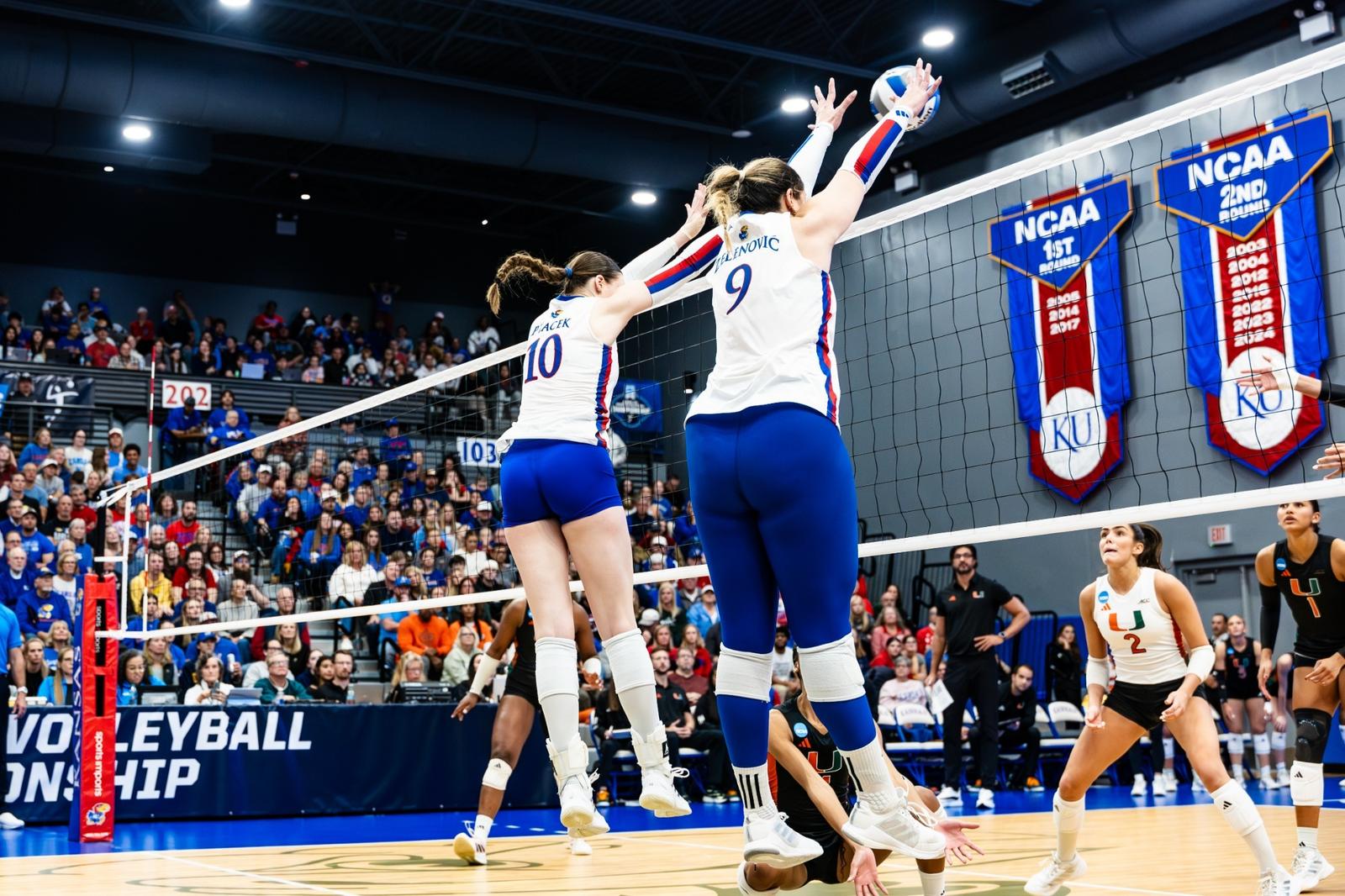
The Honorable Mention All-America honors come after both Ptacek and Zelenovic were named First Team All-Big 12, leading one of the league’s most efficient and balanced offenses. Under first year head coach Matt Ulmer, the Jayhawks finished with a 24-11 and the program’s fourth appearance in the NCAA Sweet 16 all-time.
Ptacek, a native of Prescott, Wis., earns her first career All-America honors after hitting .314 with 331 kills, 136 blocks and 27 service aces during the 2025 season. Ptacek was recently named to the AVCA All-Region Team and was named to the AVCA Player of the Year Watch List during the 2025 season.
Zelenovic, a freshman from Novi Sad, Serbia, finished a standout freshman season for the Jayhawks, leading the team with 485.5 total points, 375 kills, 46 service aces and a .276 hitting percentage. Defensively, Zelenovic posted 123 total blocks. Zelenovic was also named to the AVCA All-Region Team and was named as the Central Region’s Freshman of the Year.
Ptacek and Zelenovic are the latest Jayhawks to earn All-America honors, becoming the 14th and 15th Jayhawks to earn All-America honors all-time. Kansas has had multiple All-Americans in just eight seasons all-time, including 2025, 2024, 2023, 2017, 2016, 2015, 2014 and 2013.
See below for a full list of Kansas volleyball All-American honors:
Josi Lima 2003 Honorable Mention Caroline Jarmoc 2013 Third Team 2012 Second Team Chelsea Albers 2014 Honorable Mention 2013 Honorable Mention Sara McClinton 2013 Honorable Mention Erin McNorton 2013 Honorable Mention Cassie Wait 2016 Honorable Mention Ainise Havili 2017 Honorable Mention 2016 Third Team 2015 First Team 2014 Honorable Mention Kelsie Payne 2017 Third Team 2016 First Team 2015 First Team Madison Rigdon 2017 Honorable Mention 2016 Honorable Mention Caroline Bien 2021 Honorable Mention Reagan Cooper 2023 Third Team Camryn Turner 2024 Third Team 2023 Honorable Mention Toyosi Onabanjo 2024 Honorable Mention

Deniz Dakak Named an AVCA All-American

Vallivue High hires Steve Myers as its next football coach

Declining participation forces Huntsville school to sideline team; coaches cite trend in youth sports

Skinner, Sheffield Set to Meet in NCAA Volleyball Semifinals – UK Athletics

LOCAL SPORTS: North Alabama Elite Wrestling shows out at Arab Youth Invitational; Jackson earns top honors

Kids Club Day to Take Center Stage as Wolverines Host La Salle

Colyer, Booth earn AVCA All-American honors

Congress Explores Youth Sports ‘Crisis’ Amid Rising Costs and Declining Participation
Pitt volleyball reaches Final Four again but can it win championship?
Bankruptcy trustee presses case against Deion Sanders’ son Shilo

Jeff Gordon 1 of 1 trading card inserted into Panini America’s National Treasures Racing production

Which Truck Series Rides are Still Open for 2026?

$45 million college football head coach reportedly offers Lane Kiffin unexpected role

$36 million college football coach reportedly out of race for Michigan vacancy

John Ammerman – Bakken Young Funeral Home

First Tee Winter Registration is open

Fargo girl, 13, dies after collapsing during school basketball game – Grand Forks Herald

CPG Brands Like Allegra Are Betting on F1 for the First Time

F1 Las Vegas: Verstappen win, Norris and Piastri DQ tighten 2025 title fight

Volleyball Recaps – November 18

Sycamores unveil 2026 track and field schedule

Utah State Announces 2025-26 Indoor Track & Field Schedule

Two Pro Volleyball Leagues Serve Up Plans for Minnesota Teams

Redemption Means First Pro Stock World Championship for Dallas Glenn

Jo Shimoda Undergoes Back Surgery

Texas volleyball vs Kentucky game score: Live SEC tournament updates

SoundGear Named Entitlement Sponsor of Spears CARS Tour Southwest Opener

Bowl Projections: ESPN predicts 12-team College Football Playoff bracket, full bowl slate after Week 14

How this startup (and a KC sports icon) turned young players into card-carrying legends overnight

Robert “Bobby” Lewis Hardin, 56

 NBA Legend Michael Jordan to Join NBC Sports as Special Contributor
 Why a rising mid-major power with an NCAA Tournament team opted out of revenue-sharing — and advertised it
 Falcons mailbag
 Portal Update – Basketball and Gymnastics Take Hits
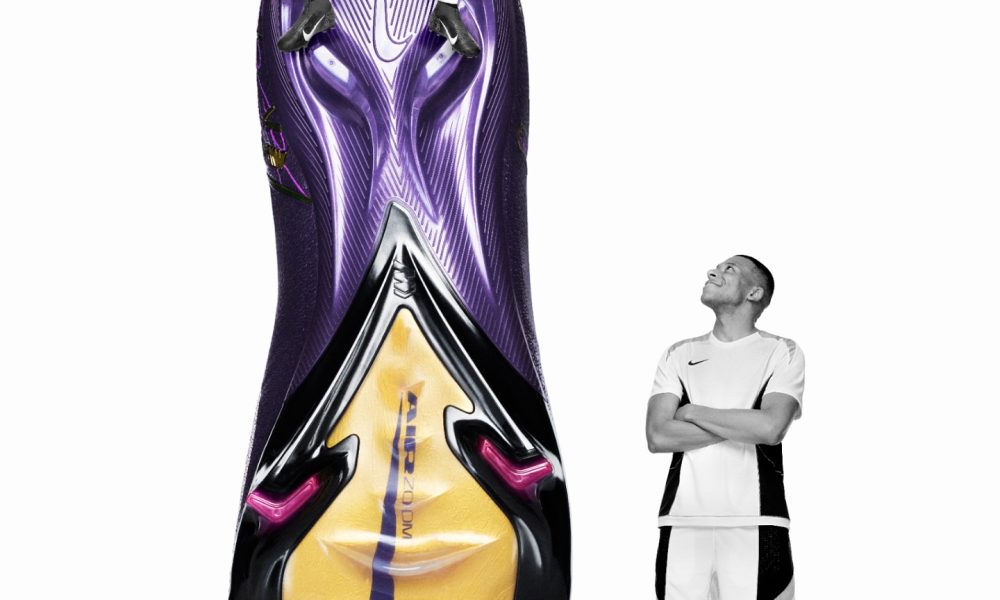 has always dreamed in Mercurial. Now his initials are on the boots.
The new Kyl…
has always dreamed in Mercurial. Now his initials are on the boots.
The new Kyl…
-
 Motorsports3 weeks ago
Jo Shimoda Undergoes Back Surgery
-
 NIL2 weeks ago
Bowl Projections: ESPN predicts 12-team College Football Playoff bracket, full bowl slate after Week 14
-
 Motorsports1 week ago
SoundGear Named Entitlement Sponsor of Spears CARS Tour Southwest Opener
-
 Rec Sports3 weeks ago
How this startup (and a KC sports icon) turned young players into card-carrying legends overnight
-
 Rec Sports3 weeks ago
Robert “Bobby” Lewis Hardin, 56
-
Sports3 weeks ago
Wisconsin volleyball sweeps Minnesota with ease in ranked rivalry win
-

 Motorsports3 weeks ago
Pohlman admits ‘there might be some spats’ as he pushes to get Kyle Busch winning again
-

 Motorsports1 week ago
Donny Schatz finds new home for 2026, inks full-time deal with CJB Motorsports – InForum
-

 Motorsports3 weeks ago
Increased Purses, 19 Different Tracks Highlight 2026 Great Lakes Super Sprints Schedule – Speedway Digest
-

 Rec Sports2 weeks ago
How Donald Trump became FIFA’s ‘soccer president’ long before World Cup draw