
Technology
The Economic Power of Video Games


Video games have grown from a hobby of specialists to a dominant trend in the global economy. What was once confined to arcades and console-based operations in the basement now represents a billion-dollar industry that influences technology, entertainment, jobs, and consumer spending. From game developers and hardware manufacturers to content creators and professional teams, the industry has ingrained itself within the very fabric of the broader economy in a manner that few could have predicted even a couple of decades ago.
A particularly interesting shift has been the way gaming habits overlap with other digital industries, including online wagering. As digital spending and engagement habits evolve, more users are exploring entertainment ecosystems that blend gaming mechanics with real-money experiences. This crossover has led to a rise in demand for platforms that support these hybrid models, such as those highlighting where Arizona players can gamble online. These connections reveal how gaming culture increasingly influences broader economic activity, including how people choose to spend and interact online.
As technology evolves day by day, and gaming culture enters the mainstream, the financial influence of video games continues to rise. Policymakers, investors, and even buyers must catch up with this influence as the line between amusement and enterprise continues to blur.
A Revenue Giant in the Entertainment Industry
Gaming now generates more revenue than the film and music industries. Franchise games like Call of Duty, Grand Theft Auto, and Fortnite have pulled in billions, not just from flat-out sales, but from microtransactions, downloadable content, battle passes, and in-game advertising. All of these monetization methods have transformed how value is created within the sector.
Game publishers and game makers benefit not only from the initial sale of a game, but also from a long-tail business model that will continue to earn them money for months or years following release. The popularity of live-service and online multiplayer titles keeps players playing all day, every day, and funnels directly into repeated expenditure. This model creates flat streams of income for companies, which makes them more financially secure and attractive to investors.
Job Creation and Industry Employment
The video game business employs hundreds of thousands of people in a huge variety of jobs, from developers to designers, engineers, animators, writers, marketers, and support staff. These jobs vary from the technical and creative arts and are often very specialized. The increasing demand for talent has fueled the growth of programs at colleges and vocational institutions that focus on game development and digital arts.
Besides the studios, there are also peripheral publishing, retailing, hardware manufacturing, and logistics jobs that rely on the well-being of the video game industry. Even ad agencies and data analysts get a chance here as companies try to figure out what the consumer is doing and how to get the most participation.
Independent game developers and freelancers are also benefiting from the expansion of the sector. Platforms like Twitch, YouTube, and TikTok have developed a new economy of streamers, influencers, and content creators who often earn a livelihood based on sponsorships, donations, and ad revenue based on video games. This democratization of sources of income has changed how people approach careers in gaming.
Digital Infrastructure and Tech Innovation
Perhaps most importantly, but unobtrusively, gaming serves the economy by pushing technology hand. Graphics management, network architecture, artificial intelligence and virtual reality have all been accelerated by the demands of modern gaming. The imperative to deliver smoother frame rates, better refresh rates, more interactive experiences, and less latency has yielded groundbreaking innovations that carry over into other industries.
Gaming has also helped to bring about the mainstreaming of cloud services and subscription models. Xbox Game Pass and PlayStation Plus have set the consumers in the habit of thinking differently with regard to digital ownership and access. These models are now being applied in other domains such as software, streaming media, and online learning.
Tech companies that make GPUs, CPUs, and other hardware have seen tremendous growth due to increased demand from game developers and gamers. These hardware advancements flow into consumer markets elsewhere and power everything from data centers to creative workstations.
Esports and Competitive Gaming
Competitive gaming, or esports, is no longer a specialized niche. It’s a global phenomenon with enormous prize purses, sponsorship, and a hardcore audience that rivals mainstream sports among particular age groups. Big events have the potential to attract millions of viewers and bring in lucrative advertising and media rights income.
It has also led to the creation of standalone arenas, the formation of high school and college leagues, and investment by non-traditional sport franchises. Major events have started being held by cities, creating tourism, hospitality spending, and employment within the local area. This brings in yet another dimension to the economic contribution of games, with physical infrastructure and logistics coming into play.
Broadcasting these events generates further revenue through media like Twitch and YouTube, and jobs for commentators, analysts, producers, and technical staff. Esports revenue is not limited to prize money only, with merchandising, sponsorship deals, and content rights generating a range of streams of revenue.
Retail, Merchandising and Licensing
The gaming industry’s financial impact extends well beyond the electronic universe. Retail shopping is still a massive component of the gaming ecosystem, regardless of how much downloadable content has risen. Consoles, accessories, merchandise, and even themed decor are all constituents of a rampant retail sub-sector driven by game players.
Brand licensing is another key area. Popular franchises increasingly find themselves on clothing, backpacks, collectible toys, and even fast food. These partnerships not only profit developers and publishers but also benefit manufacturers, distributors, and retailers. The cultural phenomenon of gaming continues to move into mainstream consumer products, with cross-promotional deals that generate both brand awareness and revenue.
Small release sizes and collector’s editions also fuel spending by consumers in niche markets, appealing both to collectors and players. Such items usually maintain or increase in value with time, creating a unique nexus within gaming and the economy of collectables.
Real Estate and Development
As the gaming industry grows, so does the demand for real estate space to support it. Major cities are now seeing a surge in office space for game development studios, esports centers, and co-working facilities for digital content producers. The developments drive property markets and generate economic activity through construction, leasing, and maintenance.
Game studios tend to need facilities of high quality, equipped with sophisticated technology and security, and such investments can revitalize neglected commercial buildings. In certain regions, local governments provide incentives for gaming firms to relocate, perceiving them as high-growth opportunities that can elevate the communities around them.
The resulting economic activity from these advances also serves to generate greater demand for residential property, shopping, and services, further driving economies. This localized impact serves to explain why video games are not just a virtual reality but have real economic consequences.
Tourism and Events
Conventions and exhibitions with gaming, like PAX, E3, and Comic-Con, attract tens of thousands of visitors worldwide. Conventions inject tourism dollars into cities, paying for hotels, restaurants, transportation, and local attractions. Vendors, developers, and independent creators benefit from the exposure, while cities also benefit from the hosting of high-level events that contribute to their cultural and economic prestige.
Local conventions of smaller sizes have also become popular, spreading the economic impact to cities that are not traditionally event cities for large international events. The increased popularity of cosplay, fan conventions, and gaming tournaments means greater travel frequency and spending in the ecosystem.
It is also being viewed by tourism authorities and event organizers as a sustainable and reliable means of economic growth. With virtual reality tours and theme parks in the pipeline, the intersection of digital games and actual tourism is becoming broader.
Education, Research and Academic Growth
The economic contribution of video games is now beginning to shape educational and research centers as well. Universities are initiating special programs in game development, virtual design, and interactive media. They are educating the future professionals operating in the gaming industry while bringing funds, grants, and private alliances.
Behavioral psychology research in human-computer interaction and game theory is being pioneered by gaming applications. This is inspiring innovation across the entertainment industry, but also within healthcare, education, and training simulation. Organizations and institutions are gamifying learning and development tools to increase participation and outcomes.
This pipeline of education supplies a consistent supply of skills and innovation, further entrenching the gaming industry in the economy as a whole. It also promotes collaborations between industry and academia, with internships, research centers, and clusters of innovation becoming increasingly common.


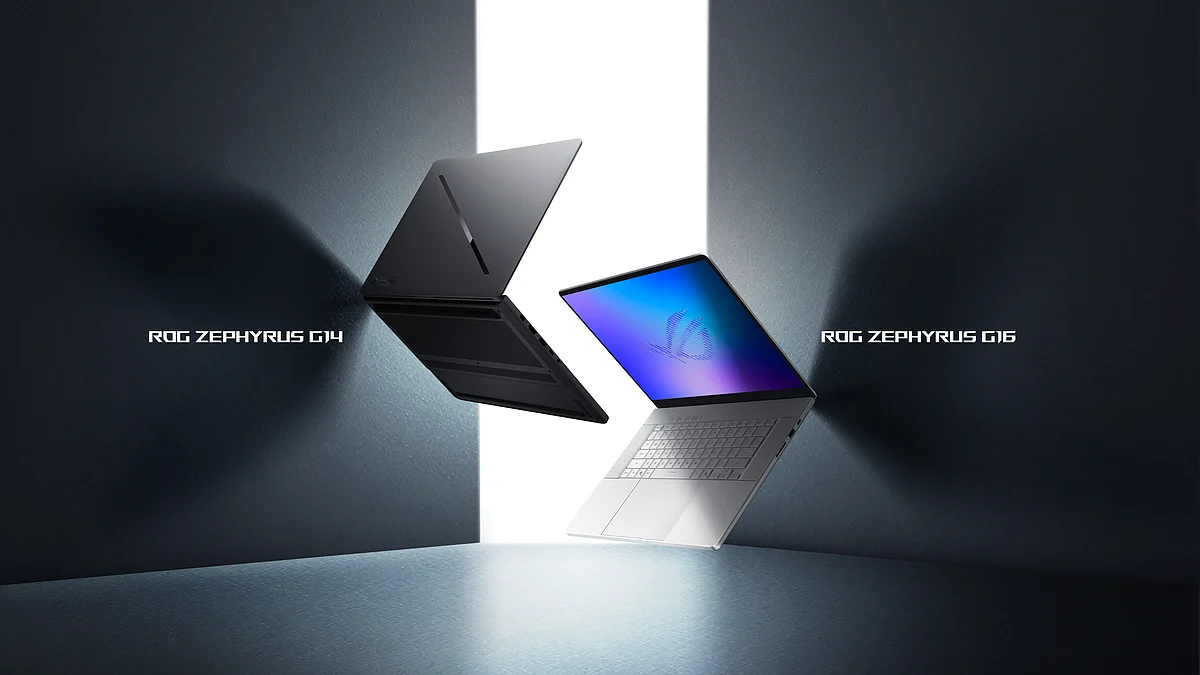
ASUS Republic of Gamers (ROG) today announced its Dare to Innovate virtual event at CES 2026, unveiling the next chapter of its vision for gaming performance, design, and culture. The showcase celebrates 20 years of fearless innovation, highlighting breakthrough technologies that empower gamers and creators, while reinforcing ROG’s commitment to redefining gameplay, creation, and competitive performance worldwide.
A wide range of next-generation ROG gaming laptops takes center stage at CES 2026, alongside select flagship innovations such as the ROG G1000 gaming desktop, showcasing world-first engineering, AI-driven performance, and advanced thermal design that elevate gaming and creative experiences.
Marking its 20-year milestone, ROG reflects on a legacy defined by bold ideas and pioneering engineering — from early breakthroughs that reshaped high-performance gaming hardware to today’s cutting-edge laptops and desktops built for power, immersion, and reliability. Every milestone embodies the spirit of For Those Who Dare, challenging conventions and redefining what gaming technology can achieve.
Continuing this legacy, innovations from the ROG Lab are highlighted this year, introducing advancements focused on intelligent performance optimisation, thermal mastery, and user-centric design across both laptops and flagship systems, empowering gamers and creators to play, create, and push limits with confidence.
ROG Zephyrus laptops: immersive, AI-powered, and ultraportable
Designed for those who need performance on the go, the Zephyrus line-up delivers all-day power and stunning visuals in a sleek, ultraportable chassis. With smart AI features and efficient cooling, it keeps creators and gamers productive and immersed wherever they are.
ROG Zephyrus G14 and G16
This generation’s ROG Zephyrus G14 (GU405/GA403) and ROG Zephyrus G16 (GU606) redefine what compact performance can deliver, featuring next-gen processing power and a new HDR-class display that delivers higher brightness and visual depth for gamers who want more capabilities in the same sleek footprint.
The Zephyrus G14 (GU405) and G16 (GU606) feature Intel® Core™ Ultra Series 3 processors, delivering flexible performance and up to 50 TOPS of NPU power for local AI tasks and in-game AI workflows. The G14 GU405 supports up to an NVIDIA® GeForce RTX™ 5080 Laptop GPU, and the G16 GU606 up to GeForce RTX 5090, with NVIDIA Blackwell architecture, DLSS 4, and Frame Generation. Max GPU TGP has been increased by up to 23% in manual mode, from 120W to 130W on the G14 and 130W to 160W on the G16. The G14 (GA403) is also available with a next-gen AMD Ryzen™ AI processor, offering Copilot+ certification and local AI execution.
With 50 TOPS of NPU performance and Copilot+, these laptops bring AI-powered acceleration directly to the device for gaming, creating, and multitasking — without relying on the cloud. ROG Intelligent Cooling keeps both models quiet and efficient under load, with a redesigned bottom panel, optimized exhaust vents, and liquid metal on the CPU.
In terms of display, they now feature a new 1100-nit Nebula HDR display with Nebula HDR engine tuning, delivering richer highlights, deeper contrast, and more lifelike HDR visuals, while providing 100% DCI-P3 coverage and Delta E < 1 color accuracy for cinema-grade quality. Extended battery life ensures productivity throughout the day. The laptop also adds a full-size SD card reader for easy media transfer. Powerful as it is, the G14 features a CNC-milled aluminum chassis with a redesigned Slash lighting and glass-mirror finish, combining performance, portability, and style.
ROG Zephyrus Duo 16
The dual-screen ROG Zephyrus Duo 16 (GX651) takes versatility to the next level. Its dual 3K ROG Nebula HDR OLED touchscreens run at 120Hz with a 0.2ms response time, providing smooth, tear-free visuals while supporting multitasking for gaming, streaming, or creative workflows, and the main panel supports NVIDIA G-SYNC®. Powered by the latest Intel processor and up to an NVIDIA GeForce RTX 5090 Laptop GPU, it handles demanding games, content creation, and AI workloads with ease. ROG Zephyrus Duo enable five operating modes to suit any scenario, while ROG Intelligent Cooling — featuring a vapor chamber, dual fans, and a dedicated graphite sheet — all combine together to provide the best possible performance, providing ultimate flexibility for work, play, and creation.

ROG x Kojima Productions: a visionary gaming collaboration
ROG has partnered with Kojima Productions to merge high-performance gaming technology with visionary storytelling and artistry. The collaboration celebrates creativity, exploration, and immersive experiences, bringing gamers, creators, and dreamers a collection of devices and peripherals that are as functional as they are collectible.
The ROG Flow Z13-KJP stands at the center of this collaboration, merging two decades of ROG’s gaming innovation with Kojima Productions’ visionary storytelling. Designed to reflect and reimagine the studio’s core values, the device draws deep inspiration from its iconic mascot, Ludens. It is a flexible 2-in-1 powerhouse that transforms into a gaming console, a creator tablet, a workstation, or an ultraportable laptop. Powered by the AMD Ryzen AI Max+ 395 processor with Radeon™ 8060S graphics and a 50 TOPS NPU, it delivers desktop-class performance and on-device AI acceleration in a tablet-sized form factor. Its 13.4-inch 2.5K Nebula HDR touchscreen with a 180Hz refresh rate and a 100% DCI-P3 color gamut offers cinematic visuals and ultra-responsive motion, while the detachable keyboard and slim chassis make play and creation possible anywhere. Designed by Yoji Shinkawa, the chassis blends art and engineering into a collectible piece, enhanced with exclusive Kojima Productions packaging, custom Armoury Crate themes, and Ludens-inspired wallpapers.
ROG G1000: a gaming desktop with holographic innovation
The ROG G1000 redefines what a gaming desktop can be, combining extreme performance with show-stopping innovation. At its core, the built-in AniMe Holo fan is the world’s first holographic fan system in a prebuilt gaming PC that can project customizable holographic visuals, transforming the environment into a medium of personal expression. The AniMe Holo module is housed in an independent chamber that incorporates the hinge-door design, ensuring airflow does not interfere with the main components’ thermal path and helping reduce overall system noise by limiting vibration from the Holo system. The ROG Thermal Atrium, dedicated for CPU cooling, channels fresh air through 420 mm AIO liquid cooler with three fans and isolated airflow paths, ensuring critical components remain cool and stable during extended gaming sessions. Equipped with ROG Astral GeForce RTX 5090 / 5080, ROG Strix GeForce RTX 5070 Ti, or AMD Radeon 9070XT GPUs, up to 128GB DDR5 memory, and up to a 4TB PCIe® 5.0 SSD, the G1000 is tuned and ready for peak performance from day one. The 104L ATX ultra tower chassis enhances airflow, accommodates larger cooling hardware, and supports easy maintenance, while the Fan Key provides instant one-touch thermal boost. Customization is extensive with Armoury Crate and Aura Sync, letting users control RGB lighting across GPU, cooling fans, water-cooling blocks, and the AniMe Holo, delivering a system that is as visually striking as it is powerful. With every unit validated for stability and backed by comprehensive ROG service, the G1000 gives gamers and creators the confidence to push limits without compromise.
Strengthening the ROG community in the UAE
Beyond hardware innovation, ROG continues to invest in its regional gaming community through initiatives such as the ROG Elite Program, which rewards loyal gamers with exclusive benefits, early access opportunities, community events, and competitive experiences across the UAE.
With its latest CES laptop lineup and ongoing community engagement, ROG reinforces its commitment to empowering gamers and creators in the UAE — delivering not just powerful devices, but a connected ecosystem built around performance, creativity, and passion for gaming.
Learn more about the choice of champions at https://rog.asus.com/me-en/
Technology
CES 2026: Audfly and Thunderobot Jointly Unveil World’s First Focusound-Integrated Gaming Monitor and Laptop

LAS VEGAS, NV, UNITED STATES, January 8, 2026 /EINPresswire.com/ — Today, at the opening of CES 2026, Audfly, the global leader in directed audio, and Thunderobot, a premier professional gaming brand, jointly announced a strategic partnership. The two companies have officially unveiled two groundbreaking devices: the world’s first gaming monitor and gaming laptop integrated with Audfly’s Focusound Screen® technology.
This collaboration marks a historic milestone in the gaming industry, signaling the end of the “headset era” for immersive esports.
Revolutionizing the Sound of Esports Displayed at the Audfly suite in the Bellagio, the new Thunderobot gaming lineup features Audfly’s proprietary Focusound Screen® technology. This transparent audio layer creates a focused sound field directly from the screen, ensuring that high-octane game audio is delivered exclusively to the player without disturbing others nearby.
“Naked-Ear” Immersion with Hybrid Spatial Audio The highlight of the launch is the debut of Audfly’s Hybrid Spatial Audio technology on the new Thunderobot monitor.
Precision Positioning: By fusing screen-based directional sound with advanced HRTF algorithms, the system achieves precise left-right ear channel separation.
Tactical Advantage: Gamers can now distinguish footsteps, gunfire, and environmental cues with 3D spatial accuracy—without wearing headphones.
Quotes from Leadership “We are thrilled to partner with Thunderobot to bring this technology to gamers worldwide,” said Zhen Li, CEO at Audfly. “Together, we are proving that you don’t need heavy headsets to experience true immersion and privacy.”
Mr. Lu Kailin, the founder and chairman of Thunderobot Technology, added: ‘Thunderobot is committed to ultimate performance. Audfly’s directional sound allows our users to enjoy a private, high-fidelity audio zone even in dorms or shared living spaces. It is a game-changer.’”
Availability Attendees can experience the new Thunderobot devices powered by Audfly at the Bellagio Hotel & Casino through January 9.
About Audfly: Audfly is a global leader in audio innovation and a pioneer in directed audio technology worldwide. Its groundbreaking Focusound Screen® technology, a transparent film-based directional sound solution, has transformed the integration of audio into consumer electronics. Expanding beyond screens, Audfly also provides versatile directional speaker modules and dual-directional voice interaction solutions tailored for digital signage, kiosks, and intelligent terminals. By creating a personal soundscape with enhanced privacy, immersion, and audio-visual enjoyment, Audfly redefines user experiences across consumer and professional markets.
Media Contact: Brenda Chen csj@audfly.com
Brenda Chen
Audfly Technology (Suzhou) Co., Ltd.
+86 137 6102 7061
email us here
Visit us on social media:
LinkedIn
Instagram
Facebook
YouTube
X
Legal Disclaimer:
EIN Presswire provides this news content “as is” without warranty of any kind. We do not accept any responsibility or liability
for the accuracy, content, images, videos, licenses, completeness, legality, or reliability of the information contained in this
article. If you have any complaints or copyright issues related to this article, kindly contact the author above.

Information contained on this page is provided by an independent third-party content provider. XPRMedia and this Site make no warranties or representations in connection therewith. If you are affiliated with this page and would like it removed please contact pressreleases@xpr.media


Gaming Peripherals For Esport Market
New Jersey, US State: “The global Gaming Peripherals For Esport market in the Consumer Goods and Retail category is projected to reach USD 3.2 billion by 2031, growing at a CAGR of 9.5% from 2025 to 2031. With rising industrial adoption and continuous innovation in Consumer Goods and Retail applications, the market is estimated to hit USD 1.5 billion in 2024, highlighting strong growth potential throughout the forecast period.”
Gaming Peripherals For Esport Market Size & Forecast 2031
The Gaming Peripherals for Esport Market is experiencing strong growth driven by the rapid expansion of competitive gaming, live streaming platforms, and professional esports leagues worldwide. High-performance keyboards, mice, headsets, controllers, and monitors are essential for competitive gameplay, fueling demand among professional players and enthusiasts alike. Continuous advancements in precision engineering, ergonomic design, and customization features are significantly enhancing user experience and performance.
Looking ahead to 2031, market growth is expected to be supported by rising esports sponsorships, increasing participation in online tournaments, and broader adoption of gaming as a mainstream form of entertainment. Integration of wireless low-latency technology, AI-driven customization, and immersive feedback systems will further accelerate demand. As esports ecosystems mature globally, the gaming peripherals market is projected to maintain strong expansion.
Key Players in the Gaming Peripherals For Esport Market
Logitech
Razer
Corsair
SteelSeries
HyperX
ASUS
Roccat
Alienware
Acer
Cooler Master
BenQ
For Further Detail, Download the Sample PDF with Complete TOC, Tables, Figures, Charts, And More @ https://www.marketresearchintellect.com/download-sample/?rid=521770&utm_source=OpenprJune&utm_medium=026
Factors Supporting Growth of Gaming Peripherals For Esport Market in the Future:
1.Technological Advancements and Innovation:
The continuous evolution of technology is playing a vital role in driving the Gaming Peripherals For Esport market forward. Cutting-edge innovations are improving product functionality, enhancing performance, and reducing costs, making these solutions more accessible to a broader range of industries. Emerging technologies such as AI, IoT, advanced analytics, and automation are also enabling smarter and more efficient use cases, further expanding the scope of the market. These advancements are not only upgrading existing systems but are also creating entirely new application opportunities that will support long-term market expansion.
2. Expanding Applications Across End-Use Sectors:
The increasing integration of Gaming Peripherals For Esport solutions across diverse industries such as automotive, healthcare, consumer electronics, telecom, and industrial manufacturing is significantly boosting market demand. Each sector brings unique requirements, pushing companies to diversify their offerings and customize solutions. This cross-industry relevance ensures consistent demand growth, while rising digitalization and adoption of smart technologies amplify the market potential across both developed and developing regions.
3. Favorable Government Policies and Infrastructure Push:
Supportive initiatives by governments around the world, including funding programs, tax incentives, and policy frameworks, are providing a strong foundation for market development. Efforts to strengthen digital infrastructure, promote energy efficiency, and drive sustainable development are fueling demand for advanced Gaming Peripherals For Esport technologies. Moreover, public-private partnerships and national transformation agendas such as smart cities and Industry 4.0 are creating favorable conditions for rapid market expansion, especially in emerging economies
4. Increased Investment and Focus on Research & Development:
The Gaming Peripherals For Esport market is experiencing a surge in investment from both private and public entities, driven by the urgency to innovate and stay competitive. Companies are dedicating substantial resources to research and development to create next-generation products with higher efficiency, scalability, and environmental sustainability. Venture capital funding, mergers, acquisitions, and collaborations are also contributing to a dynamic ecosystem that fosters experimentation and accelerates commercialization of novel solutions, ensuring sustained market growth in the future.
To avail a discount on the purchase of this report visit the link @ https://www.marketresearchintellect.com/ask-for-discount/?rid=521770&utm_source=OpenprJune&utm_medium=026
Key Segments Covered in Our Report: Gaming Peripherals For Esport Industry
Gaming Peripherals For Esport Market by Input Devices
Gaming Mice
Gaming Keyboards
Game Controllers
Gaming Headsets
Mouse Pads
Gaming Peripherals For Esport Market by Output Devices
Monitors
VR Headsets
Speakers
Streaming Equipment
Capture Cards
Gaming Peripherals For Esport Market by Accessories
Cable Management
Webcams
Microphones
Cooling Pads
Gaming Chairs
The Application segment showcases the industries and sectors that use Gaming Peripherals For Esport products for example Gaming Peripherals For Esport targeting healthcare and automotive industries etc. It also provides a perspective of the market rate of acceptance, usage of the products, and new applications that are paving the way for the future of the market.
Global Gaming Peripherals For Esport Market Regional Analysis
The Global Gaming Peripherals For Esport Market is examined in dimensions of regions, wherein each region has its own market growth, trends as well as dynamics. This section highlights on the detailed market performance, major shifts, and trends and underlying factors explaining growth in different places around the world.
North America: North America accounts for a large share of the Gaming Peripherals For Esport market which is a result of the developed technology, intense consumer market, and huge investments in the Gaming Peripherals For Esport industry. To add, the U.S. market also plays a crucial role as this economy is more concerned with innovation and was also one of the first to implement Gaming Peripherals For Esport products in its Gaming Peripherals For Esport sectors. The region is expected to see a gradual rise till 2031 and this is because of its reinforced infrastructure and existing regulation mechanisms.
Europe: Global has the fastest growing Gaming Peripherals For Esport market and is oriented around environmental protection, renewed efforts and environmental awareness. The market is dominated by countries like Germany, the UK, and France that have improved their technologies and have a strong industrial structure. Increased request for green solutions along with regulatory efforts are increasing demand in the market’s key areas such as Gaming Peripherals For Esport sectors.
Asia-Pacific: The growth potential in the Gaming Peripherals For Esport market is expected to be maximum for Asia-Pacific region. Increased maturation, urban migration as well as expanding middle class in China, India, and Japan and other developing economies are great constituents of market growth. Further, there is an increasing contribution to investments in the Gaming Peripherals For Esport sector which is increasing the demand for Gaming Peripherals For Esport regions-supplying throughout the area.
Rest of the World: Countries and areas like Latin America, Middle East & Africa have also been showing moderate Gaming Peripherals For Esport market growth. Although still developing, these markets are fueled by a fast increasing infrastructure, expending industrial activities and growing consumer demand for Gaming Peripherals For Esport goods. These regions pose great opportunities for the market players to tap into other sources of growth.
Frequently Asked Questions (FAQ) – Gaming Peripherals For Esport Market
Q1: What is the anticipated growth rate of the Global Gaming Peripherals For Esport Market?
A1: With a growth rate of CAGR of 9.5%, the Global Gaming Peripherals For Esport Market is anticipated to reach USD 3.2 billion by 2031. Industrial demand and innovation will lead it to reach USD 1.5 billion by 2024.
Q2: Which regions provide the highest growth opportunities for the Gaming Peripherals For Esport Market?
A2: Asia-Pacific is likely to provide the highest growth prospects based on speedy industrialization and infrastructure growth, followed by robust markets in Europe and North America.
Q3: Which are the primary drivers of market growth?
A3: The primary drivers are technology innovation, growing industrial applications, heightened government initiatives, and expanding use of Gaming Peripherals For Esport solutions in different industries.
Q4: What are the challenges faced by the Gaming Peripherals For Esport Market?
A4: The challenges are tight regulatory systems, high upfront capital expenditures, fragmentation of the market in the emerging markets, and geopolitical risks in some regions.
Q5: Which are the major players in the Global Gaming Peripherals For Esport Market?
A5: The market has a number of leading players with a focus on innovation, strategic alliances, and global expansion.
Q6: How does innovation influence the Gaming Peripherals For Esport Market?
A6: Market growth is driven by innovation, which enhances product efficiency, lowers costs, and facilitates new applications, making the overall market potential broader.
Q7: Which industries utilize Gaming Peripherals For Esport products mostly?
A7: Major industries include manufacturing, automotive, energy, electronics, and infrastructure, among others, where Gaming Peripherals For Esport solutions deliver operational efficiency and sustainability.
Q8: How is the market anticipated to change after 2031?
A8: Although projections beyond 2031 are uncertain, continued technological advancement and increasing industrial demand are expected to continue supporting long-run growth patterns.
For More Information or Inquiries, Visit @ https://www.marketresearchintellect.com/product/gaming-peripherals-for-esport-market-size-and-forecast/?utm_source=Linkedin&utm_medium=026
About Us: Market Research Intellect
Market Research Intellect is a leading Global Research and Consulting firm servicing over 5000+ global clients. We provide advanced analytical research solutions while offering information-enriched research studies. We also offer insights into strategic and growth analyses and data necessary to achieve corporate goals and critical revenue decisions.
Our 250 Analysts and SMEs offer a high level of expertise in data collection and governance using industrial techniques to collect and analyze data on more than 25,000 high-impact and niche markets. Our analysts are trained to combine modern data collection techniques, superior research methodology, expertise, and years of collective experience to produce informative and accurate research.
Should you have any queries, please contact us as follows:
Mr. Edwyne Fernandes
Market Research Intellect
APAC: +61 485 860 968
EU: +44 788 886 6344
Us: +1 743 222 5439
This release was published on openPR.


Online Gaming Market
How are innovation trends reshaping demand in the global online gaming market?
Innovation in the online gaming market is increasingly driven by convergence between entertainment, social interaction, and digital economies. Cloud gaming platforms, cross-platform interoperability, and live-service game models are accelerating market penetration by reducing hardware dependency and expanding addressable audiences. Demand is being fueled by rising broadband access and mobile-first strategies, particularly in emerging economies where national digital infrastructure programs aligned with World Bank development priorities are improving connectivity and payment access.
Major demand drivers now extend beyond gameplay to include immersive user experiences, competitive esports ecosystems, and monetization through virtual assets. Regulatory recognition of digital entertainment as a legitimate economic activity in several jurisdictions has strengthened investor confidence and encouraged studio consolidation. From a buyer search intent perspective, enterprises are prioritizing scalable platforms, user retention analytics, and localized content strategies that align with cultural consumption behaviors.
For C-suite leaders, innovation is no longer optional but a core growth lever. Smart solutions such as AI-driven matchmaking and real-time content updates are enabling differentiated value propositions while supporting sustainable revenue models in a highly competitive global market.
Get | Download Sample Copy with TOC, Graphs & List of Figures @ https://www.verifiedmarketresearch.com/download-sample?rid=374636&utm_source=Openpr-NSL-Jan26&utm_medium=308
What key technological advancements are defining competitive advantage in online gaming?
Technological advancement in online gaming is centered on artificial intelligence, real-time data processing, and immersive interfaces. AI is being deployed across game design, player behavior prediction, and fraud prevention, enabling publishers to optimize engagement and lifetime value. Advances in graphics processing and game engines are also lowering development cycles while enhancing realism, a critical factor for premium user acquisition.
Cloud-native architectures and edge computing are reducing latency and enabling seamless multiplayer experiences across regions. These developments align with national regulatory bodies’ emphasis on resilient digital infrastructure and cybersecurity, particularly as online gaming platforms handle large-scale user data. Payment technology integration, including secure digital wallets and localized compliance features, is further supporting frictionless transactions.
From a strategic lens, technology adoption is tightly linked to market intelligence. Firms that align R&D investments with regulatory shifts and platform interoperability standards are better positioned to capture enterprise partnerships and long-term growth opportunities.
How are changing consumption patterns influencing online gaming market strategies?
Changing consumption patterns are redefining how online gaming products are developed, distributed, and monetized. Players increasingly favor on-demand, socially connected experiences accessible across devices, reflecting broader digital lifestyle trends. Subscription-based access, free-to-play models with in-game purchases, and community-driven content are now central to revenue strategies.
Health and well-being considerations, acknowledged by global public health authorities, are also shaping product design through features such as playtime controls and age-appropriate content filters. This has influenced regulatory frameworks and reinforced trust among parents and institutional stakeholders. At the same time, mobile gaming growth in urbanizing regions is aligning with environmental efficiency goals promoted by international agencies focused on energy-aware digital consumption.
For market leaders, understanding these behavioral shifts is critical. Data-led segmentation, personalized engagement, and compliance-ready platforms are enabling companies to respond proactively to evolving user expectations while sustaining competitive differentiation.
The competitive landscape of a market explains strategies incorporated by key players of the Online Gaming Market. Key developments and shifts in management in recent years by players have been explained through company profiling. This helps readers to understand the trends that will accelerate the growth of the Online Gaming Market. It also includes investment strategies, marketing strategies, and product development plans adopted by major players of the Online Gaming Market. The market forecast will help readers make better investments.
The report covers extensive analysis of the key market players in the market, along with their business overview, expansion plans, and strategies. The key players studied in the report include:
Tencent Holdings Limited
Sony Corporation
Microsoft Corporation
Apple Inc.
Activision
Blizzard
Inc.
Electronic Arts (EA)
Ubisoft
Take-Two Interactive Software.
Online Gaming Market Segmentation
By Game Type
By Platform
By Business Model
By Geography
• North America
• Europe
• Asia Pacific
• Latin America
• Middle East and Africa
The comprehensive segmental analysis offered in the report digs deep into important types and application segments of the Online Gaming Market. It shows how leading segments are attracting growth in the Online Gaming Market. Moreover, it includes accurate estimations of the market share, CAGR, and market size of all segments studied in the report.
Get Discount On The Purchase Of This Report @ https://www.verifiedmarketresearch.com/ask-for-discount?rid=374636&utm_source=Openpr-NSL-Jan26&utm_medium=308
The regional segmentation study is one of the best offerings of the report that explains why some regions are taking the lead in the Online Gaming Market while others are making a low contribution to the global market growth. Each regional market is comprehensively researched in the report with accurate predictions about its future growth potential, market share, market size, and market growth rate.
Geographic Segment Covered in the Report:
• North America (USA and Canada)
• Europe (UK, Germany, France and the rest of Europe)
• Asia Pacific (China, Japan, India, and the rest of the Asia Pacific region)
• Latin America (Brazil, Mexico, and the rest of Latin America)
• Middle East and Africa (GCC and rest of the Middle East and Africa)
Key questions answered in the report:
• What is the growth potential of the Online Gaming Market?
• Which product segment will take the lion’s share?
• Which regional market will emerge as a pioneer in the years to come?
• Which application segment will experience strong growth?
• What growth opportunities might arise in the Welding industry in the years to come?
• What are the most significant challenges that the Online Gaming Market could face in the future?
• Who are the leading companies on the Online Gaming Market?
• What are the main trends that are positively impacting the growth of the market?
• What growth strategies are the players considering to stay in the Online Gaming Market?
For More Information or Query or Customization Before Buying, Visit @ https://www.verifiedmarketresearch.com/product/online-gaming-market/
Contact us:
Mr. Edwyne Fernandes
US: +1 (650)-781-4080
US Toll-Free: +1 (800)-782-1768
About Us: Verified Market Research
Verified Market Research is a leading Global Research and Consulting firm servicing over 5000+ global clients. We provide advanced analytical research solutions while offering information-enriched research studies.
We also offer insights into strategic and growth analyses and data necessary to achieve corporate goals and critical revenue decisions.
Our 250 Analysts and SMEs offer a high level of expertise in data collection and governance using industrial techniques to collect and analyze data on more than 25,000 high-impact and niche markets. Our analysts are trained to combine modern data collection techniques, superior research methodology, expertise, and years of collective experience to produce informative and accurate research.
This release was published on openPR.
Technology
ASUS Republic of Gamers presents next-gen gaming innovations, commemorates 20 years of gaming excellence at CES 2026

ROG Zephyrus laptops: immersive, AI-powered, and ultraportable
Designed for those who need performance on the go, the Zephyrus line-up delivers all-day power and stunning visuals in a sleek, ultraportable chassis. With smart AI features and efficient cooling, it keeps creators and gamers productive and immersed wherever they are.
ROG Zephyrus G14 and G16
This generation’s ROG Zephyrus G14 (GU405/GA403) and ROG Zephyrus G16 (GU606) redefine what compact performance can deliver, featuring next-gen processing power and a new HDR-class display that delivers higher brightness and visual depth for gamers who want more capabilities in the same sleek footprint.
The Zephyrus G14 (GU405) and G16 (GU606) feature Intel Core Ultra Series 3 processors, delivering flexible performance and up to 50 TOPS of NPU power for local AI tasks and in-game AI workflows. The G14 GU405 supports up to an NVIDIA GeForce RTX 5080 Laptop GPU, and the G16 GU606 up to GeForce RTX 5090, with NVIDIA Blackwell architecture, DLSS 4, and Frame Generation. Max GPU TGP has been increased by up to 23% in manual mode, from 120W to 130W on the G14 and 130W to 160W on the G16. The G14 (GA403) is also available with a next-gen AMD Ryzen AI processor, offering Copilot+ certification and local AI execution.
With 50 TOPS of NPU performance and Copilot+, these laptops bring AI-powered acceleration directly to the device for gaming, creating, and multitasking — without relying on the cloud. ROG Intelligent Cooling keeps both models quiet and efficient under load, with a redesigned bottom panel, optimised exhaust vents, and liquid metal on the CPU.
In terms of display, they now feature a new 1100-nit Nebula HDR display with Nebula HDR engine tuning, delivering richer highlights, deeper contrast, and more lifelike HDR visuals, while providing 100 per cent DCI-P3 coverage and Delta E < 1 color accuracy for cinema-grade quality. Extended battery life ensures productivity throughout the day. The laptop also adds a full-size SD card reader for easy media transfer. Powerful as it is, the G14 features a CNC-milled aluminum chassis with a redesigned Slash lighting and glass-mirror finish, combining performance, portability, and style.
ROG Zephyrus Duo 16
The dual-screen ROG Zephyrus Duo 16 (GX651) takes versatility to the next level. Its dual 3K ROG Nebula HDR OLED touchscreens run at 120Hz with a 0.2ms response time, providing smooth, tear-free visuals while supporting multitasking for gaming, streaming, or creative workflows, and the main panel supports NVIDIA G-SYNC. Powered by the latest Intel processor and up to an NVIDIA GeForce RTX 5090 Laptop GPU, it handles demanding games, content creation, and AI workloads with ease. ROG Zephyrus Duo enable five operating modes to suit any scenario, while ROG Intelligent Cooling — featuring a vapour chamber, dual fans, and a dedicated graphite sheet — all combine together to provide the best possible performance, providing ultimate flexibility for work, play, and creation.
ROG x Kojima Productions: a visionary gaming collaboration
ROG has partnered with Kojima Productions to merge high-performance gaming technology with visionary storytelling and artistry. The collaboration celebrates creativity, exploration, and immersive experiences, bringing gamers, creators, and dreamers a collection of devices and peripherals that are as functional as they are collectible.
The ROG Flow Z13-KJP stands at the center of this collaboration, merging two decades of ROG’s gaming innovation with Kojima Productions’ visionary storytelling. Designed to reflect and reimagine the studio’s core values, the device draws deep inspiration from its iconic mascot, Ludens. It is a flexible 2-in-1 powerhouse that transforms into a gaming console, a creator tablet, a workstation, or an ultraportable laptop. Powered by the AMD Ryzen AI Max+ 395 processor with Radeon 8060S graphics and a 50 TOPS NPU, it delivers desktop-class performance and on-device AI acceleration in a tablet-sized form factor. Its 13.4-inch 2.5K Nebula HDR touchscreen with a 180Hz refresh rate and a 100 per cent DCI-P3 color gamut offers cinematic visuals and ultra-responsive motion, while the detachable keyboard and slim chassis make play and creation possible anywhere. Designed by Yoji Shinkawa, the chassis blends art and engineering into a collectible piece, enhanced with exclusive Kojima Productions packaging, custom Armoury Crate themes, and Ludens-inspired wallpapers.
ROG G1000: a gaming desktop with holographic innovation
The ROG G1000 redefines what a gaming desktop can be, combining extreme performance with show-stopping innovation. At its core, the built-in AniMe Holo fan is the world’s first holographic fan system in a prebuilt gaming PC that can project customizable holographic visuals, transforming the environment into a medium of personal expression. The AniMe Holo module is housed in an independent chamber that incorporates the hinge-door design, ensuring airflow does not interfere with the main components’ thermal path and helping reduce overall system noise by limiting vibration from the Holo system. The ROG Thermal Atrium, dedicated for CPU cooling, channels fresh air through 420 mm AIO liquid cooler with three fans and isolated airflow paths, ensuring critical components remain cool and stable during extended gaming sessions. Equipped with ROG Astral GeForce RTX 5090 / 5080, ROG Strix GeForce RTX 5070 Ti, or AMD Radeon 9070XT GPUs, up to 128GB DDR5 memory, and up to a 4TB PCIe 5.0 SSD, the G1000 is tuned and ready for peak performance from day one. The 104L ATX ultra tower chassis enhances airflow, accommodates larger cooling hardware, and supports easy maintenance, while the Fan Key provides instant one-touch thermal boost. Customization is extensive with Armoury Crate and Aura Sync, letting users control RGB lighting across GPU, cooling fans, water-cooling blocks, and the AniMe Holo, delivering a system that is as visually striking as it is powerful. With every unit validated for stability and backed by comprehensive ROG service, the G1000 gives gamers and creators the confidence to push limits without compromise.
Strengthening the ROG Community in the UAE
Beyond hardware innovation, ROG continues to invest in its regional gaming community through initiatives such as the ROG Elite Program, which rewards loyal gamers with exclusive benefits, early access opportunities, community events, and competitive experiences across the UAE.
With its latest CES laptop lineup and ongoing community engagement, ROG reinforces its commitment to empowering gamers and creators in the UAE — delivering not just powerful devices, but a connected ecosystem built around performance, creativity, and passion for gaming.
Technology
Gaming brand ROG unveils a range of next-generation gaming innovative products at CES 2026! Wi-Fi 8 router that presents new value, innovative 240Hz AR glasses, and more!

ASUS, the Republic of Gamers (ROG) gaming brand, announced its next generation gaming innovations at the CES 2026 ROG – Dare to Innovate virtual launch event on Tuesday, January 6, 2026 at CES 2026. Innovate “, a virtual launch event at CES 2026 on Tuesday, January 6, 2012! The products included the ROG NeoCore Wi-Fi 8-concept router, AR gaming glasses that will transform the gaming experience, and the ROG Falchion Ace 75 HE keyboard with ultra-fast and highly accurate keystrokes.
ASUS announces the next generation of gaming innovations from ROG! New Experiences with the Latest Technology
ASUS announced a range of innovative new products from ROG at the CES 2026 ROG – Dare to Innovate virtual launch event on Tuesday, January 6, 2026 at CES 2026. The new product line was unveiled at the “CES 2026 ROG – Dare to Innovate” virtual launch event. The following products were presented at the event
- ROG NeoCore” Wi-Fi 8 concept router and Wi-Fi 8 real-world throughput testing
- ROG XREAL R1, a 240Hz micro OLED FHD (1920 x 1080) AR gaming glasses
- ROG Kithara” headset with high-quality audio
- ROG Falchion Ace 75 HE” layout gaming keyboard with ultra-fast and precise keystrokes
The products introduced at the event consisted of products for the global market and concept products in development, including products that are not yet available in Japan. For further information and details, please visit the official X (@ASUSROGJP ).
ROG NeoCore” Wi-Fi 8 Concept Router Dawns the Technology Era!

ROG
The ROG NeoCore Wi-Fi 8 router not only delivers a significant improvement in throughput compared to Wi-Fi 7, but also up to twice the medium-range throughput, twice the IoT coverage, and up to one-sixth the P99 latency. This virtually eliminates latency, making it ideal for cloud streaming, real-time voice communication, multi-device team play, and a wide range of other situations. With the launch of ROG NeoCore and the world’s first Wi-Fi 8 real-world throughput tests, we are once again demonstrating our leadership in next-generation Wi-Fi innovation. The first Wi-Fi 8 home router will be available globally in 2026, and will not be available in Japan until further notice.
ROG XREAL R1″ AR gaming glasses for an immersive and realistic gaming experience

ROG XREAL

ROG
Developed in partnership with XREAL, the award-winning AR Smart Glasses for the general public, the XREAL R1 features a 240Hz micro OLED FHD (1920 x 1080) display and is compatible with PCs and other consoles via the ROG Control Dock. The ROG Control Dock provides high connectivity and compatibility with PCs and other consoles. Designed to be optimized for ROG’s portable gaming console, ROG Ally, the headset features a wide 57° viewing angle, native 3-DOFs with 3-axis head movement detection, electrochromic dimming technology, and premium sound audio by Bose. Wear them wherever you go and enjoy the high performance and stunning visual experience that only ROG can deliver.
ROG and HIFIMAN have collaborated to develop the “ROG Kithara” headset for gamers.
ROG and the high-end audio brand HIFIMAN have jointly developed the ” ROG Kithara ” headset for gamers! The headset features an open-back acoustic design and ROG’s customized HIFIMAN 100mm planar field drivers for crisp, realistic, and lifelike sound. A balanced headphone cable with interchangeable plugs and a USB-C adapter are included to ensure high compatibility with a wide range of devices and uncompromised sound quality. The headset is also equipped with a full-band MEMS boom microphone optimized for competitive situations and designed for gamers who demand true hi-fi sound for accurate and clear in-game communication.
ROG Falchion Ace 75 HE 75% Layout Gaming Keyboard with Rapid Trigger

ROG Falchion


PR TIMES


PR TIMES
The ” ROG Falchion Ace 75 HE ” builds on the technology of its predecessor, the “ROG Falchion Ace HFX”. It features a more spacious 75% layout than all models, upgraded ROG HFX V2 magnetic switches, and the newly developed ROG Hall sensor. In addition, a new sensitivity adjustment wheel has been introduced for easy adjustment on the unit, and the multi-function buttons, interactive touch panel, and popular Rapid Trigger toggle continue to be included. In addition, an ultra-fast polling rate of 8000 Hz provides ultra-fast and highly accurate key input. A convenient carrying case is also included, making it easy to take the device outside! The product will be available in Japan around February 2026.

What if Not NIL but Hit the Road Jack
Bailey Sinish named Gatorade Player of the Year
Pride Men’s Track and Field Takes on Wesleyan Winter Invitational
2025 Providence Journall All-State Girls Volleyball Team
Track and Field Opens 2026 Calendar year at Wesleyan Winter Invitational

Nowak Paces Jaspers; Men’s Volleyball Opens Program at Penn State

Hadziahmetovic, Hale and Marshall Among Ball State Leaders at Badgers Midwest Invite

Sports broadcasting’s parroting problem is bordering on the shameful

Damis, Bolaske Post Top 40 Division III Marks as Indoor Track Gets Back in Action

Live Updates: 2026 World Athletics Cross-Country Championships

O’Reilly Sets Canadian U23 600m Record at Wolverine Invitational

CFP overreactions: Miami discipline issues will prove costly vs. Indiana

WT&F | DeSouza 800m Win Highlights Gaels Performance at Silver and Blue Invitational

Nissan Unveils Aura NISMO RS Concept, Signals Future of High-Performance Hybrid Hot Hatches

Record Wins the 800 Meters to Lead Union at Middlebury

Stempien to seek opening for Branch County Circuit Court Judge | WTVB | 1590 AM · 95.5 FM

#11 Volleyball Practices, Then Meets Media Prior to #2 Kentucky Match

Ross Brawn to receive Autosport Gold Medal Award at 2026 Autosport Awards, Honouring a Lifetime Shaping Modern F1

Maine wraps up Fall Semester with a win in Black Bear Invitational

Nascar legal saga ends as 23XI, Front Row secure settlement

Princeton Area Community Foundation awards more than $1.3 million to 40 local nonprofits ⋆ Princeton, NJ local news %

Downtown Athletic Club of Hawaiʻi gives $300K to Boost the ’Bows NIL fund

Sunoco to sponsor No. 8 Ganassi Honda IndyCar in multi-year deal

WNBA’s Caitlin Clark, Angel Reese and Paige Bueckers in NC, making debut for national team at USA camp at Duke

Badgers news: Wisconsin lands 2nd commitment from transfer portal

Nike Signs 10 LSU Athletes to NIL deals

Three Clarkson Volleyball Players Named to CSC Academic All-District List

Five Youth Sports Trends We’re Watching in 2026

Beach Volleyball Unveils 2026 Spring Schedule – University of South Carolina Athletics

Kentucky AD explains NIL, JMI partnership and cap rules






-
 Sports3 weeks ago
Badgers news: Wisconsin lands 2nd commitment from transfer portal
-
 Rec Sports1 week ago
Five Youth Sports Trends We’re Watching in 2026
-

 Sports2 weeks ago
Kentucky VB adds an All-American honorable mention, loses Brooke Bultema to portal
-

 Motorsports3 weeks ago
Dr. Patrick Staropoli Lands Full-Time O’Reilly Ride with Big Machine Racing
-

 Motorsports2 weeks ago
BangShift.com IHRA Acquires Historic Memphis Motorsports Park In Millington Tennessee. Big Race Weekend’s Planned For 2026!
-
NIL2 weeks ago
Fifty years after IU’s undefeated champs … a Rose Bowl
-

 Sports2 weeks ago
2025 Volleyball Player of the Year: Witherow makes big impact on Central program | Nvdaily
-

 Sports2 weeks ago
H.S. INDOOR TRACK & FIELD: GLOW region athletes face off at Nazareth University | Sports
-

 Sports2 weeks ago
Texas A&M volleyball’s sweep of Kentucky attracts record viewership
-

 Sports2 weeks ago
Colorado volleyball poised to repeat success