Connect with us
https://yoursportsnation.com/wp-content/uploads/2025/07/call-to-1.png

Sports

The End of Niche College Sports

Published

on


A few sports at a few U.S. universities generate billions of dollars in total. The rest hemorrhage money. For decades, this was an easy circle for schools to square: The money from football and basketball was spent on sports such as squash, water polo, rowing, tennis, golf, and field hockey.

But this system was monumentally unfair. The football and basketball players, disproportionately Black and poor, entranced millions of TV viewers and enriched their universities. Rather than compensating them, administrators turned around and spent much of the money subsidizing teams that go largely unwatched.

Recent court cases have produced major policy changes: Star athletes can now be paid by advertisers, fans, and as of this summer, their schools. This has spooked those on the other side of the equation, whose sports are getting cut to free up money to pay the football players. “That’s not fair, you know?” Cochise Wanzer, the father of twin collegiate divers, told The Washington Post, after both of his sons lost their roster spots because of budget reductions.

Yet allowing colleges to pay revenue-generating athletes is long overdue. If that means cutting the diving team because athletic budgets are finite, so be it.

In the struggle of subsidized squash against the powerful forces of the free market, President Donald Trump has sided with the former. In an executive order signed late last month, he declared that “opportunities for scholarships and collegiate athletic competition in women’s and non-revenue sports must be preserved and, where possible, expanded.” (Whether he has the legal authority to enforce these requirements is, to put it lightly, unclear.)

Protecting women’s access to college sports is a matter of settled federal law—Title IX is interpreted to require equitable athletic opportunities for men and women. But blanket protection for nonrevenue sports, which Trump’s order calls “the backbone of intercollegiate athletics,” would help preserve an arbitrary status quo. If you’re an excellent high-school-squash player, you might be admitted to a school that you would otherwise not get into, and that might pay for your tuition, even if your parents could have afforded it. (Student athletes come from disproportionately wealthy backgrounds, and many nonrevenue sports are distinctly upscale pastimes.) When you arrive, you’ll be treated to expensive travel, fancy merch, and a get-out-of-class-free card. If you’re equally good at chess or violin or oil painting, however, none of this is an option.

Where does the money for nonrevenue sports come from? Revenue-generating sports put up some of the cost; the student body (or tuition-paying parents) tends to cover the rest. James Madison University, for example, is unusually transparent about this nonconsensual sponsorship agreement: Each student pays a mandatory $2,362 a year to support the university’s athletics.

In the race to secure applicants and alumni donations, colleges see this as money worth spending—and charging students for. But the usual rationales for most intercollegiate sports don’t add up. If the goal is to promote school spirit, why does almost nobody go to the games? If the goal is to promote fitness, why not do so directly, rather than count on the tennis and lacrosse teams to set a good example? If the goal is teaching teamwork and resilience, why recruit and admit a special group of students to hoard these learning opportunities? From an academic standpoint, the traditional athletics program is a negative: According to NCAA figures, athletes typically spend 30 hours a week on their sports.

Originally, college athletics were cheap and nonintensive. Some stronger-than-average Yale and Harvard students rode a train to New Hampshire in 1852 to face off in a rowing race, the first-ever intercollegiate sporting event. For a while, that system of athletic amateurism continued. Even today, a version of this system exists, known as club sports. As an undergrad, I played club soccer and club table tennis against teams from other colleges. We paid dues to help fund our modest operating costs—we had no coaches—and offered financial aid to students who couldn’t afford those dues.

Over the past 75 years, NCAA sports has become ever more professionalized. Football and men’s basketball began to generate eye-watering sums of money, incentivizing colleges to invest more resources in them. Revenue generated by those teams subsidized the school’s less popular teams. The roster of sports continued to expand as more and more women enrolled in higher education and schools added teams to comply with Title IX.

To protect the “amateur” status of the athletes, a rigid policing structure was created to make sure they never earned any money off their sports, no matter how much they generated for their universities. Not only could colleges not pay them, but the players couldn’t accept any money or gifts as a reward for their athletic achievement. They couldn’t charge to sign autographs or even accept complimentary meals from local restaurants when their 250-pound bodies got hungry.

In the mid-2000s, the running back Reggie Bush was the best player on a football team that generated tens of millions of dollars for the University of Southern California. His Heisman Trophy and the team’s national championship were stripped after the NCAA found out that marketing agents had bought him a $13,000 car, let his parents stay in an empty investment property, and paid for their airfare so they could watch him play. (His Heisman was reinstated last year.) Ohio State players were suspended for multiple games for, among other things, accepting discounts on tattoos. Reggie Bush went on to the NFL, but not every college sports star can go pro. The most egregiously unfair cases regarded the football players who were crucial to their juggernaut teams, never got paid for their work, and just barely missed out on a professional career.

By contract, about 50 percent of NFL and NBA revenue goes to the players. At that rate, according to a 2020 National Bureau of Economic Research paper, college football players at the top 65 schools would have been paid about $360,000 a year, and basketball players about $500,000. Instead, for decades, they got nothing.

This began to change in 2021. In National Collegiate Athletic Association v. Alston, the Supreme Court unanimously held that certain rules against athlete compensation violated federal antitrust law. Shortly thereafter, the NCAA allowed players to receive pay for the use of their name, image, and likeness. This dramatically shifted the economics of big-time college sports. Top players at major programs can now make millions of dollars in endorsement deals. “Donors” eager to attract talent to their favorite team provide compensation to many other players, nominally in exchange for showing up at some events.

A legal settlement approved in June gave athletes another way to cash in: Universities are now allowed to directly pay athletes, up to a total of $20.5 million a year per school. Because some schools will compensate revenue-generating athletes in order to attract top talent, other athletes fear they’ll make room in the budget by cutting the teams that don’t generate any revenue at all. This fear has been especially pronounced about women’s sports, which typically generate less money, but Title IX ensures that any cut would affect men and women equally. In practice, universities that continue to field teams in their most lucrative men’s sports would also maintain their most popular women’s teams. Not every school will necessarily keep football and men’s basketball in perpetuity—at many schools, even those sports have little following.

Supporters of the existing system fear that the country will lose out if universities drop niche sports. In comments earlier this month, Trump noted that college sports are the primary training ground for American Olympians. But a negligible fraction of college athletes will ever compete in the Olympics, and many Olympic sports aren’t played at the intercollegiate level anyway.

Cuts to nonrevenue sports might be a good thing. Instead of giving admissions, scholarships, and resources to the best cross-country runners, for example, colleges could accept the most qualified applicants, spend money to provide them the best education, and offer financial aid to as many needy students as they can.

Students would remain free to pursue hobbies, including sports. They just wouldn’t be rewarded with scholarships and other benefits for doing so. Trump’s order purportedly seeks to “maximize the educational benefits and opportunities provided by higher education institutions through athletics.” Awarding scarce benefits and opportunities on the basis of talent in niche sports is one way to run an educational system, but it’s not one worth preserving.




Link

Continue Reading
Click to comment

Leave a Reply

Your email address will not be published. Required fields are marked *

Sports

I hear Jamie Morrison from Texas Volleyball and appreciate his sentiments… “I care less about mistakes and more about responses” And this is fine and fair…but we also have to care deeply about…

Published

on


I hear Jamie Morrison from Texas Volleyball and appreciate his sentiments…

“I care less about mistakes and more about responses”

And this is fine and fair…but we also have to care deeply about mistakes. Quality of action-execution at the adult elite level of sport matters.

I’m being purposefully facetious- I know he knows this and I know he cares about this. I highlight it because I want to suggest a way to show you want to minimise mistakes in your team.

Attention…

It starts with focus of attention.

Attention is arguably the most important mental skill in high performance sport. Actions are heavily mediated by it…in fact they’re constantly mediated by its duration, direction, and strength. Technical actions, tactical actions (decisions), and physical actions constantly mediated by attention.

Coaches should be greedy with relation to attention. They should place high demands on players taking control of their attention, executing with attention, guiding it appropriately and robustly. By doing so players lessen a propensity to make mistakes.

My thesis here is obvious – many (but not all) mistakes are as a result of low attention – a disconnection from the game. High performance sport requires a high attention – focused and connected to the game no matter what.

So…

Whilst it’s understandable to give players leeway for error (especially as such an approach promotes freedom and creativity)…coaches would do well to drive player attention – it’s control…it’s duration and direction.


Link

Continue Reading

Sports

Spartans Back In MW Action Versus Lopes On Sunday – SJSU Athletics – Official Athletics Website

Published

on


BACK TO MOUNTAIN WEST ACTION:  After a brief break for the Christmas holiday, the San José State women’s basketball team returns to action this Sunday with a Mountain West game against Grand Canyon at the Provident Credit Union Event Center. Both teams enter the game looking for their first conference win of the season. The Spartans fell at Wyoming, 83-60, while GCU fell to UNLV, 61-60, in a home game for the Lopes.

San José State enters Sunday’s game looking to extend a winning streak after defeating Sacramento State, 61-56, on December 21. Maya Anderson led all scorers with a career-high 29 points in the win.

Sunday’s game is the first of three SJSU plays this week. The Spartans play at Utah State Wednesday afternoon to end 2025. The team starts 2026 with a home game against New Mexico on January 3 at 2 p.m.

ABOUT GRAND CANYON:  The Lopes enter Sunday’s game with a 1-10 overall record and 0-1 mark in the Mountain West. The Lopes opened conference play by pushing defending champion UNLV to the brink before falling 61-60 in the final minute of the game. The team’s only win of the season came against SMU, 76-60, on November 18. Head coach Winston Gandy is in his first season at the school.

Series Record – First meeting

CAREER DAY FOR M. ANDERSON: Maya Anderson recorded her best scoring game as a Spartan with 29 points in the team’s 61-56 win over Sacramento State on December 21. She was 12-for-21 from the field and 2-for-7 from three-point range. Anderson scored 19 of her 29 points in the first half, including 10 points in the first quarter.

M. ANDERSON LEADING THE SPARTANS: 

Maya Anderson leads San José State in scoring with 152 points, 12.9 per game. She has led the team in points scored in six games including a career-best 29 points in a win over Sacramento State. She has scored in double figures in eight games this season..

Anderson also leads the team with 71 rebounds, 5.9 per game. She has led the team in boards in four games – 8 at BYU, 9 against UC Santa Barbara, 12 versus Cal State Monterey Bay and 7 against Sacramento State.

NATIONAL RANKINGS: Through December 22, the Spartans rank in the top-100 nationally in five categories.

Blocks PG – 51st 4.6 pg

Three-Point Attempts PG – 62nd 24.3 pg

Rebounds – Defensive – 90th 27.0 pg

WHO WANTS TO SCORE TONIGHT? Through 12 games this season, six different Spartans have led the team in scoring. Maya Anderson has led the team in scoring in six games, while Rylei Waugh led the team in three games. Amira Brown scored 12 points in the win at CBU, while Gabriela Pato scored 11 to lead the Spartans at No. 21 Washington. Katarina Anderson came off the bench at California and scored 10 points to lead SJSU. Stella Sgro scored a career-best 12 points off the bench at Wyoming.

UP NEXT: San José State finishes 2025 with a game at Utah State this Wednesday, December 31. Tip time is set for 1 p.m. MT/12 p.m. PT at the Dee Glen Smith Spectrum.

#AllSpartans


Link

Continue Reading

Sports

Win Mikasa balls by filling in the 2025-26 Club Survey!

Published

on


Give your views by filling in the Volleyball England 2025-26 Club Survey and you could win VW200 Mikasa balls for use during training and matches. 

The survey has been distributed today (27th December) to club administrators, with spot prizes of two balls given out at key milestones. 

The survey takes just 15 to 20 minutes to complete, and, by participating, your club is helping to shape the future direction of the sport in this country. 

To complete the survey, check your club’s admin email inbox for the relevant link. 

“The information gleaned from the Club Survey remains invaluable in shaping Volleyball England’s future planning and delivery,” said Oliver Hudson, Volleyball England’s Project lead for Data and Insights. 

“The more clubs who are able to give their thoughts and opinions, the easier it is for us as the national governing body to respond to the needs of the sport, so we’re always extremely grateful to those clubs that fill out the survey.” 

The survey will remain open until 31st January 2026, after which the data will be anaylsed and key findings communicated across the organisation and its sub-groups before a summary of findings will be released to clubs.  

If you have any questions or need assistance with the Club Survey, please email o.hudson@volleyballengland.org.


Link

Continue Reading

Sports

College track: Mount Pleasant’s Gabe Feldmann running with a purpose | The Hawk Eye – Burlington, Iowa

Published

on


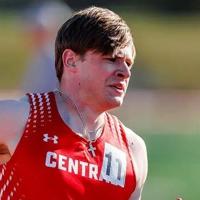
PELLA — Central College track and field junior Gabe Feldmann of Mount Pleasant hasn’t let cystic fibrosis slow him down on the track or his generosity off the track to raise support for the Cystic Fibrosis Foundation.

An inherited genetic disease, cystic fibrosis impacts the lungs, digestive system and other organs in the body. A build-up of thick, sticky mucus can lead to breathing problems, infections and digestive issues by blocking ducts and airways.

Depending on the weekend, Feldmann typically competes in races that range from the 200-meter dash all the way up to the 800-meter run. His focus is on the 400 meters, an event he has completed 13 times in his first two years at Central.

Breathing is an important part of all running events, but especially the 400.

“You breathe hard in a 400,” he said. “You feel it right in the chest.”

He completed the lap around the track in 51.62 seconds at the American Rivers Outdoor Championships in 2025, placing 22nd. He also was on the fifth-place 4×400-meter relay squad at that same meet.

Feldmann was approached by the Cystic Fibrosis Foundation about using his college athletic experience as a platform to raise money. Starting earlier this fall and running through the end of the Dutch season in early May, Feldmann is posting content on his Instagram account (@gabetracksdowncf) and thanking supporters who have donated to the foundation.

“It was the option that really stuck out to me,” he said. “I work out every day no matter what for track, but I’m still raising money doing what I do normally.”

He’s working towards clocking in at 48 seconds in the 400 this year.

“My goal is to run a 48 this year,” he said. “If I’m able to do that, I’ll be able to tell everybody who supported me in this that they were there with me.”

Raising money for the foundation is not new to the Feldmann family, who ran fundraising events in Mount Pleasant from 2016-2023.

Money isn’t the only motivation for Feldmann, who also wants to inspire other people with cystic fibrosis to chase big goals.

“I said I was never going to let being born with cystic fibrosis limit me.” he said. “I’ve been an athlete my whole life. If I could show any other kid that having cystic fibrosis doesn’t have to hold them back, that would be super cool. It’s the entire goal.”


Link

Continue Reading

Sports

EKU Volleyball Adds Two Transfers For 2026 Season

Published

on


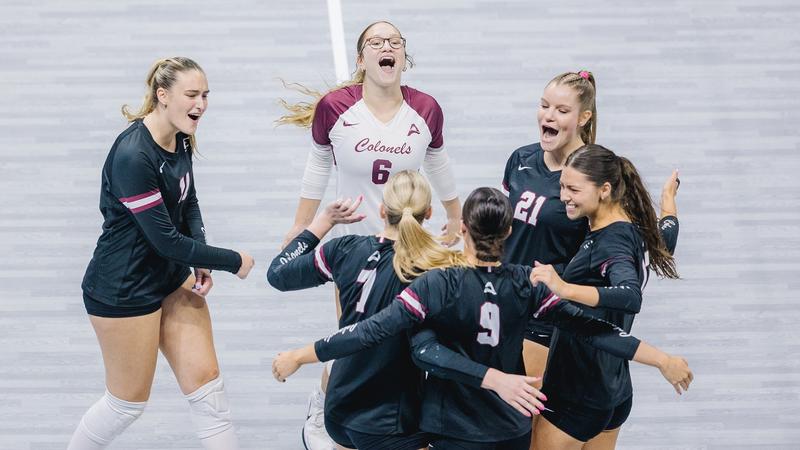
RICHMOND, Ky. – Eastern Kentucky University’s volleyball team has added two transfers for the 2026 season – Audrey Hudson, an outside hitter transferring from Wright State University, and Alexis Bull, a middle blocker/right side transferring from the University of Texas at Arlington.
 
“I’m so excited to add Audrey and Alexis to our program,” EKU Head Coach Johnna Bazzani said.  “They both come from championship programs.  That alone is going to help elevate and raise the standard in our gym!”
 
The 5-foot-10 Hudson will be a junior in 2026.  In her first season at Wright State, she played in five matches before suffering a season-ending injury.  In 2025, Hudson played in 18 matches and started three times.  She averaged 0.83 kills and 1.62 digs per set.
 
Hudson, a Fort Wayne, Indiana native, played high school volleyball at Bishop Dwenger and club volleyball for Munciana.  She helped Bishop Dwenger capture a 3A State Championship in 2020.  She was a second team all-state pick in 2022 and a first team all-conference selection as a senior in 2023.
 
Bull will be a senior in 2026.  She played in 42 matches over three seasons at UT Arlington.  As a junior this past season, Bull averaged 1.03 kills and 0.66 blocks in 19 matches.  She led the Western Athletic Conference (WAC) with an average of 0.41 aces per set.  Bull had a season-best six blocks at Louisiana and a season-high seven kills against Jackson State.
 
The 6-foot-2 Magnolia, Texas native was a 4-year member of the AVCA Phenom Watch List during her high school career at Oak Ridge and Magnolia.  She recorded 878 kills, 280 blocks and 123 aces during her prep career.  Bull was chosen as First Team All-Montgomery County and as the District 19-5A Offensive Player of the Year in 2022.
 
EKU tied for second in the Atlantic Sun Conference standings this season and advanced to the ASUN Tournament championship match.   The Colonels have won 20 or more matches in three straight seasons, the first time the program has accomplished that since 2003-05.


Link

Continue Reading

Sports

Wyoming Area’s Taylor Gashi commits to Army for track and field

Published

on


Taylor Gashi just needed to find the sport that gave her the best chance at achieving the goals for her future.

High-level youth gymnastics competition gave way to years of work on the volleyball court that continued even after a development in Gashi’s freshman year at Wyoming Area pointed her on the right path.

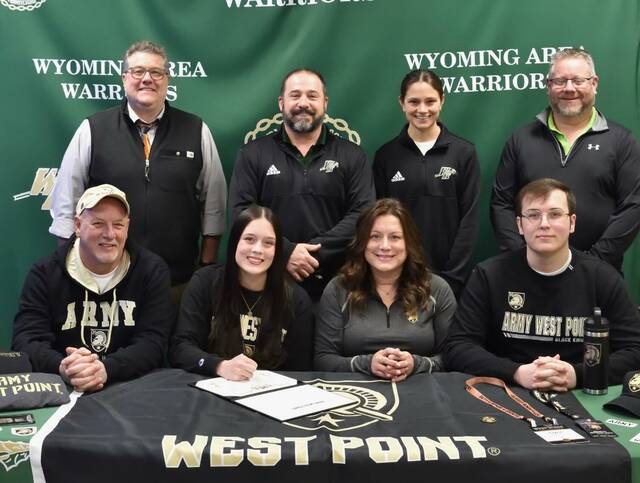
“With track and field, I kind of knew a few years back,” said Gashi, who on Dec. 15 formalized her commitment to attend the U.S. Military Academy at West Point and compete in the sport. “Volleyball has been a part of my life longer than track and field. Freshman year, I placed second in district for triple jump so that was kind of a wake-up call for my coaches and my family that this could probably go somewhere far.”

Gashi expects to concentrate on the long jump and triple jump while competing at Army West Point, but her overall athletic ability means she could potentially help the team in the heptathlon, a combination of events she tested and did well at with a Lehigh Valley club team last summer. As a junior at Wyoming Area, Gashi finished 20th in the state in Class 3A in the triple jump after taking silver medals in District 2 in the triple jump and discus and a bronze in the long jump.

Once Gashi realized track and field was her best option for a college sport, the rest fell into place.

“That same year, I also got to experience going to West Point for a football game,” she said. “One of my good friends brought me there. Both of my parents had been in the military, so the military was never something I was opposed to doing.”

Gashi learned more about the athletic program’s status on the National Collegiate Athletic Association Division I level, leading to her verbal commitment in September.

“It was kind of everything I had been looking for and track and field was something that could get me there,” she said.

Gashi will report to West Point for plebe summer, beginning her military duties before academics start next fall. Accepting her nomination to the academy means a five-year military commitment after she is done with school.

While at Wyoming Area, Gashi has kept busy not just in multiple events in track and field, but in multiple sports.

In volleyball, Gashi was a four-year starter, earning first-team, all-star status from Wyoming Valley Conference coaches this fall after previously receiving honorable mention.

After taking last year off, Gashi is back on the swim team this winter, specializing as freestyle sprinter.

Unsure of a major, Gashi has interest in looking into military intelligence and aviation.

“Those are the two that really strike interest for me,” she said.


Link

Continue Reading
Sports20 minutes ago

I hear Jamie Morrison from Texas Volleyball and appreciate his sentiments… “I care less about mistakes and more about responses” And this is fine and fair…but we also have to care deeply about…

Motorsports23 minutes ago

Ricky Thornton Jr has built his first race shop (Photos)

NIL34 minutes ago

Texas RB Quintrevion ‘Tre’ Wisner plans to enter the NCAA Transfer Portal

Sports37 minutes ago

Spartans Back In MW Action Versus Lopes On Sunday – SJSU Athletics – Official Athletics Website

Motorsports55 minutes ago

Penske celebrating 60 years in motorsports | Highlands News-Sun

Motorsports1 hour ago

Kuwait Motor Sports Club achieves outstanding results

Rec Sports1 hour ago

Shorthanded Orange drops Holiday Classic opening game to Incline, Nev. –

Rec Sports1 hour ago

After Lennart Karl success, Bayern Munich CEO intends to lean heavily on youth talent

Sports1 hour ago

Win Mikasa balls by filling in the 2025-26 Club Survey!

NIL1 hour ago

Damon Wilson II vs. Georgia football battle could set NIL contract precedent

Rec Sports1 hour ago

Holland named ASWA Finalists for 4A Lineman of the Year | Sports

Sports2 hours ago

College track: Mount Pleasant’s Gabe Feldmann running with a purpose | The Hawk Eye – Burlington, Iowa

Sports2 hours ago

EKU Volleyball Adds Two Transfers For 2026 Season

Sports2 hours ago

Wyoming Area’s Taylor Gashi commits to Army for track and field

Motorsports2 hours ago

Mini Bike Challenges Sport Bike to a Race – Drag Bike News

Most Viewed Posts

Trending