
Rec Sports
The Parental Arms Race Needs to End


Recently, in these pages, Ivana Greco made her pitch for why parents should opt out of the escalating arms race around parenthood. Elizabeth Grace Matthew, in her contribution, similarly puts the onus on parents to make their lives easier by, well, acting like parents.
They are correct to make the case, but their solutions don’t go far enough. Just as parents who want to protect their kids from internet brainworms need state laws, not just individual actions, to improve the climate in schools, lowering the competitive pressures around parenthood may require systemic, in addition to individual, action.
To see why, let’s imagine a high-achieving, academically minded young man in the spring of 1966, one of the 1.32 million young men preparing to graduate from high school that year. He’s aiming high, inspired by the recently assassinated president’s stirring words about what he can do for his country, and wants to go to Harvard just like his political hero did. Given the Vietnam draft, Harvard’s admissions offices have seen quite a spike in applications, up by more than a third compared to the period before the Gulf of Tonkin resolution.
This young man would be one of six thousand applicants (all male, of course) gunning for a spot in the next year’s freshman class. After accounting for deferrals, waitlists, and other administrative niceties, the odds of getting into Harvard for our fresh-faced young man in the mid-1960s would be about one in three, the same odds of your rolling a five or six on a throw of the die.
Today, his grandson is applying to Harvard, competing to be one of the 1,675 lucky souls who eat their freshman year meals in Annenberg and dream of being funny in the pages of the Lampoon. The school has been coed for decades, and international students now take up one of every six seats. The number of applications has risen eightfold since the Vietnam era, to nearly forty-eight thousand last year, and the odds of being successful are now under five percent: the odds of rolling snake eyes with two dice.
Without sufficient dynamism, “success” in a meritocratic society feels like a reverse game of musical chairs: the number of chairs stays the same, but the number of players continues to rise. It’s harder today than it was in 1968 to get into Harvard, to get a spot on a Major League Baseball roster, or to buy an attractive three-bedroom house within commuting distance to a thriving American city, not because those conspiratorial elites took them from you, but because we haven’t expanded opportunities for success.
We could expand the Ivy League (M.I.T.-in-Flint still has a certain ring to it) or push to revalue what traits and characteristics we deem worth of esteem, as with the Manhattan Institute’s recent release of college rankings. We could expand the number of baseball teams (Mexico City, anyone?) and prioritize efforts to revitalize middle America. Part of the answer involves adding more chairs to the game of musical chairs, as well as, to push the analogy further than it can bear, helping some people recognize that their gifts are better suited to pin the tail on the donkey.
Until the incentives change, we must admit a certain logic to that of the self-avowedly “intensive” parent. “Helicopter parents” may be a cause of a culture in which achievement and status are given outsized weight, but they are also an effect. In a world where “success” is increasingly understood as zero-sum, we might have some empathy for today’s parents who are worried they are letting their kids down if they are not setting them up to succeed, even if that comes at a collective cost.
Elissa Strauss, author of the 2024 book When You Care: The Unexpected Magic of Caring for Others, admits she “just might be an intensive parent,” partly because of the competitive pressures kids face in the real world. “[Intensive] parents are not doing a lot because of a psychological drive toward making sure their kids are the best of the best. They are doing a lot because society doesn’t do enough.” Greco would probably agree, acknowledging that high-intensity parenting “works” on its own terms, “in the sense that it makes it more likely that a child will ‘win’ the race of travel sports, cheerleading competitions, and college acceptances.”
That pressure seems to be felt most heavily by moms. In a 2022 poll conducted by YouGov on behalf of the Institute for Family Studies and the Ethics and Public Policy Center, we found that three in five moms said parenting today felt harder than it did a generation or two ago. Dads, on the other hand, were nearly as likely to say that parents today have it easier than they did in the 1970s.

It’s popular on the right to blame declining fertility on the “girlboss,” that too many women are going into the workforce and choosing career over children. The problem with this analysis is that the timeline doesn’t line up. The rise in female labor force participation largely occurred over a time period of gently-declining-to-roughly-stable fertility. This post–Great Recession drop in birth rates, on the other hand, is heavily concentrated among unmarried women, who have seen birth rates fall by over one-quarter, and marriage rates have been falling fastest among minority women and those without a college degree.
The “girlboss,” in other words, might get later in life than her predecessors, but many of them are still getting married and having a kid or two; it’s low-income women who are increasingly staying single and putting off childbearing. To put it another way, the share of college-educated women who have ever given birth has stayed flat since the late 1970s, while dropping by ten percentage points for those without a college degree. Marriage and parenthood are increasingly more correlated with college education, not less.
A new paper from the Brookings Institution’s semi-annual economics conference helps identify how the competitive pressures of the “rug rat race” are helping push birth rates down. The authors first identified the dynamic in the hypermeritocratic societies of East Asia, but find signs of that mindset taking root here as well. They find that counties with more upwardly aspirational residents, as measured by social media connections, have lower birth rates. Higher levels of social capital and social cohesion are also linked to lower fertility. And they find that the number of Advanced Placement exams—a commonly used proxy for localized academic pressure on students—“is strongly negatively correlated with state-level birth rates in recent years.”
As parenthood has transitioned from economic investment (hands on the farm, future earners to keep you out of poverty in old age) to more of a lifestyle good, it has picked up aspects of conspicuous consumption. People have children not for the dollars and cents, but for how their children’s accomplishments reflect back on them. And social media and the relentless desire to show off the Instagram-ready trophy shelf help put this impulse on steroids. In essence, parenthood is being put on a pedestal by, possibly, ballerinas on farms and others selling a highly curated parenting lifestyle or brand.
Intense competition among wealthy parents is nothing new; what’s new is that it’s no longer limited to the boarding school set. The authors specifically talk about Hispanic women, who have seen some of the sharpest declines in fertility relative to the pre-Recession trend. Take, say, a middle-class Hispanic woman who is fed unrealistic and unattainable parenthood trends featured on her algorithm, while also being fed a diet of social media’s usual instant gratification when it comes to wealth and consumption. Is it any wonder she might start to adopt the belief that parenthood is something best put off until it can be done well—or not done at all?
The absolute out-of-pocket costs of children aren’t what’s driving fertility decline; indeed, cross-sectional analyses show no visible link between oft-touted expenses like childcare costs and declining fertility. Instead, our decline in fertility is as much a product of affluence and increased opportunity as anything else. We should absolutely encourage parents to be, in Greco’s words, “good enough,” rather than perfect, and some of that will encompass some of Matthews’s prescriptions of discipline in things that matter (the type of person your child is becoming, that is, rather than the accomplishments they are capable of racking up). But we can also remove some of the incentives that reward such strenuous applications of parental energy and vigor.
Greco and Matthew, in their own ways, argue for a cultural shift that recognizes the escalatory and zero-sum nature of status competitions in parenting. We could experiment with other ideas on how to reduce the returns to excessive investment in youth activities. Should we consider an excise tax on youth sports leagues, or cigarette package-style disclosure on parenting magazines?
But we also need to tackle the other end of the spectrum, ensuring that even students who don’t take home the blue ribbon, the travel league championship, or the thick admission packet from a brand-name school have meaningful opportunities and chances to contribute and feel needed in their community.
Our efforts to make having a family easier in America should include aiming to reduce some of the anxiety around which bumper sticker proud parents can slap on the back of the SUV. This means creating more opportunities—in housing, in industry, in politics—to have a foothold, rather than trying to break into a stagnant and aging status quo. It includes exploring how to resurrect the economic vitality of middle-town America, breaking up the perceived hegemony of superstar cities, and making it possible for people to become a local elite, rather than looking to escape to New York or San Francisco as soon as possible. These goals may even end up leading to more babies, but at the very least, they would likely lead to a less stressful, more pro-family America.
Image licensed via Adobe Stock.


Every youth athlete goes through periods of rapid growth — but not all of them experience pain or injury along the way. So, what separates the athletes who stay healthy from those who get sidelined?
Growth itself isn’t the issue. The real challenge lies in how the body adapts to increases in size, speed and overall physical stress. During growth spurts, bones often lengthen faster than muscles and tendons can keep up. This mismatch can affect coordination, control and overall movement quality. Without adequate relative strength, movement competency and physical capacity, young athletes are more vulnerable to overuse injuries such as Osgood-Schlatter’s, Sever’s disease and even stress fractures.
At Rehab 2 Perform, we focus on bridging the gap between rehabilitation and sports performance with a proactive, development-based physical therapy approach. Our rehab program includes age-appropriate movement assessments, targeted strength training and education for both athletes and their parents. We don’t simply help young athletes rehab and recover; we help them build resilience, confidence and the physical foundation needed for long-term success.
By moving beyond the traditional “rest and wait” approach—or ignoring pain altogether—we empower young athletes to understand their bodies, address their weaknesses and take ownership of their development. Growth doesn’t have to equal growing pains. With the right environment, coaching and training principles, athletes can grow stronger, move better and stay on the field.
At Rehab 2 Perform, we believe the true measure of success isn’t just returning to play—it’s creating durability and longevity in sport and in life.

Dr. Josh Funk, DPT
Rehab 2 Perform
About the Author
Dr. Josh Funk, DPT, is the Founder and CEO of Rehab 2 Perform, a leading performance-based physical therapy company with 14 locations across the Washington, D.C., Maryland and Virginia region. A former collegiate and pro lacrosse player, Dr. Funk specializes in bridging the gap between rehab and performance for athletes of all levels.
Awards & Honors
Individual:
- EY Entrepreneur of the Year Finalist (Mid-Atlantic) 2024, 2025
- APTA Peer2Peer Honoree
- Goldman Sachs 10,000 Small Businesses Graduate
- Daily Record VIP 40 Under 40
Rehab 2 Perform:
- Inc. 5000 Fastest Growing Company (2020–2025)
- U.S. Chamber CO-100 Growth Accelerator Honoree
- WebPT Innovator of the Year 2022

Crean Lutheran’s Hunter Caplan moves the ball as Cypress guard Ethan Mai defends Friday night. (Photos courtesy Crean Lutheran Shutterbugs, John Luciano, Samantha Burgett and Howard Lyon).
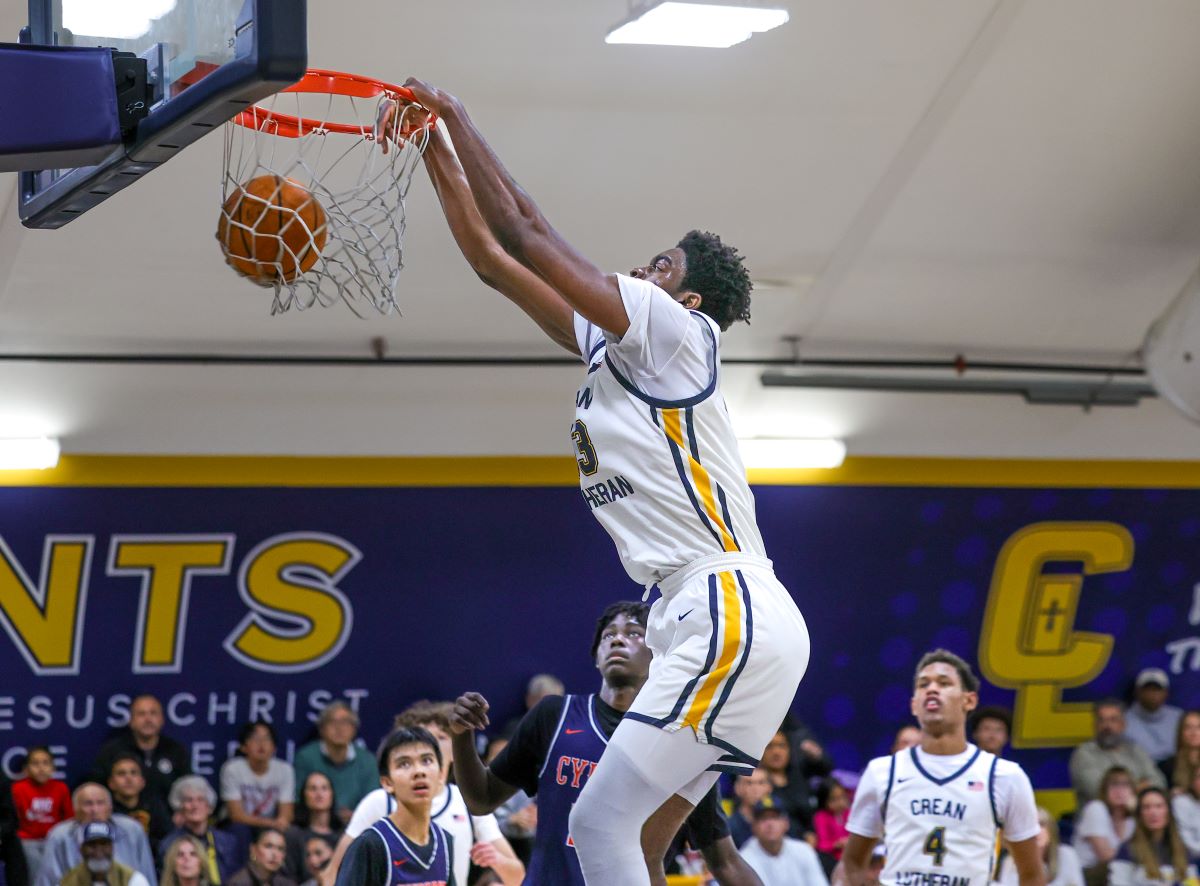
Crean Lutheran’s boys basketball team battled back from a four-point halftime deficit to defeat Cypress 72-60 in a Crestview League opener Friday night at Crean Lutheran.
To see the slide show, click on the first photo:

Crean Lutheran’s Chadrack Mpoyi dunks to help rally the Saints early in the second half.
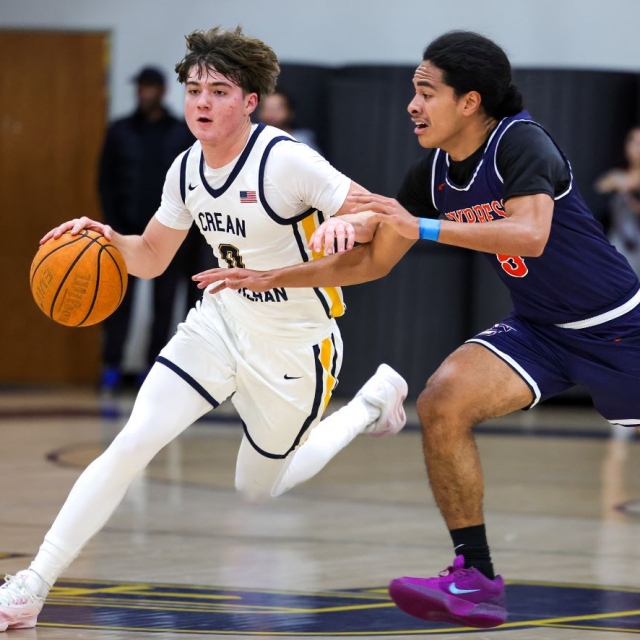
Crean Lutheran’s Caden Jones drives against Tyrus Allen of Cypress.
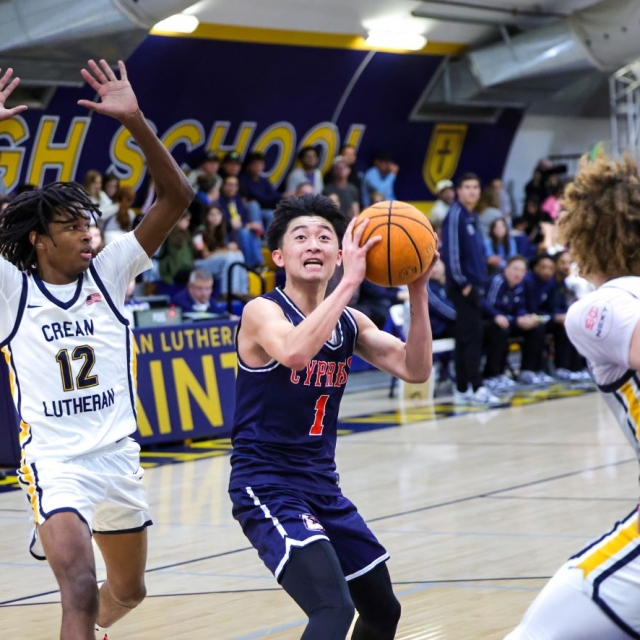
Cypress senior point guard Ryan Gov drives to the basket as Crean Lutheran’s Evan Mack and Nicholas Giarrusso defend.
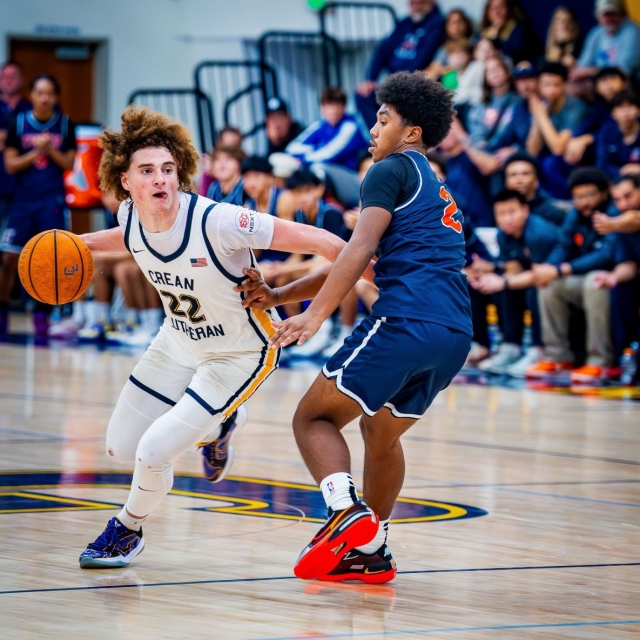
Crean Lutheran’s Nick Giarrusso drives against Jaharii Hall of Cypress Friday night.
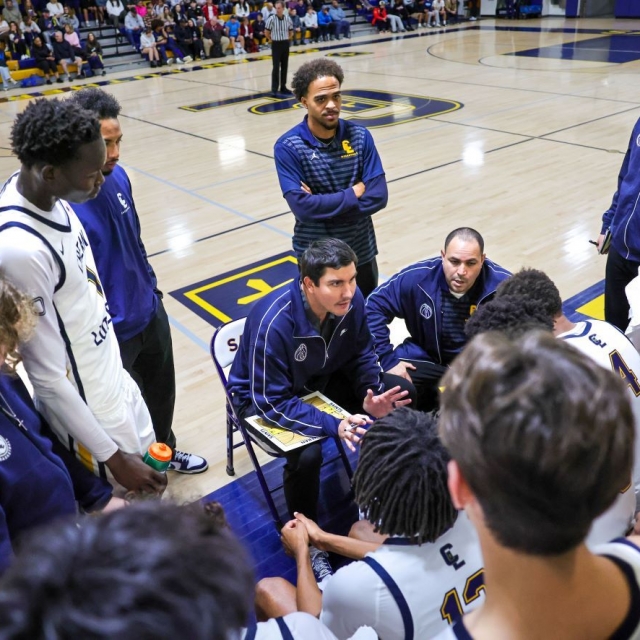
Crean Lutheran Coach Austin Loeb talks to his team during a timeout Friday.
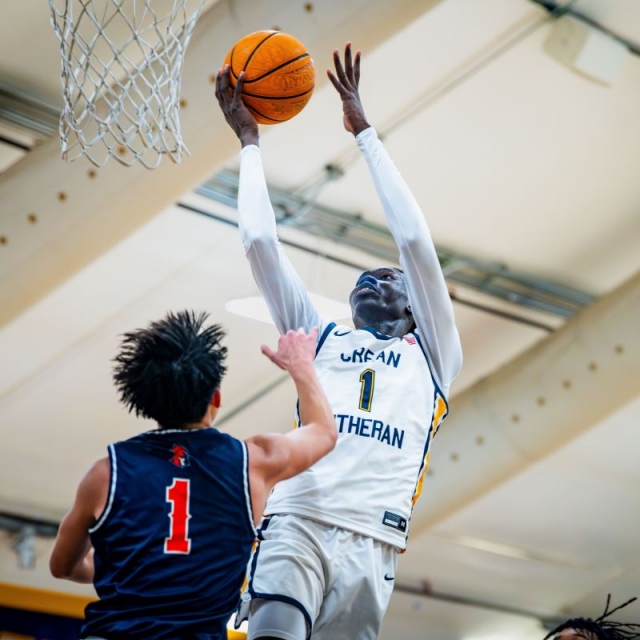
Will Malual scores for Crean Lutheran.
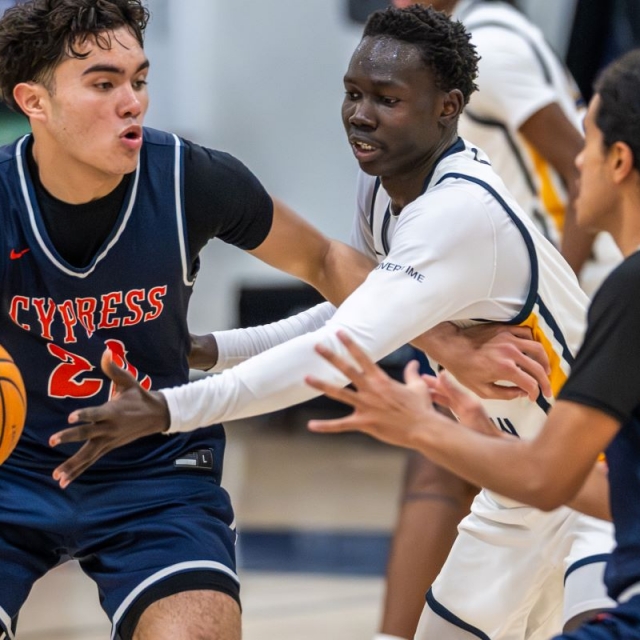
Gavin Kroll of Cypress is defended by Will Malual of Crean Lutheran.
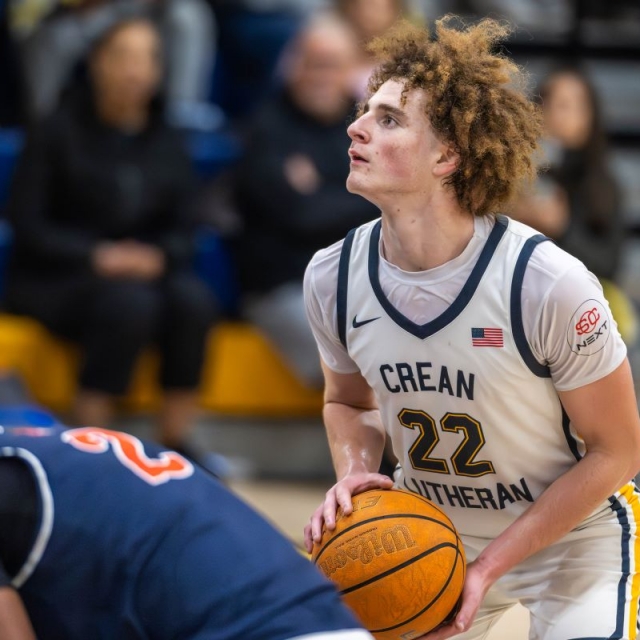
Crean Lutheran’s Nicholas Giarrusso attempts a free throw.

Cypress players get excited during a big play.
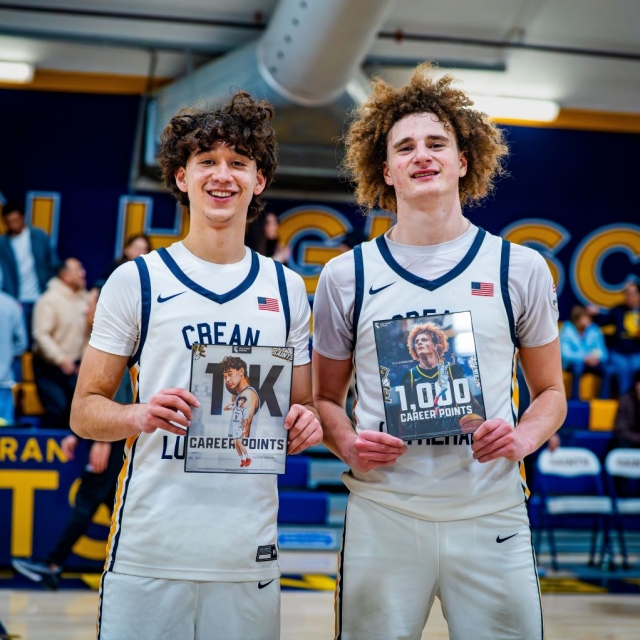
Crean Lutheran’s Nick Giarrusso (right) and Hunter Caplan celebrate 1,000 career points.
It was a back and forth game up until the final two minutes of the game before the Saints (13-5, 1-0) were able to finish strong against the Centurions (14-6, 0-1), according to Crean Lutheran Coach Austin Loeb.
“Hats off to Cypress and Coach {Derek] Mitchell as they are a very disciplined team and play great team basketball,” Loeb told OC Sports Zone. “I thought our guys pulled together late in the fourth quarter and started to execute which helped us get the lead and ultimately the win.”
Hunter Caplan led Crean Lutheran with 19 points and two assists. Chadrack Mpoyi had 17 points and 11 rebounds and Nick Giarrusso had 14 points, eight rebounds and six assists for the Saints.
Ryan Gov scored 21 points and Gavin Kroll 18 points to lead Cypress.
Crean Lutheran was again without starter Jacob Majok, who is out with an ankle injury, Loeb said.
In another league game, La Habra (15-4) defeated Foothill 57-46 Friday night at Foothill.
—Tim Burt, OC Sports Zone; timburt@ocsportszone.com
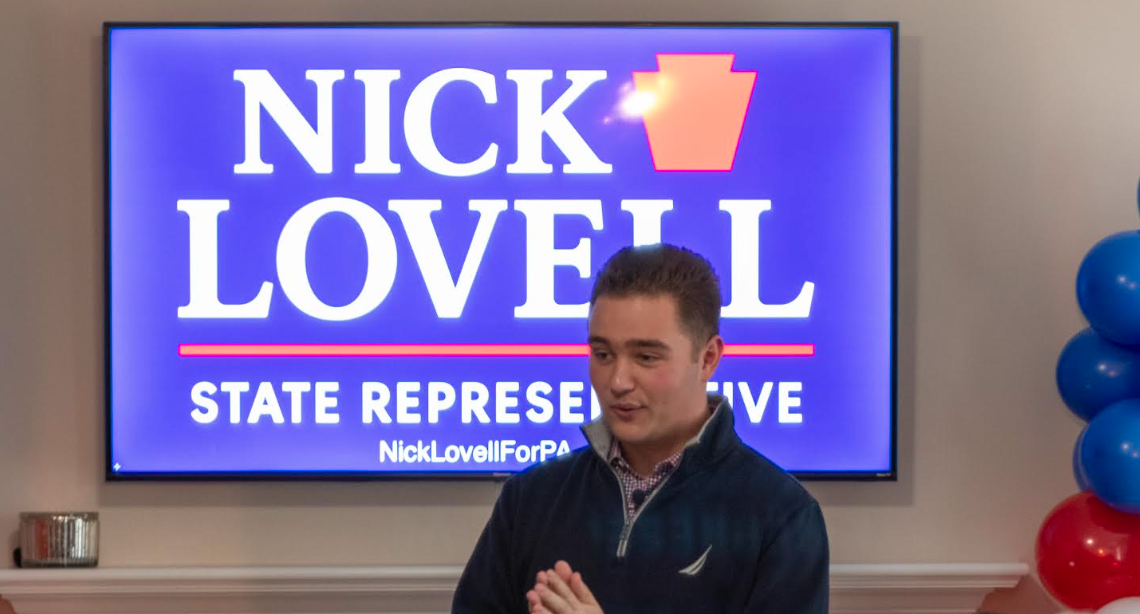
Nick Lovell, a fifth-generation Adams County native, local small business owner, and President of the Littlestown Area Board of School Directors, announced at a campaign event today that he is running as a Republican to represent the 91st District in the Pennsylvania House of Representatives.
The 91st District seat, which covers most of Adams County, is presently held by Dan Moul,

Lovell has served on the Littlestown Area School Board since 2023, when he was elected as the top vote recipient in both the primary and the general election. He currently serves as board president. In addition to his public service, Lovell runs his own business and has been active in his local church, where he serves as a worship leader. He is also deeply involved in the youth sports community, managing multiple baseball leagues in the area.
“Families across our district are working hard and doing everything right to make ends meet. They deserve a state representative who works just as hard for them,” Lovell said. “Leadership is service. It means showing up, listening, and getting results for your constituents. I’m running to fight for real property tax relief, stronger schools with accountability to families, and a state government that does its job on time and with fidelity.”
Lovell emphasized his commitment to practical solutions that help working families and seniors, protect taxpayers, and strengthen local communities.
“As a Christian and a lifelong Pennsylvanian, I believe public service is a calling,” Lovell added. “I’m proud of my roots here, and I’m ready to bring a strong work ethic and fresh energy to Harrisburg on behalf of the people of the 91st district.”
Lovell’s campaign will focus on property tax reform, fair and effective school funding, affordability, greater accountability in the state budget process, and term limits.
Voters can learn more and get involved at NickLovellForPA.com.

The Loudoun County Department of Parks, Recreation and Community Services is organizing its first girls’ flag football league this spring with a middle school and high school division.
Young girls in Loudoun County, Virginia, interested in playing flag football will have a chance to do so in their own backyard.
The Loudoun County Department of Parks, Recreation and Community Services is organizing its first girls’ flag football league this spring. It will have a middle school and high school division.
Sharon Moseley, the department’s youth sports program coordinator, told WTOP that girls of all ages are interested in the sport, and the league will make it more accessible to players in the county.
“It was just a matter of seeing the need and trying to meet it,” Moseley said.
The department will partner with Michael Rivera, who founded the Virginia Hurricanes girls’ flag football program and is currently the head coach of Marymount University’s women’s flag football team. Moseley said he brings the knowledge and passion for the sport, which makes it a great partnership.
“We want to give them the opportunity to play at a competitive level, to be able to just continue playing a game that they love and are learning, but also to improve at that game so they can have successful high school careers,” Rivera said.
Season runs for 6 weeks
Preseason practices would begin in March, with the season starting on April 12. The spring season will run over six Sundays, culminating with the final slate of games on June 7. All the games will take place on the turf field at Loudoun County High School in Leesburg, allowing multiple games to be played at the same time, Rivera said.
Families can register their child on the PRCS Connect page dedicated to flag football through March 1.
Players are required to register individually but will be asked questions during the process about which team they want to play for. The league will also be open to out-of-county residents.
While officials have been encouraging high school teams to register to play, Rivera said players of all skill levels are welcome to join and will be placed on a team to match their skill level.
A combination of volunteers and experienced coaches will assist during the first season. Moseley hopes that high school players entering the league will motivate their coaches to also participate in the future.
The addition of the flag football league comes as the sport continues to grow. Last September, 12 of the 13 high schools in Prince William County fielded girls flag football teams, four of which opened the inaugural season at the Washington Commanders training facility. Girls’ flag football also became a varsity sport in neighboring Maryland.
Flag football to premiere at Olympics
According to the National Federation of State High School Associations, the number of girls playing the game in high schools has more than doubled, with 42,955 girls participating in the 2023-24 season. Its increased popularity comes as a new collegiate flag football conference is set to begin in the spring, and the sport will debut at the 2028 Summer Olympics.
Rivera, who’s been involved in the sport for over a decade, said that once girls try it, they are instantly hooked.
“I have so many players who have just come out and just by trying it, realize how much they love it, and it clicks very, very quickly,” Rivera said. “So, we’re trying to make it accessible to as many girls as possible.”
It costs $175 per player to join the league, with players receiving an NFL Flag Football jersey and a flag football belt. Players will be required to bring their own mouth guard and wear shorts or pants with no pockets as part of their uniform, Moseley said.
Officials say the inclusion of middle school players will be a starting point in getting younger girls involved in the sport. Moseley added that eventually, the league will include elementary school children as well.
“The younger we can start them and get them interested and get the skills and confidence, then they’re just going to thrive even more as they get older,” she said.
Moseley said once the sport becomes an official varsity high school sport in Virginia, Loudoun County’s rec league will become a place for players to get “supplemental training.”
While all skill levels are welcome, Rivera said players should expect a competitive environment on the gridiron in the spring.
“We want to make sure we make meaningful athletic opportunities for these girls and just make sure that we are keeping pace with everybody else,” Moseley said. “We don’t want them falling behind because the opportunity isn’t there.”
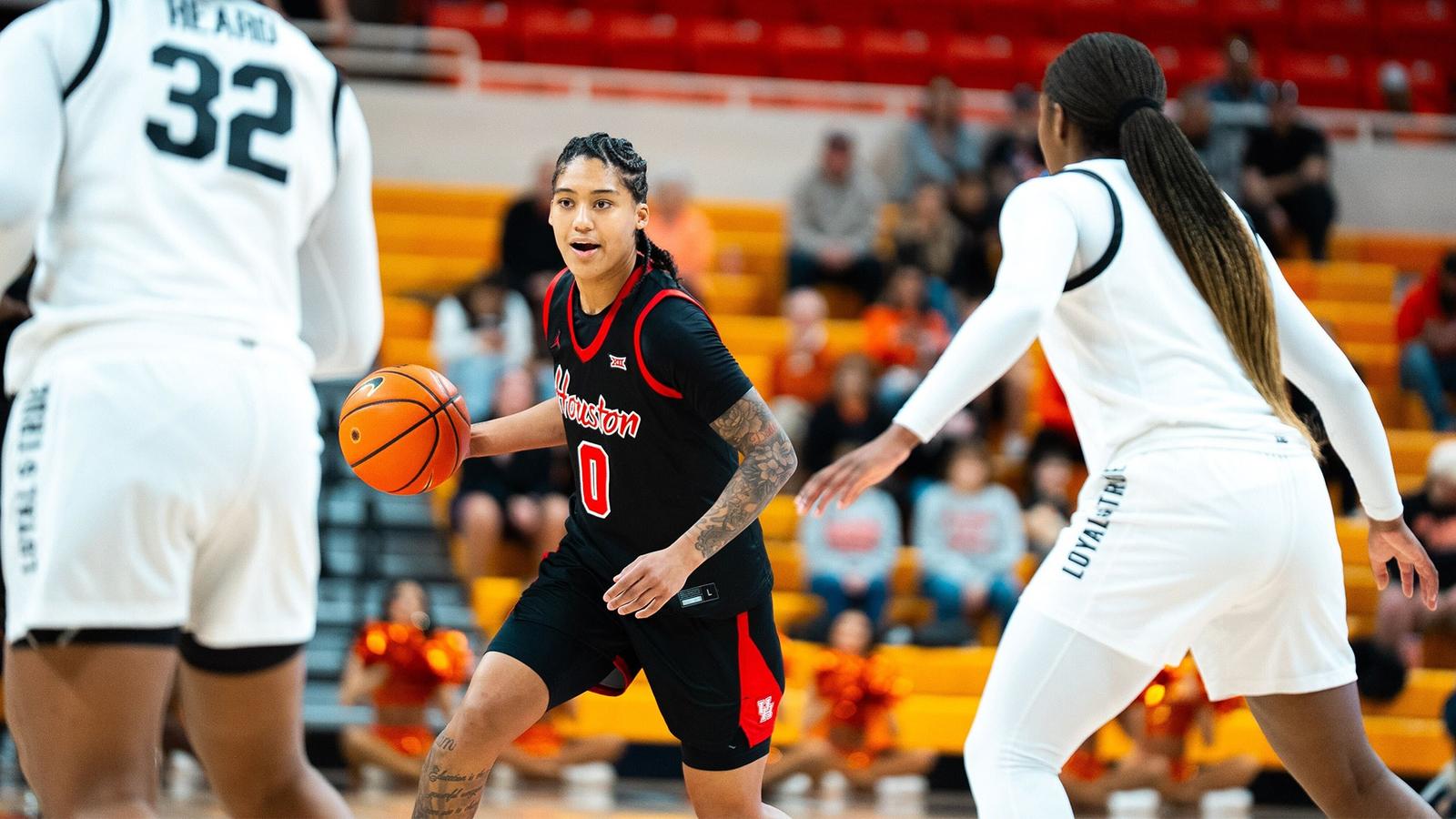
Senior guard TK Pitts led the Cougars (6-8, 0-3 Big 12) in scoring with 15 points, marking her sixth game this season in double figures. Freshman forward Jade Jones notched 10 points on the day, tallying her seventh outing of the year in double-digit scoring. Graduate forward Amani Bartlett set a career high of six rebounds.
Oklahoma State (13-3, 2-1) and Houston kept it close in the first, but the Cowgirls used a 10-2 run to take an 18-9 lead at the end of the quarter.
A game of runs ensued as a 17-4 stretch through the opening five minutes of the second extended Oklahoma State’s lead to 35-13. After trading scores late into the period, Houston sparked a 9-3 run to cut the deficit down to 16 at 45-29 to enter halftime.
Jadyn Wooten and Micah Gray each produced 21 points on the day for the Cowgirls, leading five double-digit scorers for Oklahoma State to pull away in the second half.
UP NEXT
The Cougars return to Fertitta Center for a two-game homestand beginning with Kansas State at 6:30 p.m., Wednesday, for Family Game Night. Fans can play bingo during the game to win special prizes. Fans can also stay after the game for postgame autographs with redshirt-senior guard Kyndall Hunter.
Houston welcomes rv/- BYU at 1 p.m., Saturday, for Youth Basketball Day. Fans can stick around for postgame autographs with senior guard TK Pitts.
SUPPORT YOUR COOGS
Fans can make a direct impact on the success of Houston Women’s Basketball by providing NIL opportunities, purchasing tickets and joining Full Court Press, which provides support directly to Houston Women’s Basketball for needs beyond its operating budget.
STAY CONNECTED
Fans can receive updates by following @UHCougarWBB on X, formerly known as Twitter, and catch up with the latest news and notes on the team by clicking LIKE on the team’s Facebook page at UHCougarWBB or on the team’s Instagram page at @UHCougarWBB.
– UHCougars.com –

MILWAUKEE, Wis. (WMTV) -On Jan. 3, 1996, Wisconsin residents and visitors began funding construction of what would become Miller Park through a new sales tax.
The funding mechanism was part of state legislation passed in 1995. The bill included a $250 million preliminary budget for design, construction and development of the Milwaukee Brewers stadium.
The legislation allowed a one-tenth of a percent sales tax to help pay for the stadium in Milwaukee. The bill also required any major league baseball team using the facility to contribute to youth sports organizations annually and mandated general seating in the stadium be smoke-free.
Construction on what is now American Family Field began Nov. 6, 1996. The stadium opened five years later in 2001 as Miller Park, a name it held until 2020.
Click here to download the WMTV15 News app or our WMTV15 First Alert weather app.
Copyright 2026 WMTV. All rights reserved.

Gophers can’t spin Koi Perich’s decision to enter portal – Twin Cities

North Texas QB Drew Mestemaker transfers to Oklahoma State in big portal splash

Dale Earnhardt Jr looks unrecognizable in throwback photo with NASCAR – Motorsport – Sports
Will NASCAR racing ever return to the Kentucky Speedway?

Pennsylvania Doubles Up As Jax Wittmer Lands Junior Sprint Golden Driller – Speedway Digest

Bruce Pearl calls for collective bargaining, multi-year contracts in college sports

2025 Volleyball Season Recap – University of Washington Athletics

Red Wing’s Annie Reinitz excels as volleyball setter | Sports

If all youth athletes grow, why don’t they all hurt?

Crean Lutheran finishes strong for opening league win against Cypress –

Nick Lovell Announces Campaign for Pennsylvania House of Representatives, 91st District

‘Seeing the need’: Loudoun County adds girls flag football rec league

Cougars Drop Saturday Meeting against rv Oklahoma State

College football’s top 5 transfer portal commitments so far

Pete Golding addresses status of LSU assistants at Ole Miss for remainder of College Football Playoff

SoundGear Named Entitlement Sponsor of Spears CARS Tour Southwest Opener

Donny Schatz finds new home for 2026, inks full-time deal with CJB Motorsports – InForum

David Blitzer, Harris Blitzer Sports & Entertainment

How Donald Trump became FIFA’s ‘soccer president’ long before World Cup draw

DeSantis Talks College Football, Calls for Reforms to NIL and Transfer Portal · The Floridian
Elliot and Thuotte Highlight Men’s Indoor Track and Field Season Opener

JR Motorsports Confirms Death Of NASCAR Veteran Michael Annett At Age 39

#11 Volleyball Practices, Then Meets Media Prior to #2 Kentucky Match

Rick Ware Racing switching to Chevrolet for 2026

Colleges ponying up in support of football coaches, programs
West Fargo volleyball coach Kelsey Titus resigns after four seasons – InForum

Maine wraps up Fall Semester with a win in Black Bear Invitational

Ross Brawn to receive Autosport Gold Medal Award at 2026 Autosport Awards, Honouring a Lifetime Shaping Modern F1

Nascar legal saga ends as 23XI, Front Row secure settlement

Temple Begins Indoor Track & Field Season at UPenn This Weekend





-
 Motorsports3 weeks ago
Ross Brawn to receive Autosport Gold Medal Award at 2026 Autosport Awards, Honouring a Lifetime Shaping Modern F1
-

 Rec Sports3 weeks ago
Stempien to seek opening for Branch County Circuit Court Judge | WTVB | 1590 AM · 95.5 FM
-

 Rec Sports2 weeks ago
Princeton Area Community Foundation awards more than $1.3 million to 40 local nonprofits ⋆ Princeton, NJ local news %
-

 NIL3 weeks ago
Downtown Athletic Club of Hawaiʻi gives $300K to Boost the ’Bows NIL fund
-

 NIL3 weeks ago
Kentucky AD explains NIL, JMI partnership and cap rules
-

 Rec Sports3 weeks ago
Teesside youth discovers more than a sport
-

 Sports3 weeks ago
Young People Are Driving a Surge in Triathlon Sign-Ups
-
 Sports3 weeks ago
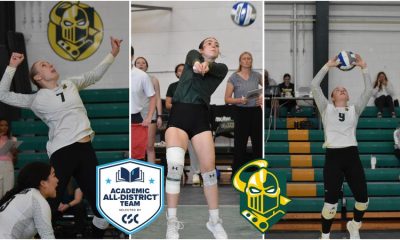
Three Clarkson Volleyball Players Named to CSC Academic All-District List
-

 Motorsports3 weeks ago
PRI Show revs through Indy, sets tone for 2026 racing season
-

 Sports2 weeks ago
Beach Volleyball Unveils 2026 Spring Schedule – University of South Carolina Athletics