
NIL
The Wild West Of NIL

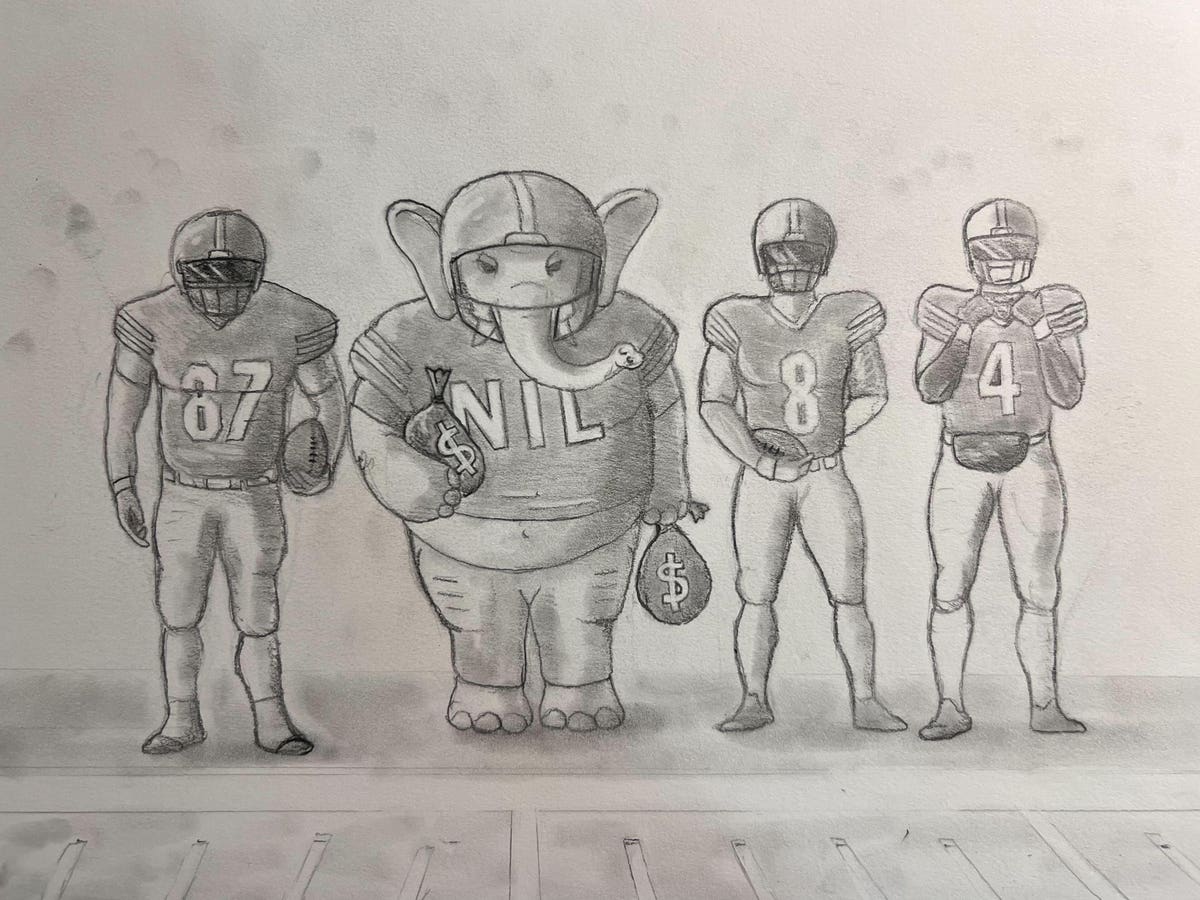
Warren Zevon once famously sang “send Lawyers, Guns, and Money,” a term that came to represent the merging of political, legal, and financial interests that are brought into a situation to exert influence. Paying college athletes for their athletic performance has been a shadowy pillar of University athletics for decades, until now. After years of defending/defining the concept of amateurism, a Supreme Court decision forced the NCAA to revoke its restrictions on athlete compensation. The floodgates opened on July 1, 2021, when athletes were officially allowed the opportunity to monetize their personal brands via their Name, Image, and Likeness (“NIL”). Transactions that once took place “under the table” were now out in the open. Like all new frontiers, the college athletics landscape brings massive opportunity. Still, the lack of precedent and enforcement procedures can make it feel like The Wild West.
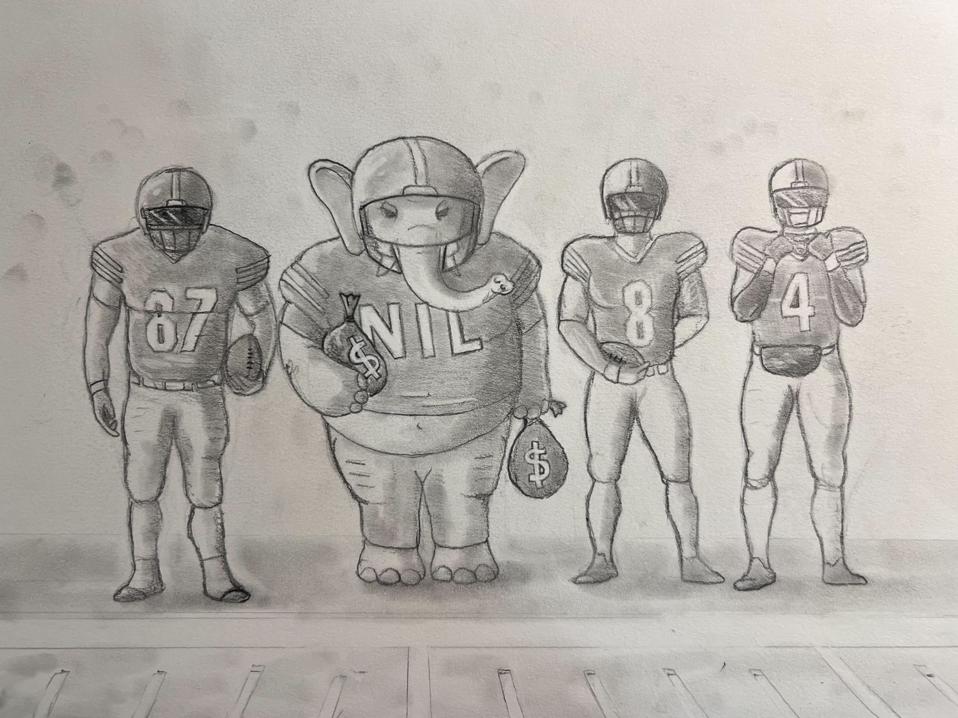
THE ORIGINAL NIL DEAL
Eric Dickerson was born on September 2, 1960 in Sealy, Texas. Widely regarded as one of the best running backs to ever grace the gridiron, Dickerson was a highly recruited prospect out of his small Southeastern Texas town. He ultimately decided on Southern Methodist University “SMU” to continue his football career. After an extensive investigation into SMU regarding improper benefits being offered to prospective recruits, the NCAA handed down one of the harshest penalties in the history of collegiate athletics: forfeiture of their remaining season, reduced scholarships and a probationary period banning them from any televised games and future bowl appearances. Affectionately referred to as “THE DEATH PENALTY,” this decision altered the future of SMU football for decades.
It does make one think, if SMU was offering cash and other perks, maybe there were other universities offering cash, or even farmland and heads of cattle, as a compensation package.
“Everyone was doing it,” including the likes of Reggie Bush Chris Webber Rick Pitino, but SMU was caught first and paid a dear price. Jay Bilas has been one of the most public figures in support of the NIL frontier, advocating for the athletes.
LAWYERS
The seismic changes in college sports were not voluntary NCAA implementations. Paying players publicly and not requiring them to sit out one year upon transfer, were forced reactions to major losses in the court room.
The most influential NIL-related lawsuits center on antitrust issues. For those that are not licensed to practice law (like me), antitrust violations occur when companies engage in anticompetitive behavior that harms consumers or the market. Two fundamental NCAA rules that were viewed as “anticompetitive,” along with key lawsuits, ultimately led to what we know as NIL today.
1. Old NCAA Rule #1: Limit athlete compensation to scholarships:
One core argument is that the NCAA conspired with its member conferences and universities to engage in “price fixing” by collectively denying athletes compensation beyond education-related benefits like scholarships, room, and board. Imagine if all the major banks on Wall Street agreed to only pay their interns with free training and lunch, despite the fact their production contributes to multimillion dollar deals. Unlike banking interns, college athletes are the primary reason for multimillion dollar deals.
- O’Bannon v. NCAA (2014): Ed O’Bannon was a UCLA standout and NBA draft pick in 1995. While playing the EA College Basketball videogame, he noticed a player that looked and played just like him. Considering NBA and NFL players were paid for their representation in videogames, O’Bannon felt the NCAA’s restriction of compensation was unfair. So, he filed and won a lawsuit in what was the first major win against the NCAA’s limitation on compensation. But rather than allowing EA to pay players for licensing rights, the NCAA stuck to its restrictions that led to the abrupt end of the EA college videogame franchise.
- NCAA v. Alston (2021): Shawne Alston played running back in 37 games for the West Virginia Mountaineers from 2009-2012. He and a group of NCAA Division I athletes found it unfair that athletes were limited to earning only education-related benefits like those detailed above.
By denying athletes the opportunity to monetize their Name, Image, and Likeness, the NCAA was effectively acting with unfair monopoly power.
Athletes were enabled to make money from corporate sponsorships, high net worth “boosters” and everything in between with no oversight. - House v. NCAA (2024): Collegiate swimmer Grant House represented athletes in a lawsuit arguing that athletes who had missed the chance to profit from their NIL in broadcasting, videogames, and third-party NIL revenue were owed money. With the potential to bankrupt the NCAA if taken to trial, the suit was settled with the NCAA agreeing to pay former college athletes a sum of $2.8 billion over the next ten years. To gain more control over the current NIL frenzy, the settlement also permits universities to directly pay their student athletes a share of revenues annually, starting at $20.5 million. Judge Claudia Wilkens granted final approval in July, just in time for the 2025-2026 academic year.
2. Old NCAA Rule #2: Athletes that transfer must sit out 1 year:
Prior to 2021, college athletes who transferred schools would have to sit out one season before being eligible to play. Facing mounting antitrust scrutiny (see: Alston – again), the NCAA decided to get ahead of it and permit athletes one free transfer that allowed them to compete immediately. Even though this limitation is intended to ensure academic stability, it can still be viewed as anti-competitive for athletes seeking better situations.
- State of Ohio et al. v. NCAA (2024): A coalition of states challenged the NCAA’s remaining restrictions on transfers, arguing that the adjusted rule still imposed unreasonable restraint on athletes. Newfound transfer freedom allowed athletes to seek the best fit.
GUNS
If you read my prior article: Athletes, Entertainers, & The Fight For Relevance you will remember that athletes have a short window in life to profit off their talents and every second of on-field production matters. Prior to the Alston 2021 ruling, athletes who were seeking a transfer to another program were required to sit out one year of competition (barring a few exceptions). The real gun fight now takes place in the transfer portal.
As a result of the transfer process changes, the portal has become much more active with a higher level of competition and an increased focus from schools to win now opposed to developing talent over four years. The portal also creates a bottleneck for high school seniors who now must wait their turn to get a shot at playing time and could force them to make a pit stop at a junior college “JUCO”. With this major shift, it is interesting to get the point of view from a player that isn’t in the spotlight but watching the new landscape develop around him.
Outside of diehard Ohio State fans, most college football enthusiasts do not know of NOLAN BAUDO.
Nolan Baudo is a 5’10, 180LB, 2023 preferred walk-on wide receiver at THE Ohio State University hailing from Marist High School on the Southwest Side of Chicago.
Nolan has learned/befriended some of the most elite talent in the country—players like Carnell Tate, Marvin Harrison Jr., Emeka Egbuka, Jaxon Smith-Njigba, and Jeremiah Smith. These aren’t just teammates; they’re friends and current/future NFL stars. Not to mention 47% of the National Championship team answered: “Baudo” when asked who they would most likely hangout with. Baudo has gained insight into a critical shift happening across college football.
In Baudo’s eyes, NIL has created a noticeable divide between average, good, and great players. He sees a pattern: average players are often preoccupied with the paycheck, good players are similarly focused on compensation over performance, but the great players—those destined for the next level—understand that production comes first. For those next level athletes, the money follows the performance, not the other way around. The more they produce in college tends to translate into a higher NFL draft pick which means: more money tomorrow.
Beyond NIL, Baudo emphasizes something even more fundamental: culture and chemistry. With rosters pushing 110 players, he believes alignment is everything. If even a handful of players aren’t fully bought into the program’s vision, the result is friction and instability. “Money will never win a championship,” Baudo often says. “But great culture and unmatched team chemistry can give you a real shot.”
At Ohio State, that culture is built around a single word: fight. It’s a mentality that extends far beyond game day. Whether it’s grinding through winter workouts, battling in the heat of preseason camp, or staring down a fourth-quarter deficit in the playoffs, players are expected to fight—for their team, their goals, and the brotherhood. That mentality isn’t just preached, it’s lived daily.
What stood out to Baudo most during the 2024 season was the team’s chemistry. It wasn’t surface-level camaraderie—it was a deep trust that bound the team together. Players weren’t just teammates, they were family. They hung out together, supported each other, and most importantly, trusted each other implicitly.
But even with NIL, culture, and chemistry in place, Baudo believes the defining factor of a championship team is its players—specifically, its leaders and what he calls “dudes.” In the football world, a “dude” isn’t just a talented player. It’s someone who shows up with purpose, plays with fire, and pushes everyone around him to rise to the same standard. It’s about intentional effort, day in and day out. Not everyone has that in them—and as strength coach Mick Marotti often says, “You either are, or you ain’t.”
Leadership, Baudo explains, is another critical component. At Ohio State, it’s not given—it’s earned. Through grueling workouts, accountability, and mutual respect, leaders emerge. Coach Marotti plays a huge role in that development. His approach forces players out of their comfort zones, constantly stretching their limits. To Baudo, growth only happens when you’re uncomfortable, and real leadership is forged in those moments.
That leadership was never more important than after Ohio State’s loss to Michigan on 11/30/2024 – a moment that could’ve unraveled their season. Instead, the response was defiant. The players held a closed-door meeting, led entirely by the team’s veterans. They hashed everything out, spoke honestly, and ended it arm-in-arm in prayer. From that moment on, it was Ohio State versus the world.
And the result? A national championship.
“That,” Baudo says, “is Ohio State. That is culture. That is chemistry. That is how you win.”
MONEY
Make no mistake about it – college athletics is a big business with billions of dollars at stake, and money is the gasoline that makes the engine go. With the recent House settlement, arranging direct player payment, this engine is as close as it has ever been to professional grade.
When looking to understand how exactly Northwestern can afford to build an $850 million stadium or how the state of Georgia can justify paying a coach $130 million or how a freshman can earn millions before setting foot on campus, you need to start from a 10,000 foot view far above any individual university athletic department.
Let’s start by looking at the crown jewel of college sports: March Madness. In the 2023-2024 fiscal year, the NCAA pulled in over $1.3 billion in revenue, around 90% of which is derived from this iconic tournament. This includes postseason ticket sales and, far more importantly, the sale of media rights. CBS and Turner Sports are set to cough up $1.02 billion for exclusive control over eyeballs in March. And why not? People love watching their brackets break, and advertisers love things that people watch, which makes March Madness media rights as defensible and attractive as any other investment in sports. Which brings us to what hosted the most-watched non-NFL sporting event of 2024-2025: the College Football Playoff (“CFP”).
Due to what has arguably become its consistent lack of foresight, the NCAA lost control of college football in the 1980s, ultimately leading to the independent operation of the CFP. This entity, which now oversees a 12-team playoff, rakes in an estimated $1.3 billion from its media contract every year—significantly more than its basketball counterpart (ouch!). If the NCAA is not getting this football money, who is? That would be the conferences and their university constituents, with the “Power 4” (SEC, Big 10, Big 12, and ACC) dictating the terms of the college football industry.
If you were to view a conference as a person who earns a regular salary, you can view the money received from March Madness and CFP payouts as a sort of performance-based side hustle. The real money (their “salary”, per se) comes from independently negotiated media rights deals with distributors who broadcast regular season conference games and conference championships. The SEC, for example, brings in over $500 million per year from its own deal tied to TV and radio rights. Its exceptional performance in the 2025 NCAA Tournament earned it roughly $70 million in performance-based payouts from the NCAA. Its CFP presence earned another $25 million in payouts, which does not even include its undisclosed base payments.
These numbers illustrate the sheer magnitude of money in the college sports ecosystem. Bear with me here as we tie it all together.
Universities receive payouts from all these sources: the NCAA pays out most of its revenue to its members with conferences doing the same. On top of this, universities can profit from the sale of their other multimedia rights, including things like sponsorships, merchandise, advertising and more. Wealthy alumni also provide a healthy revenue stream for athletic departments through donations. Schools use this money to fund stadium renovations, pay coaches, and subsidize money-losing sports.
Prior to 2021, the money beyond scholarships, room and board ended there (in the pockets of the Universities). None of that money mentioned was flowing “legally” to the athletes that put in the work to sell tickets and TV viewership.
Well, at least not at the surface. As alluded to previously, many athletes accepted under-the-table payments from schools (and their partners) who knew their contributions have a meaningful impact on their (and their partners’) bottom line. Even after the courts acknowledged that these athletes were owed their fair share, the NCAA compliant schools had no way to pay it. So, collectives filled that role.
These collectives are essentially school-associated fundraising units that redirected the flow of donor money from the institutions to the athletes.
And while they also served as a middleman in legitimate NIL deals between companies and athletes, they were mainly a front for boosters to throw cash at football and basketball rosters. Schools will directly pay their players millions of dollars.
The money is real. And now, for the first time in the history of college sports, it is in the open for all to see.
While that sounds like a semi-satisfying resolution, the conversation around athlete compensation is not even close to over. The concepts sound clean, but the legal, financial, and logistical mess of education-oriented institutions having to function like professional for-profit sports franchises is just now beginning to reveal itself.
Very few university athletic departments are profitable, with football and men’s basketball as the primary revenue generators that outnumber their cost to the University.
Questions about the sustainability of the business model start to arise.
Where will they get the money to pay students? Will the well run dry of wealthy donors who have plowed millions of dollars into the post-Alston college athletics landscape? How inventive will universities and conferences have to be in generating new revenues? On-field sponsorships? Jersey patches? Private equity?
At least one thing is certain: Money TALKS and the NCAA was forced to LISTEN.
Nicholas C. LoMaglio is a registered representative with UBS Financial Services, since 2008, and authors thought leadership articles for Forbes on the business of athletics.

Constructing a college football roster is wildly different now than it was even three years ago, as the transfer portal, NIL and revenue sharing completely reshaped the way coaches and programs must operate.
There are plenty of teams that use the ability to (legally) pay players and the portal to their advantage, but the newness of everything related paying players and the lack of regulations in college football, due to the ever-weakening NCAA, created a number of challenges.
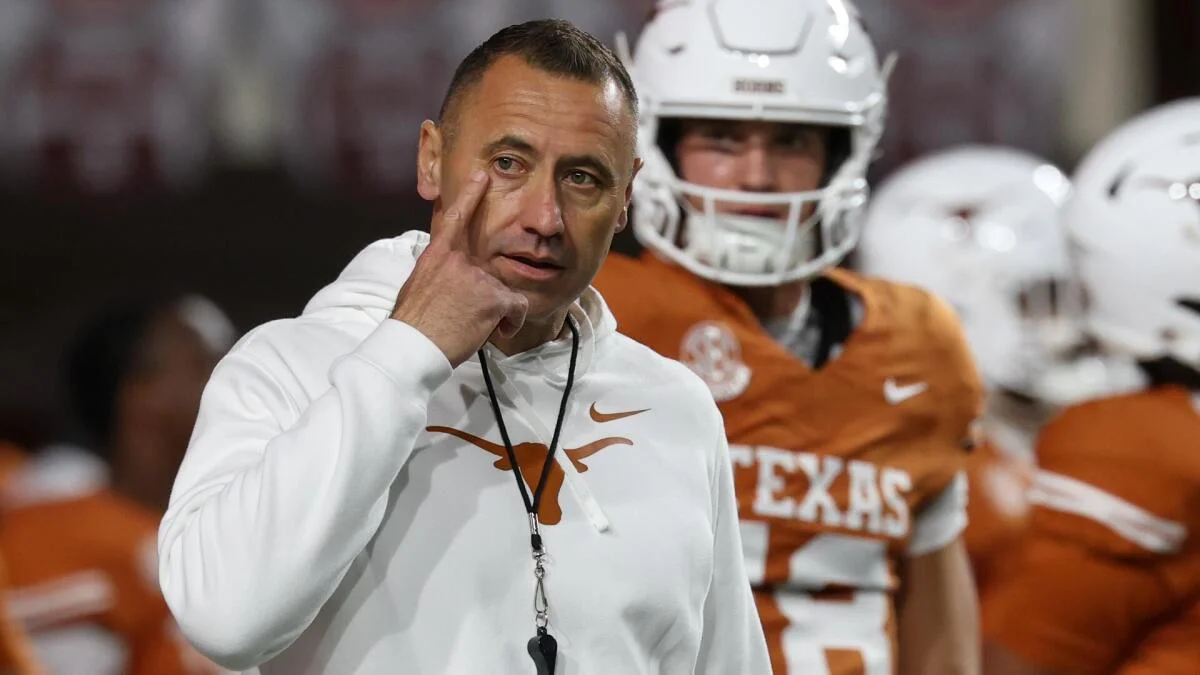
Texas coach Steve Sarkisian detailed one major problem he hopes to see addressed after a reporter asked about how he approaches building through the portal. Texas doesn’t have much issue with investment or resources, but Sarkisian explained that the lack of a certification process for agents can lead to some absurd situations.
“I think it’s all so strategic, right? It’s one about need. It’s two about money and the cost and where’s the market and which agent you’re dealing with,” Sarkisian said. “There are some agents that are rational, and there are some agents that this is the first time ever being an agent — I don’t know if they are even licensed to be agents, but all of a sudden they get to be agents because we have no certification process in college football. In the NFL, you have to be certified. In college football, it may be their college roommate their freshman year who’s their agent right now, and this guy is throwing numbers at you and it’s like, we can’t even deal with this. Like, you just move on. It’s unfortunate. And we’ll get there in college football, but right now it’s a tough situation.”
Coaches complaining about NIL and the portal often amount to sour grapes, but Sarkisian’s point about the challenge of dealing with agents which have no previous experience or understanding of the market is a legitimate one.
That said, you have to wonder if this is fresh in Sarkisian’s mind due to any of Texas’ opt-outs, as they have 13 players who announced intentions to enter the transfer portal and won’t play in the Citrus Bowl. Among them are the Longhorns top three running backs, headlined by Tre Wisner, and their second-leading receiver, DeAndre Moore Jr.
Eventually one would think some governing body will emerge that can provide some form of regulations on that sort of thing and require certification to help everyone out — as players would be better served being represented by more professional agents. However, it’s not clear when that will happen as the fear of anti-trust litigation led the NCAA to await congressional action, which has yet to materialize in any meaningful way.
In the meantime, coaches and GMs will have to deal with the occasional green agent who asks the world, which even a program with seemingly endless resources like Texas has to laugh off.

The college football transfer portal window opens soon with a flurry of high-profile movement expected across the country.
One of the most significant announcements comes from a veteran quarterback, with a reported $1.4 million valuation by On3, who declared his intention to seek a new home for his final senior campaign. This signal-caller brings a wealth of experience and production to the open market as teams look to solidify their rosters for 2026.
This prospect stands out as the most experienced returning starter in the Power 4 conferences with 39 career starts under his belt. He has accumulated 26 victories over the last three years and boasts 83 total touchdowns during his collegiate career. His decision to move on follows a challenging 2025 season where he battled through a partially torn labrum and an AC sprain while leading his team.
Speculation immediately centers on a reunion with his former head coach who recently departed for a prominent job in the Big Ten Conference. The two share a close relationship that could facilitate a quick transition to the new program in State College.
Analysts believe this connection makes the Nittany Lions a logical landing spot for the seasoned passer as he explores his options in a lucrative marketplace.
Quarterback Rocco Becht leaves Iowa State Cyclones to pursue new opportunities
Rocco Becht officially announced his decision to enter the NCAA transfer portal on Dec. 20 through a social media post. The Iowa State Cyclones standout thanked the fanbase and the program before stating his desire to find a new destination for his final year of eligibility. Becht leaves Ames as one of the most productive players in school history and as the coach who guided the team to its first 11-win season in 2024.
His entry into the portal comes shortly after Iowa State Cyclones head coach Matt Campbell accepted the head coaching position with the Penn State Nittany Lions. Campbell and Becht developed a strong bond during their time together in the Big 12 Conference.

Reports from ESPN’s Max Olson suggest Becht is a strong candidate to follow Campbell to Pennsylvania. However, the redshirt junior is expected to consider offers from other schools before finalizing his decision.
The market for experienced quarterbacks has grown expensive with top passers commanding deals in the $3 million to $4 million range. Becht offers a proven track record despite a statistically down year in 2025 caused by multiple injuries. He underwent surgery on his non-throwing shoulder recently to address a labrum issue that plagued him throughout the fall.
The 6-foot-1 quarterback threw for 2,584 yards and 24 touchdowns this past season while managing the physical setbacks. He ends his time at Iowa State with 9,274 passing yards and 64 passing touchdowns.
The NCAA transfer portal window will open for all players on Jan. 2.
Read more on College Football HQ
The NCAA transfer portal officially opens on Friday for all college football players seeking new programs to play for in 2026. The portal will stay open for the following two weeks.
Among the vast number of players who have entered the transfer portal, quarterbacks have received the most attention in recent weeks. No less than seven Power Four starters from the 2025 season are on the move, and there are a number of starters from the Group of Five ranks looking to move into the Power Four.
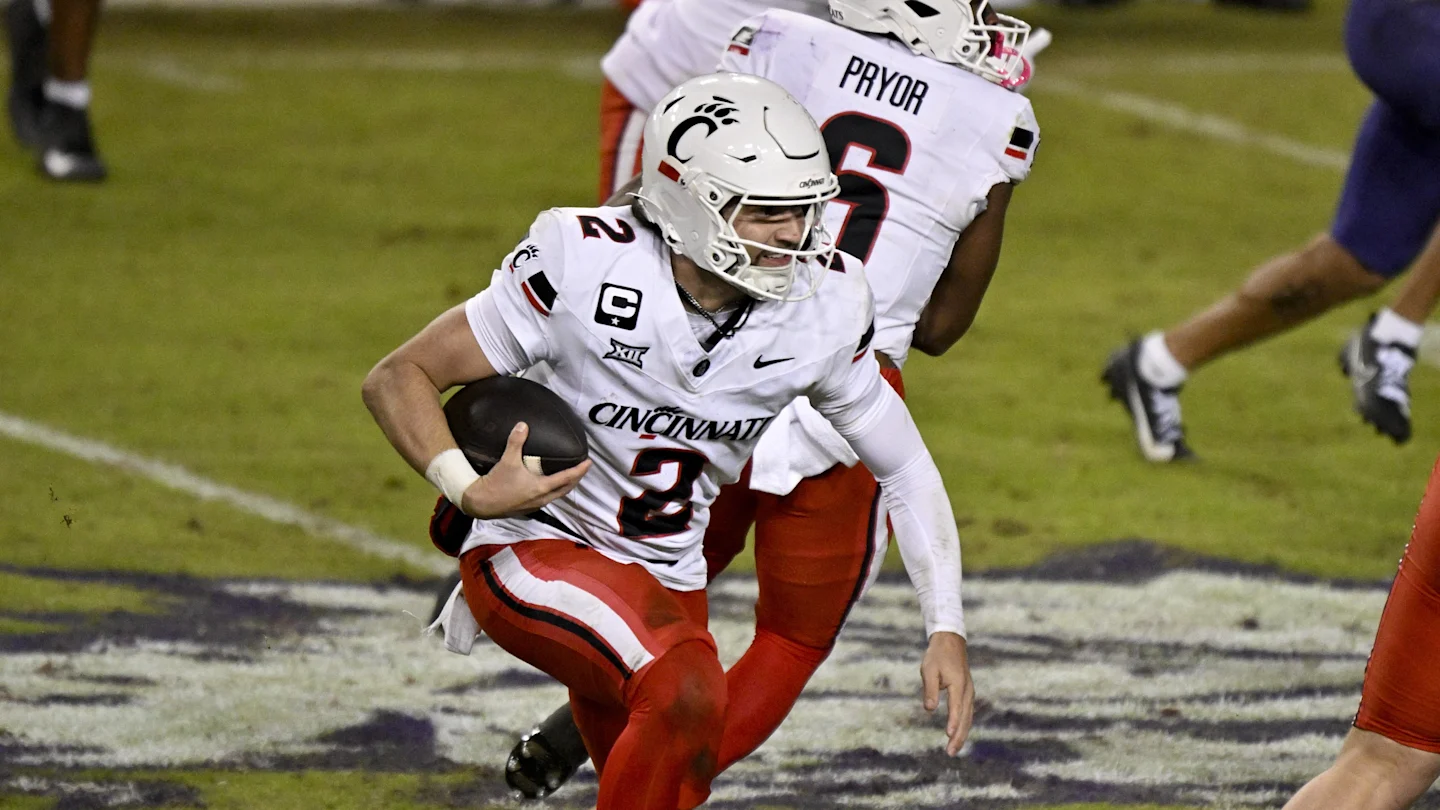
One Power Four starter on the move is Cincinnati quarterback Brendan Sorsby. He will have one season of eligibility remaining at his third school.
While Sorsby is an attractive starter candidate from the transfer portal, one of the strongest contenders lies within the Big 12.
The Athletic recently unveiled projections for each quarterback’s potential destination out of the transfer portal. One of the projections listed Sorsby transferring to Texas Tech in the 2026 offseason.
The Red Raiders are some of the most aggressive NIL spenders in college football, but they have seldom used the portal for a quarterback. Tyler Shough is the only quarterback Texas Tech has started from the portal under Joey McGuire, and he transferred to Louisville after suffering an injury and losing the job to Behren Morton.
Sorsby began his college football career at Indiana under Tom Allen in 2022. He redshirted that season, finishing 3-of-6 passing for eight yards and an interception in a blowout loss to Penn State.
The Hoosiers featured Sorsby in 10 games during the 2023 season. He passed for 1,587 yards, 15 touchdowns and five interceptions and rushed for 112 yards and four touchdowns. Allen was fired by Indiana that offseason, so Sorsby transferred to Cincinnati.

Scott Satterfield immediately named Sorsby as the Bearcats’ starter in 2024. He compiled 2,813 pass yards, 18 touchdowns and seven interceptions to go along with 447 rush yards and nine rush touchdowns. Cincinnati finished the year 5-7, losing each of its last five games.
Sorsby accumulated 2,800 passing yards, 27 touchdown passes and nine interceptions to go along with 580 yards and nine touchdowns on the ground. The 36 total touchdowns are the most in Cincinnati program history.
Since the portal opens on Jan. 2, Sorsby will not play in Cincinnati’s bowl game. The Bearcats (7-5, 5-4) will face Navy (10-2, 7-1) in the AutoZone Liberty Bowl (4:30 p.m. EST, ESPN).

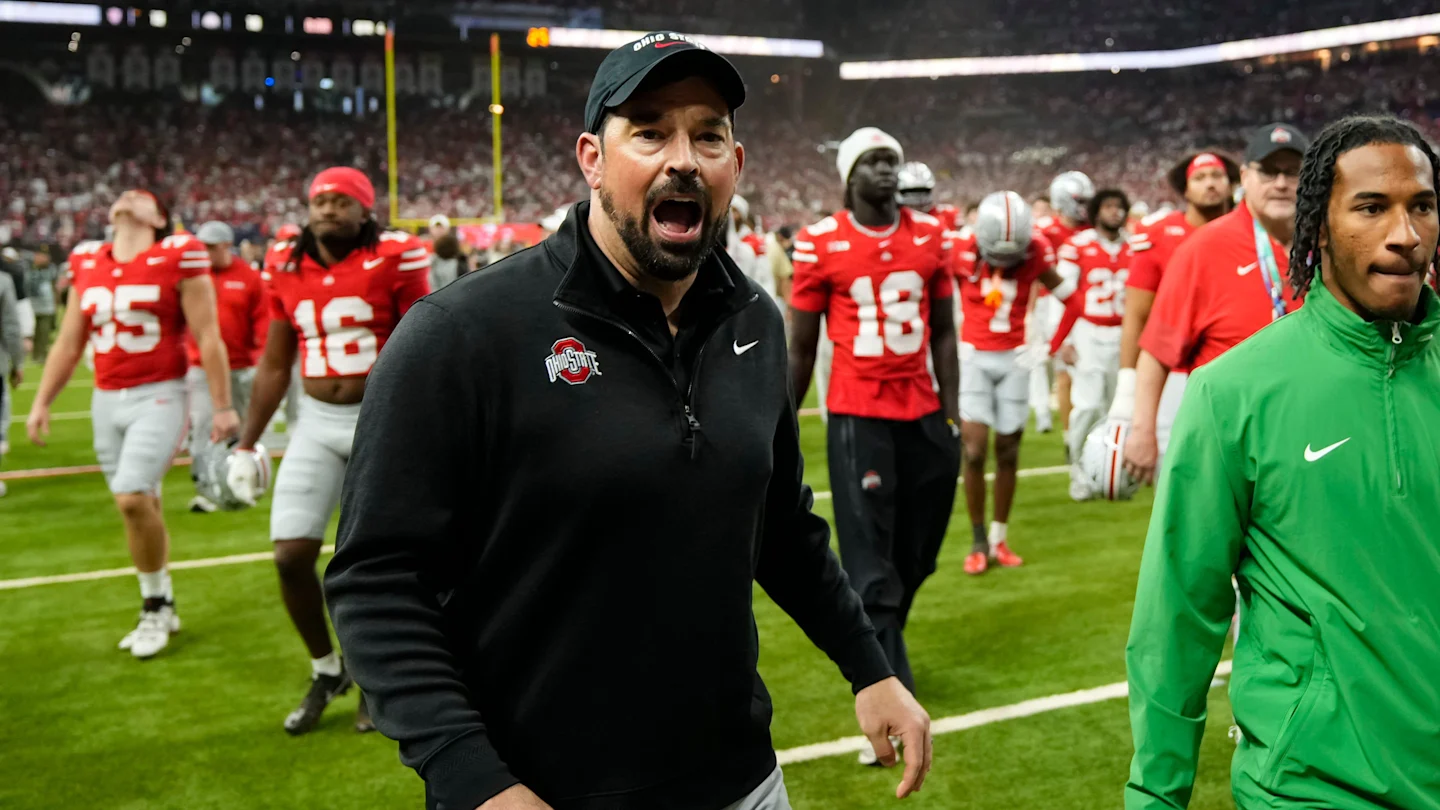
After entering the year ranked No. 2 in the AP Top 25 preseason poll, Penn State endured a turbulent 2025 season that included the firing of long-time head coach James Franklin, a disappointing 3–6 Big Ten conference record, and a late rebound capped by a 22–10 Pinstripe Bowl win over Clemson to finish 7–6.
Chaz Coleman, Penn State’s true freshman defensive end, emerged as one of the program’s more promising underclass pass-rush prospects in 2025, recording eight total tackles, three tackles for loss, one sack, one forced fumble, and two fumble recoveries across five appearances.
However, Coleman announced his decision to enter the transfer portal on December 18 and has since emerged as the No. 1-ranked player in the portal according to 247Sports.
Soon after, reports surfaced regarding Ohio State’s interest in portal edge talent, with On3’s Pete Nakos specifically naming Coleman and listing the Buckeyes among the programs already connected to him.
On Monday, Nakos again linked Coleman to Ohio State, noting significant mutual interest and that the two sides appear close to coming together.

Coleman is a Warren, Ohio, product who arrived at Penn State as a highly regarded high school prospect.
He was listed by On3 as a four-star recruit, the No. 25-ranked edge rusher nationally, and the No. 8-ranked prospect in Ohio, holding more than a dozen offers before choosing the Nittany Lions over Kentucky, Florida State, Illinois, Michigan State, Missouri, and Ohio State.
Ohio State compiled a 12–1 regular-season record in 2025, finished undefeated in Big Ten play before falling to Indiana in the conference title game, and entered the College Football Playoff as the No. 2 seed, drawing a quarterfinal matchup against Miami in the Goodyear Cotton Bowl Classic on Wednesday.
Coleman’s Ohio roots, size (6’4″, 240 pounds), and Ohio State’s recent success developing portal and transfer edge defenders into NFL-caliber players make the Buckeyes a logical fit.
Read More at College Football HQ
- $2.6 million QB ranked as No. 1 transfer in college football
- 25-touchdown RB shares farewell note after entering college football transfer portal
- College Football Playoff team loses All-Conference player to transfer portal
- College football team loses three All-Americans to transfer portal
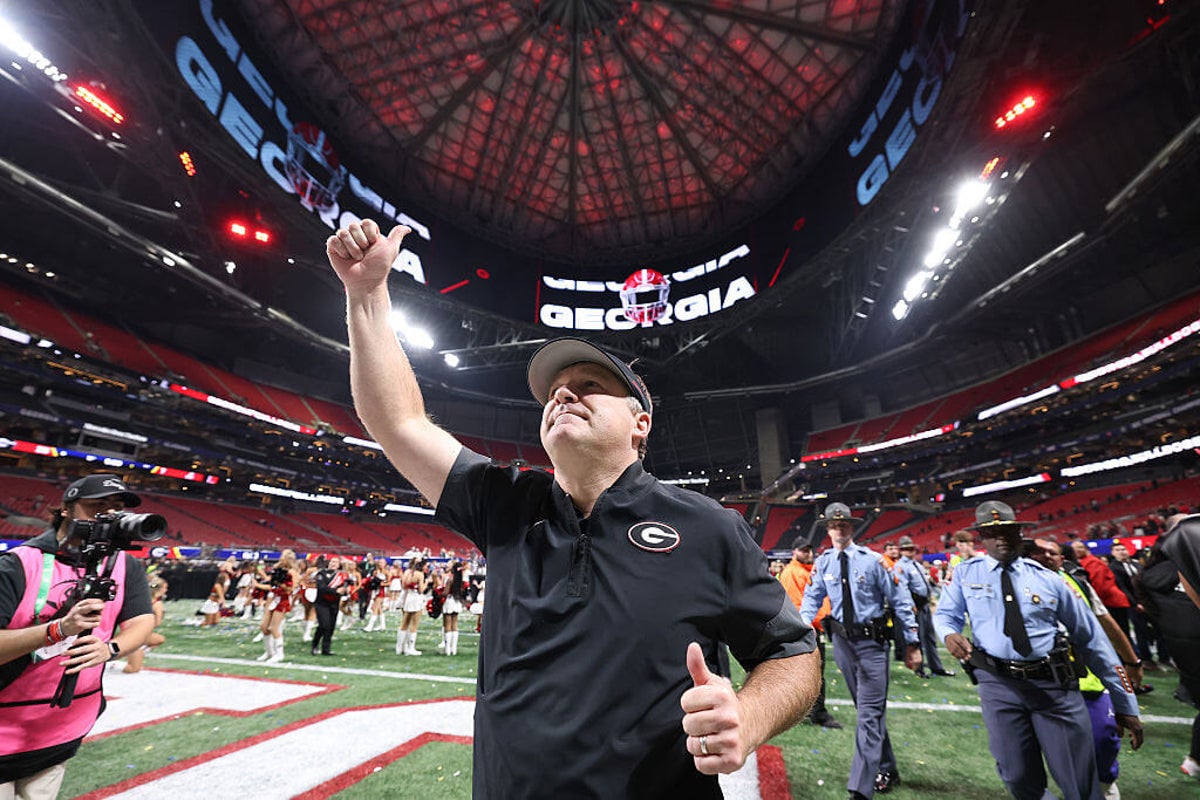
Kirby Smart’s first college coaching stop was at tiny Valdosta State back in 2000. The team’s strength and conditioning coach was Michael Doscher, who was asked two decades later what Smart was like then, which may have foretold what he would become. Doscher thought for a couple beats, then answered.
“He was humble,” Doscher said.
Valdosta State was a budding cradle of future big-time head coaches — Hal Mumme, Mike Leach, Dana Holgorsen, Will Muschamp — and they all had some “it factor” about them. And for the 22-year-old Smart, fresh off an All-SEC playing career, it was the way he carried himself.
“Kirby was a little more personable about it, more friendly and had that way about him,” Doscher said.
Maybe it’s hard to consider the current Smart — the 10th-year Georgia coach who rants and rails on the sideline, who has six national title rings as a head coach and defensive coordinator — as humble. Yet, it’s also a bit of the secret sauce.
It was for Nick Saban, the man who hired Smart away from Valdosta State and into his vortex, and is now off the stage — essentially replaced by Smart as the accepted best coach in the sport. And while they’re not the same person or coach, the reason they got to the top and stayed there may be the same: The flexibility to adjust when the world around them changes.
Saban, the defensive mastermind and offensive traditionalist, adjusted late in his career to the up-tempo, passing revolution. Smart made the same adjustment, but also to changes in the sport: unlimited transferring, paying players, the flattening of the talent pool such that the Georgias and Alabamas can’t hoard talent like the old days.
Eleven months ago, Smart’s program seemed to be falling back to the pack. The Dawgs were soundly beaten by Notre Dame in the quarterfinals of the College Football Playoff, ending a season that had an SEC championship, but also three losses and more close calls. When it ended, Smart declined to make any changes to his coaching staff, to the concern of many in Georgia’s fan base.
And a month into this season, Georgia suffered its first home loss in six years and needed the help of a missed field goal to win at Tennessee. The Dawgs didn’t look like a great team anymore.
Now here they are: SEC champions again. Playing their best ball going into the Playoff, one of three betting co-favorites to win the national title. The Playoff could always re-ignite questions. However, right now, entering Thursday’s Sugar Bowl tilt against Ole Miss, Georgia as an elite program seems inevitable, for a simple reason: The head coach knows what he’s doing.
Staff management
Some saw it as stubbornness. Smart saw it as stability.
Georgia was coming off a rough offensive season in 2024, especially in blocking. Quarterback Carson Beck regressed, receivers dropped passes and there was almost no running game. That was despite three offensive linemen being good enough to be drafted in the first three rounds of the NFL Draft.
And yet Smart opted to bring back offensive line coach Stacy Searals and offensive coordinator Mike Bobo, who was Smart’s college teammate and close friend. To the critics, Smart was allowing personal relationships to cloud his professional thinking. To Smart, he was counting on two veteran coaches with longer track records.
“We’ve built our program around retention,” Smart said in the spring. “I think we’ve got the most stable, not only staff, but stable organization in all of college football. I think that’s what we’ve hung our hat on, is we have stability. We have retention. We have a great foundation. We’re built to last.”
And built, it turns out, to validate Smart’s gamble.

Gunner Stockton and the Georgia offense have soared this season, validating Kirby Smart’s bet on continuity. (Kevin C. Cox / Getty Images)
Georgia’s offense may be the reason it made the Playoff, winning early-season shootouts against Tennessee (44-41) and Ole Miss (43-35). New quarterback Gunner Stockton ended up seventh in the Heisman Trophy voting. The running game was a strength. Bobo was named a finalist for the Broyles Award, which goes to the nation’s top assistant.
The defense was realistically the bigger worry until late in the season, when the old Georgia defense showed up again, smothering Texas, Georgia Tech and Alabama.
Still, it goes further than that: Georgia’s special teams have always been an underrated strength, and Smart has put Kirk Benedict in charge of that for several years.
And off the field, the longtime guiding force remains Scott Sinclair, who has been the strength and conditioning coordinator throughout Smart’s tenure. The two are wrapping up their 10th season together.
“This league will chew you up and spit you out,” Smart said, mentioning how other teams have player and coaching turnover, while his program is among the best at retention. “I take a lot of pride in that, and I think that’s one of our weapons.”
Smart in charge (still, with help)
Georgia’s talent advantage isn’t what it was in the pre-2021 days, when unlimited transferring and NIL arrived. The Bulldogs no longer can stow blue-chip recruits on their bench for a few years, then unleash them as starters. It has been a hit to the team’s depth, and occasionally left weak spots on the field.
The program, nonetheless, has also managed it well enough that it still has plenty of talent. Georgia signed 21 of its 24 starters in the SEC championship in one of its past four recruiting classes, all of which ranked in the top three nationally.
And when the program badly needed a difference-making receiver, it got him via the transfer portal. USC’s Zachariah Branch has become such a focal point of the offense that with 73 catches, he’s four away from setting Georgia’s single-season record.
In an age when many programs are hiring a general manager, Georgia already has one: Smart. He has always been the de facto GM, the one in charge of roster procurement. There isn’t a person in charge of it who reports to Smart. There is a football chief of staff — Mark Robinson — and director of player personnel — Will Myers. Still, as the portal and NIL became prominent, Georgia didn’t have to expand its personnel staff. It was already pretty robust.
“We’ve got a lot of people in charge of roster management, including myself, including our football office staff (who) are involved,” Smart said. “Our operations slash player development, player personnel staff, everybody gets involved in that.”
This was what Saban did: He revolutionized college football coaching at Alabama in the late 2000s by hiring analysts, which critics pilloried as staff-bloating, but it was Saban who wanted extra eyes on his team and extra hands in recruiting. Saban was not arrogant enough to think he could do everything.
That’s the formula for Smart in this era: Lots of eyes, ears and mouths involved, then he makes the final call.
“It’s a team effort,” Smart said. “We reorganize and restructure some things in terms of what falls under whose duty and whose aspects. But at the end of the day, I’m not ready to run off and go hire somebody that’s just going to make all the decisions for what goes on the football field. I think I’ve got to stay involved in that heavily. We’ve got the capacity and the quality of people in the areas that I think we need.”

Georgia’s 117 wins since Kirby Smart took over in 2016 are second-most in the country behind only Alabama’s 121. (Todd Kirkland / Getty Images)
Internal culture in the age of NIL and the portal
Georgia has dealt with too many bad headlines over the last few years, with a couple dozen players arrested since the January 2023 car crash that killed a player and staff member. However, Georgia people — administrators, staffers, players — put those issues in a separate category from what they see as a strong internal culture. There is a dichotomy: Players getting in legal trouble is something Smart has had to handle, adjusting his level and manner of punishment. Yet, when it comes to team-building and chemistry in the age of NIL and the portal, not much has changed.
“NIL hasn’t impacted what we’ve been doing,” said Drew Brannon, a sports psychologist who has worked with Georgia since 2018, especially starting with the 2021 national championship season. “The things we’ve built in terms of program DNA have certainly had a positive impact given the ramifications of NIL, but we haven’t done things differently due to NIL, portal, etc.”
Georgia has been practicing skull sessions — when players in small or large groups discuss personal issues or desires — since 2021. Smart has also given Brannon the floor to introduce motivational exercises, such as before the second national championship, using the Netflix and Blockbuster story.
There have been some challenges, especially last year, when players said the connection among teammates, especially on offense, wasn’t as strong. Still, there was also optimism from existing players about the returning 2025 core.
“I’ve got a lot of faith in them,” linebacker Smael Mondon said last February. “They’ve got a good leadership class, and I feel really good about it.”
That’s been borne out. The quarterback change also helped. Beck was quieter and on his own, while Stockton’s personality and playing style endeared him to teammates. Teams often feed off the personality of their quarterbacks. This year’s team pulled off comeback wins over Tennessee, Auburn, Ole Miss and Florida — and it did that last year too. This time, though, it improved as the season continued and looks much better heading into the CFP.
“We do our best to enhance our efforts each year with tweaks, but the fundamentals don’t change, and I think that has a lot to do with why our players and staff don’t flinch when they encounter challenging situations,” Brannon said. “Coach Smart does an incredible job of modeling this from the top, which is what you see in the highest-performing organizations in the world.”
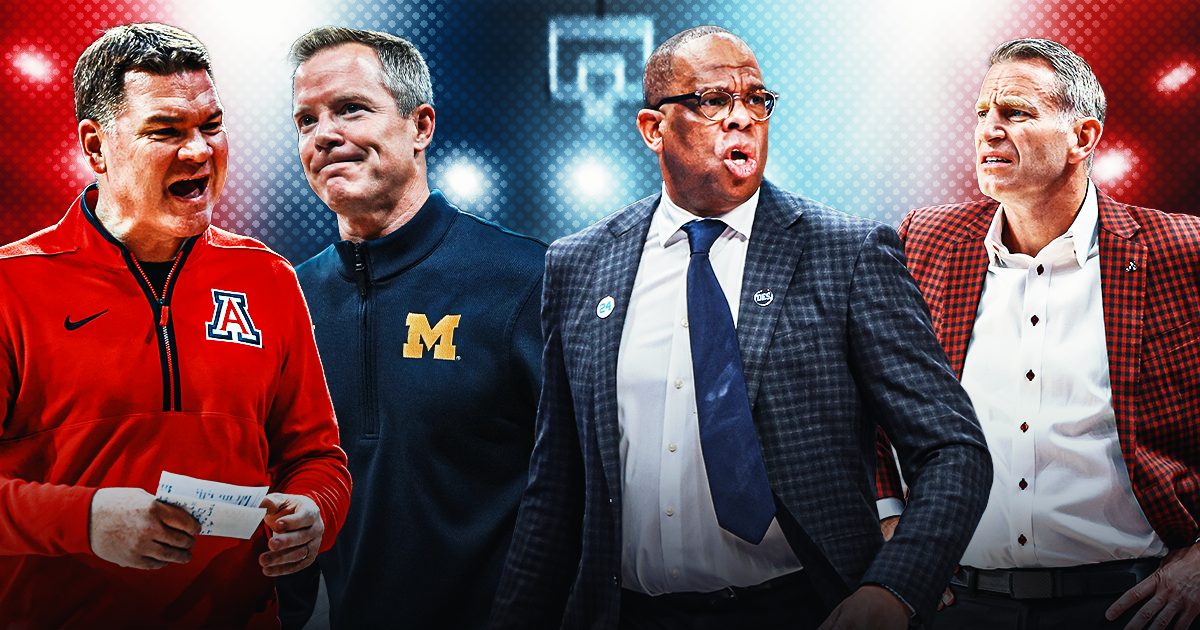
The USA TODAY Sports Men’s Basketball Coaches Poll Top 25 has been refreshed following the eighth week of the season. It was a bit of a light week due to Christmas, but some showdowns still took place amid the holiday celebrations, resulting in some movement throughout the Top 25.
With conference play picking up this coming weekend, we’re getting into the nitty-gritty of the season, where the rankings will fluctuate week-in and week-out. While this past week was packed with tune-up games and not a ton of riveting action, that won’t be the case from now until April.
Regardless, the Coaches Poll Top 25 is certain to see plenty of movement. For now, here’s how things stack up after Week 8. This week’s updated rankings are below.
Michigan enjoyed a full week off and enters the week undefeated at 11–0. The Wolverines return to action with home games against McNeese State on Monday and USC on Friday.
Senior forward Yaxel Lendeborg has been the engine, stuffing the stat sheet with 15.6 points, 7.1 rebounds, and 3.8 assists per game. Michigan will look to stay perfect as conference play looms.

Arizona rolled past Bethune 107–71 last Monday to improve to 12–0 on the season. The Wildcats host South Dakota State before traveling to Utah for a road test on Saturday.
Freshman guard Brayden Burries has emerged as a steady scorer, averaging 14.0 points per game. Arizona’s depth and tempo continue to overwhelm opponents early in the season.
Iowa State remained perfect at 12–0 after an off week. The Cyclones host Houston Christian on Monday and West Virginia on Friday.
Junior forward Milan Momcilovic leads the team at 18.3 points per game. Iowa State’s balance continues to separate it from most of the field.
UConn had the week off and remains one of the nation’s most complete teams at 12–1. The Huskies head to Xavier on Wednesday before hosting Marquette on Sunday.
Junior guard Solo Ball leads the backcourt with 15.4 points per game. This week offers a strong measuring stick against Big East competition.
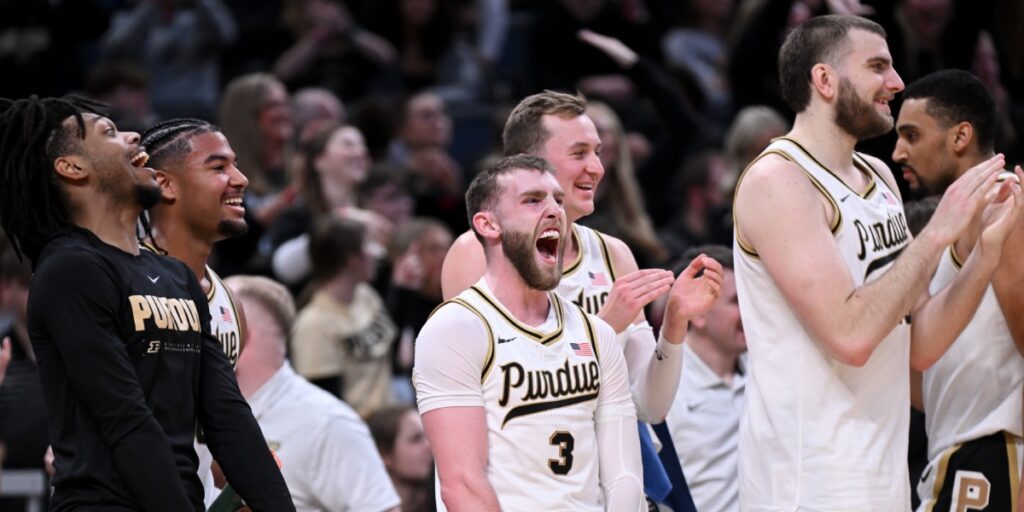
Purdue stayed idle last week but remains firmly entrenched near the top of the Coaches Poll with an 11–1 record. The Boilermakers face a tricky week with a home matchup against Kent State on Monday before heading to Wisconsin on Saturday.
Senior forward Trey Kaufman-Renn continues to anchor the frontcourt, averaging a double-double at 13.9 points and 10.0 rebounds per game. Purdue’s ability to maintain consistency through a two-game week will be closely watched.
Duke remained idle last week and sits at 11–1 entering a two-game stretch. The Blue Devils host Georgia Tech on Wednesday before traveling to Florida State on Saturday.
Freshman phenom Cameron Boozer has been dominant, averaging 23.2 points and 10.0 rebounds per game. Duke will be tested defensively as ACC play intensifies.
Gonzaga extended its winning streak with a victory over Pepperdine on Sunday and sits at 13–1. The Bulldogs play three times this week, traveling to San Diego before hosting Seattle U and LMU.
Junior forward Braden Huff leads the way with 19.1 points per game. Gonzaga’s depth will be tested during the busy stretch.
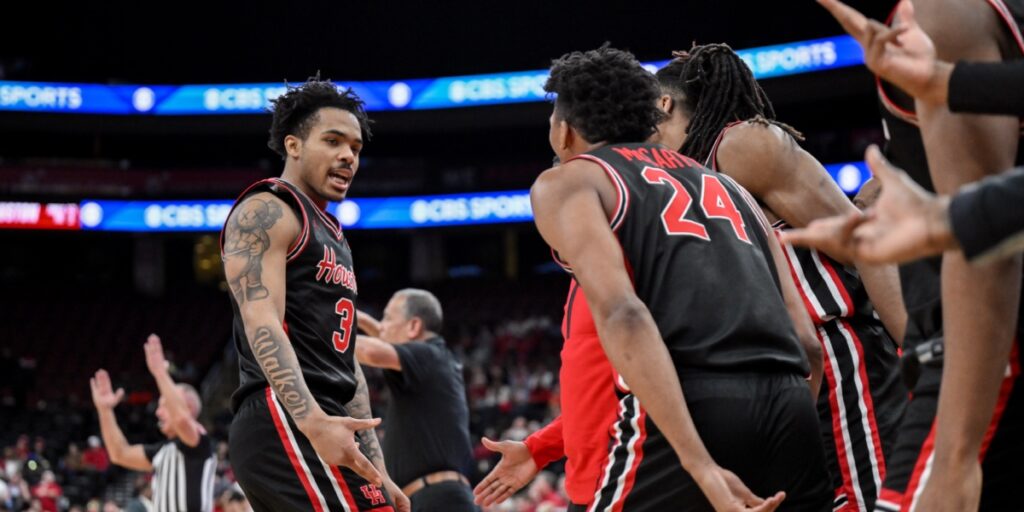
Houston enters the week at 11–1 after a quiet stretch. The Cougars host Middle Tennessee State on Monday before heading to Cincinnati on Saturday.
Senior guard Emanuel Sharp continues to pace the offense with 17.9 points per game. Houston’s defensive pressure remains its calling card heading into conference play.
Michigan State enjoyed a week off and sits at 11–1 on the season. The Spartans host Cornell on Monday before traveling to Nebraska on Friday.
Senior forward Jaxon Kohler has been a force inside, averaging 13.9 points and 10.3 rebounds. Michigan State will look to sharpen its execution away from home.
BYU cruised past Eastern Washington 109–81 last Monday to improve to 12–1. The Cougars face a lone test this week with a road trip to Kansas State on Saturday.
Freshman star AJ Dybantsa has lived up to the hype, averaging 23.1 points per game. BYU’s offense remains one of the most explosive in the country.
11. Vanderbilt
12. North Carolina
13-T. Nebraska
13-T. Louisville (+1)
15. Alabama
16. Texas Tech
17. Kansas
18. Arkansas
19. Illinois
20. Tennessee
21. Virginia
22. Florida
23. Iowa
24. Georgia
25. St. John’s
Dropped Out: No. 25 USC
Others Receiving Votes: Kentucky 35; USC 25; Utah State 14; Auburn 7; Saint Louis 6; Clemson 6; Seton Hall 5; Oklahoma State 5; Yale 4; UCLA 4; Saint Mary’s 4; LSU 3; California 2; Villanova 1; Miami (OH) 1; Indiana 1
Wisconsin should have more Winter Olympians. How can we make it happen?

Philippine Star – A DREAM SIX YEARS IN THE MAKING 🥇…

Heartland Motorsports Park Acquired by IHRA

Toxic Legacy: How Lead in Schools Is Silently Harming Black Kids

Sponsorship Opportunities Open for Marquee Events at Oxford Plains…

SCVNews.com | New Year, New You: Why Not Volunteer?

Aced it! ESPN scored most-watched 2025 NCAA Women’s College Volleyball season on record

College football transfer portal: Texas’ Steve Sarkisian calls out irrational agents

Volleyball Adds Three from High School Ranks to 2026 Roster
No. 2: Myles Rowe Breaks Through With Historic First Win

Matheny Set for Under Armour All-American Game

Mondello Euro RX return is ‘monumental’, says British champion Tohill

A simple gift, a powerful message: Bringing hope to youth this Christmas

Jamesville-DeWitt boys volleyball standout caps career with highest honors

Nevada Youth Sports Participation Ranks Last Nationwide

SoundGear Named Entitlement Sponsor of Spears CARS Tour Southwest Opener

Donny Schatz finds new home for 2026, inks full-time deal with CJB Motorsports – InForum

Black Bear Revises Recording Policies After Rulebook Language Surfaces via Lever

Bowl Projections: ESPN predicts 12-team College Football Playoff bracket, full bowl slate after Week 14

Men’s and Women’s Track and Field Release 2026 Indoor Schedule with Opener Slated for December 6 at Home

David Blitzer, Harris Blitzer Sports & Entertainment

How Donald Trump became FIFA’s ‘soccer president’ long before World Cup draw

Michael Jordan’s fight against NASCAR heads to court, could shake up motorsports

DeSantis Talks College Football, Calls for Reforms to NIL and Transfer Portal · The Floridian

Rick Ware Racing switching to Chevrolet for 2026
Elliot and Thuotte Highlight Men’s Indoor Track and Field Season Opener

JR Motorsports Confirms Death Of NASCAR Veteran Michael Annett At Age 39

23 عاما من الفضائح السياسية والجنسية منذ انقلاب حمد بن خليفة.. استغلال الفتيات الصغيرات في الدعارة.. ضبط ابنة رئيس وزراء قطر خلال ممارستها لجنس الجماعي.. ملامح الحكم تتخبط بين المنفي وتدخلات النساء

Colleges ponying up in support of football coaches, programs

#11 Volleyball Practices, Then Meets Media Prior to #2 Kentucky Match





-
 Motorsports3 weeks ago
SoundGear Named Entitlement Sponsor of Spears CARS Tour Southwest Opener
-
 NIL3 weeks ago
DeSantis Talks College Football, Calls for Reforms to NIL and Transfer Portal · The Floridian
-
 Sports3 weeks ago
#11 Volleyball Practices, Then Meets Media Prior to #2 Kentucky Match
-
 Motorsports3 weeks ago
Nascar legal saga ends as 23XI, Front Row secure settlement
-

 Motorsports3 weeks ago
Sunoco to sponsor No. 8 Ganassi Honda IndyCar in multi-year deal
-
 Sports2 weeks ago
Maine wraps up Fall Semester with a win in Black Bear Invitational
-
 Rec Sports3 weeks ago
WNBA’s Caitlin Clark, Angel Reese and Paige Bueckers in NC, making debut for national team at USA camp at Duke
-
Motorsports3 weeks ago
NASCAR, 23XI Racing, Front Row Motorsports announce settlement of US monopoly suit | MLex
-
 Motorsports2 weeks ago
Ross Brawn to receive Autosport Gold Medal Award at 2026 Autosport Awards, Honouring a Lifetime Shaping Modern F1
-

 Motorsports3 weeks ago
Rick Hendrick comments after the NASCAR lawsuit settlement