
NIL
The Women's Basketball Boom

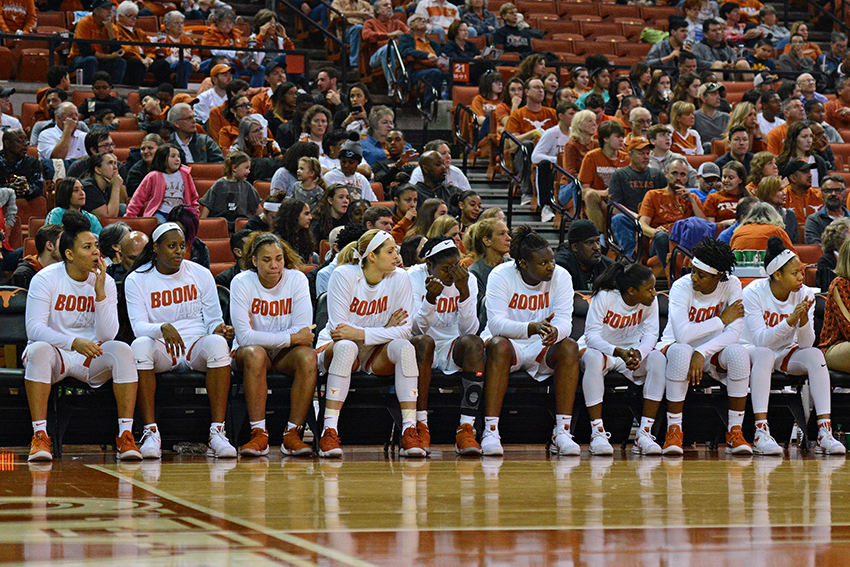
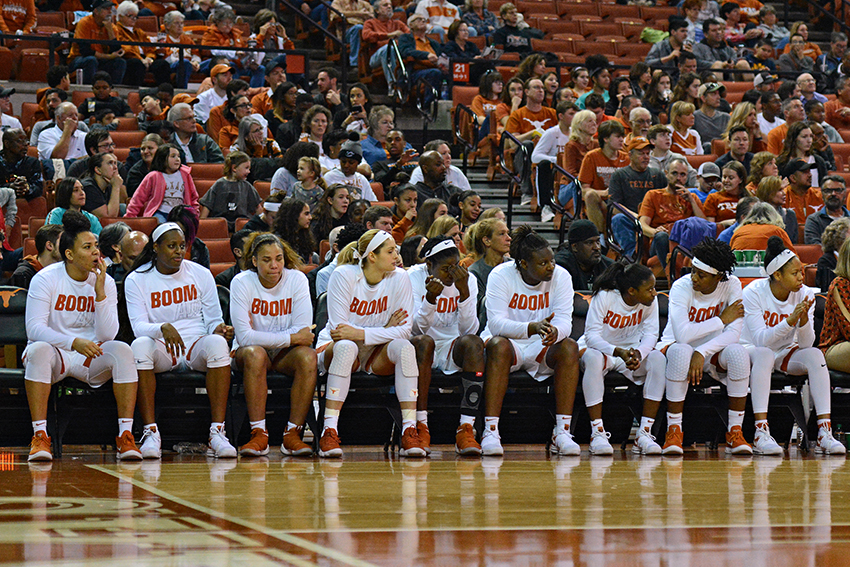
The Women’s Basketball Boom
An influx of gifted, charismatic, politically active stars have willed the WNBA into a genuine sporting attraction. Can they leverage the sport’s growing popularity into a better deal for players?
We’ve largely done away with the Great Man Theory in historiography, but I remain intrigued by the Great Player Theory of basketball history. The NBA isn’t the NBA without Bill Russell and Wilt Chamberlain’s midcentury rivalry, Kareem Abdul-Jabbar’s on-court dominance and off-court eloquence, or Magic Johnson and Larry Bird’s cross-coastal clashes. (The last helped shift the racialized discourse around what was, in the early 1980s, disparaged as a cocaine-addicted league airing tape-delayed finals games after M.A.S.H., Dallas, and the local news.) Basketball doesn’t become a cultural and economic colossus without Michael Jordan’s branded silhouette, Charles Barkley’s affable irreverence, or LeBron James’s hyper-publicized rise from scrawny Akron teen to billionaire mogul. Unlike in football, we see the players’ faces. Unlike in baseball, our favorite stars participate in almost every play. Unlike in hockey, there’s no barrier between the fans and the action. We know that Steph Curry chews his mouth guard at the free throw line, that Luka Dončić contorts his face in exasperation upon each whistle, and that, by halftime, Nikola Jokić’s arms are decorated with vivid red scratches. We don’t know these men, yet we feel like we do.
And the list above is exclusively composed of men. This is by no means to discredit the many dominant female hoopers who’ve graced the court over the years—Tamika Catchings, Maya Moore, Lauren Jackson, Lisa Leslie—but it does speak to the gendered reality of sports. In 2019, just 5.7 percent of ESPN’s Sportscenter coverage was dedicated to women. Data collected between 2018 and 2020 found that men’s NCAA basketball teams received 60 percent more funding than their female counterparts. Women’s sports have been undermarketed, underfunded, and woefully underappreciated.
The facts and figures are alarming, but in women’s basketball they are improving. This is due foremost to an influx of gifted, charismatic, politically active stars who have willed the WNBA into a genuine sporting attraction, even during the dog days of baseball-dominated summer. A’ja Wilson is breaking scoring records and skewering intersectional oppression. Angel Reese’s relentless motor on the glass—and infectious charisma on the mic—has brought attention to the game’s inequities. Players Association President Nneka Ogwumike has been advocating for athletes and racking up All-Star selections since the Obama administration. Kelsey Plum will drop thirty and school you up on WNBA economics. The league has never been so profuse with talent.
The W’s ascension has been further aided by the munificence of billionaires. These include Joe Tsai, cofounder of Alibaba, who has largely sportswashed away scrutiny over his ties to companies with horrific human rights records. Since buying the New York Liberty, Tsai has financed an $80 million practice facility in Greenpoint, Brooklyn; invested in a media company dedicated to promoting women’s sports; and moved Liberty home games from the Westchester County Center, where in 2019 they averaged about 2,000 fans, to downtown Brooklyn’s Barclays Center, where they averaged close to 13,000 fans during the 2024 season. Billionaire owner Mark Davis has made similar moves with the Las Vegas Aces: in 2023, they became the first WNBA team with their own practice facility. The Indiana Fever are set to join their ranks in 2027 with a $78 million facility in downtown Indianapolis, a basketball-crazed town at the center of a women’s basketball boom.
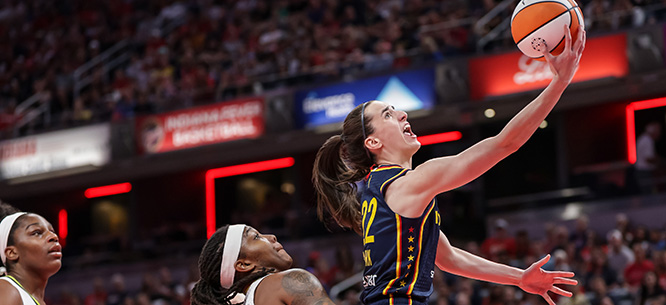
The sport’s rapid growth has also been spearheaded by Caitlin Clark, the Fever’s dime-dropping, logo three-draining megastar point guard. Prior to her arrival in Indiana, Clark eviscerated her Big Ten competition at Iowa on her way to becoming the all-time NCAA scoring leader—men’s and women’s—and one of the most famous and bankable athletes in the United States. Three of the six most-watched basketball games in 2024 featured Clark’s Iowa Hawkeyes, including an average viewership of 18.9 million in the national championship against South Carolina. (The men’s NCAA championship averaged 14.8 million in 2024, while the 2024 NBA finals averaged just 11.3 million.)
Clark largely met lofty expectations during her 2024 rookie season in the WNBA. She led the perennially cellar-dwelling Fever to their first playoff appearance in eight years, earning rookie of the year and first-team All-WNBA honors along the way, and she propelled the most successful, lucrative season in the history of the W—her $76,000 salary be damned. TV viewership reached an all-time high, attendance rose 48 percent, and merchandise sales skyrocketed by 601 percent (Fever jersey sales went up a cool 1,193 percent). Overall revenue surged to somewhere in the vicinity of $200 million, and the league signed a new media rights deal that, according to estimates, will more than quadruple broadcast dollars.
Despite record numbers across the board, the players themselves only received 9.3 percent of league revenue last season. Their counterparts in the NBA, meanwhile, receive about 50 percent of basketball-related income (BRI), which makes up the vast majority of the league’s overall revenue. The W’s lopsided deal is a product of the last collective bargaining agreement (CBA) between the league and the Women’s National Basketball Players Association (WNBPA) in 2020. The players may have made headway in pay, family and maternity benefits, travel, and free agency, but their negotiated 50/50 split on incremental revenue can be misleading. NBA players earn their negotiated share on all BRI—to which their salary cap is directly tied—whereas WNBA salaries are not formally linked to BRI, and players only get an equal split on the money earned beyond the league’s yearly revenue target. That target has never been hit, thanks in no small part to its being determined by cumulative revenue, which took a monumental hit during the pandemic; hence the putrid split.
The WNBPA has opted out of its current CBA—a rarity in most unionized sectors, CBAs in pro sports league often include opt-out clauses—which is now set to expire following the 2025 season. So while the W continues to enjoy record ratings and surging jersey sales, and while the on-court product continues to be some of the best basketball in the world, the future of the sport will be determined off the court, in boardroom meetings and late-night negotiations aimed at avoiding what both the league and the union would deem catastrophic in the middle of an unprecedented boom: a 2026 labor stoppage.
In my view, even more disastrous would be an inequitable deal that continues to deny players their fair share. (To be crystal clear: W players are not asking for the same salaries as the men, but for a similar percentage of their own league’s revenue, as Kelsey Plum has explained.) If a just agreement can’t be reached—and even if it can—this inflection point in women’s basketball is also an opportunity to consider larger questions surrounding the marriage of sports and capital: Can we imagine a pro-labor sporting world beyond the reach of antitrust-exempt cartels and the whims of billionaires?
I used to think visions of a more equitable sports landscape were the stuff of fiction, like the prescient 2019 film High Flying Bird. Penned by playwright Tarell Alvin McCraney and directed by Steven Soderbergh, High Flying Bird takes place amid a labor dispute and looming work stoppage in the NBA. The film centers on an entrepreneurial basketball agent, Ray (played by André Holland), and his efforts to buck the system when a video of his star client’s impromptu pickup game goes viral. Ray tries to circumvent traditional league channels and develop a network of player-run, direct-to-consumer games. The owners quickly come to the bargaining table when they learn of the “lockout street ball” events popping up around the country, but not before admitting to the players’ ingenuity. “You know what I hate about this?” says one owner. “It’s exactly what I’d do.”
After the dust settles, Ray’s mutiny is revealed to be, at least in part, a power play: he leverages his shrewd maneuvering into a (strongly implied) promotion. Ray may be looking out for his bottom line as much as the owners are, though he does wonder what would happen if the superstar pawn in his scheme was able to think bigger: “He ain’t a game changer,” laments Ray. “He’s just happy to be playing the game.” In today’s NBA, the stars are brands unto themselves with more market power than ever before; owners are surely praying they maintain a similar level of complacency.
The latent power of the NBA’s top draws was glimpsed during the (nonfictional) 2011 lockout. While an ongoing labor dispute was putting the season in jeopardy, the league’s biggest names played in viral exhibition games at the Goodman League in D.C., the Melo League in Baltimore, and the Drew League in LA. The status quo was largely preserved in the eventual CBA, but the players’ visibility outside traditional league channels boosted their bargaining power, and the lockout provided a fleeting glimpse of a labor-driven basketball world.
Caitlin Clark perhaps excepted, WNBA players are not the same economic behemoths as their male peers; they don’t have the bargaining power of a LeBron, Steph, or Kevin Durant. This is due to a confluence of factors, ranging from a lack of funding on the youth level to comparatively minuscule marketing and promotional machines for the pros. But the women are now having a moment, and as the league’s CBA nears expiration, the W’s biggest stars are getting creative.
Unrivaled, the fledgling women’s basketball league taking place during the W’s offseason, is at the center of these creative, alternative visions for the future of the sport. Based in Miami, the six-team league wrapped up its first season in March. It boasts some of the W’s top talent—twenty-two of its thirty-six players have been league All-Stars—and it’s experimenting in drastic ways: games are three-on-three instead of five-on-five; the court is twenty-two feet shorter than the W’s; shot clocks are eighteen seconds instead of twenty-four; and the final quarter ends not with a buzzer, but with a team reaching a set final score (known colloquially as an Elam Ending). The shrunken court, swift possessions, and increased spacing resulted in relentlessly paced, high-scoring games. The fans tuning in—present company included—were treated to a delightful barrage of fast breaks.
Like its devoted (if still modest) fan base, participating players were pleased with Unrivaled. Its $220,000 average salary is just shy of the WNBA max, despite the season being less than half as long, and the league’s amenities received rave reviews. Team-specific practice facilities are anomalous in the W—the Connecticut Sun have had to adjust practice plans for, among other things, Pilates classes and a toddler’s birthday party. There are no such issues at Unrivaled’s private, 130,000-square-foot facility in Miami, which includes weight rooms and practice gyms, onsite day care, chef-prepared meals, and massages. “They have everything you possibly need,” said star forward Alyssa Thomas.
WNBA athletes often supplement their salaries by playing overseas. (Women’s GOAT Diana Taurasi skipped the entire 2015 season to take a lucrative contract with a Russian club, which paid fourteen times her W salary.) One of Unrivaled’s stated goals is to make these international moves less necessary. The budding league was initially devised as a means of helping players bypass the WNBA’s draconian prioritization rule, a 2020 CBA clause designed to penalize players who head to Europe during the offseason (some players are even rewarded with “time-off” bonuses for not joining another club). Historically, more than half the league plays internationally over the winter, and if they’re not back by training camp they face fines and suspensions. Unrivaled’s schedule allows the athletes to avoid W penalties, stay close to family, and still get paid.
It’s perhaps no surprise that Unrivaled is doing right by the players, because Unrivaled is owned by the players. Founded by superstars Breanna Stewart and Napheesa Collier, the league is something of a capitalist unicorn in that it’s been created for athletes by athletes (at least partially). Every player who participated in the inaugural season shared in a 15 percent equity pool, divvied up according to tenure and career accolades. The only similar model I’m aware of in US sports is Premier League Lacrosse (PLL), founded in 2018, which offers stock options to all its players. (Believe it or not, Joe Tsai has his hand in this as well.)
There’s plenty to like about Unrivaled’s financial and institutional makeup, but it isn’t building a socialist sporting utopia. Morgan Stanley has joined the Unrivaled party, as has ex-Milwaukee Bucks owner and private equity kingpin Marc Lasry, currently embroiled in a $100 million lawsuit over alleged sexual misconduct. Unrivaled is certainly a trailblazer in the world of upstart sports leagues. It is not, however, immune to the harsh realities of the market, and one might even argue their limited player equity pools are more symbolic gestures meant to appease players than actual breaks with the profit-driven norm. In Unrivaled—and the PLL, for that matter—capital is still queen.
Unrivaled also isn’t immune to the need for eyeballs, and its first season’s ratings can be generously described as “middling.” Though the league was able to secure an impressive multiyear deal with TNT, they averaged just 221,000 viewers over the course of the season, a far cry from the WNBA’s 2024 average of 657,000 (W games on ESPN averaged 1.2 million). To be fair, Unrivaled is competing with NBA broadcasts, and lacks the W’s brand recognition. And it is promising that Unrivaled almost broke even; almost every upstart sports league hemorrhages money, the WNBA included.
Now in its twenty-ninth year, the W has never turned a profit. The NBA, whose Board of Governors founded the WNBA in 1996, has historically helped to keep the league afloat. Almost three decades later, the W still functionally operates as a subsidiary. This may seem like an advantage, as the NBA can provide hefty cash infusions and lend out its robust operational infrastructure. But there’s a fine line between stability and stagnation, and the W’s lack of organizational autonomy, coupled with a perpetual branding as its parent company’s plucky, underachieving offspring, has seriously constrained its growth potential. The WNBA doesn’t even negotiate its own media rights—those are packaged together with the NBA—so it’s unclear what it would be worth on the open market.
Given recent trends, the W’s financial fortunes should change soon. And though its unprofitability is ammunition for naysayers to reject a more equitable revenue split, the W is still young compared to established men’s leagues, and, I’d argue, remains in something of a startup stage due to its historical lack of press coverage. The league exploded upon receiving more media attention. Keep covering it and it’ll keep growing. And as individual teams rapidly become more valuable, an emphasis on the league’s unprofitability is increasingly reductive: this year the New York Liberty were valued at $450 million, thirty times their 2019 valuation. Mark Davis bought the Aces for $2 million in 2021; they’re now worth a reported $310 million. Even the Connecticut Sun, one of the least valuable franchises in the league according to Forbes, just sold for a record $325 million (the sale is pending final approval by the WNBA Board of Governors). All this to say: the profits will come, and the athletes who built the league’s skyrocketing value deserve a larger piece of the pie.
While the W continues to defy even the most optimistic growth projections, Unrivaled is coming off a turbulent first year. Much of this can be chalked up to a jam-packed sports calendar and to the league’s relative industry anonymity, but Unrivaled is further restricted by geography: its entire operation is confined to a small suburb of Miami. Even in an era of increased player popularity, civic and regional pride play a considerable role in sports fandom. This isn’t a uniformly positive feature of sports, as city tax coffers are raided by billionaires for unwieldy stadium complexes with dubious economic benefits. Nevertheless, from a fan engagement and retention standpoint, Unrivaled’s relative lack of local fervor is an issue.
In year two, however, they might roll out a touring model, which would reportedly take the action to college towns and non-WNBA cities. They could go a step further and directly tie teams to tour stops: Phantom Basketball Club becomes the Wisconsin Phantom; Mist Basketball Club becomes the Georgia Mist. This is a concept lifted from the PLL, which already has a touring model and began assigning each team to a specific market last year. Host cities were decided by, among other things, fan voting. When the tour stops in a team’s “home,” they play two games over the course of the weekend instead of the usual one. After switching to its new format, the PLL saw huge growth.
There are many other ways of expanding Unrivaled’s cultural footprint: community engagement, sponsorship deals, fan activation. But none will be a bigger boon to its near-term success than a commitment from Caitlin Clark. Seven times more people tuned into watch Clark get drafted than to watch the Unrivaled championship; a Fever preseason contest featuring Clark received six times more viewers than the average Unrivaled game. The league is more than aware of her trajectory-altering potential, which is why it offered her an equity stake along with over $1 million to participate in their inaugural season—more than ten times her W salary. Yet Clark turned them down, which shouldn’t come as a surprise. Thanks to her many lucrative brand deals, she doesn’t need the cash, and after playing in the 2024 NCAA championship on April 7 and reporting to Fever training camp three weeks later, you can hardly blame her for wanting a full offseason of rest and recovery, out of the spotlight.
Whether or not Clark deserves that spotlight—especially compared to other trailblazing female hoopers, most of them Black—dominates the discourse. Clark herself has acknowledged her privilege as a white player. “Black women [made] this league what it is,” she said. Two things can be true: Clark is one of the most talented rookies in W history, and institutionalized racism plays a role in her marketability compared to her Black peers. So while the intersectional dimensions of her popularity deserve scrutiny, the indisputable fact remains that everyone is riding a wave set off by the earth-quaking gravity of Caitlin Clark. According to one estimate, she generated over a quarter of WNBA economic activity last season.
If Clark does suit up for Unrivaled in year two, she could secure the immediate future of the league, and her profile could establish its player equity structure as a viable industry model. That might sound trivial, but the implications could be profound. For better or worse, sports have a vice grip on American culture, and right now they’re in a mutually beneficial relationship with the market, reinforcing a capitalist reality so deep-seated that we can hardly imagine anything else. But what if, instead of aspiring to high wages in corporate sports cartels, young athletes dreamed of securing equity in a worker-owned league? What if, instead of reflecting the market’s cutthroat competition and exploitation, the sporting world manifested labor solidarity, civic responsibility, and community?
I’m not making a one-track argument for 100 percent player equity. Leagues like the PLL and Unrivaled, where the teams are all owned by the league, mix player equity pools and stock options with private investment. There are also beloved, publicly owned franchises like the Green Bay Packers, a nonprofit with over 500,000 shareholders and one of the richest histories, and smallest hometowns, in American sports. And there’s plenty to like about the 50+1 rule in the German Bundesliga, where football clubs like Bayern Munich must ensure that their members—usually fans—maintain majority control. These are all rare exceptions to the industry norm, and they represent painfully incremental progress, but they’re still steps in the right direction.
Even Caitlin Clark’s paradigm-shattering market power can’t overcome our political-economic reality. And while the American sports model, replete with sportswashed robber barons holding cities hostage for tax dollars, is in desperate need of transformation, it’s hardly fair to ask female athletes to forgo newfound riches in order to develop a utopian sports commune while their male peers receive nine-figure contracts. Upon ratification of the new CBA, I expect the status quo to mostly remain in place. Players are advocating to improve the system, not to upend it.
There are plenty of reasons to be optimistic about the new deal. Record ratings and attendance numbers have bolstered player leverage, as has the modest success of Unrivaled. A more equitable revenue split seems likely to be negotiated, where the players earn money on all basketball related income and not just on incremental revenue. Pay will likely at least double, and the salary cap will soften. Dedicated practice facilities will become more norm than anomaly, and family and retirement benefits will drastically improve. Perhaps the prioritization rule will be loosened, if not outright abolished. And the WNBPA will make major headway in training, nutrition, and healthcare for both current and former players.
These wins, assuming they happen, should be lauded: they’ll help to standardize and professionalize a league that, for far too long, has compelled its workforce to make do with subpar resources. Yet such wins will also entrench the industry’s status quo. The WNBA’s recent surge in popularity is one of the best things to happen in sports this decade, and it has emboldened players to demand more from their league and its owners. But the reigning top-down labor structure remains beyond scrutiny. “Pay Us What You Owe Us,” read the players’ warm-ups at last month’s All-Star Game. They’re bargaining for higher wages—a larger chunk of the revenue they themselves produce. They are not, so far, imagining anything fundamentally new.
Michael Knapp’s writing has appeared or is forthcoming in the Los Angeles Review of Books, Public Books, Electric Literature, the Cleveland Review of Books, and elsewhere. He teaches at Irvine Valley College.


1. The latest actual numbers I can find…per 247 sports, U of L was 20th in NIL monies in college sports at about 450 million. Now we are approaching 2026 and things obviously have changed, but we were at least trying to play the NIL game.
2. Jeff did not leave Purdue the first time because the timing wasn’t right or he still had a job to do with the Boilermakers. I respected Jeff for that and quite frankly made me feel more proud of who he was as a person .
I could be naive and stupid but:
A. This crazy money by rich people to pay athletes is just that, crazy and not sustainable long term.
B. U of L is probably doing the best it can but can not compete against oil monies etc.
C. Love him or not, (I love Jeff as our coach) he is the best we could have and feel safe he wants to stay. (Is this a dumb statement given the leaving fears?)
D. Let’s keep winning at Jeff’s level or better
Updated Dec. 24, 2025, 2:51 p.m. CT

Four Missouri football staff members, including the lead executive of the Tigers’ NIL agency, are leaving MU to follow former offensive coordinator Kirby Moore to Washington State.
Brad Larrondo, who was the CEO and general manager of Every True Tiger Brands, is moving to take a role at WSU. He is a Boise State grad and still has significant connections to the region.
The Tigers also are set to lose tight ends coach Derham Cato to the same role with the Cougars, and Mizzou assistant offensive line coach Jack Abercrombie is set to become Moore’s lead O-line coach. Those staff changes were first reported by Matt Zenitz at CBS Sports.
Finally, Mizzou assistant director of football athletic performance Malcolm Hardmon will become Washington State’s strength and conditioning coach, per Bruce Feldman at The Athletic.
The most significant loss of the group, arguably, is Larrondo, who has been instrumental in the name, image and likeness space for Missouri.
Mizzou coach Eli Drinkwitz originally hired Larrondo, who like the MU coach had spent time working at Auburn and Boise State, to oversee recruiting and external relations. Larrondo ultimately became the lead executive at Every True Tiger, where he helped establish the core of Mizzou’s current NIL structure.
Every True Tiger and Larrondo are influential in negotiating both revenue-sharing and third-party NIL deals for Missouri athletes, as well as distributing money to athletes and making sure the football program remains within its spending cap. The agency also is a marketing arm and has helped facilitate deals for Mizzou student-athletes.
The college football transfer portal is approaching, which brings significant challenges for both roster retention and recruitment for teams — something Larrondo would have been closely involved with.
The portal officially opens Jan. 2 and remains open for new entries through Jan. 16.

Missouri football has not hired a general manager partly because, with Drinkwitz at the forefront, it has recreated that role in the aggregate through Larrondo and other staffers.
Drinkwitz responded to reports of Larrondo’s exit via his personal X/Twitter account.
“Good luck to Brad and thank you for all he did, but MIZZOU NIL was started way before Brad, and is a STRONG POSITION! Carry on!” Drinkwitz wrote Wednesday, Dec. 24.
Beyond Larrondo, the staff shakeup was seemingly expected. Drinkwitz indicated Dec. 16 that some assistants could end up following Moore to Pullman, Washington.
“Could lose a couple more people off of our staff from analyst roles as coach Moore finalizes and puts his staff together,” Drinkwitz said Dec. 16. “It shouldn’t change the dynamic of what we do at all.”
Missouri is only actively looking to replace one primary assistant on its staff in Cato, who had been with the team for three seasons. The Tigers will need a new tight ends coach.
As part of Drinkwitz’s recent contract extension, he was given an additional $4 million to spend on his assistant and staff salary pool.
Mizzou has recently made two notable hires.
Michigan’s Chip Lindsey was tabbed as the Tigers’ new offensive coordinator, and Jack Breske has joined the team from Tennessee as MU’s president of player personnel and recruiting.
NIL
Matt Patricia’s first season at Ohio State exceeds expectations going into College Football Playoff :: WRALSportsFan.com
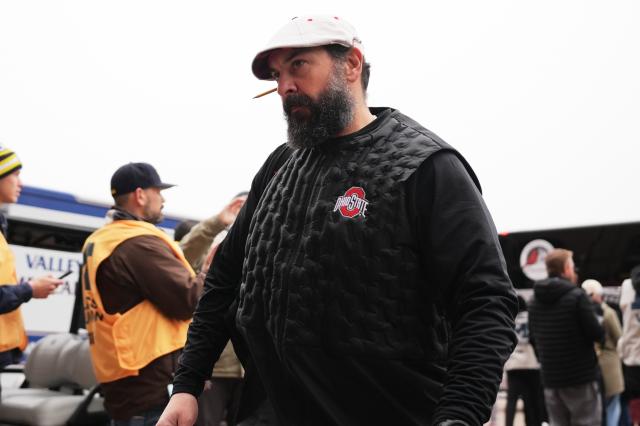
Matt Patricia is used to postseason runs from his days as the defensive coordinator of the New England Patriots.
However, Patricia acknowledges that the preparation for the College Football Playoff is different than the NFL. Patricia is in his first season as Ohio State’s defensive coordinator as the second-seeded Buckeyes (12-1) get ready to face 10th-seeded Miami (11-2) in a CFP quarterfinal at the Cotton Bowl on Dec. 31.
“It’s a learning (process) for me. We’d have bye-week kind of moments in the NFL, but this is a really long layover and break,” Patricia said. “Right now, I’m trying to trust the expertise in the building. Some of the things we did transfer, you know, because we have some different kind of scheduling and when everybody is in school and that stuff.”
Ohio State was off for two weeks after its 13-10 loss to Indiana in the Big Ten championship game on Dec. 6. Players were mostly occupied with final exams while waiting to see who they would face in the Cotton Bowl.
With the Buckeyes going for consecutive national championships for the first time in school history, Patricia’s first season in Columbus has exceeded expectations. He was hired after Jim Knowles left for Penn State, tasked with leading a unit that returned only three starters, none on the defensive line.
Patricia and Ohio State made an emphatic opening statement in their Aug. 30 14-7 victory over Texas and continued the momentum throughout the season.
The Buckeyes are ranked either first or second nationally in nine different categories. They lead the nation in scoring defense (8.2 points per game), passing yards (129.1), red zone scores (66.7%) and fewest plays of 10 or more yards (90).
Ohio State had three AP All-America first-team selections on the defense — defensive tackle Kayden McDonald, linebacker Arvell Reese and safety Caleb Downs. All three plus linebacker Sonny Styles are projected to be first-round picks in April’s NFL draft.
Patricia, who returned to coaching in college for the first time since 2002, is a finalist for the Broyles Award, which is given to the top assistant coach in college football.
“The players have done an unbelievable job. Again, give them all the credit. I think they’ve played so hard and aggressive and flying around on the field. And it is a lot of fun. I tell them all the time, it’s such a privilege to be up there in front of the group and talk to the group,” Patricia said. “And just for me, personally, it has been so much fun to come back to college and have that little bit of a youthful energy with the players that we have here and their excitement to go out and play.”
When Patricia was hired, many lauded his ability to adjust his personnel by running multiple fronts and coverages. He also has shown the ability to relate to players.
“When he first stepped on campus here, it was like a long-lost family member that just came back from whatever he came from, but he came back home,” defensive end Kenyatta Jackson said. “And I mean, all the guys love him. Even offensive guys. He don’t just talk to the starters or whatever the case may be, but he talks to everybody. And I think that’s why everybody loves him.”
One person who hasn’t been surprised with Patricia’s success is the guy who hired him.
“His background speaks for itself and putting guys into a situation to be successful. And every player just wants someone that’s going to be there to get them better but also wants someone to care about them. He’s done both of those things,” coach Ryan Day said. “It’s great to have somebody in the building who has been through some of the games he’s been through, the Super Bowls and a lot of playoff games, so there’s a confidence level the guys have in him. So, I think all of that adds up to what you’re seeing.”
___
Get poll alerts and updates on the AP Top 25 throughout the season. Sign up here and here (AP News mobile app). AP college football: https://apnews.com/hub/ap-top-25-college-football-poll and https://apnews.com/hub/college-football

If I were given $25 million to build the 105-man Arkansas football roster, how would I do it? All schools on the Power Four level have $22.5 million allotted for revenue sharing across all sports. SEC programs have pledged to donate $2.5 million of that to scholarships. For most schools, football is expected to receive approximately 75% of the remaining balance.
That comes out to $13.5 million in revenue sharing for football. That means we need to raise an additional $11.5 million in NIL to get to $25 million, which is probably the amount of money a program would need to be considered to be in the upper-half of NIL among SEC programs. And that’s an educated guess. Arkansas is likely working somewhere between $20 million and $25 million, I would assume.
That’s probably what it takes to bump someone out among programs like Georgia, Alabama, Texas, Texas A&M, Florida, Tennessee, Oklahoma, Auburn and Ole Miss. Let’s suppose the breakdown below is for Arkansas. It has always been said Arkansas must do more with less. I’ve got a formula that should stretch that $25 million in Monopoly Money I’m playing with today…

Welcome to the Morning Commute
Today we are talking about Mizzou Football!
In case you missed it, Mizzou defensive end Damon Wilson II got sued by Georgia in regards to breached agreement by transferring and owes $390,000, the unpaid portion of the deal, under a liquidated damages clause.
The Missouri defensive end challenges whether or not that agreement was ever legally binding.
Wilson is suing for defamation after spokesman Steven Drummond told ESPN that Georgia “expects student athletes to honor commitments.” The complaint alleges the comment damaged Wilson’s character by falsely implying he breached a contract.
This is definitely an ongoing subject so the best way to stay updated is the Rock M+ forums!
Yesterday at Rock M and Rock M+
Let’s shift our focus to Mizzou Football as Missouri plays in the TaxSlayer Gator Bowl vs Virginia on Saturday night. For the final time this season, it’s game week.
Hey… Missouri Football is playing! Should be an exciting matchup to wrap up Christmas festivities!
MU has seen its three-point field goal percentage drop from 45 percent to 31 percent since Stone, who shot 41.7 percent from beyond the arc in his six games this season, left the rotation. Gates used the analogy of his team as a puzzle in the postgame press conference, pointing to Pierce and Stone as key (missing) pieces.
Key players missing leads to major impact. Mizzou needs to get healthy if it wants a chance to compete in the SEC.
From Rock M Radio: Dive Cuts
In this episode, what turned into a slaughter fest of the Braggin’ Rights matchup is previewed. More to come soon on Rock M Radio!
If you like Rock M Radio drop us a Review and be sure to subscribe on your preferred podcasting platform. Follow @RockMRadio on Twitter and if you haven’t already head over to our YouTube channel and click that subscribe button!
(** RockMNation has affiliate partnerships. These do not influence editorial content, though RockMNation may earn commissions for products purchased via affiliate links.**)

ATHENS — Collectively, the Georgia football program is focused on its Sugar Bowl showdown with Ole Miss that’s rapidly approaching.
But behind the scenes next season’s roster is being determined, as Kirby Smart has met with players about their football futures.
Smart — arguably the master of modern-day roster management with the most NFL draft picks (46) and national titles (2) in college football the previous four years — has held private meetings with players about their football futures.
It’s fair to say retention, as much as recruiting, has been key to the Bulldogs’ championship runs going back to Jordan Davis and Devonte Wyatt deciding together to return for the 2021 season.
Georgia, with 54% of its roster made up of first- or second-year players, figures to have several key contributors returning to a team Smart has enjoyed coaching this season.
“A couple of them just told me they want to go back and practice tonight, they said they want to get out there tonight and get on a Bloody Tuesday when we get back home,” Smart said in his postgame on-field interview after the 28-7 SEC title game win over Alabama.
“That’s the kind of mentality this team has — they want to practice some more, they want to practice some more, they love contact, and we love them.”
Settling up
If there is a silver lining to Georgia missing out on 2026 quarterback recruit Jared Curtis — whose signing would have cost in excess of $700,000 — it’s that Smart has more funds to spread around on returning players.
The Bulldogs, like many other programs, front-loaded investing in the 2025 class with the settlement of the landmark House vs. NCAA case pending, as it brought about a $20.5 million cap that schools could directly pay student-athletes for usage of their Name, Image and Likeness.
Smart noted the challenge some of the front-loaded deals would bring when discussing last year’s signing classes.
“ … What’s going to happen when those people expect that same money the next year and it’s not there because you’re in a cap?” Smart said last April. “There’s going to be a correction eventually, and I don’t think any of us know what’s going to happen.”
What has happened is that Georgia, like other schools, is working to help secure NIL deals for student-athletes that meet the standard for approval required by the College Sports Commission’s “NIL Go” platform.
“We can now help our athletes really serve as a marketing agency to go out and source opportunities, whether it’s corporate opportunities, whether it’s local opportunities, whether it’s social media opportunities,” Ohio State athletic director Ross Bjork said on Front Office Sports Today. “That’s going to be the next race.”
Per ESPN, more than 8,300 NIL deals worth approximately $80 million were approved between June 11 and Aug. 31 alone.
Keeping the culture
Name Image and Likeness deals, though not intended to be an incentive for recruiting talent or inducing transfers, certainly have had an effect.
But in a college football world dominated by high-profile transfers — including seven of the 10 Heisman Trophy finalists — Smart’s program continues to feature a culture built from within.
Indeed, the difference between Georgia and Ole Miss — its CFP Sugar Bowl quarterfinal opponent (8 p.m. Jan. 1) — is no less than stunning.
UGA recruits have made 90% of the starts for the Bulldogs this season, while nearly two-thirds (66.3%) of the starts made in the Rebels’ program have been made by transfers.
Perhaps it’s fitting that Lane Kiffin, the architect of the Ole Miss roster, has himself transferred in the sense of leaving his team for what’s perceived to be a better job as LSU’s head coach.
Building blocks
Indiana and Texas Tech — the next two most transfer-heavy teams in the 12-team College Football Playoff — took different approaches to free agency.
Hoosiers coach Curt Cignetti has brought 13 transfers with him from his previous job as James Madison head coach, effectively replanting a team culture in Bloomington, Indiana.
Cignetti, like Kiffin a former Nick Saban assistant, was not like Kiffin when it came to cashing in on his success in pursuit of a better job, even while his name was among the hottest for the most high-profile jobs.
Cignetti, whose most recent portal haul included 23 players (including Heisman Trophy-winner Fernando Mendoza and veteran Notre Dame starting center Pat Coogan), re-signed an 8-year contract with Indiana that will pay him $11.6 million annually — this, after more than doubling his salary at Indiana with an extension worth more than $8 million annually signed the year before.
Texas Tech, meanwhile, has a roster reportedly worth some $25 million reportedly funded by prominent Texas Tech booster and billionaire oilman Cody Campbell, a former Red Raiders offensive lineman (2001-04).
Campbell, who founded the Double Eagle Energy oil and gas company, leads the school’s “Matador Club” NIL collective and he is the school’s Chairman of the Board of Regents.
The Red Raiders brought in seven of the top 75 players in ESPN’s transfer rankings.
It’s worth noting five of the top 10 ESPN transfers helped lead their respective new programs into the 12-team College Football Playoff:
• John Mateer (Oklahoma, ranked No. 1)
• Carson Beck (Miami, ranked No. 2)
• Fernando Mendoza (Indiana, ranked No. 5)
• Makhi Hughes (Oregon, ranked No. 7)
• Zachariah Branch (Georgia, ranked No. 10).
The Red Raiders will next face Oregon in the CFP Orange Bowl quarterfinal at noon on Jan. 1.
The Ducks’ roster is widely believed to benefit from the school’s well-known association with Nike co-founder and billionaire booster Phil Knight.
Smart said at the 2024 SEC Media Days: “(I) wish I could get some of that NIL money (Knight is) sharing with Dan Lanning.”
Campaigning for dollars
Arizona State coach Kenny Dillingham openly campaigned on Saturday for $20 million in NIL money from someone — anyone — in the Phoenix community.
“We need to find one of these really rich people in this city to step up and stroke a check,” said Dillingham, whose Sun Devils missed making this year’s CFP field after winning the Big 12 last season.
“We live in Phoenix, Arizona. You’re telling me there’s not one person who could stroke a $20 million check right now? There is somebody out there who can.”
The funding required to compete for championships doesn’t stop with NIL dollars.
Per a recent story in “The Athletic,” this year’s College Football Playoff field reflected the four schools with the highest football budgets — not all calculated the same, the story notes — each made the field.
Total expenses submitted by the schools for 2023-24:
• Alabama: $112.2 million
• Texas A&M: $82.2 million
• Ohio State: $78.6 million
• Miami: $78.1 million
• Georgia: $68.9 million
• Oklahoma: $65.8 million
• Indiana: $61.3 million
• Ole Miss: $57.1 million
• Oregon: $53.9 million
• Texas Tech: $34.3 million
• James Madison: $15.9 million
• Tulane: $13 million
At Georgia, Smart works closely with athletics director Josh Brooks to stay within the proposed budget, while maintaining the necessary relationships with players, eschewing the trend of hiring a general manager.
“It’s still a relationship business for us,” Smart said last spring. “We find our niche in our culture, which is relational, and trying to have a relationship with somebody.”

FDU deputy AD says new UND coach David Nguyen is ‘an incredible volleyball mind’ – Grand Forks Herald

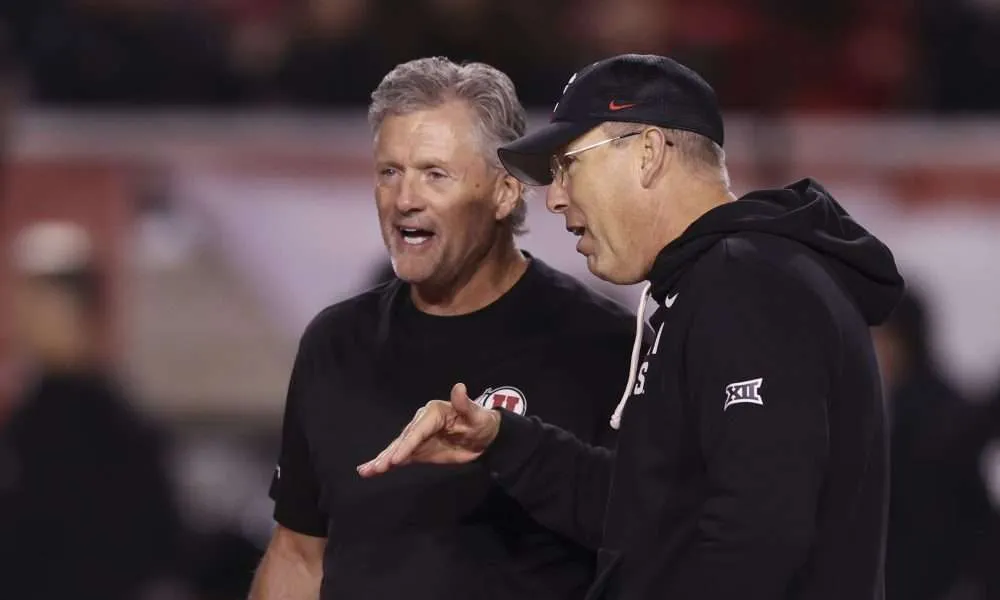
Two things about NIL and Brohm
2025 StarNews All Area Volleyball teams

IMSA team unveils Greg Biffle tribute following death – Motorsport – Sports

Coming home: Neilson tabbed as new BYU women’s volleyball coach | News, Sports, Jobs

Slidell’s Danny Tullis is headed to Mandeville | St. Tammany community news

The Games of the Future Abu Dhabi 2025 Closes Landmark Edition, Setting New Benchmark for Phygital Sports

Bulldog Explorers Program brings global learning to Starkville youth
4 Missouri football staffers, including lead NIL exec, follow Moore to WSU

Season in Review: Culture Leads to Special Season for Volleyball

From Repair to Prevention: The Emerging Role of Preventive Orthopedics

Meet the Rapid City Journal’s 2025 Best of the Black Hills volleyball team

WholeHogSports Athletes of the Year: Arkansas Razorbacks had 4 of nation’s best in 2025

Volleyball Camp and Girls Youth Basketball Leagues Starts Soon with JPRD | Raccoon Valley Radio

New lights on youth soccer pitch signal bright future for Keach Park

Fargo girl, 13, dies after collapsing during school basketball game – Grand Forks Herald

CPG Brands Like Allegra Are Betting on F1 for the First Time

Sycamores unveil 2026 track and field schedule

Two Pro Volleyball Leagues Serve Up Plans for Minnesota Teams

Utah State Announces 2025-26 Indoor Track & Field Schedule

SoundGear Named Entitlement Sponsor of Spears CARS Tour Southwest Opener

Jo Shimoda Undergoes Back Surgery

Redemption Means First Pro Stock World Championship for Dallas Glenn

Bowl Projections: ESPN predicts 12-team College Football Playoff bracket, full bowl slate after Week 14

Black Bear Revises Recording Policies After Rulebook Language Surfaces via Lever

Texas volleyball vs Kentucky game score: Live SEC tournament updates

Robert “Bobby” Lewis Hardin, 56

How this startup (and a KC sports icon) turned young players into card-carrying legends overnight

Donny Schatz finds new home for 2026, inks full-time deal with CJB Motorsports – InForum

Indiana’s rapid ascent and its impact across college football





-
 Motorsports2 weeks ago
SoundGear Named Entitlement Sponsor of Spears CARS Tour Southwest Opener
-
 Motorsports2 weeks ago
Donny Schatz finds new home for 2026, inks full-time deal with CJB Motorsports – InForum
-

 Rec Sports3 weeks ago
How Donald Trump became FIFA’s ‘soccer president’ long before World Cup draw
-
 Rec Sports2 weeks ago
David Blitzer, Harris Blitzer Sports & Entertainment
-
 Motorsports3 weeks ago
JR Motorsports Confirms Death Of NASCAR Veteran Michael Annett At Age 39
-
Sports2 weeks ago
Elliot and Thuotte Highlight Men’s Indoor Track and Field Season Opener
-
 Motorsports2 weeks ago
Rick Ware Racing switching to Chevrolet for 2026
-
Sports2 weeks ago
West Fargo volleyball coach Kelsey Titus resigns after four seasons – InForum
-
 Sports2 weeks ago
#11 Volleyball Practices, Then Meets Media Prior to #2 Kentucky Match
-
 Sports3 weeks ago
Temple Begins Indoor Track & Field Season at UPenn This Weekend