

Connect with us
https://yoursportsnation.com/wp-content/uploads/2025/07/call-to-1.png

NIL

Tony’s takes: My three-step plan to save college football

Published

on


Tony’s takes: My three-step plan to save college football

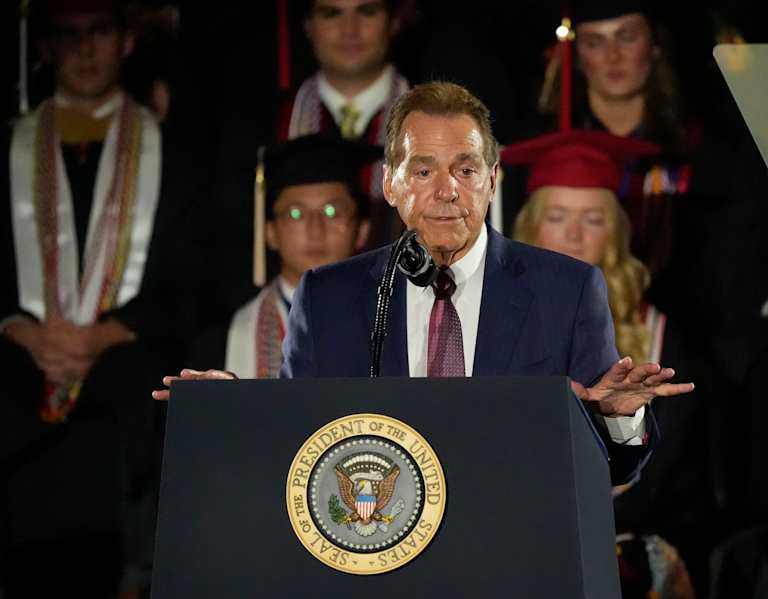
If Nick Saban is truly college football’s knight in shining armor, this will be his biggest feat of heroics yet. Earlier this week, Saban and Texas Tech board of regents chairman Cody Campbell were chosen to co-chair President Donald Trump’s commission on college athletics.

The new commission is expected to examine the landscape of college sports and work toward fixing issues including booster-funded payments, transfer rules, conference alignment and Title IX. On paper, Saban — college football’s best-ever head coach — and Campbell — a former Texas Tech football player turned multi-billionaire businessman — appear to be promising choices for leadership.

I can’t say I’m confident the duo can save the sanctity of college football, but I can tell you the steps I would take if I were in their shoes. With that said, here is my three-step process to saving the sport.

Create a single transfer window 

This is the most popular suggestion when it comes to fixing college football. Simply put, the spring transfer window is a mess. Most of the high-impact transfers are handled in the winter window, and having a 10-day transfer period following spring camp only leads to chaos and roster uncertainty.

A singular transfer window is a must, but with every solution comes a compromise. Currently, players have a 20-day transfer window in the winter followed by a 10-day period in the spring. My compromise is creating a single three-month window that begins on Jan. 1 and extends until March 31.

That’s an 89-day period compared to the combined 30 days players currently get. My timeline comes with a catch, but we’ll get to that later.

This is a win-win for both parties. Prospective transfers would have an extended amount of time to settle on a new destination, while teams would be able to finalize their rosters in time for spring camp.

Who knows, maybe this could revive Alabama’s A-Day game… provided we all pay a small contribution to Yea Alabama, of course.

Impose a roster-transaction window 

Remember how I said my extended window comes with a catch? Well, here it is. While my model would give players an extended period to find a new home, it would impose a deadline for them to sign with a new school.

Players would have until March 31 to register with a new school for the coming season. Any unregistered player after that date would be eligible to sign and receive money from a school but would not be able to play until the beginning of the following window.

In addition, players who register with a team would not be eligible to re-register with another team in the same season. For example, if a player decided to transfer from his team in October, he could join a playoff team in January. Theoretically, an unregistered player could wait until January to join a playoff team. However, that scenario would be highly unlikely.

I’m even fine with early enrollees becoming immediately eligible for playoff teams provided those incoming freshmen elect to use their redshirt season in order to play in those games. Consider it an added recruiting benefit for contending teams.

Allow binding NIL contracts 

While the above transfer alterations should help, things would be a lot easier if teams would be allowed to sign players to binding deals. That could soon become possible due to a multibillion-dollar antitrust case that would allow schools to pay athletes a portion of their media revenues, capped at $20.5 million per season, starting on July 1.

There’s still concern over how such a ruling would create a divide between the haves and have-nots of the sport. Wealthier teams would still have a distinct advantage, as they would be able to pool their NIL funds along with expected media revenue. However, at the very least, we might see an end to the continuous jumping of ship among players vying for more lucrative offers on a yearly basis.

As is the case with coaches, such contracts could come with buy-out clauses. That could create some interesting transfer situations. Say Alabama wanted to poach a star freshman from Auburn who had signed a three-year deal with the Tigers. Assuming that player had a buy-out clause, Alabama would pay Auburn that said fee, which the Tigers would be able to use on another transfer to fill the hole in their roster.

This isn’t a perfect fix, but it’s more realistic than creating any type of salary cap. Outside of the $20.5 million per season allowed in revenue sharing, the ambiguity of NIL makes it impossible to regulate how much money teams can promise players. There will always be a disparity between college football’s biggest programs. However, the introduction of contracts will at least bring some structure to what has become a chaotic landscape.

Drink of the week — Old Fashioned 

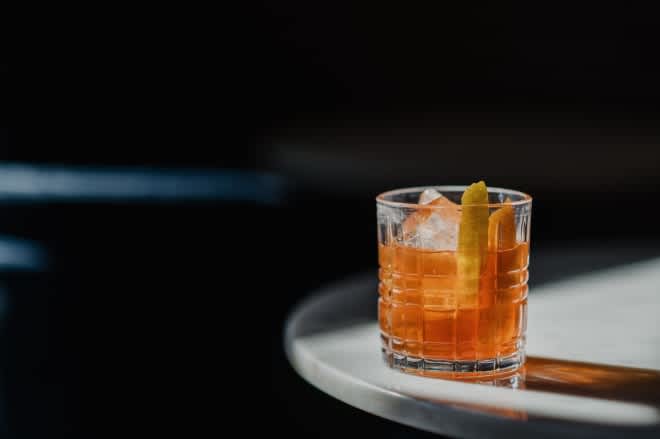
I brainstormed my college football fixes over a few Old Fashioneds with a friend on Saturday night, so it’s only fitting that the cocktail should be our drink of the week.

No one makes a better Old Fashioned in Tuscaloosa than our friends at Session Cocktails. Here’s how they stir up the classic drink.

Combine two ounces of Old Forester bourbon (head coach Paul “Bear” Bryant’s favorite), .25 ounces of Demerara Syrup and three dashes of Angostura Bitters. Pour the ingredients into a glass, add ice and stir. Express an orange peel over the drink and rub it around the rim before placing it in the glass. Express a lemon peel over the drink before placing it in the glass as well.

Cheers!

(Commercial break: My drink of the week section is now sponsored by my friends at Session Cocktails in Tuscaloosa. Session has been a mainstay in Tuscaloosa’s cocktail scene since 2019 and offers some of the tastiest drinks in town. Stop by and tell them I said hi!)


Link

Continue Reading
Click to comment

Leave a Reply

Your email address will not be published. Required fields are marked *

NIL

Texas Longhorns’ Michael Taaffe Reveals Difference-Making Strategy with NIL

Published

on


NIL has been one of the biggest and most impactful changes to the world of college football for both programs and athletes.

For some affluent programs, NIL has allowed them to climb back up to be a college football powerhouse, and for those without a track record of great success in the sport its allowed them to gain a seat at the table.

And for the players, they are likely the biggest beneficiaries of it all, finally being able to be financially compensated for the efforts and hard work they put into their programs. However, one Texas Longhorns star has taken a different route when navigating the world of NIL.

Michael Taaffe Discusses his Use of NIL

Texas Longhorns Football Michael Taaffe

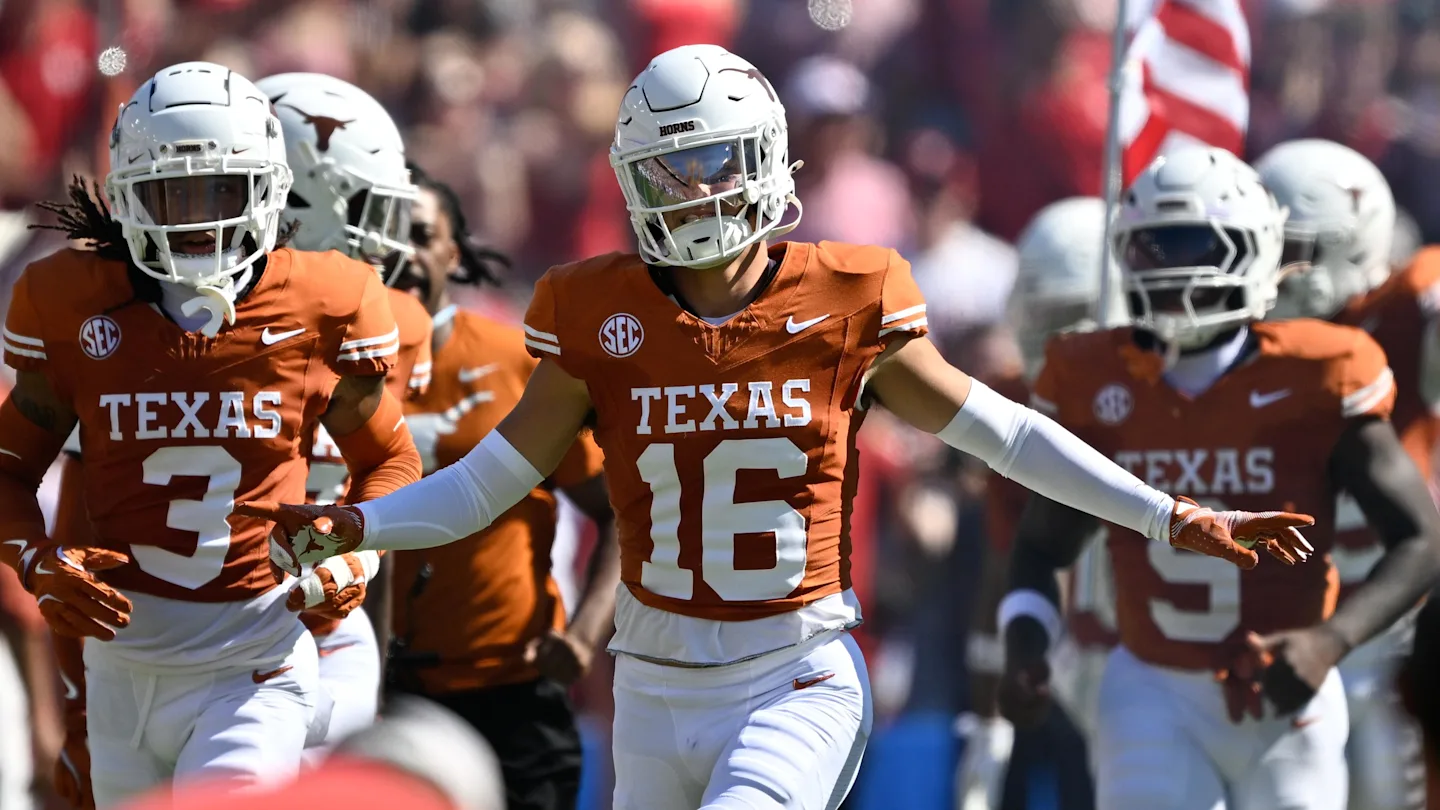
Texas Longhorns defensive back Michael Taaffe (16) celebrates after the game against the Kentucky Wildcats at Kroger Field. | Jordan Prather-Imagn Images

With Longhorn star safety Michael Taaffe, whether on or off the football field, is one of the best representatives of the Texas program, there’s no better example of that than how the senior has approached NIL and optimized it.

“I think NIL, for me, has been a little bit different because there’s opportunities that I have taken to get a little cash in the wallet, in the pocket,” Taaffe told On3. “But I think, would you much rather have this little success? This little financial success that at the end of the day, when you have to go buy a house, when you have to get a car, when you have to pay rent, this little success isn’t going to matter in the long-term? Or, would you rather have success and significance to the University of Texas that will last 100 years? I chose that route.”

While Taaffe was a part of a few partnerships with outside brands and companies, his main focus was on partnering with Texas Against Fentanyl, where he helped raise nearly $60,000 for the organization through a fundraiser, which he said helped cover the organization’s yearly budget.

Taaffe’s efforts did not go unnoticed, as he was recognized with the Wuerffel Trophy, which is the premier award for community service and recognizes athletes who use their platforms to serve others and create positive change and who exemplify community service, academic excellence, and athletic achievement.

Not only was Taaffe heavily involved with raising awareness of substance abuse, but before the 2025 season, he played a big role in the relief efforts after the flooding at Camp Mystic. The safety participated in a fundraiser for the families and, during SEC Media days, wore a special tie to honor the victims.

The Longhorns’ star has used his platform to give back to communities in need and to try to make a difference in those communities, which he says hold plenty of importance to him.

“I don’t fault anybody for the routes they take,” Taaffe said. “But I just knew that I believe being significant is way more important than being successful.”


Link

Continue Reading

NIL

Why the College Football Playoff system isn’t to blame for lopsided postseason

Published

on


Everybody wants to fix the College Football Playoff, but nobody seems to know how. There’s a good reason for this. It’s because the College Football Playoff isn’t broken … college football is.

On Saturday, college football die-hards and casuals alike tuned in to watch two games that were largely decided before a snap ever took place. Sure, the possibility of an upset always looms, but the first quarters of Ole Miss’s 41-10 win over Tulane or Oregon’s 51-34 win over James Madison made it clear quickly how those games would go. They were results that would do nothing to slow the ceaseless wave of the college football literati who had spent the last few weeks gnashing their teeth in despair over the possibility these blowouts would happen and what it would all mean.

But the pearl-clutching, hemming and hawing are all directed at the wrong target. What we’re seeing in the College Football Playoff is the result of a far bigger problem in the sport. College football has always been a top-heavy sport, and while we’ve seen a more even distribution of that weight up top thanks to NIL and the transfer portal (the GLP-1 of college football), on the whole, the sport is more top-heavy than ever before.

Resources, talent shifting in one direction

There is far more talent available and far more money coming in than at any time before, and it’s all flowing overwhelmingly in one direction.

If you look at the top recruiting classes for the 2026 cycle, you’ll notice a couple of things. The first is that, for the first time since 2008, the top class in the country belongs outside of the SEC. USC took the honors this year, the first non-SEC program to do so since Miami way back when. Furthermore, Alabama is the only SEC school to finish in the top four, but while that’s nice to see as far as spreading the talent around, it ignores the larger picture.

Sure, the Big Ten has the top spot, but 23 of the top 35 classes call the Big Ten or SEC home. The only non-Big Ten and SEC schools to crack the top 20 were Notre Dame, Miami, Florida State, North Carolina, Texas Tech and Clemson. Of those six, only Notre Dame and Miami are in the top 10, and Miami is 10th.

Pete Golding shows he’s in charge as Ole Miss dominates without Lane Kiffin: ‘He controls what he wants’

John Talty

Pete Golding shows he's in charge as Ole Miss dominates without Lane Kiffin: 'He controls what he wants'

Damage done by mass realignment

Recruiting rankings are not the only area in which the Big Ten and SEC have consolidated power. They’re just another result of that consolidation. In the last 15 years, the Big Ten has added Nebraska, Maryland, Rutgers, UCLA, USC, Oregon and Washington to the fold. Taking the last four essentially killed the Pac-12, while reaching out and taking Nebraska caused a destabilizing effect on the Big 12. An instability the SEC was all too happy to take advantage of as it poached Missouri, Oklahoma, Texas and Texas A&M from the league over the last 15 years, too. Both leagues will exist in 2026 but largely in name only. Clearly, the Big 12 has survived the attacks much stronger than the Pac-12 has, but the league has seen all of its biggest brands taken from it, which leaves it at a disadvantage when it comes to finding a television deal, causing the gap to grow only wider.

Perhaps that’s why, while we were all forced to suffer the horrors of two uncompetitive football games on Saturday, Arizona State’s Kenny Dillingham was sending out a call to any possible billionaires who wanted to buy him a new roster. Because that’s where we are now with NIL. The sport dragged its collective feet and ignored the giant tidal wave coming at it for decades, only to dive in full speed ahead on openly paying players (some of) what they’re owed. Only, you know, with hardly any regulations or guidelines that everybody can follow and no viable way to enforce them. Whose fault is that? I don’t know? Everybody’s?

Anyway, right now, people are looking at the Group of Five as the problem with the playoff, but believe me: if finances continue to work the way they’re working in this sport, it’s only a matter of time before the ACC and Big 12 get the same treatment people are giving Tulane and James Madison. After all, it’s the Big Ten and SEC who have been handed complete control of the future of the format as a compromise to simply let the ACC and Big 12 continue to exist.

Big Ten, SEC will win out in the end

But, the truth is, the Big Ten and SEC have always controlled the College Football Playoff. The Big Ten and SEC have won nine of the first 11 College Football Playoffs. Clemson is the only team from outside those leagues to win it, and it’s done so twice. Of course, Clemson has only made the field once since the NCAA stopped forcing transfers to sit out a year after changing schools and hasn’t won a playoff game at all. That’s mostly due to Clemson’s stubbornness, but it’s fitting nonetheless.

To drive the point home even further, of the 22 teams that have played in a College Football Playoff National Championship, 16 currently reside in the Big Ten or SEC. Clemson (4x), TCU and Notre Dame are the only teams to get there who aren’t in those leagues (Oregon and Washington made it while still members of the Pac-12, but are now in the Big Ten).

As the Big Ten and SEC expanded, the Big 12 and ACC did what they had to do to try to keep up. All of which has led to bloated conferences spanning the entire continent where you only play half the league in any given season, leading to ridiculous tie-breaker scenarios that end up with a five-loss Duke winning the ACC, which puts those damned Dukes of James Madison in the field!

So what’s the solution? How do we fix it all? I don’t know that you can, but I do believe there’s a natural outcome from all of this that at least leads to equilibrium of some sort.

You simply let nature take its course. Let the Big Ten and SEC finish what they started. Whether you’re excited about it or not — and believe me, I am not — the Super League or whatever dumb name you want to give it is coming. I don’t know if it will be the result of a hostile takeover by the Big Ten and SEC pilfering all the remaining valuable brands once the current television deals expire, or if it’ll be the result of a compromise between the four leagues to break off from the NCAA and form their own, fully professionalized league. But whatever the method, and whatever the final makeup of the schools involved, it is coming.

And when it does, your College Football Playoff will finally be “fixed.” The blowouts, however, will continue.


Link

Continue Reading

NIL

Kickin’ It with Kiz: We comin’? They leaving. CU stars dump Coach Prime for greener pastures

Published

on


These young men leaving the CU football program want wins. Wins equal NIL money.

– Joe, ninja-like tendencies

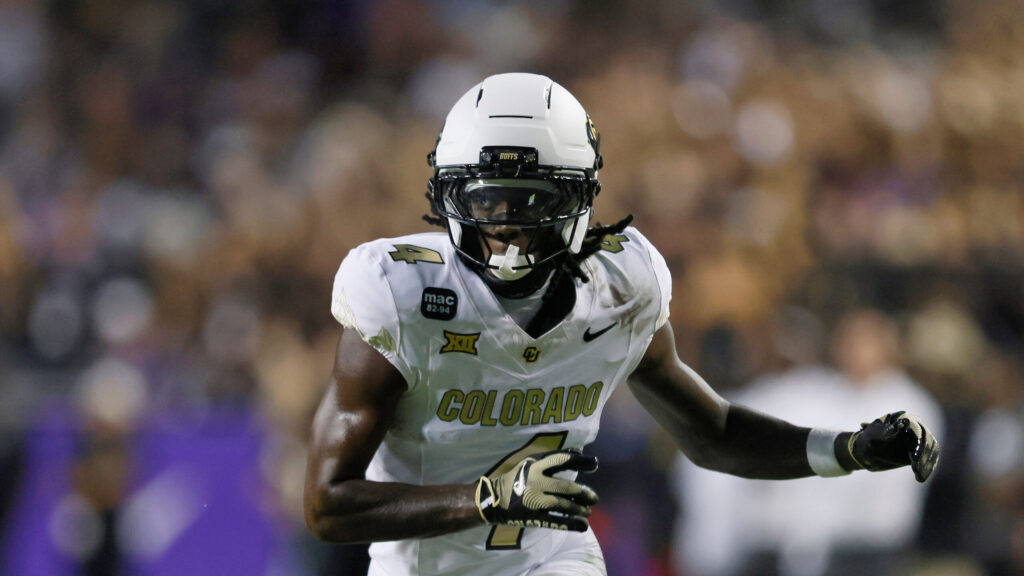
Kiz: Maybe it was Deion Sanders’ magnetic personality that attracted wide receiver Omarion Miller and safety Tawfiq Byard to Boulder. But they’re both hitting the transfer portal, because, as it turns out, the Buffs’ top offensive playmaker and most impactful defender from a wretched 3-9 CU team find money more attractive than Coach Prime. We comin’? They leavin’. Louis Vuitton cuts both ways, eh? 

Maybe it’s not such a doom-and-gloom situation with Sanders and the Buffs if other football programs are getting hit by the transfer portal in the same way.

– S.D., Buffs fan

Kiz: Can you handle the truth? Sanders came to Boulder to make the CU football program a pro showcase for his son and Travis Hunter. Coach Prime also got his bag. More power to him. But CU was so busy countin’ the money from the increased attention that athletic director Rick George was blind to what’s painfully obvious now. The University of Colorado is not a serious football program. As a coach, is Prime ready to get serious about becoming something more than an Aflac pitchman? We’re fixing to find out.

The NIL mess has ruined college football, Kiz.

– Allison, chasing the sun

Kiz: I am all for an athlete at a big-time football school getting paid, because it’s a strenuous and pressurized job. Always has been. But college football has become a game without any semblance of financial rules, loyalty or ethics. That’s not sport, it’s chaos. College football is my first love. So, this mess not only hurts my heart, but it also gives the Buffs next to no shot at winning another national championship.

The college football system is a wreck. So much is wrong that I wonder how you begin to fix it. The question isn’t: What would you do to fix it? In a practical sense, it’s more like how do you convince people to make the necessary changes?

– Z., Denver

Kiz: ESPN should replace its happy little charade of bowl week with more meaningful programming and call it tampering week. Texas at San Antonio playing Florida International in a bowl on the day after Christmas is a complete waste of everybody’s time, especially when you consider UTSA coach Jeff Traylor expects 20 of his players to opt out of their last dance with teammates. “I hate what’s going on in college football,” Traylor said. “It’s sad, it really is sad. I never thought we’d be punished for making a bowl game by being leveraged, that if you don’t give (players) a certain number, they’re not going to play in a bowl.” Nothing short of a collective bargaining agreement, with binding contracts between players and college teams, is going to fix this mess.

And today’s parting shot warns the Broncos to not start taking their football magic for granted.

Beware the Jags. The Broncos will be facing a tough test. Denver needs to keep its edge. Jacksonville quarterback Trevor Lawrence is playing at a high level. Fingers and toes crossed.

– Z.G., true Bo-liever


Link

Continue Reading

NIL

I’m deeply disturbed by what just happened with BYU’s football coach

Published

on


We continually talk about serving the collective good, creating inclusive environments and making ethical choices. The spectacle of multimillion-dollar contracts in athletics sends a conflicting message.

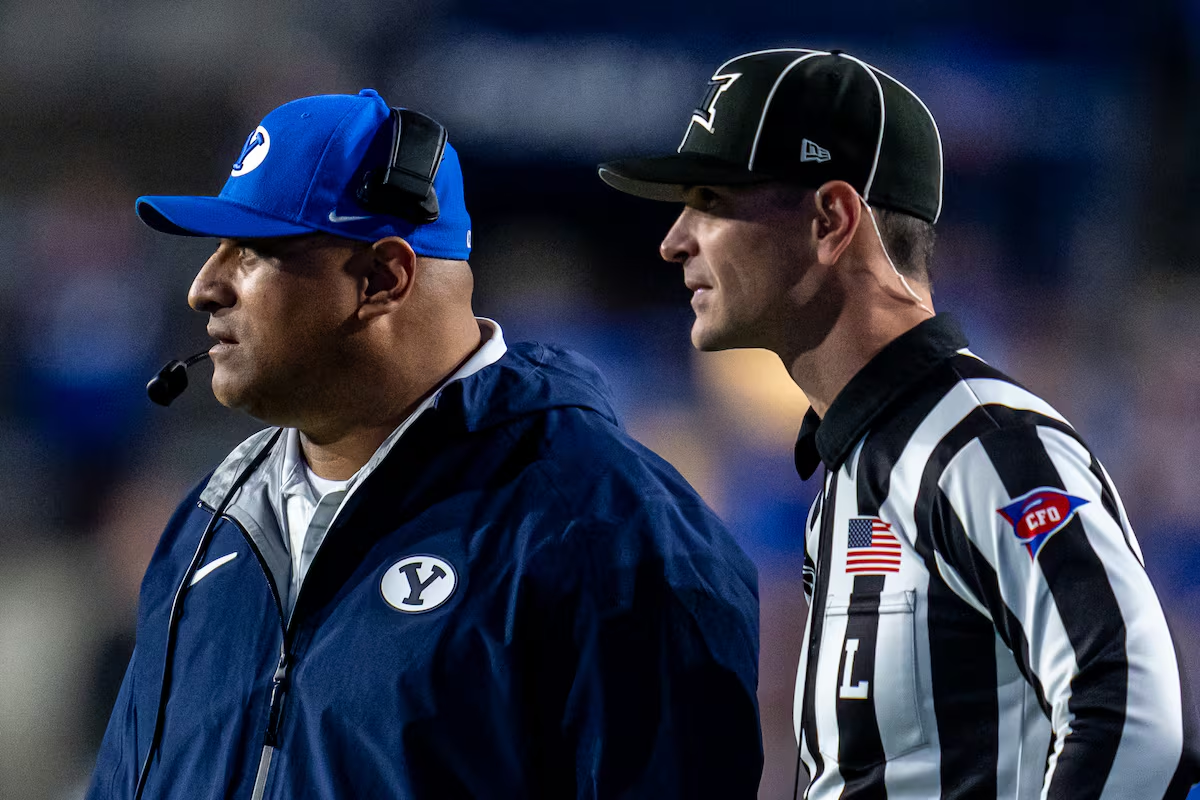
(Trent Nelson | The Salt Lake Tribune) BYU Cougars head coach Kalani Sitake as BYU hosts TCU, NCAA football in Provo on Saturday, Nov. 15, 2025.

Since the onslaught of Name, Image, and Likeness (NIL) deals in college sports, Brigham Young University has made it clear that it is not just willing to play the game — it is willing to pay top dollar.

The recent contract our football coach signed is the latest example. As a BYU student, I am deeply disturbed by the attitude our university has taken toward athletics.

Although the numbers are not officially confirmed, Coach Kalani Sitake’s new annual salary is reportedly in the ballpark of $9 million. Those millions could provide clean drinking water and food to people around the world; it could fund thousands of full tuition scholarships at BYU each year. Yet that same money is tied up in a single athletic contract. What does this suggest about BYU’s priorities?

I am not against sports, nor do I begrudge athletes or coaches for earning compensation. But BYU’s approach raises difficult questions about our values. President Shane Reese is clearly a big proponent of BYU athletics, but the frequency with which he attends sporting events, speaks of athletic outcomes and invests his bully pulpit and limited time in sports, can feel to the rest of campus like our academic focus lags behind. BYU cannot control what donors do with their money, but it can choose what it does with donor money, and that’s what students, faculty and Cougar Nation are watching.

BYU’s mission emphasizes providing an education that is spiritually strengthening, intellectually enlarging and character-building, with a focus on service and the full realization of human potential. How then, do we justify advocating for self-reliance, helping the poor and the needy and promoting ethical values while simultaneously celebrating multimillion-dollar contracts in athletics?

NIL deals became legal in 2021, creating opportunities for college athletes to profit from endorsements and sponsorships. BYU has clearly embraced this reality, investing heavily to compete financially and attract top talent. While the university maintains that its mission remains intact, the optics are hard to ignore. Students who work campus jobs are still earning sometimes under $10 an hour, while they see athletes and coaches earning millions. Professors researching cures for cancer, promoting democratic ideals, championing global ecological stewardship and strengthening families earn less than our assistant coaches. What message does this send about fairness, value and the culture we are promoting on campus?

Some defenders of this system argue that the sports budget is separate from university funds, and, technically, that is true. But every time BYU’s name, logo or likeness is used in media coverage, sponsorships or promotions, the university’s reputation is leveraged for profit. The supposed separation of funds does little to address the ethical and practical implications for the rest of the student body. What we are celebrating now is a kind of hypocrisy — one that contradicts the core principles meant to guide the university community.

In our classes, we talk often about serving the collective good, creating inclusive environments and making ethical choices. Yet, the spectacle of multimillion-dollar contracts in athletics sends a conflicting message. Sports can inspire and unite communities, and I have no wish to diminish athletic achievement. But BYU has to ask: Are we actually serving our mission, or are we just keeping people entertained with bread and circus?

I don’t see BYU’s attitude toward sports changing anytime soon. But the next time a student faces a family member with cancer, a community is devastated by a natural disaster or any urgent need arises, I expect BYU administrators, mega-donors and alumni to respond just as quickly and generously as they did to retain a football coach.

(Elias Johnson) Elias Johnson is a senior at Brigham Young University.

Elias Johnson is a senior honors student studying biodiversity in conservation at Brigham Young University.

The Salt Lake Tribune is committed to creating a space where Utahns can share ideas, perspectives and solutions that move our state forward. We rely on your insight to do this. Find out how to share your opinion here, and email us at voices@sltrib.com.


Link

Continue Reading

NIL

NCAA reaches settlement over NIL lawsuit with Tennessee, other states – The Daily Beacon

Published

on


The NCAA has reached a settlement in principle with several states, including Tennessee, surrounding a lawsuit of name, image and likeness. Tennessee attorney general Jonathan Skrmetti announced the settlement in a statement Friday.
The lawsuit began when Skrmetti sued the NCAA alongside Virginia attorney general Jason Miyares. It was filed Jan. 31 of last year following an NCAA investigation into Tennessee and Spyre Sports. Prior to the lawsuit, Tennessee athletic director Danny White and chancellor Donde Plowman responded in statements against the NCAA.

A federal judge gave the plaintiffs a preliminary injunction on Feb. 23, temporarily suspending the NCAA’s regulations on name, image and likeness. Nine days later, the NCAA decided to pause the investigation into Tennessee athletics and Spyre Sports.

“We’ve been fighting hard to protect Tennessee student-athletes,” Skrmetti said in a statement. “Last year, we blocked the NCAA’s unlawful enforcement against Tennessee students and schools, and now this settlement in principle lays the groundwork for a permanent solution.”

Per the statement, the settlement will allow students to retain rights from NIL and not allow the NCAA to ban NIL recruiting procedures. Finalization of the settlement is scheduled for March 17.

Prior to the most recent investigation, the NCAA investigated the Tennessee football program, finding several violations from September 2018 to November 2020. The violations, numbering in their hundreds, resulted in significant punishment against Tennessee football.

Required reading

Why Donde Plowman sent a letter to NCAA President Charlie Baker

State of Tennessee, NCAA conclude preliminary injunction hearing, expect decision in ‘short order’

Injunction granted in Tennessee vs. NCAA, court freezes NIL rules

Breaking down the state of Tennessee’s suit against the NCAA

Who is Jonathan Skrmetti? The Tennessee attorney general who isn’t scared

States of Florida, New York, District of Columbia join Tennessee’s antitrust suit against NCAA

Why adding Florida, New York, District of Columbia will benefit Tennessee in antitrust suit against NCAA


Link

Continue Reading

NIL

James Madison vs. Oregon prediction: Odds, picks, best bet for College Football Playoff

Published

on


James Madison vs. Oregon. In the College Football Playoff. These are the weirdest of times.

When the field expanded to 12 teams, it meant we were eventually going to get a matchup like this.

On one side of the field stands Oregon, a juggernaut backed up by one of the most robust NIL budgets in the country, and on the other, James Madison, playing in just its fourth season at the FBS level.

James Madison now heads across the country to Eugene as 21-point underdogs, hoping to pull off one of the most profound upsets in the history of the sport.

James Madison vs. Oregon odds, prediction

The Dukes were unquestionably one of the best teams in the Group of 5 this season, but they also ranked 121st in strength of schedule, with their only loss coming against their lone Power 4 opponent — Louisville.

You can only beat the teams in front of you, however, and James Madison did that in style in 2025.


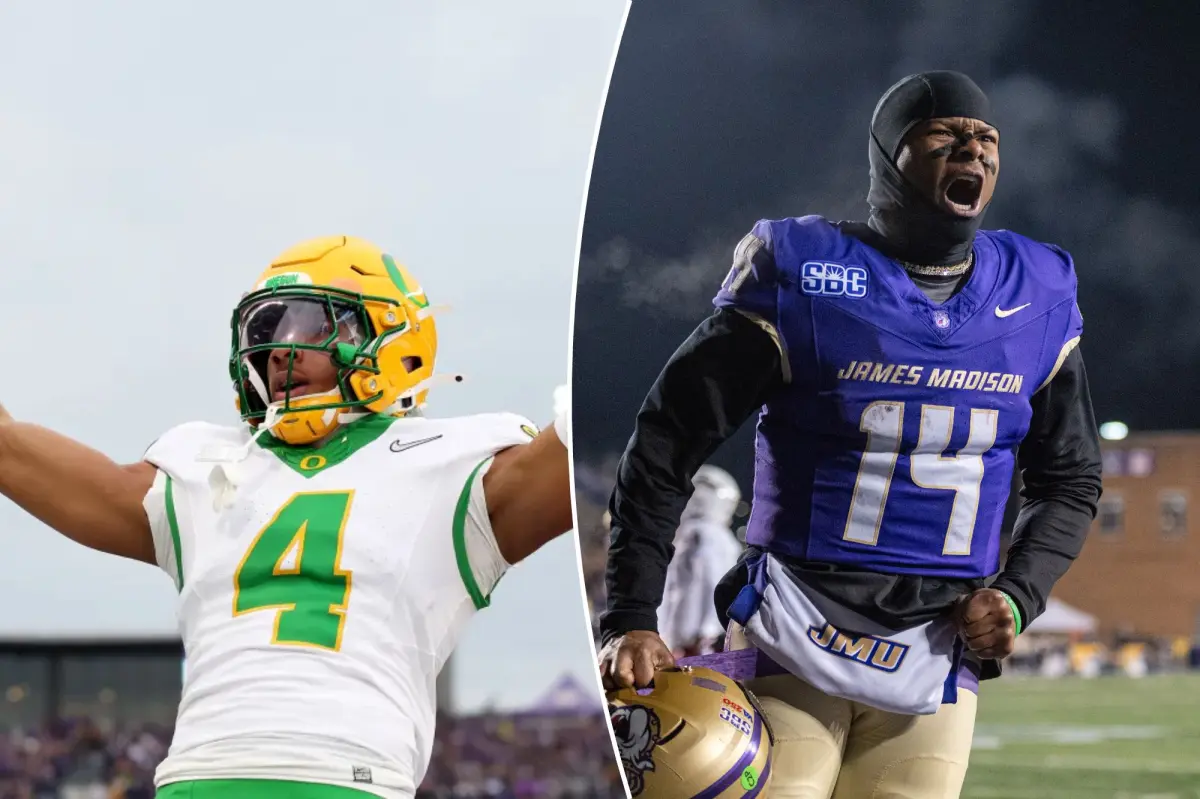
Brandon Finney #4 of the Oregon Ducks reacting during the second half against the Washington Huskies.
Brandon Finney of Oregon celebrates. Getty Images

The Dukes had an average margin of victory of 21.5 points, went 8-5 against the spread and won eight games by at least three possessions.

James Madison hit the 45-point mark five times, including against a couple of decent sides in Old Dominion and Texas State.

That kind of scoring power certainly makes the Dukes a tough out as a 21-point underdog, especially since James Madison excels at controlling the clock.

Only two teams (Army, Miami) average more time of possession per game than the Dukes, who lean into the run more than just about anybody outside of the Service Academies.


Betting on College Football?


Whether or not the Dukes will be able to pull that kind of game plan off against an elite Oregon defense remains to be seen, but it bodes well for James Madison’s chances to cover a large spread that it is committed to the run. That should keep the clock moving, which is a great thing for underdog bettors.

Oregon is likely going to prove to be too much for James Madison over the course of 60 minutes, but the Dukes are uniquely set up to be a thorn in the Ducks’ side on Saturday night.

The Play: James Madison +21 (-110, bet365)


Why Trust New York Post Betting

Michael Leboff is a long-suffering Islanders fan, but a long-profiting sports bettor with 10 years of experience in the gambling industry. He loves using game theory to help punters win bracket pools, find long shots, and learn how to beat the market in mainstream and niche sports.


Link

Continue Reading

Most Viewed Posts

Trending