
In the dynamic world of sports, women’s sports are on a steady and anticipated rise. The Female athletes are breaking records and smashing ceilings, be it in competition or in payment charts. From the field of tennis to the footballing grounds, the highest paid female athletes are showing what it means to be a champion both on and off the field.
NIL
Top 10 Highest Paid Female Athlete in the World (Currently Ranked)

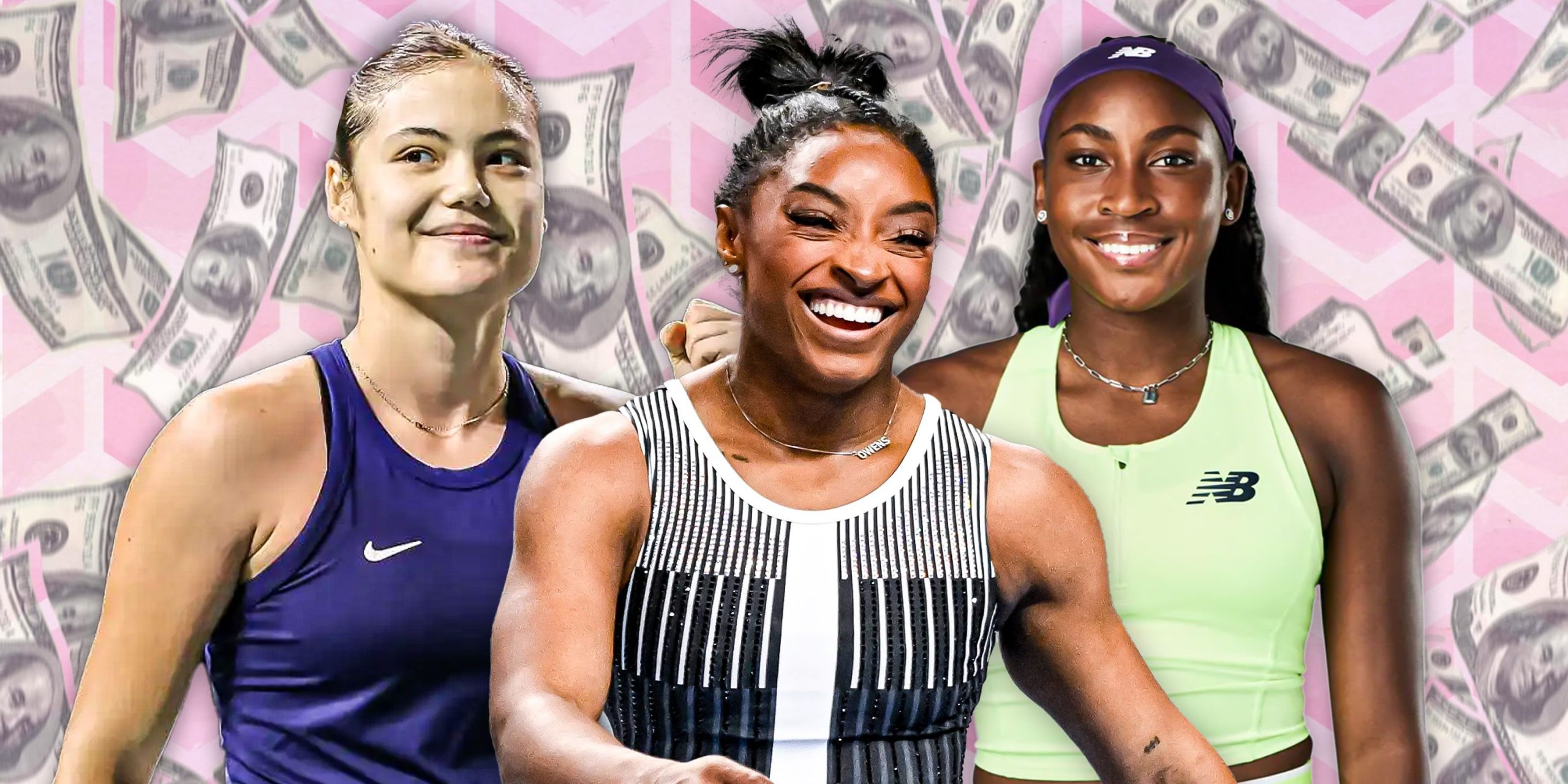
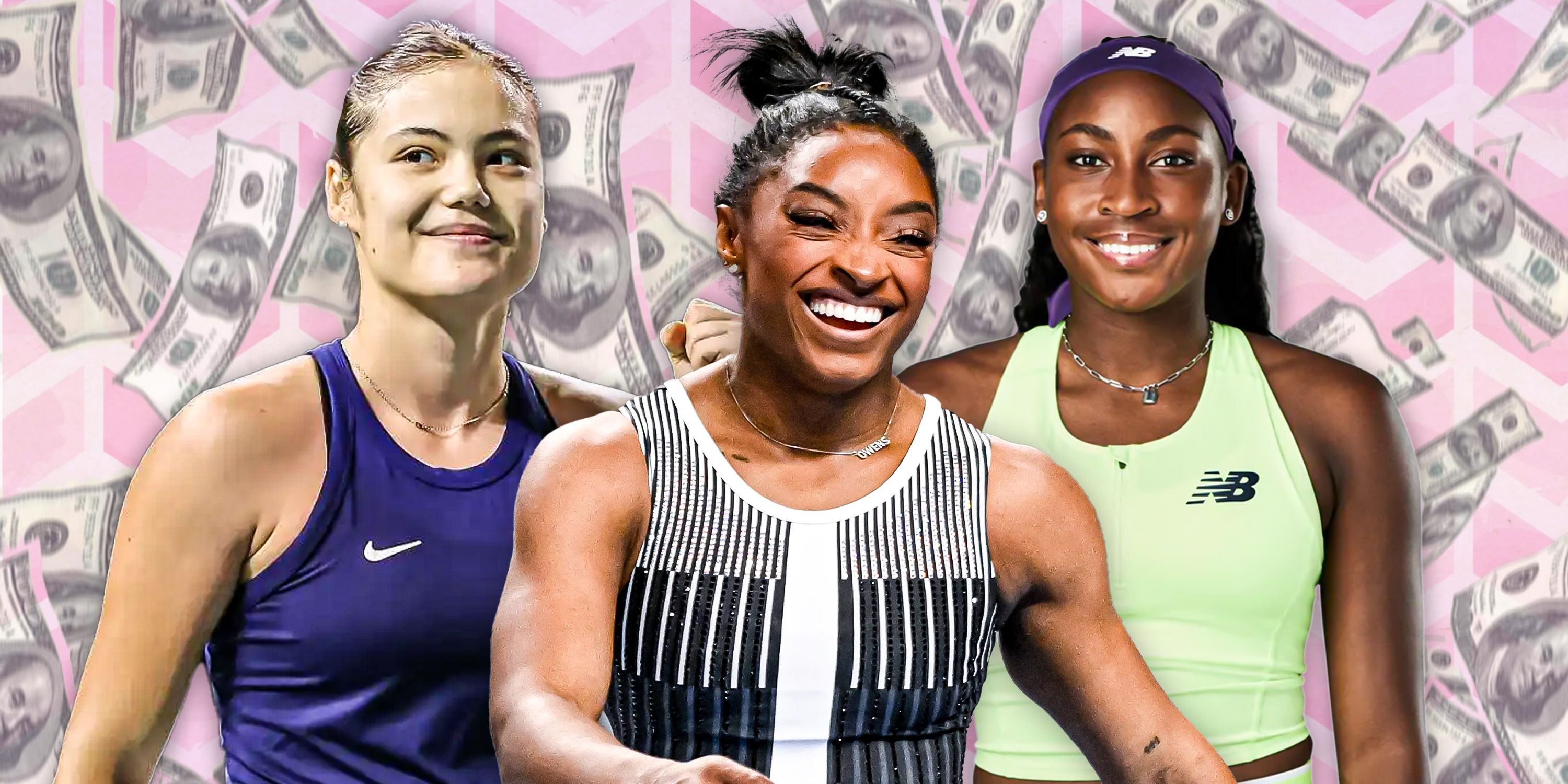
Legends like Iga Swiatek and Coco Gauff are leading the charts as they secure medals on the field and big money business moves off the field. These women aren’t just the champions, but they are also some of highest paid female athletes around the globe. These trailblazers inspire millions of people and attract the attention of brands all over the world, making them more than just athletes. Discover not only who is the highest-paid female athlete in 2025, but also how marketability, talent, and personality come together to produce unstoppable success stories.
List of Highest Paid Female Athletes 2025
The spotlight on women’s sports has never been brighter, with highest paid female athletes topping the sports pages of record earnings through a combination of prize money on the field and endorsements off the field. The game of tennis continues to dominate these tables with athletes like Naomi Osaka and Aryna Sabalenka. However, the highest paid female athletes 2025 list includes female athletes from golf, gymnastics, and even freestyle skiing, reflecting the growing commercial appeal of women across a wider range of sports disciplines.
The charts of highest paid female athletes are based on verified earnings data and estimates. The list contains a diverse mix of youth and senior veterans showcasing not only the excellence of athletes but also their brand power established through their fan following across the globe, compelling brands to hand over to them big blockbuster endorsement deals. If you’re wondering who the highest paid female athlete is right now, this breakdown provides a definitive answer supported by hard numbers and global reach.
| Rank | Player | Sport | Annual Salary (Approx. USD) |
|---|---|---|---|
| 10 | Simone Biles | Gymnastics | $11.2 million |
| 9 | Venus Williams | Tennis | $12.1 million |
| 8 | Nelly Korda | Golf | $12.5 million |
| 7 | Emma Raducanu | Tennis | $12.9 million |
| 6 | Naomi Osaka | Tennis | $12.9 million |
| 5 | Aryna Sabalenka | Tennis | $18.7 million |
| 4 | Zheng Qinwen | Tennis | $20.6 million |
| 3 | Eileen Gu | Freestyle Skiing | $22.1 million |
| 2 | Iga Świątek | Tennis | $23.8 million |
| 1 | Coco Gauff | Tennis | $34.4 million |
How We Ranked the Highest Paid Female Athletes?
Identifying the highest-paid female athletes in 2025 involves more complex factors than just prize money or club salaries. These days, athletes build diversified portfolios that go beyond the sporting field. Our rankings combine verified figures from salaries, bonuses, endorsement deals, and commercial ventures to present a comprehensive picture of who is the highest paid female athlete this year. Below are the key factors we used to assess the earnings of the highest paid female athletes across various sports.
• Salary
The core of every athlete’s income sheet is their salary. Be it their contract with a sports team, prize money they win from participating in tournaments or their match fees in some sports. For this, we took into account the official figures from sports leagues and other competitions’ pay-outs. From Grand Slam wins in tennis to annual contracts in football. The wage component highlights female athletes whose competitive achievement strongly correlates with financial gain. It’s also an important metric for comparing the highest-paid female athlete based on sporting ability.
• Endorsements
In the modern sporting world, income through endorsement has been a game-changing factor. It has turned out to be one crucial factor while determining the highest paid female athlete. Many top athletes earn more through brand collaboration than their salaries. Partnerships with sporting brands like Nike, Adidas or Puma, or collaborations with other brands like Red Bull or Rolex, not only boost their presence and public profile but also get millions added to the annual incomes of these athletes. For example, athletes like Coco Gauff and Naomi Osaka are not just tennis stars; they’re brand powerhouses.
• Commercial Activities
Beyond salaries and endorsements, many of the highest paid female athletes 2025 are carving out additional income through personal branding and entrepreneurial ventures. They might include many speaking gigs, social media monetisation or strategic investments.
The highest paid female athletes usually charge fixed figures for appearances or social media posts, while some of them build long-term business beyond sports. Commercial success off the field has become essential for staying on top of the highest paid female athletes lists, showcasing how sportswomen are evolving into full-scale business moguls.
Who is the Highest Paid Female Athlete Currently?
In terms of earnings, tennis, gymnastics, and golf are the most competitive sports among elite women athletes in 2025. Due to their strong personal brand, significant endorsement deals, and steady top-tier finishes in their sport, the highest paid female athlete currently dominates both performance and marketability.
Owing to their strong personal brand and many blockbuster endorsement deals, their commercial value has skyrocketed, making them global icons through their respective sports. As a result, many of them comfortably lead the list of the highest paid female athletes in the world.
10. Simone Biles (Gymnastics, USA) – $11.2M

Simone Biles is the most decorated gymnast in history and one of the highest paid female athletes globally. In 2025, her earnings of $11.2 million come mainly from endorsements with top brands like Athleta and Visa, alongside selective competition prize money. Biles’s status as a sports icon transcends gymnastics, making her a leading figure among the highest paid athletes female.
Simone’s story inspires many, and she consistently features in discussions about who is the highest paid female athlete, thanks to her blend of athletic achievement and commercial success in the landscape of highest paid female athletes 2025.
| Category | Details |
|---|---|
| Age | 27 |
| Sport | Gymnastics |
| Estimated Annual Salary | $11.2 million |
| Endorsements | $11 million |
9. Venus Williams (Tennis, USA) – $12.1M

Venus Williams, a veteran and icon in tennis, remains a key figure among the highest paid female athletes. Her 2025 earnings are estimated at $12.1 million, predominantly from endorsements, which reflects her lasting influence on and off the court. Venus’s brand extends beyond tennis into fashion and philanthropy, making her a multi-dimensional athlete.
Her longevity and business acumen place her prominently in the highest-paid female athlete category, and she continues to be a role model for aspiring players wondering who is the highest paid female athlete.
| Category | Details |
|---|---|
| Age | 44 |
| Sport | Tennis |
| Estimated Annual Salary | $12.1 million |
| Endorsements | $12 million |
8. Nelly Korda (Golf, USA) – $12.5M

Nelly Korda stands out as one of the few golf players among the highest paid female athletes. In 2025, she earned $12.5 million, combining $4.5 million in prize money with $8 million in endorsements. Korda’s success on the LPGA Tour and strong brand partnerships, including with Nike and Citizen, have boosted her to elite status among the highest-paid female athletes in non-tennis sports.
Nelly’s career highlights the diversification of sports represented by highest paid female athletes of 2025, showing that excellence and marketability can cross sport boundaries. She is a prime example for young athletes asking who is the highest paid female athlete outside of tennis.
| Category | Details |
|---|---|
| Age | 26 |
| Sport | Golf |
| Estimated Annual Salary | $12.5 million |
| Endorsements | $8 million |
7. Emma Raducanu (Tennis, UK) – $12.9M

Emma Raducanu’s meteoric rise has made her one of the highest paid female athletes despite limited on-court time due to injuries. With $0.9 million in prize money and $12 million in endorsements in 2025, Raducanu has shown immense commercial appeal, signing with major global brands like Nike and Dior. She exemplifies how young talent can quickly ascend the ranks of highest paid athletes female worldwide.
Her story often surfaces in discussions on who is the highest paid female athlete, highlighting the power of branding and media presence in shaping athlete income. Emma Raducanu remains a key figure in the highest paid female athletes 2025 conversation.
| Category | Details |
|---|---|
| Age | 21 |
| Sport | Tennis |
| Estimated Annual Salary | $12.9 million |
| Endorsements | $12 million |
6. Naomi Osaka (Tennis, Japan) – $12.9M

Naomi Osaka remains a household name among the highest paid female athletes despite recent breaks from competitive tennis. Her 2025 earnings of $12.9 million come mainly from endorsements, totalling $12 million, with prize money making up a smaller portion. Osaka’s global brand appeal is unparalleled, with deals from Nike, Louis Vuitton, and Beats by Dre, making her one of the most marketable highest paid athletes female can find.
Her journey demonstrates the increasing importance of off-court earnings in the profile of who is the highest paid female athlete today. Osaka continues to influence the highest paid female athletes 2025 landscape with her impactful brand and charitable endeavours.
| Category | Details |
|---|---|
| Age | 26 |
| Sport | Tennis |
| Estimated Annual Salary | $12.9 million |
| Endorsements | $12 million |
5. Aryna Sabalenka (Tennis, Belarus) – $18.7M

Aryna Sabalenka has solidified her status as one of the highest paid female athletes through consistent success on the tennis circuit. With $9.7 million earned from prize money and $9 million from endorsements in 2025, she commands a sizable income that places her well within the elite of highest paid athletes female. Aryna’s aggressive playing style and multiple WTA titles have boosted her profile and earnings alike.
Sabalenka’s rising commercial value illustrates the blend of athletic performance and marketing that defines the highest paid female athletes 2025. Fans often cite her as a leading contender when discussing who is the highest paid female athlete, due to her impressive balance of prize earnings and endorsement deals.
| Category | Details |
|---|---|
| Age | 26 |
| Sport | Tennis |
| Estimated Annual Salary | $18 million |
| Endorsements | $9 million |
4. Zheng Qinwen (Tennis, China) – $20.6M

Zheng Qinwen is a rising star in women’s tennis and ranks among the highest paid female athletes thanks to her strong performance and rapidly growing endorsement portfolio. In 2025, she earned around $20.6 million, splitting her earnings between $5.6 million in prize money and $15 million in endorsements. Zheng’s commercial appeal in both the Chinese and global markets makes her a powerful figure among the highest paid athletes female tennis players.
Her rapid rise is a clear example of how the global tennis landscape is shifting, creating opportunities for new stars to become some of the highest paid female athletes 2025. Zheng’s blend of on-court success and off-court marketability makes her a fascinating athlete to watch.
| Category | Details |
|---|---|
| Age | 21 |
| Sport | Tennis |
| Estimated Annual Salary | $20.6 million |
| Endorsements | $15 million |
3. Eileen Gu (Freestyle Skiing, China/USA) – $22.1M

Eileen Gu is a unique figure among the highest paid female athletes, standing out as a freestyle skiing champion with a global fanbase. Her annual earnings of $22.1 million are heavily weighted towards off-field income, with about $22 million coming from endorsements, while prize money from competitions is relatively modest. Eileen’s appeal spans East and West, thanks to her dual heritage and successful partnerships with brands like Victoria’s Secret, Tiffany & Co., and Red Bull.
Gu’s commercial success emphasises how highest paid female athlete today are not just dominating their sports but also thriving as international influencers and entrepreneurs. When people wonder who is the highest paid female athlete, Eileen Gu’s name frequently appears, especially among athletes outside mainstream team sports. She embodies the growing diversity of the highest paid female athletes 2025.
| Category | Details |
|---|---|
| Age | 20 |
| Sport | Freestyle Skiing |
| Estimated Annual Salary | $22.1 million |
| Endorsements | $22 million |
2. Iga Świątek (Tennis, Poland) – $23.8M

Polish tennis sensation Iga Świątek ranks among the highest paid female athletes thanks to her outstanding performance and lucrative endorsement deals. In 2025, she earned approximately $23.8 million, combining $8.8 million in prize money with $15 million from endorsements. Iga’s consistent dominance on the WTA Tour and multiple Grand Slam titles have propelled her into the elite category of highest paid female athletes that women can aspire to.
Świątek’s commercial partnerships with global brands like On Running and Red Bull enhance her earnings substantially, making her a major figure in the conversation around who is the highest paid female athlete. Her ability to blend sporting excellence with strong marketing appeal typifies the profile of the highest paid female athletes 2025.
| Category | Details |
|---|---|
| Age | 24 |
| Sport | Tennis |
| Estimated Annual Salary | $23.8 million |
| Endorsements | $15 million |
1. Coco Gauff (Tennis, USA) – $34.4M

Coco Gauff is currently one of the highest-paid female athletes in the world, making waves not only with her on-court prowess but also with her remarkable earning power off the court. In 2025, Gauff’s total earnings of $34.4 million place her at the very top of the rankings for highest-paid female athletes. Her $9.4 million in prize money, combined with a staggering $25 million from endorsements, highlights her marketability and global appeal. Coco has attracted major brands such as New Balance, Barilla, and Head, cementing her status as a top-tier female athlete who excels both athletically and commercially.
As a rising star in tennis, Coco represents the growing trend of young athletes becoming major business icons. Fans and industry watchers alike often ask, who is the highest paid female athlete? At the moment, Coco Gauff’s blend of youthful talent and sponsorship deals firmly answers that question. Her influence extends beyond sports, inspiring a generation of highest paid female athletes 2025 world
| Category | Details |
|---|---|
| Age | 20 |
| Sport | Tennis |
| Estimated Annual Salary | $34.4 million |
| Endorsements | $25 million |

Continue Reading


In this era of college football, one of the most pressing questions facing Arkansas – and every program, for that matter – seems simple on the surface, but is actually quite complex upon closer inspection: How should teams spend their budget when it comes to building a roster?
The Razorbacks, in particular, are trying to sort this out as we speak. As things currently stand, they have just one scholarship quarterback, one semi-proven running back, two returning starting offensive linemen, one established defensive end, three scholarship linebackers and very limited experience in the secondary. (The partridge in a pear tree just entered the transfer portal.)
That’s a lot of holes to fill – a task made even more difficult by the fact that there is no centralized clearinghouse of contracts like in the NFL. That means college football programs are left trying to figure out how much each player and position is worth and how to keep talent contributing now and into the future.
It’s a question at the top of mind for every FBS staffer, as well as most fans, so Trey Biddy over at HawgSports took a stab at it last week, giving himself $25 million to distribute across the Razorbacks’ roster. It’s an interesting breakdown and one we strongly recommend reading for yourself.
Best of Arkansas Sports, though, wanted to take a slightly different approach to the topic, so they asked sports economist Parker Fleming to take a stab at it from an analytics perspective. Here’s what he came up with…
Using the NFL as a Guide
When building a college roster, many front offices look to the NFL, which has a centralized database of player contracts as part of its Collective Bargaining Agreement. Valuing a player in the NFL becomes as straightforward as looking at a few key metrics, seeing where that player ranks in those key metrics, and then slotting their earnings in accordance with their production.
Poll
Want to Get Paid for Following Arkansas Sports?
In fact, many college teams have hired directly from the NFL ranks to have someone with professional experience help with their cap and contract management. While the experience and general principles from the NFL have great value, there are still some unique realities in college football one must consider.
First, uncertainty around player quality in college football is dramatically higher than the NFL. New Arkansas general manager Gaizka Crowley mentioned this in a recent interview with The Athletic, citing college being distinct from the pros because there is “a ton of variance” among and between programs. College prospects are developmental, and that means the range of outcomes on a player are much larger than their more polished pro counterparts. Due to that uncertainty, investing all your resources in just a few players is going to increase your risk.
Second, and perhaps more important, is the fact that the NFL is a passing league, where college football features the run game much more prominently. In 2025, college football teams rushed about 15% more than an average NFL team, given down, distance and game state. That means we must recalibrate our positional value relative to the NFL: QB passing and WR/CB play become slightly less important, while the run game – running backs, offensive and defensive linemen, linebackers, blocking tight end – becomes more important.
Ryan Silverfield’s Memphis was a slightly pass-heavy team in 2025, passing 2.9 percentage points more than the average team (56th most-pass happy in the nation, per cfb-graphs.com), so for this specific example, we won’t over-indulge in the run game, but we do know that’s a clear difference from the NFL example.
Clearly, we can’t just map one for one the structure of the NFL and hope for the best with the rest of the roster. While a roster of 15 elite players and 90 replacement players would be a fun experiment, it also puts the team in a hole for recruitment (money you have to tie into players who need to develop to contribute), and at severe risk of an injury or bust derailing a season spectacularly.
What we can do, though, is use NFL benchmarks for elite talent and adjust for rush rates to get us guiding principles for position-by-position group allocation. For our rushing adjustment, we want to increase the value of the rushing positions by about 15% and decrease the value of the passing positions by about 15%.
Then, we’ll adjust by number of players: we need more linemen and more wide receivers than we do quarterbacks or running backs, so we’ll adjust the pools accordingly. At this point, we’re entering into art not science, and different teams will have strong opinions about this adjustment. But as a guiding principle, this illustrates the roster building challenge and ways to attack it.
Position-by-Position Breakdown
One place many programs have started is with the NFL franchise tag. The franchise tag is a tool teams have where they can retain a free agent player for one season at a premium salary, designated by the average annual value of the top five salaries at that position over the last four years.
In 2026, per overthecap.com, the franchise tag values are projected to look something like this:

This table essentially reflects how the league values elite talent at each position.
We can apply our rushing adjustment to these values to get guidelines for our position-by-position distribution. Applying the 15% adjustment to the positions as stated above, we get percentages and total amounts of a $25 million dollar budget as follows:

Following the Eagles’ Blueprint
Now that we have guardrails for positional value and overall spending, we need to think about how to distribute these amounts across players. In his article, Trey Biddy acknowledges this problem and articulates a reasonable solution:
Related Articles
“I’m capped at 105 roster spots, but instead of giving something to everyone, I’m going to focus on 75 players and no more. Everyone else will have to be happy with a scholarship. At least 20 of those 75 players will be elite recruits. However, there might be the possibility that a recruit fits into a starter, backup or reserve role. In that case it would be 20-plus recruits.
Essentially, I’m going for 55 players who are going to see the field or provide insurance in case of an injury, plus 20 more I’m invested in for the future. I also considered limiting it to as few as 47 players (the two-deep plus special teams) plus 20 or so recruits.”
Biddy was on the right track with that final statement.
The Philadelphia Eagles, one of the NFL’s most savvy front offices, invest about 80% of the salary cap in 55% of their roster, which equates to about 47 players we want to really invest in, some of whom will be recruits. Ideally, some of those recruits can contribute immediately, especially wide receivers, running backs and defensive backs. We’ll bump that up to a round 50 to include two specialists and a fourth quarterback for depth.
We’ll use the percentages above and allocate $20 million of our $25 million to those 47+3 players on the roster to give us a $5 million reserve for recruitment and portal – that’s money we want to spend every year, but reserve to allow us to go over slot or over positional numbers as the roster needs dictate based on eligibility and turnover.
To allocate this money within position groups, I’ll use a Pareto distribution to allocate the position budgets across players. Some of you may be familiar with the Pareto rule in business, where 20% of inputs yield 80% of outputs. In our context, what it means is simple: Top-end talent will have more influence on our results, and we want to pay accordingly. Using this Pareto distribution to spread money across position groups will allow us to invest our money in high-quality talent at the most impactful positions, yielding the best results on the field, both now and in the future.
Without further ado, let’s go position by position and allocate our 50 roster spots.
QUARTERBACK (4 Players)
- QB1: $2,500,000
- QB2: $647,775
- QB3: $254,000
- QB4: $150,723
RUNNING BACK (4 Players)
- RB1: $548,931
- RB2: $245,654
- RB3: $153,482
- RB4: $109,933
WIDE RECEIVER (7 Players)
- WR1: $1,022,607
- WR2: $457,629
- WR3: $285,922
- WR4: $204,795
- WR5: $158,090
- WR6: $127,000
- WR7: $107,003
TIGHT END (3 Players)
- TE1: $602,161
- TE2: $269,474
- TE3: $168,365
OFFENSIVE LINE (10 Players)
- OT1: $1,558,248
- OT2: $710,761
- OG1: $444,076
- OT3: $318,074
- C: $245,535
- OG2: $198,730
- OT4: $166,190
- OT5: $142,342
- IOL4: $124,164
- IOL5: $109,880
DEFENSIVE END (4 Players)
- DE1: $767,881
- DE2: $343,636
- DE3: $214,701
- DE4: $153,782
DEFENSIVE TACKLE (4 Players)
- DT1: $1,209,932
- DT2: $541,460
- DT3: $338,299
- DT4: $242,310
LINEBACKER (4 Players)
- LB1: $1,073,996
- LB2: $480,627
- LB3: $300,291
- LB4: $215,086
SAFETY (4 Players)
- S1: $795,899
- S2: $356,175
- S3: $222,534
- S4: $159,393
CORNERBACK (4 Players)
- CB1: $599,777
- CB2: 268,408
- CB3: $167,699
- CB4: $120,116
SPECIALISTS (2 Players)
TOTAL: 50 Players, $19,726,000
- OFFENSE: 28 Players, $11,010,000
- DEFENSE: 20 Players, $8,572,000
- SPECIALISTS: 2 Players, $144,000
RECRUITING BUDGET AND REST OF ROSTER: $5,418,000 ($235,565 per player for an average recruiting class of 23 players)
These are some of the key differences between mine and Trey Biddy’s methods:
- Less commitment to QBs: we want to keep the money on the field, and so while we want to entice backups to stay, we also need to walk a fine line between paying for players who aren’t contributing this season.
- Balance at the tails for premium positions: The value of a good running back is higher in college than the NFL, but we also know a couple things: Running Backs take a lot of wear and tear, and their success is dependent on their surroundings. The analytical approach would be to pay for an upper middle class veteran back, and play your young running backs as well, investing the rest of the top end money into the offensive line.
- Specialist numbers were too high. A good punting and kicking game is important, but ancillary to moving the ball well in the down-to-down business of football. We want to attract and retain talent without paying market premiums for positions that yield minimal influence on our overall success. I refrained from paying a long-snapper at all; long-snapping is a skill that can be taught, and I have faith in the coaching staff to find a walk-on who would be happy to have that role.
What we’ve done above is taken an analytical approach to framing ideal targets for roster spending. This approach, one of many potential successful approaches, emphasizes top-end talent on on-field contribution, while leaving substantial funds for coaching preference at depth or paying premiums for transfer portal talent.
When building a roster, the current money on the books will be the biggest constraint for coaches, as well as the natural evolution of the roster due to eligibility limits. The analytical approach above attempts to tie spending to on-field impact and position Arkansas to build a championship caliber roster.
***

***
More coverage of Arkansas football and the transfer portal from BoAS…
Related
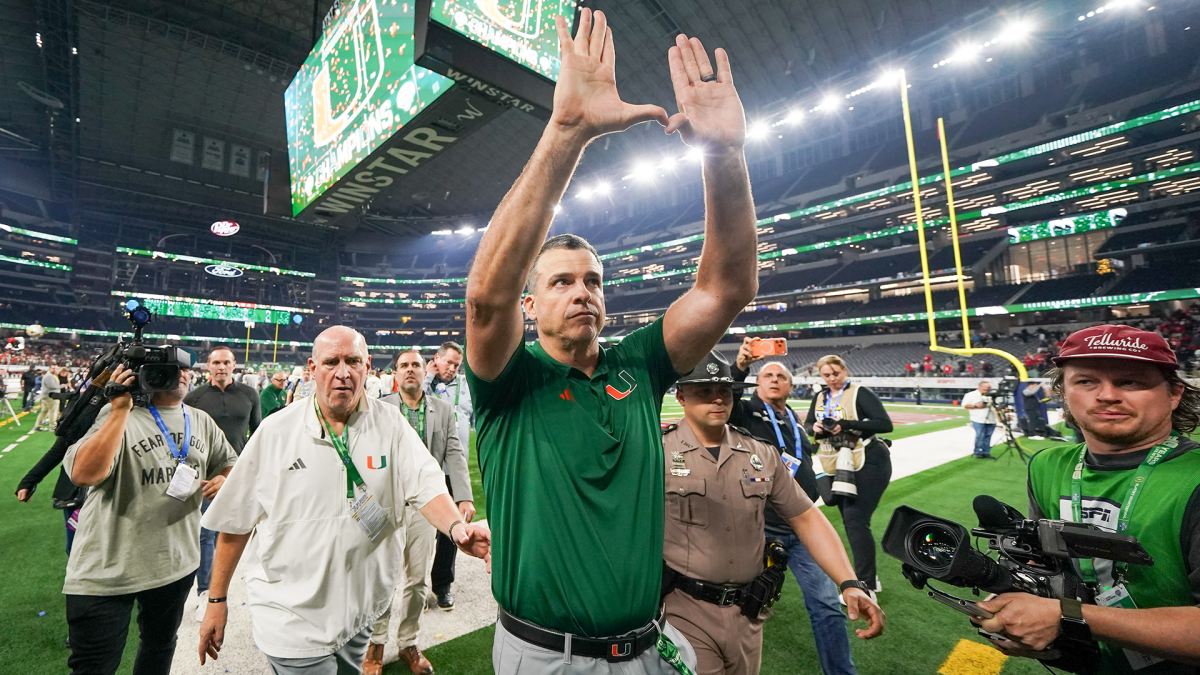
We have reached the College Football Playoff semifinals, and unlike last season when the favorites won all eight games in the first two rounds, we’ve seen some surprises this year. Gone are the likes of Ohio State, Georgia and Alabama. In are the upstarts like Indiana, Ole Miss and a Miami team that hasn’t played on a stage like this in over 20 years.
Between those three and Oregon, we are guaranteed to not only have a new national champion but a team that will win its first title in the CFP era. Of our final four teams, Miami is the only program to win a national title going back to the BCS era — its last natty coming in 2001.
For Ole Miss, you have to go back to 1960, which is the lone national title in program history. Indiana and Oregon? They’ve never won the national title.
College Football Playoff overreactions: Best postseason we’ve seen, Curt Cignetti on Hall of Fame track
Will Backus
NIL, the transfer portal and the College Football Playoff were supposed to bring us new blood, and it’s hard to argue with the results right now, isn’t it? So we’re either re-crowning a long-dormant national power or welcoming a new power to the fold, but I’m not here to figure out who will take the trophy at the end right now. No, the point of our exercise today is to determine what the best possible title game matchups would be. To figure that out, I looked at the possibilities from multiple perspectives. How competitive would the game likely be? How does the matchup look? Who has the coolest uniforms? And, while I’m not a television executive, I also considered which matchup would be most appealing to a broader audience.
Here are my highly scientific results.
1. (5) Oregon vs. (10) Miami
Oregon may not have a national title to its name, but it’s not exactly a stranger to the stage. This is Oregon’s third appearance in the CFP, and if it advances to the title game, it will be its second appearance in a national championship game since the start of the BCS era in 1998. Miami is the blue blood of the group. It has won a national title this century and has five in its history.
While neither team is a television draw the likes of Ohio State or Alabama, they are known commodities in the college football world and would draw more “casual” eyeballs in this spot than any other possible combination. As for the matchup itself, the teams are quite similar. They have physical run games that look to punish you for 60 minutes but also have accurate quarterbacks who can get the ball to dangerous playmakers at the wide receiver position.
They’re also both led by coaches who put a strong emphasis on building their program from the lines of scrimmage out, though Dan Lanning is more aggressive when it comes to gameday decisions than Mario Cristobal. Oh, and that brings up another fun storyline for this game. Mario Cristobal left Oregon to take the job at Miami and was replaced by Lanning. There was a lot of talk about the possibility of a Carson Beck vs. Georgia’s revenge game the last few weeks, but we all overlooked Mario vs. Oregon.
2. (1) Indiana vs. (10) Miami
A lot of what I said about the football matchup between Oregon and Miami applies here as well. Indiana may not have a bunch of blue-chip prospects on their offensive and defensive lines, but go ahead and ask all those blue-chip teams it’s beaten if they could tell the difference when facing them. The Hoosiers are just as mean as anybody, and I don’t know that there’s a defense in the country that takes as much joy in hitting ballcarriers as Indiana’s does.
Indiana also might have the best quarterback in the country. Fernando Mendoza won the Heisman Trophy for good reason and could be the first pick in the NFL Draft this spring. So that certainly brings some “sizzle” to the matchup for television purposes. Plus, you can always sell this as New Blood vs. Blue Blood.
3. (5) Oregon vs. (6) Ole Miss
Of the four possible matchups, this is the one most likely to deliver us a shootout. Ole Miss has been involved in plenty of those all year, thanks to the likes of Trinidad Chambliss and an explosive offense. Lane Kiffin might be gone (oh, the irony of leaving for LSU to compete for national championships while then watching the team you just left do that), but he didn’t take the offense with him. Ole Miss has scored 80 points through its first two playoff games after averaging 37.6 during the regular season.
Oregon has shown more versatility. It can win a rock fight, but it’s also one of the most explosive offenses in the country. It has scored 40 points or more seven times this season and has cracked the 50-point mark four times.
4. (1) Indiana vs. (6) Ole Miss
This is the matchup that would have the largest spread. I don’t know where the final odds would be by the time the game came around, but using my power ratings, I’d have Indiana as roughly a 10-point favorite here. Of course, if this game happens, Ole Miss will have reached the title game after beating both Georgia and Miami as underdogs in the quarters and semis, so it’s not a position where the Rebels would be afraid.
Still, while I’ll be happy to watch this game if it’s the one we get. The blowout potential here is higher than anywhere else, which makes it the least appealing. Yes, there’s the angle of neither team having won or competed for national titles in the modern era before, but like Indiana, Oregon hasn’t won a national title either, so the novelty doesn’t carry much weight.
Jan. 3, 2026, 7:02 a.m. ET
We tend to think of the transfer portal, at least as outside observers, in terms of opportunistic players.
Those are the ones who seek a “better” situation in terms of playing time or, at the upper echelon of Division I sports, a chance to get paid.
The reality, says Linda Martindale, a mental fitness coach for high school and college athletes, is many of them are pushed into the portal.
“A coach says, ‘You’re not gonna play here, so find somewhere else to play,’ ” Martindale, who coaches high school basketball in the Boston area, told USA TODAY Sports last month. “It happens all the time.
“The transfer portal is not full of selfish athletes who want to find something better or who aren’t getting to play, which I think some people think. It’s probably a 50-50. You know, you’ve been over-recruited. You’re not as good as, maybe, the coach thought you were gonna be. That kind of thing.”
Jan. 2 marked the start of the NCAA’s transfer portal window for football that runs through Jan. 16. Longer windows start for basketball in March and continue throughout the spring and summer for other sports.
The process involves thousands of kids every year. Top athletes are lured by schools through payments they receive from Name, Image and Likeness (NIL) deals.
“I had a Power Four basketball GM tell me straight up, ‘We don’t recruit anymore. We acquire,’ ” says Brian Cruver, co-founder and CEO of Scorability, a database that stores player information that coaches and athletes use as a recruiting tool. “ ‘We look at how much money we have to spend and we go spend it. And if we have to spend more on this kid, it’s less we have available to spend on this other kid.’ It’s basically just dealing with an amount of money and what can you buy with it?”
Cruver, though, says players seeking large sums of NIL money make up a small fraction of college athletes on NCAA, NAIA or junior college teams. The rest are looking for help to find the right spot, investing time and money, and anguish, to do so.
What do we need to know if our kids are thinking of entering the transfer portal? Here are four questions athletes and parents can ask themselves, gleaned from consultation with experts:
YOUTH SPORTS SURVIVAL GUIDE: Pre-order Coach Steve’s upcoming book for young athletes and their parents

What do you really know – or maybe not know – about the transfer portal?
The system allows athletes to transfer to another school and be eligible to play the next season, sometimes earlier.
What I learned from listening to coaches at on-campus baseball prospect camps (Division I, II and III) with my son, now a high school senior, is you’re not guaranteed to be picked up by another school when you enter the transfer portal.
According to recent NCAA data, about 30% of Division I athletes who enter the portal don’t find another D-I program.
Perhaps there’s a sounder strategy, for any level.
“We’ve had some people transfer to programs where they want to play,” North Carolina women’s lacrosse coach Jenny Levy told Martindale on Martindale’s ‘Game Changers’ podcast in 2024. “They’re usually kids that aren’t getting what they want on the field. Sometimes they say, ‘Jenny, I’m going to graduate early, and I’m going to go somewhere where I can play.’
“I’m like, ‘Great, let me help you.’ I have no problem with that. I’m very supportive of those players all the time. … But if you’re leaving just because you’re not getting what you want, don’t have the patience to actually develop yourself, and you just want a CliffsNotes version to start, and you want to go top 10 to top 10, then I think that’s bad parenting, personally.
“If you’re gonna go to a program that’s maybe not in the top 10, so maybe you finish your degree at the school where you are and you’ve got eligibility left and you want to go have a different experience and maybe play for a program that you can get on the field with, I think that’s great. Good for those guys.”
Coach Steve:How do I get recruited? Our series goes behind curtain of D-I
No one comes to sit on the bench, but what are you getting out of being on the team?
If you are thinking about entering the portal, consider talking to your college coach first.
Do they support your decision? Will your school take you back if you don’t land somewhere else? That conversation might help you better realize your value to them.
“I think part of my job is managing disappointment,” Levy told Martindale. “And you have to understand that no one came to sit on the bench … You have to be aware that while you’re still pushing and prodding your highest performers, there’s a whole group of players that are human, and they want to achieve, and they want to feel valued. And so we talk a lot about that.
“Sometimes the kid’s like, ‘I’m just not better than the player in front of me.’ And that’s OK. What they’re doing takes courage. It takes commitment and passion. And in four years, when they get out of our program, they have learned a whole set of skills, intangible skills that they will take with them for their lives. And so we really start to talk about what are you learning as a human? What are you taking with you?”
Ray Priore, who spent 38 years as either a head or assistant football coach at the University of Pennsylvania before stepping down in November, admits he was one of the lucky ones among the high-profile sports. He didn’t deal with NIL offers and instead sold the value of an Ivy League education and the career and financial opportunities it brought.
Priore called the Ivy League experience “NIL for life.” Still, he told USA TODAY Sports in November, Penn has lost a player or two every year since the transfer portal opened in 2018. One of them was running back Malachi Hosley, the Ivy League Offensive Player of the Year in 2024. He left for Georgia Tech and became the nationally ranked FBS team’s second leading rusher in 2025.
Priore says he was told Hosley received a “significant” NIL deal.
“I’m happy for him because I think he’s at a level and perhaps the NIL situation is helping his family,” Priore said. “And I think that that’s a good thing. Hurtful, from the standpoint it hurts us. Because now you lose that person.”
According to the NFL, about 1.6% of NCAA football players make it to the professional level. Most other sports don’t even have that opportunity.
“We really try to create a transformational experience here,” says Levy, who has won four national titles at North Carolina. “Lacrosse is not a sport that they’re going to go pro and make a living off of just being a lacrosse player. You’re going to get a job.
“You’re going to have different types of responsibilities outside of the sport after you graduate. And so for us, obviously we want to (position) the team every year to win a conference and NCAA championship, but the culture piece is also very high.
“And that includes team building, it includes career networking and development. So it includes a lot of different things that are addressing developing the whole human.”
I was a rower at a top collegiate program who was often left out of my school’s varsity boats. But I still carry skills learned from the sport – many of them in practice – such as coordinating with others and persevering through difficult tasks. I stuck with the team for three years and stepped away from it for a more “normal” student life my senior year.
“I think we have the greatest classroom in the world,” Priore said in November, pointing out the window of his office at Penn’s Franklin Field. “I don’t care what the venue is.
“I think that’s where maybe parents sometimes miss it. Why is a kid playing? My niece was a good high school soccer player. But my younger brother, at the same time, thought she was like Mia Hamm. She was a scholarship level but she wasn’t going to the Olympics. She was (on) every travel team, elite squad. …. And it’s like, parents, just let the kid enjoy it.”
Is the grass really greener somewhere else?
Parents tell kids they should be playing more on their team. In the case of Howard men’s basketball coach Kenny Blakeney, they request floor seats from him in return for their son’s commitment.
We can be wiser and sounder with our actions and advice. Martindale, the high school and mental fitness coach who also played D-I basketball, has a son who transferred twice as a Division I college basketball player and now plays professionally in Europe.
Over the years, she has come up with four criteria for good coaches: Know you, connect with you, prepare you for failure, believe in you.
If your coach embodies these qualities in their relationship with you, is it worth leaving?
“It’s not soft and fluffy,” Martindale says. “We’re not suggesting that everyone sings songs after a game around a campfire. We know it’s sports, we know it’s competitive, we know it’s aggressive. But joy comes from preparation, from knowing that you’ve given everything you have, of competing, of showing up … all the things that you’re doing, and you’re not giving yourself any credit for.”
Was that ‘fun’?Coco Gauff’s intense US Open embodies what it means in sports
Which situation best helps your end game?
Steve Alford won a national championship playing for Bobby Knight and has coached a number of teams into the NCAA tournament over 30-plus seasons as a Division I men’s basketball head coach.
Like a number of his veteran peers, two of whom (Nick Saban, Jay Wright) have gotten out of NCAA coaching, Alford has publicly expressed frustration with the current state of college sports.
“Five years ago, I wasn’t on conversations (with players), saying, ‘How much you want to be paid?’ ” Alford, who now coaches Nevada, said last March. “Never thought that would happen in college basketball. I don’t believe student-athletes shouldn’t be paid. But the way it is now is utterly ridiculous. And it’s changed our game. And so you gotta adapt. Before every game, me and the opposing coach are gonna talk about portal issues. And, you know, where’s academics at? … ”
“It used to be, ‘Hey, what’s my degree gonna look like? What’s your facilities look like? What’s your relationship with the team look like? Are you there for all practices? Are you a coach that dives into relationships, and you’re gonna care for my child?’ You might as well throw all that stuff out, ’cause the only question they’re concerned about is what they’re getting paid in the portal. …
“Most of them are getting what they’re getting before they ever produce. You should have to produce, then you receive. It’s a bad lesson, and we shouldn’t be sending kids off to teach them bad models for when they’re 25 and 26.”
During the press conference, Alford alluded to five of his players at the time whose NIL deals were set to expire in the next two months. He openly asked the question of what happens next.
“Are they gonna be able to handle the real world?” he said.
It’s a question any kid, athlete or not, can try and answer with a parent when considering a potential college.
Borelli, aka Coach Steve, has been an editor and writer with USA TODAY since 1999. He spent 10 years coaching his two sons’ baseball and basketball teams. He and his wife, Colleen, are now sports parents for two high schoolers. His Coach Steve column is posted weekly. For his past columns, click here.
Got a question for Coach Steve you want answered in a column? Email him at sborelli@usatoday.com

Jan. 2, 2026, 3:44 p.m. PT
Washington Huskies sophomore quarterback Demond Williams Jr. will begin his third season at the school among the top compensated players in college football after agreeing to a new deal on Friday.
ESPN college football insider Pete Thamel reported the deal between the 5-foot-11, 190-pound signal-caller and the school on Friday, reuniting Williams and Jedd Fisch for the next two seasons through his senior year in 2027.
The Chandler, Arizona native emerged as one of the best quarterbacks in the Big Ten in his first year as the Huskies’ starter, throwing for 3,064 yards and 25 touchdowns with an additional 611 yards rushing and six touchdowns on the ground in 2025, leading the program to a 9-4 overall record in year two under Fisch.
Although not a surprise, securing the talented dual-threat quarterback was a top priority for Fisch as he aims to get UW back into double-digit victories and a potential College Football Playoff berth in 2026 while continuing to build the roster through high school recruiting.
Williams, who began getting recruited by Fisch when he was a freshman at Basha High School, finished second in the Big Ten in total offense 192 yards behind USC quarterback Jayden Maiava, something that caught many national pundits by surprise having started only two games in 2024—at Oregon in the regular season finale and the Sun Bowl against Louisville—behind veteran Mississippi State transfer Will Rogers.
Among the many highlights from his first full season as the Huskies’ starter, Williams put on his best performance in a 38-19 Week 7 win vs Rutgers at Husky Stadium, completing 21-of-27 attempts for 402 yards and two touchdowns with another 132 rushing yards and two more touchdowns on the ground to become only the 16th quarterback in NCAA history to throw for 400-plus yards and run for 100-plus in a single game, the truest testament to what he can with the football in his hands.
UW opens the 2026 season at Husky Stadium against Washington State on September 5.
Updated Jan. 2, 2026, 5:25 p.m. CT

Missouri football does not appear to be wasting much time on the most important question on its roster.
Multiple reports landed Friday, Jan. 2, indicating that the Tigers are the team to watch for Austin Simmons, who, at the beginning of the 2025 season, was widely expected to be the starting quarterback for the Ole Miss Rebels under then-head coach Lane Kiffin.
Simmons, according to a report Friday from national ESPN reporter Pete Thamel, has entered the transfer portal with a no-contact tag. That typically means that a player has a good idea where they would like to end up, and it bars other schools from reaching out to him or his representatives.
Also according to Thamel, and several other national reporters, Simmons’ most-likely landing spot is in the SEC with Missouri and head coach Eli Drinkwitz.
The move makes sense for Mizzou, which definitely needs a quarterback this offseason but had options in terms of portal strategy.
Missouri can bring back freshman Matt Zollers, who has a talented arm but still needs refining and work to become an SEC starter, as exhibited by an up-and-down day in a Gator Bowl loss to Virginia.
The Tigers are expected to lose 2025 QB1 Beau Pribula to the transfer portal, and while there has been no confirmation from his camp, backup Sam Horn is still widely expected to join the Los Angeles Dodgers’ farm system this year as a highly touted right-handed pitcher.
So, Missouri’s options were two-fold:
- Bring in a QB with immediate starting caliber and let Zollers develop behind him.
- Bring in a QB who Zollers can compete with over the next eight months.
Simmons, if he does end up committing to Mizzou, would be closer to Option No. 1.
Before Trinidad Chambliss became one of stories of the 2025 college football season, the feeling in Oxford was that Simmons was a highly capable replacement for first-round draft pick Jaxson Dart.
But Simmons picked up an ankle injury in a Week 2 win over Kentucky. While he was limited in September, Chambliss — a Division-II transfer from Ferris State — took over the reins.
Ole Miss is now headed to the CFP semifinals as a 13-1 ball club. It will face Miami in the Fiesta Bowl on Jan. 8 for a spot in the national title game.
That’s a potentially important date. The current expectation is that Simmons will finish the season with the Rebels before making a transfer decision.
Now, he could announce a transfer decision before then. But he also might wait.
He is from Miami, Florida, and is listed at 6-foot-4, 215 pounds by the Rebels.
In 2025, Simmons completed 60% of his 75 pass attempts for 744 yards, four touchdowns and five interceptions. He rushed 21 times for 82 yards and one touchdown. He also had three fumbles.
Simmons, who is left-handed, has two remaining years of eligibility.

More than two-thirds of his passes were play-action looks, according to Pro Football Focus, which is more than Ole Miss has run with Chambliss. That’s an interesting stylistic difference. For comparison, both Pribula and Zollers ran play-action — a fake handoff into a pass — less than 30% of the time, per PFF.
Comfort with play-action could be a useful tool with how strong Mizzou’s running sets up to be with Ahmad Hardy and Jamal Roberts returning. Play-action looks tend to keep defenses honest defending the pass against strong running outfits, which MU has struggled with recently.
Now, Simmons would not automatically come in and be named the starter. The Tigers would make him earn it over Zollers, based on recent history at the position in Columbia.
But, he would be the favorite. SEC starters don’t come cheap in the NIL age. Players don’t tend to move — think of Pribula last year — without reason to believe they’ll start at their new school.
Like Zollers, Simmons’ best quality is his arm talent. Kiffin, in a story with Thamel at ESPN, compared Simmons to Tua Tagovailoa.
It’s not confirmed, and likely won’t be for a number of days.
This is college football in the year 2026. We’re keenly aware of how fast things change, especially when it comes to the lawless land of the transfer portal.
But Mizzou does appear to be the favorite to land the southpaw’s services.
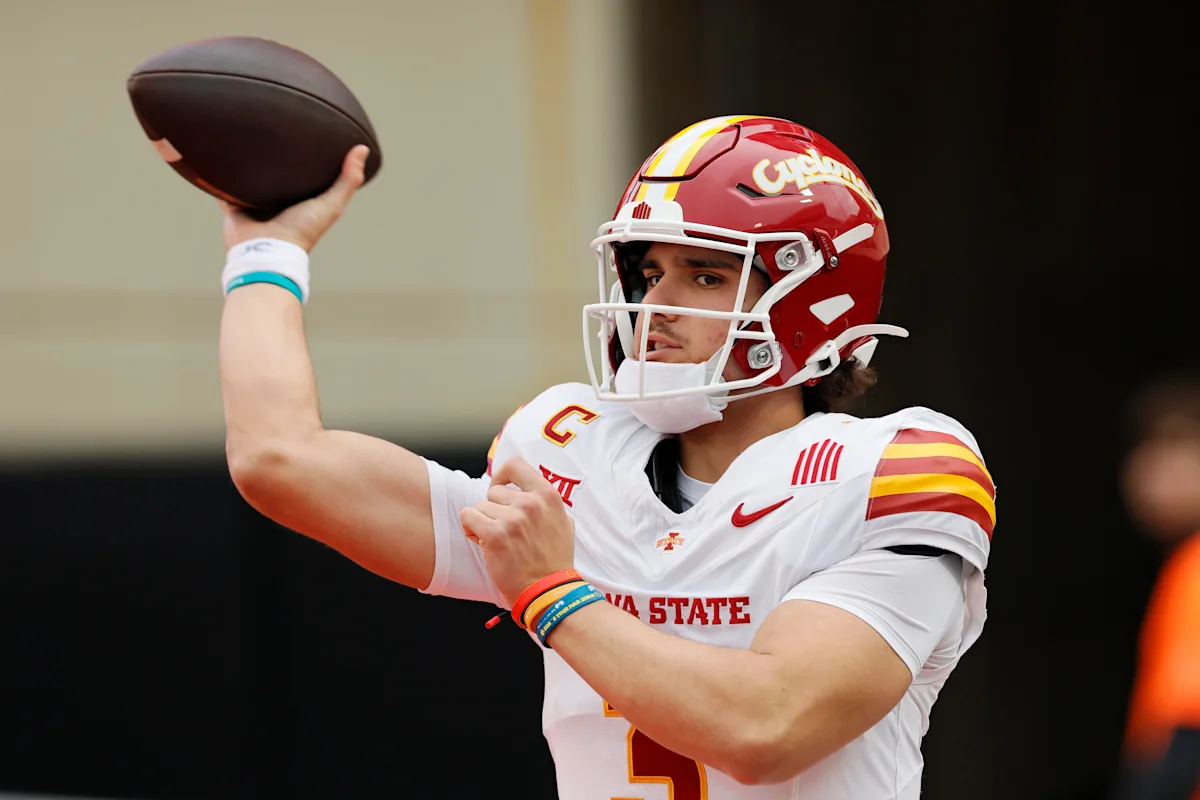
We’ve known Leavitt was going to leave Arizona State for a couple weeks now after a social media post, but he’s officially in the portal as of this morning.
He played in seven games this season before suffering a foot injury that required him to have surgery and miss the remainder of the year. In those seven games, he threw for 1,628 yards and 10 TDs along with three interceptions. He also ran for 306 yards and five TDs. The previous season, he threw for 2,885 yards and 24 TDs with six interceptions while running for another five rushing TDs.
The former four-star prospect originally committed to Michigan State before transferring to ASU, where he’s been the last 2 years.

NIL9 minutes ago
Sports Economist Concocts His $25 Million Recipe for Silverfield’s First Arkansas Roster

Sports10 minutes ago
Keith Smith Named USU Head Volleyball Coach

Sports26 minutes ago
Kayla Ward hired as Parkersburg Catholic volleyball coach | News, Sports, Jobs

Sports43 minutes ago
Men’s Volleyball vs NJIT on 1/2/2026 – Box Score

Motorsports44 minutes ago
Tulsa Shootout – Championship Saturday Adjusted To 10AM Start Time – Speedway Digest

Rec Sports58 minutes ago
More than 170M youth sports complex proposed for Big Bend

Sports59 minutes ago
Hawaii men’s volleyball sweeps NJIT in 2026 season opener

Motorsports1 hour ago
Rockingham Speedway Changes Ownership as IHRA Completes Purchase

NIL1 hour ago
Ranking potential CFP National Championship games: Miami vs. Oregon leads the way
Rec Sports1 hour ago
Brown Deer youth sports facility project proceeds with site purchase

Rec Sports1 hour ago
Hockey vs Trine (St. Cloud Youth Hockey Night) on 1/2/2026 – Box Score

Sports1 hour ago
Long Beach State Men’s Volleyball Sweeps Calgary to Conclude First Day of North American Challenge – The562.org

Motorsports1 hour ago
Midwest Racers’ Expo offers free entry for top racers | Washington Co. News

Rec Sports1 hour ago
a Kinesiologist Casts Doubt on Sex-Based Athletic Differences

Rec Sports1 hour ago
What’s the deal with… local gas station closures?

Motorsports3 weeks ago
SoundGear Named Entitlement Sponsor of Spears CARS Tour Southwest Opener

Motorsports4 weeks ago
Donny Schatz finds new home for 2026, inks full-time deal with CJB Motorsports – InForum

Rec Sports4 weeks ago
Black Bear Revises Recording Policies After Rulebook Language Surfaces via Lever

Rec Sports4 weeks ago
David Blitzer, Harris Blitzer Sports & Entertainment

Rec Sports4 weeks ago
How Donald Trump became FIFA’s ‘soccer president’ long before World Cup draw

NIL3 weeks ago
DeSantis Talks College Football, Calls for Reforms to NIL and Transfer Portal · The Floridian
Sports4 weeks ago
Elliot and Thuotte Highlight Men’s Indoor Track and Field Season Opener

Motorsports4 weeks ago
JR Motorsports Confirms Death Of NASCAR Veteran Michael Annett At Age 39

Sports3 weeks ago
#11 Volleyball Practices, Then Meets Media Prior to #2 Kentucky Match

Motorsports4 weeks ago
Rick Ware Racing switching to Chevrolet for 2026

NIL4 weeks ago
Colleges ponying up in support of football coaches, programs
Sports4 weeks ago
West Fargo volleyball coach Kelsey Titus resigns after four seasons – InForum

Motorsports3 weeks ago
Nascar legal saga ends as 23XI, Front Row secure settlement

Sports3 weeks ago
Maine wraps up Fall Semester with a win in Black Bear Invitational

Motorsports2 weeks ago
Ross Brawn to receive Autosport Gold Medal Award at 2026 Autosport Awards, Honouring a Lifetime Shaping Modern F1





-
 Motorsports2 weeks ago
Ross Brawn to receive Autosport Gold Medal Award at 2026 Autosport Awards, Honouring a Lifetime Shaping Modern F1
-

 Rec Sports3 weeks ago
Stempien to seek opening for Branch County Circuit Court Judge | WTVB | 1590 AM · 95.5 FM
-

 Rec Sports2 weeks ago
Princeton Area Community Foundation awards more than $1.3 million to 40 local nonprofits ⋆ Princeton, NJ local news %
-
 NIL3 weeks ago
Downtown Athletic Club of Hawaiʻi gives $300K to Boost the ’Bows NIL fund
-

 NIL2 weeks ago
Kentucky AD explains NIL, JMI partnership and cap rules
-

 Rec Sports3 weeks ago
Teesside youth discovers more than a sport
-

 Motorsports3 weeks ago
PRI Show revs through Indy, sets tone for 2026 racing season
-
 Sports3 weeks ago
Young People Are Driving a Surge in Triathlon Sign-Ups
-
 Sports3 weeks ago
Three Clarkson Volleyball Players Named to CSC Academic All-District List
-

 Sports3 weeks ago
Central’s Meyer earns weekly USTFCCCA national honor