Cougars on the air
Arizona State (0-1, 9-5) at No. 10 BYU (1-0, 13-1)
- Wednesday, 7 p.m. MST
- At the Marriott Center
- Provo, Utah
- TV: Peacock
- Radio: BYU Radio 107.9 FM/BYURadio.org/BYU Radio app

Jaylin Rivers: Good morning, everybody. My name is Jaylin Rivers, I attend [inaudible], and I am proud to announce Mayor Eric Adams.
Mayor Eric Adams: I want to thank Jaylin, and this is a coming together of so many pieces. I want to thank the entire team here, but particularly Chauncey, our former deputy mayor. Many people don’t know about the silent giants that are among us who commit their lives to not only the public safety aspect that entails law enforcement, but how do you prevent crimes from taking place in the first place. And Chauncey saw that.
He heads HIDTA, where our law enforcement teams meet every morning to take illegal guns off our street. He was part of the architect that allowed us to remove 24,000 illegal guns off our streets in his coordination. But he also knew that if our young people had a bat in their hand, they won’t have a nine millimeter in their hand. If they were on a field of dreams, they can actually dream.
And he pushed this issue over and over again. We announced it in our state of the city and we’re here now to make it happen. It’s unfortunate that the weather’s inclement, but I think the sunshine is in this room today because of what you have done. Thank you so much for what you have done.
And bringing those dollars in, D.A. Bragg, some of those forfeiture dollars that you and your team are bringing in. And you probably missed him because of his height, but we have to say thank you to the Yankees’ CC Sabathia. A lot of great memories at Yankee stadium.
Just even off the field he continued to do the work with his – A former New York Yankee and founder of the PitCCh In Foundation. He has continued to do what’s right. And those others who are here, Chuck Brady representing the Car Ripken Foundation, the law enforcement team, the district attorney’s office that’s here, so many who have pitched in and knew this is the right thing to do.
This is an exciting project, it’s one of those legacy projects that our administration is going to be proud to look back on. So many young people are going to use this opportunity, not only to play professional sports, but to receive scholarships to prestigious institutions and to learn the discipline that’s associated with playing a sport. Knowing how to get back up when you’re knocked down, knowing how every day is not going to be a winning day, but you keep pushing forward and focus on that to accomplish the great things you want to accomplish.
And nothing personifies that more than Brigadier General Charles Young. His family is here and we’re going to hear from you as well. But his story is an impressive story and we should all read it. Born into slavery, becoming one of the few African Americans to attend West Point during a different time in a different era and going on to become a Brigadier General and one of the leaders in the military service in our country.
And so when we named this field after him, it is going to inspire young people to do what they like to do, to Google and find out exactly who was the Brigadier General and what he represented to this city and to this entire country.
Public safety is a prerequisite to prosperity. If we’re not safe, we will never prosper. And far too often, when you look across the city, there were too many communities that lack the public safety that’s needed. And we wanted to zero in on that, and the numbers are so impressive. When you look at the lowest numbers of shootings and homicides and victims of crime, generally, when you talk about those numbers, they’re in Black and Brown communities, folks.
It’s not citywide numbers, but it’s numbers that impact the communities where our young people come from, and where my son comes from, and many of the young people who are lining these halls right now, and we zeroed in on that. And this administration was successful in ensuring that we would turn around those numbers and save lives.
And we wanted to make sure our communities not only were safe but felt safe. And we must make the smart upstream investments, and this is the type of investment we wanted to make investing in our young people and ensuring they had the opportunity that they desire. I’m looking at these young men who are in their, it looks like their football jerseys. The relationships they’re going to develop is going to go through a lifetime of relationships.
Being there for each other. I still remember things that my coach told me as a child, over and over again reflected on it. And it becomes moments of instruction and moments of learning. I am probably the mayor of the City of New York because I had a coach, someone that told me there would be good days and bad days, days I wish I would have gotten out of bed, days I wanted to stay in bed, but every day you got to get up.
And if you take the field, you will have an opportunity to win. The only game you would never win is the game that you don’t play. And that is what these young people need to know as they move forward. So, today we are making our children’s dreams come true. They can come true.
The Harlem Field of Dreams, first announced this year in the State of the City, it’s an $11 million investment that has turned a once dilapidated field into a place where dreams can come true. Why does Harlem, South Bronx, Brownsville, Bedstuy; South Jamaica, Queens, why do our fields look the way they do?
And you go into other communities, and they see well-manicured, clean fields. That is just wrong. And some of the projects that we have done, we have turned it around. And I want to thank the commissioner who’s here, who’s in charge of Parks, for what she’s doing, the great equalizer.
This project is going to be a vibrant place for young people to play baseball, football, soccer, lacrosse. Now, 800 children in Harlem and across New York city will have a safe, enriching space to play, learn, and build trust. And parents can rest easy knowing that the growth and the safety of their child is not limited to the classroom, but also in clean safe spaces because programming at the Harlem Field of Dreams will keep them healthy, engaged, and connected to their community.
And we know the power of sport and recreation. It is extremely significant. It brings us together. Its joy can change lives. It is universal in having recreational spaces for our children to play, build stronger communities. Having no place to go and nothing to do, it is a recipe for disaster. It wasn’t just my mother, it probably was one of the well-known sayings, “An idle mind is the devil’s workshop.” But we’re closing down the devil’s workshop by giving these children a Field of Dream.
And I know what it’s like, a young man, dyslexic, growing up in South Jamaica, Queens, finding myself on the wrong side of the law, turning my life around, going into public safety, law enforcement. And now the mayor of the City of New York, because opportunities were there, and I had a second chance. And we don’t only want to give our young people second chances, we want to give them the first chance. It’s the right chance for them.
We should not have to have luck to succeed. If I want to paraphrase the movie, if we build it, they will come. And they’re going to come. They’re going to be part of this wonderful experience. By investing in free programs to keep young people safe and engaged, like Saturday Night Lights, another Chauncey Parker endeavor. The Harlem Field of Dreams upholds our commitment to making smart, upstream investments that prevent crime in the first place.
Saturday Night Lights partners with 136 gyms across the five boroughs to create year-round safe spaces for young people to learn and play every Saturday night. And fostering positive relationships and trust between young people and police officers, so important and needed. And the New York City Soccer Initiative promotes safe, active, and engaged communities, while also connecting young people of color with mentorship and opportunities.
Most of all, this facility will also, as I stated, tell the story of Brigadier General Young. Born into slavery in 1864, Charles Young graduated from West Point as only the ninth Black cadet in the school’s history. His career included a historic appointment as the first Black National Park superintendent. And up until his death in 1922, he was the highest-ranking Black officer in the US Army.
His feeling of everything is possible and perseverance gave the story of what Brigadier Young was about. The story that the Harlem Field of Dreams will preserve. The story that will inspire generations. Because we are a place where anything is possible in New York City. And we want to continue to make sure that happens.
As I said, in my role as the mayor, I got [29] days. I have not thrown in a flag. We’re going to do a lot of stuff in [29] days. I will be the mayor until the [29th] day. And this is only the beginning of what we’re going to do. This is like the playoffs, when CC Sabathia is on the mound and we’re trying to get those last games in. Brother, we’re going to get those games in. And we’re going to get it done.
So, I want to turn it over to an amazing first Latina to be the commissioner of Parks, the largest park system in the country, and turn it over to you. Thank you so much. Job well done.
Commissioner Iris Rodriguez-Rosa, Parks: Thank you. Thank you so very much, Mayor Adams. I can’t thank you for the opportunity to be able to serve in this administration as the Parks commissioner. And I have to say that it’s wonderful to see the audience here. The audience that is here, made up of the students from the Frederick Douglass Academy. Congratulations for being here as well.
To the descendants of Brigadier General Charles Young that are here. To the National Park Service that is here as well. And I just wanted to say thank you. And I also want to be able to say at this point that we have a lot of our New York City Parks employees that are here, that are going to be the ones that are going to be maintaining this particular location. So, with a round of applause for them that are here. They’re the ones that are going to maintain this location. I just want to make sure that they know that.
So, today is absolutely a special day for the Harlem community and for our entire city. As we officially open the new Harlem Field of Dreams. This remarkable transformation of the Brigadier General Charles Young Playground provides a space that will uplift young people and families for generations to come.
This stunning multi-sport athletic facility represents much more than a capital project. It actually reflects what we can accomplish when the city agencies, community partners, and private supporters come together with a shared commitment to invest in our young people. With this new synthetic turf field, improved amenities, and expanded opportunities for free youth programming. And as we know, when you provide, when you seed it with positive programming, you weed out the negative elements that may be existing. So that is so wonderful to be able to have.
We are delivering a state-of-the-art space where our kids can learn, grow, and thrive. It also honors the legacy of Brigadier General Charles Young. As we know, a trailblazer whose courage, service, and devotion to this nation continues to inspire us all. This field stands as a testament not only to his story, but to the resilience and pride of this Harlem community.
I want to, of course, thank our Mayor Adams for championing the investments like this that have kept our young people safe, engaged, and supported. We are so incredibly proud that under this administration, we have had more than $203 million invested in playground and facility upgrades in precincts identified by the mayor’s Gun Violence Prevention Task Force. We are building stronger parks and safer communities.
I also want to thank all the funders who made this project possible. The Cal Ripken Senior Foundation led the construction and provided additional financial support. And of course, as I mentioned, the parks team, led by our borough commissioner, Tricia Shimamura and her team. Thank you so very much, Tricia.
Everyone’s dedication has brought real change to the neighborhood that deserves world class spaces. Thank you all so very much for being here today and for participating in this wonderful endeavor. Now it is my pleasure to introduce the director of the New York/New Jersey HIDTA program, our very own Chauncey Parker.
Chauncey Parker, Director, New York/New Jersey HIDTA: Thank you. Thank you, commissioner. Thank you for your amazing Parks team that we’ve had hundreds of meetings, never giving up, Christine and Max and Joy and so many others pushing this project forward. And Mayor Adams, thank you for your leadership. I know that you believed in this vision from the very beginning and have pushed and pushed and gotten the four corners of city government behind this to make sure that we’re able to get this done.
This has been a long journey. And today we’re celebrating this beautiful field. And we’re also honoring true American heroes. Where we are right now is the 369th Regiment Armory, named after the Harlem Hellfighters. You are literally sitting in a historic landmark. This is named after the Harlem Hellfighters. The Harlem Hellfighters are the soldiers who fought in World War I. They’re the Black soldiers, many of them volunteers, including James Reese Europe, who is one of the great legendary band leaders.
But these soldiers volunteered and said, “We want to fight for America.” And they volunteered, but because of our segregationist policies, Black soldiers weren’t allowed to fight in combat. And they said, “Well, we’ll serve in whatever way we can.” So, they were stationed in Paris. And what they brought with them, a little footnote to history, is James Reese Europe brought his instruments, and they played jazz and everything while they’re waiting to have some role. And one of the reasons why Paris is a jazz capital of the world is because of those Harlem Hellfighters of 369th that brought jazz to Paris.
While they were waiting, France was struggling on the Western Front and was about to get overrun by Germany. It was a tough, tough battle. And the French went to the United States, to General Pershing, and said, “We’re desperate. We’re about to be overrun by the German soldiers. Do you have any soldiers that you can give us?” And he said, “We have no soldiers. Our soldiers are all fighting all over Europe. All we have are these Black soldiers.” And they said, “I don’t care whether they’re Black, White, what they are. We need soldiers.”
And those soldiers, those 369th Regiment soldiers, fought side by side with those French soldiers. They fought for 191 days in a row, longer than any combat unit in all of World War I. They didn’t give up an inch of ground, and they saved France. And after World War I, the French government awarded the 369th Regiment soldiers, those Harlem Hellfighters, awarded them the Croix de Guerre, which is the highest medal of valor you can get from the French government.
And so, there’s a famous picture, I think we have it, of those soldiers. And when they came back, this armory was built in their honor. And this armory is literally a historic landmark in the honor of the Harlem Hellfighters and the 369th. And under Colonel Myones and the team here and their leadership, they make sure that people never forget that history because it’s so important.
We also have across the street another historic landmark, and that is the Brigadier General Charles Young Field. Brigadier General Charles Young, little-known footnote to history, is the Jackie Robinson– CC Sabathia. He’s the Jackie Robinson of American military history, no doubt about it. As the mayor said, he was born in slavery in 1864. [He] is self-educated with his mother, and his ascendant, wonderful Renotta Young, is going to be telling the story.
But, self-educated, spoke all these different languages, played all these different instruments, graduated from West Point. In 1917, he’s the highest-ranking Black officer in American military history as a colonel. And America is now going into World War I, and he knows as a colonel that the next stop is he’s going to be promoted to be a brigadier general to get a combat assignment because that’s the next step.
But, while he was in Ohio, he was notified by the United States Army that he was being medically retired because of high blood pressure. So, he writes to W.E.B. Du Bois. I just want to read it because this is what he said in his letter. “I am sound. I can ride. I can walk. I can shoot. My heart is as strong as any man’s. I shall present my proof.” And he rode 497 miles on horseback for 16 days from Ohio to the doorstep of the secretary of war in World War I to prove that he was medically fit for duty.
And he wrote to that secretary of war, “My physical condition is excellent. I am fit for active field service and ready to take up whatever duty the Army may assign me.” And he was still medically retired. And thanks to the work of Renotta Young and others, 100 years later, he got the honor that he deserved. But even to the day he died, he would always sign his portrait, Charles Young would always sign his portrait, “Yours, for race and country.” So, he truly is not just a Jackie Robinson, but he’s an American hero.
So, this story begins for us. As the commissioner says, director of the HIDTA program. HIDTA is a program that invests in these law enforcement partnerships to build safe and healthy communities. We have many of our law enforcement leaders here today who lead this effort, risk their life, much like our soldiers risk their life to protect us.
And over the years, this is about 25 years ago, that the armory drill floor, right through that door, there’s a 50,000 square foot drill floor. That really got into bad shape. It had become a homeless shelter. The floor was rotted. It was in really, really tough shape.
Across the street was this field, which was a dirt field. And Elijah Brooks and others who played on that, brought kids to play on that field. It was a dirt field filled with rat holes. You’d have to worry about heroin, glycines. It was just both, as the mayor said, it’s not right, that that’s okay here.
I mean, I live across the street from Asphalt Green on 90th and York. And you talk about two worlds and why it should never be that way. And in fact, seeing Asphalt Green every day, when I see that and see kids playing seven days a week until 10 o’clock at night, I keep thinking, why isn’t that in Harlem? And so that really drove, at least for me, it drove this partnership.
So, the first part of this partnership is we went to the National Guard and said, can we help transform that drill floor into a sports center for the children in Harlem? They said, “On one condition. We’ll give it to you for free, but you have to fill it with children.” That’s the deal that the National Guard has made with the Harlem Children’s Zone, and Wendy Hill Yards Gymnastics, Harlem Junior Tennis League. The only thing they ask in return is that they fill that with children. And that’s what they’ve done.
And so, that way we used one of our secret sauces, so to speak, to fund these projects, thanks to our law enforcement leaders, is what they like to do is take, and Alvin Bragg also likes to do this, take money from people who are hurting people, selling drugs, human trafficking, whatever they’re doing that they’re hurting people, take their money. Instead of putting it just back into more law enforcement, take those dollars that cause so much pain and put it back into the community. And so, that was funded with money that came from drug dealers.
And then, what brings us here today is that we saw the field, and we saw the field as a next step. Could we do something like that for this field? Went to the Parks Department and the commissioner, and everybody has been such great partners. They said, “Absolutely. If you can raise the money for this, we really want to work together to transform the Charles Young Field.”
So, we met Gale Brewer, who at the time was the Manhattan borough president, and she said, the first step is that we’re going to bring the community together because, as I learned from Gale, you don’t plan for the community without the community. And so, she brought– I said, “Are you sure this is going to work?” Federal, state, local, community, and everybody agreed, yes. We all sign on to this vision of what we can do with it. And so that’s where we started.
And then we met with the Cal Ripken Foundation. They have a national vision of transforming fields across the country. And then, through Parks, we met CC Sabathia. So, any time you have to raise money for a project, I’m just a beginner at this sort of fundraising thing. The very first, for sure, when you have no money, it’s hard to get any money.
CC Sabathia put $500,000 in this project before we had [any] money. And has believed in the vision ever since and pushed and pushed. And then Major League Baseball, they put in money in partnership with the New York City Police Foundation and Susan Birnbaum and their team. They worked out a way that we could get the money from both Major League Baseball and the NFL. D.A. Bragg put in $500,000. The governor put in $800,000.
But the big money that we brought in, thanks again to our federal law enforcement partners, they put in $8 million. Homeland Security Investigations, Rick Patel and our other federal [inaudible]. And it wasn’t even, to me, it wasn’t even my idea. They were saying, is there something we can do to build trust with the community, to help the police department?
What better sign than taking money and actually doing something to transform these broken-down spaces and create opportunities for kids? And so, thanks to that great work, that is how we are where we are today.
So, the last thing I’ll just say is this field and this project is enormously important. One is, as the mayor calls it, the Field of Dreams. That it is, if you build it, they will come. If you create this opportunity, we will make a difference for children for years to come and there’s nothing more important that we can do.
Second, what this project does is it has law enforcement and our federal, state, local law enforcement, they’re crying out. Particularly for our young people, to hear this message that we love you. We want only the best for you. We’re not just saying that because they’re actually going to put money and their resources in to try to create these kinds of opportunities.
And the third message is that history matters. And that we need– history matters because through history, the mistakes we’ve made, we can do, we can learn our lessons and hopefully do better. And history matters because we need to celebrate and recognize and never forget our heroes. And I have to say that whether it’s Renotta Young, Dr. Matthews, the head of the Buffalo Soldiers Foundation, because Charles Young was a Buffalo Soldier and an icon of the Buffalo Soldiers.
They remind me of that movie Coco, the Disney movie, where you have to remember people. If you don’t remember the heroes of the past, we can forget them. But you, Renotta, you, Dr. Matthews, all of our partners, the National Guard with the Harlem Hellfighters, you send this message and you make sure that we never forget these heroes. So, with that, I thank you all so much.
Mayor Adams: And now we want to bring on Renotta Young, a descendant of Brigadier General Charles Young.
Renotta Young: First of all, it’s great to be back in New York. I worked in Harlem for 18 years and when I first started with my employer, some colleagues said, “You know, there are three parks, two or three parks named after Charles Young.” And I said, when I retire, I’m going to work on that. And then, Chauncey called me one day and you never know what’s in the making.
So, I want to thank everyone, the mayor, the commissioner, all the people who made this happen. One thing from being here in New York, I know that when anything like this is pulled together, it is very complicated.
I want to give you context about the Charles Young story. My grandfather and Charles Young were first cousins, but they were like brothers. They planned their futures together when they were children in elementary school. They planned big. They thought big. Charles Young went on to West Point and he was, you know, didn’t have a great time there, but he kept going.
He loved making history happen. His professors, some were– they built the roads in the Panama Canal. We grew up knowing that as Youngs, under the Young Doctrine, we had to uphold expectations. And so I grew up under his two children, Charles and Marie. And they were responsible for our academic excellence.
They all believed that with perseverance and study, you can make it happen. They spoke eight different languages. They taught music, and we just grew up in that environment. When I went to school, I would ask my history teachers, “Why don’t I see my cousin’s name in the history books?”
And so, in the third grade, I started thinking, you know, history’s got to be more reflective of the people who did a lot of work. And Charles Young’s son sat me down one day. He typed up this whole document on his father and he said, “You are responsible for making sure this legacy goes on.” So, I did take that seriously.
In the early, in about 1993, the Charles Young home was determined to be a National Parks monument. And Roger is here from the National Parks [Service]. He is the chief educator and interpreter. And that was a big deal for us because we had a monument, a National Parks monument that reflected the life of Charles Young. That’s where it started.
Then we went on to meet with folks in California. We renamed Highway 198 into Sequoia National Park, Colonel Charles Young, because he and the Buffalo Soldiers built the roads in Sequoia. And then Fort Huachuca. Fort Huachuca is known for military intelligence. And at Fort Huachuca, he was base commander. And they have kept the name going.
So, Charles Young is a Renaissance man. What we found is that wherever we mention his name and give a brief synopsis of his history, people are– they’re touched by him. And I think that’s why everybody is here today because he did not give up, but he had the intellectual capacity and fortitude to keep things going. And he loved his country.
He loved people. He loved his country. And I think, you know, this is something for us today to realize that each one of us, our young people, we have high expectations for you. You persevere. Things that you hear now, you may not think, “Well, this is just a conversation.” But take this to heart. Because when a lot is expected of you, you can do a lot.
I also want to thank the Omega Psi Phi fraternity because during all of our chances to get the Young name out, they have mass numbers. And they put money into the monument. And they’re always there when we want to keep things going and keep the name out there. But the Charles Young name isn’t just for me as a descendant. It’s for you. Because his life, as I said, is the American story. And I thank you so very much.
Mayor Adams: Thank you. Well said, well said. And, you know, we can’t do projects like this without our district attorneys in general, specifically the Manhattan D.A. So, we’re going to turn it over to D.A. Alvin Bragg.
Manhattan District Attorney Alvin Bragg: Thank you, Mr. Mayor. I’m just humbled to be here at this intersection of history. Our rich past, our beautiful presence, and this investment in the future. And for me, I know our mayor named a whole lot of great neighborhoods around the city, but we’re in Harlem. And I grew up two blocks away, Esplanade Gardens. You can literally look at the park from there.
We heard Chauncey talk about this space when it was a homeless shelter. I first made my way here for youth sports when I was in single digits, when it was doubling as a homeless shelter. And to see the investments, first in this space, in this building, and then what is going to happen in the Field of Dreams across the street. So humbled to be a part of it. Thank the mayor, commissioner, former borough president, councilmember for their leadership. Thank all the law enforcement partners from HIDTA, NYPD, Lee’s Foundation, Doe Foundation.
And I have to end with Chauncey, because every single conversation I’ve had with Chauncey for the last two years has started with this field. I know you know what I’m talking about. And he has been a visionary on this and so many other things, and also someone who executes. And as the mayor stated, he’s doing a lot of other things too. I mean, in Manhattan, our shootings are down 65 percent compared to four years ago. Homicides down about 50 percent.
And Chauncey’s convening all of us every day to focus on gun violence. And as he said, this is the other half. We want those numbers to remain low. We’ll continue to do what we do in law enforcement. But this investment in the future is going to help keep those numbers low and continue to drive them down. So, I think I saw a Harlem Little League hat in here.
There it is. Play ball.
Mayor Adams: I know he did not want to speak, but we have to hear from him. Come on, CC.
[Crosstalk.]
Mayor Adams: You know, so why don’t we open it up to a few questions. Again, as pointed out, we see we have our partners here from the FBI and so many other federal agencies that are here. We want to thank you.
Open it up to a few questions.
Question: Mr. Mayor, you mentioned this as a legacy project. Is there anything else you can tell us about these last 29 days? What other projects you want to get done? What else we can expect?
Mayor Adams: One of the major projects that I’m speaking with the city agencies about that is extremely important to me, the biggest barrier to receiving city services is language barriers. People who are not proficient in English, they just don’t have access to services.
And there’s no reason with all the technology that we have, from Google Translate to ChatGPT, etc., that every agency cannot be empowered with technology so that when someone walks into a city agency, that they’re able to communicate directly with a city employee.
But not only that, as we just indicated, General Young spoke several different languages. Only in America that our children just know one language. And by having a language-friendly city, that no matter what language you speak, we will learn from each other, and that we won’t shut the door on those who are non-English speakers.
And so, we’re going to make an amazing announcement to make this the most language-friendly city in the country, if not the globe. And that’s one of the projects I’m working on.
Question: Hi, mayor. When it comes to these ongoing projects, have you spoken with the Mamdani administration about wanting to continue some of the stuff that you’ve already started? And when are you planning to have that meeting with Mamdani?
Mayor Adams: It’s so funny you ask me. I am seeing the mayor-elect today at noon. And we’re going to turn over documents of our transition. And he can make the determination on what projects he wants to continue. Every mayor brings their projects. And what I must do is show what we have accomplished and turn over documents so he can determine if he wants to continue or not.
Because I think Commissioner Rodriguez said something that many people have missed. When we decided what parks we were going to put our money into, we did an analysis of shootings. And we put our money into communities that were dealing with a high level of violence.
And we want to show the incoming mayor what we’ve done, how we brought down crime, how we built more housing than any other mayor in the history of the city. How we have more jobs in the history of the city. We broke the record 11 times. How we have more small businesses. How we outpaced the state in reading and math.
Of all the things we’ve done, I want him to continue that success. And I think the best level of appreciation is duplication. And I think they’re going to duplicate a lot of things that we’ve done. Thank you.
###


Huseboe
Kevin Huseboe, Marshall County Veterans Affairs Director
One of the big things was we had the dedication for the incredible Veterans memorial in March. That was a great feat to get over with and have done in a short amount of time that we approached it and got it designed and built and got it dedicated.
Our Coffee and Camaraderie has been incredible that we do the first Tuesday of every month. It’s been awesome. We’ve seen a lot of vets and a lot of young vets. We’re starting to see a lot of Desert Storm, Desert Shield, a lot of Gulf War vets starting to come to us. We still see a few Vietnam and Vietnam era vets coming through, but we’re starting to see a lot of young vets coming through the door now, which is great. They’re starting to hear about it and starting to come in and see it. We’re starting to see a lot of Guard and Reserve people coming through the door. It’s been really incredible.
I want to throw a great thank you out to our three commissioners, Bob Grimes, Dave Streets and Herschel Edwards, who just came on this year. Herschel’s still in the Guard, and he’s a great asset to the office and to the commission. A big thank you to the Board of Supervisors — Jarret Heil, Carol Hibbs and Kevin Goodman — thank you to them for allowing us to run the office and do what we do every day and assist and help all the veterans that we do.
Another great thing, too, is the economic development that we’re doing with helping all the veterans in Marshall County. What is going in now is $1.6 million coming into Marshall County veterans for service-connected disability. That’s a monthly amount coming to the veterans. That’s up a lot from what it was six years ago when it was $780,000. That’s a big increase of what Shari and myself have been doing, and another big thank you to Shari Coughenour, a great add-on to the office. She’s been there almost three years, and it’s been great.
It’s just like our van. When I started here a little over four years ago, we had 14 Marshall County veterans using that service. Presently now, and Shari oversees the van, we have 89 veterans in Marshall County using that service, so a lot of great things are going on there.
The big challenge for next year is that I’m going to retire at the end of 2026, December of 2026, but we have a young man that’s looking at the job and dealing with Shari, working with her and working with myself, so he’s gonna be our number one pick. His dad lives around here. He lives out in Vegas presently, and he’s in the Reserve right now. And he’s wanting to relocate so he can be next to his dad and family here, and he’s been working with Shari a lot so he’s gonna be our number one pick that I’m gonna recommend to the county. He’ll be a great one to hit the ground running, so I think he’ll be a great asset to the office.
It’s gonna be bittersweet. I’m gonna miss what we’ve been able to do. When I stepped in there a little over four years ago, I had no clue that I was gonna be able to turn it around from what it was and what it had been. Nothing against our predecessors, but it needed to be woken up. And I had no clue that I was gonna be able to do what’s been able to happen.
It’s been incredible. Thank you to all the veterans in Marshall County — coming through, getting them taken care of, putting the trust back in that office that it needed — and for us to be able to move forward and bring a lot of great things to those veterans. The VA health care is a big thing, and having a new CBOC (clinic) that was dedicated this year also, that’s been a great asset to the town.
The year just went by so quickly, and so many wonderful things happened in 2025. The downside to 2025 was what happened in December, the loss of the Marshall County soldier (William “Nate” Howard) and the Grimes soldier (Edgar Brian Torres-Tovar). That was sad, but life goes on. The families, they’ll grieve and everything, and we’re here to help in whatever way we can with those families. And we’re here for them. We always support all of our brothers and sisters in the loss of those soldiers and to help them in any way we can. Our hearts go out to them every day.
So any new challenges for 2026 is just having more and more veterans come through the door. It’s a process to deal with the VA and always remember, because they use AI a lot, don’t give up the fight. We keep the fight going. The VA healthcare is a great thing to get available and get in the door and utilize it, and then just never give up is the big thing.

Jacobus
Todd Jacobus, Iowa Department of Veterans Affairs/Iowa Veterans Home Commandant
The Iowa Veterans Home has maintained continuous operations here on the Northwest corner of Marshalltown since December 1, 1887. During this Home’s 138 years of service we have served 19,620 Veterans of the U.S. Armed Forces and their spouses – the most recent veteran was admitted on December 30.
Over the last year, the census of the Iowa Veterans Home has fluctuated between 371 and 410. Our veteran population includes 141 Army, 97 Navy, 72 Air Force, 35 Marines, and 2 Women’s Army Corps; 22 of our residents are women Veterans. Two IVH residents served in World War II, 22 in Korea, 196 in Vietnam, 17 in the Middle East, and 84 are peacetime Veterans. We have 41 residents over the age of 90. We have space on campus for 447 residents, but as we close out 2025 our census is 374, as we have households that will open once we hire additional nursing staff.
All of us who have the privilege of serving those who served are grateful for the incredible support that we receive from the City of Marshalltown, Marshall County, and beyond. A total of 681 volunteers from across the State – most of whom are from this community – volunteered 9,634 hours in 2025. Examples of volunteering range from Doris Lemker, who was inducted into the Iowa Volunteer Hall of Fame in 2025, working on a daily basis in the Gift Shop, to Marshalltown Councilman Mike Ladehoff serving hot dogs during ballgames at Valor Field. The gifts and monetary donations to IVH resulted in many performances and presentations throughout the year, each resident receiving two gifts at Christmas, and many other opportunities. These volunteer hours translate directly to the enhancement of the quality of life of our residents. Thank you.
We are grateful to scores of visitors to the Iowa Veterans Home who took the time to visit, speak, and present in 2025. Those visitors included Lieutenant Governor Chris Cournoyer, U.S. Rep. Randy Feenstra (IA-4), Governor and Ambassador Terry Branstad, many state legislators and staff, including Senator Kara Warme and Representative David Blom, former Ambassador to Vietnam and President Emeritus of World Food Prize Kenneth Quinn, Maj.Gen. Steve Osborn, Kosovo Chief of Consular Mission Drilon Zogaj, and Kosovo Security Forces Maj.Gen. Irfeti Spahiu. Command Sgt.Maj. Matt Strasser and other senior Iowa National Guard leaders visited the Iowa Veterans Home six times during the year.
I am grateful to the Iowa Commission of Veterans Affairs – Darlene McMartin, Joella Perry, George Mosby, Dave Grimm, Becky DirksHaugsted, Dennis Jones, Elizabeth Ledvina, Scott Miller, Greg Paulline, Reginald Richardson, Linda Jones and Robert Suesakul, who volunteer their time to serve as vibrant, enthusiastic voices of veteran service organizations to the department. They also serve as a conduit of information from the department to their service organizations, meet quarterly with the veteran community and stakeholders, meet monthly to review trust fund applications, and serve as the voice to the department for the organizations they represent. Many thanks to all of these commissioners, who are also veterans of the U.S. Armed Forces, and thanks for your outstanding work to support Iowa veterans. In 2025, the department received 268 trust fund applications, approved 233 applications, and disbursed $905,974 to veterans in need of assistance and to veteran service organizations providing military funeral honors.
Our nation will celebrate 250 years of independence in 2026. Many of us remember the “bicentennial” year of 1976; 2026 will be the “semiquincentennial” year and we are looking forward to the celebrations that commemorate Iowa’s role in our nation’s past, present, and future. Veterans of the U.S. Armed Forces have had had a central role in shaping the history, values, and freedoms of our nation. From our nation’s founding to the present day, men and women who served have influenced major events, defended democratic principles at home and abroad, and contributed to American society long after their service ended. We are looking forward to this celebration of America.
As always – it’s an honor to serve. And the best is yet to come.
Jass-Ramirez
Kim Jass-Ramirez, Marshalltown YMCA/YWCA CEO
In 2025, the Marshalltown YMCA-YWCA continued to be a welcoming place where people of all ages could build confidence, connections, and healthy habits. I will share some highlights below which tell the story of how the Y strengthened our community in ways that go beyond programs; because there’s no place like the Y to belong, grow, and thrive together.
More than 500 youth participated in Y sports, learning teamwork and resilience in an environment grounded in encouragement and belonging. Youth programs extended beyond sports, with 270 children engaged in summer camp, preschool, after-school programs, and school’s out fun days–creating safe, enriching spaces where young people could learn, play, and grow while families felt supported.
Healthy living was a powerful thread throughout the year. Members logged more than 30,000 check-ins to group exercise classes in the pool and on land, reflecting a strong commitment to physical and mental well-being. Aquatics programs alone served 3,259 people, including swim lessons, water safety education, adaptive swim lessons, and lifeguard certifications, helping participants build life-saving skills and confidence in the water.
The addition of EGYM made an immediate impact, with more than 850 members enrolling in its first year. By offering personalized, accessible strength training, EGYM supported members at every stage of their wellness journey. Perhaps most powerfully, 2025 showcased the Y’s impact through personal transformation and shared responsibility. One member’s experience of losing nearly 200 pounds through consistency, support, and access to Y resources illustrated how the Y helps individuals reach their full potential with dignity.
The Y also demonstrated its role as a community connector through inclusive events and innovative programming. Pickleball beginner classes introduced more than 100 people to a sport that fosters fun and social connection. Community events such as the Halloween Carnival welcomed more than 300 attendees, reinforcing the Y as a place where neighbors come together to celebrate and belong. Hosting the Special Olympics Iowa state swim meet further highlighted the Y’s commitment to creating spaces where athletes of all abilities are celebrated and supported.
In 2026, we will be celebrating the 150th anniversary of the YMCA in Marshalltown. This anniversary is a milestone that honors a legacy of service, connection, and community impact that spans generations. None of this impact would be possible without the generous support of donors who help ensure programs remain affordable and inclusive, the dedication of volunteers who bring energy and heart to every space, and community partners who amplify the Y’s reach and impact. Together, this collective support strengthens the Y’s ability to serve and reminds us that when a community comes together, there truly is no place like the Y.
Ladehoff
Mike Ladehoff, Marshalltown Mayor
2025 was a year of action on so many items that came off the drawing board and into actual construction. Center Street, Main Street, the Apgar Family Water Plaza, the Iowa Rivers Edge Trail, the Shops in Marshalltown Mall, The Marshalltown Company, Franklin Field, TIG Manufacturing, Lillie Mae Chocolates and the announcement of a billion dollar addition to our present Alliant Bobcat Energy Center, just to name a few.
New staff at City Hall and employees gelled quickly with a solid “can do” attitude with City Administrator Carol Webb at the helm. The professionalism and talents of our staff and employees continue to impress me.
The Arts and Culture Alliance continued to wow residents and visitors alike with continual projects, music and events, teasing out the very best of Marshalltown for the world to see, hear, taste and touch. In 2026, I expect more of the same. Progress is hard at first, messy in the middle and glorious at the end.
Finishing up the East of Center Street portion of Main Street, finishing the Apgar Family Water Plaza and other projects will be a priority in the new Council’s “to do” list. Jumping right into the budget in the first part of 2026. I have confidence that the new Council will learn to work together quickly and once again, produce a balanced budget. As always, we will face hurdles to clear, tough decisions to make steering our community into the future.
As far as myself, I am looking forward to 2026, moving over and into the Mayor’s chair. Let’s get after it.

Phillips
Joel Phillips, Marshall County Sheriff
As 2025 comes to a close, I want to take a moment to reflect on the challenges, successes, and shared responsibilities over the last twelve months. Serving as your Sheriff is both an honor and profound responsibility that is never done alone.
This year we were challenged in many ways. We faced old challenges that no community is immune to domestic abuse, addiction, theft, and violence. Increasingly this year challenges came in new forms. Longer incarceration periods for inmates with mental health issues, medical emergencies in rural areas, online threats and scams that were “AI” generated, and as many businesses are experiencing increasing operating costs.
As budgets are being refined, operating costs, revenues, resources and training programs are evaluated, annual activity reports are analyzed; it is evident deputies responded to emergencies at all hours, weekends, holidays, and often under difficult circumstances, while continuing to balance compassion, professionalism and accountability. Behind every call for service was a person in need, behind every 911 call for help someone answered, and behind every badge was a dedicated professional committed to protecting life and upholding the law.
I’m especially proud of the men and women of the Marshall County Sheriff’s Office. Their dedication, resilience, and integrity are evident every day. Whether in the Patrol Division, Jail Division, Civil Division, Courthouse Security, Investigations, or Communications Center they serve the community even when their assignment demanded personal sacrifice.
As the host agency for the Mid Iowa Drug Task Force (MIDTF) our investigators continue to identify, disrupt or dismantle drug trafficking organizations in Marshall, Tama, Hardin and Grundy Counties. It is important we continue partnering with State and Federal agencies to have resources available for successful drug investigations including long-term high impact multiagency investigations.
Alternative to Incarceration Program (AIP) — This program is designed to allow people sentenced to jail for non-violent crimes to participate in work programs. This reduces labor and housing costs. Partnerships with Prairie Ridge, Iowa Primary Health Organizations with the Jail Diversion Program to reduce incarceration and recidivism by providing support services with substance abuse treatment, mental and behavioral health, to help establish employment, housing, and education. Our jail staff and partnering agencies are dedicated to provided services to our incarcerated population to help them be successful and productive citizens.
We also continue to strengthen our partnerships with local agencies, first responders, community organizations and citizens through community engagement. Public safety is successful with trust and cooperation from our communities. I am grateful for the support and engagement we received throughout the year at fundraising events, community celebrations, and educational programs.
To our communities and citizens, we serve, thank you for your trust, feedback, and willingness to partner with us. Your support reminds us why this work matters and who we serve.
As we look ahead to the coming year, we remain committed to transparency, professionalism, and service. There will be new challenges, but also new opportunities to improve, listen and to lead with integrity.
On behalf of the Marshall County Sheriff’s Office, I wish you and your families a safe, healthy, and peaceful New Year. We are honored to serve you.

Rosenblum
Sarah Rosenblum, Marshalltown Public Library Director
2025 was a busy year at the Marshalltown Public Library. The community rooms were upgraded with new technology, allowing for presentation and videoconferencing in both spaces. This project was made entirely possible with funds from the Friends of the Marshalltown Public Library. In addition, dramatic changes occurred on the library grounds when the two houses on the northwest corner of the property, both owned by the Friends of MPL, were sold and moved to the 400 block of West Linn Street. Library staff were busy checking out nearly 232,000 items and presenting 1048 programs over the course of the year. The adult services department hosted best-selling romance author Denise Williams and rolled out a new seed library, distributing over 900 seed packets to local residents. The youth services department provided a summer reading program for nearly 900 area youth. In addition, they hosted over 300 programs for youth of all ages, a couple highlights being a full day visit by author Kelly Crull in partnership with the Marshalltown Community School District and the annual Día de los Niños/Día de los Libros (Children’s Day/Book Day) featuring a showcase performance by the Miller Mariachi Band on the West Lawn. Finally, the library was pleased to bring back the popular Iowa Adventure Pass in 2025, and has added the new Blue Zoo, an interactive aquarium in West Des Moines, to its list of local cultural and educational venues.
Big changes are coming to the library in 2026. An interior renovation project, funded entirely by the Friends of MPL, will begin in January. The southwest corner of the building, which currently houses the local history collection, will be reconfigured to create new study rooms, a gathering space and a podcasting room. In addition, there will be significant changes coming to the library staff in the new year. Monica Rhodes-Fulton, a familiar face in Information Services since 1995, will be retiring at Valentine’s Day, and library director Sarah Rosenblum will be retiring in early November after 15 years of service.
The library staff are looking forward to offering premier service to the local community in the new year!
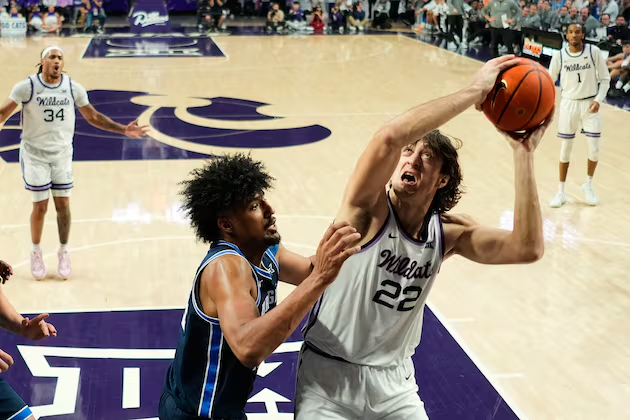
MANHATTAN, Kansas — After Kansas State had cut No. 10 BYU’s lead to six points early in the second half Saturday afternoon, Cougars coach Kevin Young inserted 6-foot-10 newcomer Abdullah Ahmed into the game and pulled out rim protector supreme Keba Keita.
The timing seemed ripe for the Wildcats to continue their comeback, but Ahmed was able to hold his own inside, and even contributed a couple of buckets to push BYU’s lead out to nine points on two different occasions.
Kansas State got no closer than seven points the rest of the way and BYU rolled to an 83-73 victory in the Big 12 opener in front of 11,010 at Bramlage Coliseum. Ahmed, whose nickname is “Biddo,” finished with four points, two assists and three blocks in only his second game in a BYU uniform.
“Biddo helped us get that win,” said senior forward Richie Saunders. “It’s good to have him here.”
Of course, not everybody is happy to see Ahmed playing in the college ranks, after the native of Cairo, Egypt, spent the last two seasons playing for the Westchester Knicks in the NBA’s G League. Ahmed, who is classified as a sophomore in eligibility, joined the Cougars a few months ago, gained his eligibility just before the holiday break, and scored one point in his debut, BYU’s 109-81 win over Eastern Washington on Dec. 22.
Ahmed went undrafted in the 2025 NBA draft, while a player that Baylor recently signed to the chagrin of many and added to its roster — 21-year-old James Nnaji, certainly was. The 7-footer was booed every time he touched the ball in Baylor’s 69-63 loss at TCU on Saturday, while finishing with five points and four rebounds in 16 minutes off the bench.
Prominent college basketball coaches such as UConn’s Dan Hurley, John Calipari of Arkansas and Tom Izzo of Michigan State have publicly complained recently about NCAA rules that allow the G League players and NBA-drafted players to join college programs — Baylor’s addition of Nnaji has drawn far more criticism than BYU’s addition of Ahmed — as midseason roster acquisitions.
Neither Nnaji nor Ahmed have appeared in NBA games.
For his part, Young defended the practice at Big 12 basketball media days in Kansas City in October when rumors surfaced that BYU was recruiting Ahmed, and he doubled down on that belief last Thursday when previewing the BYU-Kansas State game.
“I’ve seen a lot of the discussion points there. The first thing I would say is just the amount of respect I have for all the legends of the game as it relates to college coaching,” Young said. “A lot of guys I grew up watching and being fans of (have criticized the rules) and their broad experience and the longevity that they’ve had (is impressive). I don’t blame them for raising an eyebrow to the way things are going, because it’s so different.”
But “different” doesn’t necessarily mean it is a bad thing, Young said, while expressing “respect” for coaches who have been able to coach at the collegiate level for as long as Calipari and Izzo have.
“In terms of how I see what is happening, I think the big thing is understanding what the rules are, and understanding that you have to play within those rules, and being able to put together a team that you think is going to help you win,” Young said. “The opinion I have and the thing that I’ve heard a lot is this idea of what it (negatively) does to the kids and what it does to the high school players.”
The veteran coaches are saying that allowing pros — from the G League or overseas — to play college basketball is lessening opportunities for high school players. Young coached in the NBA’s developmental leagues (D League and G League) from 2007-16 and then was an NBA assistant with the Philadelphia 76ers from 2016-20 and Phoenix Suns from 2020-24 before landing the BYU job in 2024.
Young said making younger players have to “pay their dues” is not always a bad thing.
“I do understand it impacts some high school players and young guys. But at the same time, I think it could really help if we reimagine what it looks like for a young player,” he said. “I was in the G League for nine years and sometimes you get a kid from a power conference team and they aren’t ready to help us win and they have a long road ahead of them. … Some of those guys flamed out and their lives look a lot different than if they had stayed in school and gotten more ready to play in the NBA.”
Young acknowledged that it is “never ideal” to bring in a player in the middle of the college season, as Baylor and BYU have done. He said it is “no different” than bringing in a guy before the NBA trade deadline when teams are preparing to make a playoff run, “which is essentially how I viewed us bringing in Biddo.”
Young said the BYU coaching staff did its due diligence and properly vetted Ahmed to ensure he would be the right fit and not disrupt a team that has lost just once, by two points to No. 3 UConn in Boston.
“We felt in our particular case that it was a calculated risk that we were willing to take. He’s a great young man. He understands how to play and he’s unselfish, and he fits with what we’re doing,” Young said. “So I think it’s situational. You throw the wrong guy (on the team) and the whole thing is going to blow up. So you got to be super careful. In our own case, so far, it’s gone good.”
BYU returns to the Marriott Center on Wednesday to host Arizona State (0-1, 9-5) at 7 p.m. The Sun Devils fell 95-89 to Colorado on Saturday in Tempe.

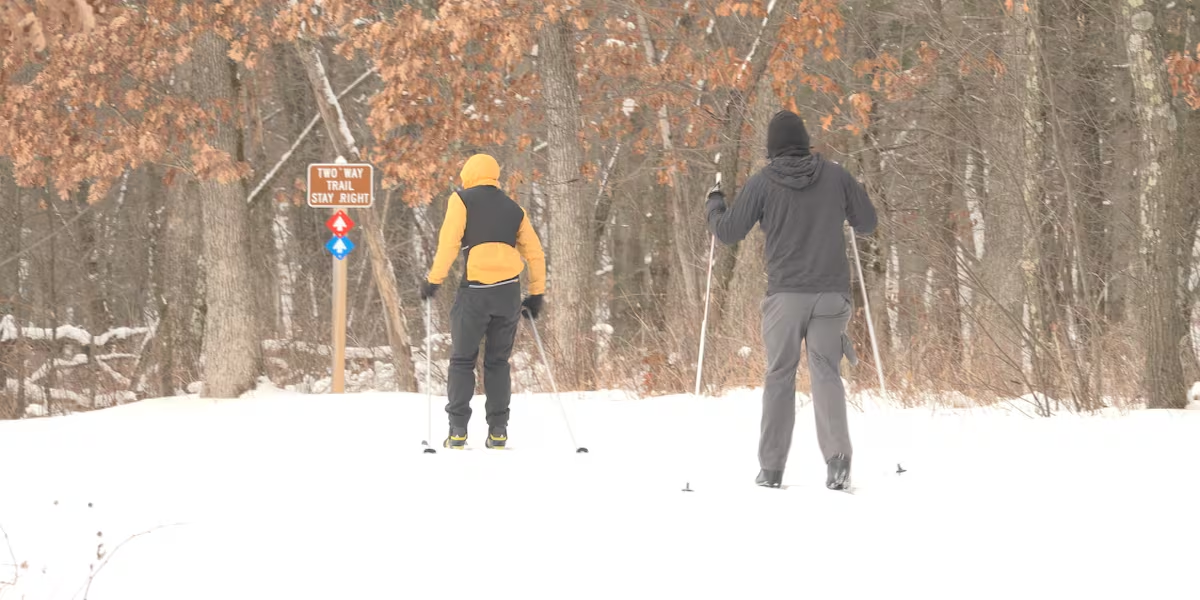
STEVENS POINT, Wis. (WSAW) – Standing Rocks County Park provides winter sports opportunities for families and outdoor enthusiasts in central Wisconsin, featuring three ski hills designed for beginners and learners.
The park offers daily ski passes at $18 for adults, $15 for youth skiers, and free admission for children eight years and under. The slopes remain open as long as snow conditions allow or until March 15, whichever comes first.
“As a kid, this is where I learned how to ski back. I’m in my mid-30s now, so just kind of keeping on the tradition with the family,” said Bryan Konkol. “It’s a perfect hill for little kids to learn, and the price is reasonable.”
The park features more than eight miles of trails and paths for cross-country skiing, fat-tire biking and snowshoeing. A second lodge serves cross-country skiers, while a sledding hill operates near the main lodge.
Park workers brought rehabilitating birds of prey to teach young skiers about local wildlife during recent visits.
“I just see how much joy it gives them. And yeah, I mean, it’s just the weather’s perfect, and it’s just something they love to do,” Konkol said.
Young visitors Parker and Madison expressed enthusiasm for the slopes. “I like going fast down all the hills, and it’s super fun,” Parker said. Madison added, “I just like going down there because we get to go down the hills fast.”
The ski slopes operate weekends from 11 a.m. until 4 p.m. Cross-country trails remain open from 6 a.m. until 11 p.m., with some trails illuminated after dark. Ski rentals are available in the main lodge for $15 to $20.
Click here to download the WSAW news app or WSAW First Alert weather app.
Click here to submit a news tip or story idea.
Copyright 2026 WSAW. All rights reserved.

Nevada may rank last nationwide for youth participation in sports, but when it comes to flag football, it’s a leader.
The Nevada Interscholastic Athletic Association, the governing body for the state’s high school sports, in 2012 launched a flag football pilot program in Clark County. It was approved as a varsity sport in 2016, making Nevada just the second state after Florida to authorize flag football.
Nationwide and in Nevada, flag football is especially popular among female athletes.
“There’s a lot of trailblazers out there in Nevada who have been championing it for girls,” said Charles Torwudzo, the manager of the U.S. national teams and of player personnel at USA Football, the governing body for flag and touch football.
Nevada’s program is one of the nation’s strongest, boasting multiple athletes on the U.S. flag football teams for both teenage girls and adult women. Last year, more than 1,800 girls played high school flag football in Nevada.
That’s triple the number playing in the 2013-14 school year, the earliest year data is available from the National Federation of State High School Associations.
“Nevada specifically has a great grassroots baseline out there, as one of the early adopters,” Torwudzo said.
Sixteen states now authorize girls’ high school flag football, with 12 of these states doing so in the last three years alone. The sport’s growth has been helped by millions of dollars from benefactors such as Nike and the NFL and has unfolded as interest in women’s sports explodes.
Collegiate opportunities are also increasing. At least 65 NCAA schools sponsor girls flag football at the club or varsity level, including UNLV and UNR. Nevada State University launched its first team this fall.
The sport was also recently approved to join the NCAA Emerging Sports for Women program, the first step to possibly becoming an official sport for the top three divisions.
Scott Blackford is the director of programs at Nevada Youth Sports, an organization that runs recreational and club sports in Southern Nevada and manages charter schools’ sports leagues.
Blackford said his Las Vegas-based sports organization has seen girls’ participation in their flag football teams increase by 250 percent since 2021. Four years ago, one in every 10 of their flag football players was female. Now that number is one in every four, he said.
He attributed the sport’s popularity to its inclusivity.
“It’s a sport almost anybody can play. Tackle football is for a certain type of person,” Blackford said. “Flag football is also football, but allows kids to to enjoy the game without the other stuff that tackle brings.”
Torwudzo theorized that the sport has found success because of its limited barriers to entry, with minimal equipment and easy-to-learn rules.
Girls who play flag football said the activity has given them a chance to make the sport their own.
Maci Joncich, a Henderson native who in 2024 became the youngest member of the U.S. women’s national flag football team, told The Nevada Independent she grew up playing the sport with her older brothers.
She said she thinks the sport is so popular because it “gives girls the opportunity to really work for something” by joining competitive varsity teams.
Flag football has changed gender patterns in sports nationwide, according to Project Play, a branch of the Aspen Institute think tank. Although boys still generally participate in sports at higher rates than girls, that gap has grown significantly smaller since the pandemic.
That trend has not materialized in Nevada, where U.S. Census Bureau data shows girls’ sports participation was higher than boys’ prior to the pandemic but has since dropped dramatically.
But when it comes to football, girls in Nevada are far outpacing boys, whose participation in high school tackle football has dipped slightly in the last decade. Girls’ participation in flag football has tripled.
Joncich said she never expected this level of participation among girls.
“Younger girls will come up to me at events and say, ‘I want to play,’” Joncich said. “It warms my heart, because I never used to see that growing up.”
Alyce Brown of The Associated Press contributed to this article.
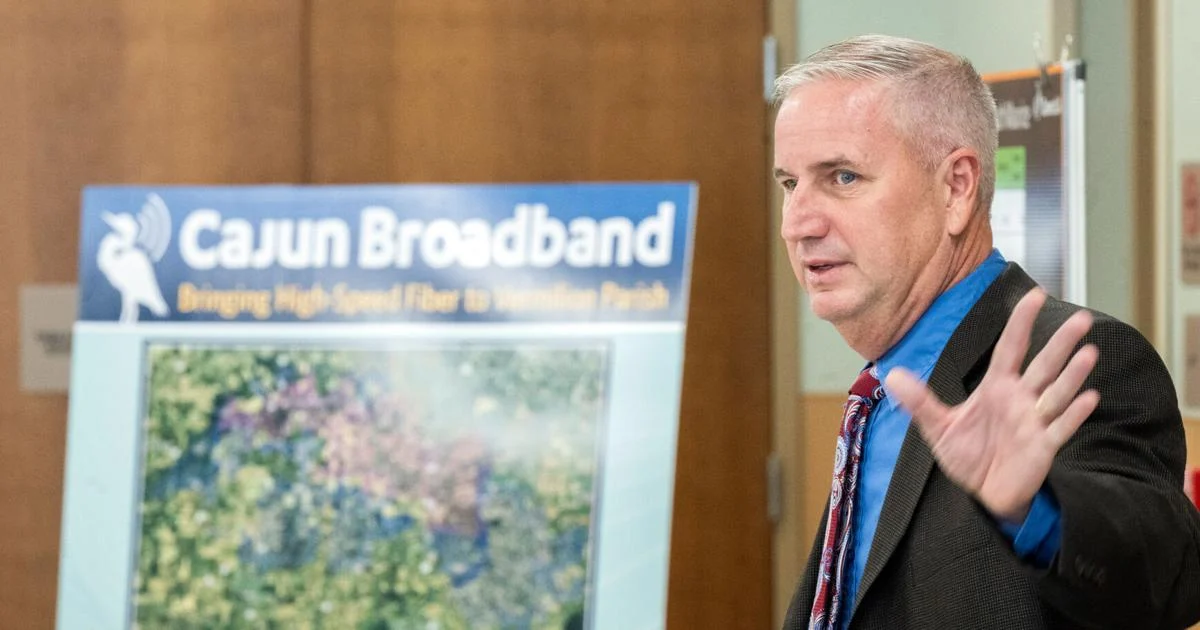
ABBEVILLE — At an event celebrating the completion of another project by Cajun Broadband, the little internet company that could, there were speeches by local officials, a video message from Gov. Jeff Landry, a ribbon-cutting.
And there was seafood gumbo, cooked the night before by Chris Disher, the company’s co-founder.
His grandmother made her gumbo with tomatoes, but Disher skipped them, knowing the crowd, and used shrimp and oysters harvested from parish waters.
The gathering in Vermilion Parish, like much of what Cajun Broadband does, had a personal feel that belied a bigger truth: The company is among those leading Louisiana’s push to bring speedy internet to the state’s rural reaches.
This fall, it won $18.2 million in federal funding from the Broadband Equity Access and Deployment Program, or BEAD, to connect another 4,000 homes and businesses. This month, they’ll be among the companies breaking ground with that funding: “We’re small, so we can build fast,” Disher said.
Already, the Broussard-based company provides fiber internet across Acadiana, in a doughnut-like shape surrounding Lafayette. In 2023, Inc. Magazine named it among the fastest-growing companies in the U.S. — landing at 603 out of 5,000 and fourth among those based in Louisiana.
“We kept doubling the size every year,” Disher said, “because we didn’t understand just how big this need was in the rural communities.”
But it started in 2017 with an antenna in a pine tree.
Disher’s two then-teenage sons had been nagging him for years about the slow, spotty internet. One Sunday before church, they’d hooked up their Xbox for a software update, “and the game wasn’t even 5% done updating after being gone for like three and a half hours,” said his son Matthew.
Meanwhile, Chris Disher’s close friend and now partner Jimmy Lewis, an IT professional struggling with his own internet service, had been driving by an empty tower on his way to work each day.
He wondered: What if we put an antenna on that?
They got the OK, grabbed a chain saw and mounted a dish. “And Chris is hollering up at me, ‘We’ve got 60 megs!” Lewis said, short for 60 megabytes per second. “We’ve got 60 megs!”
They hooked up one neighbor, then another, then 10. They kept their day jobs, at first, working nights and weekends.

Matthew Disher splices fiber in a Cajun Broadband truck for a Maurice home in December.
Within two years, they had more than 1,000 customers, said Daniel Romero Jr., operations manager. (Disher declined to give a current count, but the company’s website touts “nearly 10,000 customers across seven Louisiana parishes.”)
“We just kept going and kept building and kept working,” said Lewis, Cajun’s managing director.
When Louisiana’s Granting Underserved Municipalities Broadband Opportunities, or GUMBO, program was announced, Disher bought a nice tie and went door-to-door, parish to parish. In late 2022, with nearly $20 million in GUMBO funding, Cajun Broadband installed some 90,000 feet of fiber in St. Martin Parish.
It was the first completed project in the state under GUMBO, whose mission is in its name. Cajun Broadband competed with and beat bigger companies to nab GUMBO funds, said Veneeth Iyengar, executive director for the Louisiana Office of Broadband Development and Connectivity.
“They bootstrapped this business,” he said. “They saw a need in their community that was not fulfilled, and they decided to bootstrap it through entrepreneurial capitalism and build a business which is now impacting thousands of lives.”
Still, the business has stayed small and nimble. Ask an employee how many of them there are, and they’ll begin ticking off names, counting the number on two hands. It feels like family, said Steven Creduer, field supervisor. “I’m leaving my house to go to my other house.”
Disher’s son, Matthew, works in the field as a splicer now. Romero’s daughter works for the company, too.
Employees exchange “Merry Christmas” texts with customers. Many of them had long struggled to use Zoom, to upload and to stream, and were thrilled to spot Cajun Broadband’s trailer on their rural roads. Technicians see firsthand how people rely on the internet for necessities, from health care to homework.
“People are really happy you’re there,” Disher said.

Company founders and state and local officials hold a ribbon-cutting ceremony for the expansion of Cajun Broadband into Vermilion Parish Tuesday, December 9, 2025, at the LSU AgCenter Cooperative Extension Building in Abbeville, La.
A Louisiana-born-and-educated engineer, Disher hadn’t yearned to be an entrepreneur, the 55-year-old said. “I never wanted to do anything on my own.”
For years, he worked for General Electric in the oil fields of Singapore and Brazil, eventually supporting six regions from Broussard — but traveling often. Then GE downsized, and Disher lost his job.
With his wife’s encouragement, he became Cajun Broadband’s first full-time employee, he said. “She just kept saying, ‘You can do it, you can do it.’”
At first, he felt responsible to his family, his mortgage in mind. Then, he felt responsible for the company’s employees, their families in mind. Now, he feels responsible for the region and its residents.
Several broadband customers were in at the LSU Ag Center office in Abbeville for last month’s ribbon-cutting, which marked the completion of three broadband projects in Vermillion Parish comprising some 500,000 feet of fiber to 1,750 homes and businesses.
Among the beneficiaries: Michelle Romero, a 38-year-old mother, nurse and health coach who can now upload her workout videos in a few minutes, rather than several hours. (Disher used healthier oils in his gumbo, knowing she’d be in the crowd.)
And there’s the North Vermilion Youth Athletic Association, which for years had struggled to make credit card sales in its concession stand using Cox internet.
“We had issues on top of issues,” said Josh Broussard, the nonprofit’s president.
Cajun Broadband offered the athletic association free hookups, Wi-Fi service and boosters in exchange for some publicity. Now, the park has strong enough service to fuel live scoreboards and stream games, Broussard said, which means that they can host regional tournaments.
Broussard, who played sports at the park as a child, said the change is much needed.
“I saw what it was, and I just want to improve it,” Broussard said, “and make it better than what it was when we were there.”

ALMATY – Kazakhstan’s athletes delivered another successful year in the country’s sporting history in 2025, achieving breakthroughs across football, boxing, tennis and winter sports.

Kairat FC team. Photo credit: Kairat FC
From historic firsts to record medal hauls, Kazakhstan’s presence on the world sports map grew stronger than ever.
The defining moment of the year came when FC Kairat qualified for the UEFA Champions League group stage for the first time in its history, defeating Scotland’s Celtic FC in a dramatic penalty shootout in Almaty. The club’s international rise was further reinforced, when FC Kairat was ranked among the 500 best football clubs in the world by the International Federation of Football History and Statistics (IFFHS). Kairat became the only Kazakh club on the list, placing 240th overall with 90.75 points.
FC Kairat’s momentum culminated on Dec. 9 when Anarbekov became the first Kazakh footballer ever to be named UEFA Champions League Player of the Match. His exceptional performance against Olympiacos earned him a 9.2 rating from UEFA, which also included two of his saves among the best of the matchday.
Kazakhstan’s young football talent also gained international visibility, with 17-year-old forward Dastan Satpayev being recognized among the world’s top five young players by Score 90. Meanwhile, Italian giant Inter Milan highlighted Anarbekov’s skills in a dedicated feature. Institutional progress followed as well as the Kazakhstan Football Federation’s national academy received official FIFA Talent Academy status, making Kazakhstan only the ninth country in the world to achieve it.
At the IBA World Championships in Dubai, the Kazakh team finished second overall, collecting six medals – three gold, one silver, and two bronze. Saken Bibossinov (54 kg), Orazbek Asylkulov (57 kg), and Abylaikhan Zhussupov (71 kg) captured world titles.
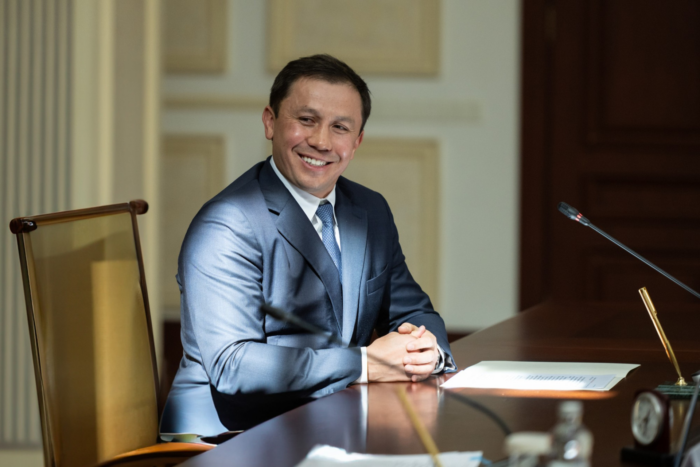
Gennady Golovkin. Photo credit: olympic.kz
The year also brought historic recognition for Kazakhstan with Gennady Golovkin becoming the president of World Boxing Federation and his election to the International Boxing Hall of Fame. Golovkin, selected in the 2025 ballot, became the first Kazakh boxer inducted into the Hall and joined global legends such as Muhammad Ali, Manny Pacquiao, and Mike Tyson.
Kazakhstan further cemented its dominance by topping the medal standings at the World Boxing Championships in Liverpool, where the national team earned seven gold medals.
Tennis: International titles and historic rankings
Kazakhstan strengthened its global presence in tennis with some of the most significant victories to date. Elena Rybakina made history when she became the first Kazakh player to win the WTA Finals, defeating World No. 1 Aryna Sabalenka in straight sets in Riyadh. She finished the year ranked fifth in the WTA standings, while Yulia Putintseva entered the top 20 for the first time in her career.

Elena Rybakina (L) and Yulia Putintseva (R). Photo credit: Kazakhstan Tennis Federation
On the men’s side, Alexander Bublik captured the ATP 500 Terra Wortmann Open in Halle, Germany, securing his fifth career ATP title after defeating a series of top-ranked players, including Daniil Medvedev.
The next generation also delivered promising results as 17-year-old Amir Omarkhanov climbed to No. 4 in the global junior rankings, bolstered by a breakthrough season. Kazakhstan also continued expanding its tennis ecosystem, hosting the ATP 250 Almaty Open.
Chess
Kazakhstan continued its rapid rise in global chess, achieving historic results across elite, youth, and team competitions. A historic moment took place inside the British Parliament when top Kazakh grandmasters played an exhibition match against members of the UK Parliament.
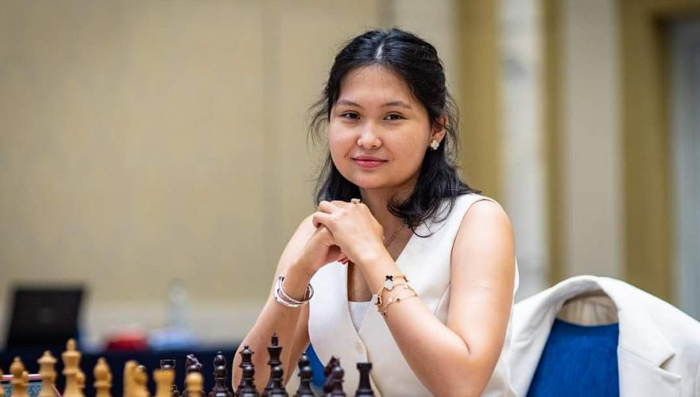
Bibisara Assaubayeva. Photo credit: Ministry of Tourism and Sports of the Republic of Kazakhstan
A major milestone came when FIDE President Arkady Dvorkovich announced that Kazakhstan won the most medals worldwide in all FIDE competitions in 2024. The momentum continued into 2025 with the national women’s team placing fourth at the FIDE World Women’s Team Championship in Linares and earning three individual medals.
Kazakhstan’s rising star Meruert Kamalidenova delivered another impressive result by finishing as women’s vice-champion at the sixth El Llobregat Open in Spain, a major international event featuring participants from 33 countries.
Youth achievements further underscored Kazakhstan’s depth of talent. At the 27th Asian Youth Chess Championship in Bangkok, Kazakh players captured 11 medals, including five gold across classical, rapid, and blitz events.
Bibisara Assaubayeva also achieved the norms required to become Kazakhstan’s second female grandmaster, following Zhansaya Abdumalik, reinforcing the nation’s expanding influence in the chess world.
Winter sports
Kazakhstan’s athletes delivered a series of outstanding results in winter sports, particularly at the 2025 Asian Winter Games in Harbin, where the national team earned 20 medals – four gold, nine silver, and seven bronze. Among the most significant accomplishments were the country’s first-ever victories in short track and freestyle acrobatics.

Mikhail Shaidorov. Photo credit: olympic.kz
The men’s 5,000-meter relay team secured Kazakhstan’s inaugural gold in short track, while the freestyle acrobatics duo defeated two leading Chinese teams to win the nation’s first gold in that discipline. Kazakhstan’s men’s hockey team also continued its tradition of excellence by winning the Asian Winter Games title for the fifth time.
Figure skating brought additional triumphs when Mikhail Shaidorov secured silver at the 2025 ISU World Championships in Boston, marking Kazakhstan’s third-ever medal at the event and earning him a place at the 2026 Winter Olympics.
Expanding success beyond traditional arenas
Kazakhstan also reached new heights in sports outside its long-established strengths. In motorsports, Artline Kazakhstan became the world champion in the Lamborghini Super Trofeo series, marking the country’s first world title in the sport.
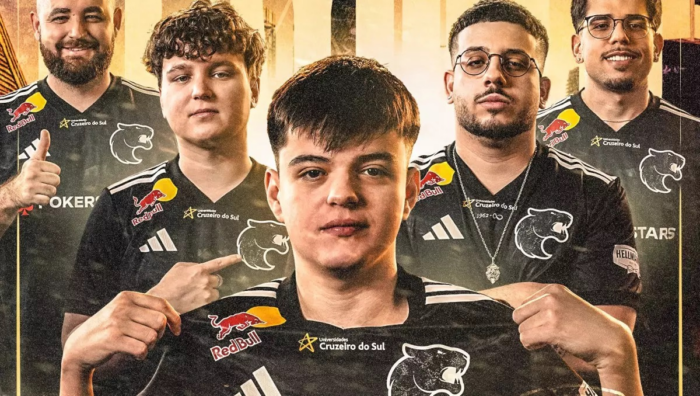
Kazakh player Daniil Golubenko, representing the Brazilian organization FURIA. Photo credit: digitalbusiness.kz
Kazakhstan also saw a breakthrough in eSports when Kazakh Counter-Strike player Daniil Golubenko, representing FURIA, won the Intel Extreme Masters (IEM) Chengdu 2025 tournament with a dominant 3:0 performance and was named MVP.
Meanwhile, Kazakhstan launched its first professional women’s eSports league, the Female Pro League, which aims to promote inclusivity and create new opportunities for female gamers.
Youth and junior success: A foundation for future champions
At the Asian Youth Games in Bahrain, Kazakhstan achieved its best-ever result, winning 93 medals and ranking third overall. The country’s next generation of boxers also excelled at the ASBC Asian U22 & Youth Boxing Championships in Colombo, where Kazakh athletes captured 22 gold medals, including sweeping all women’s weight divisions.
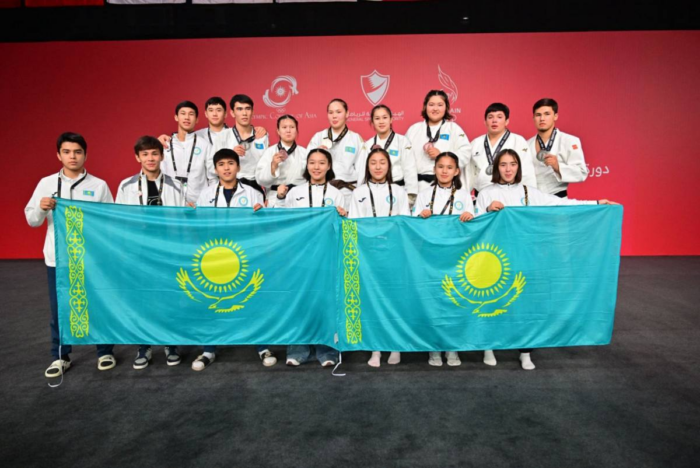
Kazakh athletes competed in more than 20 sports. Photo credit: National Olympic Committee’s press service.
Kazakh juniors continued to show promise in tennis, figure skating, and athletics, demonstrating the growing depth of talent across multiple sports.
From Champions League debuts and world titles to Hall of Fame inductions and record-breaking youth performances, 2025 solidified Kazakhstan’s reputation as a rising global sports nation.


Ross Brawn to receive Autosport Gold Medal Award at 2026 Autosport Awards, Honouring a Lifetime Shaping Modern F1

Downtown Athletic Club of Hawaiʻi gives $300K to Boost the ’Bows NIL fund

Princeton Area Community Foundation awards more than $1.3 million to 40 local nonprofits ⋆ Princeton, NJ local news %


Kentucky AD explains NIL, JMI partnership and cap rules

Three Clarkson Volleyball Players Named to CSC Academic All-District List


Young People Are Driving a Surge in Triathlon Sign-Ups


Beach Volleyball Unveils 2026 Spring Schedule – University of South Carolina Athletics


Why the NIL era will continue to force more QB transfers


Is women’s volleyball the SEC’s next big sport? How Kentucky, Texas A&M broke through
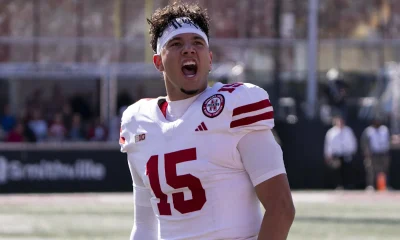

New college football program emerges as landing spot for Dylan Raiola