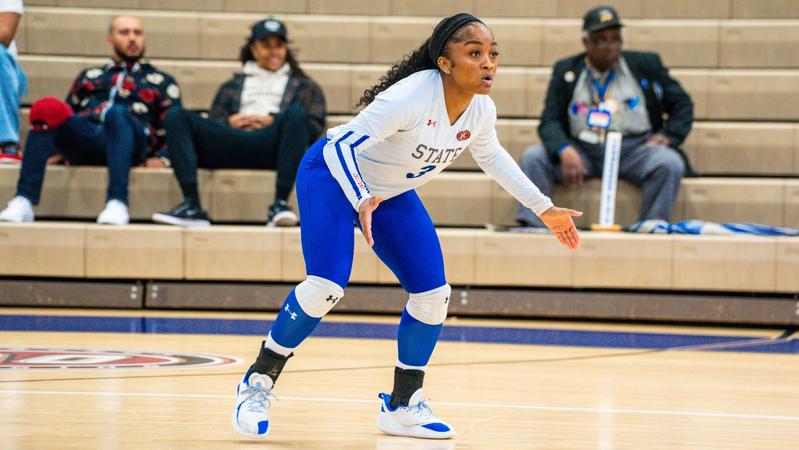
Jaylin Rivers: Good morning, everybody. My name is Jaylin Rivers, I attend [inaudible], and I am proud to announce Mayor Eric Adams.
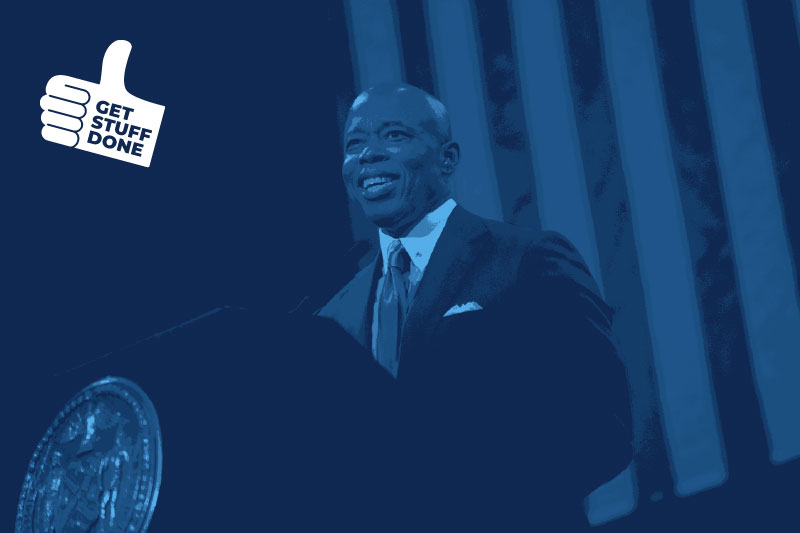
Mayor Eric Adams: I want to thank Jaylin, and this is a coming together of so many pieces. I want to thank the entire team here, but particularly Chauncey, our former deputy mayor. Many people don’t know about the silent giants that are among us who commit their lives to not only the public safety aspect that entails law enforcement, but how do you prevent crimes from taking place in the first place. And Chauncey saw that.
He heads HIDTA, where our law enforcement teams meet every morning to take illegal guns off our street. He was part of the architect that allowed us to remove 24,000 illegal guns off our streets in his coordination. But he also knew that if our young people had a bat in their hand, they won’t have a nine millimeter in their hand. If they were on a field of dreams, they can actually dream.
And he pushed this issue over and over again. We announced it in our state of the city and we’re here now to make it happen. It’s unfortunate that the weather’s inclement, but I think the sunshine is in this room today because of what you have done. Thank you so much for what you have done.
And bringing those dollars in, D.A. Bragg, some of those forfeiture dollars that you and your team are bringing in. And you probably missed him because of his height, but we have to say thank you to the Yankees’ CC Sabathia. A lot of great memories at Yankee stadium.
Just even off the field he continued to do the work with his – A former New York Yankee and founder of the PitCCh In Foundation. He has continued to do what’s right. And those others who are here, Chuck Brady representing the Car Ripken Foundation, the law enforcement team, the district attorney’s office that’s here, so many who have pitched in and knew this is the right thing to do.
This is an exciting project, it’s one of those legacy projects that our administration is going to be proud to look back on. So many young people are going to use this opportunity, not only to play professional sports, but to receive scholarships to prestigious institutions and to learn the discipline that’s associated with playing a sport. Knowing how to get back up when you’re knocked down, knowing how every day is not going to be a winning day, but you keep pushing forward and focus on that to accomplish the great things you want to accomplish.
And nothing personifies that more than Brigadier General Charles Young. His family is here and we’re going to hear from you as well. But his story is an impressive story and we should all read it. Born into slavery, becoming one of the few African Americans to attend West Point during a different time in a different era and going on to become a Brigadier General and one of the leaders in the military service in our country.
And so when we named this field after him, it is going to inspire young people to do what they like to do, to Google and find out exactly who was the Brigadier General and what he represented to this city and to this entire country.
Public safety is a prerequisite to prosperity. If we’re not safe, we will never prosper. And far too often, when you look across the city, there were too many communities that lack the public safety that’s needed. And we wanted to zero in on that, and the numbers are so impressive. When you look at the lowest numbers of shootings and homicides and victims of crime, generally, when you talk about those numbers, they’re in Black and Brown communities, folks.
It’s not citywide numbers, but it’s numbers that impact the communities where our young people come from, and where my son comes from, and many of the young people who are lining these halls right now, and we zeroed in on that. And this administration was successful in ensuring that we would turn around those numbers and save lives.
And we wanted to make sure our communities not only were safe but felt safe. And we must make the smart upstream investments, and this is the type of investment we wanted to make investing in our young people and ensuring they had the opportunity that they desire. I’m looking at these young men who are in their, it looks like their football jerseys. The relationships they’re going to develop is going to go through a lifetime of relationships.
Being there for each other. I still remember things that my coach told me as a child, over and over again reflected on it. And it becomes moments of instruction and moments of learning. I am probably the mayor of the City of New York because I had a coach, someone that told me there would be good days and bad days, days I wish I would have gotten out of bed, days I wanted to stay in bed, but every day you got to get up.
And if you take the field, you will have an opportunity to win. The only game you would never win is the game that you don’t play. And that is what these young people need to know as they move forward. So, today we are making our children’s dreams come true. They can come true.
The Harlem Field of Dreams, first announced this year in the State of the City, it’s an $11 million investment that has turned a once dilapidated field into a place where dreams can come true. Why does Harlem, South Bronx, Brownsville, Bedstuy; South Jamaica, Queens, why do our fields look the way they do?
And you go into other communities, and they see well-manicured, clean fields. That is just wrong. And some of the projects that we have done, we have turned it around. And I want to thank the commissioner who’s here, who’s in charge of Parks, for what she’s doing, the great equalizer.
This project is going to be a vibrant place for young people to play baseball, football, soccer, lacrosse. Now, 800 children in Harlem and across New York city will have a safe, enriching space to play, learn, and build trust. And parents can rest easy knowing that the growth and the safety of their child is not limited to the classroom, but also in clean safe spaces because programming at the Harlem Field of Dreams will keep them healthy, engaged, and connected to their community.
And we know the power of sport and recreation. It is extremely significant. It brings us together. Its joy can change lives. It is universal in having recreational spaces for our children to play, build stronger communities. Having no place to go and nothing to do, it is a recipe for disaster. It wasn’t just my mother, it probably was one of the well-known sayings, “An idle mind is the devil’s workshop.” But we’re closing down the devil’s workshop by giving these children a Field of Dream.
And I know what it’s like, a young man, dyslexic, growing up in South Jamaica, Queens, finding myself on the wrong side of the law, turning my life around, going into public safety, law enforcement. And now the mayor of the City of New York, because opportunities were there, and I had a second chance. And we don’t only want to give our young people second chances, we want to give them the first chance. It’s the right chance for them.
We should not have to have luck to succeed. If I want to paraphrase the movie, if we build it, they will come. And they’re going to come. They’re going to be part of this wonderful experience. By investing in free programs to keep young people safe and engaged, like Saturday Night Lights, another Chauncey Parker endeavor. The Harlem Field of Dreams upholds our commitment to making smart, upstream investments that prevent crime in the first place.
Saturday Night Lights partners with 136 gyms across the five boroughs to create year-round safe spaces for young people to learn and play every Saturday night. And fostering positive relationships and trust between young people and police officers, so important and needed. And the New York City Soccer Initiative promotes safe, active, and engaged communities, while also connecting young people of color with mentorship and opportunities.
Most of all, this facility will also, as I stated, tell the story of Brigadier General Young. Born into slavery in 1864, Charles Young graduated from West Point as only the ninth Black cadet in the school’s history. His career included a historic appointment as the first Black National Park superintendent. And up until his death in 1922, he was the highest-ranking Black officer in the US Army.
His feeling of everything is possible and perseverance gave the story of what Brigadier Young was about. The story that the Harlem Field of Dreams will preserve. The story that will inspire generations. Because we are a place where anything is possible in New York City. And we want to continue to make sure that happens.
As I said, in my role as the mayor, I got [29] days. I have not thrown in a flag. We’re going to do a lot of stuff in [29] days. I will be the mayor until the [29th] day. And this is only the beginning of what we’re going to do. This is like the playoffs, when CC Sabathia is on the mound and we’re trying to get those last games in. Brother, we’re going to get those games in. And we’re going to get it done.
So, I want to turn it over to an amazing first Latina to be the commissioner of Parks, the largest park system in the country, and turn it over to you. Thank you so much. Job well done.
Commissioner Iris Rodriguez-Rosa, Parks: Thank you. Thank you so very much, Mayor Adams. I can’t thank you for the opportunity to be able to serve in this administration as the Parks commissioner. And I have to say that it’s wonderful to see the audience here. The audience that is here, made up of the students from the Frederick Douglass Academy. Congratulations for being here as well.
To the descendants of Brigadier General Charles Young that are here. To the National Park Service that is here as well. And I just wanted to say thank you. And I also want to be able to say at this point that we have a lot of our New York City Parks employees that are here, that are going to be the ones that are going to be maintaining this particular location. So, with a round of applause for them that are here. They’re the ones that are going to maintain this location. I just want to make sure that they know that.
So, today is absolutely a special day for the Harlem community and for our entire city. As we officially open the new Harlem Field of Dreams. This remarkable transformation of the Brigadier General Charles Young Playground provides a space that will uplift young people and families for generations to come.
This stunning multi-sport athletic facility represents much more than a capital project. It actually reflects what we can accomplish when the city agencies, community partners, and private supporters come together with a shared commitment to invest in our young people. With this new synthetic turf field, improved amenities, and expanded opportunities for free youth programming. And as we know, when you provide, when you seed it with positive programming, you weed out the negative elements that may be existing. So that is so wonderful to be able to have.
We are delivering a state-of-the-art space where our kids can learn, grow, and thrive. It also honors the legacy of Brigadier General Charles Young. As we know, a trailblazer whose courage, service, and devotion to this nation continues to inspire us all. This field stands as a testament not only to his story, but to the resilience and pride of this Harlem community.
I want to, of course, thank our Mayor Adams for championing the investments like this that have kept our young people safe, engaged, and supported. We are so incredibly proud that under this administration, we have had more than $203 million invested in playground and facility upgrades in precincts identified by the mayor’s Gun Violence Prevention Task Force. We are building stronger parks and safer communities.
I also want to thank all the funders who made this project possible. The Cal Ripken Senior Foundation led the construction and provided additional financial support. And of course, as I mentioned, the parks team, led by our borough commissioner, Tricia Shimamura and her team. Thank you so very much, Tricia.
Everyone’s dedication has brought real change to the neighborhood that deserves world class spaces. Thank you all so very much for being here today and for participating in this wonderful endeavor. Now it is my pleasure to introduce the director of the New York/New Jersey HIDTA program, our very own Chauncey Parker.
Chauncey Parker, Director, New York/New Jersey HIDTA: Thank you. Thank you, commissioner. Thank you for your amazing Parks team that we’ve had hundreds of meetings, never giving up, Christine and Max and Joy and so many others pushing this project forward. And Mayor Adams, thank you for your leadership. I know that you believed in this vision from the very beginning and have pushed and pushed and gotten the four corners of city government behind this to make sure that we’re able to get this done.
This has been a long journey. And today we’re celebrating this beautiful field. And we’re also honoring true American heroes. Where we are right now is the 369th Regiment Armory, named after the Harlem Hellfighters. You are literally sitting in a historic landmark. This is named after the Harlem Hellfighters. The Harlem Hellfighters are the soldiers who fought in World War I. They’re the Black soldiers, many of them volunteers, including James Reese Europe, who is one of the great legendary band leaders.
But these soldiers volunteered and said, “We want to fight for America.” And they volunteered, but because of our segregationist policies, Black soldiers weren’t allowed to fight in combat. And they said, “Well, we’ll serve in whatever way we can.” So, they were stationed in Paris. And what they brought with them, a little footnote to history, is James Reese Europe brought his instruments, and they played jazz and everything while they’re waiting to have some role. And one of the reasons why Paris is a jazz capital of the world is because of those Harlem Hellfighters of 369th that brought jazz to Paris.
While they were waiting, France was struggling on the Western Front and was about to get overrun by Germany. It was a tough, tough battle. And the French went to the United States, to General Pershing, and said, “We’re desperate. We’re about to be overrun by the German soldiers. Do you have any soldiers that you can give us?” And he said, “We have no soldiers. Our soldiers are all fighting all over Europe. All we have are these Black soldiers.” And they said, “I don’t care whether they’re Black, White, what they are. We need soldiers.”
And those soldiers, those 369th Regiment soldiers, fought side by side with those French soldiers. They fought for 191 days in a row, longer than any combat unit in all of World War I. They didn’t give up an inch of ground, and they saved France. And after World War I, the French government awarded the 369th Regiment soldiers, those Harlem Hellfighters, awarded them the Croix de Guerre, which is the highest medal of valor you can get from the French government.
And so, there’s a famous picture, I think we have it, of those soldiers. And when they came back, this armory was built in their honor. And this armory is literally a historic landmark in the honor of the Harlem Hellfighters and the 369th. And under Colonel Myones and the team here and their leadership, they make sure that people never forget that history because it’s so important.
We also have across the street another historic landmark, and that is the Brigadier General Charles Young Field. Brigadier General Charles Young, little-known footnote to history, is the Jackie Robinson– CC Sabathia. He’s the Jackie Robinson of American military history, no doubt about it. As the mayor said, he was born in slavery in 1864. [He] is self-educated with his mother, and his ascendant, wonderful Renotta Young, is going to be telling the story.
But, self-educated, spoke all these different languages, played all these different instruments, graduated from West Point. In 1917, he’s the highest-ranking Black officer in American military history as a colonel. And America is now going into World War I, and he knows as a colonel that the next stop is he’s going to be promoted to be a brigadier general to get a combat assignment because that’s the next step.
But, while he was in Ohio, he was notified by the United States Army that he was being medically retired because of high blood pressure. So, he writes to W.E.B. Du Bois. I just want to read it because this is what he said in his letter. “I am sound. I can ride. I can walk. I can shoot. My heart is as strong as any man’s. I shall present my proof.” And he rode 497 miles on horseback for 16 days from Ohio to the doorstep of the secretary of war in World War I to prove that he was medically fit for duty.
And he wrote to that secretary of war, “My physical condition is excellent. I am fit for active field service and ready to take up whatever duty the Army may assign me.” And he was still medically retired. And thanks to the work of Renotta Young and others, 100 years later, he got the honor that he deserved. But even to the day he died, he would always sign his portrait, Charles Young would always sign his portrait, “Yours, for race and country.” So, he truly is not just a Jackie Robinson, but he’s an American hero.
So, this story begins for us. As the commissioner says, director of the HIDTA program. HIDTA is a program that invests in these law enforcement partnerships to build safe and healthy communities. We have many of our law enforcement leaders here today who lead this effort, risk their life, much like our soldiers risk their life to protect us.
And over the years, this is about 25 years ago, that the armory drill floor, right through that door, there’s a 50,000 square foot drill floor. That really got into bad shape. It had become a homeless shelter. The floor was rotted. It was in really, really tough shape.
Across the street was this field, which was a dirt field. And Elijah Brooks and others who played on that, brought kids to play on that field. It was a dirt field filled with rat holes. You’d have to worry about heroin, glycines. It was just both, as the mayor said, it’s not right, that that’s okay here.
I mean, I live across the street from Asphalt Green on 90th and York. And you talk about two worlds and why it should never be that way. And in fact, seeing Asphalt Green every day, when I see that and see kids playing seven days a week until 10 o’clock at night, I keep thinking, why isn’t that in Harlem? And so that really drove, at least for me, it drove this partnership.
So, the first part of this partnership is we went to the National Guard and said, can we help transform that drill floor into a sports center for the children in Harlem? They said, “On one condition. We’ll give it to you for free, but you have to fill it with children.” That’s the deal that the National Guard has made with the Harlem Children’s Zone, and Wendy Hill Yards Gymnastics, Harlem Junior Tennis League. The only thing they ask in return is that they fill that with children. And that’s what they’ve done.
And so, that way we used one of our secret sauces, so to speak, to fund these projects, thanks to our law enforcement leaders, is what they like to do is take, and Alvin Bragg also likes to do this, take money from people who are hurting people, selling drugs, human trafficking, whatever they’re doing that they’re hurting people, take their money. Instead of putting it just back into more law enforcement, take those dollars that cause so much pain and put it back into the community. And so, that was funded with money that came from drug dealers.
And then, what brings us here today is that we saw the field, and we saw the field as a next step. Could we do something like that for this field? Went to the Parks Department and the commissioner, and everybody has been such great partners. They said, “Absolutely. If you can raise the money for this, we really want to work together to transform the Charles Young Field.”
So, we met Gale Brewer, who at the time was the Manhattan borough president, and she said, the first step is that we’re going to bring the community together because, as I learned from Gale, you don’t plan for the community without the community. And so, she brought– I said, “Are you sure this is going to work?” Federal, state, local, community, and everybody agreed, yes. We all sign on to this vision of what we can do with it. And so that’s where we started.
And then we met with the Cal Ripken Foundation. They have a national vision of transforming fields across the country. And then, through Parks, we met CC Sabathia. So, any time you have to raise money for a project, I’m just a beginner at this sort of fundraising thing. The very first, for sure, when you have no money, it’s hard to get any money.
CC Sabathia put $500,000 in this project before we had [any] money. And has believed in the vision ever since and pushed and pushed. And then Major League Baseball, they put in money in partnership with the New York City Police Foundation and Susan Birnbaum and their team. They worked out a way that we could get the money from both Major League Baseball and the NFL. D.A. Bragg put in $500,000. The governor put in $800,000.
But the big money that we brought in, thanks again to our federal law enforcement partners, they put in $8 million. Homeland Security Investigations, Rick Patel and our other federal [inaudible]. And it wasn’t even, to me, it wasn’t even my idea. They were saying, is there something we can do to build trust with the community, to help the police department?
What better sign than taking money and actually doing something to transform these broken-down spaces and create opportunities for kids? And so, thanks to that great work, that is how we are where we are today.
So, the last thing I’ll just say is this field and this project is enormously important. One is, as the mayor calls it, the Field of Dreams. That it is, if you build it, they will come. If you create this opportunity, we will make a difference for children for years to come and there’s nothing more important that we can do.
Second, what this project does is it has law enforcement and our federal, state, local law enforcement, they’re crying out. Particularly for our young people, to hear this message that we love you. We want only the best for you. We’re not just saying that because they’re actually going to put money and their resources in to try to create these kinds of opportunities.
And the third message is that history matters. And that we need– history matters because through history, the mistakes we’ve made, we can do, we can learn our lessons and hopefully do better. And history matters because we need to celebrate and recognize and never forget our heroes. And I have to say that whether it’s Renotta Young, Dr. Matthews, the head of the Buffalo Soldiers Foundation, because Charles Young was a Buffalo Soldier and an icon of the Buffalo Soldiers.
They remind me of that movie Coco, the Disney movie, where you have to remember people. If you don’t remember the heroes of the past, we can forget them. But you, Renotta, you, Dr. Matthews, all of our partners, the National Guard with the Harlem Hellfighters, you send this message and you make sure that we never forget these heroes. So, with that, I thank you all so much.
Mayor Adams: And now we want to bring on Renotta Young, a descendant of Brigadier General Charles Young.
Renotta Young: First of all, it’s great to be back in New York. I worked in Harlem for 18 years and when I first started with my employer, some colleagues said, “You know, there are three parks, two or three parks named after Charles Young.” And I said, when I retire, I’m going to work on that. And then, Chauncey called me one day and you never know what’s in the making.
So, I want to thank everyone, the mayor, the commissioner, all the people who made this happen. One thing from being here in New York, I know that when anything like this is pulled together, it is very complicated.
I want to give you context about the Charles Young story. My grandfather and Charles Young were first cousins, but they were like brothers. They planned their futures together when they were children in elementary school. They planned big. They thought big. Charles Young went on to West Point and he was, you know, didn’t have a great time there, but he kept going.
He loved making history happen. His professors, some were– they built the roads in the Panama Canal. We grew up knowing that as Youngs, under the Young Doctrine, we had to uphold expectations. And so I grew up under his two children, Charles and Marie. And they were responsible for our academic excellence.
They all believed that with perseverance and study, you can make it happen. They spoke eight different languages. They taught music, and we just grew up in that environment. When I went to school, I would ask my history teachers, “Why don’t I see my cousin’s name in the history books?”
And so, in the third grade, I started thinking, you know, history’s got to be more reflective of the people who did a lot of work. And Charles Young’s son sat me down one day. He typed up this whole document on his father and he said, “You are responsible for making sure this legacy goes on.” So, I did take that seriously.
In the early, in about 1993, the Charles Young home was determined to be a National Parks monument. And Roger is here from the National Parks [Service]. He is the chief educator and interpreter. And that was a big deal for us because we had a monument, a National Parks monument that reflected the life of Charles Young. That’s where it started.
Then we went on to meet with folks in California. We renamed Highway 198 into Sequoia National Park, Colonel Charles Young, because he and the Buffalo Soldiers built the roads in Sequoia. And then Fort Huachuca. Fort Huachuca is known for military intelligence. And at Fort Huachuca, he was base commander. And they have kept the name going.
So, Charles Young is a Renaissance man. What we found is that wherever we mention his name and give a brief synopsis of his history, people are– they’re touched by him. And I think that’s why everybody is here today because he did not give up, but he had the intellectual capacity and fortitude to keep things going. And he loved his country.
He loved people. He loved his country. And I think, you know, this is something for us today to realize that each one of us, our young people, we have high expectations for you. You persevere. Things that you hear now, you may not think, “Well, this is just a conversation.” But take this to heart. Because when a lot is expected of you, you can do a lot.
I also want to thank the Omega Psi Phi fraternity because during all of our chances to get the Young name out, they have mass numbers. And they put money into the monument. And they’re always there when we want to keep things going and keep the name out there. But the Charles Young name isn’t just for me as a descendant. It’s for you. Because his life, as I said, is the American story. And I thank you so very much.
Mayor Adams: Thank you. Well said, well said. And, you know, we can’t do projects like this without our district attorneys in general, specifically the Manhattan D.A. So, we’re going to turn it over to D.A. Alvin Bragg.
Manhattan District Attorney Alvin Bragg: Thank you, Mr. Mayor. I’m just humbled to be here at this intersection of history. Our rich past, our beautiful presence, and this investment in the future. And for me, I know our mayor named a whole lot of great neighborhoods around the city, but we’re in Harlem. And I grew up two blocks away, Esplanade Gardens. You can literally look at the park from there.
We heard Chauncey talk about this space when it was a homeless shelter. I first made my way here for youth sports when I was in single digits, when it was doubling as a homeless shelter. And to see the investments, first in this space, in this building, and then what is going to happen in the Field of Dreams across the street. So humbled to be a part of it. Thank the mayor, commissioner, former borough president, councilmember for their leadership. Thank all the law enforcement partners from HIDTA, NYPD, Lee’s Foundation, Doe Foundation.
And I have to end with Chauncey, because every single conversation I’ve had with Chauncey for the last two years has started with this field. I know you know what I’m talking about. And he has been a visionary on this and so many other things, and also someone who executes. And as the mayor stated, he’s doing a lot of other things too. I mean, in Manhattan, our shootings are down 65 percent compared to four years ago. Homicides down about 50 percent.
And Chauncey’s convening all of us every day to focus on gun violence. And as he said, this is the other half. We want those numbers to remain low. We’ll continue to do what we do in law enforcement. But this investment in the future is going to help keep those numbers low and continue to drive them down. So, I think I saw a Harlem Little League hat in here.
There it is. Play ball.
Mayor Adams: I know he did not want to speak, but we have to hear from him. Come on, CC.
[Crosstalk.]
Mayor Adams: You know, so why don’t we open it up to a few questions. Again, as pointed out, we see we have our partners here from the FBI and so many other federal agencies that are here. We want to thank you.
Open it up to a few questions.
Question: Mr. Mayor, you mentioned this as a legacy project. Is there anything else you can tell us about these last 29 days? What other projects you want to get done? What else we can expect?
Mayor Adams: One of the major projects that I’m speaking with the city agencies about that is extremely important to me, the biggest barrier to receiving city services is language barriers. People who are not proficient in English, they just don’t have access to services.
And there’s no reason with all the technology that we have, from Google Translate to ChatGPT, etc., that every agency cannot be empowered with technology so that when someone walks into a city agency, that they’re able to communicate directly with a city employee.
But not only that, as we just indicated, General Young spoke several different languages. Only in America that our children just know one language. And by having a language-friendly city, that no matter what language you speak, we will learn from each other, and that we won’t shut the door on those who are non-English speakers.
And so, we’re going to make an amazing announcement to make this the most language-friendly city in the country, if not the globe. And that’s one of the projects I’m working on.
Question: Hi, mayor. When it comes to these ongoing projects, have you spoken with the Mamdani administration about wanting to continue some of the stuff that you’ve already started? And when are you planning to have that meeting with Mamdani?
Mayor Adams: It’s so funny you ask me. I am seeing the mayor-elect today at noon. And we’re going to turn over documents of our transition. And he can make the determination on what projects he wants to continue. Every mayor brings their projects. And what I must do is show what we have accomplished and turn over documents so he can determine if he wants to continue or not.
Because I think Commissioner Rodriguez said something that many people have missed. When we decided what parks we were going to put our money into, we did an analysis of shootings. And we put our money into communities that were dealing with a high level of violence.
And we want to show the incoming mayor what we’ve done, how we brought down crime, how we built more housing than any other mayor in the history of the city. How we have more jobs in the history of the city. We broke the record 11 times. How we have more small businesses. How we outpaced the state in reading and math.
Of all the things we’ve done, I want him to continue that success. And I think the best level of appreciation is duplication. And I think they’re going to duplicate a lot of things that we’ve done. Thank you.
###