
NIL
Utah's Kyle Whittingham on college football structure

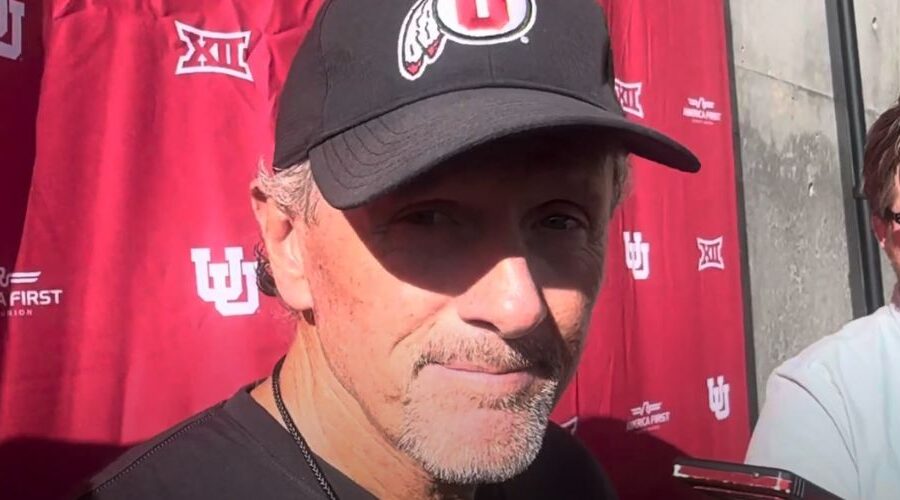
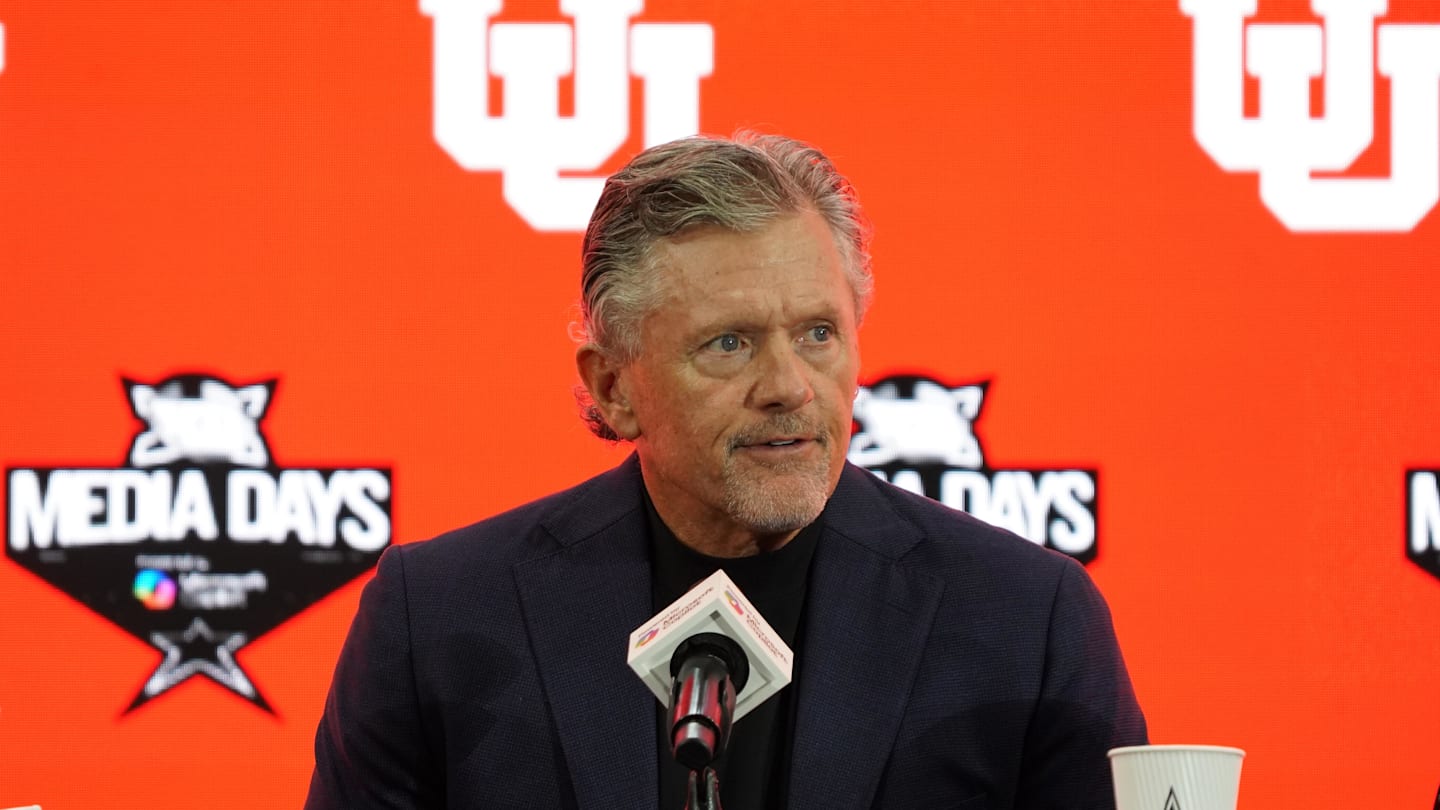
As he addressed the media on Monday, Kyle Whittingham admitted that while he’s not the same person holistically, the 65-year-old has all the energy he needs to be on the sidelines after 20-plus seasons as the head coach of Utah.
His feelings toward the changes the NCAA has made regarding the transfer portal and name, image and likeness, pointed to how college sports’ governance has been less adaptive than he has been over the past two decades.
In addition to discussing the Utes’ Week 1 matchup against UCLA, Whittingham also took some of his 15 minutes at the podium Monday to offer up a few changes he felt were necessary to the long-term viability of college football, including multi-year contracts for players and the implementation of preseason games which wouldn’t count toward a team’s win-loss record.
Whittingham didn’t offer a take on the situation his opposing quarterback, UCLA’s Nico Iamaleava, went through in the offseason before he transferred from Tennessee to play for the Bruins, though he did voice some approval for multi-year contracts being implemented to provide a sense of structure in roster building.
“Multi-year contracts — I think there’s some merit to that,” Whittingham said. “But, I think somehow we’ve got to get to the point where, and again, I say a ‘minor league NFL’; not technically, but theoretically; where we’re just the same type of setup, same structure, salary cap, that type of thing.”
Whittingham’s remarks came after Utah athletic director Mark Harlan said earlier in August that he supports federal legislation for implementing multi-year contracts in college sports. As of July 1, schools have been able to share up to $20.5 million in revenue with their student-athletes as part of the landmark House settlement. Harlan said in a news release shortly after the settlement was granted final approval that Utah Athletics plans to share the full amount allotted in revenue share with their student-athletes in 2025-26.
Whittingham added that a player’s union seems like a likely outcome.
“What we do right now is not sustainable,” Whittingham said. “They’ve got to figure out a way to get some sanity to the whole thing. The prices are spiraling out of control for the rev-share monies now, and so it’s still in a place where I don’t think you can continue this way without some major changes.”
Scheduling has been a hot topic in college football lately, with conference games and the importance of a strong nonleague slate sitting at the focal point of those discussions.
Whittingham has a different stance he believes is worth considering, and it might be one some conference commissioners investigate further for themselves at some point.
While mentioning the pros and cons to arranging a power conference opponent out of the gate to start the season, Whittingham offered an amendment to the sport’s calendar to carve out time for preseason contests, much like in the NFL.
“If I was going to say, what would I absolutely prefer is probably to have a lesser opponent that you can find out who you are early on,” Whittingham said. “But I don’t know if college is going to ever go to preseason like the NFL — and that wouldn’t be a bad idea, in my opinion, to have a couple preseason games that don’t count on the record.”
Saturday will mark the Utes’ fourth season opener against a power conference opponent since 2011.
Whittingham estimated that about 50% of Utah’s 2025 roster consisted of players who weren’t on the team last season, and that managing that roster turnover in the offseason was difficult between the winter and spring transfer portal windows.
It also wasn’t easy to keep track on the balance sheets, either.
“We feel like we did a good job in the portal this year and then, of course, the finances come into play as well,” Whittingham said. “Portal guys are more expensive than retaining your own guys; but you can’t just retain your own guys, or you’ll run out of guys because they’ll eventually graduate.”
“Typically, high school guys are priced pretty high as well. So it’s a balancing act.”
Whittingham’s assessment of the portal was echoed in an ESPN article posted Monday, detailing the average price range several power conference schools spent to acquire top-end transfers this past offseason. According to ESPN’s sources, the highest-paid quarterbacks in the sport, such as Miami’s Carson Beck or Oklahoma’s John Mateer, will make well over $2 million this season, though $3 million was also suggested by one SEC general manager.
Good running backs ranged from $300,000-$700,000 on average, while solid wide receivers cost about $400,000-$800,000, according to ESPN.
“The NFL has the capologist guys — they manage the cap, and that’s essentially what we have to do,” Whittingham said. “And it’s a challenge, but the portal certainly allows you to go out and replenish if you’re thin at a position or whatever, that helps you in that regard. But it’s certainly a different ball game than it used to be.”
“I guess it could return somewhat to how it used to be, but they’re gonna have to have a major overhaul of the rules and how things are structured.”
MORE UTAH NEWS & ANALYSIS


The decision to head to the NFL instead of returning to college can be a complicated choice. Massive NIL payouts, potential NFL landing spots, and the solidity of a returning team are several factors that go into the stay-or-go calculus.
But with the 2026 NFL Draft QB class looking a bit thin already, some are second-guessing one QB’s plan to return to school.
Ole Miss QB Trinidad Chambliss is in the middle of requesting another year of college eligibility from the NCAA. Chambliss is claiming that he missed the 2022 season due to respiratory health issues and is thus seeking one more year to play. His NIL value is likely to end up at several times the $665,000 estimate from On3sports.
ESPN broadcaster Chase Daniel second-guessed Chambliss’s decision to return to school. “Trinidad Chambliss should absolutely think abotu entering the draft after the way he’s played in the #CFBPlayoff,” Daniel Tweeted. “Light QB draft,” he also noted.
The 2026 NFL Draft class is highlighted by Indiana’s Fernando Mendoza and, should he enter, Oregon’s Dante Moore. Many are projecting both of those quarterbacks at or near the top of the Draft. But after Mendoza and Moore, things get increasingly cloudy.
Alabama’s Ty Simpson has indicated his plan to enter the Draft. Other veteran QBs like Carson Beck and Cade Klubnik figure to be in the picture. But it’s entirely plausible that NFL teams could view Chambliss as the No. 3 or No. 4 QB prospect in the 2026 NFL Draft class.

Chambliss rose to prominence seemingly from nowhere in 2025. He sat for two years at Division II Ferris State and then played mostly as a reserve in 2023. In 2024, though, he passed for 2,901 yards and 26 scores while rushing for 1,019 yards and 25 scores on the ground while leading Ferris State to the national title.
He began 2025 as the backup for Ole Miss’s Austin Simmons. But an ankle injury in Week 2 gave Chambliss a chance to play and he didn’t relinquish the job. Chambliss wound up passing for 3,937 yards and 22 touchdowns against just three interceptions. He ran for an additional 527 yards and eight touchdowns.
Of course, an adverse NCAA ruling might leave Chambliss with no real choice but to go pro. He has inked a tentative NIL deal with Ole Miss based on the premise that he will be given eligibility. That deal has been indicated as likely worth several million dollars. But Daniel thinks even better NFL money could be in Chambliss’s future… if he seeks it.
Thursday night, Ole Miss’ run in the College Football Playoff came to an end. The Rebels fell to Miami in the final seconds of the Fiesta Bowl.
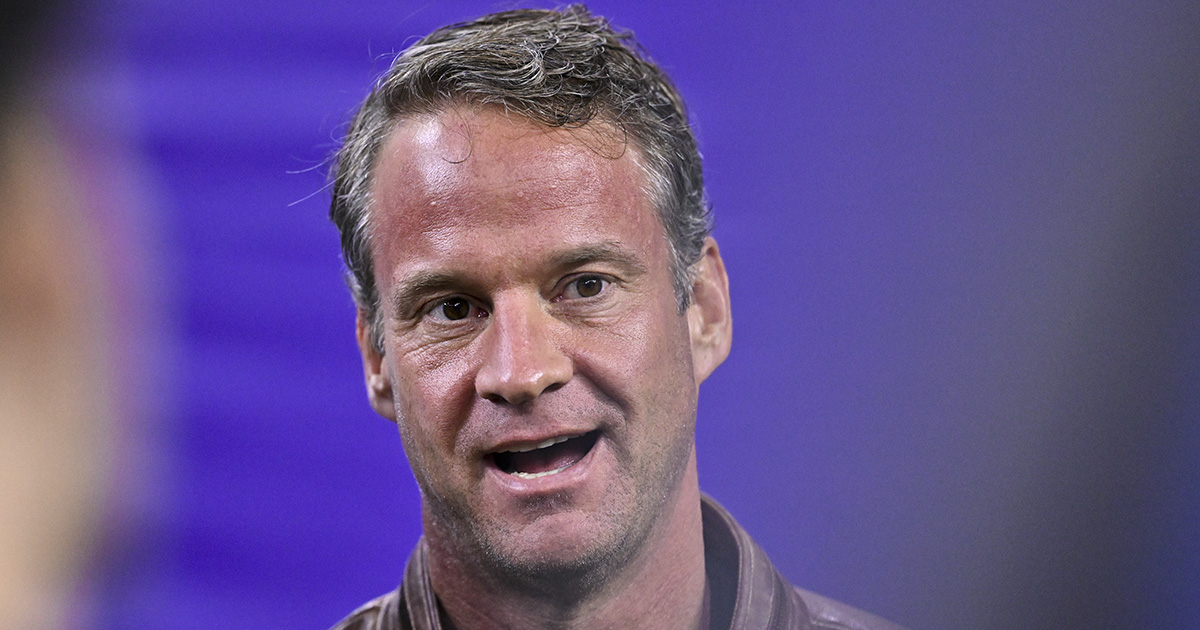
With the loss, Lane Kiffin will officially receive a $500,000 payout from LSU within 30 days of the end of Ole Miss’ campaign. That was the amount he was due from Ole Miss, per the terms of his contract, and LSU said it would honor it in his deal with the Tigers. The school included “ancillary benefits” in Kiffin’s agreement after his high-profile departure from Ole Miss.
Ole Miss’ advancement in the College Football Playoff bracket increased Kiffin’s payout, which LSU is due to pay 30 days after the Rebels’ postseason run ends. It would have gone up even more if Ole Miss won the title. Here is how the structure is written out in his deal at LSU.
- Ole Miss first-round game participation: $150,000
- Ole Miss quarterfinal appearance: $250,000
- Ole Miss semifinal appearance: $500,000
- Ole Miss CFP national championship appearance: $750,000
- Ole Miss CFP national championship win: $1 million
With Thursday’s loss, Ole Miss’ season ended in the College Football Playoff semifinal. As a result, Kiffin is due $500,000. If the Rebels pulled off a win, that figure would have grown to $750,000.
“Coach will be entitled to receive a payment in an amount equal to the amount Coach would have been entitled to receive had he remained Head Coach at Coach’s immediate prior employer and coached the prior employer’s football team through the 2025-26 CFP,” Lane Kiffin’s contract at LSU reads. “… If applicable, the payment under this section may be paid from affiliated foundation funds and shall be paid within 30 days following the prior employer’s team being eliminated from the 2025-26 CFP.”
Miami holds on to beat Ole Miss in Fiesta Bowl
Ole Miss trailed Miami 17-13 at halftime of the College Football Playoff semifinal at the Fiesta Bowl, but mounted a charge in the fourth quarter. The Rebels were able to capitalize on multiple Hurricanes miscues and took their first lead of the game, 19-17, with seven minutes to play.
Miami responded with a touchdown from Malachi Toney, but Ole Miss punched back. After a pass interference penalty extended the drive, Trinidad Chambliss hit Dae’Quan Wright for a touchdown and got the two-point conversion to make it a 27-24 Rebels lead with 3:13 to go.
The Hurricanes didn’t go down easily, though. Carson Beck ran in the go-ahead touchdown with 18 seconds left to make it a 31-27 Miami lead, giving Ole Miss one more shot. But Chambliss’ final Hail Mary fell short, sealing the Hurricanes’ victory and sending the program to the national title game.
However, Miami won’t have to go far for the championship game. The game will be at Hard Rock Stadium Jan. 19. The Hurricanes now wait to find out if they will play Oregon or Indiana.
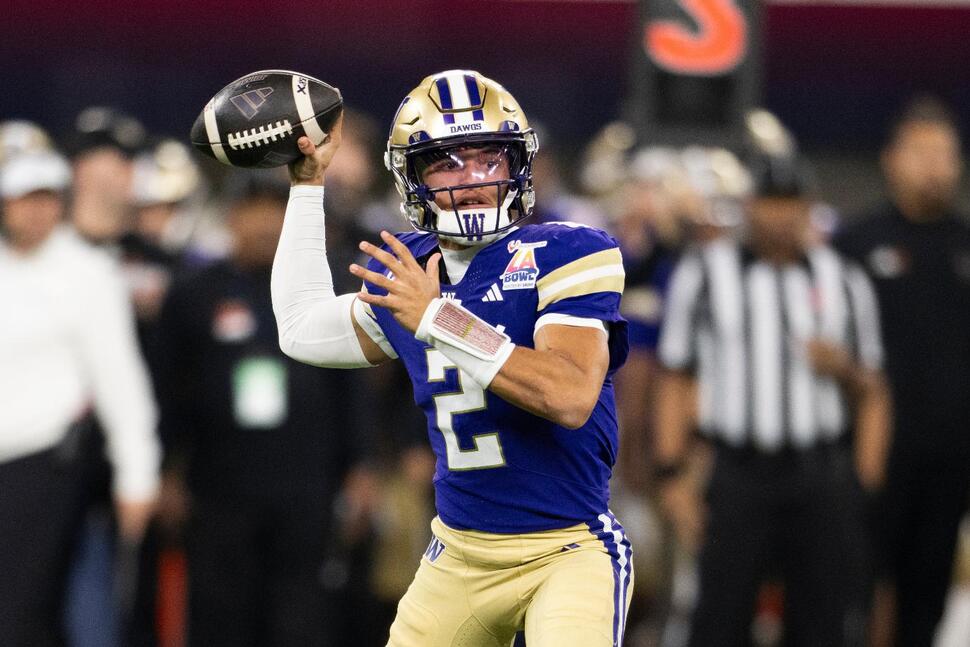
A quarterback reportedly reneging on a lucrative deal to hit the transfer portal, only to return to his original school. Another starting QB, this one in the College Football Playoff, awaiting approval from the NCAA to play next season, an expensive NIL deal apparently hanging in the balance. A defensive star, sued by his former school after transferring, filing a lawsuit of his own.
“It gets crazier and crazier. It really, really does,” said Sam Ehrlich, a Boise State legal studies professor who tracks litigation against the NCAA. He said he might have to add a new section for litigation against the NCAA stemming just from transfer portal issues.
“I think a guy signing a contract and then immediately deciding he wants to go to another school, that’s a kind of a new thing,” he said. “Not new kind of historically when you think about all the contract jumping that was going on in the ’60s and ’70s with the NBA. But it’s a new thing for college sports, that’s for sure.”
Washington quarterback Demond Williams Jr. said late Thursday he will return to school for the 2026 season rather than enter the transfer portal, avoiding a potentially messy dispute amid reports the Huskers were prepared to pursue legal options to enforce Williams’ name, image and likeness contract.
Edge rusher Damon Wilson is looking to transfer after one season at Missouri, having been sued for damages by Georgia over his decision to leave the Bulldogs. He has countersued.
Then there is Ole Miss quarterback Trinidad Chambliss, who reportedly has a new NIL deal signed but is awaiting an NCAA waiver allowing him to play another season as he and the Rebels played Thursday night’s Collge Football Playoff semifinal against Miami. On the Hurricanes roster: Defensive back Xavier Lucas, whose transfer from Wisconsin led to a lawsuit against the Hurricanes last year with the Badgers claiming he was improperly lured by NIL money. Lucas has played all season for Miami. The case is pending.
Court rulings have favored athletes of late, winning them not just millions in compensation but the ability to play immediately after transferring rather than have to sit out a year as once was the case. They can also discuss specific NIL compensation with schools and boosters before enrolling and current court battles include players seeking to play longer without lower-college seasons counting against their eligibility and ability to land NIL money while doing it.
Ehrlich compared the situation to the labor upheaval professional leagues went through before finally settling on collective bargaining, which has been looked at as a potential solution by some in college sports over the past year. Athletes.org, a players association for college athletes, recently offered a 38-page proposal of what a labor deal could look like.
“I think NCAA is concerned, and rightfully so, that anything they try to do to tamp down this on their end is going to get shut down,” Ehrlich said. “Which is why really the only two solutions at this point are an act of Congress, which feels like an act of God at this point, or potentially collective bargaining, which has its own major, major challenges and roadblocks.”
The NCAA has been lobbying for years for limited antitrust protection to keep some kind of control over the new landscape — and to avoid more crippling lawsuits — but bills have gone nowhere in Congress.
Collective bargaining is complicated and universities have long balked at the idea that their athletes are employees in some way. Schools would become responsible for paying wages, benefits, and workers’ compensation. And while private institutions fall under the National Labor Relations Board, public universities must follow labor laws that vary from state to state; virtually every state in the South has “right to work” laws that present challenges for unions.
Ehrlich noted the short careers for college athletes and wondered whether a union for collective bargaining is even possible.
A harder look at contracts
To sports attorney Mit Winter, employment contracts may be the simplest solution.
“This isn’t something that’s novel to college sports,” said Winter, a former college basketball player who is now a sports attorney with Kennyhertz Perry. “Employment contracts are a huge part of college sports, it’s just novel for the athletes.”
Employment contracts for players could be written like those for coaches, he suggested, which would offer buyouts and prevent players from using the portal as a revolving door.
“The contracts that schools are entering into with athletes now, they can be enforced, but they cannot keep an athlete out of school because they’re not signing employment contracts where the school is getting the right to have the athlete play football for their school or basketball or whatever sport it is,” Winter said. “They’re just acquiring the right to be able to use the athlete’s NIL rights in various ways. So, a NIL agreement is not going to stop an athlete from transferring or going to play whatever sport it is that he or she plays at another school.”
There are challenges here, too, of course: Should all college athletes be treated as employees or just those in revenue-producing sports? Can all injured athletes seek workers’ compensation and insurance protection? Could states start taxing athlete NIL earnings?
“What’s going on in college athletics now is trying to create this new novel system where the athletes are basically treated like employees, look like employees, but we don’t want to call them employees,” Winter said. “We want to call them something else and say they’re not being paid for athletic services. They’re being paid for use of their NIL. So, then it creates new legal issues that have to be hashed out and addressed, which results in a bumpy and chaotic system when you’re trying to kind of create it from scratch.”
Employment contracts would not necessarily allow for uniform rules with an athlete able to go to transfer when terms have been met. Collective bargaining could include those guidelines.
“If the goal is to keep someone at a school for a certain defined period of time, it’s got to be employment contracts,” Winter said.
Copyright 2026 The Associated Press. All rights reserved. This material may not be published, broadcast, rewritten or redistributed.
Photos You Should See – December 2025

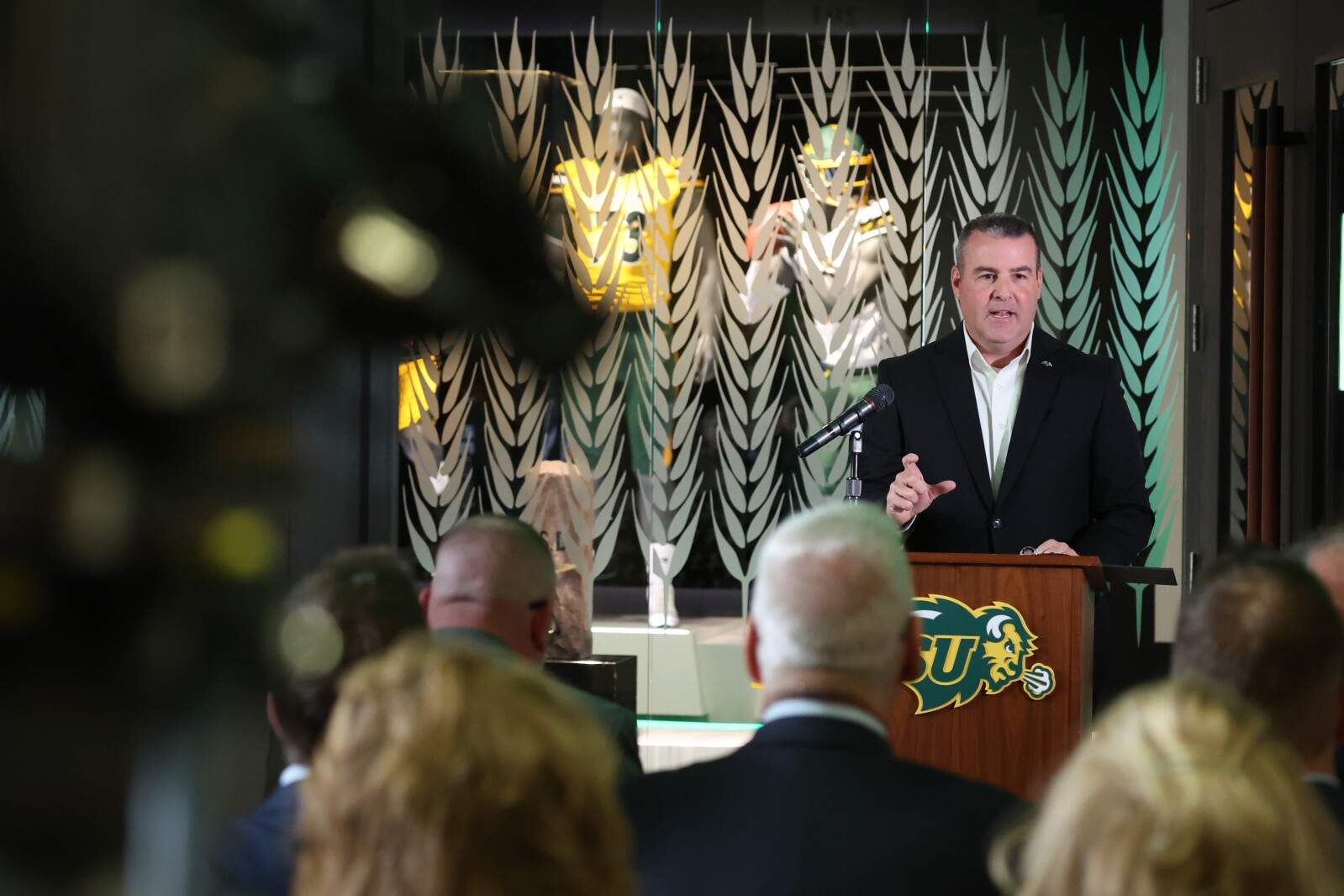
FARGO — North Dakota State athletic director Matt Larsen says “never in a million years” did he foresee his position getting into legal agreements like Name, Image and Likeness contracts with student-athletes. Well, a million years suddenly became 2026.
Another step in the different world of college football is alive and well with the Bison, whose players are required to sign either one of two contracts with the athletic department: a student-athlete participation and publicity agreement that allows the university to use the student-athlete for marketing and promotional purposes and a more comprehensive NIL license agreement that is tied to funds players receive directly from the Green and Gold Fund, the collective that pays student-athletes from the athletic department.
Almost 80% of NDSU football players are part of the latter.
Contracts like NDSU’s are most likely the standard in college football these days.
“I don’t know about every school but I think if you’re doing any sort of in-house institutional NIL, these are the types of things you need to do,” Larsen said. “There are probably varying degrees to how extensive they are. We just felt like we wanted to do it right on the front end.”
NDSU’s NIL license agreement is nine pages of legal language. For instance, there are stipulations that do not allow the athlete to enter into a third-party agreement with a competitor of an athletic department or university sponsor (which is nothing new), such as Under Armour, Scheels, Gate City Bank or Sanford Health, among others.
They are not allowed to represent industries related to alcohol, tobacco, anabolic steroids, gambling or sexually-oriented businesses.
Not all football players are paid and not all are paid the same, with preference given to starters or veterans who contribute the most on the field. The contract specifies the student-athlete have a degree of confidentiality with the exception of the student-athlete’s authorized representative, immediate family members, tax adviser or legal counsel.
The contracts between student-athletes and the university are not subject to open records, mainly because of student privacy rights like the Family Educational Rights and Privacy Act (FERPA).
“It’s a completely new world,” Larsen said. “It’s not something I ever thought I would do yet here we are.”
Larsen didn’t want to get into how enforceable the contracts are, although it’s a general assumption that a multi-million dollar agreement with a Power Four athlete is vastly different from a contract with an FCS player.

Anna Paige / The Forum
It’s doubtful a school like NDSU would legally go after a player making $10,000 in NIL as opposed to the University of Washington suggesting this week it may take legal action against quarterback Demond Williams Jr., who signed a million-dollar NIL contract last week with the school but said he was entering the transfer portal this week.
All 425 NDSU student-athletes sign the participation and publicity contract, which grants NDSU to use them for promotional purposes. There is no revenue exchanged with the parties.
Both contracts didn’t come about overnight. NDSU met with multiple lawyers, including an external Title IX attorney and the North Dakota University System assistant attorney general, over the summer in creating the agreements.
Football players get paid between two and four times a year depending on their situation with the payments of NIL funds to NDSU athletes being done through a company called Teamworks LLC, an operating system that distributes funds. The company advertises that its platform helps with tax obligations and offers tools for savings and business accounts.
Larsen calls it a general manager tool. More than that, Larsen has become more than a director of his athletic department. Add general manager to that title, too.
“A lot of our terms are all pretty standard,” he said.
Standard, in 2026.

Jeff Kolpack, the son of a reporter and an English teacher, and the brother of a reporter, worked at the Jamestown Sun, Bismarck Tribune and since 1990 The Forum, where he’s covered North Dakota State athletics since 1995. He has covered all 10 of NDSU’s Division I FCS national football titles and has written four books: “Horns Up,” “North Dakota Tough,” “Covid Kids” and “They Caught Them Sleeping: How Dot Reinvented the Pretzel.” He is also the radio host of “The Golf Show with Jeff Kolpack” April through August.

NEWYou can now listen to Fox News articles!
Demond Williams Jr., a college football player who ignited controversy by entering the transfer portal just days after signing a lucrative name, image and likeness deal with Washington, announced late Thursday that he will remain with the Huskies. The abrupt reversal comes amid reports that the university was weighing its legal options to enforce the contract.
Williams, 19, signed an NIL deal on Jan. 2 to remain as Washington’s quarterback for the 2026 season, a contract reportedly valued at around $4 million. Days later — on the same day as the memorial service for Washington women’s soccer player Mia Hamant, who died in November after a long battle with kidney cancer — Williams announced his intention to enter the transfer portal.
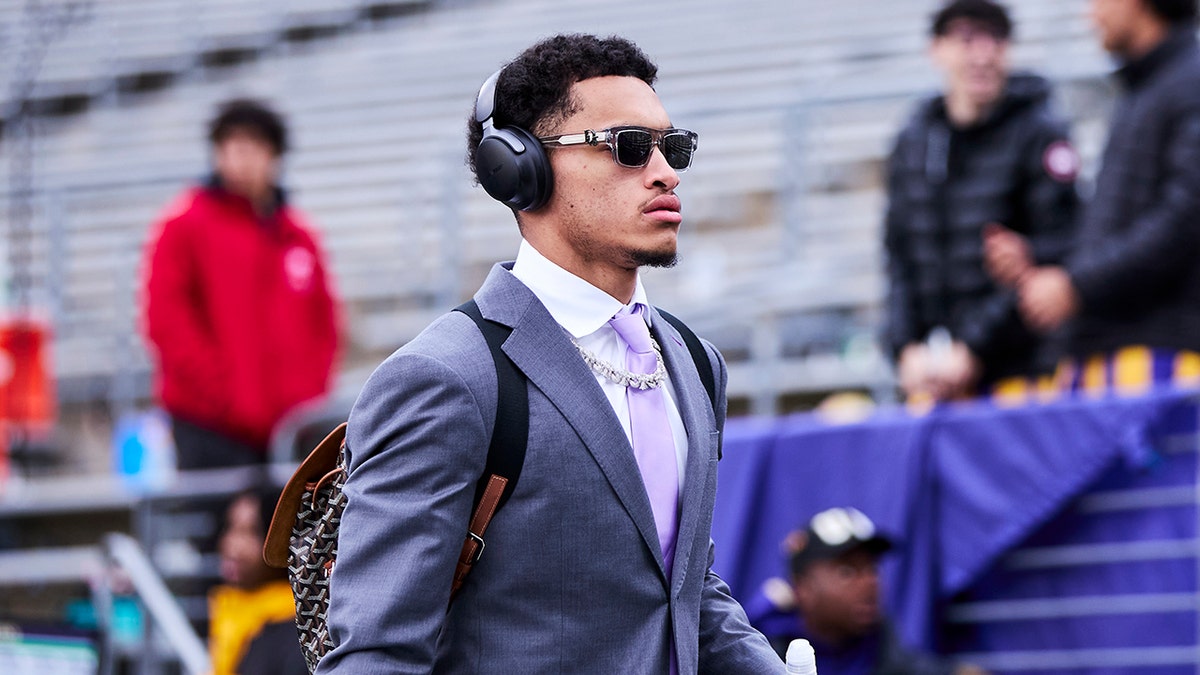
Demond Williams Jr. of the Washington Huskies arrives for the game against the Oregon Ducks at Husky Stadium on Nov. 29, 2025 in Seattle, Washington. (Blake Dahlin/ISI Photos/ISI Photos)
The decision, and the timing of Williams’ announcement, was met with both shock and backlash.
CLICK HERE FOR MORE SPORTS COVERAGE ON FOXNEWS.COM
The fallout of that announcement led Williams’ agent, Doug Hendrickson, to drop the quarterback, citing “philosophical differences.” Williams then retained Florida-based attorney Darren Heitner amid reports that the university was exploring legal action to enforce the contract.
But in a shocking reversal, Williams released a statement Thursday confirming that he would be staying with Washington.
“After thoughtful reflection with my family, I am excited to announce that I will continue my football journey at the University of Washington. I am deeply grateful to my coaches, teammates, and everyone in the program for fostering an environment where I can thrive both as an athlete and as an individual,” his statement posted to social media read.
“I am fully committed and focused on contributing to what we are building.”
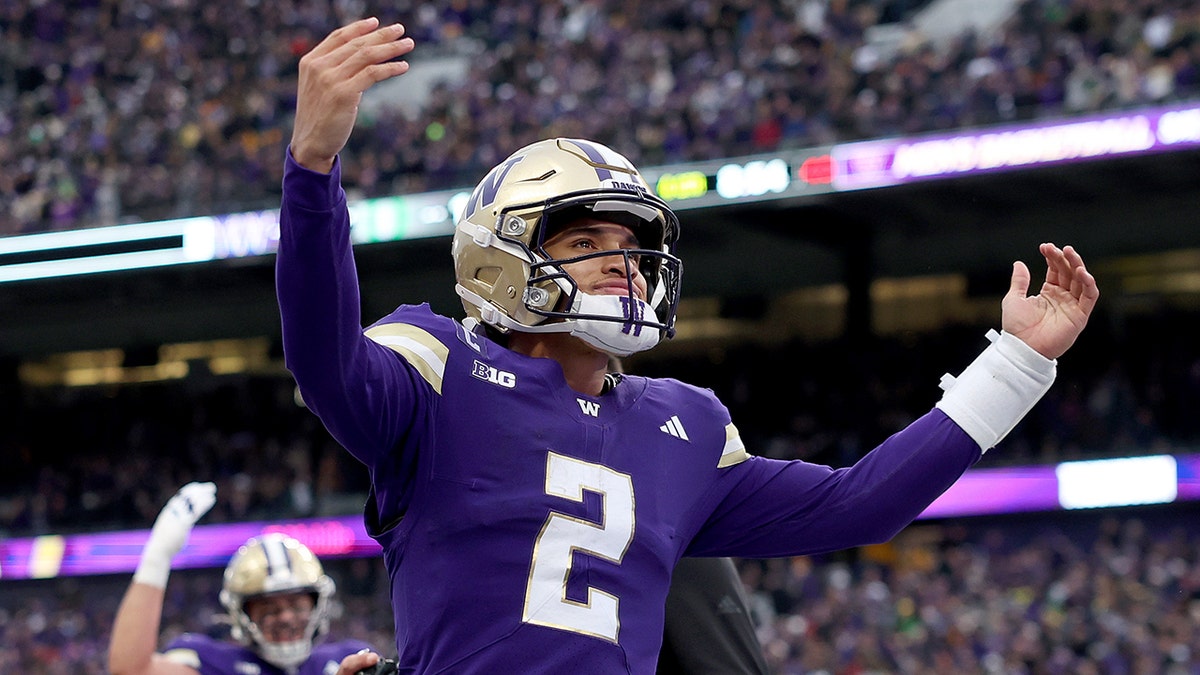
Demond Williams Jr. of the Washington Huskies celebrates a touchdown against the Oregon Ducks during the second half at Husky Stadium on Nov. 29, 2025 in Seattle, Washington. (Steph Chambers/Getty Images)
AGENT DUMPS WASHINGTON QUARTERBACK TRYING TO BREAK $4M CONTRACT DAYS AFTER SIGNING
Williams also apologized that his initial announcement “coincided with the celebration of life for Mia Hamant, a beloved member of our University community. I never intended to call attention away from such an important moment.”
In his statement, head coach Jedd Fisch acknowledged the strain caused by the situation and said the program would work with Williams to repair relationships and rebuild trust within the Husky community.
“Over the last few days, Demond and I have engaged in very honest and heartfelt conversations about his present and future. We both agree that the University of Washington is the best place for him to continue his academic, athletic, and social development,” he said in a statement provided by the university.
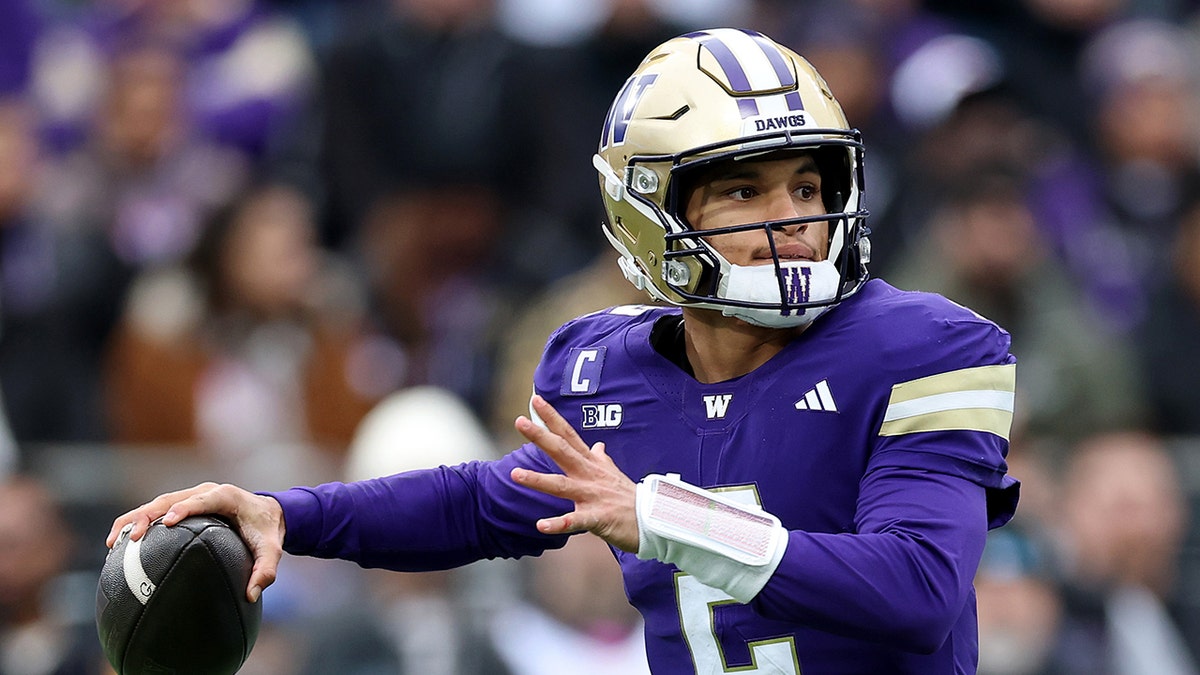
Demond Williams Jr. of the Washington Huskies passes against the Oregon Ducks during the first half at Husky Stadium on Nov. 29, 2025 in Seattle, Washington. (Steph Chambers/Getty Images)
CLICK HERE TO DOWNLOAD THE FOX NEWS APP
“I appreciate Demond’s statement. I support him, and we will work together to begin the process of repairing relationships and regaining the trust of the Husky community.”
Williams is a dual-threat quarterback who threw for 3,065 yards with 25 touchdowns and eight interceptions, while also rushing for 611 yards and six scores during his sophomore season at Washington.
Fox News Digital’s Scott Thompson contributed to this report.
Follow Fox News Digital’s sports coverage on X, and subscribe to the Fox News Sports Huddle newsletter.

From Harvard to Horned Frog. That’s the transition record-breaking Crimson quarterback Jaden Craig ’26 is making.
Craig finished his eligibility at Harvard on a down note with the 52-7 defeat to Villanova on November 29, 2025, in the Football Championship Subdivision (FCS) post-season playoffs. Having concluded his academic coursework in Cambridge, he is now enrolling at Texas Christian University (TCU) in Fort Worth, Texas, as a so-called “grad transfer,” a development first reported by the Crimson. The expectation is that Craig will be the starting quarterback for the Horned Frogs (that is, their mascot) when they kick off the 2026 season in the fall.
The move represents a step up in class for the two-time All-Ivy signal caller. TCU plays in the Football Bowl Subdivision (FBS) as a member of the Big 12, one of college football’s so-called Power Four conferences. To get there, Craig entered his name in the NCAA’s transfer portal, indicating his availability as a potential graduate transfer for an additional season of college football.
Craig quickly found a taker at TCU, whose starting quarterback in 2025, Josh Hoover, is transferring to suddenly-mighty Indiana. This past season the Horned Frogs were 9-4 and played in the Alamo Bowl, where they outlasted Southern Cal 30-27.
The graduate transfer rule was established in 2018, one of the many features of the new, Wild West atmosphere of college sports. It essentially rewards student-athletes who have run out of eligibility at their school by allowing them to get an additional year of competition at another school that will accept them. (The Ivy League does not accept grad transfers for athletic competition.)
Several former star Harvard players have taken advantage of the rule and played elsewhere, most notably kick returner Justice Shelton-Mosley ’19 (Vanderbilt), tight end Tyler Neville ’24 (Virginia), and defensive lineman Thor Griffith ’24 (Louisville). This past season, receiver Cooper Barkate ’26 became a star at Duke as a grad transfer. More players from Harvard’s 2025 team are expected to follow Craig’s lead in the coming weeks.
Andrew Aurich, the Stephenson family head coach for Harvard football, thinks the move will benefit both Craig and TCU. “I see him being able to fit in right away, whatever the dynamics are of the roster at TCU,” says Aurich. “They do a really good job of putting the quarterback in situations to be really successful, and Jaden’s a really good decision maker.”
Still, Aurich, who also has coached at the FBS level and in the NFL, knows that it may take a while for Craig to adjust. “The speed that he saw from a few defensive guys in the Ivy League,” Aurich says, “he’ll see from everyone in the Big 12.”
Craig’s grad transfer stint will be a showcase for NFL scouts who may be skeptical of his Ivy pedigree. For sure, he had done all he could on Soldiers Field. Craig was an integral member of teams that shared three Ivy championships. He established new Crimson career records with 52 touchdown passes and 6,074 yards gained through the air. Craig threw for more than 300 yards five times.
Gaudy as they are, the statistics don’t fully do him justice. This past season against Penn, he calmly directed a stirring march in the final 22 seconds to set up a game-winning field goal that clinched a share of the league title.
Craig is in the discussion for the best Harvard quarterback of all time. Perhaps only Ryan Fitzpatrick ’05 surpasses him. What is undeniable is that Craig sported the best arm in the program’s 151 seasons. In football parlance, Craig has all the throws. He can rifle the ball or prettily feather it. He can fit passes into tight windows. He can loft long bombs that drop right into the hands of streaking receivers. His rapport with favorite targets—the most notable being Barkate—has been almost eerie. He has set a high bar for his successors.
Now he moves onto the big stage, and a more lucrative one. In this new world of big-time college sports, schools can legally pay student-athletes (Harvard does not), who also can earn money through NIL (Name, Image and Likeness) deals. Some reports have FBS schools putting together financial packages worth a minimum of $1 million for starting quarterbacks. We have no idea if Craig has partaken of such booty. Then again, his concentration at Harvard was economics.
We wish him well—as potential new fans of the Horned Frogs.

TIBBETTS LUMBER PARTNERS WITH SPIRE MOTORSPORTS & MICHAEL MCDOWELL

Men’s Volleyball Unveils 2026 Schedule

$665K QB faces scrutiny after decision to stay in college football

ESPN presents LOVB’s 2026 professional volleyball season
Elmira area business owner, youth sports coach fondly remembered

Black Sports Moms is equipping, empowering parents and athletes
Fall 2025 SouthCoast High School Girls Volleyball Super Team

No. 2 UH men’s volleyball makes easy work of No. 7 Loyola Chicago

Every F1 team’s engine supplier for the 2026 season

Austin Hill & Bennett Transportation Return To RCR

T&F Set to Host Penn Select

Ross Chastain Inks Eight-Race Truck Deal with Niece Motorsports

Total bet on sports in North Carolina exceeds $7B in 2025 :: WRAL.com

Lane Kiffin due $500,000 payout from LSU after Ole Miss College Football Playoff run

Safety in Youth Sports Act (HB 2042) Voting Meeting Scheduled

SoundGear Named Entitlement Sponsor of Spears CARS Tour Southwest Opener

DeSantis Talks College Football, Calls for Reforms to NIL and Transfer Portal · The Floridian

#11 Volleyball Practices, Then Meets Media Prior to #2 Kentucky Match

Stempien to seek opening for Branch County Circuit Court Judge | WTVB | 1590 AM · 95.5 FM

Ross Brawn to receive Autosport Gold Medal Award at 2026 Autosport Awards, Honouring a Lifetime Shaping Modern F1

Princeton Area Community Foundation awards more than $1.3 million to 40 local nonprofits ⋆ Princeton, NJ local news %

Maine wraps up Fall Semester with a win in Black Bear Invitational

Nascar legal saga ends as 23XI, Front Row secure settlement

Downtown Athletic Club of Hawaiʻi gives $300K to Boost the ’Bows NIL fund

Sunoco to sponsor No. 8 Ganassi Honda IndyCar in multi-year deal

WNBA’s Caitlin Clark, Angel Reese and Paige Bueckers in NC, making debut for national team at USA camp at Duke
NASCAR, 23XI Racing, Front Row Motorsports announce settlement of US monopoly suit | MLex

Hope College Tops MIAA Commissioner’s Cup Fall Update

Nike Signs 10 LSU Athletes to NIL deals

Badgers news: Wisconsin lands 2nd commitment from transfer portal





-
 Sports2 weeks ago
Badgers news: Wisconsin lands 2nd commitment from transfer portal
-

 Rec Sports7 days ago
Five Youth Sports Trends We’re Watching in 2026
-

 Sports3 weeks ago
Is women’s volleyball the SEC’s next big sport? How Kentucky, Texas A&M broke through
-
 Sports2 weeks ago
Kentucky VB adds an All-American honorable mention, loses Brooke Bultema to portal
-

 Rec Sports3 weeks ago
NBA, Global Basketball Community Unite for World Basketball Day Celebration
-

 Motorsports2 weeks ago
Dr. Patrick Staropoli Lands Full-Time O’Reilly Ride with Big Machine Racing
-
 NIL3 weeks ago
$2.1 million transfer portal QB predicted to join College Football Playoff team
-

 Motorsports3 weeks ago
NASCAR, IndyCar, and F1 Share These Race Days in 2026
-

 Sports2 weeks ago
Texas A&M volleyball’s sweep of Kentucky attracts record viewership
-

 Motorsports2 weeks ago
BangShift.com IHRA Acquires Historic Memphis Motorsports Park In Millington Tennessee. Big Race Weekend’s Planned For 2026!