Connect with us
https://yoursportsnation.com/wp-content/uploads/2025/07/call-to-1.png

Sports

Wales Euro 2025

Published

on

Wales Euro 2025

More than 30 years have been and gone. No one has seen the letter. But those in Wales know of its legend.

In 1992, three women — Laura McAllister, Michele Adams and Karen Jones — penned a missive to Alun Evans, the Football Association of Wales (FAW) general secretary, requesting an audience. He duly accepted.

Advertisement

The footballers walked into Evans’ plush Cardiff office in the centre of the Welsh capital with anger. They walked out with a formally recognised Wales women’s national team.

Thirty-two years later, Wales are competing at Euro 2025, their first major tournament. It would not have happened without ‘The Letter’.


Lore such as this is ever-changing. In the case of women’s football, where archives have been reliant on oral history due to a lack of resources, fact-checking is a matter of democracy.

Neither McAllister, Adams, nor Jones can remember how they were summoned to Evans’ office, when that took place, the exact date the letter was written and, sometimes, who actually wrote it. Adams and Jones maintain with unerring conviction that it was McAllister, their former Cardiff City team-mate.

“It’d be amazing if you could find it,” McAllister, once the national team captain and now a vice president of UEFA’s executive committee, tells The Athletic at full time of Wales’ 2-1 defeat against Denmark in the Nations League at Cardiff City Stadium in April. “Alun kept almost everything.”


Aberystwyth is a small coastal town in west Wales (Hawlfraint y Goron/Crown copyright, Cymru Wales)

On a June afternoon, the smell of cramped humanity during a stunning four-hour journey wafts through a late train to Aberystwyth, a small coastal town on Wales’ western flank that will soon be home for the next 72 hours as The Athletic goes letter hunting.

Evans, who died in 2011 aged 69, allegedly kept (nearly) every piece of correspondence from his time as general secretary between 1982 and 1995, along with much that bookended him.

The boxes carrying that paperwork are known colloquially as the ‘Alun Evans Papers’. They’re housed in the National Library of Wales, a hulking grey monolith that hovers upon a hilltop overlooking the town, Mount Olympus-style.

No one has sifted through the boxes. No one knows what lies inside but, apparently, there’s a letter.


The National Library of Wales in Aberystwyth has 1,900 cubic meters of archive (National Library of Wales)

Before my visit, a library spirit guide named Martin explains the decorum:

  1. Present two forms of identification and printed permission from the three women to search for (and if found, photograph) the letter.
  2. No food, drink, bags or jackets permitted inside the library’s reading rooms.
  3. Absolutely nothing not already in the public domain (ie, anything beyond FAW committee minutes) can be photographed or written about from Evans’ boxes.

“I certainly hope,” Martin wrote in an email 24 hours before my trip, “after all of this, and your travelling, all to trawl through the boxes of the Alun Evans Papers, that you do indeed manage to trace the letter in question. I accordingly wish you every success in this endeavour.”


In 1972, Adams graced the back pages of the South Wales Echo newspaper for the second time. The first, three years earlier, had been a matter of innocent corruption: an 11-year-old girl unaware she was violating the 1922 law barring her from playing football in Wales.

The second, however, was an indictment. In a back-page triptych featuring a female long-distance lorry driver and a female shop owner, Adams’ face stared back as the third avatar: 14 years old, her hair tucked conspiringly in the upturned collar of her shirt amid a plague of boys playing football.

Advertisement

“The headline was something like ‘The Modern Woman’,” recalls Adams. “And there was this dirty photo of me in the Barry Boys’ League. I was banned.”

A month later, an Irishman named John J Rooney stood on her family’s stoop with a lifeline. Two years earlier, the FAW, the country’s governing body, had lifted its ban on women’s football (but enacted a ban on girls playing with boys). Rooney had a women’s team. He was putting together a league and, eventually, a Wales national team. He wanted Adams.


The North Reading Room is library perfection. White ceilings high and arching. Wood desks adorned with small gold lamps with emerald tops. Everything is whispered. Including this: “There are 37 boxes.”

In the librarian’s shaking arms, a charcoal box big enough for a two-tiered wedding cake.


A picture of one of the boxes containing Alun Evans’ paperwork (Megan Feringa)

Adams remembers the rain: biblical, a baptism in the most literal sense. Three years after Rooney’s first visit to her family home, she stood on a pitch-turned-bog in Llanelli, Wales, losing 3-2 against the Republic of Ireland in the national team’s first match, in front of a crowd of 3,500.

Her soggy kit clung beyond her knees, borrowed from Swansea City’s academy. The FAW refused to supply the women with kits bearing the FAW crest, setting into motion the team’s two-decade battle for recognition.

“I wouldn’t call it a battle,” laughs Jones. “Is it a battle when they don’t even look at you sideways?”

A word Adams and Jones prefer to use is “deaths”, or the manifold times the national team and domestic clubs folded between 1973 and 1992 due to lack of funds, resources, willpower from volunteers or a semblance of infrastructure for the domestic game.

By 1992, the women’s national team had all but evaporated. A resurrection looked impossible.


Laura McAllister, Karen Jones and Michele Adams pictured in their Wales kit (Karen Jones)

The Alun Evans Papers vacillate between a harmonised treasure trove and a coffee-stained bottomless pit of various committee minutes as far back as 1886.

I’m not technically allowed to say any more. But box No 8 houses a binder dedicated to the Welsh ancestry of nine-cap Wales international and Hollywood hardman Vinnie Jones.


In 1992, Adams was Cardiff City Ladies’ tigerish midfielder. The then-33-year-old was also the team’s minibus driver.

Such was the life of Welsh women’s teams in 1991: schlepping to English leagues across the border on the weekend (in Cardiff City Ladies’ case, Division 1 of the South West Women’s league), enduring six-hour round trips for organised competition.

Advertisement

Beside Adams at the front of the bus was Jones, the club’s veteran goalkeeper, map reader and the one running the women’s team with Adams. Between them was McAllister, a 27-year-old midfielder pursuing a doctorate in political science at Cardiff University.

The rest of the team rode in the back.

“One night we’re driving home after a match,” says Adams. “Laura slams her textbook shut, starts asking about the FAW.”

The outburst inspired motherly glances from Adams and Jones, who regaled McAllister before with sorry tales of the past two decades. But McAllister’s ire was rekindled in 1991, when the summer’s European Championship was officially recognised by UEFA, European football’s governing body, before the first Women’s World Cup was held in China in November.

“And Laura is Laura,” Adams says. “She doesn’t drop things.”

“I just couldn’t believe how much Karen and Michele put into establishing the club’s infrastructure all by themselves,” says McAllister, comparing their efforts to those of London clubs she came to know while playing for Millwall Lionesses during her undergraduate studies at the London School of Economics two years earlier.

“I remember thinking, ‘Why don’t we go back to the FAW and show them how professional this is? The worst they can do is continue to not support us’.”

By the time the minibus reached Wales’ border, a letter was written.


Cardiff City Ladies, with Karen Jones pictured top row in the goalkeeper’s kit (Karen Jones)

“I believe it has a Cardiff City Ladies letterhead, if that helps.” McAllister’s voice note plays in my ears as I haul box No 29 to my desk.

My eyes burn. Then, my heart skips.

On the top: a letter from McAllister, addressed to Evans — but it’s 10 years too late. Beneath it, dissertations on women’s sport governance, and women’s sport and reproductive health; a literary analysis on the “societal value of women’s sport” from 1991; copies of FAW surveys for “club interest in women’s football” from 1995; invitations to join the new South Wales Women League in 1999; letters upon letters from McAllister, Jones, Adams and others concerning women’s football.

Advertisement

Snagged inside a stack of FAW financial records, a letter addressed from Jones to Evans in 1996, in which Jones calls Evans “a long-time friend, always our ally”.

The letter is written on paper with Cardiff City Ladies letterhead. Then, the box’s bottom laughs at me.


The carpet is what the three women remember. It’s what everyone who crept into the FAW’s internal sanctum in the 1990s remembers. Crimson, luxurious, emblazoned every few metres with the governing body’s crest, a ginormous roaring dragon.

“They must have sold an arm and a leg for those rugs,” says Adams. “At least.”

“And here we were, begging for handouts,” Jones says.

Situated on Westgate Street, across the road from Cardiff Castle, the former FAW headquarters was described by many as stubbornly Victorian, dripping in an unyielding homage to the past.

“It was not a place for progression,” McAllister says. “Or women.”

But three women stood in front of Evans’ mahogany desk. None had brought notes. No pitch or presentation was prepared. “We were just three angry, angry women,” says Adams. “That office would never have encountered the likes of us before.”


The librarian behind the desk offers me a smile. It is 9:30 am, day three of my mission. Behind her, a trolley of boxes forms a Jenga tower.

“The rest are in that closet.”


The National Library of Wales is home to six million books and newspapers (Hawlfraint y Goron/Crown copyright (2022) Cymru Wales)

Not feisty, but a word of that ilk. “Persuasive, passionate…” Helen Croft reels off synonyms until something sticks. “I can remember Alun saying something about those angry women after their meeting. That they were women to be reckoned with. And they were. They still are. Really, Alun probably felt he didn’t have much of a choice.”

In the Legend of the Letter, Croft is a forgotten and unheralded main character.

In 1991, the former head of operations at the Football Association and now a grassroots mentor with UEFA left a teaching job at the University of Leeds to join the FAW as an administration assistant, offering executive support to Evans. Not long after her arrival, Croft remembers a letter.

Advertisement

“Alun handed it to me. He asked, ‘So? What do you think?’.”

Croft, who played football for Cardiff City Ladies’ rivals Tongwynlais with a 14-year-old Jayne Ludlow (Arsenal treble winner and future Wales manager) and recalls having to change for matches and training sessions in the adjacent portacabins rather than use the club’s male facilities, represented an unorthodox sounding board for a governing body still wrestling with a reputation as an “old boys’ club”.

“Alun knew about my passion for women’s sport,” says Croft. “He also would’ve known I was politically naive. I was going to tell him the right thing to do for women, for the country.”


An unspecified number of weeks after McAllister, Adams and Jones walked into Evans’ office, they say Evans turned up unannounced at Ely’s Trelai Park, Cardiff City Ladies’ home stadium, for a match. His wife and two sons were in tow.

The following week, he attended a second match, this time with FAW treasurer Des Shanklin. The men stood. They nodded. They commented on passing angles.

“Alun thought the football was going to be very amateurish,” McAllister says. “He told me later he was more impressed by how well organised Cardiff Ladies seemed to be. That’s why he came to watch. He wanted to see if our professionalism reflected on the pitch.”


Aberystwyth’s promenade (Hawlfraint y Goron/Crown copyright, 2022, Cymru Wales)

At 3:55 pm on my third day, I put the lid on the final box. I am letterless. I consider crying.

Instead, I walk a mile down to Aberystwyth’s promenade, just out of sight of the library. Amid a xylophone of pastel beach-front buildings, the old Belle Vue Royal Hotel is an anaemic yellow. Its front doors are boarded up, its windows sealed, closed indefinitely since a 2018 fire ripped through a neighbouring building.

In August 1993, the hotel hosted an executive committee meeting in which Evans declared the FAW would take “financial responsibility” for the following month’s Women’s Euro 1995 qualifier against Switzerland, the team’s first competitive match with FAW recognition.


Croft does not deny Evans’ altruism. But in 1991, a collision course was set into motion.

In October of that year, minutes in one of the boxes from the FAW’s finance and general purposes committee describe a meeting with representatives from “women’s football in Wales to consider whether any support should be given to that aspect of the game”.

Advertisement

It is the first mention of women’s football in official FAW correspondence, the second arriving the following September when the FAW youth and development committee agreed that a “more detailed survey of the situation be undertaken”.

By 1993, FIFA began requiring national associations “to control all aspects of football, including women’s football”, as the youth and development committee noted in its January 1993 meeting minutes.

In the same meeting minutes, nine recommendations concerning women’s football are listed, including the “reformation” of the women’s national team under the FAW’s direct control.

A tenure peppered with controversy, including the hasty creation of the League of Wales, now known as the Cymru Premier, amid questions of Wales’ autonomy as a footballing nation given that some men’s clubs play in the English pyramid system, at mention of legacy Croft compares Evans’ tenure to the Mayor of Casterbridge, the 1886 tragic Thomas Hardy novel about a powerful man whose past comes to haunt him.

“Alun was a great advocate for the women’s game,” says Croft, who was responsible for organising the Euro 1995 qualifying campaign and subsequently appointed head of women and girls’ football.

“He was brave. He was the inspiration for it, but then, I was the worker who made it happen. And I don’t think it would have happened without the letter from the girls, without it triggering in him some wish to tackle that inequality.”

It is a common thread that runs through women’s football in Wales and around the world: the need for powerful men to open doors but the onus on women to demand more doors be opened.

The FAW’s recognition of the women’s national team was not a sunset moment. Recommendations from Croft for a full-time national team head coach, a goalkeeping coach and a video analyst were rejected in 1997, though infrastructure for the domestic game was approved.

Advertisement

As early as 1998, Jones voiced interest in being a women’s football representative on the FAW council. Not until 2013 was a woman elected to the council.

In 2003, the women’s senior team were removed from qualifiers for Euro 2005 due to budget cuts amid the men’s Euro 2004 qualifying campaign, setting the women’s team back at least a decade.

Even so, Adams and Croft recall the Euro 1995 qualification campaign with welcomed lucidity. Their first match against Switzerland was watched by 346 people in Cwmbran. A seven-day trek through Bielefeld (Germany), Effretikon (Switzerland) and Zagreb (Croatia) followed. Against Germany, Wales lost 12-0 twice. Not a single point from six matches was won.

“I think about that now,” Croft says. “Those years with Wales were the most enjoyable of my career. It was a blank page. It was much simpler than it is now. But you know, we had to start somewhere.”

(Top photo: Karen Jones; Illustration: Kelsea Petersen / The Athletic)

Continue Reading
Click to comment

Leave a Reply

Your email address will not be published. Required fields are marked *

Sports

Julia Skari ‘can’t imagine’ not being with Northern State – Jamestown Sun

Published

on


JAMESTOWN — Julia Skari has a history with excellence when it comes to athletics.

Northern State University is hoping history keeps repeating itself.

Skari, a Jamestown High School Class of 2025 graduate, is currently training and competing for the Northern State University track and field team.

“I was so excited to go to college and have a little bit of change,” Skari said. “I knew going into college I wouldn’t know anyone since no one from Jamestown went to NSU (Northern State University), so I was a bit scared for that, but I was excited to meet new people. … Within the first week at Northern State it was clear that I made the best academic and athletic decision, I can’t imagine not being there.”

Skari began running track in 2021 as an eighth grader. She is a five-time state placer in the 300 hurdles and a two-time state placer in the 100 hurdles. Skari also competed in triple jump and the sprint relays when she was with the Blue Jays.

In her senior year, Skari was crowned the WDA champion in the 100 hurdles and 300 hurdles at the West Region Track and Field Meet. Skari clocked times of 15.59 and 45.62 seconds, respectively, in her races. The senior sprinter also placed eighth in the 100-meter dash and fifth in the 200.

At State, Skari placed third in the 300 hurdles, posting a season-best time of 45.35 seconds. In the 100 hurdles, the Blue Jay senior finished second 0.38 seconds behind Fargo Davies’ Kate Laqua who crossed the finish line at 14.38 seconds.

Her resume made her a natural recruit target for Northern State’s track coaches. The Wolves announced Skari’s signing via social media in May. Skari is planning to compete in both the 100- and 400-meter hurdles. The freshman said she is also hoping to compete in some relays but is open to wherever her coaches put her.

“It is both nervewracking and exciting to be a freshman,” Skari said. “I have a lot to learn, improve and build on throughout this year and the following years. Being a freshman is nervewracking because I know I have to prove myself to not only coaches but my teammates. It’s exciting because it’s a fresh new start with whole new experiences with a new team, coaches and level of competition. The upperclassmen are so willing to take time, critique my form and give advice.”

Northern State opened the indoor track and field season on Nov. 24 with the school’s Maroon vs. Gold Meet. Skari and the Wolves competed again on Dec. 5 at South Dakota State University’s Holiday Meet.

“Coming into my first collegiate meet I was very nervous,” Skari said. “The thought of competing against not only (Division) two athletes but also (Division) one made the nervous go up more. After I competed in my first event … I had a huge sign of relief realizing it’s not much different then high school, just more teams and more competitive.”

IMG_1640.jpeg

Julia Skari, second from left, is enjoying her first season with the Northern State University track and field team.

Contributed / Julia Skari

In her first meet, Skari competed in the 60-meter hurdles and the 4-by-400 meter relay.

“For my first meet I knew I just had to get my nervousness out of the way so my standards weren’t very high besides I just wanted to get my first meet done and get the feeling of how the meets feel,” Skari said. “My time in the 60-meter hurdles was almost my PR (personal record) in high school which means I only plan on getting faster.”

Skari’s continual progression is a testament to how hard she trains with her team.

Skari said as a team, the Wolves train Monday through Saturday with days switching either from a hurdles to sprinting to cross-training on her own time. The team lifts on Mondays, Tuesdays and Thursdays.

“I train hurdles on Monday and Thursday,” Skari said. “Tuesday is normally a sprinting workout which is our hard workout. On Wednesday and Saturday we train on our own and on Fridays we switch from sprinting or either hurdle work again. We normally practice around three or three and a half hours a day when we lift and practice.

“Workouts became more intense than high school, so it definitely was a good change,” she said. “College track differs from high school track because practices started back in the beginning of September and it lasts til May. It takes more time than any of my other sports did because it is a bigger commitment.”

The Wolves’ next indoor meet is scheduled for Jan. 15 against the University of Jamestown.

Northern State’s conference indoor track and field season will conclude at the end of February. The NCAA Division 2 Indoor Championships will be held March 13-14. The outdoor season will begin with a three-day invite in Myrtle Beach, South Carolina.

“No matter how I do (this season), I know I can always get better but I think my main goal is to just train hard, believe in myself and give it my best effort,” Skari said. “I think that’s would make me have a successful first year of colligate track and field athlete. In order for me to be at my best I need to have a positive mindset and be willing to do the hard stuff.”

Katie Ringer

Katie Ringer is a sports reporter for the Jamestown Sun. Katie joined the Sun staff in the summer of 2019 after graduating from the University of Wisconsin Eau Claire with a degree in journalism. She can be reached by email at kringer@jamestownsun.com or by phone at 701-952-8460.


Link

Continue Reading

Sports

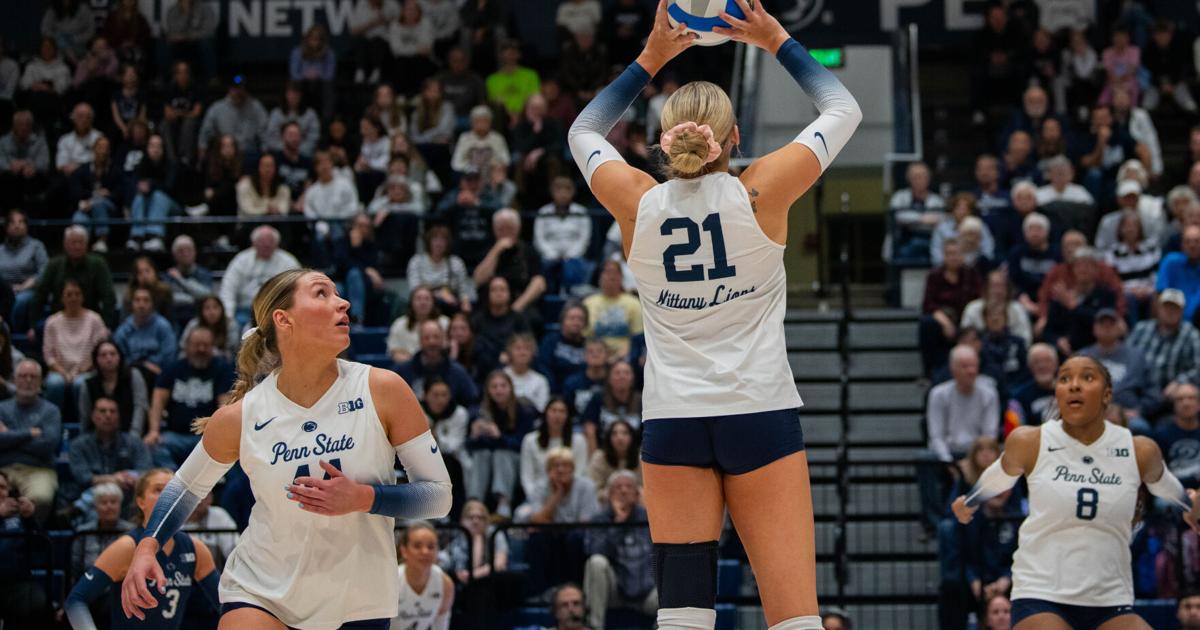
Former Penn State setter Izzy Starck announces transfer to Pitt | Penn State Volleyball News

Published

on


Izzy Starck has found a new home.

The former Nittany Lion will stay in the Keystone State as she has transferred to Pitt.

Starck was Freshman of the Year, an All-American and won a national championship in her lone full season with the blue and white.

Starck will now face Penn State at least once a season with the Panthers, in the annual Keystone State Rivalry match.

MORE VOLLEYBALL COVERAGE


Penn State women’s volleyball drops out of final AVCA rankings

It’s a rare occurrence for Penn State in the rankings.

If you’re interested in submitting a Letter to the Editor, click here.


Link

Continue Reading

Sports

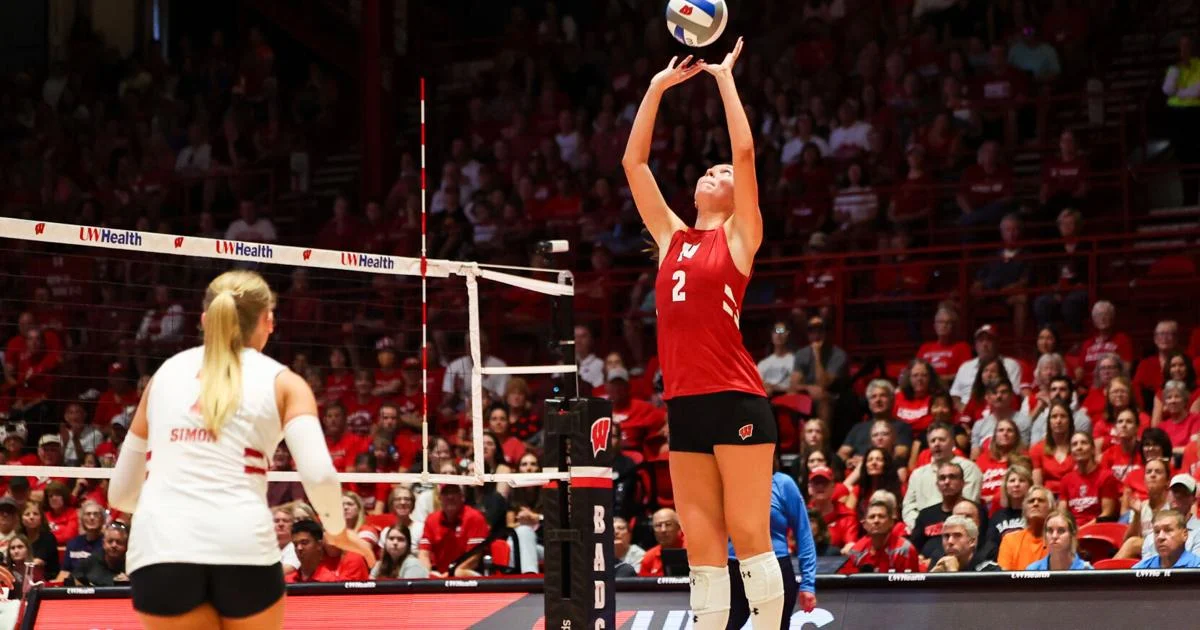
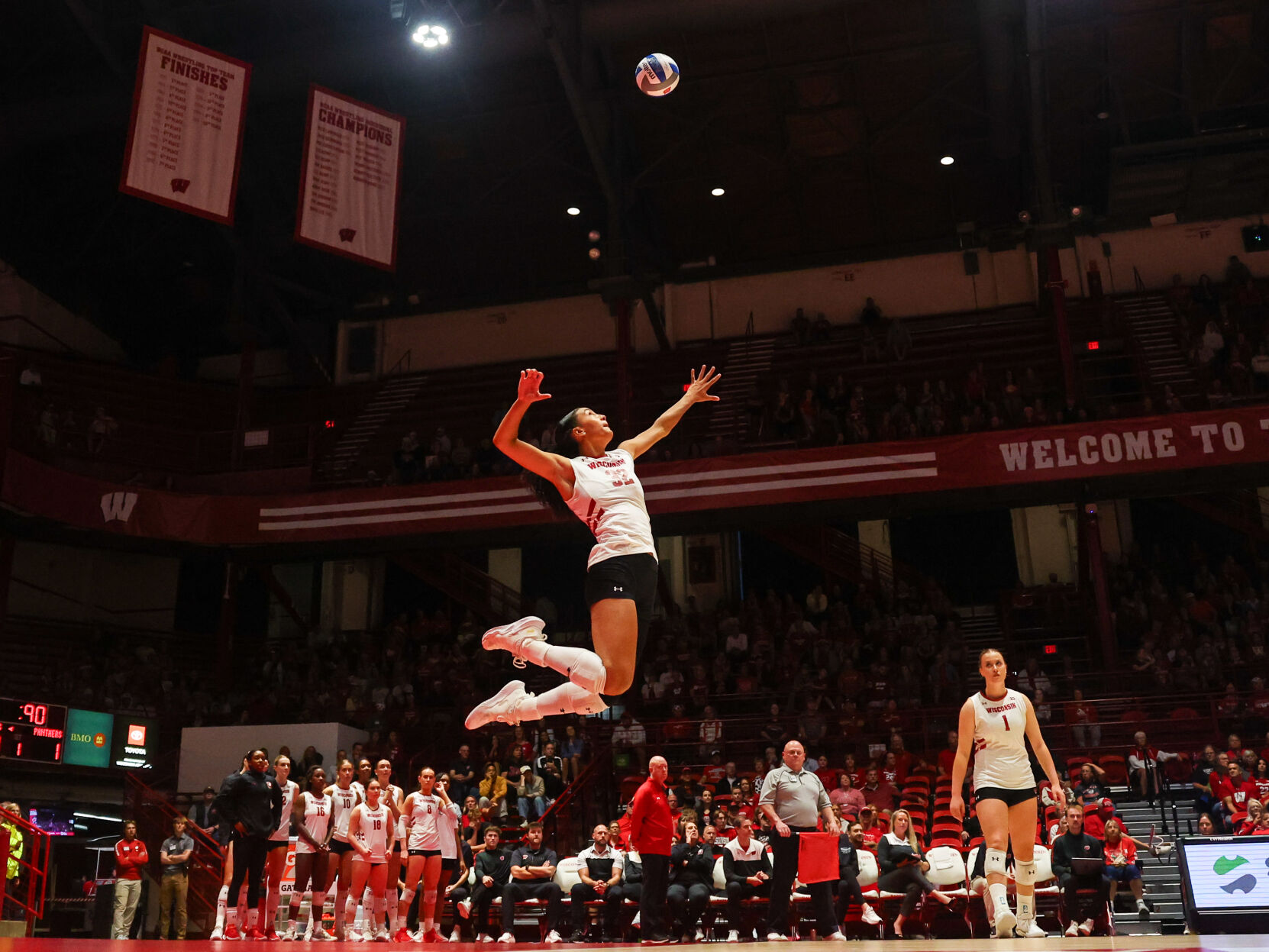
Setter Isabelle Hoppe flips from Pittsburgh to Wisconsin volleyball

Published

on


Dec. 24, 2025, 5:15 a.m. CT


Link

Continue Reading

Sports

Patriots volleyball makes return to state tournament

Published

on


The Homewood High School volleyball team finished as one of the top eight teams in Class 6A this fall, making its appearance at the state volleyball tournament Oct. 28 at the Birmingham CrossPlex.

The Patriots matched up with a stout Saraland team in the opening round of the tournament, falling in three sets to close the season with a 25-20 record.

Homewood was in the state tournament for the first time since 2021. The Patriots won three straight matches in the North Super Regional Tournament last week to advance.

“I’m so grateful for our community, our kids and for this to be the new standard; to expect to be here and want to be here,” Homewood head coach Grace Burgess said. “The kids worked so hard with that in mind the whole season, but without talking too much about it. They believe in themselves and they’re confident kids.

Saraland won the state tournament match in straight sets: 25-20, 25-21, 27-25. The Spartans put forth a tremendous rally to draw even late in the third set and eventually prevailed.

For Homewood, Mary Ellis Jarmon led the offense with 12 kills, adding a pair of aces. Walker Binkley added seven kills and four blocks. Kamryn Coleman directed things with 34 assists, also compiling eight digs and four aces. Sarah Johnson nearly had a double-double, finishing with nine kills and nine digs. Addison Wood had six digs and an ace as well.

The Patriots will conclude their season as the only team from Alabama to knock off 7A favorite McGill-Toolen. They also defeated 6A semifinalist Saraland during the year. They won the area championship, finished runner-up at regionals and advanced to the gold bracket in all but one of their tournaments this year.

“The season was up and down, but they never stopped working when things weren’t going well,” Burgess said. “They didn’t listen when people said they couldn’t accomplish anything. The fact it worked out for them makes me really happy for them.”


Link

Continue Reading

Sports

Wisconsin Badgers volleyball transfer portal tracker 2025-26

Published

on


The University of Wisconsin volleyball program saw significant transfer portal action as soon as the Badgers’ season ended.

kAm%@ 96=A 72?D <66A FA H:E9 2== E96 492?86[ 96C6VD J@FC @?6\DE@A 9@>6 7@C 2== E96 EC2?D76C A@CE2= ?6HD DFCC@F?5:?8 E96 (:D4@?D:? G@==6J32== AC@8C2>]k^Am

k9amx}i xD236==6 w@AA6[ D6EE6Ck^9am

kAmxD236==6 w@AA6 :D?VE 4@>:?8 7C@> E96 EC2?D76C A@CE2= D:?46 D96VD 2 >6>36C @7 E96 4=2DD @7 a_ae[ 3FE H6VC6 255:?8 96C D:?46 D96VD 2 ?6H 255:E:@? E@ E96 AC@8C2>] w@AA6 2??@F?465 @? s64] ab E92E D96 H2D 7=:AA:?8 96C 4@>>:E>6?E 7C@> !:EED3FC89 E@ (:D4@?D:?]k^Am

People are also reading…

kAmk2 9C67lQ9EEADi^^32586C6IEC2]4@>^DA@CED^G@==6J32==^C64CF:E:?8^H:D4@?D:?\G@==6J32==\7=:AD\9:89=J\C2?<65\D6EE6C\7C@>\3:8\E6?\C:G2=^2CE:4=60`7bb4f55\_ecd\cced\2hd7\6dgbf3g`ch7h]9E>=Q E2C86ElQ03=2?@C6 23@FE w@AA6k^2m]k^Am

k9am~&%i &?2 ‘2;28:4[ @FED:56 9:EE6Ck^9am

kAm&?2 ‘2;28:4 3642>6 E96 7:CDE DE2CE6C E@ 2??@F?46 96C :?E6?E:@? E@ =62G6 E96 q2586CD] $96 >:DD65 =2DE D62D@? H9:=6 C64@G6C:?8 7C@> 2? pr{ :?;FCJ[ E96? A=2J65 2 4CF4:2= C@=6 😕 E9:D D62D@?VD }rpp %@FC?2>6?E] $96 2??@F?465 s64] aa @? x?DE28C2> 96C 564:D:@? E@ 6?E6C E96 EC2?D76C A@CE2=] $96 H:== 92G6 E9C66 J62CD @7 6=:8:3:=:EJ C6>2:?:?8]k^Am

kAmk2 9C67lQ9EEADi^^32586C6IEC2]4@>^DA@CED^G@==6J32==^H:D4@?D:?\G@==6J32==\=@D6D\DE2CE6C\H9@\D9:?65\5@H?\E96\DEC6E49\E@\EC2?D76C\A@CE2=^2CE:4=60c7ae5b`_\e_ff\c756\24hd\f5gf36__`hd6]9E>=Q E2C86ElQ03=2?@C6 23@FE ‘2;28:4k^2m]k^Am

k9amx}i tG2 %C2G:D[ @FED:56 9:EE6Ck^9am

kAm$@A9@>@C6 tG2 %C2G:D 62C?65 uC6D9>2? @7 E96 *62C 9@?@CD 😕 E96 q:8 (6DE r@?76C6?46 =2DE J62C 2?5 9@?@C23=6 >6?E:@? @? E96 p’rp’D !24:7:4 #68:@? 2H2C5D =:DE 2E &r $2?E2 q2C32C2] $96 2??@F?465 s64] aa @? x?DE28C2> 96C 564:D:@? E@ ;@:? E96 q2586CD] $96 H:== 92G6 EH@ J62CD @7 6=:8:3:=:EJ C6>2:?:?8]k^Am

kAmk2 9C67lQ9EEADi^^32586C6IEC2]4@>^DA@CED^G@==6J32==^H:D4@?D:?\G@==6J32==\=2?5D\42=:7@C?:2\@FED:56\9:EE6C\7C@>\EC2?D76C\A@CE2=^2CE:4=60h22e_a_a\7`cc\c5bg\2cga\`ba7bd4e2h3e]9E>=Q E2C86ElQ03=2?@C6 23@FE %C2G:Dk^2m]k^Am

k9amx}i y26=2 pF8FDE6[ >:55=6 3=@4<6Ck^9am

kAm%96 7:CDE 255:E:@? E@ E96 q2586CD C@DE6C 42>6 7C@> E96 u=@C:52 v2E@CD 😕 y26=2 pF8FDE6[ H9@ 62C?65 E9:C5 E62> p==\p>6C:42? 9@?@CD E9:D D62D@?] $96 2??@F?465 s64] a_ @? x?DE28C2> 96C 564:D:@? E@ ;@:? E96 q2586CD] $96 H:== 92G6 EH@ J62CD @7 6=:8:3:=:EJ C6>2:?:?8]k^Am

kAmk2 9C67lQ9EEADi^^32586C6IEC2]4@>^DA@CED^G@==6J32==^H:D4@?D:?\G@==6J32==\=2?5D\2==\2>6C:42?\7C@>\EC2?D76C\A@CE2=\E@\C6A=246\56A2CE:?8\DE2C^2CE:4=60a5d6cccg\_bbe\ce2c\2c53\d625db4`a`hd]9E>=Q E2C86ElQ03=2?@C6 23@FE pF8FDE6k^2m]k^Am

k9am~&%i %C:?:EJ $9255\r6C6D[ @FED:56 9:EE6Ck^9am

kAmx?;FC:6D =:>:E65 E96 492?46D 7@C D@A9@>@C6 %C:?:EJ $9255\r6C6D[ 3FE D96 5:5 62C? A=2J:?8 E:>6 5FC:?8 E96 q2586CDV A@DED62D@? CF?] $96 2??@F?465 s64] `h @? x?DE28C2> 96C 564:D:@? E@ 6?E6C E96 EC2?D76C A@CE2=] $96 H:== 92G6 EH@ J62CD @7 6=:8:3:=:EJ C6>2:?:?8]k^Am

kAmk2 9C67lQ9EEADi^^32586C6IEC2]4@>^DA@CED^G@==6J32==^H:D4@?D:?\G@==6J32==\=@D6D\<6J\A=2J@77\4@?EC:3FE@C\E@\EC2?D76C\A@CE2=^2CE:4=60hh4d7f3a\_h5c\cee4\g2d_\g4d74bd7af5b]9E>=Q E2C86ElQ03=2?@C6 23@FE $9255\r6C6Dk^2m]k^Am

k9am~&%i %@D:2 $6C27:?@HD<2[ >:55=6 3=@4<6Ck^9am

kAm#65D9:CE 7C6D9>2? %@D:2 $6C27:?@HD<2 D2H =:>:E65 24E:@? 😕 96C =@?6 D62D@? 😕 |25:D@?[ 86EE:?8 A=2J:?8 E:>6 😕 7:G6 >2E496D] $96 2??@F?465 s64] `h @? x?DE28C2> 96C 564:D:@? E@ 6?E6C E96 EC2?D76C A@CE2=] $96 H:== 92G6 E9C66 J62CD @7 6=:8:3:=:EJ C6>2:?:?8]k^Am

kAmk2 9C67lQ9EEADi^^32586C6IEC2]4@>^DA@CED^G@==6J32==^H:D4@?D:?\G@==6J32==\=@D6D\EH@\56AE9\A=2J6CD\E@\EC2?D76C\A@CE2=^2CE:4=60_6`3665h\3743\ca`2\26c4\fb5fac_3eh7c]9E>=Q E2C86ElQ03=2?@C6 23@FE $6C27:?@HD<2k^2m]k^Am

k9am~&%i |2:=6 r92?[ =:36C@^s$k^9am

kAm$@A9@>@C6 |2:=6 r92? A=2J65 😕 2 E@E2= @7 ad >2E496D 5FC:?8 96C EH@ D62D@?D H:E9 E96 q2586CD] $96 2??@F?465 s64] `h @? x?DE28C2> 96C 564:D:@? E@ 6?E6C E96 EC2?D76C A@CE2=] $96 H:== 92G6 EH@ J62CD @7 6=:8:3:=:EJ C6>2:?:?8]k^Am

kAmk2 9C67lQ9EEADi^^32586C6IEC2]4@>^DA@CED^G@==6J32==^H:D4@?D:?\G@==6J32==\=@D6D\EH@\56AE9\A=2J6CD\E@\EC2?D76C\A@CE2=^2CE:4=60_6`3665h\3743\ca`2\26c4\fb5fac_3eh7c]9E>=Q E2C86ElQ03=2?@C6 23@FE r92?k^2m]k^Am

k9am~&%i p55J w@C?6C[ D6EE6Ck^9am

kAmuC6D9>2? p55J w@C?6C 62C?65 ?:?6 DE2CED 7@C E96 q2586CD 27E6C r92C=:6 uF6C3C:?86C DF776C65 2? :?;FCJ 282:?DE |:49:82? 😕 62C=J ~4E@36C] w@C?6C 2??@F?465 s64] `h @? x?DE28C2> 96C 564:D:@? E@ 6?E6C E96 EC2?D76C A@CE2=] $96 2??@F?465 s64] ab @? x?DE28C2> E92E D96VD 9625:?8 E@ %r&] $96 H:== 92G6 E9C66 J62CD @7 6=:8:3:=:EJ C6>2:?:?8]k^Am

kAmk2 9C67lQ9EEADi^^32586C6IEC2]4@>^DA@CED^G@==6J32==^H:D4@?D:?\G@==6J32==\=@D6D\A2CE\E:>6\DE2CE6C\E@\EC2?D76C\A@CE2=^2CE:4=60ca7cfgea\abhh\c2d`\hfag\gh434dhfcbh3]9E>=Q E2C86ElQ03=2?@C6 23@FE w@C?6Ck^2m]k^Am

kAmk2 9C67lQ9EEADi^^32586C6IEC2]4@>^DA@CED^G@==6J32==^7@C>6C\H:D4@?D:?\G@==6J32==\D6EE6C\7:?5D\?6H\9@>6^2CE:4=60c6_cf6g_\552`\c7_`\gbb5\7e_g5dbd3bbb]9E>=Q E2C86ElQ03=2?@C6 23@FE w@C?6CVD ?6H AC@8C2>k^2m]k^Am

k9am~&%i p?:J2 (2CC6?[ =:36C@^s$k^9am

kAmuC6D9>2? p?:J2 (2CC6? H2D E96 ?2E:@?VD E@A\C2?<65 =:36C@ 😕 96C C64CF:E:?8 4=2DD H96? D96 564:565 E@ 4@>6 E@ (:D4@?D:?] (2CC6? 2??@F?465 s64] `h @? x?DE28C2> 96C 564:D:@? E@ 6?E6C E96 EC2?D76C A@CE2=] $96 H:== 92G6 E9C66 J62CD @7 6=:8:3:=:EJ C6>2:?:?8]k^Am

kAmk2 9C67lQ9EEADi^^32586C6IEC2]4@>^DA@CED^G@==6J32==^7@C>6C\9:89=J\C2?<65\H:D4@?D:?\G@==6J32==\C64CF:E\E@\6?E6C\EC2?D76C\A@CE2=^2CE:4=60_4c54234\fdac\cg__\hhcc\2bbgf7gc2457]9E>=Q E2C86ElQ03=2?@C6 23@FE (2CC6?k^2m]k^Am

Contact Jim Polzin at jpolzin@madison.com.


Link

Continue Reading

Sports

Aggie volleyball adds a pair of Midwest transfers

Published

on


COLLEGE STATION, Texas (KBTX) – Just two days after winning a national championship, Jamie Morrison and Aggie volleyball announced the signing of two Division One transfers.

Texas A&M added graduate transfer and All-American Natalie Ring from Marquette and Ohio State’s Kaia Castle.

Volleyball is one of six revenue-sharing sports at Texas A&M, and following the national title match, Morrison acknowledged the university’s financial commitment to recruiting.

“Our administration’s really stepped up and said, hey, we really want you to be competitive on the national landscape. And I couldn’t be more grateful for that,” Morrison said.

Ring led the Golden Eagles to the second round of the NCAA Tournament and landed on the All-America third team. She was also named a unanimous All-Big East selection. She had a career-high 29 kills in a close loss to No. 2 Louisville in the NCAA Tournament.

The Madison, Wisconsin native ranked No. 16 in the nation with 4.60 kills per set.

“We are excited to add Natalie to our Aggie family here in Aggieland,” Morrison said. “She brings a wealth of experience as a well-rounded outside hitter and is a relentless competitor who consistently raised her level against the best competition. The 12th Man is going to love her fire, spirit and the way she plays the game.”

Castle is a redshirt sophomore and averaged 1.94 kills per set as a middle blocker.

“We value speed at the middle blocker position and it’s rare to see someone with Kaia’s length who can move the way she does,” Morrison said. “Beyond the physical tools, she is an incredible human. I truly enjoyed every part of the recruiting process with Kaia and can’t wait to have her here in Aggieland.”

Castle recorded 91 blocks this year for the Buckeyes and broke the program’s single-match block record with 15 against Troy.

The Aggies were quick to get to work on building for next season and remaining at the top of the college volleyball landscape.

“We’re going to sit down, and we’re going to enjoy this as much as we possibly can,” Morrison said. “And then we’re going to get to work and go do it again.”


Link

Continue Reading

Most Viewed Posts

Trending