Connect with us
https://yoursportsnation.com/wp-content/uploads/2025/07/call-to-1.png

Sports

Wales Euro 2025

Published

on

Wales Euro 2025

More than 30 years have been and gone. No one has seen the letter. But those in Wales know of its legend.

In 1992, three women — Laura McAllister, Michele Adams and Karen Jones — penned a missive to Alun Evans, the Football Association of Wales (FAW) general secretary, requesting an audience. He duly accepted.

Advertisement

The footballers walked into Evans’ plush Cardiff office in the centre of the Welsh capital with anger. They walked out with a formally recognised Wales women’s national team.

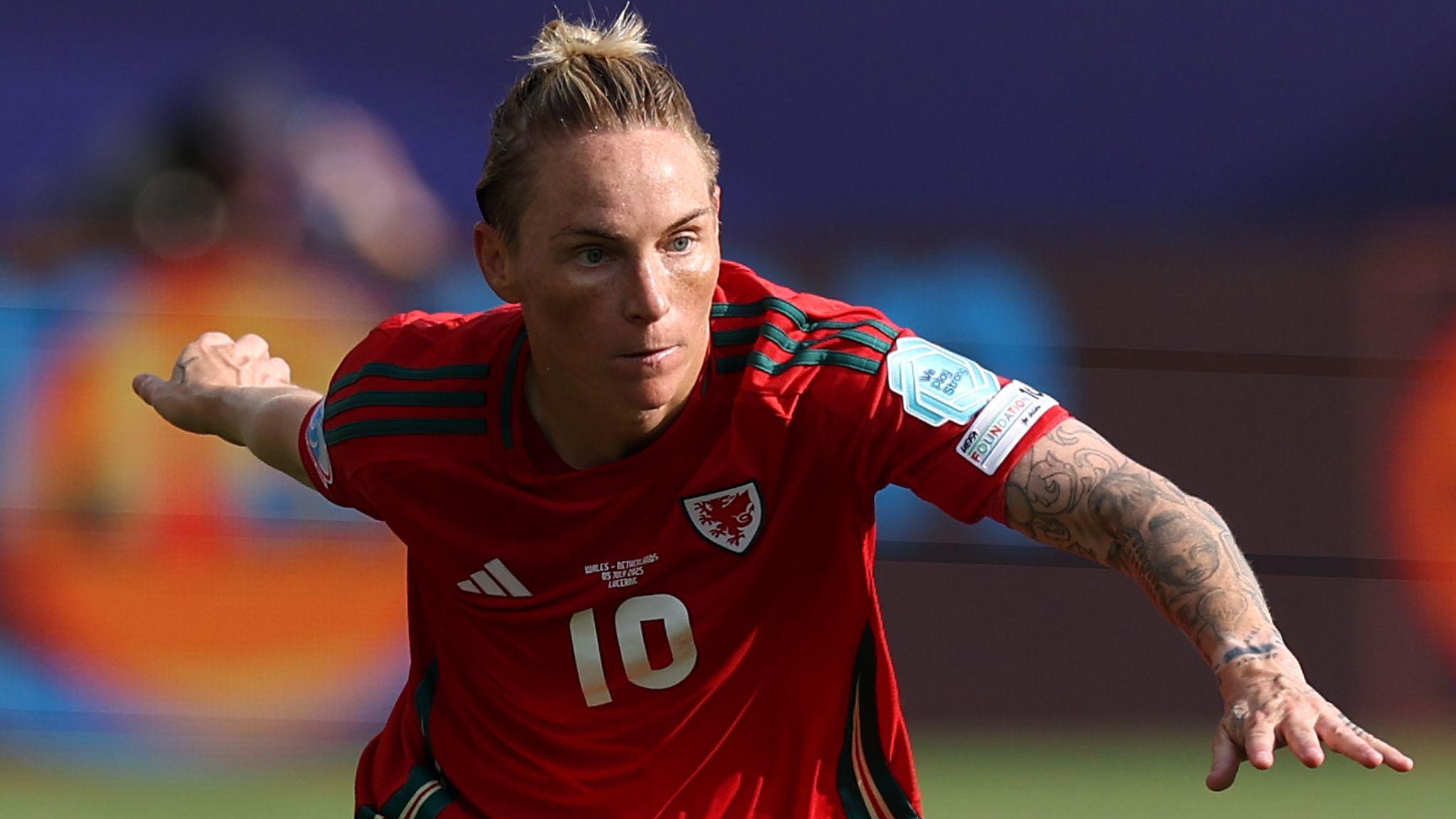
Thirty-two years later, Wales are competing at Euro 2025, their first major tournament. It would not have happened without ‘The Letter’.


Lore such as this is ever-changing. In the case of women’s football, where archives have been reliant on oral history due to a lack of resources, fact-checking is a matter of democracy.

Neither McAllister, Adams, nor Jones can remember how they were summoned to Evans’ office, when that took place, the exact date the letter was written and, sometimes, who actually wrote it. Adams and Jones maintain with unerring conviction that it was McAllister, their former Cardiff City team-mate.

“It’d be amazing if you could find it,” McAllister, once the national team captain and now a vice president of UEFA’s executive committee, tells The Athletic at full time of Wales’ 2-1 defeat against Denmark in the Nations League at Cardiff City Stadium in April. “Alun kept almost everything.”


Aberystwyth is a small coastal town in west Wales (Hawlfraint y Goron/Crown copyright, Cymru Wales)

On a June afternoon, the smell of cramped humanity during a stunning four-hour journey wafts through a late train to Aberystwyth, a small coastal town on Wales’ western flank that will soon be home for the next 72 hours as The Athletic goes letter hunting.

Evans, who died in 2011 aged 69, allegedly kept (nearly) every piece of correspondence from his time as general secretary between 1982 and 1995, along with much that bookended him.

The boxes carrying that paperwork are known colloquially as the ‘Alun Evans Papers’. They’re housed in the National Library of Wales, a hulking grey monolith that hovers upon a hilltop overlooking the town, Mount Olympus-style.

No one has sifted through the boxes. No one knows what lies inside but, apparently, there’s a letter.


The National Library of Wales in Aberystwyth has 1,900 cubic meters of archive (National Library of Wales)

Before my visit, a library spirit guide named Martin explains the decorum:

  1. Present two forms of identification and printed permission from the three women to search for (and if found, photograph) the letter.
  2. No food, drink, bags or jackets permitted inside the library’s reading rooms.
  3. Absolutely nothing not already in the public domain (ie, anything beyond FAW committee minutes) can be photographed or written about from Evans’ boxes.

“I certainly hope,” Martin wrote in an email 24 hours before my trip, “after all of this, and your travelling, all to trawl through the boxes of the Alun Evans Papers, that you do indeed manage to trace the letter in question. I accordingly wish you every success in this endeavour.”


In 1972, Adams graced the back pages of the South Wales Echo newspaper for the second time. The first, three years earlier, had been a matter of innocent corruption: an 11-year-old girl unaware she was violating the 1922 law barring her from playing football in Wales.

The second, however, was an indictment. In a back-page triptych featuring a female long-distance lorry driver and a female shop owner, Adams’ face stared back as the third avatar: 14 years old, her hair tucked conspiringly in the upturned collar of her shirt amid a plague of boys playing football.

Advertisement

“The headline was something like ‘The Modern Woman’,” recalls Adams. “And there was this dirty photo of me in the Barry Boys’ League. I was banned.”

A month later, an Irishman named John J Rooney stood on her family’s stoop with a lifeline. Two years earlier, the FAW, the country’s governing body, had lifted its ban on women’s football (but enacted a ban on girls playing with boys). Rooney had a women’s team. He was putting together a league and, eventually, a Wales national team. He wanted Adams.


The North Reading Room is library perfection. White ceilings high and arching. Wood desks adorned with small gold lamps with emerald tops. Everything is whispered. Including this: “There are 37 boxes.”

In the librarian’s shaking arms, a charcoal box big enough for a two-tiered wedding cake.


A picture of one of the boxes containing Alun Evans’ paperwork (Megan Feringa)

Adams remembers the rain: biblical, a baptism in the most literal sense. Three years after Rooney’s first visit to her family home, she stood on a pitch-turned-bog in Llanelli, Wales, losing 3-2 against the Republic of Ireland in the national team’s first match, in front of a crowd of 3,500.

Her soggy kit clung beyond her knees, borrowed from Swansea City’s academy. The FAW refused to supply the women with kits bearing the FAW crest, setting into motion the team’s two-decade battle for recognition.

“I wouldn’t call it a battle,” laughs Jones. “Is it a battle when they don’t even look at you sideways?”

A word Adams and Jones prefer to use is “deaths”, or the manifold times the national team and domestic clubs folded between 1973 and 1992 due to lack of funds, resources, willpower from volunteers or a semblance of infrastructure for the domestic game.

By 1992, the women’s national team had all but evaporated. A resurrection looked impossible.


Laura McAllister, Karen Jones and Michele Adams pictured in their Wales kit (Karen Jones)

The Alun Evans Papers vacillate between a harmonised treasure trove and a coffee-stained bottomless pit of various committee minutes as far back as 1886.

I’m not technically allowed to say any more. But box No 8 houses a binder dedicated to the Welsh ancestry of nine-cap Wales international and Hollywood hardman Vinnie Jones.


In 1992, Adams was Cardiff City Ladies’ tigerish midfielder. The then-33-year-old was also the team’s minibus driver.

Such was the life of Welsh women’s teams in 1991: schlepping to English leagues across the border on the weekend (in Cardiff City Ladies’ case, Division 1 of the South West Women’s league), enduring six-hour round trips for organised competition.

Advertisement

Beside Adams at the front of the bus was Jones, the club’s veteran goalkeeper, map reader and the one running the women’s team with Adams. Between them was McAllister, a 27-year-old midfielder pursuing a doctorate in political science at Cardiff University.

The rest of the team rode in the back.

“One night we’re driving home after a match,” says Adams. “Laura slams her textbook shut, starts asking about the FAW.”

The outburst inspired motherly glances from Adams and Jones, who regaled McAllister before with sorry tales of the past two decades. But McAllister’s ire was rekindled in 1991, when the summer’s European Championship was officially recognised by UEFA, European football’s governing body, before the first Women’s World Cup was held in China in November.

“And Laura is Laura,” Adams says. “She doesn’t drop things.”

“I just couldn’t believe how much Karen and Michele put into establishing the club’s infrastructure all by themselves,” says McAllister, comparing their efforts to those of London clubs she came to know while playing for Millwall Lionesses during her undergraduate studies at the London School of Economics two years earlier.

“I remember thinking, ‘Why don’t we go back to the FAW and show them how professional this is? The worst they can do is continue to not support us’.”

By the time the minibus reached Wales’ border, a letter was written.


Cardiff City Ladies, with Karen Jones pictured top row in the goalkeeper’s kit (Karen Jones)

“I believe it has a Cardiff City Ladies letterhead, if that helps.” McAllister’s voice note plays in my ears as I haul box No 29 to my desk.

My eyes burn. Then, my heart skips.

On the top: a letter from McAllister, addressed to Evans — but it’s 10 years too late. Beneath it, dissertations on women’s sport governance, and women’s sport and reproductive health; a literary analysis on the “societal value of women’s sport” from 1991; copies of FAW surveys for “club interest in women’s football” from 1995; invitations to join the new South Wales Women League in 1999; letters upon letters from McAllister, Jones, Adams and others concerning women’s football.

Advertisement

Snagged inside a stack of FAW financial records, a letter addressed from Jones to Evans in 1996, in which Jones calls Evans “a long-time friend, always our ally”.

The letter is written on paper with Cardiff City Ladies letterhead. Then, the box’s bottom laughs at me.


The carpet is what the three women remember. It’s what everyone who crept into the FAW’s internal sanctum in the 1990s remembers. Crimson, luxurious, emblazoned every few metres with the governing body’s crest, a ginormous roaring dragon.

“They must have sold an arm and a leg for those rugs,” says Adams. “At least.”

“And here we were, begging for handouts,” Jones says.

Situated on Westgate Street, across the road from Cardiff Castle, the former FAW headquarters was described by many as stubbornly Victorian, dripping in an unyielding homage to the past.

“It was not a place for progression,” McAllister says. “Or women.”

But three women stood in front of Evans’ mahogany desk. None had brought notes. No pitch or presentation was prepared. “We were just three angry, angry women,” says Adams. “That office would never have encountered the likes of us before.”


The librarian behind the desk offers me a smile. It is 9:30 am, day three of my mission. Behind her, a trolley of boxes forms a Jenga tower.

“The rest are in that closet.”


The National Library of Wales is home to six million books and newspapers (Hawlfraint y Goron/Crown copyright (2022) Cymru Wales)

Not feisty, but a word of that ilk. “Persuasive, passionate…” Helen Croft reels off synonyms until something sticks. “I can remember Alun saying something about those angry women after their meeting. That they were women to be reckoned with. And they were. They still are. Really, Alun probably felt he didn’t have much of a choice.”

In the Legend of the Letter, Croft is a forgotten and unheralded main character.

In 1991, the former head of operations at the Football Association and now a grassroots mentor with UEFA left a teaching job at the University of Leeds to join the FAW as an administration assistant, offering executive support to Evans. Not long after her arrival, Croft remembers a letter.

Advertisement

“Alun handed it to me. He asked, ‘So? What do you think?’.”

Croft, who played football for Cardiff City Ladies’ rivals Tongwynlais with a 14-year-old Jayne Ludlow (Arsenal treble winner and future Wales manager) and recalls having to change for matches and training sessions in the adjacent portacabins rather than use the club’s male facilities, represented an unorthodox sounding board for a governing body still wrestling with a reputation as an “old boys’ club”.

“Alun knew about my passion for women’s sport,” says Croft. “He also would’ve known I was politically naive. I was going to tell him the right thing to do for women, for the country.”


An unspecified number of weeks after McAllister, Adams and Jones walked into Evans’ office, they say Evans turned up unannounced at Ely’s Trelai Park, Cardiff City Ladies’ home stadium, for a match. His wife and two sons were in tow.

The following week, he attended a second match, this time with FAW treasurer Des Shanklin. The men stood. They nodded. They commented on passing angles.

“Alun thought the football was going to be very amateurish,” McAllister says. “He told me later he was more impressed by how well organised Cardiff Ladies seemed to be. That’s why he came to watch. He wanted to see if our professionalism reflected on the pitch.”


Aberystwyth’s promenade (Hawlfraint y Goron/Crown copyright, 2022, Cymru Wales)

At 3:55 pm on my third day, I put the lid on the final box. I am letterless. I consider crying.

Instead, I walk a mile down to Aberystwyth’s promenade, just out of sight of the library. Amid a xylophone of pastel beach-front buildings, the old Belle Vue Royal Hotel is an anaemic yellow. Its front doors are boarded up, its windows sealed, closed indefinitely since a 2018 fire ripped through a neighbouring building.

In August 1993, the hotel hosted an executive committee meeting in which Evans declared the FAW would take “financial responsibility” for the following month’s Women’s Euro 1995 qualifier against Switzerland, the team’s first competitive match with FAW recognition.


Croft does not deny Evans’ altruism. But in 1991, a collision course was set into motion.

In October of that year, minutes in one of the boxes from the FAW’s finance and general purposes committee describe a meeting with representatives from “women’s football in Wales to consider whether any support should be given to that aspect of the game”.

Advertisement

It is the first mention of women’s football in official FAW correspondence, the second arriving the following September when the FAW youth and development committee agreed that a “more detailed survey of the situation be undertaken”.

By 1993, FIFA began requiring national associations “to control all aspects of football, including women’s football”, as the youth and development committee noted in its January 1993 meeting minutes.

In the same meeting minutes, nine recommendations concerning women’s football are listed, including the “reformation” of the women’s national team under the FAW’s direct control.

A tenure peppered with controversy, including the hasty creation of the League of Wales, now known as the Cymru Premier, amid questions of Wales’ autonomy as a footballing nation given that some men’s clubs play in the English pyramid system, at mention of legacy Croft compares Evans’ tenure to the Mayor of Casterbridge, the 1886 tragic Thomas Hardy novel about a powerful man whose past comes to haunt him.

“Alun was a great advocate for the women’s game,” says Croft, who was responsible for organising the Euro 1995 qualifying campaign and subsequently appointed head of women and girls’ football.

“He was brave. He was the inspiration for it, but then, I was the worker who made it happen. And I don’t think it would have happened without the letter from the girls, without it triggering in him some wish to tackle that inequality.”

It is a common thread that runs through women’s football in Wales and around the world: the need for powerful men to open doors but the onus on women to demand more doors be opened.

The FAW’s recognition of the women’s national team was not a sunset moment. Recommendations from Croft for a full-time national team head coach, a goalkeeping coach and a video analyst were rejected in 1997, though infrastructure for the domestic game was approved.

Advertisement

As early as 1998, Jones voiced interest in being a women’s football representative on the FAW council. Not until 2013 was a woman elected to the council.

In 2003, the women’s senior team were removed from qualifiers for Euro 2005 due to budget cuts amid the men’s Euro 2004 qualifying campaign, setting the women’s team back at least a decade.

Even so, Adams and Croft recall the Euro 1995 qualification campaign with welcomed lucidity. Their first match against Switzerland was watched by 346 people in Cwmbran. A seven-day trek through Bielefeld (Germany), Effretikon (Switzerland) and Zagreb (Croatia) followed. Against Germany, Wales lost 12-0 twice. Not a single point from six matches was won.

“I think about that now,” Croft says. “Those years with Wales were the most enjoyable of my career. It was a blank page. It was much simpler than it is now. But you know, we had to start somewhere.”

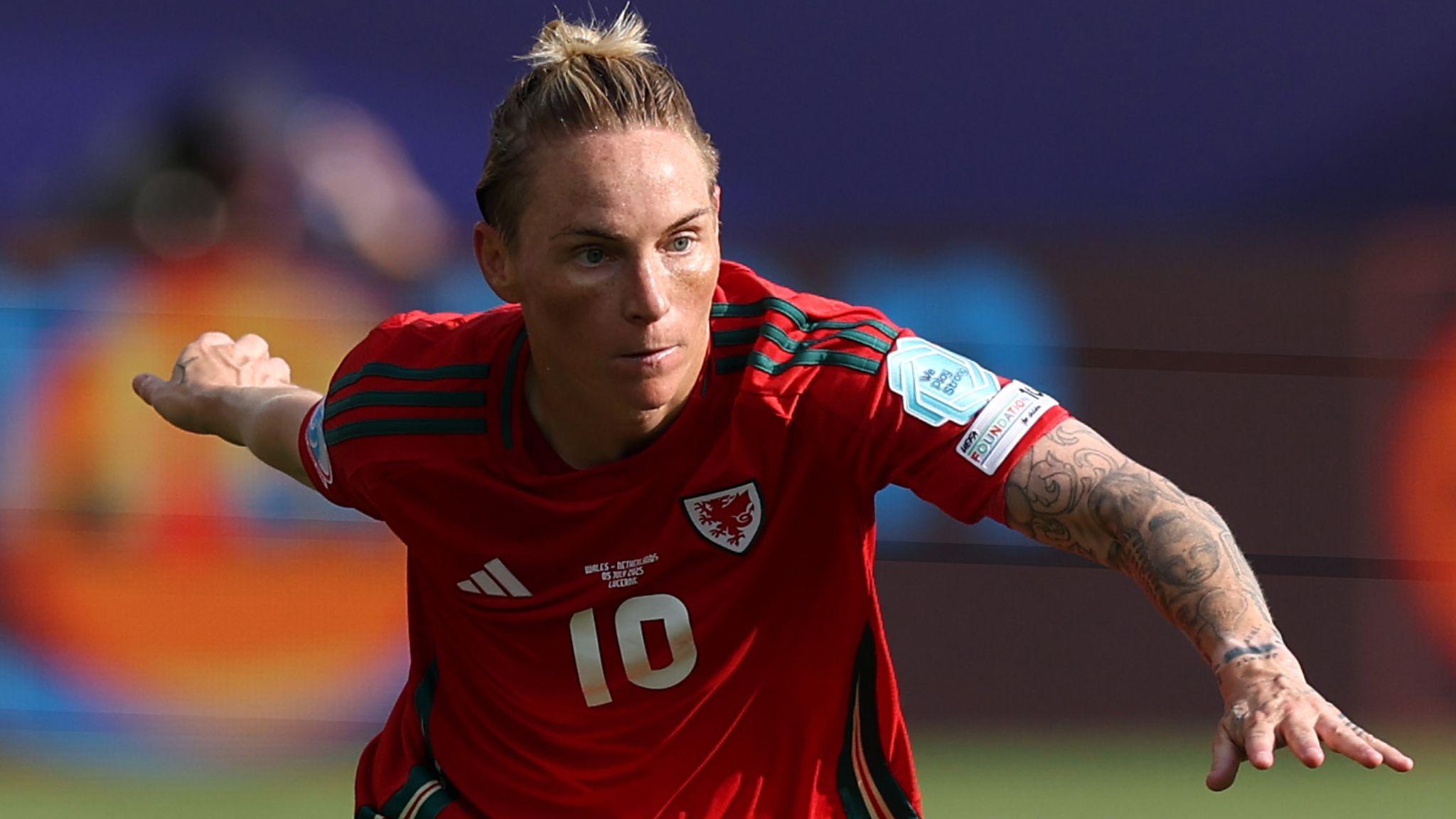
(Top photo: Karen Jones; Illustration: Kelsea Petersen / The Athletic)

Continue Reading
Click to comment

Leave a Reply

Your email address will not be published. Required fields are marked *

Sports

Texas A&M volleyball’s sweep of Kentucky attracts record viewership

Published

on


Dec. 24, 2025, 10:30 a.m. CT

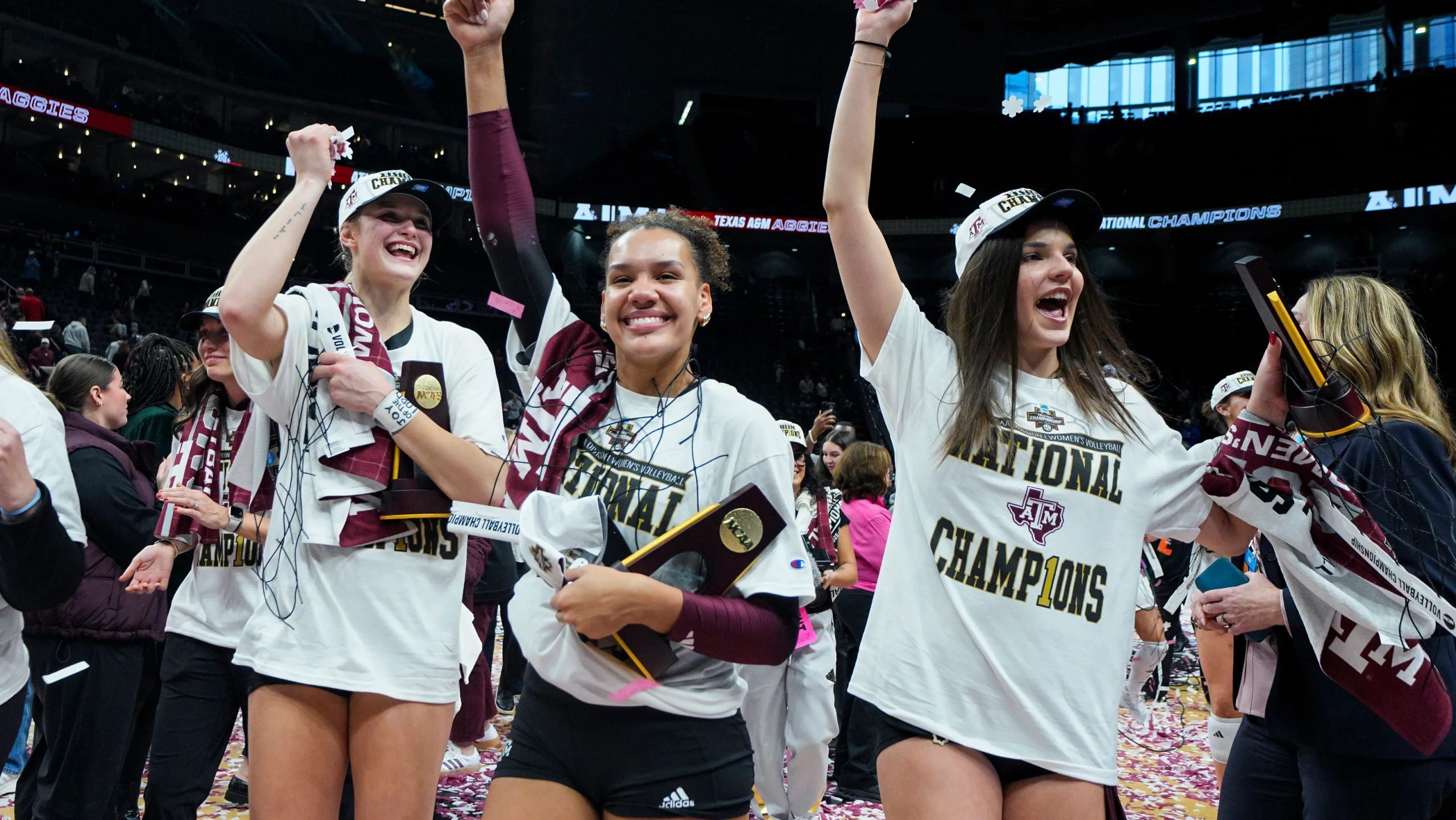
Texas A&M’s first-ever NCAA Championship win over the Kentucky Wildcats on Sunday was one of the most-watched title games in college volleyball history.

The 2025 campaign has featured many first-time achievements for Jamie Morrison’s squad in just his third year as head coach in Bryan-College Station, Texas, including a victory in the No. 2-most-watched NCAA title game ever. Texas A&M’s match against Kentucky attracted a peak of 1.7 million viewers, as part of the most-consumed NCAA Women’s Volleyball Tournament in the history of the sport.

The Aggies have much to be proud of following their historic run on the court this season. Still, the Maroon and White faithful have also played their own crucial roles in supporting the program as it ventured to some of the most hostile road environments in volleyball. One of those rowdy atmospheres occurred in the Lincoln Regional, where Morrison’s squad dethroned No. 1 seed Nebraska in an instant classic that advanced the Aggies to their first-ever appearance in the Final Four.

Texas A&M’s outstanding season, capped off by a sweep of the Wildcats in the NCAA Championship, played a massive role in etching their name into the viewership history books.


Link

Continue Reading

Sports

K-State Hires Jeremiah Johnson to Serve as Defensive Backs Coach

Published

on


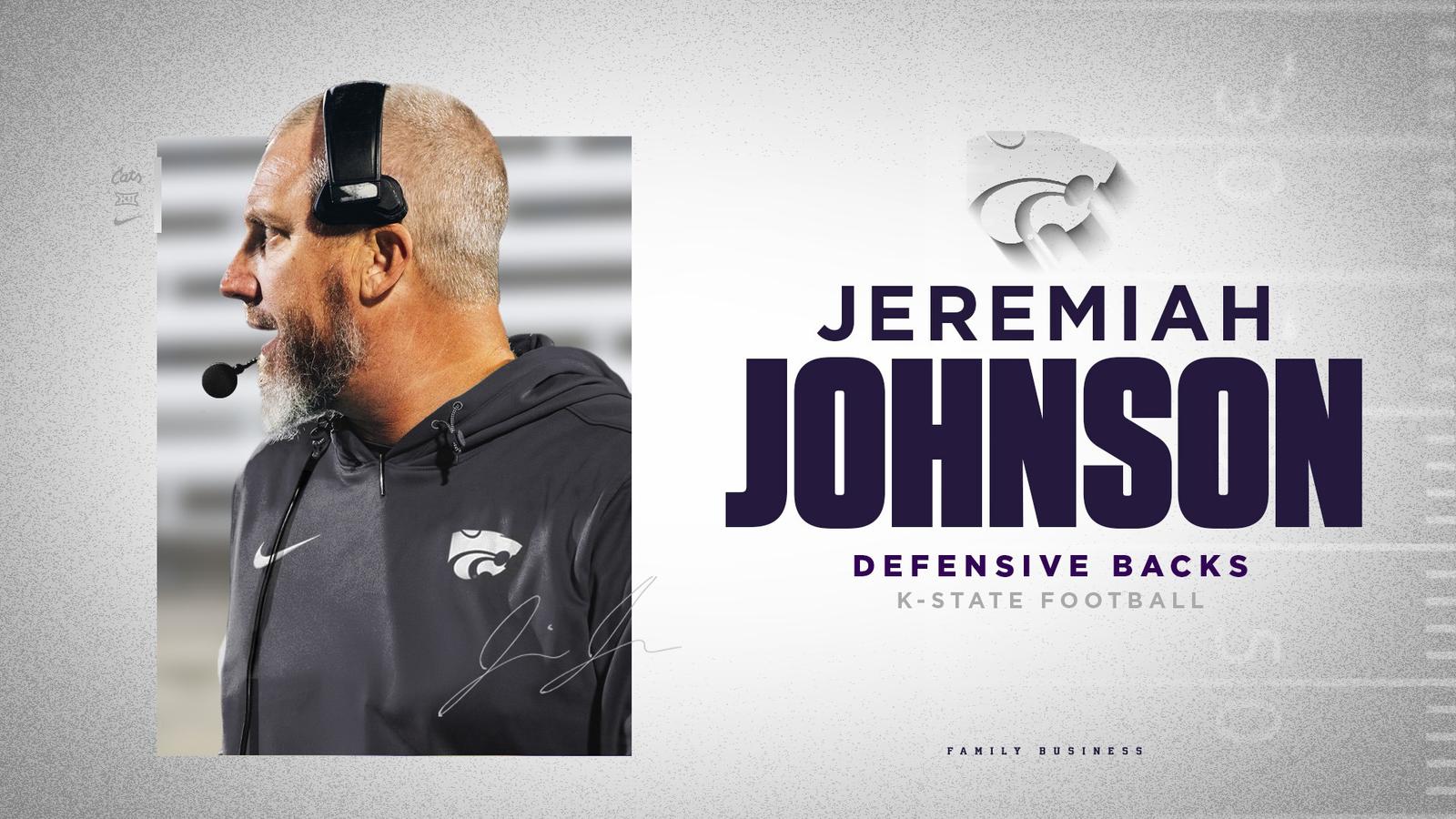
MANHATTAN, Kan. – A 24-year coaching veteran who has 13 years of coordinator experience, Jeremiah Johnson has been hired as a defensive backs coach at Kansas State, head coach Collin Klein announced Wednesday.
 
Johnson comes to Manhattan after serving one season as the defensive coordinator at Coastal Carolina in addition to being the Chanticleers’ interim head coach for the Independence Bowl against Louisiana Tech, which will be played next Tuesday.
 
“When Coach Klein called about joining his staff, it was a no brainer,” said Johnson, who worked with Klein during the 2016 season at Northern Iowa. “Having the opportunity to help him execute his vision for this program is exciting, and I am humbled and honored to work alongside one of the best coaches, leaders and humans in this business. It’s an added bonus that I am able to return to my home state. Nicki, Lane, Drew and I are so grateful to Collin and Shalin for bringing us on their journey and making us a part of their Wildcat Family. Team Johnson is fired up to get to Manhattan and get to work. Go Cats!”
 
Johnson has also served as a defensive coordinator at Northern Iowa (2014-2021, 2023), Kent State (2022) and Louisiana Tech (2024).
 
“Jeremiah is one of the best teachers of the game of football I have been around,” said Klein. “He is a relentless recruiter and a program builder. I am very excited to have him on our staff.”
 
This season, Johnson has helped Coastal advance to its sixth-straight bowl game as the Chanticleers rank 16th nationally and second in the Sun Belt in fourth down defense (40.0%) and 31st in fumble recoveries (8). He has helped Xamarion Gordon to a No. 2 national ranking in fumble recoveries (3) and a No. 5 ranking in the conference in interceptions (3). Myles Woods also had three interceptions on the year, while Johnson has coached Ezekiel Durham-Campbell to a No. 7 ranking in the conference in sacks (0.46 per game).
 
The Johnson-led Louisiana Tech defense in 2024 ranked 12th nationally in total defense, surrendering only 308.4 yards per game. It was a 98-spot improvement over where the Bulldogs finished in 2023, while his unit also produced a 91-place improvement in scoring defense (21.0 points per game) as they finished at No. 26. Additionally, Johnson led La Tech to an 88-place bump in rushing defense (135.5 yards per game) to rank 44th.
 
Outside of a one-year hiatus in which he served the 2022 season as Kent State’s defensive coordinator, Johnson coached for 16 seasons at Northern Iowa, spending the 2007 through 2021 seasons – in addition to the 2023 campaign – in Cedar Falls. While at UNI, Johnson coached Panther defenders to a combined 32 All-Missouri Valley Football Conference (MVFC) First Team honors, five MVFC Defensive Players of the Year, one Buck Buchanan Award winner, 15 Associated Press FCS All-America honors and seven American Football Coaches Association (AFCA) All-American accolades.
 
In 11 seasons as the UNI defensive coordinator, Johnson’s defenses ranked in the top 10 nationally in statistical categories 29 times, which included turnovers gained on six occasions (highest ranking of No. 2 in 2019 with 34), defensive touchdowns four times (highest ranking of No. 5 in 2016 and 2019 with 4) and scoring defense three times (best ranking of No. 6 at 15.3 points per game in the Spring of 2021). During his first run as defensive coordinator from 2014 through 2021, UNI ranked sixth in the FCS by allowing 19.9 points per game over a 99-game span. He was also named a finalist for the 2019 FootballScoop FCS Defensive Coordinator of the Year award.
 
The Panthers won four conference championships during Johnson’s time at UNI. Additionally, they made 10 FCS Playoff appearances and advanced past the first round in eight of 10 seasons, which included a semifinal showing in 2008 and quarterfinal appearances in 2015 and 2019.
 
Before being promoted to coordinator, Johnson coached the Northern Iowa defensive backs and served as the recruiting coordinator from 2009 through 2012. In 2007 and 2008, he was the video coordinator and assistant defensive backs coach.
 
Johnson went to UNI after working the 2003 through 2006 seasons at Loras College, serving on the same staff as former K-State head coach Chris Klieman. Johnson worked with the Duhawk defensive backs in 2003, 2004 and 2006, while he coached the wide receivers in 2005. Prior to his time at Loras, he was a graduate assistant and video coordinator at Wyoming in 2002.
 
A native of Scandia, Kansas, Johnson obtained his undergraduate degree in sports science from Kansas in 2000, while he earned a master’s degree in athletic administration from Loras in 2005.
 
Johnson and his five, Nicki, have a son, Lane, and a daughter, Drew.
 
THE JEREMIAH JOHNSON FILE
Hometown: Scandia, Kansas
College: Kansas – Bachelor’s degree in sports science (2000); Loras College – Master’s degree in athletic administration (2005)
Family: Wife: Nicki; Children: Lane, Drew
 
JEREMIAH JOHNSON’S COACHING CAREER
2002, Wyoming (Graduate Assistant/Video Coordinator)
2003-04, Loras College (Defensive Backs)
2005, Loras College (Wide Receivers)
2006, Loras College (Defensive Backs)
2007-08, Northern Iowa (Video Coordinator/Assistant Defensive Backs Coach)
2009-12, Northern Iowa (Defensive Backs/Recruiting Coordinator)
2013-16, Northern Iowa (Defensive Coordinator/Linebackers)
2017-21, Northern Iowa (Defensive Coordinator/Defensive Backs)
2022, Kent State (Defensive Coordinator)
2023, Northern Iowa (Defensive Coordinator)
2024, Louisiana Tech (Defensive Coordinator)
2025, Coastal Carolina (Defensive Coordinator/Interim Head Coach)
2026, K-State (Defensive Backs)


Link

Continue Reading

Sports

Texas A&M Volleyball adds another productive player from the portal

Published

on


Dec. 24, 2025, 5:40 p.m. CT

Winning championships is always the top goal for any athletic program. However, when you go deep into the postseason, especially in volleyball, it can interfere with the staff’s ability to recruit. That’s a good problem to have when you’re bringing home hardware, and Texas A&M head coach Jamie Morrison is already getting work done in the NCAA transfer portal.

Needing to reload a roster that’s losing nine seniors, including four All-Americans and two future professional players, Coach Morrison received some major news on Tuesday. It was announced that former Boise State middle blocker Eliza Sharp has committed to Texas A&M. This gives A&M another young talent to develop and brings some elite production.

Originally, Coach Morrison had a five-year plan to reach a national title, which meant he understood that the roster he had now would be a crucial part of turning the Aggie volleyball program into a national powerhouse. With him now ahead of schedule by two years, it gives him a significant advantage in recruiting and positions Texas A&M for a quick turnaround to make another championship run in the near future.

Below is key information on the third commit joining the 2026 Texas A&M volleyball team.

Eliza Sharp – Middle Blocker


Link

Continue Reading

Sports

The News-Gazette’s 44th All-State volleyball team: Player of the Year Burgdorf a dominant force for St. Charles North | Sports

Published

on


ST. CHARLES — St. Charles North volleyball coach Lindsey Hawkins made a point to sit down with Haley Burgdorf this summer and watch “The Last Dance.”

Burgdorf had already seen the 10-episode miniseries chronicling Michael Jordan’s career and final season with the Chicago Bulls, and Hawkins had shown her team clips from the documentary in the run-up to the IHSA playoffs last season. But the North Stars coach saw value in a rewatch heading into Burgdorf’s senior season.

“I specifically played the episode where (Jordan) starts talking about the team evolving and being able to rely more on Scottie Pippen and Dennis Rodman,” Hawkins said. “She’s a big Michael Jordan fan. She had seen it before, but I wanted her to specifically focus in on that episode and how he figured out he needed the team around him. She really embraced that, too. … She was like, ‘Yeah, I can see this and how important it is to get everybody else involved,’ because we would literally, last year, just set her all the time.”

Burgdorf was a one-woman wrecking crew in 2024. The 6-foot-1 outside hitter hammered home 611 kills in a 32-win season for St. Charles North.

Burgdorf was no less dominant for the North Stars this fall, but the team dynamic shifted. She didn’t have to do it all. Illinois State-bound Sidney Wright grew into a bigger role at middle blocker. Hawkins called senior outside hitter Amber Czerniak her “silent killer” and “unsung hero,” and future Valparaiso setter Mia McCall directed traffic in a more balanced attack.

But Burgdorf was still the centerpiece. Still St. Charles North’s go-to option. Still a nearly unstoppable force on the pin.

That’s why Burgdorf, who will enroll next month at Penn State and start training immediately with the Big Ten powerhouse, was named the 44th News-Gazette All-State Player of the Year. The catalyst for a 35-win team thanks to 435 kills, 198 digs and 52 aces for the North Stars.


ABN-L-GVB-GLENBW-SECT-1106-01.jpg

St. Charles North’s Haley Burgdorf (23) slams the ball over the net during the Class 4A Glenbard West Sectional semifinal game against Glenbard West in Glen Ellyn on Tuesday, Nov. 4, 2025. (James C. Svehla / for The Beacon-News)


“I knew that now we have a bunch of good players because everyone has improved so much from club season and back to high school,” Burgdorf said. “The pressure, really for me, was to lead this team to victories and do our absolute best. You have to lead everyone to believe they can do this. That was really my role this year because last year it was being able to dominate. This year it was, ‘Let’s have all the other pieces come together.’ That was our mindset the whole time.”

Burgdorf played a key role for St. Charles North as a freshman. It was her sophomore year, though, where she was thrust into a leadership role on the court with injuries to seniors Katherine Scherer, Jackie Ruder and Adrianna Huptych.

“Those three gave me a lot of advice on what to do and just be myself and just be confident in everyone and what they do,” Burgdorf said. “Coming into my junior year, I knew I had to fill that role but also be very dominant. Most of the pressure was on me my junior year being able to make everyone else on my team better and being there for them if they needed me. This year was more of a team thing.”

How much the North Stars leaned on Burgdorf early in her career helped mold her into the dominant outside hitter she became as an upperclassmen.

“She’s kind of been in this leadership position forever,” Hawkins said. “Her play, it shows how much the kids trust her and how much she trusts herself, too. It doesn’t matter if she’s got two blockers, three blockers, she trusts herself to find open court space. I’ve been coach at North for almost 18 years, and I have probably only seen two other kids (Plainfield North’s Ella Wrobel and Geneva’s Grace Loberg) dominate the way she does.”

Wrobel and Loberg both wound up in the Big Ten. Wrobel started her career at Wisconsin before transferring to Ohio State. Loberg helped Wisconsin win the 2021 NCAA title.

Burgdorf is also bound for the Big Ten. Penn State might have been later to her recruitment than other power conference teams, but all it took was a trip to State College, Pa., for a volleyball camp and ensuing scholarship offer to sell Burgdorf on the Nittany Lions.


Haley Burgdorf

St. Charles North outside hitter, 2025 N-G All-State Player of the Year and Penn State-bound Haley Burgdorf, left, poses with Nittany Lions coach and 1996 N-G All-State Player of the Year Katie Schumacher-Cawley at Rec Hall in State College, Pa.


“I fell in love with the campus when I got there,” Burgdorf said. “We all get that feeling, a sense of home, and that’s what Penn State felt like for me.”

Burgdorf will play for Katie Schumacher-Cawley at Penn State. The Nittany Lions coach, who guided the team to the 2024 NCAA title while beating breast cancer, starred at Mother McAuley in the mid-1990s and was the 1996 N-G All-State Player of the Year.

“Once we got her to camp, we really liked her and knew she would fit in — not just volleyball-wise,” Schumacher-Cawley said. “She’s such a hard worker and will definitely fit in with the culture of the program and add so much value. Even when the high school season was over, she was in the gym the next day. I was like, ‘Maybe you should take some time off,’ but she was like, ‘No, I love it.’ That’s what we need.

“She has the tools to compete, and it’s exciting that she’s going to come at semester. She’ll be able to get int he weight room with our strength coach and get herself prepared for fall and in the classroom as well getting to know campus and getting her feet wet with college courses.”

Burgdorf envisions herself as a six-rotation outside hitter at Penn State. That’s the goal. It’s why she honed her passing and defensive skills at Sports Performance Volleyball at the club level.

“I think the challenge I’m most excited for is being able to test my ability at another level because the Big Ten is considered one of the best leagues in NCAA volleyball,” Burgdorf said. “I’m excited to play out there and see what I’m capable of. I’m really excited to play against most of the best players in the world.”


Link

Continue Reading

Sports

Wisconsin volleyball flips Isabelle Hoppe from Penn State

Published

on


Link

Continue Reading

Sports

Penn State earns commitment from Pitt transfer Ryla Jones | Penn State Volleyball News

Published

on


Penn State earned another commitment from the transfer portal.

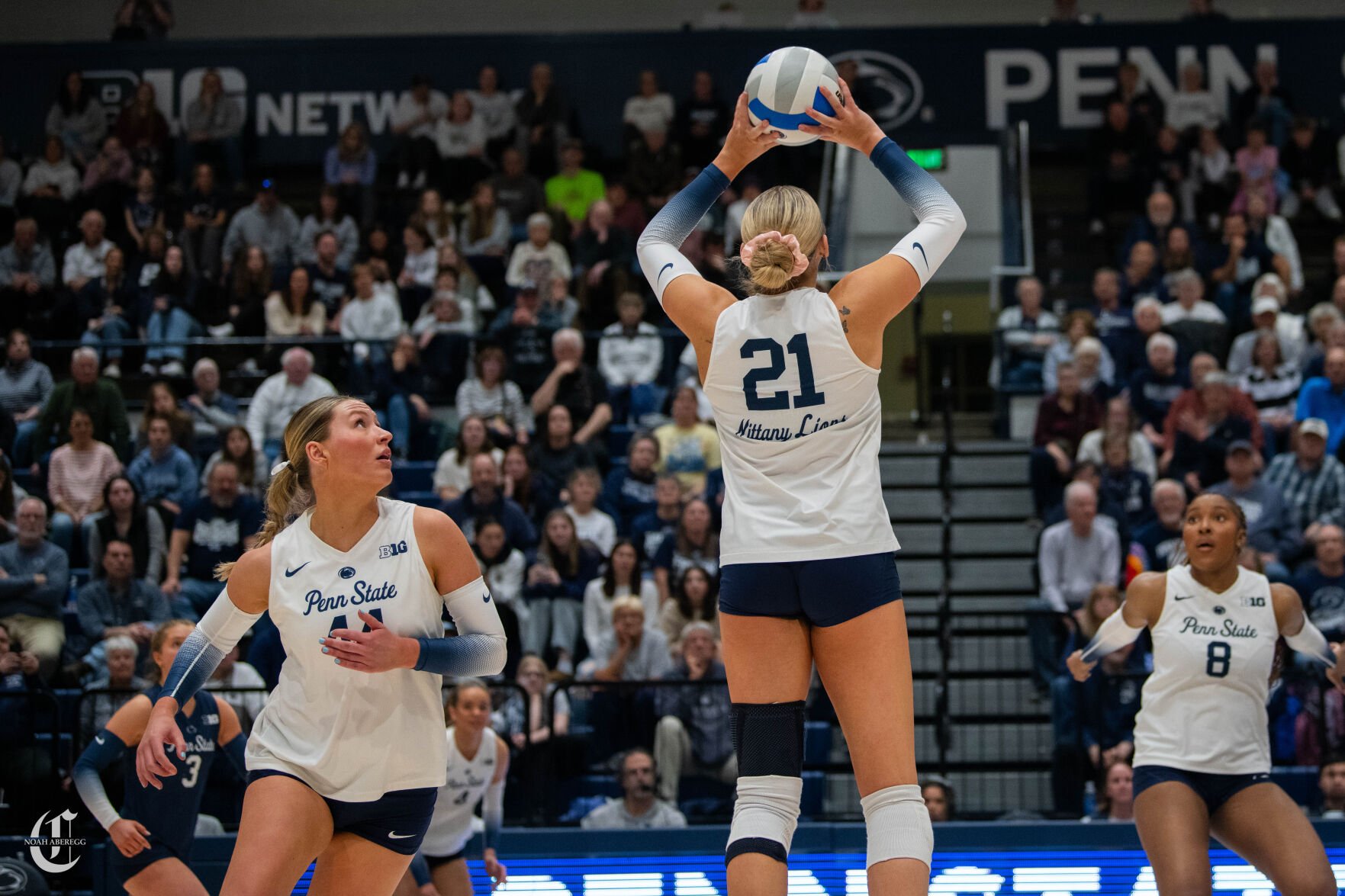
Ryla Jones has transferred to the Nittany Lions. 

Jones is staying in the Keystone State, coming over from Pitt, where she was in the final four.

The Oxon Hill, Maryland, native tallied nine kills on a .400 hitting percentage, with nine total blocks against Penn State. 

Jones will play between Kennedy Martin and Emmi Sellman next season and could be a part of a lethal front-court trio.

MORE VOLLEYBALL COVERAGE


Former Penn State setter Izzy Starck announces transfer to Pitt

Izzy Starck has found a new home.

If you’re interested in submitting a Letter to the Editor, click here.


Link

Continue Reading

Most Viewed Posts

Trending