
NIL
West Texas boom



WEST TEXAS — Cody Campbell signed some of his earliest land acquisitions on the hood of work trucks at drilling sites across the Permian Basin.
A three-year starter along the offensive line at Texas Tech from 2001-04, Campbell didn’t have the backing of a major investor when he went out prospecting. It was just him and John Sellers, a former teammate at Canyon High School and Texas Tech. The pair of Canyon Eagles fittingly named their startup Double Eagle Energy. And at the beginning, the risks seemed crazy for the former real estate agents looking for a new trade after the housing market collapsed in 2008.
When the market went down, Double Eagle decided to pounce. They scoured the Permian Basin, putting every cent they had into searching for leases. As opposed to the big boys who outsource such tasks, Campbell and Sellers mined through land registers themselves to buy mineral rights. There were no guarantees that any would hit it big. Hell, they were closer to bankruptcy than billionaire status.
“We were the underdog,” Campbell said. “And we had to find out a way to squeeze out some success amid titans, among huge companies.”
In one legendary story, they bought a landowner a first-class ticket to London by spending $9,800 on a $10,000 credit card as a form of payment to extend a lease. It took until the final hour before the option expired before Double Eagle managed to find a buyer. The seven-figure deal helped keep the company barely above water.
Then, the timing hit just right. Oil prices crashed, allowing Double Eagle to buy up massive swaths of land. Technology advanced, allowing drillers to get a great quantity of oil with less expense, supercharging the margins. Earlier this year, Campbell and Sellers made one of its biggest deals ever, selling for more than $4 billion of cash and stock.
Campbell has spent his whole life looking for investments. His latest brings him back home. A fourth-generation Red Raider, Campbell’s great-grandfather was part of the first ever class at Texas Tech in 1925. His dad and brother played sports there. In April, he was named Chairman of the Board of Regents, giving him a formal leadership role with the school.
But 20 years after he left Tech for the Indianapolis Colts, football is still everything to him. He has been in the ear of President Donald Trump and was set to co-chair a Presidential Commission. He has spent more time, money and effort helping Texas Tech football than almost anyone. And in college football’s Wild West era, he once again saw opportunity.
“College sports are a business more than they’ve ever been before,” Campbell said. “And I think it does require a business mindset in order to be effective. Every dollar you spend, every move you make, has to be thought about as an investment.”
Last season, after a frustrating loss to Colorado, a fan jeered at him on social media, asking him to “buy us an O-line.” Campbell responded simply: “I will.”
Little did we know, that plan was put into motion months earlier. It’s not enough to improve a football team. It’s a roadmap to showcase an entire region.
I. The Landman’s Plan
Giant windmills start to appear as you drive up Highway 84 towards Lubbock from Dallas. There’s motion on the horizon, and then you’re surrounded by whirling turbines dotting the plateaus.
A cracked sign points to the Fluvanna Renewable Energy Project. Beyond is a lone rusted oil pump jack, slowly pulling black gold from the ground. But the creak of the jack is overpowered by the rustle of the whirling blades. Energy is king out here, and it doesn’t matter how you find it.
Lubbock is called the Hub City. Its centralized location at the floor of the Panhandle connects all the parts of West Texas. Down south is the Midland Basin, which remains one of the most fertile oil deposits in the world. North is the Panhandle, filled with cattle and ranchers. West is the gateway to the trails of the American Southwest, while east leads to the shining economic powerhouse of the Metroplex.
At the center of the spoke lies Texas Tech. Founded in 1923, it has become one of the most important institutions in the region. It produces most of the lawyers, doctors and businessmen that fill West Texas. The university’s research arm has been critical to growth in the energy, agricultural and weather sectors.
The central location means Lubbock is transient, ready to follow the winds of change. And the winds were blowing on college football.
Texas Tech Athletics
It was July 2024. Campbell called a meeting with football coach Joey McGuire, general manager James Blanchard and a select few other administrators in athletic director Kirby Hocutt’s private conference room. There, he laid out his big idea.
Paying players is legal, and there’s no cap. After the season, de facto free agency will open. There’s no guarantee this world will last forever. When players enter the transfer portal, we should be ready to pounce.
The goal was to finish with a top-five transfer class and supercharge the roster in time for the Big 12 race. With Campbell leading a cadre of megaboosters — including Sellers, Gary Petersen and Dustin Womble — money was no object.
“It was just analysis of the legal situation and the business situation,” Campbell said. “That’s what we do every day at work, find opportunities to gain competitive advantages. I saw it as no different than a business deal.”
Texas Tech once became the story of college football because of its innovation, when Campbell’s former coach Mike Leach turned pea shooter-armed quarterbacks into household names.
At least 11 former players and assistants under Leach went on to become FBS head coaches. A decade later, Patrick Mahomes revolutionized the brand and now sits as the best quarterback in the NFL. But for all the towering legends, success has been sparse.
Campbell was an offensive lineman under Leach and started in three straight bowl victories. The program reached its top ranking in nearly 30 years. He got a taste of success.
Seeing wide-open spaces on the horizon, the landman wanted more.
Campbell’s foresight ended up being a premonition. On July 1, 2025, revenue sharing will begin after the House v. NCAA lawsuit was formally settled. The era of a fully uncapped college athletics roster is potentially over. The offseason was a last gasp. And with it, 2025 becomes a truly once-in-a-lifetime opportunity for investment. This could be the oil boom all over again, but this time at Campbell’s alma mater. Or, the credit card could finally find itself maxed out.
“It’s a moment in time and an opportunity that may not exist again in the next decade,” Hocutt said. “It’s an opportunity to go all in.”
II. The Wildcatting Scout
In a previous life, Blanchard assembled fire hydrants while doing amateur scouting message boards. He’d put them together, from screwing on nuts and bolts to painting them red, and was paid six figures. Maybe that gave Blanchard his trademark attention to detail.
Joey McGuire made him his first hire when he got the Texas Tech job after he proved himself in the Baylor scouting office. In the years since, he’s become one of the most sought-after GMs in the sport, most notably turning down an offer from Marcus Freeman at Notre Dame.
Months before the portal opened, Blanchard’s staff created a massive recruiting board of potential transfer targets. Many of them would never pan out, or would leave for the NFL. It didn’t matter; it was all about being prepared. Other programs would have to go through a chain of command. Not Texas Tech.
“Our work is already done,” Blanchard said. “We could just get him on campus, we already know what he is, what we’re looking for and what we want to do with him.”
At the same time, Blanchard evaluated the roster. Bringing back veteran quarterback Behren Morton and star linebacker Jacob Rodriguez meant high-dollar positions could be avoided. But while watching the Philadelphia Eagles bulldoze their way to the Super Bowl with elite trench talent, Blanchard knew where he wanted to spend his money.
The rise of the college sports GM: As the game goes professional, only the head coach may have more power
Dennis Dodd

While blue-blood programs scattered looking for overpriced quarterbacks and receivers, Texas Tech perfected its pitch to the big men. Howard Sampson, for example, had a strong relationship with former coach Mack Brown at North Carolina. McGuire, as a former Texas high school coach, remains close with Brown. They FaceTimed on his visit and Sampson, the No. 14 player in the portal, locked in his commitment.
On Dec. 16, 2024, Georgia Tech edge rusher Romello Height entered the transfer portal. Texas Tech reached out to his agent early. Within days, Height was on campus. Immediately, he was blown away by the thoroughness and honesty of the presentation. He didn’t want to go anywhere else. He canceled the rest of his visits and committed on Dec. 19.
“Like why not?” Height said. “You’ve got everything you need. You’ve got a great coaching staff. You’ve got players who want the same things as you. Like man, everything is here. Everything is here.”
There’s also one more ace up the sleeve that Texas Tech deployed. The Womble Football Center, a $242 million facility, just opened in 2025. It features a massive weight room, elite nutrition services and state of the art recovery tools. It also has a barbershop, two player lounges and more places to relax. Defensive coordinator Shiel Wood dubbed it the “Football Resort.” As more money goes directly to players and moves away from facilities, competing with it will only get harder for rivals. The timing was impeccable.
The pitches worked well, maybe better than expected. McGuire takes official visitors out to a steakhouse in Lubbock called Las Brisas, a local favorite. He usually orders a filet mignon with a peppercorn crust, cooked medium with mashed potatoes and asparagus, which he calls one of the best steaks of his life.
During one stretch in December, McGuire ate out there so much with recruits — every day for more than two weeks — that he had to mix it up with the tortilla crusted chicken penne. Even for a native Texan, there’s only so much red meat one man can eat.
“I mean we’re bringing in people and we had a plan of, this is the number that we need,” McGuire said. “But then we turn around and you’re like, well we can’t not take this guy. It just makes us so much better.”
Texas Tech Athletics
Five transfers turned to 10. Ten turned to 20. These are players that major programs wanted, including 13 blue-chips. What the hell was going on in Lubbock?
Perhaps the biggest flex for Texas Tech was its final piece. Stanford edge transfer David Bailey entered the portal in March after coach Troy Taylor was fired. Because of the timing, every program in the country fought for his services. A Los Angeles native who played in the Bay Area, Bailey was ultimately convinced to take a trip to Lubbock.
Bailey graduated with a degree from Stanford, so his education was set. It was time for a masters in NFL development. An offer of more than $2 million, sources tell CBS Sports’ Chris Hummer, got his attention. Getting into the Football Resort and seeing the high-powered transfers that found everything they needed in Lubbock convinced him to shut it down.
“I told everybody that asked, what I wanted in a transfer was to take my football skills to the next level,” Bailey said. “I wasn’t really aware at all of what they were doing recruiting defensive talent to the roster. When I found out about that, that’s what really sparked my interest.”
So instead of Texas or UCLA, his other two finalists, Bailey opted to sign with Texas Tech. His addition pushed the recruiting class to No. 1. Heads turned towards West Texas.
III. The Ringleader
Kirby Hocutt wishes he saved the voicemail. Joey McGuire, then an assistant at Baylor, had gotten hold of his number. The two sides had yet to make real contact or hold a formal interview.
“I’m not going to be able to live with myself if I don’t make this phone call,” Hocutt recalls McGuire saying. “I just want you to know, you need to hire me as your head football coach.”
It was a brash, bold call for a coach who was coaching high schoolers only five years prior. He had never called plays at the collegiate level and was regarded as more of a recruiter. His only collegiate experience came at Baylor, and it was limited. Turning also-ran Cedar Hill High School into a three-time state champion means something in this state, but enough to hire a power conference football coach?
But in the moments after that message, Hocutt’s phone rang off the hook. High school coaches from around the state reached out vouching for McGuire. They said the Texas High School Coaches Association — of which McGuire is a Hall of Honor member — would all but guarantee that he had success at Texas Tech.
“I’ve never seen anything quite like it,” Hocutt said.
Hocutt ultimately took the shot and hired McGuire. Texas Tech’s previous coach, Matt Wells, got into hot water at a radio show when he struggled to name what he loved about Lubbock. On Day 1, McGuire was the opposite. He saw a West Texas community that needed a cheerleader, and was ready to step in.
“I’m a unicorn in coaching,” McGuire said at his opening press conference. “I have now been at four places: I was at Crowley for four years, I was at Cedar Hill for 20, I was at Baylor for five, and I will die here at Texas Tech.”
Texas Tech Athletics
Three years into the job, McGuire has not backed down from those comments. He wants to spend the rest of his life in Lubbock. A rival team recently showed a potential recruit a video that seemed to claim McGuire was looking to leave. McGuire laughed when the recruit called. Of course he’s not going anywhere. He crawled over glass to get this job. It’s got everything he needs.
“I think he understands when he has a good thing,” Blanchard said. “A lot of football coaches on the college side, their mindset is always elevate, elevate, next step, next step. He was at Cedar Hill for a long time and had a lot of success, but he was the guy who sat back and built.”
And build he has. McGuire led Texas Tech to the first three-year run of consecutive winning conference records since 1996. He is the first coach to win consecutive bowl games at Texas Tech since 2007.
In all the best ways, McGuire is a high school coach. And in many of those best ways, he’s uniquely prepared for this moment. Like a high school coach, relationships are everything for McGuire. Every Wednesday, Tech’s staff takes the whole roster to breakfast and forces them to sit with a new group to learn about their teammates.
“Coach McGuire is different, man,” Height said. “His energy, the bonds he creates with his players, I’ve never seen a head coach so tight with their players. Come get in the pool, come shoot basketball on the court, come chill, just kick it, watch a game. I’m pretty sure he knows every single name on the team, walk-ons and all, because that’s just the type of coach he is.”
Last week they went to Dave and Buster’s. This week, there’s a scheduled three-point contest. His home is open to any of his players, and his wife, Debbie, is the consummate coach’s wife after 14 years as the first lady at Cedar Hill. Academic performance is through the roof. Nothing is too small for him to worry about.
“Coach McGuire does a great job of making this place feel like home,” offensive coordinator Mack Leftwich said. “I always tell people, within two days of being here, you feel like you’ve been here for 10 years.”
But more than his relationships, McGuire is a visionary. Hocutt describes him as being “all in.” And for a program that has not been pushed in a while, McGuire’s urgency was a shot in the arm. It gave Texas Tech permission to dream.
“I’m driven by trying to do things that haven’t been done somewhere and then people saying it can’t be done there,” McGuire said. “And, you know, I want to prove people wrong that, no, it can be done here.”
IV. Boomtown
For generations, the city of Lubbock used to end around 82nd Street. From there, it was cotton fields and cattle. There was one ring of highways around the city. No longer. Now at the corner of 82nd Street and Quaker, there’s a Sprout’s Farmers Market, a harbinger of a future to come.
Down the road are a golf course, health food spots and a Target. The new developments are essentially indistinguishable from the wealthier developments in Dallas or Houston, though about 30% cheaper for similar builds. Around 120th Street, the subdivisions are replaced by developer signs promising new builds popping up soon where golden waves of grain lie. Lubbock is not resting on its laurels, and Texas Tech is the public face of it.
“Our coaches at the university are phenomenal,” said John Osborne, CEO of the Lubbock Economic Development Alliance. “Every one of them is a champion for Lubbock.”
Where the old firehouse sits is now an art district, centered by the Louise Hopkins Underwood Center for the Arts gallery. Once a month, the organization organizes a First Friday Art Trail, where locals can walk along or jump on a free trolley to see all the galleries.
I asked Judy, who was manning the front desk of LHUCA, how many people showed up to these events. A few hundred?
“No, more like thousands,” she said.
Locals pointed me to brand new spots sprouting up across town, both in the old and new parts. There’s a burgeoning brewery community complemented by wineries — did you know West Texas produces grapes? There’s a tapas bar, scenic overviews, rousing live music scene and tasting menu organized by a James Beard-nominated chef.
“Go to this spot,” many said. “You wouldn’t believe you’re still in Lubbock.” It’s time to stop being surprised, though. This is the new Lubbock. You might have missed it.
Annie Rice/USATSI
Lubbock’s reputation of dust and cacti is well known, enough so that a then-TCU assistant subtweeted Texas Tech with a cactus emoji on social media a few years ago. Texas Tech fans and staff responded by adding cactus emojis to their social media handles.
“People negatively recruit this place so hard that it actually works to our benefit,” Blanchard said. “They say there’s nothing but cactuses out here, no city. When they get out here, they’re like, ‘Blanch, they lied. This place is great.'”
Lubbock rejects the idea that anyone should have to sacrifice to live there. The city is trying to serve its burgeoning young population, with an exploding number of residents under 30. Property values are cheap. New coffee shops and restaurants are competitive with major metros. There’s a thriving small business community. There are the hipster mustaches that would look right at home in Austin. It has everything you need.
The growth of Texas Tech represents a life blood for the community. In the past 20 years, the school has grown from an enrollment of 28,000 to more than 40,000. Applications are up. More graduates than ever are staying in Lubbock after graduating, especially as the economy diversifies.
“It’s not like people drive past campus every day and are reminded of us,” Campbell said. “They’re reminded when they see us on TV and having success. So for us, that athletic exposure is maybe more important than it is for most schools.”
The softball program spent a million bucks to land prized pitcher NiJaree Canaday out of the transfer portal a year ago, and will retain her services again this upcoming season for another seven-figures. The free advertising from Texas Tech’s out-nowhere-run to the Women’s College World Series Finals — with Mahomes in attendance — may spike another attendance boom.
“All the times that they make national news highlights the fact that they’re here in Lubbock, that they’re here in West Texas, and this is a great place,” Osborne said. “That makes them want to come here, and once they get to Lubbock, they realize this is a great place and they think about staying long term.”
As rents and housing prices have exploded in other major Texas metros, more Texas Tech graduates and West Texas natives are returning. The population grew 12% between the 2010 and 2020 census, and estimates say the combined statistical area cleared 400,000 last year.
Lubbock knows that it’s an underdog in this state when compared to Dallas, Houston or Austin. It knows that people view it as flyover country. But that’s why Texas Tech is so important. There’s movers and shakers in Lubbock, Texas. It’s tiring to be West Texas against the world. Texas Tech is ready to step to the mat.
“Anyone that believes that West Texas is dying, they have absolutely no idea what they’re talking about,” Hocutt said. “When you talk about the food and fuel and fiber that funds so much of this state, it’s right here in West Texas. I think it’s one of the country’s best kept secrets, but that’s what football and athletics can help us change because it doesn’t need to be a secret.”
V. All In
It’s a Tuesday night in October 2023 and Debbie McGuire, Joey’s wife, gives him a call. She’s on her way home from mahjong night and she is not happy. Texas Tech is 3-5 after flubbing two nonconference games and the train looks ready to slide off the track.
“Joey,” she says. “You gotta start winning some games. I just have got such good friends and I absolutely love living here.”
The message was clear: This is a great thing, stop screwing it up.
Joey reassured her that he was trying his best, but it ended up being a turning point. The Red Raiders went on to go 4-1 in their final five games and finished with a second straight winning record. The pressure silenced. Mahjong night was safe. This year, things are different.
At Texas Tech, there have never been such expectations. And with the new capped era starting on July 1, it comes with an expiration date. The 2025-26 school year is an experiment, an investment property. It will either deliver or fail. And there will be no excuses if it fails.
“I see Texas Tech as a stock and this is the equivalent of getting Bitcoin when it was 13 cents, or Tesla or Apple at their IPO,” Blanchard said. “I think Cody Campbell sees that, he’s so forward thinking.”
Sure, but history is also littered with failed startups built on hubris. Pets.com was supposed to revolutionize ecommerce. Instead, it was a total disaster. Texas A&M’s expensive No. 1 recruiting class in 2022 has become a perpetual punchline in the state, and led to the firing of Jimbo Fisher. Bitcoin and Tesla stock have seen calmer days. The modern world is built on chaos.
West Texans know better than most the boom-or-bust cycle of the energy markets. When the wells dry up or demand sags, the economy of place collapses. Filet mignon dinners become dried beans, and not everyone survives it. But that’s why striking during the boom times is so important.
Each of the last two years, Texas Tech’s expectations have fallen with a thud. No one cares about winning seasons when you claim, like McGuire has, that the Big 12 runs through Lubbock.
“If there’s not big expectations, you’ve got to be on a different planet,” McGuire said. “You’ve got to be blind and not see everything that was done. Like come on, let’s be Captain Obvious here and say there’s some really big expectations. Why try to push that down or guard yourself?”
Texas Tech Athletics
After reeling in the No. 2 transfer class in the nation, the Red Raiders are tied for best odds to win the Big 12 title with four other teams, according to BetMGM. Texas Tech has not won an outright conference championship since 1955 in the Border Conference, and never even played for the Big 12 title. And with a one-year uncapped window, there’s no room for error. This is their shot.
“I’d be lying if I said I don’t feel the pressure,” Bailey said with a laugh. “But I feel like you can’t let that get to your head. You have to take it day by day, checking the boxes and showing what you can control.”
Texas Tech’s strategy — which as one college basketball coach assistant described nonverbally by scratching his thumb and index finger together, the universal symbol for moola — has led to some massive wins, too. Men’s basketball star JT Toppin won Big 12 Player of the Year after transferring from New Mexico. Despite being mocked as a first-round NBA talent, Toppin wanted to return. He felt he had more to work on. NIL gave him that opportunity.
Toppin signed a deal nearing $4 million, per CBS Sports’ Matt Norlander, to return to Texas Tech. Returning also meant he could help recruit five blue-chip transfers to join him on a breakout Red Raiders squad that lost in the Elite Eight to eventual champion Florida.
“It changes our families lives,” Toppin said. “It changes our lives and it just makes us more motivated to play the sport because we know our family’s good. Now we just get to go out and play. It just makes everything more stress free, and that’s just an amazing feeling.”
In 2006, Cedar Hill had zero playoff wins in program history. McGuire helped lead them to an unlikely state championship. From that moment on, it set the tone. Cedar Hill was a place for champions. His run from there was almost unmatched. And as Leftwich pointed out, it was in McGuire’s fourth season at Cedar Hill that set everything up. McGuire is entering his fourth season at Texas Tech.
That’s the goal. That’s the opportunity Texas Tech has. If the Red Raiders make it to Arlington and reach the College Football Playoff, everything changes. The stature of the program changes.
“You can’t negatively recruit against us facility-wise,” McGuire said. “We’re revenue sharing at the highest level. So now we need to go do something that hasn’t been done. We need to be in the mix. We need to go play at AT&T Stadium and then you check that box off and then you create what we did at Cedar Hill where you have a chance to win every year.”
Mess up this season and everyone is on the hot seat. The honeymoon is over. It’s a once in a lifetime opportunity to outflank even the top programs in college football.
It’s scary, Blanchard acknowledges it. But the high school football coach, the fire hydrant assemblyman, the washed-up NFL lineman from Canyon… none of them were supposed to be here anyway. Why not go out swinging?
“With risk comes reward, and I don’t know any reward that didn’t come with great risk,” Blanchard said. “I would rather be risky and put all the chips in and see what happens than live as a pessimist and wonder, what if? Man, let’s go out shooting. Let’s blaze our guns and see what happens. There won’t be a lot of excuses if what we have isn’t very successful.”
VI. Homeward Bound
I pulled up to Evie Mae’s in Wolfforth, just outside of Lubbock, as it opened on Tuesday morning. It was my final destination before getting on the road back to Dallas. It’s an old-school Texas barbecue stop, the kind that closes on Mondays to reset and sets hours only based on when it sells out.
Locals have long claimed the spot was one of the best barbecue joints in Texas. In 2025, it was finally rewarded with a top 10 selection by Texas Monthly, the pinnacle of the craft. Finally, the big whigs saw what was happening out here in West Texas.
“It’s about damn time,” a patron chuckled.
I ordered a two-meat plate to go—after a quick taste of rib and brisket that proved Evie Mae’s deserved all the accolades. By the register, a hand-lettered sign pointed to a cooler of loose Miller Lite and Michelob: “Free beer. Be cool.”
Shehan Jeyarajah/CBS Sports
I skipped the beer, grabbed my bag, and hit the road. Daylight makes pulling out of Lubbock a lot easier.
About an hour east, traffic came to a halt on Highway 82. Three semis eased into a wind farm, each hauling a 170-foot turbine blade. The next Texas Tech billionaire, I thought, will trade oil for wind.
While we idled, I dug into my takeout — brisket first, then creamed corn — before realizing I’d forgotten a fork. No matter, I had everything I needed.
So I ate with my fingers on the dusty shoulder of the road. No fork, no napkin, just West Texas, barbecue, and the future turning in the distance.


The College Football Playoff hasn’t quite started, but the transfer portal is heating up. The last week has seen some intriguing QB prospects make the portal dive. Here’s a rundown of the top five portal prospects (from On3.com’s rankings) and a quick thought on potential destinations for each.
Sam Leavitt, Arizona State QB
Leavitt remains On3’s top-ranked player in the portal. In 2024, he helped Arizona State reach the College Football Playoff by passing for 2,885 yards and 24 touchdowns and rushing for 443 yards and five more scores. His 2025 season was cut short by an injury in October, but in the portion of the year he could play, Leavitt passed for 1,628 yards and 10 scores in just seven games.
A week ago, we mentioned Indiana and LSU as possible destinations for Leavitt. Recent reports have confirmed both of those possibilities, with Oregon and Miami also mentioned. Of the four, it’s LSU that seems to have the dance card that’s filling up the quickest, with Trinidad Chambliss a potential nab for Lane Kiffin. Indiana and Oregon might now be the two most logical picks.
Dylan Raiola, Nebraska QB
Raiola was a five-star recruit for Matt Rhule, but after two up-and-down seasons, is looking to move on. He has passed for 4,819 yards and 31 touchdowns against 17 interceptions. Raiola showed improvement in 2025, throwing for 18 scores and six picks, but his season was shut down early due to injury.
Raiola has been tied to Louisville early in the process, as the Cardinals look to replace Miller Moss. Miami is another school frequently mentioned in conjunction with Raiola, as the Hurricanes look to replace Carson Beck, likely with a portal addition.
Brendan Sorsby, Cincinnati QB
Sorsby headed to Cincinnati from Indiana, leaving that program just before IU’s fortunes jumped. He has played well at Cincinnati, throwing for over 5,600 yards in the past two seasons with 45 touchdowns to 12 interceptions. Sorsby also rushed for over 1,000 yards and 18 scores over the past two seasons.
Early talk has linked Sorsby extensively with Texas Tech. No announcement has been made, but early indications are that he’s the likely successor to Behren Morton, and it’ll be a surprise if he ends up elsewhere.
DJ Lagway, Florida QB
A talented Florida passer, Lagway struggled with consistency in two up-and-down seasons as a Gator, ending up with over 4,100 yards and 28 touchdowns to 23 interceptions. His arm strength was legendary, but he often stacked bad decisions into some awful performances.
Lagway has been connected to Baylor early. His father played for the school, and it’s near his hometown. Another possibility is Clemson, where Lagway was recruited extensively and the Tigers could use a replacement for Cade Klubnik.
Drew Mestemaker, North Texas QB
Mestemaker exploded from out of nowhere. From being a high school backup to walking on at North Texas to becoming QB1 in 2025, he has always suprised. The redshirt freshman passed for 4,129 yards and 31 touchdowns this season.
Mestemaker might well follow his North Texas coach, Eric Morris, to Oklahoma State. A longer-shot possibility might be Tennessee, where Joey Aguilar will have to be replaced.

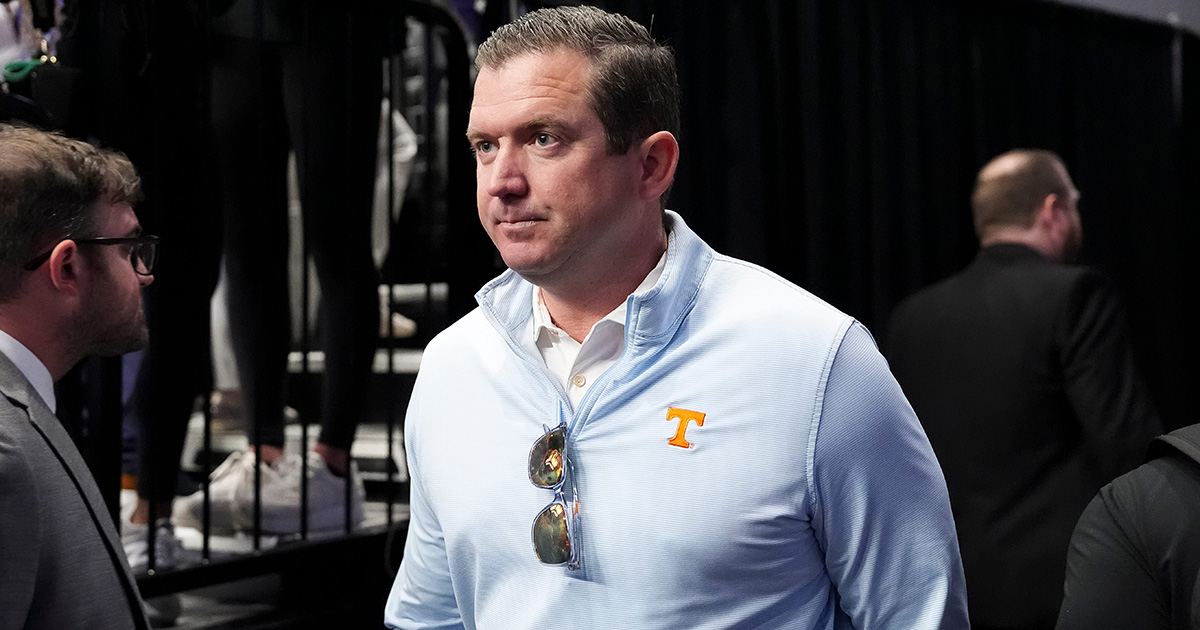
The Transfer Portal has yet to open, but there are already players announcing they’ll be entering. Oftentimes, that’s as coaches tamper with other rosters and offer improved NIL or revenue-sharing deals. Now, Tennessee Volunteers athletic director Danny White believes he has a solution.
White took to Twitter on Wednesday. There, he quoted a post from Dan Wolken of Yahoo Sports, saying, “Everyone in college sports knows the solution, they just don’t have the stomach (yet) to execute it.” Wolken himself was responding to a complaint from Missouri head coach Eli Drinkwitz regarding tampering. That solution, which White wanted to highlight, is collective bargaining with the players.
SUBSCRIBE to the On3 NIL and Sports Business Newsletter
This,” Danny White wrote. “There is a pathway to build a much healthier environment for college athletics within the current laws of our country – it’s called collective bargaining. It will be complicated, hard, and likely not perfect, but it’s far past time that we roll up our sleeves and do the work.”
Collective bargaining is relatively common in the United States and in professional sports. In essence, it’s when representatives, usually a union, negotiate on behalf of a group of employees with the employer. They do so to come up with legally binding agreements on contracts, wages, hours, working conditions, and other considerations.
This would be a seismic shift for college sports because of the reality that collective bargaining fundamentally involves employees. That’s a status that colleges and the NCAA have been very tentative to give to student-athletes.
There are a few benefits to collective bargaining. In particular, as the NCAA has lost court battles, forcing it to allow things like NIL and unlimited transfers, this would be a legal agreement that would set some rules in stone. For instance, the maximum that a program spends, how often players can transfer, and multi-year contracts could all be negotiated.
Danny White is far from the only one who has suggested that collective bargaining could help college sports and tampering, in particular. When the Transfer Portal was cut down to one window, former player Chase Daniel called it smart and called for collective bargaining. ESPN’s Rece Davis did the same, calling for collective bargaining to end tampering.
Separately, 23 different Power Four GMs backed collective bargaining in a closed-door Athletes.org meeting in August. That group, which didn’t have any names attached, “agreed in unison” that it would be the best path forward for college sports.
For his part, Danny White has been out in the open, pushing for major changes in college sports before. In the past, he’s shared a proposal to establish a national organization to employ and unionize athletes. Of course, those changes still appear to be a long way away.
NIL
Big 12’s Brett Yormark says college athletics needs legislation that’s stalled in Congress :: WRAL.com

ARLINGTON, Texas (AP) — Big 12 Commissioner Brett Yormark says legislation currently stalled in Congress is needed to regulate college athletics and put a stop to what he essentially calls uncapped spending for name, image and likeness in football.
“Let me be clear about this,” Yormark said Saturday before the Big 12 championship game between No. 5 Texas Tech and 11th-ranked BYU at the home of the Dallas Cowboys. “The House of Representatives must do what is right for over 500,000 student-athletes and pass the SCORE Act. We must protect their future, their well-being and their fair treatment. They deserve action and not excuses.”
An effort backed by the NCAA, the U.S. Olympic organization and the White House faltered in Congress this past week, with opponents raising concerns over the wide-reaching power it gives the governing body of college sports and its most powerful programs.
The NCAA and Division I conferences portray the legislation as codifying the rules created by the multibillion-dollar lawsuit settlement that allows college players to be paid, providing clarity that supporters say is long-needed.
House Republican leaders had planned to push the bill to a final vote this past week. But those plans were abruptly scrapped after a procedural vote to advance the bill nearly failed.
Yormark said he supports the revenue-sharing model that is part of the settlement and agrees with those who believe NIL spending on top of the $20.5 million could be destabilizing for college sports.
UCF coach Scott Frost said on national signing day this week he thinks college football is “broken” because of unregulated spending on players.
In 2017, Frost led the Golden Knights to a 13-0 record without a bid in the College Football Playoff, which included four teams at the time, before getting fired in the middle of a fifth unsuccessful season at Nebraska, his alma mater. UCF, which was in the American Conference for Frost’s first stint but has since joined the Big 12, went 5-7 in his return this year.
“I will be spending time with the commissioners next week on some of the challenges and issues that face collegiate athletics, and we’re working through them,” Yormark said. “But I want you to understand that nothing’s broken in this system. And I respect Scott. But nothing’s broken. It’s all about progress, not perfection. There is no perfection in any industry, but there is progress, and we’re making great progress.”
Yormark is ready for 16-team playoff
Yormark said he believes in the playoff model with five automatic bids, even if it might cost the Big 12 a second team this season. That scenario also fits his opinion that the CFP needs to be 16 teams — with 11 at-large bids — instead of the current 12.
“I believe that on a percentage basis, when there’s 136 FBS (bowl subdivision) schools, the number 12 is too low,” Yormark said. “We need more access for all the right reasons. And I’m very consistent about that.”
Yormark indicated he doesn’t think the playoff will expand for 2026, even with an extra eight weeks to try to reach an agreement. The new deadline is Jan. 23.
“I can tell you we’re working on it, but we can’t rush it,” Yormark said. “A lot goes into it. It’s not just about picking a number. You also have to look through a filter and say what are the unintended consequences of those decisions, which is what the commissioners and myself are working on. I’m not overly optimistic we’re going to be able to change anything for next year. But we’re in the lab.”
___
Get poll alerts and updates on the AP Top 25 throughout the season. Sign up here and here (AP News mobile app). AP college football: https://apnews.com/hub/ap-top-25-college-football-poll and https://apnews.com/hub/college-football
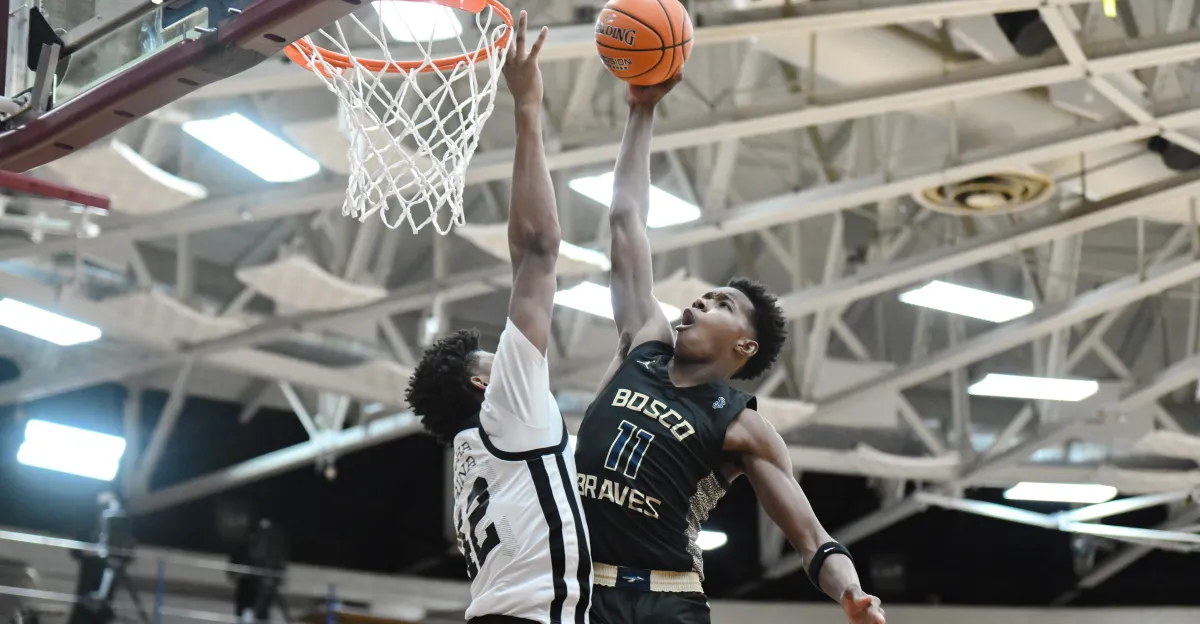
Collins, a 6-foot-8, 200-pound forward from Bellflower, California, is widely regarded as one of the premier frontcourt prospects in the country. His blend of athleticism, scoring ability, and defensive versatility made him a major priority for Kentucky head coach Mark Pope and his staff as they work to build future recruiting classes.
According to Jacob Polacheck of KSR, Collins’ recruitment is being heavily influenced by NIL structure and contract details, a growing trend at the top of the recruiting landscape. That reality was addressed publicly earlier this month by Kentucky athletic director Mitch Barnhart during Will Stein’s introductory press conference as the Wildcats’ new football head coach.
Barnhart pushed back strongly against the perception that Kentucky is at an NIL disadvantage, saying, “Enough about ‘have we got enough?’ We’ve got enough.” He also emphasized that Kentucky will not compromise its standards to land recruits. “We’ve got to do it the right way,” Barnhart said. “We’re not going to break the rules. That’s flat-out.”
While Kentucky no longer holds a crystal ball prediction for Collins, the Wildcats are not out of the race. However, his recruitment now appears far more fluid, underscoring the increasingly complex balance between elite talent, NIL expectations, and long-term program philosophy in modern college basketball.
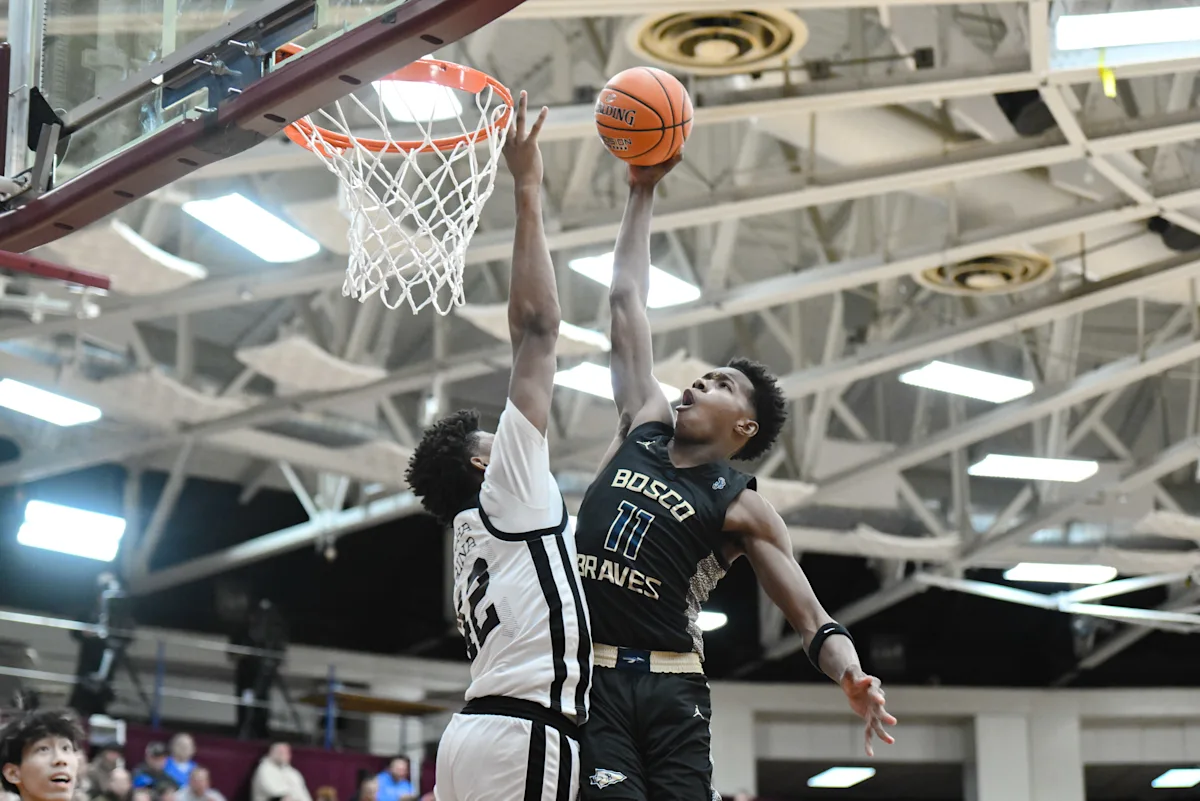
Kentucky Basketball suffered a notable recruiting setback this week as 247 Sports national analyst Travis Branham removed his crystal ball prediction for the Wildcats to land class of 2026 5-star power forward Christian Collins. Branham originally placed the prediction in early November, fueling optimism that Collins could commit to Kentucky as the early national signing period approached. That announcement never came, and momentum has since cooled.
Collins, a 6-foot-8, 200-pound forward from Bellflower, California, is widely regarded as one of the premier frontcourt prospects in the country. His blend of athleticism, scoring ability, and defensive versatility made him a major priority for Kentucky head coach Mark Pope and his staff as they work to build future recruiting classes.
Advertisement
According to Jacob Polacheck of KSR, Collins’ recruitment is being heavily influenced by NIL structure and contract details, a growing trend at the top of the recruiting landscape. That reality was addressed publicly earlier this month by Kentucky athletic director Mitch Barnhart during Will Stein’s introductory press conference as the Wildcats’ new football head coach.
Barnhart pushed back strongly against the perception that Kentucky is at an NIL disadvantage, saying, “Enough about ‘have we got enough?’ We’ve got enough.” He also emphasized that Kentucky will not compromise its standards to land recruits. “We’ve got to do it the right way,” Barnhart said. “We’re not going to break the rules. That’s flat-out.”
While Kentucky no longer holds a crystal ball prediction for Collins, the Wildcats are not out of the race. However, his recruitment now appears far more fluid, underscoring the increasingly complex balance between elite talent, NIL expectations, and long-term program philosophy in modern college basketball.

Less than two months after announcing his intention to run for lieutenant governor in Alabama, former three-time national champion Crimson Tide quarterback AJ McCarron has announced he will exit the race.
McCarron is seeking to rededicate himself to football, an effort that will require “100% of my focus, commitment, and attention that I was to give to the office of lieutenant governor, so it is time to end my campaign,” he said in a statement.
A historic career at Alabama
McCarron led the Crimson Tide to back-to-back BCS national championships in 2011 and 2012 and was part of the national title team as a redshirt player in 2009.
A native of Mobile, the quarterback became the first player at his position to win consecutive BCS titles and also received several of college football’s more prestigious awards, including the Maxwell, Johnny Unitas Golden Arm, and Kellen Moore Awards.
As a junior, McCarron established an Alabama record with 30 touchdown passes in a season, and broke Greg McElroy’s former record with 3,063 passing yards in a season during his senior campaign in 2013.
McCarron finished his Alabama career with a 36-4 overall record, completing almost 67 percent of his passes with 77 touchdowns and 15 interceptions.
McCarron in the NFL
The quarterback emerged as a fifth-round selection in the 2014 NFL Draft by the Cincinnati Bengals, playing as a backup for four years.
McCarron spent the next four seasons as a reserve first with the Oakland Raiders, followed by a stint with the Houston Texas, and finally the Atlanta Falcons.
From there, he played in the XFL with the St. Louis Battlehawks, a franchise that then moved to the United Football League.
McCarron’s political ambitions
The former quarterback star was running as a Republican for the second-highest office in his home state, a move he said was inspired by the murder of conservative political activist Charlie Kirk.
“Alabama’s conservative and cultural values are under attack from every direction,” McCarron said in his announcement for office.
“That’s why Charlie Kirk’s assassination affected so many of us so deeply. His example convinced me to get off of the sidelines, get into the game, and stand tall for our conservative beliefs.”
McCarron currently serves as a college football commentator as part of The Dynasty podcast, which he presents with fellow Alabama alum Trent Richardson and Crimson Tide broadcaster Chris Stewart.
More college football from SI: Top 25 Rankings | Schedule | Teams
Follow College Football HQ: Bookmark | Rankings | Picks

Florida Volleyball Adds Three Transfers to 2026 Roster

Predicting landing spots for the Top 5 college football transfers (Dec. 17)

“I’m Lucky To Be At A Volleyball School”

Louisell Named AVCA All-American – James Madison University Athletics

No. 3 Volleyball Faces No. 1 Pittsburgh in Final Four – Texas A&M Athletics

Ironton Auto Body Challenge Set For Indoor Auto Racing

Cape Girardeau’s new youth sports complex takes shape as turf installation begins

Tennessee AD Danny White calls for collective bargaining to fix college sports

No. 3 Volleyball earns three AVCA All-America honors
Women’s Basketball Battles In Front Of Youth Day Crowd

A First Look at the TLTC Innovation Hub

Big 12’s Brett Yormark says college athletics needs legislation that’s stalled in Congress :: WRAL.com

EXEC: Youth Sports Participation Challenged by Escalating Costs, Income Disparity

Four Members of Pack Volleyball Earn Academic All-District Honors

Republicans say sports could stem school, gun violence as Democrats push back

First Tee Winter Registration is open

Fargo girl, 13, dies after collapsing during school basketball game – Grand Forks Herald

CPG Brands Like Allegra Are Betting on F1 for the First Time

F1 Las Vegas: Verstappen win, Norris and Piastri DQ tighten 2025 title fight

Volleyball Recaps – November 18

Sycamores unveil 2026 track and field schedule

Two Pro Volleyball Leagues Serve Up Plans for Minnesota Teams

Utah State Announces 2025-26 Indoor Track & Field Schedule

Redemption Means First Pro Stock World Championship for Dallas Glenn

Texas volleyball vs Kentucky game score: Live SEC tournament updates

Jo Shimoda Undergoes Back Surgery

SoundGear Named Entitlement Sponsor of Spears CARS Tour Southwest Opener

Bowl Projections: ESPN predicts 12-team College Football Playoff bracket, full bowl slate after Week 14

How this startup (and a KC sports icon) turned young players into card-carrying legends overnight

Robert “Bobby” Lewis Hardin, 56

 NBA Legend Michael Jordan to Join NBC Sports as Special Contributor
 Why a rising mid-major power with an NCAA Tournament team opted out of revenue-sharing — and advertised it
 Falcons mailbag
 Portal Update – Basketball and Gymnastics Take Hits
 has always dreamed in Mercurial. Now his initials are on the boots.
The new Kyl…
has always dreamed in Mercurial. Now his initials are on the boots.
The new Kyl…
-
 Motorsports3 weeks ago
Jo Shimoda Undergoes Back Surgery
-
 NIL2 weeks ago
Bowl Projections: ESPN predicts 12-team College Football Playoff bracket, full bowl slate after Week 14
-
 Motorsports1 week ago
SoundGear Named Entitlement Sponsor of Spears CARS Tour Southwest Opener
-
 Rec Sports3 weeks ago
How this startup (and a KC sports icon) turned young players into card-carrying legends overnight
-
 Rec Sports3 weeks ago
Robert “Bobby” Lewis Hardin, 56
-
 NIL3 weeks ago
Indiana’s rapid ascent and its impact across college football
-

 Motorsports3 weeks ago
Pohlman admits ‘there might be some spats’ as he pushes to get Kyle Busch winning again
-
Sports3 weeks ago
Wisconsin volleyball sweeps Minnesota with ease in ranked rivalry win
-

 Motorsports1 week ago
Donny Schatz finds new home for 2026, inks full-time deal with CJB Motorsports – InForum
-

 Motorsports3 weeks ago
Increased Purses, 19 Different Tracks Highlight 2026 Great Lakes Super Sprints Schedule – Speedway Digest