
NIL
West Texas boom



WEST TEXAS — Cody Campbell signed some of his earliest land acquisitions on the hood of work trucks at drilling sites across the Permian Basin.
A three-year starter along the offensive line at Texas Tech from 2001-04, Campbell didn’t have the backing of a major investor when he went out prospecting. It was just him and John Sellers, a former teammate at Canyon High School and Texas Tech. The pair of Canyon Eagles fittingly named their startup Double Eagle Energy. And at the beginning, the risks seemed crazy for the former real estate agents looking for a new trade after the housing market collapsed in 2008.
When the market went down, Double Eagle decided to pounce. They scoured the Permian Basin, putting every cent they had into searching for leases. As opposed to the big boys who outsource such tasks, Campbell and Sellers mined through land registers themselves to buy mineral rights. There were no guarantees that any would hit it big. Hell, they were closer to bankruptcy than billionaire status.
“We were the underdog,” Campbell said. “And we had to find out a way to squeeze out some success amid titans, among huge companies.”
In one legendary story, they bought a landowner a first-class ticket to London by spending $9,800 on a $10,000 credit card as a form of payment to extend a lease. It took until the final hour before the option expired before Double Eagle managed to find a buyer. The seven-figure deal helped keep the company barely above water.
Then, the timing hit just right. Oil prices crashed, allowing Double Eagle to buy up massive swaths of land. Technology advanced, allowing drillers to get a great quantity of oil with less expense, supercharging the margins. Earlier this year, Campbell and Sellers made one of its biggest deals ever, selling for more than $4 billion of cash and stock.
Campbell has spent his whole life looking for investments. His latest brings him back home. A fourth-generation Red Raider, Campbell’s great-grandfather was part of the first ever class at Texas Tech in 1925. His dad and brother played sports there. In April, he was named Chairman of the Board of Regents, giving him a formal leadership role with the school.
But 20 years after he left Tech for the Indianapolis Colts, football is still everything to him. He has been in the ear of President Donald Trump and was set to co-chair a Presidential Commission. He has spent more time, money and effort helping Texas Tech football than almost anyone. And in college football’s Wild West era, he once again saw opportunity.
“College sports are a business more than they’ve ever been before,” Campbell said. “And I think it does require a business mindset in order to be effective. Every dollar you spend, every move you make, has to be thought about as an investment.”
Last season, after a frustrating loss to Colorado, a fan jeered at him on social media, asking him to “buy us an O-line.” Campbell responded simply: “I will.”
Little did we know, that plan was put into motion months earlier. It’s not enough to improve a football team. It’s a roadmap to showcase an entire region.
I. The Landman’s Plan
Giant windmills start to appear as you drive up Highway 84 towards Lubbock from Dallas. There’s motion on the horizon, and then you’re surrounded by whirling turbines dotting the plateaus.
A cracked sign points to the Fluvanna Renewable Energy Project. Beyond is a lone rusted oil pump jack, slowly pulling black gold from the ground. But the creak of the jack is overpowered by the rustle of the whirling blades. Energy is king out here, and it doesn’t matter how you find it.
Lubbock is called the Hub City. Its centralized location at the floor of the Panhandle connects all the parts of West Texas. Down south is the Midland Basin, which remains one of the most fertile oil deposits in the world. North is the Panhandle, filled with cattle and ranchers. West is the gateway to the trails of the American Southwest, while east leads to the shining economic powerhouse of the Metroplex.
At the center of the spoke lies Texas Tech. Founded in 1923, it has become one of the most important institutions in the region. It produces most of the lawyers, doctors and businessmen that fill West Texas. The university’s research arm has been critical to growth in the energy, agricultural and weather sectors.
The central location means Lubbock is transient, ready to follow the winds of change. And the winds were blowing on college football.
Texas Tech Athletics
It was July 2024. Campbell called a meeting with football coach Joey McGuire, general manager James Blanchard and a select few other administrators in athletic director Kirby Hocutt’s private conference room. There, he laid out his big idea.
Paying players is legal, and there’s no cap. After the season, de facto free agency will open. There’s no guarantee this world will last forever. When players enter the transfer portal, we should be ready to pounce.
The goal was to finish with a top-five transfer class and supercharge the roster in time for the Big 12 race. With Campbell leading a cadre of megaboosters — including Sellers, Gary Petersen and Dustin Womble — money was no object.
“It was just analysis of the legal situation and the business situation,” Campbell said. “That’s what we do every day at work, find opportunities to gain competitive advantages. I saw it as no different than a business deal.”
Texas Tech once became the story of college football because of its innovation, when Campbell’s former coach Mike Leach turned pea shooter-armed quarterbacks into household names.
At least 11 former players and assistants under Leach went on to become FBS head coaches. A decade later, Patrick Mahomes revolutionized the brand and now sits as the best quarterback in the NFL. But for all the towering legends, success has been sparse.
Campbell was an offensive lineman under Leach and started in three straight bowl victories. The program reached its top ranking in nearly 30 years. He got a taste of success.
Seeing wide-open spaces on the horizon, the landman wanted more.
Campbell’s foresight ended up being a premonition. On July 1, 2025, revenue sharing will begin after the House v. NCAA lawsuit was formally settled. The era of a fully uncapped college athletics roster is potentially over. The offseason was a last gasp. And with it, 2025 becomes a truly once-in-a-lifetime opportunity for investment. This could be the oil boom all over again, but this time at Campbell’s alma mater. Or, the credit card could finally find itself maxed out.
“It’s a moment in time and an opportunity that may not exist again in the next decade,” Hocutt said. “It’s an opportunity to go all in.”
II. The Wildcatting Scout
In a previous life, Blanchard assembled fire hydrants while doing amateur scouting message boards. He’d put them together, from screwing on nuts and bolts to painting them red, and was paid six figures. Maybe that gave Blanchard his trademark attention to detail.
Joey McGuire made him his first hire when he got the Texas Tech job after he proved himself in the Baylor scouting office. In the years since, he’s become one of the most sought-after GMs in the sport, most notably turning down an offer from Marcus Freeman at Notre Dame.
Months before the portal opened, Blanchard’s staff created a massive recruiting board of potential transfer targets. Many of them would never pan out, or would leave for the NFL. It didn’t matter; it was all about being prepared. Other programs would have to go through a chain of command. Not Texas Tech.
“Our work is already done,” Blanchard said. “We could just get him on campus, we already know what he is, what we’re looking for and what we want to do with him.”
At the same time, Blanchard evaluated the roster. Bringing back veteran quarterback Behren Morton and star linebacker Jacob Rodriguez meant high-dollar positions could be avoided. But while watching the Philadelphia Eagles bulldoze their way to the Super Bowl with elite trench talent, Blanchard knew where he wanted to spend his money.
The rise of the college sports GM: As the game goes professional, only the head coach may have more power
Dennis Dodd

While blue-blood programs scattered looking for overpriced quarterbacks and receivers, Texas Tech perfected its pitch to the big men. Howard Sampson, for example, had a strong relationship with former coach Mack Brown at North Carolina. McGuire, as a former Texas high school coach, remains close with Brown. They FaceTimed on his visit and Sampson, the No. 14 player in the portal, locked in his commitment.
On Dec. 16, 2024, Georgia Tech edge rusher Romello Height entered the transfer portal. Texas Tech reached out to his agent early. Within days, Height was on campus. Immediately, he was blown away by the thoroughness and honesty of the presentation. He didn’t want to go anywhere else. He canceled the rest of his visits and committed on Dec. 19.
“Like why not?” Height said. “You’ve got everything you need. You’ve got a great coaching staff. You’ve got players who want the same things as you. Like man, everything is here. Everything is here.”
There’s also one more ace up the sleeve that Texas Tech deployed. The Womble Football Center, a $242 million facility, just opened in 2025. It features a massive weight room, elite nutrition services and state of the art recovery tools. It also has a barbershop, two player lounges and more places to relax. Defensive coordinator Shiel Wood dubbed it the “Football Resort.” As more money goes directly to players and moves away from facilities, competing with it will only get harder for rivals. The timing was impeccable.
The pitches worked well, maybe better than expected. McGuire takes official visitors out to a steakhouse in Lubbock called Las Brisas, a local favorite. He usually orders a filet mignon with a peppercorn crust, cooked medium with mashed potatoes and asparagus, which he calls one of the best steaks of his life.
During one stretch in December, McGuire ate out there so much with recruits — every day for more than two weeks — that he had to mix it up with the tortilla crusted chicken penne. Even for a native Texan, there’s only so much red meat one man can eat.
“I mean we’re bringing in people and we had a plan of, this is the number that we need,” McGuire said. “But then we turn around and you’re like, well we can’t not take this guy. It just makes us so much better.”
Texas Tech Athletics
Five transfers turned to 10. Ten turned to 20. These are players that major programs wanted, including 13 blue-chips. What the hell was going on in Lubbock?
Perhaps the biggest flex for Texas Tech was its final piece. Stanford edge transfer David Bailey entered the portal in March after coach Troy Taylor was fired. Because of the timing, every program in the country fought for his services. A Los Angeles native who played in the Bay Area, Bailey was ultimately convinced to take a trip to Lubbock.
Bailey graduated with a degree from Stanford, so his education was set. It was time for a masters in NFL development. An offer of more than $2 million, sources tell CBS Sports’ Chris Hummer, got his attention. Getting into the Football Resort and seeing the high-powered transfers that found everything they needed in Lubbock convinced him to shut it down.
“I told everybody that asked, what I wanted in a transfer was to take my football skills to the next level,” Bailey said. “I wasn’t really aware at all of what they were doing recruiting defensive talent to the roster. When I found out about that, that’s what really sparked my interest.”
So instead of Texas or UCLA, his other two finalists, Bailey opted to sign with Texas Tech. His addition pushed the recruiting class to No. 1. Heads turned towards West Texas.
III. The Ringleader
Kirby Hocutt wishes he saved the voicemail. Joey McGuire, then an assistant at Baylor, had gotten hold of his number. The two sides had yet to make real contact or hold a formal interview.
“I’m not going to be able to live with myself if I don’t make this phone call,” Hocutt recalls McGuire saying. “I just want you to know, you need to hire me as your head football coach.”
It was a brash, bold call for a coach who was coaching high schoolers only five years prior. He had never called plays at the collegiate level and was regarded as more of a recruiter. His only collegiate experience came at Baylor, and it was limited. Turning also-ran Cedar Hill High School into a three-time state champion means something in this state, but enough to hire a power conference football coach?
But in the moments after that message, Hocutt’s phone rang off the hook. High school coaches from around the state reached out vouching for McGuire. They said the Texas High School Coaches Association — of which McGuire is a Hall of Honor member — would all but guarantee that he had success at Texas Tech.
“I’ve never seen anything quite like it,” Hocutt said.
Hocutt ultimately took the shot and hired McGuire. Texas Tech’s previous coach, Matt Wells, got into hot water at a radio show when he struggled to name what he loved about Lubbock. On Day 1, McGuire was the opposite. He saw a West Texas community that needed a cheerleader, and was ready to step in.
“I’m a unicorn in coaching,” McGuire said at his opening press conference. “I have now been at four places: I was at Crowley for four years, I was at Cedar Hill for 20, I was at Baylor for five, and I will die here at Texas Tech.”
Texas Tech Athletics
Three years into the job, McGuire has not backed down from those comments. He wants to spend the rest of his life in Lubbock. A rival team recently showed a potential recruit a video that seemed to claim McGuire was looking to leave. McGuire laughed when the recruit called. Of course he’s not going anywhere. He crawled over glass to get this job. It’s got everything he needs.
“I think he understands when he has a good thing,” Blanchard said. “A lot of football coaches on the college side, their mindset is always elevate, elevate, next step, next step. He was at Cedar Hill for a long time and had a lot of success, but he was the guy who sat back and built.”
And build he has. McGuire led Texas Tech to the first three-year run of consecutive winning conference records since 1996. He is the first coach to win consecutive bowl games at Texas Tech since 2007.
In all the best ways, McGuire is a high school coach. And in many of those best ways, he’s uniquely prepared for this moment. Like a high school coach, relationships are everything for McGuire. Every Wednesday, Tech’s staff takes the whole roster to breakfast and forces them to sit with a new group to learn about their teammates.
“Coach McGuire is different, man,” Height said. “His energy, the bonds he creates with his players, I’ve never seen a head coach so tight with their players. Come get in the pool, come shoot basketball on the court, come chill, just kick it, watch a game. I’m pretty sure he knows every single name on the team, walk-ons and all, because that’s just the type of coach he is.”
Last week they went to Dave and Buster’s. This week, there’s a scheduled three-point contest. His home is open to any of his players, and his wife, Debbie, is the consummate coach’s wife after 14 years as the first lady at Cedar Hill. Academic performance is through the roof. Nothing is too small for him to worry about.
“Coach McGuire does a great job of making this place feel like home,” offensive coordinator Mack Leftwich said. “I always tell people, within two days of being here, you feel like you’ve been here for 10 years.”
But more than his relationships, McGuire is a visionary. Hocutt describes him as being “all in.” And for a program that has not been pushed in a while, McGuire’s urgency was a shot in the arm. It gave Texas Tech permission to dream.
“I’m driven by trying to do things that haven’t been done somewhere and then people saying it can’t be done there,” McGuire said. “And, you know, I want to prove people wrong that, no, it can be done here.”
IV. Boomtown
For generations, the city of Lubbock used to end around 82nd Street. From there, it was cotton fields and cattle. There was one ring of highways around the city. No longer. Now at the corner of 82nd Street and Quaker, there’s a Sprout’s Farmers Market, a harbinger of a future to come.
Down the road are a golf course, health food spots and a Target. The new developments are essentially indistinguishable from the wealthier developments in Dallas or Houston, though about 30% cheaper for similar builds. Around 120th Street, the subdivisions are replaced by developer signs promising new builds popping up soon where golden waves of grain lie. Lubbock is not resting on its laurels, and Texas Tech is the public face of it.
“Our coaches at the university are phenomenal,” said John Osborne, CEO of the Lubbock Economic Development Alliance. “Every one of them is a champion for Lubbock.”
Where the old firehouse sits is now an art district, centered by the Louise Hopkins Underwood Center for the Arts gallery. Once a month, the organization organizes a First Friday Art Trail, where locals can walk along or jump on a free trolley to see all the galleries.
I asked Judy, who was manning the front desk of LHUCA, how many people showed up to these events. A few hundred?
“No, more like thousands,” she said.
Locals pointed me to brand new spots sprouting up across town, both in the old and new parts. There’s a burgeoning brewery community complemented by wineries — did you know West Texas produces grapes? There’s a tapas bar, scenic overviews, rousing live music scene and tasting menu organized by a James Beard-nominated chef.
“Go to this spot,” many said. “You wouldn’t believe you’re still in Lubbock.” It’s time to stop being surprised, though. This is the new Lubbock. You might have missed it.
Annie Rice/USATSI
Lubbock’s reputation of dust and cacti is well known, enough so that a then-TCU assistant subtweeted Texas Tech with a cactus emoji on social media a few years ago. Texas Tech fans and staff responded by adding cactus emojis to their social media handles.
“People negatively recruit this place so hard that it actually works to our benefit,” Blanchard said. “They say there’s nothing but cactuses out here, no city. When they get out here, they’re like, ‘Blanch, they lied. This place is great.'”
Lubbock rejects the idea that anyone should have to sacrifice to live there. The city is trying to serve its burgeoning young population, with an exploding number of residents under 30. Property values are cheap. New coffee shops and restaurants are competitive with major metros. There’s a thriving small business community. There are the hipster mustaches that would look right at home in Austin. It has everything you need.
The growth of Texas Tech represents a life blood for the community. In the past 20 years, the school has grown from an enrollment of 28,000 to more than 40,000. Applications are up. More graduates than ever are staying in Lubbock after graduating, especially as the economy diversifies.
“It’s not like people drive past campus every day and are reminded of us,” Campbell said. “They’re reminded when they see us on TV and having success. So for us, that athletic exposure is maybe more important than it is for most schools.”
The softball program spent a million bucks to land prized pitcher NiJaree Canaday out of the transfer portal a year ago, and will retain her services again this upcoming season for another seven-figures. The free advertising from Texas Tech’s out-nowhere-run to the Women’s College World Series Finals — with Mahomes in attendance — may spike another attendance boom.
“All the times that they make national news highlights the fact that they’re here in Lubbock, that they’re here in West Texas, and this is a great place,” Osborne said. “That makes them want to come here, and once they get to Lubbock, they realize this is a great place and they think about staying long term.”
As rents and housing prices have exploded in other major Texas metros, more Texas Tech graduates and West Texas natives are returning. The population grew 12% between the 2010 and 2020 census, and estimates say the combined statistical area cleared 400,000 last year.
Lubbock knows that it’s an underdog in this state when compared to Dallas, Houston or Austin. It knows that people view it as flyover country. But that’s why Texas Tech is so important. There’s movers and shakers in Lubbock, Texas. It’s tiring to be West Texas against the world. Texas Tech is ready to step to the mat.
“Anyone that believes that West Texas is dying, they have absolutely no idea what they’re talking about,” Hocutt said. “When you talk about the food and fuel and fiber that funds so much of this state, it’s right here in West Texas. I think it’s one of the country’s best kept secrets, but that’s what football and athletics can help us change because it doesn’t need to be a secret.”
V. All In
It’s a Tuesday night in October 2023 and Debbie McGuire, Joey’s wife, gives him a call. She’s on her way home from mahjong night and she is not happy. Texas Tech is 3-5 after flubbing two nonconference games and the train looks ready to slide off the track.
“Joey,” she says. “You gotta start winning some games. I just have got such good friends and I absolutely love living here.”
The message was clear: This is a great thing, stop screwing it up.
Joey reassured her that he was trying his best, but it ended up being a turning point. The Red Raiders went on to go 4-1 in their final five games and finished with a second straight winning record. The pressure silenced. Mahjong night was safe. This year, things are different.
At Texas Tech, there have never been such expectations. And with the new capped era starting on July 1, it comes with an expiration date. The 2025-26 school year is an experiment, an investment property. It will either deliver or fail. And there will be no excuses if it fails.
“I see Texas Tech as a stock and this is the equivalent of getting Bitcoin when it was 13 cents, or Tesla or Apple at their IPO,” Blanchard said. “I think Cody Campbell sees that, he’s so forward thinking.”
Sure, but history is also littered with failed startups built on hubris. Pets.com was supposed to revolutionize ecommerce. Instead, it was a total disaster. Texas A&M’s expensive No. 1 recruiting class in 2022 has become a perpetual punchline in the state, and led to the firing of Jimbo Fisher. Bitcoin and Tesla stock have seen calmer days. The modern world is built on chaos.
West Texans know better than most the boom-or-bust cycle of the energy markets. When the wells dry up or demand sags, the economy of place collapses. Filet mignon dinners become dried beans, and not everyone survives it. But that’s why striking during the boom times is so important.
Each of the last two years, Texas Tech’s expectations have fallen with a thud. No one cares about winning seasons when you claim, like McGuire has, that the Big 12 runs through Lubbock.
“If there’s not big expectations, you’ve got to be on a different planet,” McGuire said. “You’ve got to be blind and not see everything that was done. Like come on, let’s be Captain Obvious here and say there’s some really big expectations. Why try to push that down or guard yourself?”
Texas Tech Athletics
After reeling in the No. 2 transfer class in the nation, the Red Raiders are tied for best odds to win the Big 12 title with four other teams, according to BetMGM. Texas Tech has not won an outright conference championship since 1955 in the Border Conference, and never even played for the Big 12 title. And with a one-year uncapped window, there’s no room for error. This is their shot.
“I’d be lying if I said I don’t feel the pressure,” Bailey said with a laugh. “But I feel like you can’t let that get to your head. You have to take it day by day, checking the boxes and showing what you can control.”
Texas Tech’s strategy — which as one college basketball coach assistant described nonverbally by scratching his thumb and index finger together, the universal symbol for moola — has led to some massive wins, too. Men’s basketball star JT Toppin won Big 12 Player of the Year after transferring from New Mexico. Despite being mocked as a first-round NBA talent, Toppin wanted to return. He felt he had more to work on. NIL gave him that opportunity.
Toppin signed a deal nearing $4 million, per CBS Sports’ Matt Norlander, to return to Texas Tech. Returning also meant he could help recruit five blue-chip transfers to join him on a breakout Red Raiders squad that lost in the Elite Eight to eventual champion Florida.
“It changes our families lives,” Toppin said. “It changes our lives and it just makes us more motivated to play the sport because we know our family’s good. Now we just get to go out and play. It just makes everything more stress free, and that’s just an amazing feeling.”
In 2006, Cedar Hill had zero playoff wins in program history. McGuire helped lead them to an unlikely state championship. From that moment on, it set the tone. Cedar Hill was a place for champions. His run from there was almost unmatched. And as Leftwich pointed out, it was in McGuire’s fourth season at Cedar Hill that set everything up. McGuire is entering his fourth season at Texas Tech.
That’s the goal. That’s the opportunity Texas Tech has. If the Red Raiders make it to Arlington and reach the College Football Playoff, everything changes. The stature of the program changes.
“You can’t negatively recruit against us facility-wise,” McGuire said. “We’re revenue sharing at the highest level. So now we need to go do something that hasn’t been done. We need to be in the mix. We need to go play at AT&T Stadium and then you check that box off and then you create what we did at Cedar Hill where you have a chance to win every year.”
Mess up this season and everyone is on the hot seat. The honeymoon is over. It’s a once in a lifetime opportunity to outflank even the top programs in college football.
It’s scary, Blanchard acknowledges it. But the high school football coach, the fire hydrant assemblyman, the washed-up NFL lineman from Canyon… none of them were supposed to be here anyway. Why not go out swinging?
“With risk comes reward, and I don’t know any reward that didn’t come with great risk,” Blanchard said. “I would rather be risky and put all the chips in and see what happens than live as a pessimist and wonder, what if? Man, let’s go out shooting. Let’s blaze our guns and see what happens. There won’t be a lot of excuses if what we have isn’t very successful.”
VI. Homeward Bound
I pulled up to Evie Mae’s in Wolfforth, just outside of Lubbock, as it opened on Tuesday morning. It was my final destination before getting on the road back to Dallas. It’s an old-school Texas barbecue stop, the kind that closes on Mondays to reset and sets hours only based on when it sells out.
Locals have long claimed the spot was one of the best barbecue joints in Texas. In 2025, it was finally rewarded with a top 10 selection by Texas Monthly, the pinnacle of the craft. Finally, the big whigs saw what was happening out here in West Texas.
“It’s about damn time,” a patron chuckled.
I ordered a two-meat plate to go—after a quick taste of rib and brisket that proved Evie Mae’s deserved all the accolades. By the register, a hand-lettered sign pointed to a cooler of loose Miller Lite and Michelob: “Free beer. Be cool.”
Shehan Jeyarajah/CBS Sports
I skipped the beer, grabbed my bag, and hit the road. Daylight makes pulling out of Lubbock a lot easier.
About an hour east, traffic came to a halt on Highway 82. Three semis eased into a wind farm, each hauling a 170-foot turbine blade. The next Texas Tech billionaire, I thought, will trade oil for wind.
While we idled, I dug into my takeout — brisket first, then creamed corn — before realizing I’d forgotten a fork. No matter, I had everything I needed.
So I ate with my fingers on the dusty shoulder of the road. No fork, no napkin, just West Texas, barbecue, and the future turning in the distance.

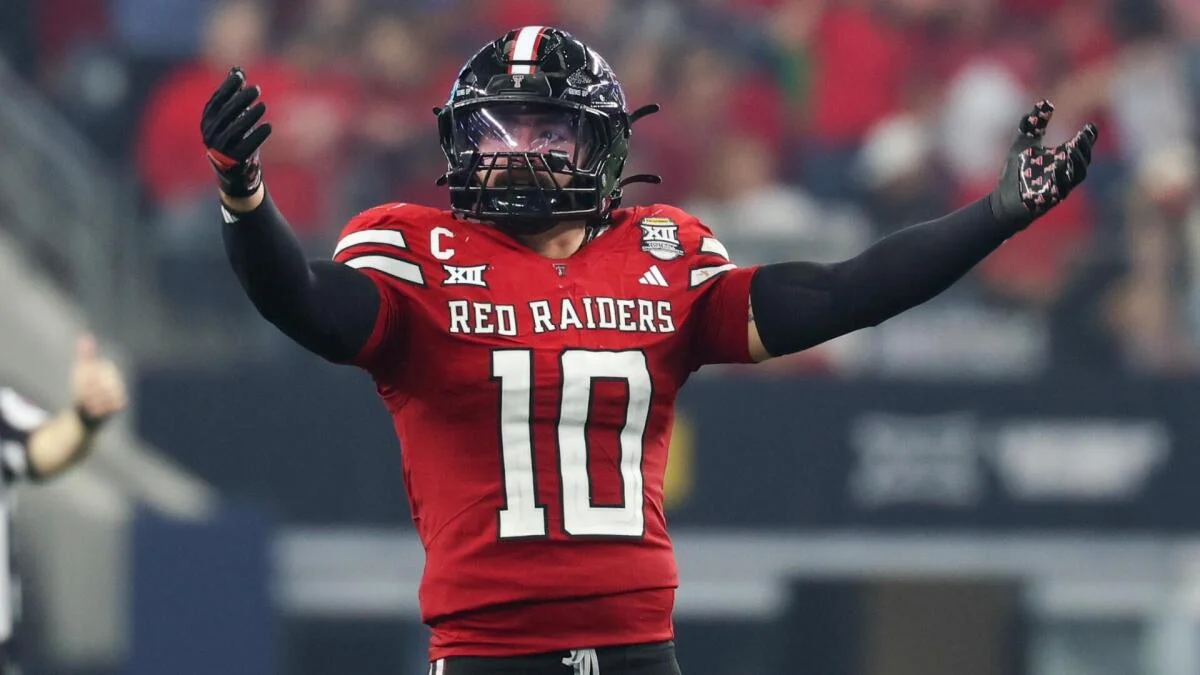
The quarterfinals of the College Football Playoff are upon us, which means the four top seeds will finally get their postseason campaigns underway after a lengthy break following conference championship weekend.
No. 4 Texas Tech waited the longest to officially learn its quarterfinal opponent. But given that No. 5 Oregon entered the first round as a three-touchdown favorite over No. 12 James Madison, the Red Raiders likely got a head start preparing for the Ducks. Despite a spirited effort from the Dukes, Oregon overwhelmed the Sun Belt champions to set up the expected Orange Bowl showdown with Texas Tech — a matchup that could be one of the best games of the entire Playoff.
There’s a fitting symmetry to the pairing. Oregon, once college football’s “new money” program, will face the NIL era’s fastest riser in Texas Tech. The Ducks have established themselves as a consistent national contender over the past two decades, while the Red Raiders poured major resources into their program and surged to the top of the Big 12 this season as a result.
In many ways, Oregon represents a blueprint for how a program like Texas Tech can build sustained excellence. On New Year’s Day in Miami, the Red Raiders will get a chance to show they’ve already closed that gap.
For two programs long defined by high-powered offenses, the defining trait of this season has been dominant defense. Both teams have been excellent offensively — they’re both top 10 nationally in scoring — but their defenses have been the engines of their success. As a result, both offenses will face a significant challenge trying to move the ball consistently in this matchup.

What to know about Texas Tech
The Red Raiders earned the No. 4 seed by riding one of the nation’s best defenses to a dominant season in the Big 12. Aside from a midseason stumble at Arizona State, Texas Tech bullied its way through the conference, including a pair of blowout wins over BYU that cemented a top-four finish in the CFP rankings and secured a first-round bye.
Texas Tech’s defense ranks among the elite nationally, finishing third in scoring defense at 10.9 points allowed per game — trailing only top seeds Indiana and Ohio State. All four of the Red Raiders’ AP All-America selections came on the defensive side of the ball, including first-team honors for linebacker Jacob Rodriguez and EDGE David Bailey.
That star-studded unit will be tasked with slowing an Oregon offense that found its rhythm in the second half of the season and finished ninth nationally in scoring at 38.2 points per game. When the Ducks have the ball, it will be a true strength-on-strength battle. Oregon ranked 14th in rushing offense at 218.4 yards per game, while Texas Tech finished No. 1 nationally in rushing defense, allowing just 68.5 yards per game.
Oregon faced two other top-10 defenses in 2025 and failed to crack 21 points against either — scoring 18 in a win over Iowa and 20 in a loss to Indiana. The Iowa game was played in a downpour, but Indiana held the Ducks to 81 rushing yards on 30 carries. Expect Texas Tech to study that film closely in hopes of replicating what the Hoosiers did up front with their own ultra-talented front seven.
The biggest question for Texas Tech is whether its No. 2 scoring offense can hold up against Oregon’s stout defense. The Red Raiders overwhelmed the Big 12, but in their biggest games — against Utah and BYU twice — the defense led the way. Oregon represents another step up in competition, and Behren Morton, Cameron Dickey and the rest of the offense will need to bring their A-game.
What to know about Oregon
The Ducks did what was expected in a convincing first-round win at home, overpowering James Madison to set up a heavyweight clash in the Orange Bowl.
The challenge for Oregon will be creating space for its playmakers against a hard-hitting Texas Tech defense. Against James Madison, the Ducks enjoyed a clear speed advantage and exploited it throughout the game. The margins will be far tighter against the Red Raiders.
Oregon typically sets up the pass with the run, but that approach may be flipped against Texas Tech. Quarterback Dante Moore could be asked to shoulder more of the load early, using the passing game to loosen the Red Raiders’ front and open opportunities on the ground.
Saturday night’s game against James Madison saw Oregon get almost anything it wanted offensively. That will not be the case on Jan. 1, but Moore looked sharp throwing the ball. His confidence and willingness to push it downfield will be critical if the Ducks’ offense is going to have success against Texas Tech.
Defensively, the question is whether Oregon can create negative plays to knock Texas Tech off schedule. The Red Raiders would prefer to lean on the run game and avoid putting too much on quarterback Behren Morton. Despite a strong overall defensive season, Oregon ranked near the bottom nationally in havoc metrics, finishing with 57 tackles for loss (113th in FBS) and 23 sacks (81st).
Texas Tech’s offense stalled early at times against Utah and BYU, largely due to backfield pressure. While both defenses eventually wore down after spending extended time on the field, the blueprint for slowing the Red Raiders is clear: generate pressure and speed up Morton’s decision-making.
Oregon has been steady defensively all season, but it may need to be more creative in manufacturing the disruption necessary to give Texas Tech problems.
Odds below via FanDuel Sportsbook.
Orange Bowl odds, prediction
I expect a highly competitive game in Miami between the Red Raiders and Ducks as I think there are a lot of similarities between these two teams. Both defenses are excellent and when at their best, the offenses can put up points in bunches. To me this game comes down to which offense can create more explosive plays in a variety of ways, because both defenses are so talented and so good at adapting in-game. I give the Ducks the edge in that department thanks to Moore and see him leading Oregon to a bit of quarterfinal revenge after last year’s dud in the Rose Bowl. PICK: Oregon -1.5
If Sun Devil fans want to stay competitive in the Big 12, they better pony up the big bucks.
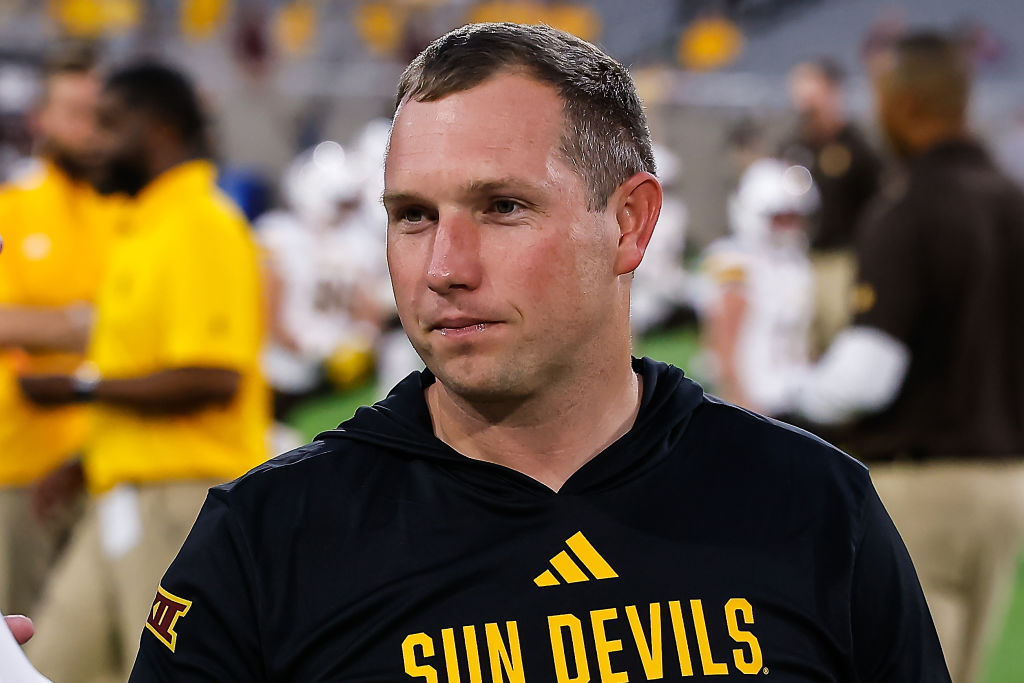
Arizona State Sun Devils head coach Kenny Dillingham has enjoyed quite a successful tenure so far in Tempe.
After his first year in which his squad put up a dismal 3-9 record, Dillingham went to work and completely flipped the fortunes of the ASU football program, posting a 19-7 record over the last two seasons, including a Big 12 championship and a College Football Playoff berth.
For his efforts, Dillingham recently received a massive extension and larger salary pool for his assistants, fending off the circling Michigan Wolverines in the process.
Though I’m sure Dillingham is happy to be staying in the Valley of the Sun and is thrilled with his new paycheck, the 35-year-old head coach was recently chatting up the local media and stumping for a different kind of payday.
It’s easy to look at Dillingham saying these things and see him as greedy or ungrateful, but he’s spot on, and the sad reality is that this is the new norm for the sport of college football.
The name of the game is roster building and retention, and if you want to compete in the Power 4 leagues and consistently make the College Football Playoff, you had better pony up some serious dough.
A sum like $20 million might seem like a ridiculous demand, but that’s a pretty reasonable number in today’s NIL arms race.
The Texas Techs of the world are going to do whatever it takes to win, and if Dillingham wants the Big 12 to run through Tempe and not Lubbock, then he is doing the right thing by lobbying for some of those billionaires living in Arizona to stroke a check.
It’s disgusting and gross and goes against everything that college football used to be about, but this junk isn’t going anywhere, so you either adapt or die.
Dillingham is adapting, now we will see if the big money players will follow his lead.
Because if they don’t, things could get very dark very soon for the Sun Devils.
And then there were eight.
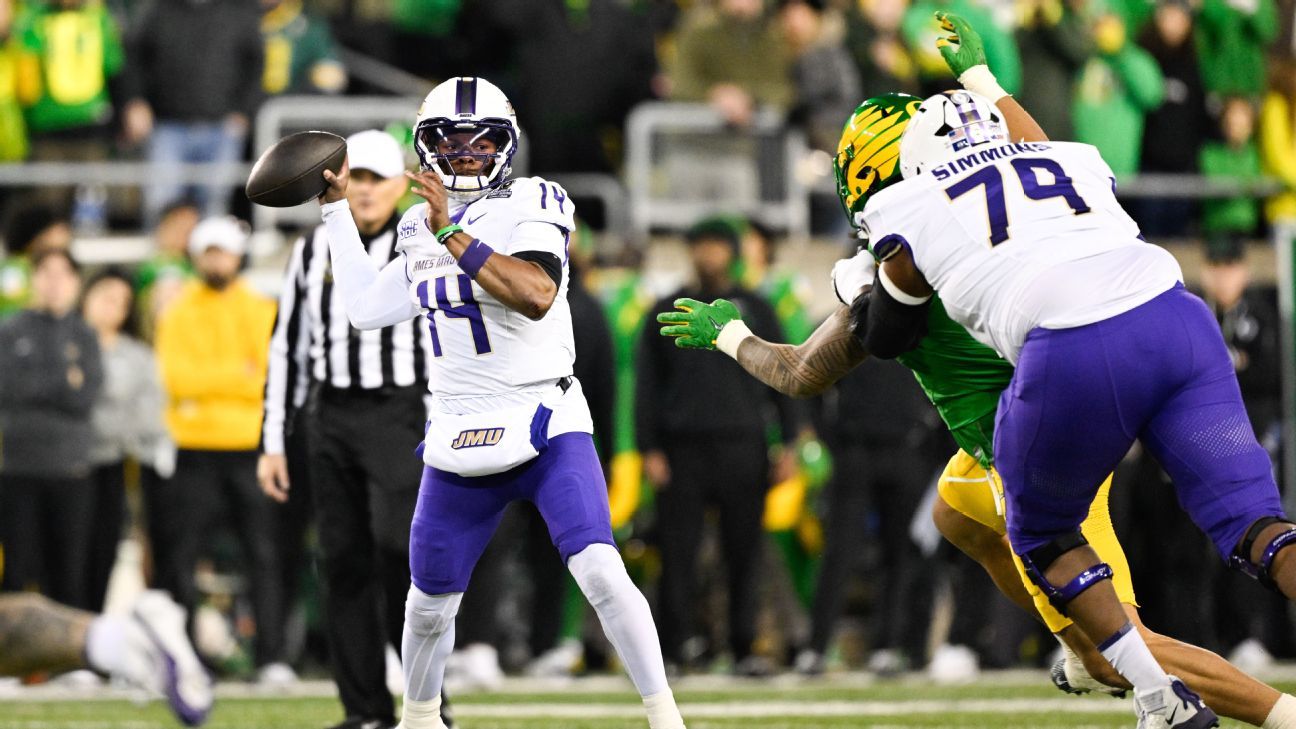
The 2025-26 College Football Playoff is here, and Saturday evening has given us our fourth eliminated team of the playoff in the James Madison Dukes. So what happens now?
We’ll tackle big questions, recruiting outlooks, portal and offseason priorities and even offer predictions for next season for every eliminated squad.
Jump to:
James Madison | Tulane
Texas A&M | Oklahoma


2025 record: 12-2
Biggest question moving forward: Can JMU make it three-for-three on coaching hires? Curt Cignetti reached the top of the mountain in the FCS and led JMU to a stellar start at the FBS level. When he left for Indiana, Bob Chesney arrived and delivered equally impressive results, getting the Dukes into the College Football Playoff. Now, Chesney is off to UCLA, and James Madison turns to Billy Napier, a coach with a history of success in the Sun Belt but who is coming off a disastrous turn at Florida. JMU’s goal has always been to measure itself against its peers rather than the upper echelon of college football, but 2025 offered a taste of the good life, and it’s now on Napier to continue to build toward that again in 2026 and beyond. The job of winning consistently at the Group of Five level has never been harder, and JMU’s aspirations have never been higher. — David Hale
Recruiting outlook: The Dukes emerged as one of the Sun Belt’s premier programs under Cignetti and Chesney, and there’s no reason to think they’ll fall off moving forward with Napier in charge. James Madison’s latest class is led by three-star cornerback Kamden Jennings, an undersized but explosive defensive back from Alpharetta, Georgia. He’s joined in the program’s secondary class by cornerback Kyle Bynes and safety D’Kwan Thomas, while defensive tackle Cory Simon arrives as a high-upside prospect. Within a deep wide receiver class, three-star Ben Whitver marks an intriguing addition with Power 4 measurables at 6-foot-2, 190 pounds. — Eli Lederman
Biggest portal priority: When Cignetti left to take over at Indiana after the 2023 season, he and his coaches took 13 players with them to Bloomington, many of whom became program leaders and All-Big Ten performers. How many Dukes will choose to move across the country to UCLA with Chesney? Alonza Barnett III, Wayne Knight, Sahir West and the rest of their top returning players have big decisions to make now, and Napier will do what he can to hold this roster together before shifting his focus to reloading in the portal. The combination of graduating seniors and potential portal defections in January likely means JMU’s starting lineup will feature lots of new faces to open the 2026 season, but Chesney’s tenure proved this program can quickly recover from a coaching transition and get right back to Sun Belt contender status. — Max Olson
Under-the-radar offseason priority: James Madison has played 40 games in three years at the FBS level, so there’s a certain level of expectation that the dominance will continue. Expectations can be dangerous, however. On its third coach in five years, maintaining high standards can be tough. With so much success, bigger schools are waiting to pick off the best talent, as is life in the Group of Five these days. But even on top of all that, so much continuous winning can breed a level of apathy when the locker room is also changing rapidly — with new players arriving and expecting the same results without fully appreciating what went into achieving that historic success. Just in the Sun Belt, App State, Coastal Carolina and Napier’s former team, Louisiana, have all had their stretches at the top, but tumbled back to earth. Reenergizing JMU after reaching what feels like a new mountaintop in 2025 will be a critical job for Napier in Year 1 on the job. — Hale
2026 prediction: JMU’s 2026 schedule looks inviting. The Dukes get a Liberty team that has been down as of late, a UConn team in the first year with a new coach and a Virginia Tech team that will just be getting its sea legs under James Franklin. Run the table out of conference, and this year showed the door is wide open for a playoff berth. The Sun Belt isn’t likely to struggle in 2026 quite as much as it did in 2025, but JMU still seems to be the clear front-runner. To aim for a second straight playoff bid is reasonable, even if realistic expectations should focus on winning the Sun Belt again and hoping the other dominoes fall into place from there. — Hale
2025 record: 11-3
Biggest question moving forward: Tulane has handled challenging coaching transitions before, going from longtime boss Willie Fritz to Jon Sumrall without any significant backslide. But Sumrall leaves a significant void as he leaves to become the head coach at Florida, and though promoting Will Hall as his successor creates some immediate stability, Hall will have to reprove himself as a program leader after a very rough end to his tenure at Southern Miss. The expectations have changed at Tulane, which is 33-13 since the start of the 2022 season. The program is set up not to revert to its pre-Fritz struggles. But the American Conference will remain a challenge, especially with significant investments at programs such as South Florida and Memphis. Similar to a lot of Group of 5 CFP teams, Tulane will lose a lot, both to graduation and the portal, and Hall and his staff will need to identify a new quarterback, replenish the offensive line and replace key defenders such as Santana Hopper and Sam Howard. — Adam Rittenberg
Recruiting outlook: The Green Wave’s 2026 class faded late, with five decommitments after Nov. 18 amid coach Jon Sumrall’s departure for Florida, headlined by the exit of four-star wide receiver Trez Davis. Still, Tulane is set to add some intriguing talent in 2026. In three-star signee A.J. Westfield, the program has its highest-ranked defensive tackle since the Green Wave landed defensive tackle Alfred Thomas and Jeffery Johnson in the 2018 class. Offensive tackle Aiden Martin and guards Tylan George and Andre Amos Jr. will provide reinforcement on the other side of the line of scrimmage. And in the skill positions, first-year coach Will Hall will have three exciting newcomers to work with — wide receivers Keyshaun Coleman and Gary Hadley Jr. and tight end Colby Simpson. — Eli Lederman
Biggest portal priority: Like any Group of 5 program going through a head coaching transition, Tulane will likely have a lot of work to do when the transfer portal opens Jan. 2. We’ll see how much roster attrition newly promoted coach Will Hall and his staff endure now that the season is over and players have Power 4 opportunities to consider. The Green Wave lost a dozen transfers to P4 programs last offseason, and all-conference defensive lineman Hopper has already announced he plans to enter the portal next month. Players who have a chance to go to Florida will have a tough time turning down those lucrative offers. There are also a bunch of freshmen on this roster who played big roles in 2025, including Jamauri McClure, Javin Gordon, Reese Baker, E’zaiah Shine and Zycarl Lewis Jr. If the new staff retains some players over these next few weeks, that’d be a good place to start. — Max Olson
Under-the-radar offseason priority: The defensive line will be an area to watch, with Hopper already heading out and others possibly to follow, but Tulane also must fortify its depth on the offensive line. First-team all-conference guard Shadre Hurst would be a massive retention, but if he moves on, along with seniors Derrick Graham, Jack Hollifield and Jordan Hall, Tulane will have to devote a lot of energy toward building around its lone returning starter, right tackle Reese Baker. Hall and Hollifield were valuable additions in last year’s portal, and Tulane should be an attractive destination for transfers with the offensive system likely not changing too much under Will Hall. — Rittenberg
2026 prediction: The Hall hire will be closely scrutinized, as Tulane prioritized continuity over candidates with more appealing credentials. Hall knows the place well after two stints as a Green Wave assistant, and he had success as a head coach earlier in his career at West Alabama and West Georgia, before the struggles at Southern Miss (14-30). Tulane’s 2026 schedule features nonleague road trips to Duke (former Tulane QB Darian Mensah is back to lead the Blue Devils) and Kansas State, as well as conference games at Army and South Florida. Given the turnover with the coaching staff and roster, Tulane is probably a seven- or eight-win team. — Rittenberg
2025 record: 11-2
Biggest question moving forward: Mike Elko loses both coordinators, with OC Collin Klein heading to his alma mater to be the head coach at Kansas State and DC Jay Bateman joining new Kentucky coach Will Stein to run the defense. Elko has opted for continuity in both roles, promoting co-OC and wide receivers coach Holmon Wiggins to take over playcalling duties and elevating Lyle Hemphill, Elko’s associate head coach for defense, to DC. Hemphill has worked with Elko since his days at Hofstra in 2006, and also served as his defensive coordinator at Duke, rejoining his staff earlier this year. Wiggins, however, is more of an unknown since this will be his first role as the coordinator. But his impact on A&M’s offense over the past two years is evident in the receivers he has identified and developed, from the additions of Mario Craver and KC Concepcion to the development of Ashton Bethel-Roman. — Dave Wilson
Recruiting outlook: The Aggies stocked up on elite defenders for another cycle on their way to landing the nation’s No. 6 class. The headliner is five-star athlete Brandon Arrington (No. 18 overall), a star sprinter from San Diego who is expected to play cornerback and could contribute on special teams from the jump. Arrington will be joined by another pair of top 100 cornerbacks in Victor Singleton (No. 56) and Camren Hamiel (No. 85) in a Texas A&M class filled with nine ESPN 300 defenders. The Aggies beat in-state rivals to an intriguing running back prospect over the summer in four-star rusher K.J. Edwards (No. 50). And Mike Elko is already rolling in the 2027 cycle, too, entering the offseason already holding onto pledges from seven members of the ESPN Junior 300, led by No. 3 dual-threat quarterback Jayce Johnson and a trio of top 70 defensive backs between JayQuan Snell, Kamarui Dorsey and Raylaun Henry. — Lederman
Biggest portal priority: Texas A&M has done an excellent job of evaluating talent in portal recruiting under Elko and finding players who fit. Last year, the glaring need was wide receiver, and the duo of Concepcion and Craver far exceeded expectations. This time around, the focus probably starts up front. Expect the Aggies to be in the mix for the top offensive tackles available as they try to find an SEC-caliber big man to take over for four-year starter Trey Zuhn III and two-year starter Dametrious Crownover. They’ll likely look into blue-chip defensive linemen as well to keep building on what this D-line achieved in 2025, and a linebacker could be needed as well if Taurean York goes pro. Craver has already re-signed to return in 2026, but there will be many more difference-makers available at wide receiver when the portal opens on Jan. 2. — Olson
Under-the-radar offseason priority: The Aggies were just 15 of 24 on field goal attempts this season, including getting a 22-yarder blocked by Jared Zirkel, who began the year as a kickoff specialist, against Miami, in a game where every point mattered. Randy Bond, the Aggies’ starting kicker, was 12-of-19 this season. The Aggies signed kicker Asher Murray out of Shreveport, Louisiana, who was 18-of-22, with a career long of 56 yards in his high school career. Elko said during his signing day news conference that Murray has a chance to be a weapon for the Aggies. — Wilson
2026 prediction: Quarterback Marcel Reed returns, but after a season in which he showcased his development, he also struggled down the stretch against South Carolina (until he played brilliantly in the second half), Texas and Miami. He’ll need to find another gear if the Aggies hope to repeat their historic 2025 season. Another 11-1 regular season looks difficult with a regular season that ends with a five-game slate that includes trips to Alabama, South Carolina and Oklahoma and home games against Tennessee and Texas. A 9-3 season looks to be challenging but also a success in the SEC’s new nine-game lineup. — Wilson
2025 record: 10-3
Biggest question moving forward: Oklahoma made important investments in its offense after the 2024 season, adding quarterback John Mateer and coordinator Ben Arbuckle from Washington State, wide receiver Isaiah Sategna III from Arkansas and other reinforcements. The Sooners now need to see the unit take a sustained step forward, or advancing in the CFP will become increasingly difficult. The offense was extremely limited during OU’s stretch run, even in wins against Alabama, Missouri and LSU. If not for superb defense and special teams, OU would have missed the CFP for a fifth consecutive season. Arbuckle will get another chance to truly upgrade the unit, and if Mateer returns rather than entering the NFL draft, the Sooners will have some beneficial continuity. OU’s offense has been hit hard by injuries in recent years, and getting Mateer healthy along with the running back room gives the unit a chance for a true breakthrough in 2026. The Sooners need to get their run game out of the 100s and ideally into the top 35 next season. — Rittenberg
Recruiting outlook: The Sooners enter the offseason prepared to add ESPN’s 16th-ranked recruiting class in 2026. The gem of coach Brent Venables’ latest class is five-star defensive end Jake Kreul (No. 25 overall), a technically-advanced edge rusher from Florida and Oklahoma’s fifth five-star signee over the past four cycles. The Sooners secured a pair of intriguing offensive additions just before the early signing period between No. 5 running back Jonathan Hatton Jr. (No. 71) and four-star wide receiver Jayden Petit (No. 178). Bowe Bentley, ESPN’s No. 2 dual-threat passer, was a priority target for Oklahoma offensive coordinator Ben Arbuckle, and he should be viewed as a potential quarterback for the Sooners when he joins the program in January. — Lederman
Biggest portal priority: Assuming Mateer bypasses the NFL draft and returns in 2026, it’ll be interesting to see how general manager Jim Nagy and the Sooners attack this upcoming January portal cycle to surround their QB1 with more premium help on offense. Expect the Sooners to go out and get proven starters at tight end and wide receiver to complement their returning playmakers and help Arbuckle’s offense take the next step in his second year. Linebackers could potentially emerge as a major need for Venables’ defense if Kip Lewis and Kobie McKinzie enter the draft and if Owen Heinecke can’t get an NCAA waiver for an extra year. Sammy Omosigho will need to step up if starters depart at that spot, but he will certainly need more help. — Olson
Under-the-radar offseason priority: Oklahoma should bring back a chunk of its depth chart on offense for 2026, but the Sooners — just like any contending team — could always use more experience on the line. The team will lose second-team All-SEC guard Febechi Nwaiwu and veteran right tackle Derek Simmons, and it needs to invest around returning players such as Michael Fasusi, who started all but three games at left tackle as a freshman. The Sooners also need playmakers for Mateer, as wide receiver Deion Burks and tight end Jaren Kanak move on and Sategna, a fourth-year junior, is a candidate to leave for the NFL draft. — Rittenberg
2026 prediction: Oklahoma was far from dominant — the Sooners won four SEC games by seven points or fewer — but showed it could hold up in a challenging SEC schedule and earn a CFP spot, albeit short-lived. The personnel picture should continue to improve in Norman, and Oklahoma should bring back enough to be in the CFP mix again. There are some significant questions about an offense that stalled out too often, though, and will be challenged early next season with Georgia (road), Texas (neutral) and Michigan (road) all within the first five games. The middle portion of the schedule softens a bit before Oklahoma closes with two CFP teams, Ole Miss and Texas A&M, in Norman and a trip to Missouri. Another 10-win season is possible, but I’ll say 9-3 for Oklahoma and very much on the CFP bubble. — Rittenberg
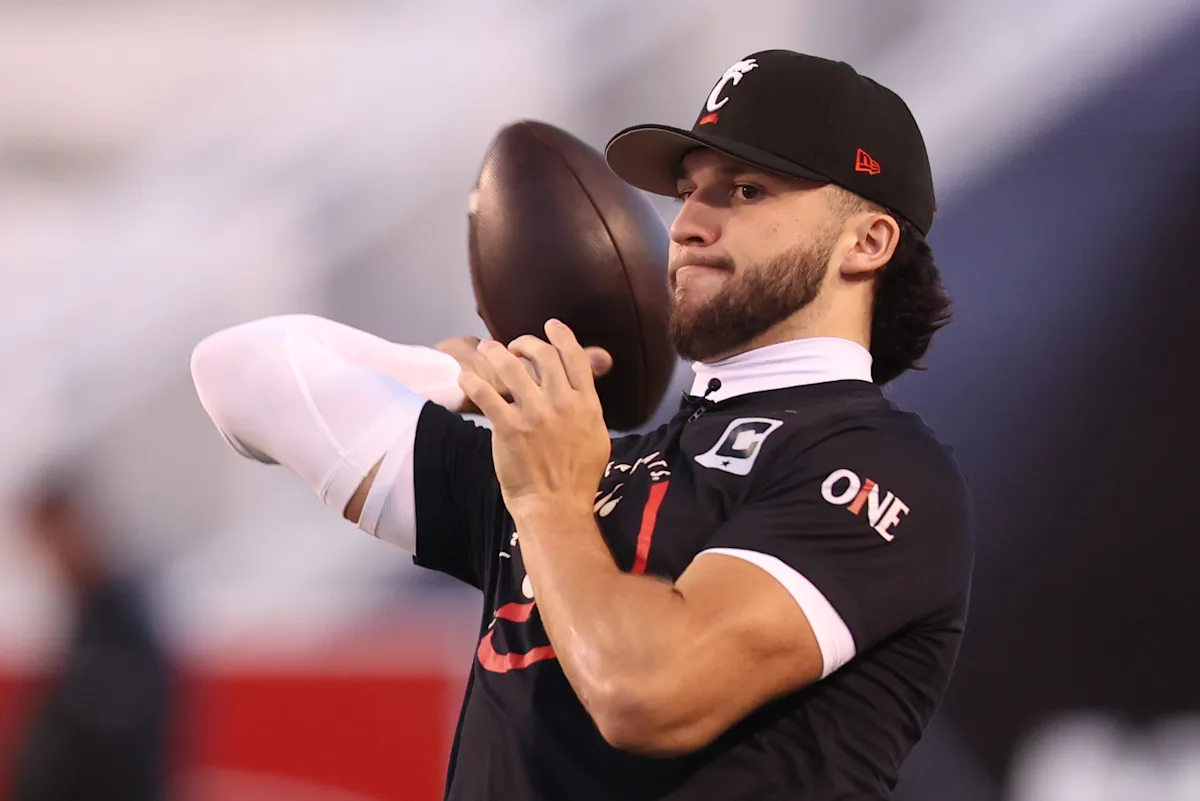
If you thought the NIL transfer market in college football already was out of control, just wait until the upcoming battles next month for the top quarterbacks looking to switch schools.
ESPN college football insider Pete Thamel believes the dollar figures during the January cycle could be as much as $5 million for one season.
Advertisement
“This market looks robust already, guys,” Thamel said Friday on College GameDay ahead of Alabama’s playoff win over Oklahoma. “You’ve got Cincinnati’s Brendan Sorsby at [the top], Nebraska’s Dylan Raiola, TCU’s Josh Hoover went in [this week], you have Arizona State’s Sam Leavitt, Florida’s DJ Lagway.”

Cincinnati Bearcats quarterback Brendan Sorsby (2) warms up before the game against the Utah Utes at Rice-Eccles Stadium. Rob Gray-Imagn Images
“So I made some calls today, guys, and sources told me the tip-top of this quarterback market, financially, could reach $5 million for one season. Look, it’s supply and demand. You have all those guys. Sorsby’s been linked early to Texas Tech. Dylan Raiola, there’s some smoke to Louisville, although maybe a [College Football Playoff] team jumps in late there. There have been early links between Indiana and Hoover, assuming that [Heisman Trophy winner Fernando Mendoza] goes pro.”
Thamel also noted that CFP programs such as Oregon and Miami are likely to be looking for a new quarterback for 2026, as well as LSU, with new coach Lane Kiffin looking to make a splash.
“Look, this is what’s going to drive the market,” Thamel said. “Oregon may lose [draft prospect] Dante Moore. Miami will be in the quarterback market again. So will LSU. So, when you really take a look at what could drive this quarterback market, it’s going to be the most expensive in the history of college football.”
Advertisement
Thamel also pointed out that seven of the past nine Heisman winners landed at those schools through the transfer portal, including Mendoza, who moved from Cal to Indiana for this season.
The main transfer portal window is open from Jan. 2-16.
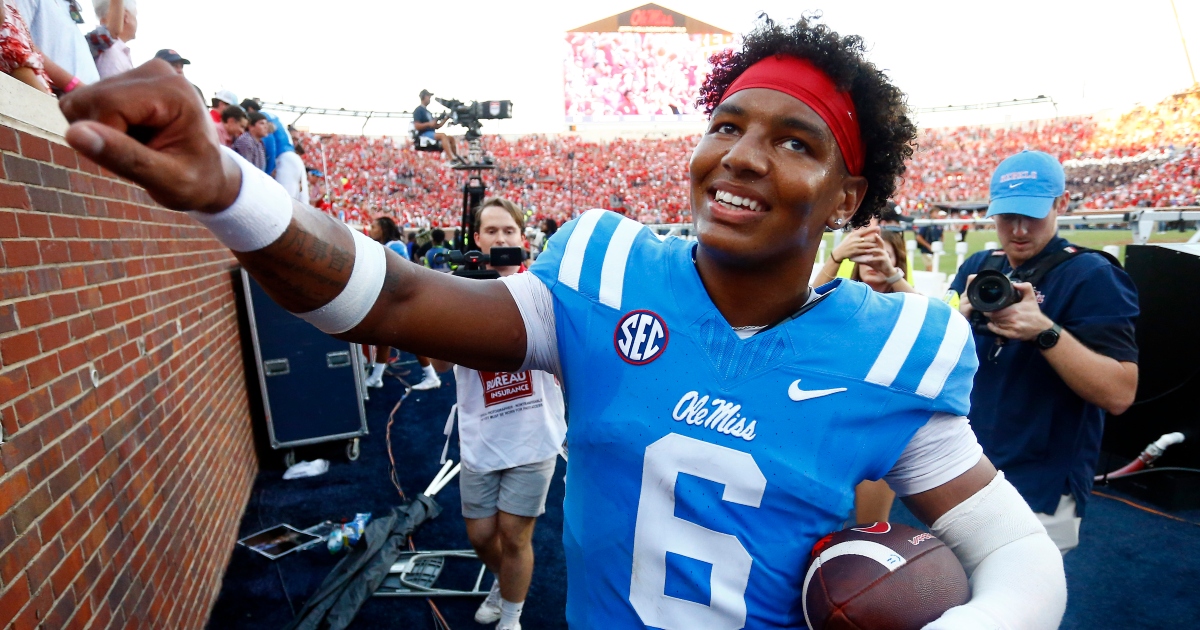
Amid a decorated season at Ole Miss after transferring from Division II Ferris State, Trinidad Chambliss is seeking another year of eligibility. He applied for a waiver, and ESPN’s Katie George shared the timeline for which the Rebels are expecting an answer.
Ole Miss expected about a month-long wait for a response from the NCAA, George said during Saturday’s College Football Playoff game against Tulane. Chambliss told the ESPN broadcast crew, which is calling the game on TNT, he applied for the waiver three weeks ago. As a result, the school is expecting a response to come down soon.
Chambliss spent three years at Ferris State before arriving at Ole Miss this season. However, he only played in two games as a freshman due to multiple health issues, which is why he’s seeking one more season at the FBS level.
“He said that they filed the waiver three weeks ago,” George reported during the first half. “Ole Miss expects it to take a month before they get an answer.
“Back in 2022 when he was at Ferris State, he did not play in a single game due to chronic tonsillitis, heart palpitations and trouble breathing, so he medically redshirted. After the season he had, proving he’s capable of playing at this level, he wants another year to build on his progress.”
After transferring to Ole Miss this year, Chambliss initially served as the backup quarterback behind Austin Simmons. However, after Simmons suffered an injury, Chambliss took the starting job and ran with it as he helped lead the Rebels to their first-ever College Football Playoff appearance.
Across his 12 appearances, Trinidad Chambliss completed 65.5% of his passes for 3,016 yards and 18 touchdowns, to three interceptions. He also added 470 rushing yards and six touchdowns on the ground. In the process, Chambliss also put himself in the Heisman Trophy conversation, finishing eighth in the voting for college football’s most prestigious award.
But as he waits for an answer on his waiver, Chambliss is keeping everything in perspective. During a press conference ahead of the CFP first round, he said he’s preparing for “every possibility” with his future still up in the air.
“I would have to consider, like, what the best situation is for me,” Chambliss said. “What I feel more comfortable with. Who I trust the most and I’m just going to feel for every possibility, really. There’s a lot that goes into that.”
The newly top-ranked overall prospect in the 2025 college football transfer portal has now been linked to a major college football program and a rival of his former team.
Penn State defensive end Chaz Coleman is entering the NCAA transfer portal ahead of the 2026 football season, and reigning national champion Ohio State has emerged as an early school to watch for his forthcoming decision, according to On3 Sports.
Ohio State made a late push to earn the commitment of the in-state edge rusher back when he was a recruit, but he ultimately chose the Nittany Lions, where he got some early, and very promising, exposure.
Now, as that program embarks on the post-James Franklin future, it appears Coleman is looking for an exit, and their Big Ten rival is an early contender to pounce on him.
Early production
A former four-star prospect from Warren, Ohio, the edge rusher was given playing time at Penn State as a true freshman this past season, notching 8 stops with 3 tackles for loss, adding 1 sack, a forced fumble, a pair of fumble recoveries, and a pass defense in that time.
Coleman was considered the No. 25 ranked defensive and the No. 8 prospect from the state of Ohio as a high school player, according to a consensus of the national recruiting services.
Top-ranked transfer
Following news of his intention to transfer, Coleman quickly shot up to the No. 1 position nationally as the best player in the portal, according to the latest 247Sports Composite standings.
“Chaz Coleman has been one of the most dynamic true freshman pass rushers in college football this season,” Rivals scouting director Charles Power said in an assessment of the player.
That early production and continued promise is expected to cost a school considerable money, as Coleman is projected to command a seven-figure package wherever he lands as a transfer, according to the On3 report.
How the college football transfer portal works
College football’s transfer portal officially opens on Jan. 2, but that hasn’t stopped a flurry of players from entering their names for consideration at a new school right now.
The new 15-day transfer portal window from Jan. 2-16 and the elimination of the spring transfer period has condensed the timeline for players and programs to make their moves.
The NCAA Transfer Portal is a private database that includes the names of student-athletes in every sport at the Division I, II, and III levels. The full list of names is not available to the public.
A player can enter their name into the transfer portal through their school’s compliance office.
Once a player gives written notification of their intent to transfer, the office puts the player’s name into the database, and they officially become a transfer.
The compliance office has 48 hours to comply with the player’s request and NCAA rules forbid anyone from refusing that request.
The database includes the player’s name, contact information, info on whether the player was on scholarship, and if he is a graduate student.
Once a player’s name appears in the transfer portal database, other schools are free to contact the player, who can change his mind at any point in the process and withdraw from the transfer portal.
Notably, once a player enters the portal, his school no longer has to honor the athletic scholarship it gave him.
And if that player decides to leave the portal and return to his original school, the school doesn’t have to give him another scholarship.
More college football from SI: Top 25 Rankings | Schedule | Teams
Follow College Football HQ: Bookmark | Rankings | Picks

Oregon vs. Texas Tech set for Orange Bowl: Preview and odds for CFP quarterfinal

Centennial Cougars beat Champlin Park Rebels – The Rink Live

Dodge County falls to Proctor/Hermantown in a ranked Class A girls hockey game

“The Struggle Never Really Ends”: When Ross Chastain Revealed the Dark Reality of Funding in NASCAR

2025 All-Area Volleyball: Meet the complete team | Sports

After Signing Extension To Stay At Arizona State, Kenny Dillingham Sounds Off

Volleyball Wildcats face Texas A&M for national championship

2025-26 College Football Playoff: What’s next for each eliminated playoff team?

A-K Valley athletes of the week: St. Joseph’s Bella Bartolovic, Springdale’s Robby Simmen

The staggering NIL figure that transfer portal QBs are expected to cost

Commanders young RBs – The Athletic

TWRA Youth Fish Art Contest Now Open

Obituary: George Harry Leaman Apt

Trinidad Chambliss waiver: ESPN reveals Ole Miss’ expected timeline for response from NCAA

No. 1 transfer portal player linked to major college football program

First Tee Winter Registration is open

Fargo girl, 13, dies after collapsing during school basketball game – Grand Forks Herald

CPG Brands Like Allegra Are Betting on F1 for the First Time

F1 Las Vegas: Verstappen win, Norris and Piastri DQ tighten 2025 title fight

Sycamores unveil 2026 track and field schedule

Two Pro Volleyball Leagues Serve Up Plans for Minnesota Teams

Utah State Announces 2025-26 Indoor Track & Field Schedule

SoundGear Named Entitlement Sponsor of Spears CARS Tour Southwest Opener

Redemption Means First Pro Stock World Championship for Dallas Glenn

Bowl Projections: ESPN predicts 12-team College Football Playoff bracket, full bowl slate after Week 14

Jo Shimoda Undergoes Back Surgery

Texas volleyball vs Kentucky game score: Live SEC tournament updates

Robert “Bobby” Lewis Hardin, 56

How this startup (and a KC sports icon) turned young players into card-carrying legends overnight

Indiana’s rapid ascent and its impact across college football




-
 Motorsports2 weeks ago
SoundGear Named Entitlement Sponsor of Spears CARS Tour Southwest Opener
-

 Motorsports2 weeks ago
Donny Schatz finds new home for 2026, inks full-time deal with CJB Motorsports – InForum
-

 Rec Sports2 weeks ago
How Donald Trump became FIFA’s ‘soccer president’ long before World Cup draw
-

 Rec Sports2 weeks ago
Black Bear Revises Recording Policies After Rulebook Language Surfaces via Lever
-
 Sports3 weeks ago
Men’s and Women’s Track and Field Release 2026 Indoor Schedule with Opener Slated for December 6 at Home
-
 Rec Sports2 weeks ago
David Blitzer, Harris Blitzer Sports & Entertainment
-

 Motorsports2 weeks ago
JR Motorsports Confirms Death Of NASCAR Veteran Michael Annett At Age 39
-
 Motorsports2 weeks ago
Rick Ware Racing switching to Chevrolet for 2026
-
Sports2 weeks ago
West Fargo volleyball coach Kelsey Titus resigns after four seasons – InForum
-
Sports2 weeks ago
Elliot and Thuotte Highlight Men’s Indoor Track and Field Season Opener