
Rec Sports
What football helmet should you buy? It’s not as simple as you think.


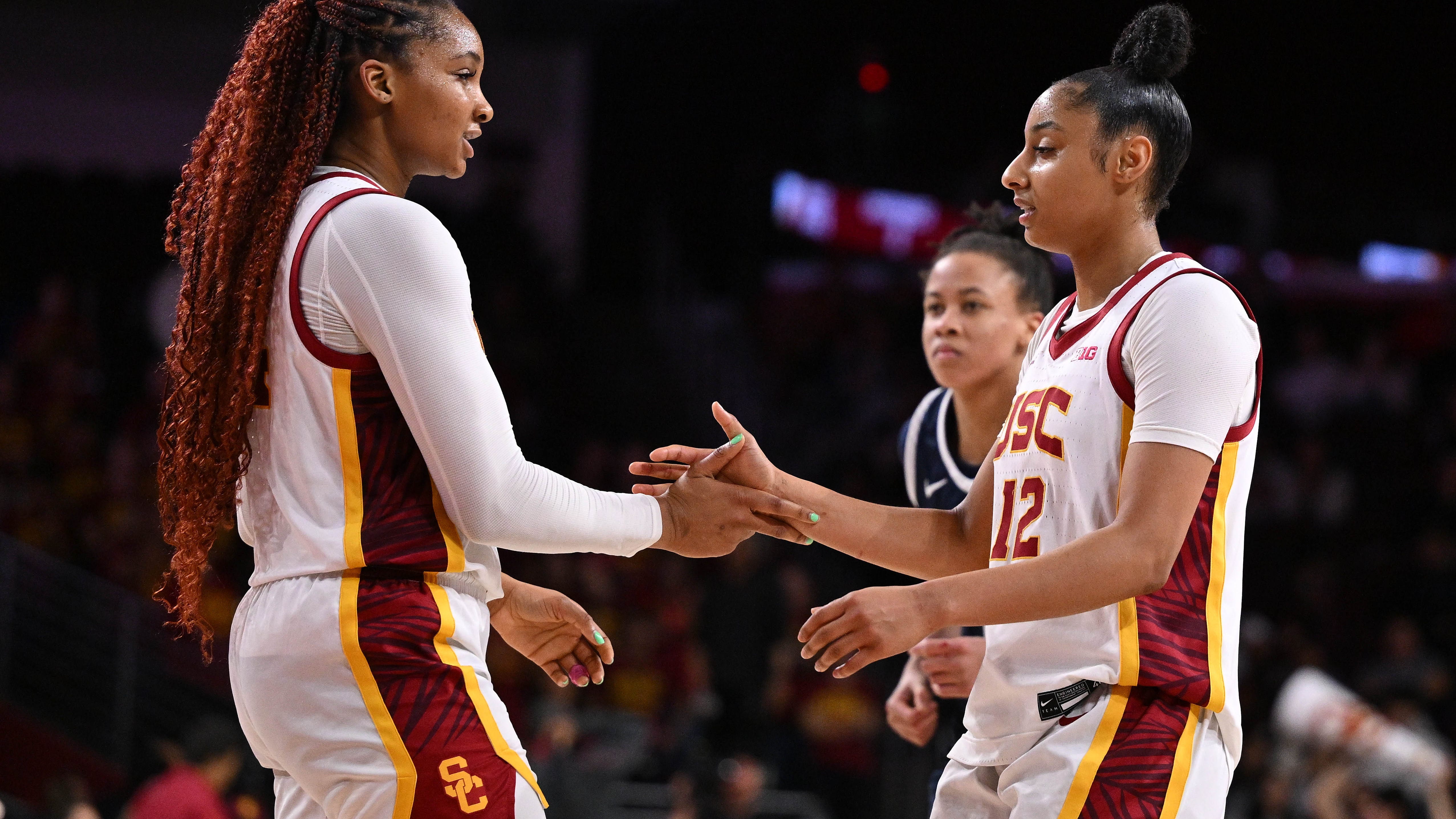

Kiki Iriafen believes in USC basketball and JuJu Watkins next season
Former Trojan Kiki Iriafen believes in her former collegiate team to dominate next season with star JuJu Watkins coming off an injury.
Sports Seriously
Which football helmets should I buy?
It’s what a Virginia Tech athletics equipment manager asked Stefan Duma, a faculty member at the university’s department of Biomedical Engineering and Mechanics, in 2009.
Duma’s team had been working to better understand what causes brain injury. It had placed sensors in Hokies players helmets. It had simulated car crashes.
The question seemed simple enough, until Duma and his colleagues delved deeper into it.
“We said, ‘We don’t know.’ We can buy helmets and test because there’s really no information available in what was good and what wasn’t,” says Steve Rowson, who, as a graduate student, joined this little-known football helmet project that was about to take off.
Duma’s group simulated hits with a guillotine-like device that plunged a dummy headform down cables onto an anvil.
“We bought the helmets, and we saw huge differences,” Rowson tells USA TODAY Sports. “But we also felt like everyone should have that information, so we developed the Virginia Tech helmet ratings based on that. And it was like the first independent, objective way of evaluating helmets.”
The investigation that started in Duma’s basement lab sparked a wave of discussion that would define standards used by youth, high school and college teams and expand to other sports.
“It wasn’t like a pass/fail scale,” Rowson tells USA TODAY Sports. “It was, ‘Here are the best performers. Here are the next best. Here are the not so good performers,’ and that really resonated with consumers. It was a little disruptive to the football helmet manufacturing industry.”
Rowson is now director of Virginia Tech’s Helmet Lab that has reached national acclaim for its testing and studies. It published the first independent safety ratings for varsity football helmets in 2011 and continues to ramp up the standard for what constitutes a five-star helmet.
Just recently, it updated its rating system with new thresholds for those used in varsity and youth football and by bicyclists.
“The best helmets back in 2011 would be the very worst helmets today,” Rowson says.
Have you ever wondered about the force of a hit to the head your kid sees in practice and in games, and how their helmets are tested to protect from them?
Or how helmet recommendations are determined for various sports and age groups?
We spoke with Rowson about the history of his lab, the methods and evolution behind Virginia Tech’s STAR testing system and how it can help keep your athlete safe.
What is the Virginia Tech Helmet Lab and how does it replicate impact?
The lab is a collection of about 25 Virginia Tech faculty, staff, graduate and undergraduate students who study the forces that cause injuries all over the body and look for ways to prevent them from occurring.
They consider over a million head impacts to develop football readings. As they learn more, they add test conditions or change methods.
Sometimes, it’s a complete overhaul.
Their first varsity football helmet ratings were based on Duma’s drop test.
“We were only considering linear acceleration in the head, and it’s because there weren’t really good methods to evaluate rotation of the head,” Rowson says. “We didn’t know how rotational acceleration related to brain injury really well at the time, but we knew enough about linear acceleration that it had a correlation to concussion risk.
“However, a few years later, we had new data to tell us how rotational acceleration related to brain injury, and we upgraded the football method to include both linear and rotational acceleration. We have a pendulum impactor, which pretty much looks like a big upside down hammer that swings down and then it hits a dummy headform that has a helmet on it. Think of a crash test dummy. That dummy headform has sensors inside it.”
Helmet manufacturing has advanced, Rowson says, as the lab has.
“The amount of change that we’ve seen in helmet design over the last decade is probably more than we saw in the previous 30 years combined,” he says.
Understanding the impact and distribution of hits
I asked Rowson, who has a master’s and Ph. D in Biomedical Engineering from Virginia Tech, if he could come up with an analogy for the greatest impact a helmet sustains on a field. He did some math and got back to me with the following scenario:
Head accelerations associated with concussion are comparable in magnitude to those experienced in unbelted car crashes at approximately 17 mph for college-level players and 10 mph for youth-level players.
However, damage from concussions can be cumulative. The lab tests helmets with the hardest hits as well as what Rowson calls “everyday impact” players see on the field.
“They probably see that impact multiple times, and then, with our highest impact condition, not every player might see it,” he says. “The ones who do are at risk of injury. The helmet influences how much force is transferred to the head during all those impacts. So if a helmet’s too soft and too thin, it might not do great under higher impact energy or if it’s optimized for high energy hits, it might do poorly at the low energy hits. So we have a comprehensive evaluation of it where you can’t overdesign for really hard hit impacts or everyday impact.”
No helmet is concussion-proof, the lab states on its website, and any athlete can sustain a head injury. It identifies the helmets that best reduce your chances.
The Summation of Tests for the Analysis of Risk (STAR) score is calculated based on a helmet’s performance in a series of impact tests that are sports-specific. Tests are weighted based on how often people experience similar impacts.
The lower the score, the better the protection. Scores are assigned a number of stars between 1-5, with 5 stars being the best.
“Our ratings are representative of the average,” Rowson says. “There is gonna be some in that (data) distribution who get hurt at really low head accelerations, and there’s gonna be other people who don’t seem to ever get hurt, even at high head accelerations, and that comes down to biological variance. Everyone has their own tolerance to head impact, everyone’s material properties and their brain tissue’s different.
“So it’s kind of a predicted number of injuries for a given number of head impacts that we would expect to see on average, amongst a lot of people. We identify helmets that systematically reduce head acceleration and thus risk.”
Coach Steve: Lessons to learn after suffering a concussion
What’s the difference between a four-and five star helmet? (Hint: They’re both good.)
Rowson says just about every varsity and youth football helmet they recently rated earned five stars.
“But that starts to dilute what a five star meaning is,” he says. “The five star rating is intended to identify what the very best available protection is. And if every helmet that’s being rated is five stars, it takes a little meaning away from that.”
The ratings update rescales those areas to make the five-star winners truly standout performers. The new thresholds reduced the number of five-star helmets from 167 to 38 (bicycle), 33 to 11 (varsity football) and youth football (26 to 6).
The lab still recommends any four or five star helmets.
“It’s not just like everything got good,” Rowson says, “it’s they got good, but to different extents where we could identify meaningful differences.”
Watch contact in practice: Understanding helmet differences and unique risks
According to Virginia Tech, varsity football helmets used to have corresponding youth versions, but there were often few differences between them. There was little data describing how risk differed for youth players.
Today, the lab model for “youth” football simulates a 10-to-12-year-old boy, the varsity model an18-to-24 year old male.
“A kid isn’t necessarily just a scaled down adult,” Rowson says. “Their head is bigger relative to their body than we see in a full grown male, their brain’s still developing, and there’s differences in kind of how they respond to a head impact.
“Every impact scenario we recreate in a lab is weighted based on how often a player is gonna see (it) on the field. We saw in our youth studies they don’t hit their heads as frequently (and) when they fall to the ground, they have a heavier head and a weaker neck, and the helmet’s pretty heavy relative to their body mass compared to an adult. So their helmet’s more likely to follow through and strike the ground. So we see more side and back impacts in youth football than we do in varsity football.”
As part of a groundbreaking 2012 study funded by the National Highway Traffic Safety Administration, Virginia Tech researchers put sensors inside the helmets of seven players aged 7–8 years old for a season and measured their impacts.
They found that 76% of the ones greater than 40 g (40 times the acceleration of gravity) and 100% of impacts greater than 80 g occurred during practices.
“It was first data measuring head impacts in youth football players,” Rowson says.
Following the study, Pop Warner youth football outlawed drills that involved full-speed, head-on-blocking and tackling that starts with players lined up more than three yards apart, as well as head-to-head contact.
According to The New York Times, Pop Warner officials said they were persuaded by data from the youth study that indicated the level of severity of some hits were similar to some of the more severe impacts college players experience.
“We’re like, ‘Wow, all our hardest hit impacts are coming from this one (Oklahoma) drill,’ ” Rowson says. “And out of all the games we collected, we didn’t see that kind of impact happen a single time. We’re like, ‘We don’t think you should be doing this,’ and the coach was really receptive. It was just a local youth football team, and it was a dad coaching who had that drill in there, because that’s what he did when he was a kid.”
A follow-up study of football teams comprised of players aged 9–12 suggested head impact exposure could reduce significantly by limiting contact in practices to levels below those experienced in games.
Coach Steve: Why are boys sports declining? Former NBA star looks for solutions
How helmet ratings differ by sport
Their helmet research always starts in the real world, Rowson likes to say. They learn how people are getting hurt and they match those conditions – the speed at which they’re hitting their head, where they’re hitting their head, their acceleration profile – in the lab.
With cycling, the researchers look at a fraction of the head impacts as football.
They don’t put a sensor on everyone because cycling is an individual sport and crashes are rare. Instead, Rowson says, they identify riders involved in crashes and collect their helmets.
They buy the same helmet and start hitting it until they match the damage profile, then back calculate the location and velocity at which they hit their head.
For snow sport, researchers have traveled to big events on mountains and set up cameras from various angles.
Through video tracking, they calculated their head impact speed into the ground.
The lab now has nine helmet ratings: Varsity football, youth football, flag football, hockey, bicycle, equestrian, soccer, snow sport, whitewater and polo.
They’ll be announcing rating programs for baseball and softball soon.
“Essentially, we’re trying to cover all sports,” Rowson says. “The ultimate goal is for us to be able to provide data to everyone on what’s available.”
The lab doesn’t formally advise any leagues, but often, the leagues come to them. A full time faculty member is assigned to direct outreach, host tours, run STEM activities for kids and answer questions.
The questions, it seems, come every day.
“Sometimes they’re very technical, sometimes they’re more general: What does this mean and how do we use it?” Rowson says.
We know now from Duma, the Virginia Tech professor of engineering whom its football team sought out in 2009, how a seemingly innocent one can lead to a scientific explosion.
Steve Borelli, aka Coach Steve, has been an editor and writer with USA TODAY since 1999. He spent 10 years coaching his two sons’ baseball and basketball teams. He and his wife, Colleen, are now sports parents for two high schoolers. His column is posted weekly. For his past columns, click here.
Got a question for Coach Steve you want answered in a column? Email him at sborelli@usatoday.com

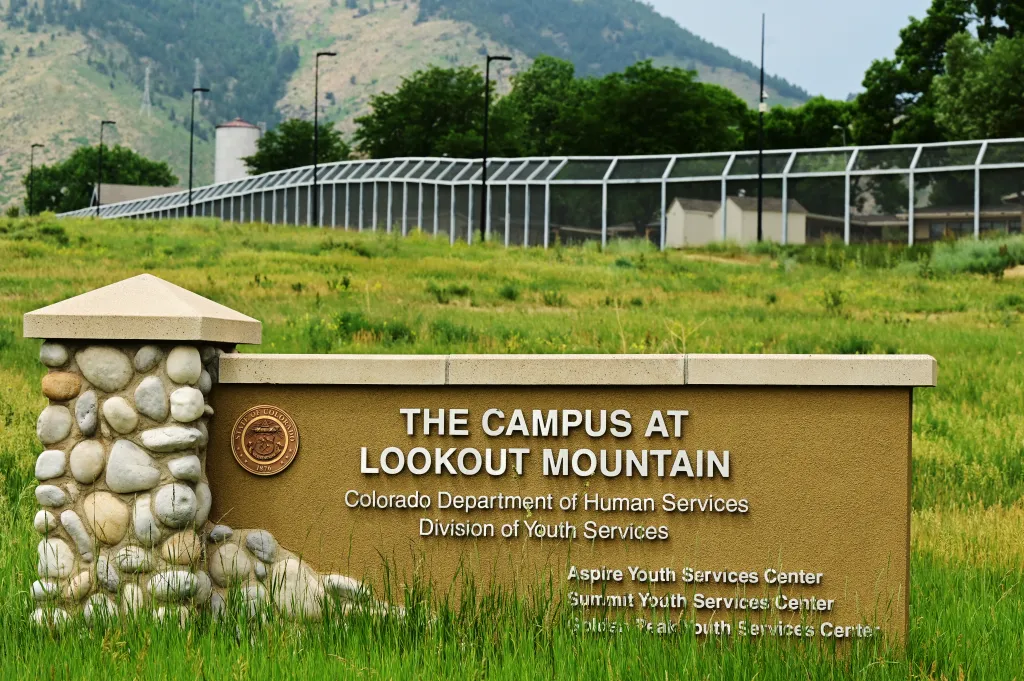
Carissa Wallace started working at the Lookout Mountain Youth Services Center in Golden two years ago because she felt strongly about helping rehabilitate young people convicted of crimes.
She loved the teens and loved the work.
But staffing shortages began to take a toll. Management routinely mandated employees pull 16-hour shifts multiple days a week because they were so short-staffed. Fewer workers meant there was nobody to respond to crises or adequately monitor the young people in their care, she said. Safety concerns mounted.
Wallace said she came home every day and cried. She went to the doctor for medication to help deal with all the anxiety the job brought.
“After two years, I was mentally broken from that place,” she said in an interview. “When I had to think about my safety every second of the day, I could no longer make a difference. I could no longer help the kids.”
Colorado’s youth detention centers are facing a staffing crisis, leading to serious safety concerns for employees and youth and low worker morale, current and former staffers told The Denver Post. The Division of Youth Services, which oversees the state’s 12 detention and commitment facilities, employs more than 1,000 employees, according to state data. Nearly 500 additional jobs remain vacant.
Some facilities, such as the Mount View Youth Services Center in Lakewood, reported a 57% staff vacancy rate, according to June figures compiled by the state. At the Spring Creek Youth Services Center in Colorado Springs, nearly 10% of its staff at one point in November were out due to injuries sustained on the job.
Current and former staff say leadership deserves a large chunk of the blame. Employees say they don’t feel management supports them or listens to their concerns. Higher-ups aren’t on the floor dealing with riots, they say, or leading programs. When situations do get out of control, staff say the brass simply looks for someone to blame.
“The administration says they care,” said Kim Espinoza, a former Lookout Mountain staffer, “but their actions say otherwise.”
Alex Stojsavljevic, the Division of Youth Services’ new director, acknowledged in an interview that working in youth detention is difficult. Retaining staff is a big priority with ample opportunities for improvement, he said. The division plans to be intentional about the people it hires into these roles, making sure that candidates know what they’re signing up for.
He hopes to sell a vision that one can make youth corrections a long, fulfilling career.
“Change is afoot in our department,” said Stojsavljevic, who took the mantle in October. “Just because we’ve done something for 20 or 30 years doesn’t mean we have to continue to do it that way.”
Critical staffing levels
Staffing shortages at Colorado prisons and youth centers have remained a persistent problem in recent years, though vacancy rates at the DYS facilities far outpace those at the state’s adult prisons.
A lack of adequate employees means adult inmates can’t access essential services like medical, dental and mental health care, according to a 2024 report from the Colorado Criminal Justice Reform Coalition. Education, employment and treatment programs lag.
“Simply put, because of the staff shortage, the (Department of Corrections) is not able to fulfill its organizational mission, responsibilities and constitutional mandates,” the report’s authors wrote.
Studies point to a litany of physical and mental health issues facing corrections workers.
Custody staff have a post-traumatic stress disorder rate of 34%, 10 times higher than the national average, according to One Voice United, a national organization of corrections officers. The average life expectancy for a corrections worker is 60, compared to 75 for the general population. Divorce and substance abuse rates are higher than in any other public safety profession, the organization noted, while suicide rates are double that of police officers.
The Colorado Department of Corrections has a 12.6% overall department vacancy rate, according to state figures. Correctional officer vacancies sit at 11%, while clinical and medical staff openings are nearly 20%.
Meanwhile, nearly one in three DYS positions is vacant.
The most common open positions are for the lowest level correctional workers, called youth services specialists. The Betty. K. Marler Youth Services Center in Lakewood currently has 23 vacant positions for this classification of employee out of 63 total slots. The facility is also short 10 teachers. Platte Valley Youth Services Center in Greeley has 21 open positions for the lowest-tier youth services specialist role out of 71 total jobs.
The same candidates who might work at DYS are also being recruited by adult corrections, public safety departments and behavioral health employers, Stojsavljevic said, leading to fierce competition for these applicants.
Current and former DYS workers say the staffing issues serve as a vicious cycle: The fewer employees there are, the more mandated overtime and extra shifts that the current staff are forced to take on. Those people, then, quickly burn out from the long hours and dangerous working conditions, they say.
Wallace, the former Lookout Mountain worker, said almost every day for the past year, leadership mandated staff stay late or work double shifts. This routinely meant working 16-hour days.
“It got to the point where people weren’t answering their phones,” she said. “People were calling out sick because they were overworked and exhausted.”
Wallace estimated that 80% of the time, the facility operated at critical staffing levels or below. State law requires juvenile detention facilities to have one staff member for every eight teens, but workers say that wasn’t always the case.
Many days, staffers said, there weren’t enough employees to respond to emergencies. In some cases, that meant the young men themselves assisted staff in breaking up fights with their peers.
One night, some of the teens set off the fire alarm at Lookout Mountain, which unlocked the doors and allowed the young people to run around campus, climb on buildings and break windows, workers said. Without enough staff to rein in the chaos, employees wanted to call 911.
But they said they were told they would be fired if they did. Leadership, they learned, didn’t want it covered by the press.
“Our jobs, our lives were threatened because they didn’t want media coverage,” Espinoza said.
Stojsavljevic said the department is “acutely aware” of the mandated work problem, though he admitted that in 24-hour facilities, staff will occasionally be told to work certain shifts.
The division has implemented a volunteer sign-up list, where staff can earn additional incentives for working these extra shifts.
Since he’s been in the job, the state’s juvenile facilities have never dropped below minimum staffing standards, Stojsavljevic said.
Routine violence in DYS facilities
Staff say violence is an almost daily occurrence inside DYS facilities, which contributes to poor staff retention.
The division, since Jan. 1, recorded 35 fights and 94 assaults at the Lookout Mountain complex, The Post reported in September. Since March 1, police officers have responded 77 times to the Golden campus for a variety of calls, including assaults on youth and staff, sexual assault, riots, criminal mischief and contraband, Golden Police Department records show.
Twenty of these cases concerned assaults on staff by youth in their care.
Multiple employees suffered concussions after being punched repeatedly in the head, the reports detailed. Others were spit on, bitten, placed in headlocks and verbally threatened with violence.
Chaz Chapman, a former Lookout Mountain worker, previously told The Post that he reported three or four assaults to police during his tenure, adding, “I was expecting to get jumped every day.”
“We were basically never able to handle situations physically, and the kids knew that; they were stronger than 90% of their staff,” Chapman told The Post in September. “The ones who stood in their way would get assaulted, such as myself.”
Staff said leadership still expected them to show up to work, even while injured.
Espinoza said she injured her knee during a restraint, requiring crutches. DYS continued to put her on the schedule, she said. So the staffer hobbled around the large Golden campus through the snow and ice.
One supervisor had his head cracked open at work this year, Espinoza said. He went to the hospital and returned to Lookout. Wallace said she’s been to the doctor 20 times since she started the job due to injuries sustained at work. She said she still has long-lasting shoulder pain.
“If they’re gonna keep hiring women who can’t restrain teenage boys, people are going to get hurt,” she said. “That was an everyday thing.”
In November, 28 DYS employees were out of work on injury leave, according to data provided by the state. Spring Creek Youth Services Center in Colorado Springs had nine workers injured out of 91 total staff. The state did not divulge how these people were hurt.
Stojsavljevic said safety is the division’s No. 1 focus area. If staff are injured on the job, he said, it’s important that they’re supported.
“Staff have to be both physically healthy and emotionally healthy to do this work,” the director said.
Division policies allow injured employees to take leave if they need it. Depending on the level of injury, some staff can return to work without having youth contact, Stojsavljevic said.
‘That place takes your soul’
But workers interviewed by The Post overwhelmingly blamed management for the division’s poor staffing levels.
As staff worked 16-hour days and were mandated to come in on their days off, they said administrators wouldn’t pitch in.
“A lot of people felt it’s unfair,” Wallace said. “The people making a good amount of money weren’t truly being leaders. They were forcing us to pick up the slack, but they didn’t want to deal with youth. They wanted to sit at a desk, collect their check, and go home for the day.”
New recruits were thrown into the deep end with barely any training or support, employees said. Those new staffers quickly saw the grueling hours and how tired their coworkers were all the time. Many left within weeks of starting the gig.
“I could see their souls were literally gone,” Wallace said. “That place takes your soul.”
After safety, Stojsavljevic said the department is prioritizing quality and innovation. Leadership wants to make sure that programs and policies are actually getting better results.
The director, meanwhile, said he wants to hear directly from staff for new ideas.
“We’re more than willing to try things out,” he said. “We can’t just continue operations the way they have been just because that’s the way we’ve always done it.”
Wallace said her experience at Lookout Mountain traumatized her. The job prompted her to go to therapy and to start taking medication for anxiety.
When state officials emptied Lookout Mountain due to deteriorating safety conditions in August, Wallace was sent to work at Platte Valley. Leadership promised to retrain staff so they could eventually reopen the Golden campus.
But when Wallace showed up on her first day of work at Platte Valley, security never checked her for contraband, she said. Staff were being mandated to work overtime shifts. Within 20 minutes of starting, she was put alone with a young person she didn’t know.
The following day, Wallace called her boss. She couldn’t work for DYS anymore.
At the end of the day, Wallace said, it’s the young people who suffer.
“I hope they make some changes because these boys deserve so much better than what they’re getting,” she said.
Sign up to get crime news sent straight to your inbox each day.


According to numerous news sources, after a five-day search the father-in-law of Olympic gymnast Dominique Dawes was found dead on Saturday outside Roanoke, Virginia. The body of 79-year-old Leonard Hugh Thompson was discovered near Route 81. His car was nearby with a flat tire and missing car keys.
Dawes had issued a plea to help locate him earlier on Saturday, Dec. 20. She worried about his wellbeing.
“He has had a health episode and is disoriented and confused,” Dawes said in a video posted to social media.
A Silver Spring native, Dawes is a three-time Olympic gold medalist. Today she operates two training academies for aspiring gymnasts in Rockville and Columbia.
A mother of four, Dawes and her husband, Jeff Thompson, posted a picture on Instagram on Saturday night with the caption, “Rest in Peace, Papa T.”
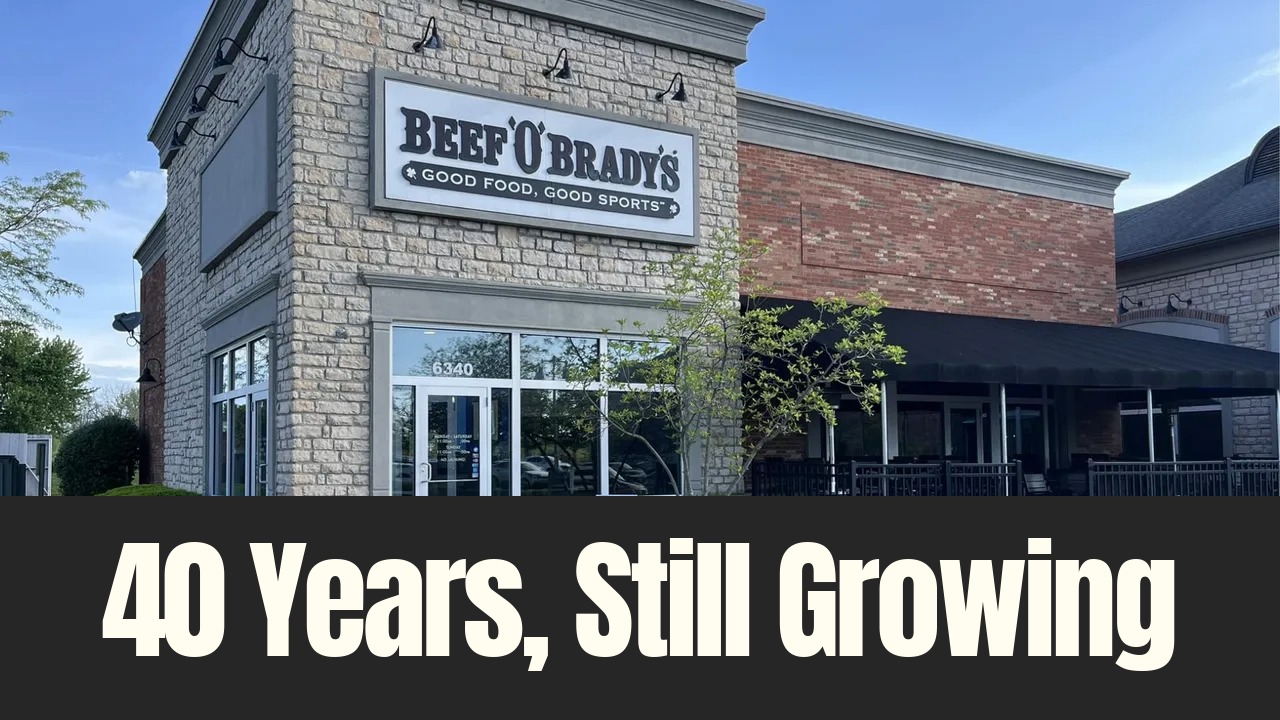
In an industry where most restaurant brands struggle to survive a decade, Beef ’O’ Brady’s is entering its 40th year still growing, still profitable and still deeply tied to the communities that built it.
The sports pub brand, founded in Brandon in 1985, now operates 125 locations across 22 states, including its original Brandon restaurant, which remains in operation today.
As one of the longest-operating restaurant groups to emerge from the Tampa Bay Area, Beef ’O’ Brady’s has grown alongside shifting consumer habits while maintaining a neighborhood-first identity.
For CEO Chris Elliott, that longevity comes down to consistency, even as the business evolves.
Growth without losing focus
Beef ’O’ Brady’s is part of FSC Franchise Co., a multi-brand restaurant group headquartered in Florida, with approximately 275 locations and $500M in systemwide sales.
The portfolio includes Beef ’O’ Brady’s, The Brass Tap and Newk’s Eatery.
Elliott joined the company as a consultant in early 2010 and became CEO later that year.
READ: LATEST TAMPA BAY BUSINESS NEWS
Since then, he has overseen a period of steady growth that included ownership changes, brand acquisitions and a shift from a single-concept company into a scalable platform.
When Elliott arrived, average unit volumes were about $850K. Last year, they exceeded $1 million.
“The fundamentals never change,” Elliott said. “Quality food, good service, attention to detail and being present in the business every day.”
Responding to today’s consumer
The pandemic and subsequent inflation reshaped consumer behavior across the restaurant industry. Elliott said guests have not stopped dining out, but they are doing so less frequently as prices rise across food, insurance and everyday expenses.
Restaurants, he said, live and die on frequency.
FSC’s response has centered on reinforcing value rather than chasing short-term promotions.
READ: Biggest Companies in Tampa Bay
Beef ’O’ Brady’s has offered daily specials since 2015, and in February will introduce 10 new menu items under a tiered value platform starting at $10.99.
“People like variety, but they still want value,” Elliott said. “New news is always good for people to come and try.”
This approach reflects what diners increasingly expect from neighborhood restaurants: consistency, choice and pricing that supports repeat visits rather than special-occasion dining.
Community as a competitive advantage
Long before national marketing budgets were common, Beef ’O’ Brady’s grew through local engagement.
Spirit nights, school fundraisers, trivia nights and community meetings remain central to the brand’s identity.
Many locations include private rooms that host youth sports organizations, civic groups and local clubs.
READ: Tampa Bay’s growth is no accident: 2026 outlook
“That started at the beginning,” Elliott said. “It’s part of our DNA.”
In many of its markets, locations function as community gathering places as much as restaurants, a dynamic that has created multigenerational loyalty. Early customers now return alongside their children and grandchildren.
Expansion remains measured
Beef ’O’ Brady’s opened five new locations in 2025 and plans eight more in 2026.
The expansion pushes the brand further beyond Florida, while still prioritizing markets where community-driven sports pub concepts have historically performed well.
The upcoming restaurants reflect a mix of core Florida markets and secondary growth cities where the brand’s community-driven model has historically performed well.
New locations are planned for:
- St. Petersburg, Florida
- Palm Harbor, Florida
- Ooltewah, Tennessee
- Columbus, Mississippi
- Macon, Georgia (2 locations)
- Lavon, Texas
- Valley, Alabama
READ: Tampa Restaurants
Approximately 70% of Beef ’O’ Brady’s locations remain in Florida, with a heavy concentration in the Tampa and Orlando markets.
While the company could expand faster, Elliott said discipline matters more than speed.
“In five years, if we’re at 150 Beef ’O’ Brady’s, 100 Brass Taps and 125 Newk’s, plus at least one additional brand, that puts us at a $1 billion company,” he said. “That’s ambitious, but realistic.”
What separates strong franchisees
Elliott said the difference between high- and low-performing franchisees is their level of involvement.
“The best operators are in the business every day,” he said. “Greeting customers, knowing their names, keeping the restaurant clean and the food consistent.”
Day-to-day leadership and operational presence, Elliott said, remain the clearest predictors of long-term franchise success.
As FSC continues to grow, Elliott believes durability will continue to separate successful brands from those that fade.
“In tough environments, the brands that survive are the ones that never stop doing the fundamentals well,” he said.
For a brand that started in Brandon and grew steadily over four decades, that mindset remains Beef ’O’ Brady’s strongest advantage.
Stay Informed
Sign up for TBBW’s newsletter | Watch TBBW’s Podcast | Follow TBBW on Social Media |Read More TBBW stories | Contact our newsroom
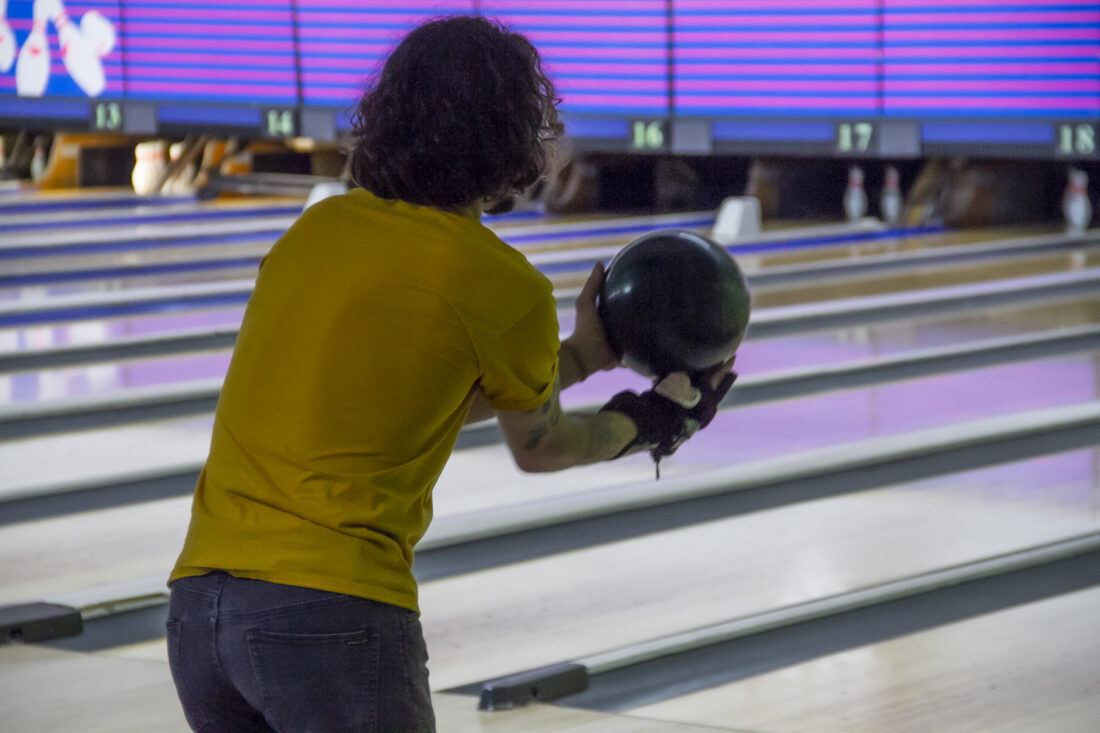
Jesse LaRose of Gladstone eyes up the pins at UP North Lanes while celebrating his brother’s birthday last month. (R. R. Branstrom | Daily Press)
ESCANABA — The sole bowling alley in Delta County, now called UP North Lanes, passed to new ownership this summer.
For more than 60 years, it operated as Bowl-a-Rama. The business still hosts a variety of leagues, offers reasonably-priced entertainment and has a bar and kitchen.
UP North Lanes and Sports Bar owner Albert Danz Jr. has made a few changes since he took over the business in August, and has plans for more. Having worked at Bowl-a-Rama for 15 years, the past seven as manager, Danz bought the place in order to make sure Escanaba’s bowling alley could be the best it could be. He changed the name to reflect the transition and to let people know the destination has entered a new era.
Results of scores for bowling leagues at the Bowl-a-Rama, in addition to advertisements for a 16-lane facility called the same at 2510 First Ave. N. in Escanaba, began being published in the Daily Press in 1960. However, it appears a reconstruction of the place happened a few years later, as a contract with builders was entered in 1963 and a grand opening was announced in 1964. The owner of Bowl-a-Rama was Delta Recreation Corp., made up of board members and shareholders R. James Bichler, Clayton C. Tanguay and Bernard St. Onge.
Several parties involved in the construction of the bowling alley in the early ’60s went to court for a yearslong battle when the general contractor, Peninsula Construction Co. of Iron Mountain, filed for bankruptcy after the building’s construction and failed to pay numerous subcontractors.
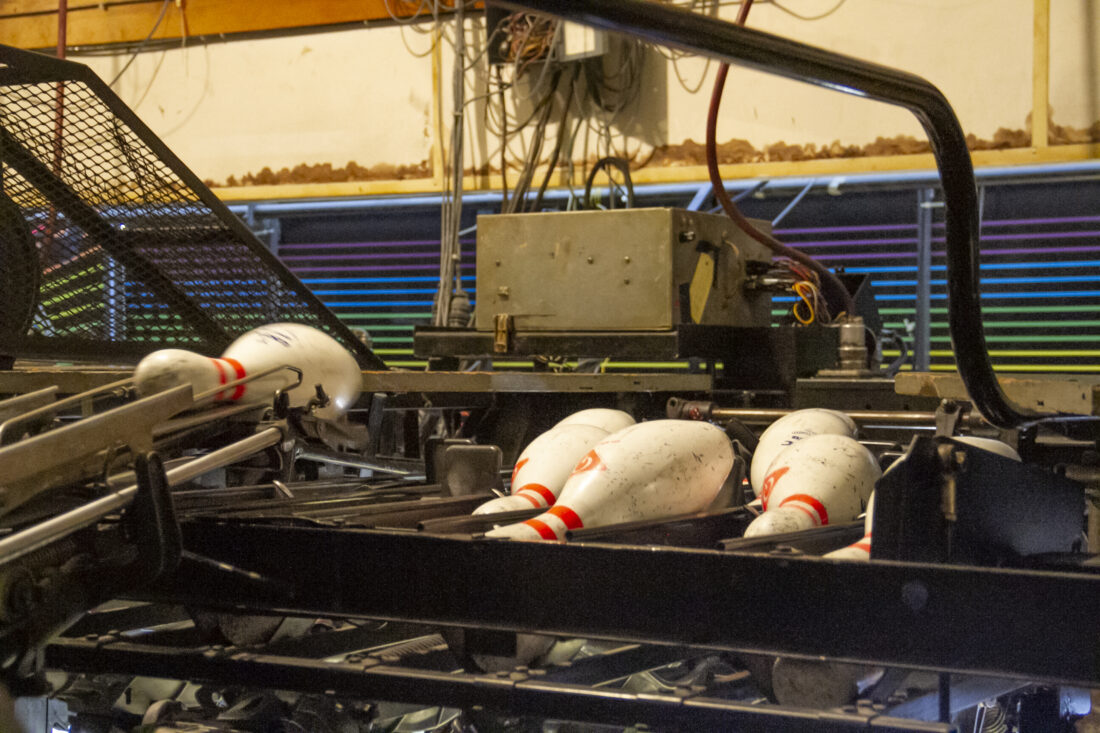
Sixty-plus-year-old machinery reracks bowling pins behind the scenes at UP North Lanes in Escanaba, formerly Bowl-a-Rama. (R. R. Branstrom | Daily Press)
But during that debacle and afterwards, business at the bowling alley grew. A Flat Rock man named Ken Smith bowled the first 300 in January 1964. Several leagues made use of the lanes. A retail shop for bowling supplies was on premises, and a lounge provided limited food and drinks.
In 1970, a Greyhound bus station was built onto the west side of the Bowl-a-Rama, and the bowling alley’s facilities were made accessible to bus passengers through connecting interior doors.
The parking lot was paved later in 1970.
After a bowling alley in Gladstone closed, another eight lanes were added, bringing the Bowl-a-Rama from 16 lanes to 24.
In 1996, Ken and Cherie Lueneburg and Bryan and Lynn Burak purchased the bowling alley from Tanguay and St. Onge, who reportedly were brothers-in-law.
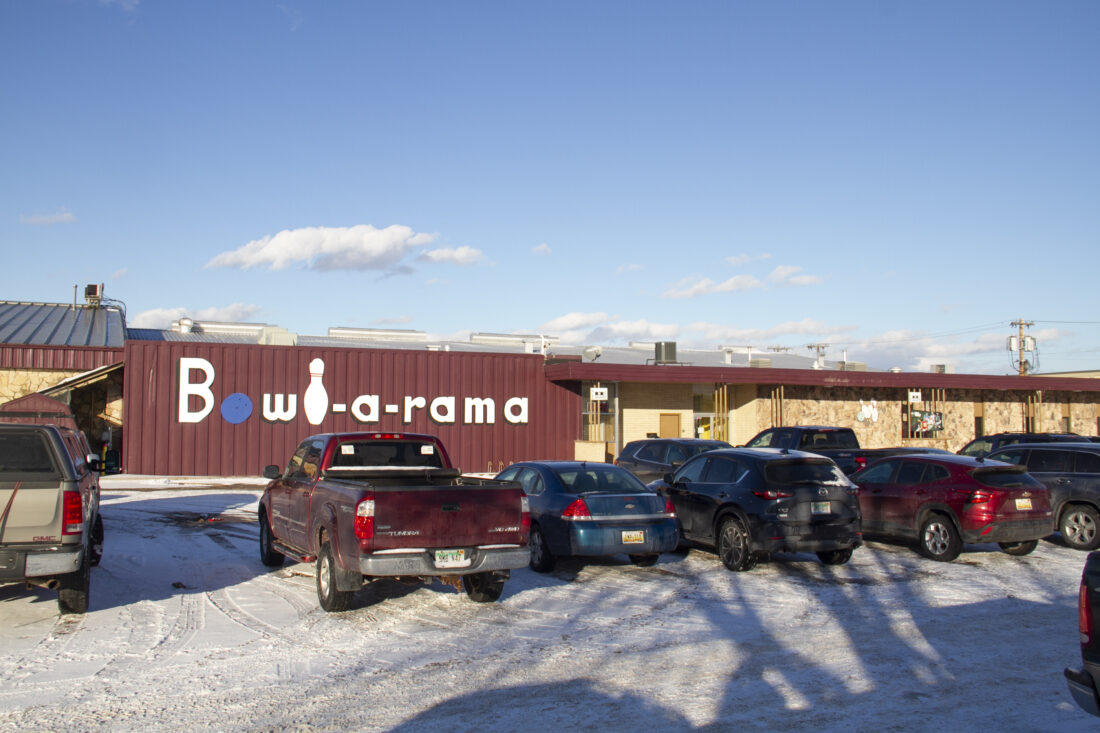
Vehicles fill the parking lot Saturday at UP North Lanes in Escanaba. The sign will probably be changed within the next year to reflect the new name and ownership. (R. R. Branstrom | Daily Press)
Before purchasing the Bowl-a-Rama, and for a couple years after, the Lueneburgs and Buraks also operated the Holiday Bowl per a lease. That place was at 2625 Ludington St. in Escanaba, now occupied by Riverside Ford.
After the Bowl-a-Rama passed to the Lueneburgs and Buraks in the ’90s, the second set of owners remodeled the place.
“Basically, we redid the whole bar, changed it around a little bit. We put in the kitchen … fryer and pizza oven,” Ken said.
They had also installed automated golf machines, which remained for about five years.
Ken proudly reported that the Bowl-a-Rama was integral in getting bowling teams started at Upper Peninsula high schools. A tournament bringing together five-member teams from high schools in Escanaba, Menominee, Kingsford, Houghton, Marquette, Ishpeming, Norway and Baraga took place at the Bowl-a-Rama in December 1996.
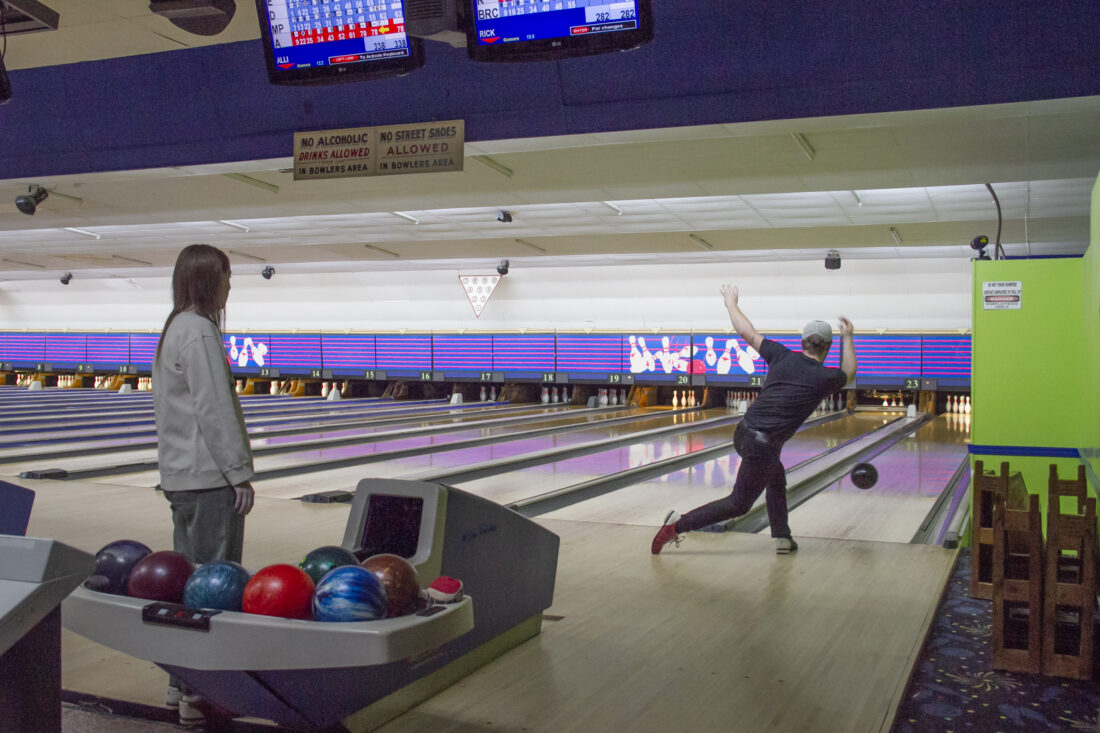
At UP North Lanes in Escanaba, Eric LaPalm releases a bowling ball down lane 24 while Allison Peltin watches before taking her own turn on the neighboring lane. (R. R. Branstrom | Daily Press)
Another major event at the local business was the Wisconsin State men’s senior bowling tournament, Ken said — as he recalled, Bowl-a-Rama hosted more than 200 teams at that tournament in 2006.
Cyber bowling — with blacklights and deals — was introduced under the ownership of the Lueneburgs and Buraks. They also started a bumper league for children, another legacy that continues for kids as young as age 3.
A nonprofit league — in which a portion of proceeds raised goes toward the winning team’s charity of choice — began about 2009 and remains operating at the Escanaba bowling alley today.
A trophy supply business also began at the Bowl-a-Rama, managed by Ken. That facet did not transfer to Danz; Ken still works there but is looking to sell it.
The space that had been occupied by the Greyhound station was converted into rental units now occupied by Bark Boulevard Pet Salon, Bloom Speech Therapy Services and The Golden Hour Studio.
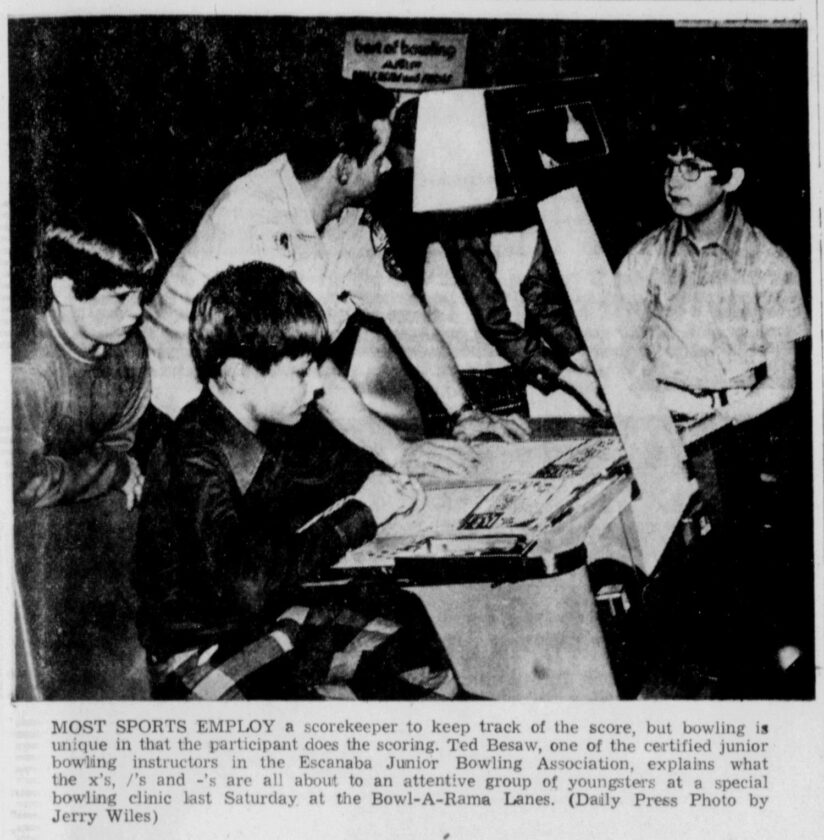
This clipping from the Jan. 25, 1974, Daily Press shows that the Escanaba bowling alley’s involvement with youth has been going on for decades.
Danz, who became a Bowl-a-Rama employee in 2011, has been bowling since a very young age and has experience working at other bowling alleys.
Originally from Addison, Ill., a Chicago suburb, Danz worked at a bowling alley in the Chicago area years ago, one called Red Carpet Lanes in Green Bay, and managed High Five Lanes in Munising for a few years before coming to Escanaba.
Having now lived in Esky for 20 years, Danz “wouldn’t trade it for the world,” he said.
When the previous owners were ready to retire after nearly 30 years in the business, Danz stepped up to purchase it, with the sale finalized Aug. 1.
“I just didn’t want to see it going to anybody or a corporation — who knows what they would have done with it,” Danz said. “I’ve been here so long, and I’ve been in the bowling business pretty much all my life, so I didn’t want to see it possibly go away.”
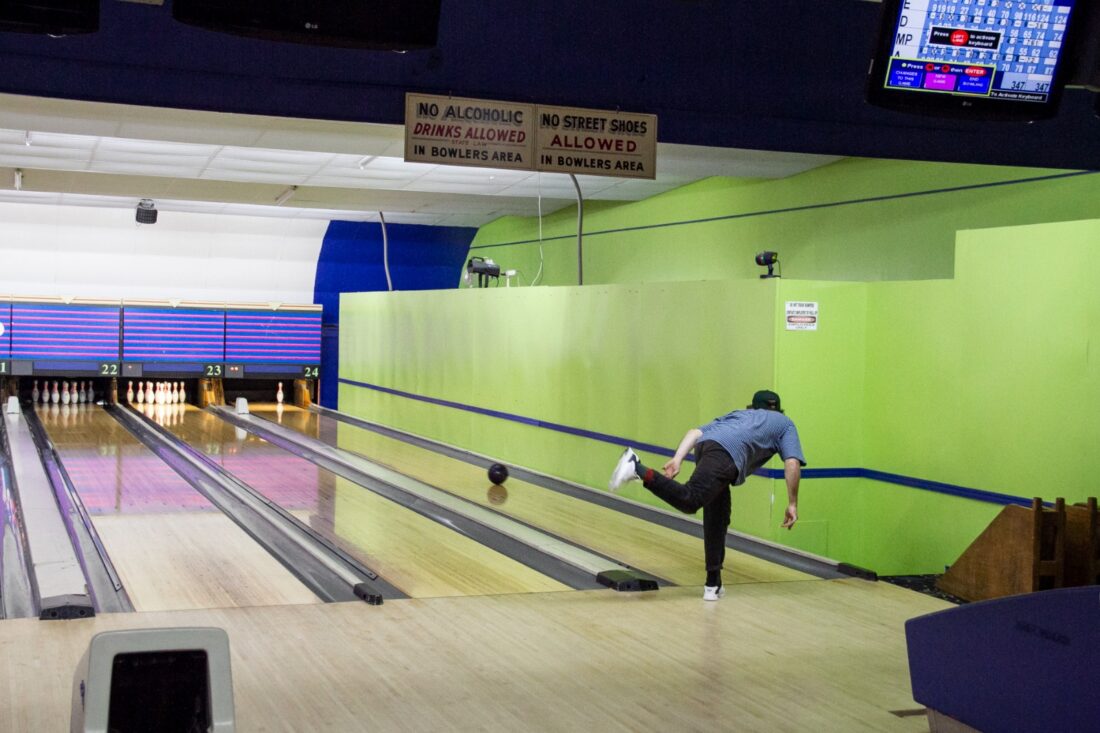
Nicholas LaRose sends a bowling ball down after one last standing pin, hoping for a spare. (R. R. Branstrom)
But instead of keeping it the same, Danz has plans for making the old bowling alley better.
Early changes include revamping the kitchen with new equipment, making the menu available on DoorDash, adding three new TVs and obtaining an NFL Ticket so people can watch football and hockey games in the bar, getting a loan to fix the building’s leaky roof, hiring additional staff and changing the name.
Though the sign out front still says “Bowl-a-Rama,” Danz hopes to replace it in the spring so people can more visibly tell UP North Lanes and Sports Bar is under new ownership.
He’s considering calling the bar portion “The 11th Frame.”
Some things will stay the same — for instance, the homemade pizza that people have gotten to know and love in recent years will continue with the same recipe.
The place offers a surprisingly thorough food menu for a bowling alley. Appetizers, loaded tater tots, burgers, steak sandwiches, wings and quesadillas come out of the kitchen, available for enjoying in or taking out.
The kitchen opens at 11:30 a.m. every day. Food is served until 9 p.m. Mondays through Thursday, until 11:30 p.m. Saturdays and until 6 p.m. Sundays.
The bowling alley and bar are open from 11:30 a.m. to 10 p.m. Monday, Tuesday and Thursday; 11:30 a.m. to 11:30 p.m. Wednesdays; 11:30 to 1 a.m. Fridays; 11 a.m. to 1 a.m. Saturdays; and 11 a.m. to 7 p.m. Sundays.
Up North Lanes has leagues for a variety of ages and skill levels.
“We accommodate every age group,” Danz said. And even if people are terrible bowlers, the game and socializing are entertaining. “If you go out, you have fun.”
Birthday parties, company Christmas parties and other events utilize the bowling alley as well. Packages include bowling time, pizza and pop.
“It’s very affordable for families,” Danz said.
May through September is the busiest time, he reported. Within a handful of years, he’d like expand the bar to bring in cornhole — an activity usually relegated to outdoors in the summertime.
More immediate improvements will include an expansion to the arcade. Danz has already purchased new arcade games to be installed.
He also would like to take out the railings and tables to bring in more modern seating and counters near the lanes.
Danz intends to move the pro shop to a larger area that now is an office and expand upon the product selection.
UP North Lanes and Sports Bar may be reached at 906-786-6500. Some information may be found at 906bowling.com.
———
R. R. Branstrom can be reached at 906-786-2021, ext. 140, or rbranstrom@dailypress.net.
Rec Sports
Super Bowl 60: Santa Clara youth soccer league displaced as NFL plans to take over park for operations center

SANTA CLARA, Calif. (KGO) — Starting Jan. 5, the NFL will be setting up its Super Bowl media center, halftime show production and other operations at the Youth Soccer Park right next to Levi’s Stadium in Santa Clara.
This means hundreds of youth soccer players will have to find somewhere else to play.
The Santa Clara Youth Soccer League has 1,500 players. We spoke with Board Member Steve Robertson.
“There’s a great deal of anxiety. Do we have alternative field space? Because even though there are grass fields in the city of Santa Clara, there a very few with lights,” Robertson said.
The Santa Clara Youth Soccer League is hustling to figure out solutions. On Wednesday night, a parent rented out a tower light to see how well it does.
MORE: Countdown begins for Super Bowl as big economic, cultural boost expected in Bay Area
“We’re scrambling right now, to be honest, without a concrete plan in place as to how the city or other constituents can help us,” Robertson said.
The Youth Soccer Park has two grass fields and one turf field. The NFL plans to use this space from Jan. 5 to Feb. 22, but those in the soccer community are concerned it will take more time than that.
The soccer league says issues arose with the last Super Bowl at Levi’s in 2016.
“It takes a number of weeks to figure out the best way to return the field to normal condition. So in the last go around, the field was trashed candidly,” Robertson said.
In a statement to ABC7, Parks and Recreation Director Damon Sparacino said the agreement requires the NFL to repair any damaged fields.
MORE: South Bay leaders say they will protect against ICE during Super Bowl as immigrant fears persist
The NFL has also pledged financial contributions and help with finding alternate soccer fields.
Santa Clara Mayor Lisa Gillmor just hopes there’s no damage to the turf field.
“This is the big rub, because if they have to replace that synthetic turf field, that will take six to nine months if we’re lucky,” Gillmor said.
She said soccer is the most popular sport in the city.
“I want to make sure if there’s damage, it’s repaired, the fields are returned expeditiously, because I also want to have events at the Youth Soccer Park leading up to World Cup in June,” Gillmor said.
MORE: NFL, Bay Area Host Committee announce venues for Super Bowl 60 events
Before Super Bowl 50, the Santa Clara Youth Soccer League sued the NFL over use of the fields on short notice.
This year, the city said talks with the youth soccer groups and the NFL started back in August.
Robertson said with large scale events, things happen in the 11th hour. He hopes they can take this opportunity to build lasting partnerships.
“We just want to make sure that the kids are not forgotten in the process, that’s all,” Robertson said.

Copyright © 2025 KGO-TV. All Rights Reserved.
Dec. 22, 2025, 4:10 a.m. CT
- A Louisiana Senator’s office is now involved to help navigate the bureaucratic delays stalling the demolition of Bayou Towers.
- The demolition is caught between four entities: FEMA, HUD, the local parish government, and the housing authority.
- While HUD approved the demolition, FEMA has not yet completed its assessment to determine if the building’s damage exceeds 50% of its value.
- Recent incidents of falling debris have raised community concerns about the building being a potential health hazard.
Officials say a Louisiana Senator has stepped in to help navigate delays in the demolition of Bayou Towers.
Houma-Terrebonne Housing Authority Director Nikita Gilton updated the commissioners Dec. 17 on the status of Bayou Towers at the first meeting since pieces of the structure began falling Dec. 5. According to Gilton, workers had to secure floors 8 through 11 and remove the awnings. With that work complete, the building once again remains in limbo, but Gilton said elected officials are stepping in to help them out.
“State Rep. Jessica Domangue reached out to us and put us in touch with Sen. Bill Cassidy’s Office,” Gilton said. “After I spoke with the chair and our attorney, I signed a waiver to let Mr. Cassidy’s office speak to FEMA on our behalf.”
Asked about the discussions, Cassidy’s office declined to comment on the matter.
The fate of the building rests between four entities: Federal Emergency Management Agency, Housing and Urban Development, Terrebonne Parish Government and the Houma-Terrebonne Housing Authority. The money for the building came from HUD for the Housing Authority to purchase the structure. The Housing Authority must get approval from HUD before taking any action.

The Terrebonne Parish Government placed 911 emergency equipment on the roof of Bayou Towers in December 2006. Sulzer Group Senior Project Manager James McDaniel told the Terrebonne Parish Council, Jan 28, that removal of the equipment was important and a plan from the parish to move along with the FEMA process. Sulzer Group is contracted to be the go-between for the housing authority and FEMA.
Demolition of Bayou Towers was approved in February 2024 by Housing and Urban Development, but FEMA has not completed its assessment of the building. FEMA decides whether to repair or demolish a building on a 50% analysis. If the damage exceeds 50% of the building’s value, FEMA it is demolished and rebuilt to current building standards.

The Housing Authority received a pay out from its insurance company for Bayou Towers, but will not disclose the exact amount. Officials with the Housing Authority say they signed non-disclosure agreements in the settlement process. The Housing authority is hoping to receive the remainder from FEMA, who determines the total value it will provide victims and subtracts from that amount the difference paid out by insurance companies.

Speaking with The Houma Courier on Dec. 6 following the panel shattering across Scott Lane, the community surrounding Bayou Towers said they were concerned that the building has become a health hazard. Other members showed up to the Terrebonne Parish Council Meeting asking that the Council take action to see the building get taken down.
Stephanie Yowell is an environmental scientist with the Louisiana Department of Environmental Quality. She said if the building has asbestos in it there’s the potential that it could go airborne. She said the threat is low, but without conducting an air quality test there’s no way to know.
“Unless the building itself is crumbling actively and pieces are falling all the time, the concern is low,” she said.
If the surrounding community is concerned, Louisiana Department of Environmental Quality Environmental Project Coordinator Cindy LaFosse said residents could call (225) 219- 3640 and DEQ could look into it.
According to Attorney Brandon DeCuir, who represents the Houma-Terrebonne Housing Authority, the building poses no threat to the surrounding community, unless they go inside.
“It is not a health hazard right now. It is not a health hazard as it stands, especially with it being walled off to anybody and any occupants… but if somebody went in there they could have an issue,” DeCuir said. “The reason it’s walled off, and the reason why people are not let in is because, not the caustic material that you are looking for, but because of the structure’s issues… You can’t go through that building safely.”

Colorado juvenile detention centers facing severe staff shortage

Oregon Loses Two More Players to Transfer Portal Amid College Football Playoff Run

Dominique Dawes’ Father-in-Law Found Dead

Beach Volleyball Releases Spring 2026 Schedule

Kyojo Cup auditions begin as Toyota announces 2026 Japanese Motorsports Programme

Chili’s signs deal to sponsor FloRacing coverage of Chili Bowl Nationals

Beef O’Brady’s expands beyond Florida with 8 new restaurants

Veteran Automotive Executive Andy Thomas Named Vice President of Manufacturer Relations At Ten Tenths Motor Club

Brian Hosfeld Named New Mexico Volleyball Head Coach – Mountain West Conference

Alex Bowman 2025 NASCAR Cup Series season in review: 48 team notched 16 top 10s and a playoff appearance

Florida wide receiver Naeshaun Montgomery plans to enter NCAA Transfer Portal

Volleyball Adds Transfer Štiglic – Northwestern Athletics

F1 Engine row erupts over ‘alleged’ 2026 compression loophole

As Forza Motorsport Winds Down, Gran Turismo Is Experiencing A ‘Phenomenon’ At PlayStation

Texas A&M wins NCAA volleyball title with sweep of Kentucky

First Tee Winter Registration is open

Fargo girl, 13, dies after collapsing during school basketball game – Grand Forks Herald

CPG Brands Like Allegra Are Betting on F1 for the First Time

F1 Las Vegas: Verstappen win, Norris and Piastri DQ tighten 2025 title fight

Sycamores unveil 2026 track and field schedule

Utah State Announces 2025-26 Indoor Track & Field Schedule

Two Pro Volleyball Leagues Serve Up Plans for Minnesota Teams

SoundGear Named Entitlement Sponsor of Spears CARS Tour Southwest Opener

Jo Shimoda Undergoes Back Surgery

Redemption Means First Pro Stock World Championship for Dallas Glenn

Bowl Projections: ESPN predicts 12-team College Football Playoff bracket, full bowl slate after Week 14

Texas volleyball vs Kentucky game score: Live SEC tournament updates

Robert “Bobby” Lewis Hardin, 56

How this startup (and a KC sports icon) turned young players into card-carrying legends overnight

Indiana’s rapid ascent and its impact across college football






-
 Motorsports2 weeks ago
SoundGear Named Entitlement Sponsor of Spears CARS Tour Southwest Opener
-
 Rec Sports3 weeks ago
Black Bear Revises Recording Policies After Rulebook Language Surfaces via Lever
-

 Motorsports2 weeks ago
Donny Schatz finds new home for 2026, inks full-time deal with CJB Motorsports – InForum
-

 Rec Sports2 weeks ago
How Donald Trump became FIFA’s ‘soccer president’ long before World Cup draw
-
 Rec Sports2 weeks ago
David Blitzer, Harris Blitzer Sports & Entertainment
-

 Motorsports2 weeks ago
JR Motorsports Confirms Death Of NASCAR Veteran Michael Annett At Age 39
-
Sports2 weeks ago
Elliot and Thuotte Highlight Men’s Indoor Track and Field Season Opener
-

 Motorsports2 weeks ago
Rick Ware Racing switching to Chevrolet for 2026
-
Sports2 weeks ago
West Fargo volleyball coach Kelsey Titus resigns after four seasons – InForum
-

 Sports2 weeks ago
Women’s track and field athletes win three events at Utica Holiday Classic