If you are or have been a Little League parent, you can relate to this story.
A young kid strikes the ball. It rises over an outfielder’s head. He starts running from home plate.
But he is so fast – and so excited – he threatens to pass the other baserunners.
“No, no, go back, go back, go back!” parents implore.
“Why am I going back?” he thinks to himself. “I just hit a home run.”
When did the boy, Curtis Pride, start dreaming about playing in the major leagues?
“After I hit a home run my first at-bat,” he tells USA TODAY Sports.
It’s a thought many of us have as youths, but for Pride, it seemed impossible. He would need to become the first deaf player to make it to the majors since Dick Sipek in 1945.
“It’s a tricky business, being deaf in a hearing world,” Pride writes in “I Felt the Cheers: The Remarkable Silent Life of Curtis Pride,” his memoir that was released this year about his life and big league career that spanned 11 seasons. “I have never tried to portray myself as someone who can hear, nor would I ever try to hide the fact that I cannot. It is mere fact, and it brings neither pride nor shame. It’s just who I am.”
As Pride has found, often it’s the self-imposed obstacles – or those imposed by others – that are harder to clear than the actual barriers in the way of your goal.
Players mocked him from Little League to the minors, sometimes right to his face. People overlooked him.
But he had the support of his parents, and he found the right group of friends, coaches and teammates to give him ground support. It’s what every kid needs.
“Curtis’s story of becoming Major League Baseball’s first full season deaf player of the modern era is unique but it’s also universal,” Doug Ward, Pride’s co-author, tells USA TODAY Sports. “Everyone has a dream, so everyone can relate to Curtis and appreciate the hurdles he overcame to make his dream come true. At book signing events, Curtis handwrites the inscription, ‘Anything is possible.’ I think that summarizes the widespread appeal of Curtis’s singular story.”
Pride, 56, played for 23 professional teams over 26 seasons. He’s now a father and has been a coach of youth and college baseball players. We asked him how his experiences can give young athletes and parents perspective on their games:
As parents, and as coaches, our job is to bring out the best in kids, regardless of their skill level
John and Sallie Pride never made Curtis feel like a burden. Sallie, their son says, never even felt she was making a sacrifice.
“We have no time to feel sorry for ourselves or for Curt if he’s going to have a decent life,” John recalled his wife telling him, right after their son was born, for a Washington Post story in 1993. “We have to start reading and learn how to help him.”
Like many of us, Pride’s parents felt he needed to play sports in order to be a kid.
What are sports, but a place that can help us associate with others, and maybe even find our niche in life, at least in early life.
“We have a lost cause,” Curtis Pride writes about how he was presented by the Wheaton, Maryland, Boys Club, to his first T-ball coach, Don Stein, in the mid-1970s. “A player with two strikes against him: He is deaf, and he is Black. His father is making a fuss, so somebody has got to take him. Will you do it?”
Curtis remembers his dad being worried, spending a lot of time with the coach, relaying to his son what the coach was saying to the team.
We all hope we meet someone like Stein, who not only makes you feel comfortable and welcome, but plays to your strengths.
Curtis could speak and read lips. Stein worked with John Pride to figure out how the players could communicate, especially in catching popups or fly balls.
“Anytime I called for the ball, it’s my ball all the way, so that there’s no misunderstanding,” Curtis Pride told USA TODAY Sports in our video interview. “So if I don’t say anything, if the guys wave me off, I know that it’s (their) ball. I don’t remember ever having a collision or anything like that.”
Youth coaches, including myself at times in the past, tend to play the most polished kids a lot more than the ones who are slower to develop.
Over time, we realize our broader purpose. Be the coach who gives everyone a chance. You never know what you might find.
“It wasn’t so much that Don made me a better player, which he did,” Pride writes, “but it was more a case of him allowing me to believe I could be a good player. … Don was the first person outside of my family to open a major door for me and, in doing so, he began a butterfly effect that altered my life’s course for the better.”
If you work with someone’s deficit – or failure – he or she can before a source of strength
About 30 years ago, I was beginning my career as a part-time sportswriter for The Washington Post when I came across a story angle about a juggernaut volleyball team at Gallaudet University.
Gallaudet is a school for deaf and hard of hearing students that competes athletically against schools that have students who hear. It’s where Pride coached baseball after his playing career, and where he would tell his players that if they wanted others to view them differently, they needed to see themselves differently.
“I never viewed the deaf kids in my program any differently than the major leaguers I played alongside,” Pride writes.
Peg Worthington, who compiled a 615-305 record at the school, told me in 1995 she devised a plan where each player stuck to a specific area of the volleyball court. They gained comfort in performing through practice and repetition.
It’s a similar message Braves manager Bobby Cox would one day impress upon his players, including Pride a few years later: Know your role, adapt to it, perfect it.
Although Worthington said sometimes her players got “burned” because they couldn’t cover the entire court or hear when a teammate tipped a ball at the net, they brimmed with confidence.
“They never take their eye off the ball,” Penny Fall, then the coach of Washington College, a regional school that played Gallaudet, told me. “I’ve considered putting earplugs on my kids to make them focus that well. I’m tired of being wiped up and down the court (by Gallaudet), but I’m also happy for them.”
It’s your job as a coach to find out what’s inside every kid and unlock it.
Giving Pride the freedom to use his speed and chase down balls gave him confidence. His teammates, dismissive at first, accepted him as he practiced and showed them he could hit.
“I don’t like (not) knowing my role,” he told me in our interview. “The role can always progress as maybe you have a little bit more responsibility during the game, where you get better, and then, you start a game.”
You have to fail in order to get better
Pride’s parents let him get into basketball, gymnastics, track, wrestling and football. When he reached high school, he was the kid who changed from his baseball to soccer uniform as his father drove across Montgomery County, Maryland, and back.
“Make a point for kids at a young age to learn how to deal with failure,” Curtis Pride says. “That’s why my parents have always encouraged me to play different things, to try different things, even though failure was possible, but because you never know what you can do until you try.”
Just last month, Phillies pitcher Orion Kerkering, with the National League Division Series on the line, struggled to field a two-out comebacker to him. He appeared to panic and quickly threw wildly home when he may have had a chance to extend the game and get the out at first base.
“We’re not perfect, we’re human beings,” Pride says. “We all feel bad for him. But it’s not his fault that the team lost. They had so many other opportunities to win the game. And they should never put that on him. Because of what he had to deal with at the moment, it’s gonna make him stronger.
“I’ve seen a lot of parents trying to protect their kids but they’re not helping them (when) they get older, when they do fail. But now, they’ve never had the experience of already having to deal with failure. So they become lost.”
Pride was 23, and in his seventh minor league season, at Class AA Binghamton (New York). He saw his teammates make fun of him across the locker room, he felt the hurt of his first girlfriend broke up with him. He couldn’t seem to hit.
He stuck out the season – as his father insisted – and returned to Maryland with the intention to quit. It was time, so it seemed, to pursue his degree in finance from William & Mary, which he earned congruently with his early minor league career with the Mets (another requirement of his father).
First he worked at his former high school as a teacher’s aide who served kids with disabilities.
“They didn’t know I played professional baseball until the teacher told them about my background,” Pride says. “And these kids were shocked” ‘How can you play professional baseball, you’re deaf?’
“I was talking to the kids. We all have different disabilities, but that shouldn’t stop us from pursuing our dreams and goals. We know what our capabilities are and we shouldn’t allow other people to place limitations on us. After I had that conversation with my class, I went home, and I talked to my mom, and these kids totally inspired me. What kind of message would I be sending to them if I quit pursuing my goal, the dream? So I felt I owed it to them.”
YOUTH SPORTS SURVIVAL GUIDE: Pre-order Coach Steve’s upcoming book for young athletes and their parents
‘We’re never alone’ in the pursuit of our goals
Steve Swisher, Pride’s manager at Binghamton who had worked tirelessly with him in the batting cage, had told him that if he starts quitting now, it will become easy, and he’ll quit other things in his life.
Pride learned to thrive with the help and advice of others. He credits his neighbor, Randy Hurowitz, who played goalie for him every day as Curtis took shot after shot against him, with helping him reach the U-16 national soccer team.
Players on the basketball team at William & Mary, where Pride played point guard, would give him a nudge into a double switch on defense. He developed a sixth sense, he feels, fueled by the confidence of those who believed in him, to make up for his lack of hearing.
When he signed with the Montreal Expos in 1993, his manager in Class AA Harrisburg was Jim Tracy, who made him feel like his sole purpose in life was to make Pride a better person and player.
“We all go through struggles, but we can rely on other people to help us get through,” Pride says. “We’re never alone. It’s just always about being positive.”
Always remember to smile
When he returned to baseball, Pride met his future wife, Lisa, a reporter who interviewed him at spring training. Colten and Noelle, who are now college students, became his favorite players, as our kids do, as he watched him.
Getting married and having children were two of his goals on a list he began keeping as a kid.
Pride recommends writing down goals – big and small, team and individual – as he did, to help push you forward.
Even if you don’t achieve all of them, they are a reminder to be relentless in your pursuit.
When he rapped a double to left center field for the Expos on Sept. 17, 1993, Pride was determined, in his words, to prove he was not just a charity case. As he was standing on second base, he could see more than 45,000 people standing and cheering. He thought they were cheering for the team, which was coming back to win.
They knew Pride was deaf and, as third base coach Jerry Manuel took it in, he realized they were doing everything they could to try to make him hear them.
As the Phillies changed pitchers, Manuel called his player over and told him it was for him. Pride tried to keep a straight face, wanting them to know he was no one-hit wonder, but tipped his cap, as his coach suggested.
Second-base umpire Gary Darling walked over. “Smile,” he told Pride. “Smile!”
It was a good reminder for all of us, and our kids, when they’re playing sports.
“I remember, at a young age, I always wanted to please the coach,” Pride says. “But I lost focus on myself. … I’m not doing this for the coaches, I’m not doing this for my parents. I’m doing this for myself because I love the game.”
Steve Borelli, aka Coach Steve, has been an editor and writer with USA TODAY since 1999. He spent 10 years coaching his two sons’ baseball and basketball teams. He and his wife, Colleen, are now sports parents for two high schoolers. His column is posted weekly. For his past columns, click here.
Have a question for Coach Steve you want answered in a column? Email him at sborelli@usatoday.com
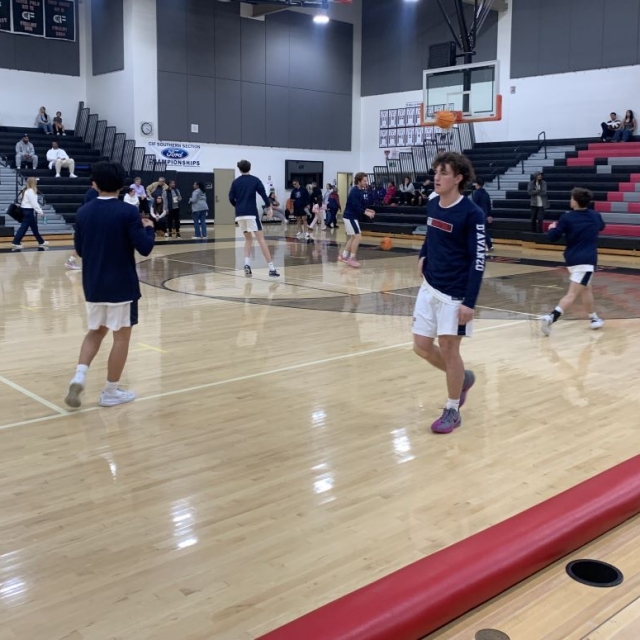
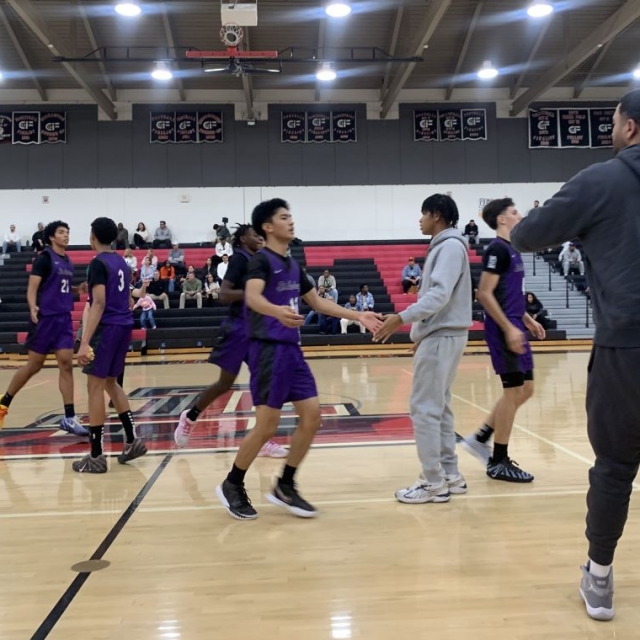
Tesoro Coach Steve Garrett and his players congratulate St. Anthony after the loss Saturday. (PHOTOS: TIm Burt, OC Sports Zone).
Tesoro’s boys basketball team has had a remarkable season so far with a 14-3 record.
But the Titans, coached by Steve Garrett, weren’t able to finish Saturday, losing to St. Anthony 64-55 in a second round game of the Ringo Bossenmeyer Holiday Classic at Tustin.
Tesoro had a six-game winning streak snapped.
To see additional photos, click on the first picture:
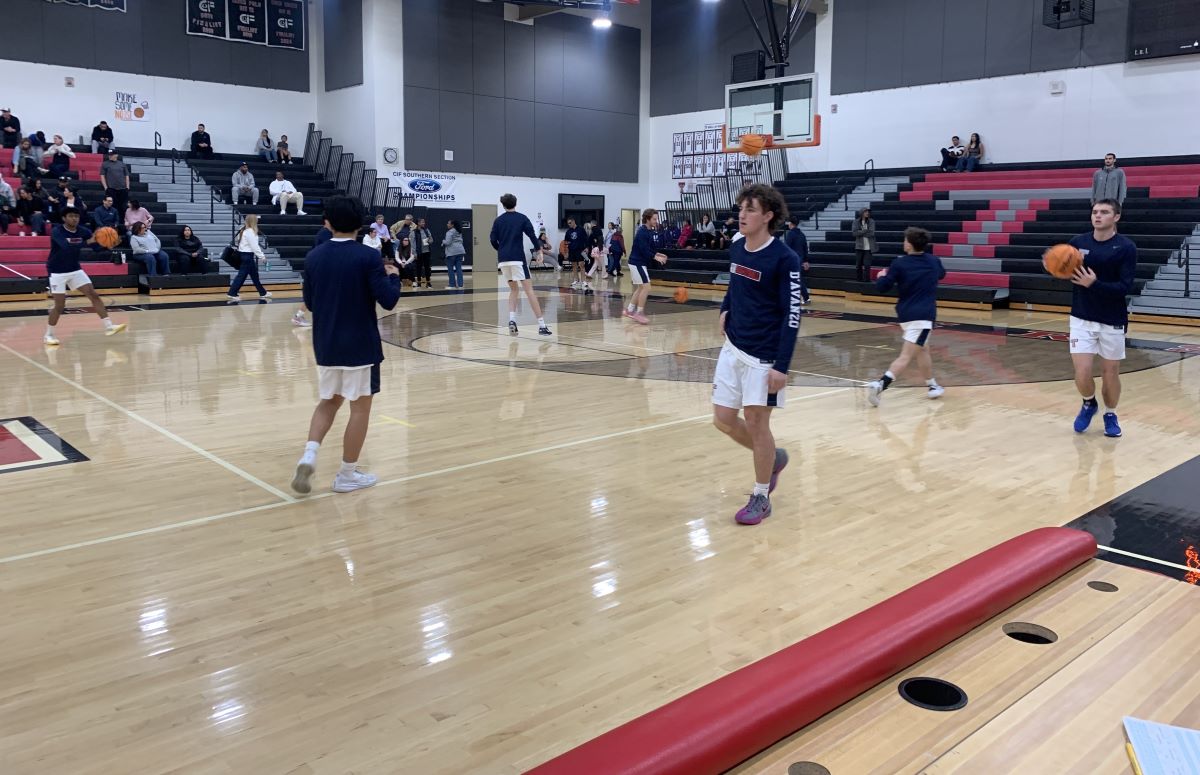
Tesoro players warm up before Saturday’s game.
St. Anthony players head to the sidelines during a timeout after a big run.
St. Anthony (2-0 in Pool A) appears headed to the championship game of the eight team tournament Tuesday at 4:30 p.m. vs. Servite. Tesoro dropped to 1-1 in pool play.
“We weren’t consistent enough to earn a win tonight, that’s the main thing,” said Tesoro Coach Steve Garrett, now in his 25th year as head coach. “There were four or five defensive possessions in a row where we didn’t stick to our principles, four or five possessions where we had good drives to the lane and didn’t take it up strong, we didn’t earn the fouls, didn’t finish.
“We went away from the defense, we got to earn wins and I just didn’t think we were consistent enough.”
Tesoro was led by sophomore Owen Hatch, who had 17 points and his brother Carson Hatch, a senior, who had 12 points.
Jamil House led St. Anthony (6-5) with a game-high 24 points and seven rebounds. House, the only Saint in double figures, had 18 of his points in the first half to help the Saints move out to a 22-16 halftime lead.
St. Anthony led by five points after three quarters. Owen Hatch made a 3-point play with 5:26 remaining before the Saints regained control and finished with a win.
“There was a stretch where we were down two and we have five of our seven possessions at the rim and I just thought they weak takes,” Garrett said. “You got to put pressure on the refs with a strong drive and finish the play and then the couple we missed, we missed our free throws. We were seven of 17 from the line, we should have gotten to the foul line at least 25 times, not because of the refs, but because of us, that’s a big factor.”
Max Draper and Dean Mika added nine points each for Tesoro.
“The kids are great, all these guys have literally played together since fourth grade,” Garrett said. “They all know each other, they’re extremely close, they count on each other for their success. Tonight, I just know we could have been overall a little bit more consistent when we needed to.”
Tesoro plays another pool play game Monday vs Beckman at 1:30 p.m.
VANCOUVER, Wash. – Lawmakers from the 18th Legislative District are taking steps to protect children in youth sports programs with new legislation.
House Bill 2180, sponsored by Rep. John Ley (R-Vancouver) and endorsed by Rep. Stephanie McClintock (R-Vancouver), would require youth sports organizations to conduct background checks via the Washington State Patrol. It also prohibits hiring anyone with convictions for crimes against children.
It also instructs the Department of Children, Youth, and Families to create mandatory training on reporting child abuse specifically for youth sports coaches.
Ley emphasized the importance of these measures, stating that the bill was prompted by a concerning incident.
“This legislation was prompted after concerned parents encountered a convicted sex offender who failed to disclose his conviction while seeking to coach their children,” said Ley. “By requiring background checks — paid for by the individual or organization — we give parents and program administrators better tools to protect kids.”
McClintock expressed her dedication to child safety, stating her support for the bill.
“Protecting kids will always be a top priority for me,” said McClintock. “As a mom, this legislation closes dangerous loopholes and helps ensure youth sports remain a safe environment for kids and families.”
Ley also extended gratitude to the community member who raised the issue.
“I also want to thank the constituent that brought this matter to our attention,” said Ley.
The 2026 legislative session is set to begin on Monday, Jan. 12.
Registration for spring sports runs from Jan. 1 – Jan. 25. The parks and recreation department offers baseball for ages 5-14, softball for ages 5-16, t-ball for ages 5-6, and spring tennis for ages 8-14. Registration must be completed online and is open from Thursday, Jan. 1, through Sunday, Jan. 25.
Grayson Touchard, a spokesperson for the parks and recreation department said about 1,800 kids sign up for spring sports each year.
“We do not place a cap on registration,” she said. “Everyone who registers will have the opportunity to play if there are enough players in their age group.”
She said parents will have about a week and half after Little League players have been chosen to register for spring ball if their child does not make the team.
The Parks and Recreation Department announced Nov. 25 that the department is now a part of the Little League Official Community and the holder of the new St. Charles Little League charter, bringing a new opportunity for young athletes across St. Charles and St. John parishes.
The newly established Little League program is open to boys and girls ages nine through 12 and will serve eligible athletes who live or attend school in St. Charles or St. John the Baptist Parish.
All tryouts will be held at the West Bank Bridge Park in Luling.
All registrations for spring sports must occur with the individual’s affiliated booster club, except for spring tennis.
The Parks and Recreation Department will provide registration information regarding track and field, First Tee-Greater New Orleans (youth golf), and SuperTots offerings in early 2026.
Editor’s note: Sheng Peng is a regular contributor to NBC Sports California’s Sharks coverage. You can read more of his coverage on San Jose Hockey Now, listen to him on the San Jose Hockey Now Podcast, and follow him on Twitter at @Sheng_Peng.
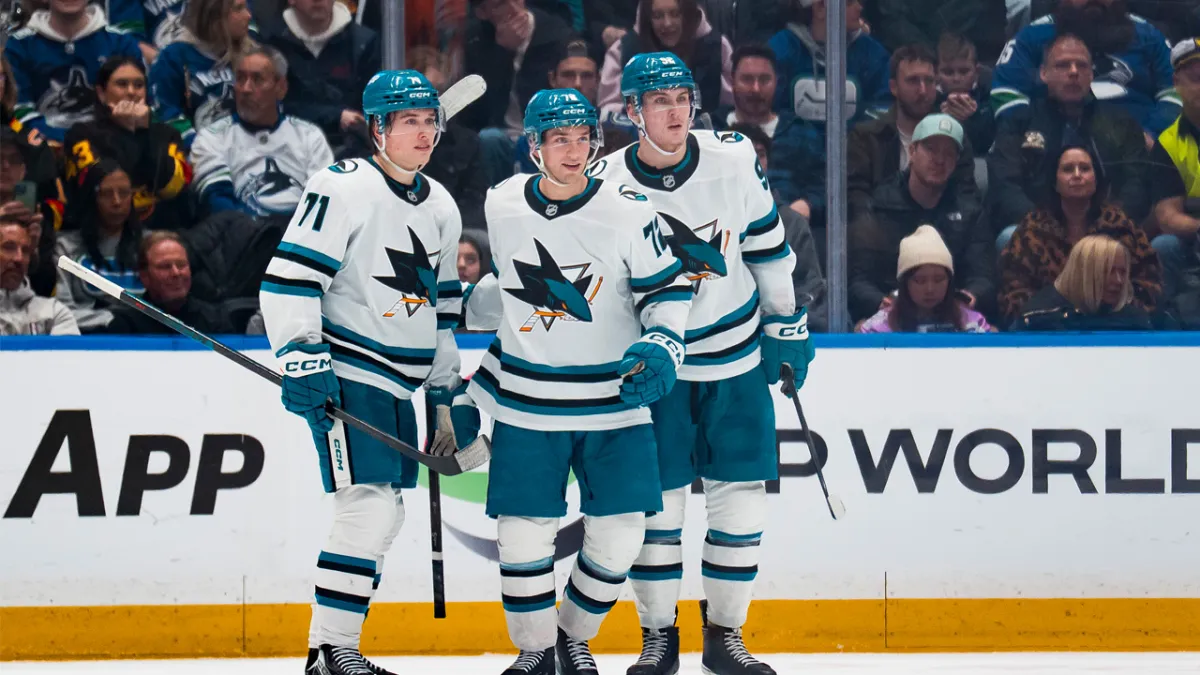
VANCOUVER — This wasn’t a must-win for the San Jose Sharks, but it certainly felt like a more important regular-season game than usual.
Macklin Celebrini admitted, after the Sharks went into the holiday break bombed by the Vegas Golden Knights 7-2, that the team needed to respond. San Jose did just that, doubling the Vancouver Canucks up 6-3 on Saturday night, in their first post-Christmas tilt.
“It’s awesome, especially with how we ended [before] break. I think we all wanted this one pretty bad,” Celebrini said, about the team’s bounceback and his first win in hometown Vancouver. “It’s cool to win here.”
This victory also put the 18-17-3 Sharks back into the last wild card berth.
I’ve been on record many times saying that I don’t believe San Jose will make the playoffs. Of course, I’m not changing that belief because of one win, though I stress that I hope they prove me wrong.
But three things stood out Saturday that will help the Sharks in their quest to qualify for the postseason.
Download and follow the San Jose Hockey Now podcast
The562’s coverage of Long Beach Poly Athletics for the 2025-26 school year is sponsored by Former Jackrabbits Wendell “WoWo” Moe, Jr. & Tyson Ruffins.
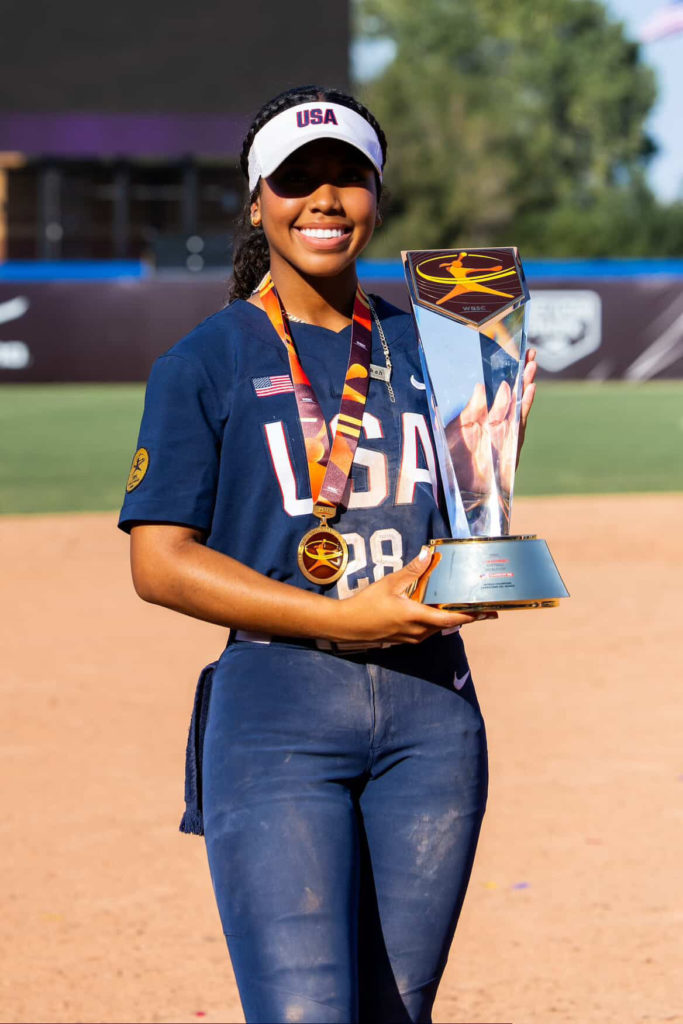
Long Beach Poly softball star Ki’ele Ho-Ching capped off an impressive 2025 campaign winning a gold medal with the USA Women’s U-18 Softball Team at the WBSC Women’s Softball World Cup in Oklahoma City. In the gold medal game, Ho-Ching drove in a run with a single during Team USA’s 7-2 championship win over world-ranked No.1 Japan.
Team USA’s medal marks its fifth-consecutive world championship after winning in 2015, 2017, 2019, 2021 and now, 2025. This victory also extended a 48-game winning streak at the World Championship for the stars and stripes squad, remaining undefeated at the World Cup with victories over China, Chinese Taipei, Canada, Mexico and two wins against Japan. Ho-Ching scored three runs during the five-day stretch in the fall tournament, collecting three hits and an RBI.
Ho-Ching is currently ranked as the No. 1 player in the nation, according to Prep Softball, and was one of 16 players from 10 states selected to the USA U-18 team. Her appearance makes her the first Moore League softball player to play on a USA Softball Youth National Team, according to USA Softball archives.
Ho-Ching joins the ranks of local sports icons to put on the “USA” jersey, including Lisa Fernandez, a Long Beach native who attended St. Joseph, and Tiare Jennings, a San Pedro native who attended St. Anthony. Both Fernandez and Jennings have represented the Senior National Team.
The Oklahoma commit is poised for another standout season as a senior with Long Beach Poly, leading a talented Jackrabbit squad looking to dethrone perennial Moore League champions Millikan. The Jackrabbits are coming off a CIF-SS Division 4 championship—the first in program history.
According to MaxPreps, Ho-Ching batted an astounding .500 with a .568 on base percentage last year through 11 games with Long Beach Poly. As a junior, she tallied 19 hits, 18 RBIs and 13 runs scored for the Jackrabbits.
STATEN ISLAND, N.Y. — The snow couldn’t keep young ballers from competing in the 4th Annual Finest AAU Holiday Classic Saturday afternoon.
The annual tournament included 86 teams ages 2nd to 8th grade this year. A whopping 106 games are to be played between Dec. 26-31 at St. Teresas, St. Patrick’s and Moore Catholic High School.
New to the competition this year was the addition of six Brooklyn teams.
“We’re seeing more girls teams register this year, as well as several Brooklyn teams,” said league director James Fleschner. “It’s exciting to diversify the competition and really challenge the players to compete over the holiday break.”
Staten Island’s Finest AAU Travel Basketball Organization holds the competition annually to keep players active during the break.
Participants received a commemorative shirt in honor of the events.
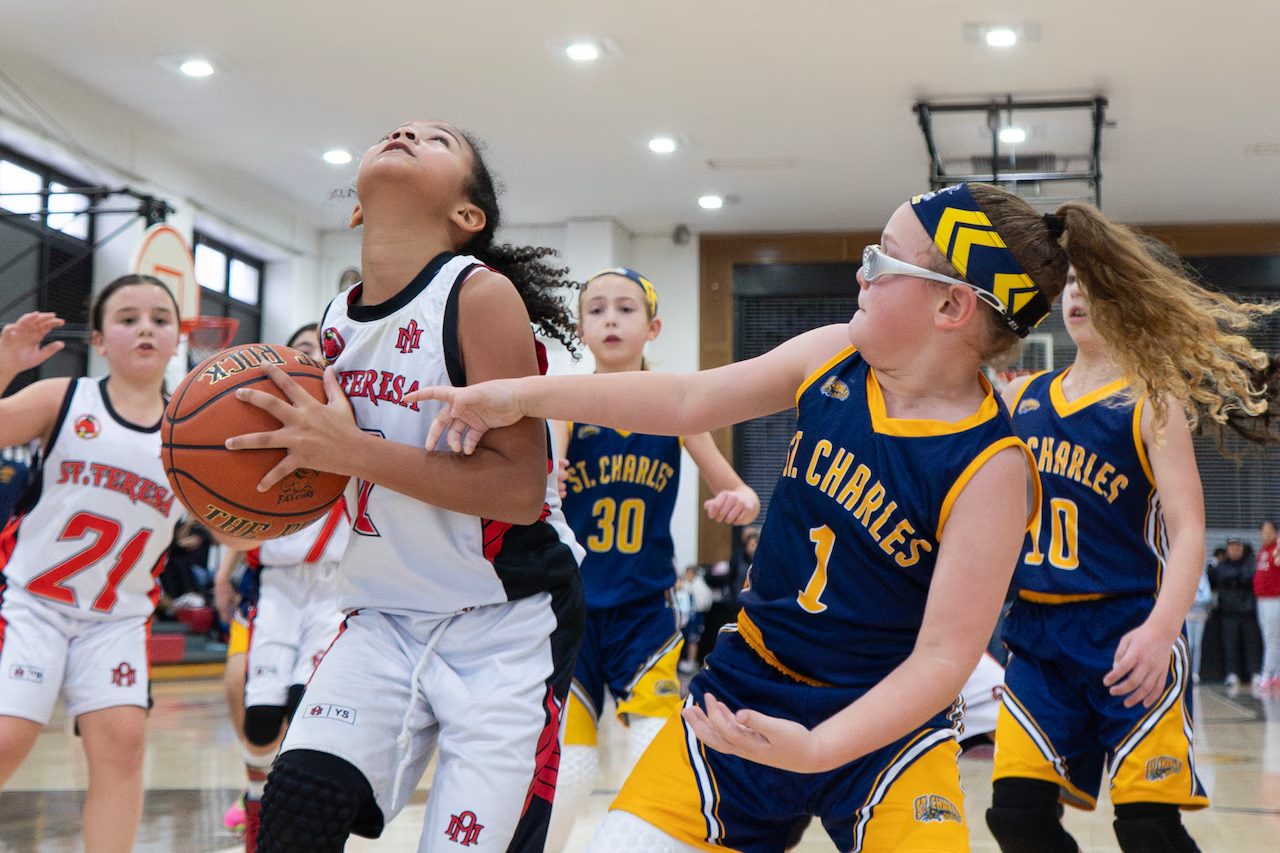
The St. Teresa’s gymnasium was full of energy as players competed Saturday afternoon.
The girls 2nd/3rd St. Teresas team defeated St. Charles by a final score of 16-14 in an electric match. The girls 2nd/3rd Holy Child team fell to St. Joseph Hill Academy, 8-5.
Check out the gallery below for the best photos of the day.
1/90
4th Annual Finest AAU Holiday Classic at St. Teresas
SUBSCRIBER BENEFIT:SILive.com is offering a perk exclusively for subscribers: Log in, click on the photo gallery and choose GET PHOTO to download print-quality images free of charge. Note to SILive.com mobile app users: To download high-resolution photos, please access this report and gallery from a standard mobile or desktop/laptop web browser