
Motorsports
What You Don’t Know About the Two People Who Own NASCAR

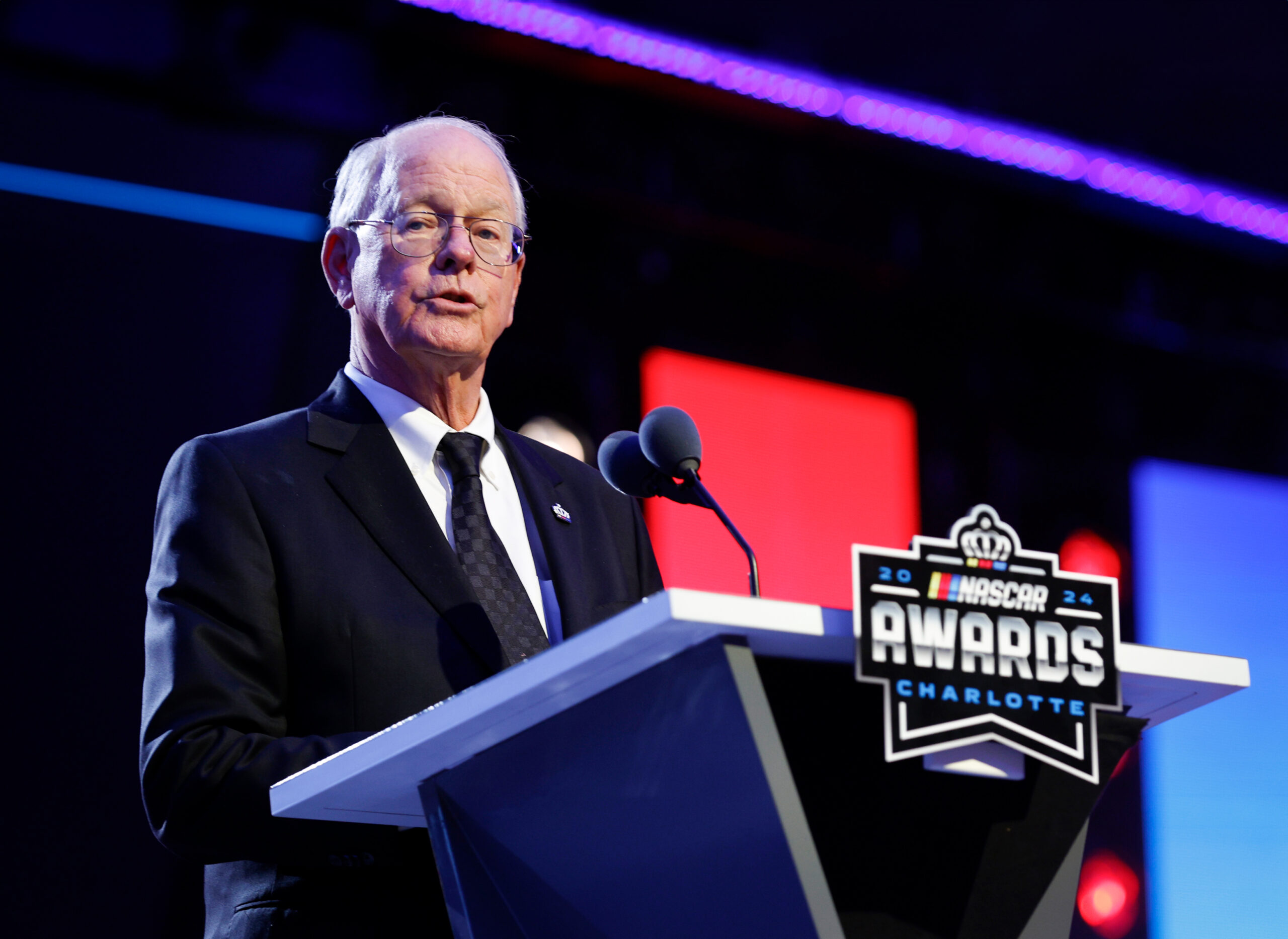
Today, the anti-trust lawsuit against NASCAR—filed by two unhappy teams, one of them led by basketball legend Michael Jordan—entered its ninth day and yielded a surprise settlement, the precise details of which have not been disclosed. Everybody, however, seemed happy on the steps of the courthouse in Charlotte, North Carolina, where the warring parties did everything but link arms and softly sing Kumbaya. Whether they’re happy because they won, or just happy it’s over, remains to be seen. Up to this point, it has been a contentious and uncomfortable battle, with lifelong friendships threatened as bombshell testimony piled up.
What was exposed over the course of the last week, and the settlement itself, were completely unexpected. The sport has been eviscerated as fans pick through the pieces online, and besides the revelation that all NASCAR charters will be permanent from now on, it’s not clear what the future holds for NASCAR. It’s not how the sport’s pioneers, Florida’s France family, mentally mapped the rolling trajectory of NASCAR, which was founded by family patriarch and Daytona Beach gas station owner “Big Bill” France, who stood 6 feet, 5 inches.
He conceived, created, and ran NASCAR. Seventy-seven years later, the France family still runs NASCAR. Jim France, the 81-year-old chairman and CEO and the son of Big Bill, owns 54 percent of NASCAR, and was specifically named in the suit. His niece, Lesa France Kennedy, the 64-year-old daughter of Bill France, Jr. and executive vice-chair of NASCAR, owns 46 percent.
Exactly what NASCAR is worth would be a guess, but the media keeps referring to a 2023 analysis by Goldman Sachs that valued it at $5 billion.
Jim France and Lesa France Kennedy are notoriously private people, visibly uncomfortable when required to speak publicly, as Jim did today as the settlement was announced. Both are also notoriously loyal to their friends.
I’ve been doing this for a while, and I’ll tell you some things you won’t read anywhere else about Jim and Lesa. First, a bit about the Frances that came before them.
In 1947, Big Bill began hosting meetings at the Ebony Bar atop the art-deco Streamline Hotel in Daytona to discuss the formation of a legit racing series for stock cars. Drivers competing at small tracks across the south were being victimized by crooked promoters, who would advertise races with big purses to attract cars and a crowd. At best, the promoter might pay out pennies on the promised dollars. At worst, he would disappear with the proceedings before the checkered flag flew.

There existed a few small sanctioning bodies, but France and friends envisioned something larger and more ambitious. They would call it the National Association for Stock Car Racing. NASCAR was officially formed on February 21, 1948. Then everybody had a drink.
NASCAR sanctioned some races for modified cars in 1948, but the template for what we know as NASCAR today was created in June of 1949 with a race in Charlotte, North Carolina, featuring “stock” cars, essentially vehicles straight from the showroom. France noted that fans liked to see cars like the ones they drove compete on the racetrack, and that trajectory was set. The Fords, Toyotas, and Chevrolets in NASCAR Cup racing are still supposed to look like Mustangs, Camrys, and Camaros, though Chevy hasn’t built a single new Camaro since 2023.
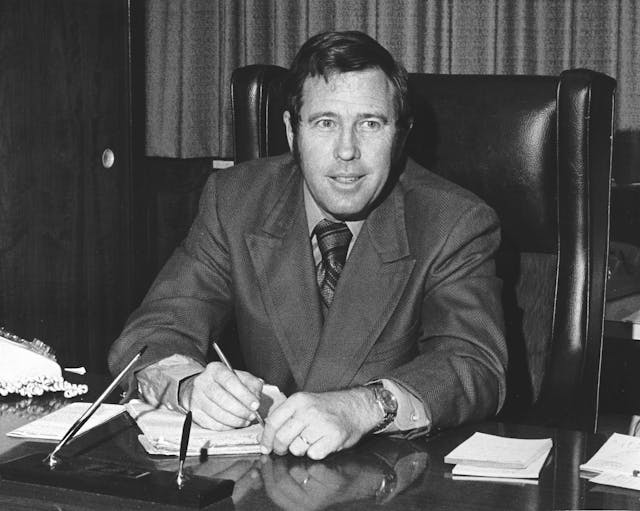
Big Bill ruled NASCAR with a firm hand, one that occasionally clutched a revolver when he needed to make a point. He retired in 1972, passing the torch to his son, the comparably imposing Bill France, Jr., who inherited his father’s ability to make other large men feel small.
Big Bill died 20 years later, from Alzheimer’s. He was 82.
The tenure of Bill France, Jr., would be rich and melodramatic. A year before he assumed control of NASCAR, the series cut a deal with R.J. Reynolds Tobacco, which had millions to spend, as the federal government was getting tough on tobacco advertising. The top NASCAR class was renamed Winston Cup, and things just went from there.
Eventually, that tenure of Bill Jr. would also be ironic: A longtime smoker, he died of lung cancer.
Under Bill Jr. and Winston, NASCAR began a steady growth that continued until 1979, the year CBS aired the Daytona 500 live. A snowstorm in the northeast kept people home, and a great many tuned into the race. As you likely know, Richard Petty won, but only after leaders Donnie Allison and Cale Yarborough crashed into the infield. They were soon joined by Donnie’s brother Bobby, and punches were thrown, viewed live and up close, on CBS. Ratings were huge. NASCAR exploded, in a good way. Everything was great until Dale Earnhardt was killed in the 2001 Daytona 500. NASCAR found out what it would take to get a race driver on the cover of Time magazine.
An ailing Bill Jr. made his son Brian, then 41, the chairman and CEO of NASCAR in 2003. Brian’s time at the wheel was uneven: Unlike his father and grandfather, he never seemed to embrace motorsports, and he didn’t possess their ability to make things happen by sheer will.
Brian did, though, bring NASCAR into the modern age. He welcomed Toyota into NASCAR Cup racing, controversial at the time but prescient. He introduced the “Chase for the Championship” in 2004, which changed the way the season champion was selected. He engineered a hugely lucrative, long-term TV deal.
But Brian didn’t resonate with fans or drivers or team owners the way his father and grandfather did. He seemed to prefer life in Los Angeles or New York City more than little Daytona Beach, and even worse, he didn’t appear to genuinely enjoy racing, and attended less than half the Cup events. There were rumors that he was thinking about moving on.
And then, in August of 2018, on a weekend when NASCAR was racing in Watkins Glen, New York, that decision was made for him. Brian was arrested 250 miles away in Sag Harbor, New York, for DUI. He took an “indefinite leave of absence,” which soon became quite definite.
There were no other young Frances, especially sizable males, prepared to step in and take over. Well, maybe one: Jim France has a son, J.C., that was appropriately sized—he stood 6 feet, 2 inches, was a Junior Olympics weightlifter and had played semipro football—but he really wasn’t cut out for the boardroom. What J.C. wanted to do was race sports cars, and he did, driving for Brumos, the legendary Florida Porsche dealer. Much of J.C.’s racing was as a co-driver for Hurley Haywood, America’s greatest endurance racer, who won the Rolex 24 overall five times and the 24 Hours of Le Mans three times.
In 2004, Haywood told me that J.C., then 38, “stepped into what could have been a very difficult, no-win situation. People may think he’s a spoiled rich kid, but he’s not. He’s a great guy.” J.C. still races historic sports cars, including multiple drives at the Goodwood Festival of Speed in England.
Said J.C. about his experience working in the family business: “I’ve done everything from paint bathrooms and mow the grass to work in the photography department and in accounting and operations, and then in the NASCAR marketing department.” But to run the whole show? You’ve got the wrong guy.
So, suddenly, Jim France, son of Big Bill but 11 years younger than his brother, Bill Jr., became the reluctant chairman and CEO of NASCAR, replacing his nephew, Brian.
It was not a job he sought.

Jim went to work for his father when he was 14, graduated from high school in Daytona, and then from college with a business degree in 1968, followed by a stint in the U.S. Army, in Vietnam. On his return, Jim gravitated not to NASCAR but to its sister company, the International Speedway Corporation, which was founded in 1953 by Big Bill to handle the very ambitious construction of Daytona International Speedway. But the publicly-traded ISC (NASCAR itself has always been private) lived long after Daytona opened in 1959, handling the construction of the even-bigger Talladega Superspeedway in Alabama, which opened in 1969.
After that, ISC began acquiring tracks, including Darlington Raceway, NASCAR’s oldest oval track; four speedways that had been owned by Roger Penske, plus building tracks, like Kansas Speedway, a project spearheaded by Lesa. At one point, ISC owned 17 tracks, and the majority of them hosted NASCAR events. Most of the non-ISC tracks used by NASCAR are owned by Speedway Motorsports, which owns 11 tracks, including Charlotte Motor Speedway and Texas Motor Speedway.
Jim is undeniably a fan of NASCAR’s mostly oval-track racing, but his passion has long been road racing. He formed the Grand American Road Racing Association in 1999, with the series’ anchor race being the most important sports car event in America, the Rolex 24 at Daytona. Grand-Am was battling the Georgia-based American Le Mans Series, founded by Dr. Don Panoz, the deep-pocketed creator of the nicotine patch. Eventually, both men agreed that America isn’t big enough for two competing series, so France bought the ALMS for a rumored $37 million, and merged the two into what is now the IMSA WeatherTech SportsCar Championship.
Jim’s niece, Bill Jr.’s daughter Lesa, also seemed to prefer ISC, which she joined in 1983, right out of college. Her march to the top was built on performance; she became ISC’s president in 2003, and CEO in 2009, the year Forbes magazine named her “the most powerful woman in sports.”
In 2019, NASCAR—which was then as it is now, pretty much Jim France and Lesa France Kennedy—voted to buy up ISC’s stock and merge it into NASCAR.

I had met Jim France before, but I got to know him a little in January of 2008 at a reception at Richard Childress Racing in North Carolina. RCR had, and still has, a NASCAR team, but that evening it was announced that Childress would field a Pontiac-powered Crawford prototype sports car in France’s Grand-Am sports car series. It was a short-lived effort.
After the presentation, it was time for wine from Childress’ own vineyard, and spirited conversation, something I’m not very good at. Neither is Jim France. I spotted him standing against a wall, by himself, waiting for this to be over. I decided to walk over and introduce myself. What’s the worst that can happen? Well, his security detail might materialize and drag me away, but I took the chance.
And nothing happened. We shook hands and had a congenial conversation. About racing, about motorcycles, about life. Might he be willing to sit for a one-on-one interview after we got back to Florida? Yes, he said, and I was bowled over: He never does that. Not then, not now.
We did several interviews. I’d go to his office, which is several miles from NASCAR headquarters; I’d do an interview, then we’d walk next door to a convenient restaurant. I asked, “Do you own this place?” He just smiled. Over the years I’d see him at NASCAR races, at sportscar races, at New Smyrna Speedway, a Saturday-night short track. He always had time to talk.
Once I saw him having breakfast at a restaurant across the street from the Daytona speedway: I was with John Doonan, France’s handpicked head of the IMSA series, and France was with one of his best friends, Gary Nelson, the Rolex 24-winning crew chief for an IMSA GTP Cadillac in this life; in a previous life, Nelson was Bobby Allison’s crew chief for his 1983 championship-winning NASCAR Cup car, and after that he worked for NASCAR, directing the safety initiative that occurred after the death of Dale Earnhardt in February, 2001.
I wrote a magazine story about Nelson, and I asked him if he’d seen it. “You know, I did, and I took it into Waffle House, opened it up to the story, and laid it down on the counter, and they still charged me for my cup of coffee.” Yes, well.
Nelson and France bonded largely over their love of motorcycle riding. One of France’s close friends was S. Truett Cathy, founder of Chick-fil-A, an avid motorcycle rider and collector. Cathy died in 2014.
Jim France also liked to drive race cars, winning a season championship in a Legends car series that competed mostly on oval tracks. I asked him why, since he was so taken with road racing, he raced in an oval track series? “Well,” he said, “If I’m driving a 10-lap race on a 15-turn road course, I have to learn 150 corners. On an oval track, I just have to remember four.”

My introduction to Lesa France Kennedy was a much sadder affair. She was married to Dr. Bruce Kennedy, an accomplished plastic surgeon, and a nice guy. They had one son, Ben.
On July 10, 2007, a Tuesday, the family was planning to leave the next day to go on a summer vacation. Dr. Kennedy, who loved to fly and held a commercial pilot’s license, took off from the Daytona Beach airport at about 8:30 a.m. for a round trip to Lakeland, an easy hourlong flight. He was accompanied by senior NASCAR pilot Michael Klemm, who had over 10,000 hours of flight time. They were in a twin-engine Cessna 310R, the smallest and slowest of nine airplanes in NASCAR’s corporate aviation division.
Ten minutes into the flight, one of the pilots, we don’t know which one, declared an emergency on the radio, reporting smoke in the cockpit. He asked to land at nearby Orlando Sanford International Airport, and said they were turning off everything electrical. They were cleared to land on any runway at the airport, but it’s doubtful they heard that.
Witnesses reported that smoke was trailing the Cessna as it descended, fast. About three miles short of the airport, the Cessna brushed some trees, clipped a house, crashed into two more houses, and caught fire. Both men aboard were killed, as were three people on the ground, and three more suffered serious burns.
In the National Transportation Safety Board’s 35-page report, the stated cause was an electrical fire under the plane’s instrument panel. Wiring on the 1977 plane was insulated with PVC—polyvinyl chloride—a substance that is no longer used for that. When PVC catches fire, it produces a thick, toxic smoke. There was evidence that one of the pilots had held the door open, likely trying to get the smoke out of the cockpit. It seems likely the pilots were either blinded by the smoke or losing consciousness when they crashed.
Especially confounding is that another NASCAR pilot flew the Cessna back from North Carolina the day before. An hour into that flight, the weather radar screen went blank, and the pilot smelled smoke. He pulled a circuit breaker, cutting power to the radar, and the burning smell went away. On arrival in Daytona, he wrote his experience up in the logbook and reported the issue to maintenance. The NTSB report said that nothing was done and criticized the decision to allow the plane to fly the next day.
It was horrible. Lesa and Ben mourned the best they could. It was a long road back.
Then, something remarkable happened. Prior to the crash, the Kennedys’ son Ben, had shown an interest in racing, and his father bought him a quarter-midget, and took him to a tiny oval track inside New Smyrna Speedway’s bigger half-mile track. The quarter-midget track was built with help from former NASCAR driver Mark Martin, to give his son, Matt, a place to race.
Though Dr. Kennedy was no mechanic, he’d do his best to adjust the chain, air up the tires, and change the spark plug and cheer on his only child.
Jim France spoke to Lesa: Do you think Ben might like to try to get back into racing? The answer was yes. Mark Martin got involved, and before long, Ben moved up to a full-sized Pro Truck series that used crate V-8 engines, then into a late model, then into the K&N touring series. They were working out of a shop Martin built for son Matt’s racing, but Matt preferred video games, Martin told me. So Mark and a small pit crew began helping Ben.
Several rungs of the ladder that Ben was climbing took place at Orlando Speedworld, a paved oval where I often raced. Lesa was always there with her son. I did an interview with Lesa and Ben—the first one they’d given after losing Bruce. I remember asking Ben one last question: Do you think your dad would be proud? Yes, he said. I think he would.
Ben began racing late models at the very fast New Smyrna Speedway’s banked oval. Occasionally I’d sit on the splintery wooden pit grandstands with Lesa, where I learned we had something in common: We both bit our nails, and were trying to quit. That wasn’t happening as she watched Ben race: One night, he crashed so hard one of his shoes came off. Lesa was inconsolable until she saw Ben climb from the car.
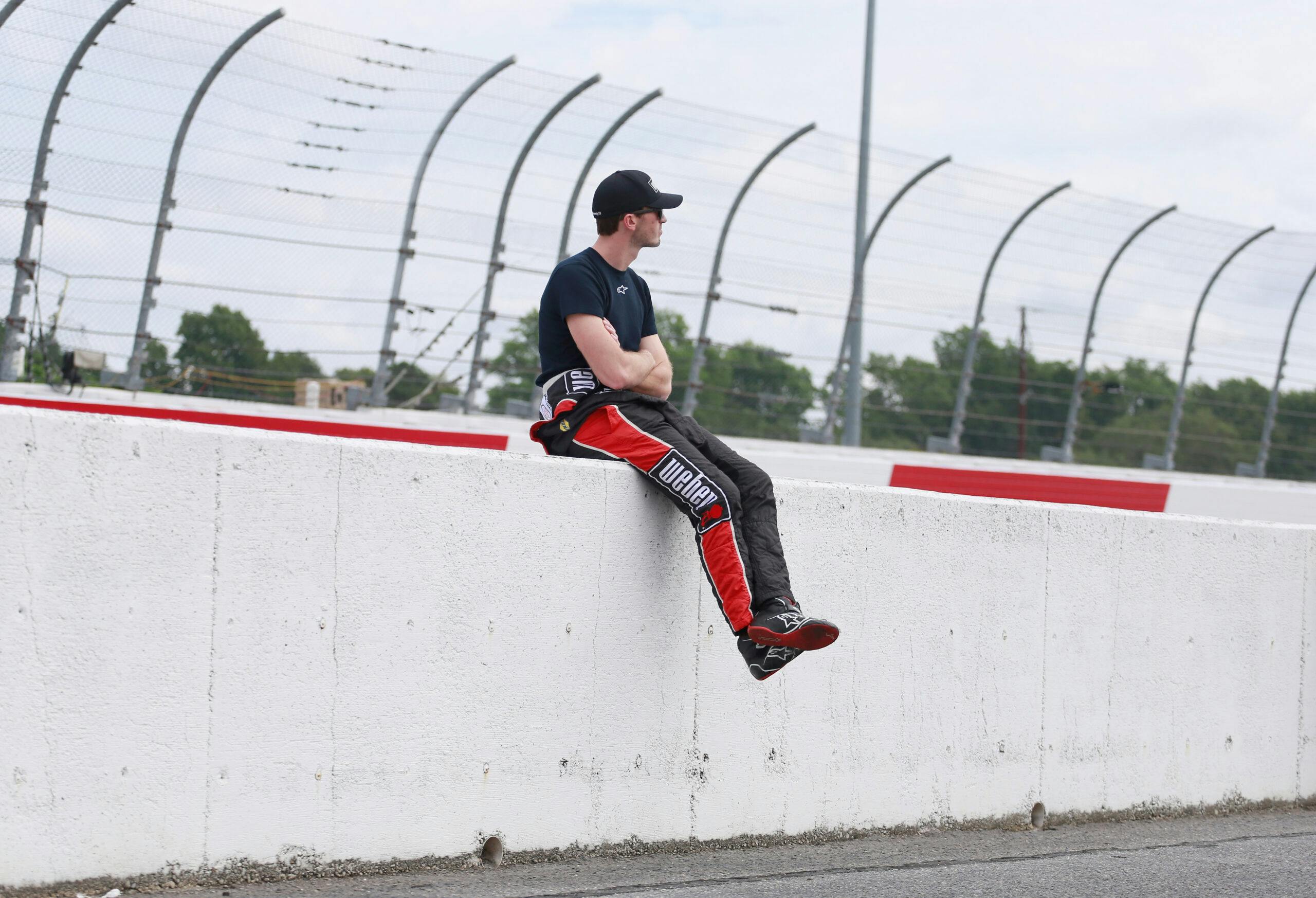
Ben managed to race and still earn his college degree, but he was faced with a decision: Keep racing, or join the family business? He chose racing, at least for a while, moving into the NASCAR truck series in 2013, then in 2017, into the Xfinity series, one step away from the NASCAR Cup series.
Ben was fast everywhere he went, but in January of 2018, he finally traded his fire suit for a business suit. There’s no denying that it had been a long time since a France had participated in NASCAR racing, which gave Ben—and Lesa as well—an up-close look at what it takes to race at a high level.
Ben is now 33, and he’s currently the NASCAR executive vice-president and chief venue and racing innovations officer. He is very well-regarded at work, still owns a late model team, and may be in line to succeed Jim as the head of NASCAR one day.

That’s assuming the France family continues to stand at the helm of the sport, which is more likely as a result of this settlement, but not a sure thing. That the dynasty has lasted this long is amazing; that NASCAR remains entirely in the hands of two members of the France family is astonishing. The battle with basketball legend Michael Jordan, NASCAR driver Denny Hamlin, and Jordan’s business partner Curtis Polk has been a bruiser to say the least.
They sought a bigger slice of the NASCAR pie for the three-car team they own, 23XI Racing. Almost a footnote is the fact that 23XI was joined in the suit by Front Row Racing, a plucky three-car team with drivers you have never heard of that belongs to Tennessee restaurateur Bob Jenkins, who owns some 250 fast-food restaurants. Jenkins testified that he has lost $100 million keeping Front Row afloat, so of course he wanted more money from NASCAR, too.
The suit was basically two-pronged: One was that 23XI and Front Row claim NASCAR is an illegal monopoly. Judge Kenneth Bell ruled before the trial even began that NASCAR is indeed a monopoly; plaintiff’s lawyers just have to prove that it’s an illegal one. The settlement seems to put that to rest.
The second prong was a little more complex. In 2016, NASCAR began the charter system. The teams, which were always categorized as independent contractors, long argued that even the best among them owned only their shop and soon-to-be obsolete race cars; they needed something from NASCAR to give them stability. Something they can sell, the way the NFL’s franchise system gives the Dallas Cowboys or Kansas City Chiefs value, should the owners ever put the teams on the market.

So NASCAR gave its full-time teams charters, one charter per car, up to a total of 36. Four-car teams got four charters, one-car teams got one. Each of the 36 chartered cars was guaranteed a spot in every race, no matter how slow they qualified. This means that their sponsors would never miss a race, and teams would know they will get a check after each race, with a base of about $185,000. NASCAR left four starting spots open, making for a field of 40, should a handful of unchartered teams show up.
In the decade the charter system has been in place, some teams have left, and others have arrived. Up until today, those new teams had two choices—they could either try to make it as one of the four unchartered cars, but that’s a precarious place to plant your flag. Or they could buy one (or two, or three) of the 36 charters from teams that are either downsizing or quitting altogether, thus guaranteeing a revenue stream from NASCAR, and that even the newest team’s car will be on TV for every race, which should impress sponsors.
Overnight, those “free” charters were worth more than $1 million apiece. And the price keeps climbing. Prior to the 2024 season, Spire Motorsports paid $40 million for Live Fast Motorsports’ charter.
Today, ESPN reported that NASCAR and Michael Jordan announced that the charters would now be permanent—a central point of contention between teams and NASCAR. NASCAR had reserved the right to review the charter allocation and revoke one or more charters if it chooses.
The charter deal that all but those two teams signed last year had been set to run through 2031, with an option for seven more years. Team owners wanted charters that can’t be revoked, period, which they believe would substantially increase the value of the charters. Any team wanting to race in the NASCAR Cup series would have to buy a charter from someone, and nobody knows what a permanent charter will cost, but it would be a lot more than $40 million.
We’re a long way from what Big Bill France envisioned, as he sat in the Ebony Bar in 1949, wondering where it would all lead.
Apparently, it led here. Is that a good thing, or a bad one? We’ll know the repercussions soon enough.
Ed. note: This story has been updated to reflect the outcome of today’s settlement.

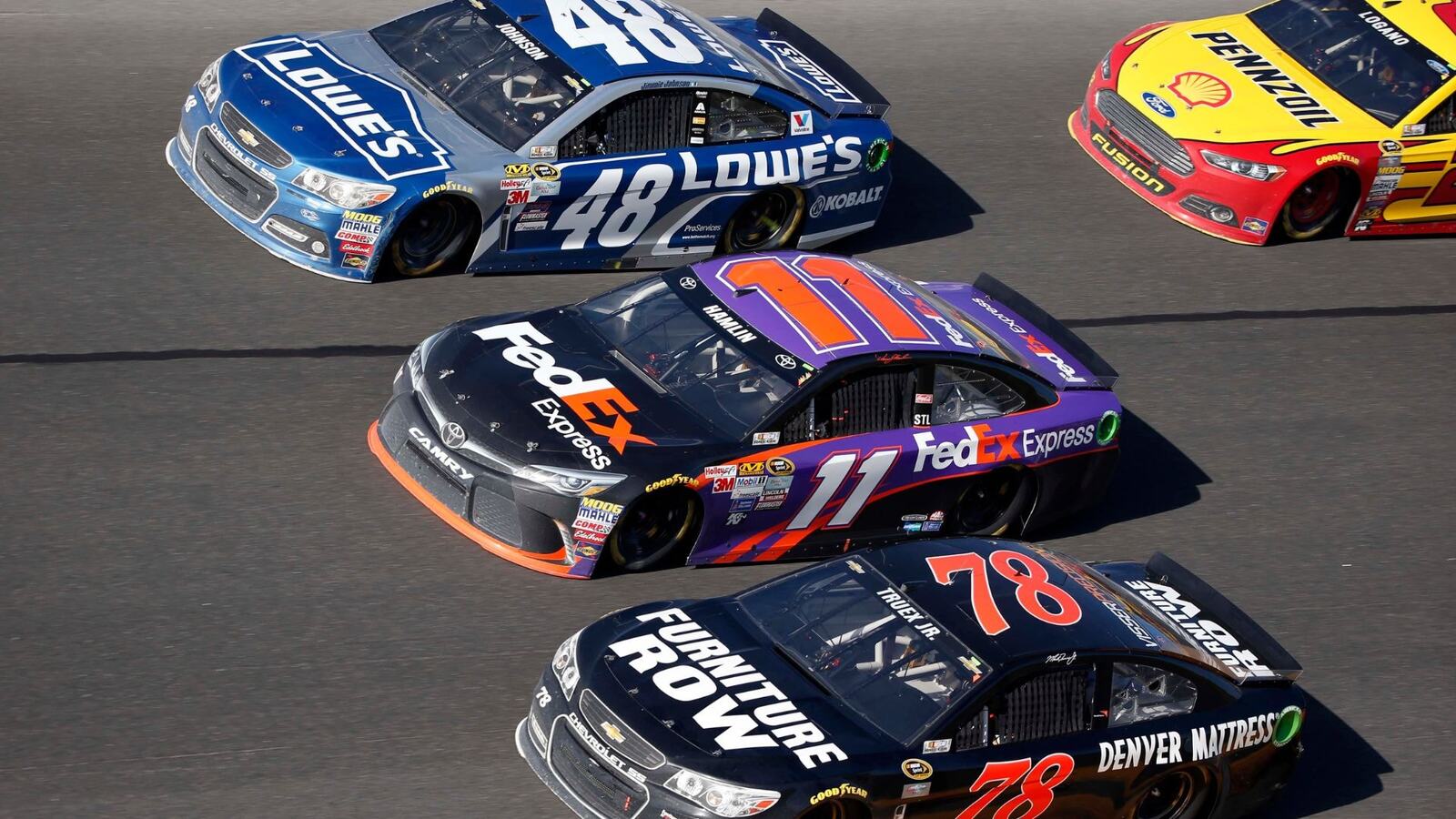
The overwhelming influence of sponsors in NASCAR became evident during the recent charter agreement fiasco. Teams would face significant challenges in operating and covering their expenses without the substantial real estate opportunities provided by their cars. But seldom do these sponsors, which are often large enterprises, stick to a single team or driver.
Dave Alpern explained why in a video posted by the team on their YouTube handle. He went, “Some sponsors within an organization like to be a family of drivers versus one. Interstate Batteries is a great example.
“Interstate for many years was just on our famed No. 18 car. Now, they try to do at least one race with all of our drivers.”
They also have an associate sponsor logo on all of the team’s cars throughout the season. This is just a marketing strategy that the company employs to have visibility during races and associate itself with one particular well-performing team. Other companies don’t necessarily follow this same approach.
Alpern continued, “There are also brands that choose to sponsor multiple times. I think of Coca-Cola. Coca-Cola has a family of different drivers across a bunch of different organizations. Their goal being, they want a winning driver to get out and swig a Coke. The more drivers they have, they feel like that meets their strategy.”
And then, there are companies like Bass Pro Shops. The sporting goods retailer not only sponsors races, but it is also associated with a bunch of different teams. It has strong relationships in the garage with multiple teams and drivers, with a wide reach of sponsorship. The point to be made is that there is no right or wrong in this facet of the sport.
“It kind of just depends on the brand and what their objectives are. But yeah, it’s more common to see one sponsor paired with one driver and car number. But it’s not uncommon to see them spread across multiple cars,” the Joe Gibbs Racing President added.
Race cars are essentially moving billboards for companies, and the ultimate goal is to catch the eye of the passionate fanbase.
Moreover, sponsoring a single car and driver can be a risky gamble. The driver could get injured or perform poorly throughout the season. This would hurt the image of the sponsor heavily and go against their end goal.

Published on
December 13, 2025

MotorCity Dark Horse Racing has started making headlines. Dark Horse Racing is a Detroit-based, newly formed racing company that has just recently started racing in major competitions like the IMSA (International Motor Sports Association) and the FIA (Fédération Internationale de l’Automobile) sanctioned events, and has just landed a partnership with global corporations META. It is a pivotal moment in Dark Horse Motor City’s history, and META’s partnership with Motor City opens the door to trailblazing tech innovations for the motorsports industry.
With the company gaining traction, the strategic collaboration with META’s AI program will continue pushing the boundaries of what’s possible in high-speed motorsports. With AI tools that will enhance motorsport activities like racing, collaboration, and interaction of the vehicles, the company is headed for a bright future.
Motorcity Dark Horse Racing – A New Era in Professional Motorsport
MotorCity Dark Horse Racing set out to make a mark in the motorsport industry and, within a year, achieved extraordinary success by entering the season in major global competitions. The team has competitors in support races at the 24 Hours of Le Mans and Lone Star Le Mans, racing events that are synonymous with pushing vehicles and racing athletes to their physical and mental extremes. The team has garnered noteworthy attention, even in its rookie year, for its performance at the events and its relentless commitment to professional motorsport.
Motorcity Dark Horse Racing has a new partnership with Patrick Gen AI Racing. This is the start of new opportunities for this team in professional motorsport. This collaboration will enhance the team’s operational performance, on track and off, and provide the team with the means to implement more advanced and beneficial technology. The team has improved its prospects for success in upcoming races as the collaboration will enhance the team’s operational performance.
META LLama Collaboration: Starting Right
As the team works towards future goals, one of the most recent accomplishments was the acceptance of the team into META Corporation’s LLama Startup AI Program. Beginning in June of 2025, this program pairs early-stage startups and corporate partners, using some of the most innovative and advanced AI technologies to develop cross-industry relationships. It was a first in the sector of motorsport to have a company like MotorCity Dark Horse Racing become a participant.
Thanks to this partnership, the team is now able to use industry-leading AI to streamline how they race and the ways they approach every aspect of the competition. AI is now used in every facet to increase performance through race strategy selection, team coordination, vehicle setup, tire prediction, and more. META worked with their individual AI practitioners to refine and cooperate with the team in model training, using legacy data that was vital to the team’s competitiveness.
Innovations to Combat Motor Racing Performance
The focus of this collaboration with META is in three major areas: AI-powered optimization, predictive analytics, and enhancement of team collaboration.
The Benefits of AI-Driven Optimization: The team has used AI in vehicle setup optimization in areas of suspension settings, aerodynamics, etc. The team obtains a competitive edge by being able to change setups and update conditions in real time.
The Benefits of AI-Driven Predictive Analytics: The team has been able to foresee and track conditions, weather, etc, and adapt strategies accordingly in real time. This has been able to decrease time spent on decision-making especially when it comes to tire compound and pit stop changes.
The Benefits of AI-Enhanced Team Collaboration: There has been an improvement in real-time decision-making and communication with the entire team. The team operates more quickly, collaboratively, and internally.
How META Helps Businesses Innovate
MotorCity Dark Horse Racing has made enormous strides, and META has played a crucial role in that growth. The team benefited from META’s AI tools, as well as systems engineering, and from META’s experts in consulting. Other creative startups in META’s network have partnered with the team and provided helpful knowledge and tactics for MotorCity Dark Horse Racing.
The company collaborates with motor racing with technology in unusual ways, and for that, they partnered with META for the AI program targeted for startups in all sectors. With Starter META’s proprietary tools, they can advance in areas where motor racing is not as developed. Because of all the support they have received, they can compete in highly developed areas and advance motorsports.
Potential Horizons: A New Era of Motorsport
The entry of Motor City Dark Horse Racing to META’s Llama Startup AI program opens a series of opportunities in the world of motorsport. Within a framework of advanced AI development, the team is likely to enjoy consistent success, not only in racing but also in achieving the nirvana of the convergence of technology and motorsport.
With the help of META’s AI-enhanced tools, the team’s efforts towards fostering technology-driven innovativeness should allow them to remain pioneers of technology in the world of motorsport. In the coming years, the continued advancement of AI in partnered development is likely to enable novel technology pathways that could promote sport itself.
Conclusion
During this period, the journey of Motor City Dark Horse Racing is showing the prospective boundaries of multi-sport collaboration. Enrolling in META’s Llama Start-Up Program, Dark Horse Racing the Dark Horse Racing team is now able to explore advanced technologies, which should greatly improve their performance and speed on the track. Utilizing AI Optimisation, Predictive Analytics, and advanced team synchronisation, Motor City Dark Horse Racing is on the verge of doing something remarkable. As the company only strives forward in innovating the technology used in racing and with META, a partnership designed to integrate AI into racing technology, Dark Horse Racing will show how technology in AI can be used to advance racing in the years to come.


The International Hot Rod Association (IHRA) today announced its acquisition of Maple Grove Raceway, marking a significant milestone for the sport of drag racing.
Established in the early 1960s, Maple Grove Raceway has earned national recognition as one of the fastest and most respected drag racing venues in the United States. For generations, it has served as a destination for racers and families, building a legacy rooted in community, competition, and tradition.
Under the leadership of the Koretsky family, Maple Grove has undergone a period of revitalization—pairing modern operational enhancements with the family-focused culture that has defined the racetrack for decades. Their commitment has preserved the track’s heritage while positioning it for long-term growth. The Koretsky family will continue to play an active role throughout the transition and in guiding Maple Grove’s future direction.
“This is a track with deep roots and an even stronger future,” said Darryl Cuttell, Owner of IHRA. “Maple Grove represents what racing should be—competitive, welcoming, and centered around racers and families. Bringing it under the IHRA umbrella is not just a business decision; it’s a commitment to strengthening the sport and investing in its long-term success.”
The Koretsky family emphasized the personal significance of this transition.
“Maple Grove has always been more than a racetrack to our family—it is home, not just for us, but for generations of racers,” the Koretskys said. “Our mission has always been to preserve this facility and ensure it remains a premier racing destination. Seeing Maple Grove join the IHRA family feels like a natural and meaningful next step for the sport.
“Meeting Darryl and Leah from the IHRA was truly eye-opening. Their vision, work ethic, and genuine passion for racers and fans are unmatched. Their innovative, forward-thinking approach is exactly what this sport has been missing. The IHRA shares our values—making racing affordable, fun, and family-centered. This new chapter is about honoring Maple Grove’s legacy while elevating the experience for future generations.”
The Koretsky family looks forward to working closely with the IHRA throughout 2026 and beyond.
With IHRA ownership, Maple Grove Raceway is expected to see continued investment in racer-focused services, fan amenities, youth and grassroots development, safety programs, and infrastructure improvements. This acquisition reinforces IHRA’s broader vision to elevate drag racing at every level while protecting the traditions that have made it a cornerstone of American motorsports.
Additional announcements regarding upcoming events, programming, and future initiatives at Maple Grove Raceway will be released in the coming months.
NHRA Implications
The recent acquisition of Maple Grove Raceway by the International Hot Rod Association (IHRA) — announced on December 12, 2025, from the previous owners (the Koretsky family) — has several potential implications for NHRA races at the track, but no immediate changes have been confirmed for the near term.
Short-Term Implications (2026 Season)
– The 2026 NHRA national event schedule includes a race at Maple Grove Raceway
– NHRA and track officials have multi-year sanctioning agreements for national events, so the Pep Boys NHRA Nationals (or equivalent Reading Nationals) is expected to continue in 2026 without disruption.
– IHRA leadership has publicly stated they have no ill feelings toward NHRA and aim to grow the sport collaboratively (e.g., referencing past track acquisitions where NHRA events continued). This suggests a cooperative approach rather than immediate conflict.
Longer-Term Implications
– Potential shift in focus: IHRA emphasizes grassroots, bracket, and sportsman racing with a family-friendly, affordable model. They plan investments in racer services, fan amenities, youth programs, safety, and infrastructure at Maple Grove — which could benefit NHRA events indirectly (better facilities) but might prioritize IHRA-sanctioned series more over time.
– Risk of losing NHRA national event status: If IHRA pushes its own professional or divisional series harder, or if negotiations sour, NHRA could eventually relocate the Northeast playoff-opener event (historically a high-attendance, record-setting race at Maple Grove). However, this is speculative—no such indications exist yet.
– Precedent from other tracks: Some IHRA-owned facilities host both sanctioning bodies’ events peacefully, while others lean more toward IHRA. Maple Grove’s strong NHRA history (hosting nationals since 1985, consistent sellouts under recent ownership) makes it a valuable venue, reducing the likelihood of abrupt changes.
– Positive side: New ownership could bring fresh marketing, upgrades, and energy, potentially boosting attendance and the overall experience for NHRA fans and teams.
In summary, no NHRA races are canceled or threatened right now—the 2026 event appears secure, and the change could even enhance the track. More details on programming and initiatives are promised in the coming months. If you’re planning to attend future events, keep an eye on official NHRA and Maple Grove announcements for any updates!


https://www.dragracecentral.com:443/DRCStory.asp?ID=414771
The resource you have requested in no longer available.
You have used an outdated link.
If you have followed an outdated link from one
of our other pages, please accept our apologies.
We have logged the error and sent email to the webmaster.
We will do our best to locate and correct the problem as soon as possible.
Motorsports
Larry Larson, Lyle Barnett Secure First Two Invites For 2026 King of The South Invitational

Earlier this year, Larry Larson put the small-tire world on notice, defeating Lyle Barnett in the final round of the $75,000 King of the South invitational, headlining the Ronnie Buff Memorial weekend at Shadyside Dragway in Shelby, North Carolina.
During the opening day of PRI in Indianapolis, KotS promoter Corey Stamper and Shadyside Dragway co-owner Seth Buff officially extended invitations to both Larson and Barnett for the 2026 edition of the event, taking place May 21-24.
Both drivers accepted, filling the first two spots in the 64-car, invite-only field of cars competing on 28×10.5 non-w slicks for another $75k.
Larson has only gained momentum since his KotS victory back in May, most recently winning the $40,000 True 10.5 N/T class at the Snowbird Outlaw Nationals presented by Motion Raceworks at Bradenton Motorsports Park. It’s been a dream season for the chassis-builder out of Oak Grove, Missouri, who originally made it into Kots earlier this year as an alternate.
“I wasn’t even invited last year,” said Larson. “They had some people drop out and Corey gave me an invite. I just went down there to see if I could learn something.”
Barnett, meanwhile, will be looking for a little bit of payback behind the wheel of the Tommy Youmans-owned “Salvage Title” Mustang. After losing to Larson by a miniscule .004 margin of victory in 2025, Barnett is hoping to go one round further in 2026 at what he deems his hometown track.
“Shadyside is home to me,” Barnett said. “I live 35 minutes from the track. I’ve won a bunch of Corey’s Carolina Cash Days in Beer Money, and when King of the South became a reality, I told him no matter what, I wanted in.
“I’ll be honest, when I rolled into the final against Larry, I thought I had him covered,” Barnett continued. “And I did until about 330 ft., and then I watched that Harts Charger just walk away from me. Larry’s a good friend, and if we can manage to stay away from each other in the early rounds at Shadyside, I’d love to see him late in the race and see if we can duplicate that final round – just swap who gets to hold the trophy.”
In addition to the hugely popular Small-Tire invitational, Stamper is adding something new for 2026 – the $10,000 Knight of the South class, featuring a 16-car invitational on even smaller 26×8.5 slicks.
KotS looks to once again be one of the biggest events of the year in 2026, building off their 2025 edition that sold out Shadyside and forced the fire marshal to close the gates on Saturday due to a record crowd. Track owners Seth and Zach Buff continue to build on their family’s legacy, giving racers a local “outlaw” feel that can’t be found at larger facilities.
“It means so much to us to have this caliber of drivers at our small track,” said Seth Buff. “It’s so surreal for us. During that weekend, I woke up and said, ‘This is unreal.’ It’s an amazing show they put on, and we appreciate them.”
Invitations will continue going out in the coming weeks. Fans can stay up to date on whether their favorite drivers will make the cut by following Spoold Media on social media outlets.
This story was originally published on December 13, 2025. 

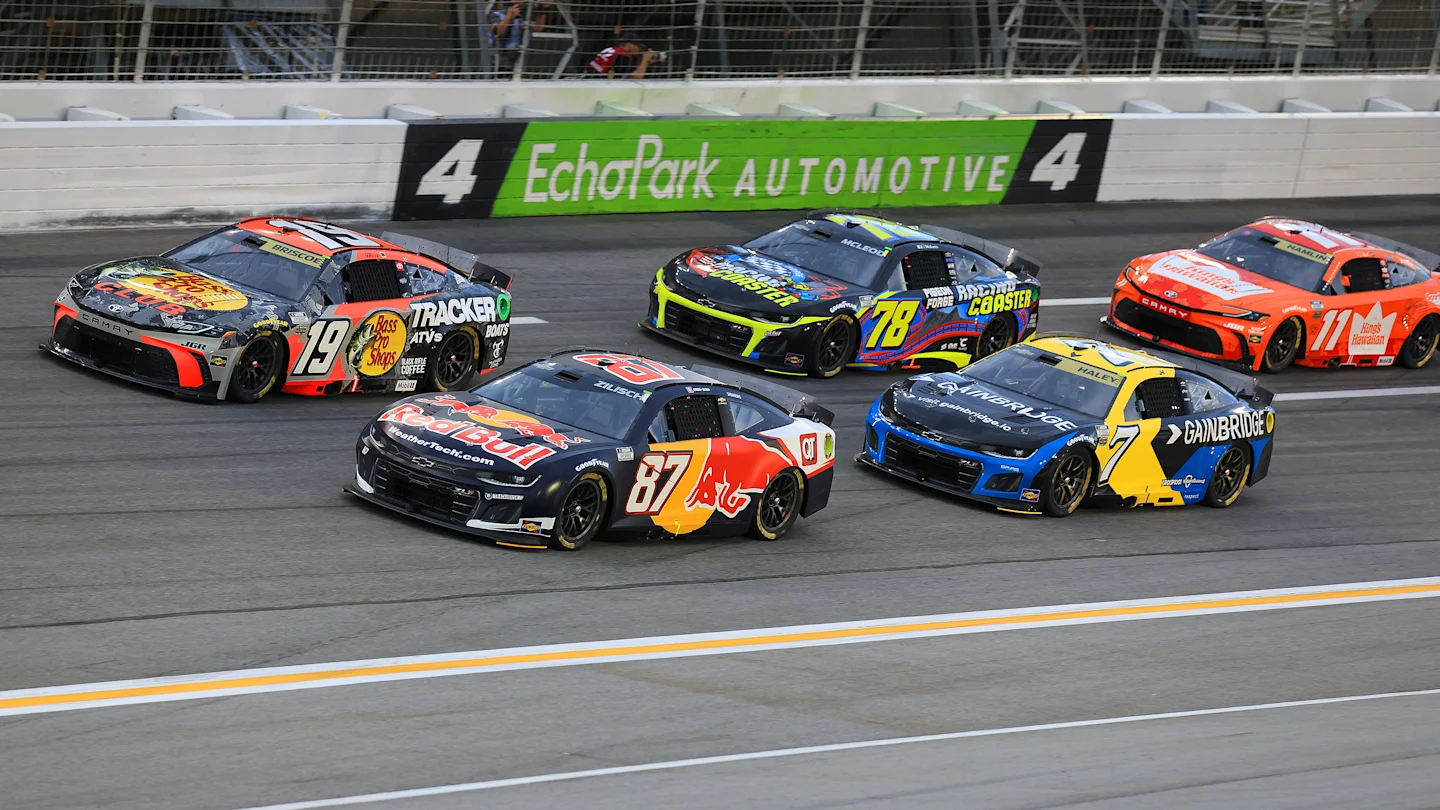
Aside from two backmarker teams in Haas Factory Team and Rick Ware Racing switching back to Chevrolet from Ford, giving the Bowtie twice as many teams as the Blue Oval after a season in which they were both responsible for fielding six organizations, there wasn’t much action in NASCAR Cup Series silly season this year.
The big change was one that many fans saw coming even before the 2025 season actually started, and it revolved around the No. 99 Trackhouse Racing Chevrolet.
Though Daniel Suarez had won a race and qualified for the playoffs in 2024, he was entering a contract year, and his overall performance, specifically relative to teammate Ross Chastain, had left a bit to be desired. Trackhouse Racing development driver Connor Zilisch was rumored to be his replacement.
Amid a dominant season in the Xfinity Series with JR Motorsports during which he won 10 races, Zilisch was indeed confirmed as Suarez’s replacement, albeit in a renumbered No. 88 Chevrolet.
Connor Zilisch the lone NASCAR Cup Series rookie in 2026
Shane van Gisbergen used the No. 88 in 2025 but is set to use the No. 97 in 2026; the No. 99 is not set to be run by the team.
Suarez landed elsewhere fairly quickly, with Spire Motorsports capitalizing on the opportunity to sign him to replace the struggling Justin Haley behind the wheel of the No. 7 Chevrolet.
Haley dropped down to the Truck Series to reunite with Kaulig Racing, the team he was with from 2019 to 2023 across the Xfinity Series and Cup Series, as they prepare to begin their new partnership with Ram Trucks.
Other than that, there were no changes made to the Cup Series driver lineup. It means that in addition to Haley being the only driver to leave the series and Suarez being the only driver to move from Cup team to Cup team from 2025 to 2026, Zilisch is set to be the series’ only new full-time driver in 2026.
It means that he has effectively locked up the Rookie of the Year Award, as long as he simply shows up to the season-opening Daytona 500 at Daytona International Speedway in a couple of months.
Tune in to Fox at 2:30 p.m. ET on Sunday, February 15 for the live broadcast of the 2026 NASCAR Cup Series season-opening 68th annual Daytona 500 from Daytona International Speedway.

MSU Denver wins 2025 DII women’s volleyball championship
Purdue volleyball proves it can win in NIL era of college athletics

Creighton volleyball falls to Kentucky in Elite Eight

President Donald Trump calls NIL ‘disaster,’ reiterates willingness to get involved

Nebraska Volleyball ready for NCAA Regional Final versus Texas A&M

Pitt Advances to Fifth-Straight NCAA Volleyball Semifinal

Why NASCAR Sponsors Spread Their Brand Across Multiple Drivers and Sometimes Races

Volleyball Ends Season With Elite Eight Loss

Bowl games are under stress. Thank goodness for BYU, Utah and Utah State – Deseret News

Time, TV for Nebraska volleyball vs. Texas A&M in Elite Eight

Nebraska volleyball is playing like a champion but know nothing is guaranteed

How MotorCity Dark Horse Racing Is Using AI To Redefine The Future Of Racing

Pitt women’s volleyball outlasts Purdue for 5th straight trip to Final Four

IHRA Announces Acquisition of Maple Grove Raceway

Pitt volleyball advances to fifth consecutive Final Four, beating Purdue

First Tee Winter Registration is open

Fargo girl, 13, dies after collapsing during school basketball game – Grand Forks Herald

CPG Brands Like Allegra Are Betting on F1 for the First Time

Volleyball Recaps – November 18

F1 Las Vegas: Verstappen win, Norris and Piastri DQ tighten 2025 title fight

Two Pro Volleyball Leagues Serve Up Plans for Minnesota Teams

Sycamores unveil 2026 track and field schedule

Utah State Announces 2025-26 Indoor Track & Field Schedule

Redemption Means First Pro Stock World Championship for Dallas Glenn

Jo Shimoda Undergoes Back Surgery

Texas volleyball vs Kentucky game score: Live SEC tournament updates

Robert “Bobby” Lewis Hardin, 56

How this startup (and a KC sports icon) turned young players into card-carrying legends overnight

Bowl Projections: ESPN predicts 12-team College Football Playoff bracket, full bowl slate after Week 14
Wisconsin volleyball sweeps Minnesota with ease in ranked rivalry win

 NBA Legend Michael Jordan to Join NBC Sports as Special Contributor
 Why a rising mid-major power with an NCAA Tournament team opted out of revenue-sharing — and advertised it
 Falcons mailbag
 Portal Update – Basketball and Gymnastics Take Hits
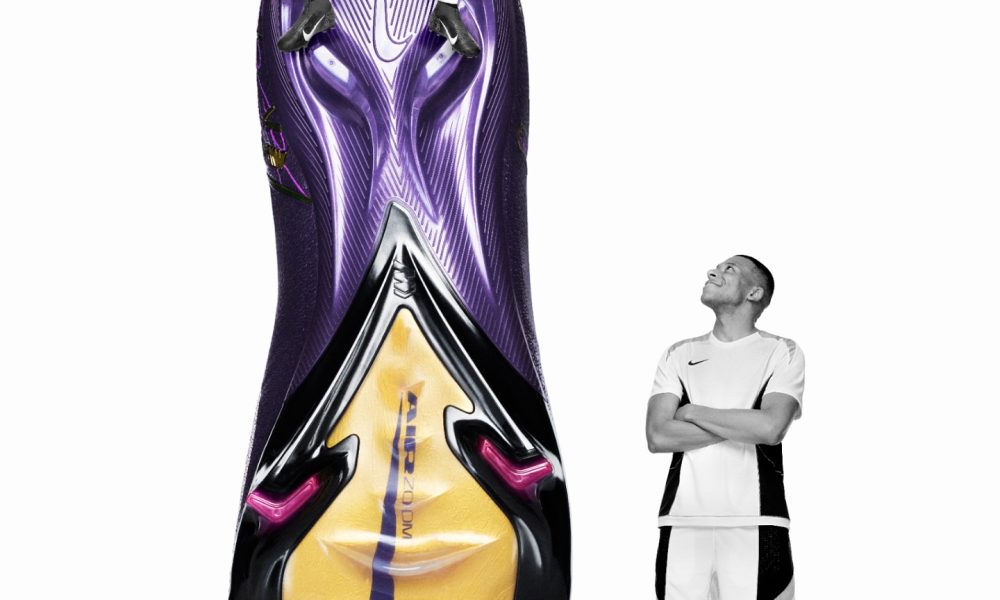 has always dreamed in Mercurial. Now his initials are on the boots.
The new Kyl…
has always dreamed in Mercurial. Now his initials are on the boots.
The new Kyl…
-
 Rec Sports3 weeks ago
First Tee Winter Registration is open
-
 Rec Sports3 weeks ago
Fargo girl, 13, dies after collapsing during school basketball game – Grand Forks Herald
-
 Motorsports3 weeks ago
CPG Brands Like Allegra Are Betting on F1 for the First Time
-
 Sports3 weeks ago
Two Pro Volleyball Leagues Serve Up Plans for Minnesota Teams
-
 Sports3 weeks ago
Sycamores unveil 2026 track and field schedule
-
 Sports3 weeks ago
Utah State Announces 2025-26 Indoor Track & Field Schedule
-
 Motorsports2 weeks ago
Jo Shimoda Undergoes Back Surgery
-
 Motorsports2 weeks ago
Redemption Means First Pro Stock World Championship for Dallas Glenn
-
 Sports3 weeks ago
Texas volleyball vs Kentucky game score: Live SEC tournament updates
-
 Rec Sports2 weeks ago
Robert “Bobby” Lewis Hardin, 56