
NIL
Wheeling Organizations Partner To Find Sponsors For New Holiday Snowflakes




WHEELING – Wheeling’s annual Fantasy In Lights parade is expected to resume its regular route next holiday season, and the city needs 58 new snowflakes to help light the way.
Local organizations are partnering in an effort to find sponsors and purchase new LED snowflakes for hanging in the downtown. The cost for each snowflake is $560, according to information provided by Wheeling Heritage.
The plan is to purchase 58 snowflakes, and that comes to $32,480. Members of the community are being asked to sponsor each of the holiday decorations.
Community partners also are working toward having a new large Christmas tree at Market Plaza and several large dine-in igloos along the parade route that can be reserved for catering in partnership with local restaurants.
Joining in the effort are the City of Wheeling, Wheeling Area Chamber of Commerce, Regional Economic Development Partnership (RED), Wheeling-Ohio County Convention and Visitors Bureau (CVB), Wheeling Heritage, West Liberty University’s Department of Media and Liberal Arts, and the chamber’s parade committee.
Bill Bryson, of Uniglobe Ohio Valley Travel and the Wheeling Chamber, is spearheading the snowflake effort.
Because of Wheeling’s ongoing Downtown Streetscape project, it has been a few years since snowflakes were hung in the city during the holiday season.
Now it appears as though there are none remaining that can be used during the upcoming season. The snowflakes were older, and many that were no longer working and were discarded, he said.
There had been hope some might be remaining and could be added in along with any new snowflakes, but none could be found, according to Bryson.
“There is nothing usable,” he said. “The city doesn’t have anything. There is no inventory to start with. Some of our people have looked, and there’s nothing to go on. We are starting from scratch.”
The project is now revitalizing some of the energy the parade had “when it began 40 years ago,” he said.
“Hopefully we will be successful this year, we will expand further and keep the excitement going. What has been amazing is the support we’ve had from the city agencies. It is encouraging to see the organizations say this will be good for the city and we will come up with 58 snowflakes by mid-November.”
Those wanting to sponsor a snowflake should go online to Wheelingheritage.org/ snowflake-sponsorship.
They many also send checks payable to Wheeling Heritage Foundation, 1400 Main St., Wheeling, WV 26003
Those with questions should call the Wheeling Heritage office at 304-232-3087.










Troy Aikman is totally out on NIL after getting burned.
Troy Aikman didn’t hold back when discussing the current state of college football and NIL.
Despite the fact I might sound like an old man yelling at the clouds, everyone with eyes and a functioning brain can see that college football is going through an unprecedented era of change.
The main driver?
Money.
NIL has completely reshaped college sports, and none more than college football. Players cut and run for bigger checks, rosters have to be rebuilt yearly, and it feels like loyalty and commitment are dying.

Troy Aikman isn’t a big fan of the current state of college football. (Photo by Sam Hodde/Getty Images)
Troy Aikman crushes current state of college football.
Well, it sounds like the Dallas Cowboys legend and current ESPN broadcaster has had enough, and he’s not spending one more penny on NIL after feeling like he got burned.
“I gave money to a kid. I won’t mention who. I’ve done it one time at UCLA. Never met the young man. He was there a year, he left after the year. I wrote a sizable check, and he went to another school. I didn’t even get so much as a thank you note. It’s one of those deals to where I’m done with NIL. I mean, I wanna see UCLA be successful, but I’m done with it,” Aikman said in an interview with Richard Deitsch, according to NBC Sports.

Troy Aikman says he’s done cutting NIL checks for UCLA. (Photo by Mike Carlson/Getty Images)
I think it’s fair to say the frustration Aikman shared is felt by a lot of people in similar situations. Writing a check for a *SINGLE YEAR* of a player who then left and never even said thank you is dirty work.
There’s no way to justify spending money in that fashion. There’s an argument NIL could be an investment if the payoff is significant.
Spending cash for a single year of action from a player for a bad football program is a total waste. Aikman might as well have put the money in a pile and lit it on fire.
At what point do the people writing checks just decide enough is enough and save their money? Everything has a breaking point. College football is racing towards it.

Troy Aikman trashed the current state of college football amid an infusion of NIL money. (Photo by Allen Berezovsky/WireImage via Getty Images)
What do you think about Aikman’s stance? Agree? Disagree? Let me know at David.Hookstead@outkick.com.
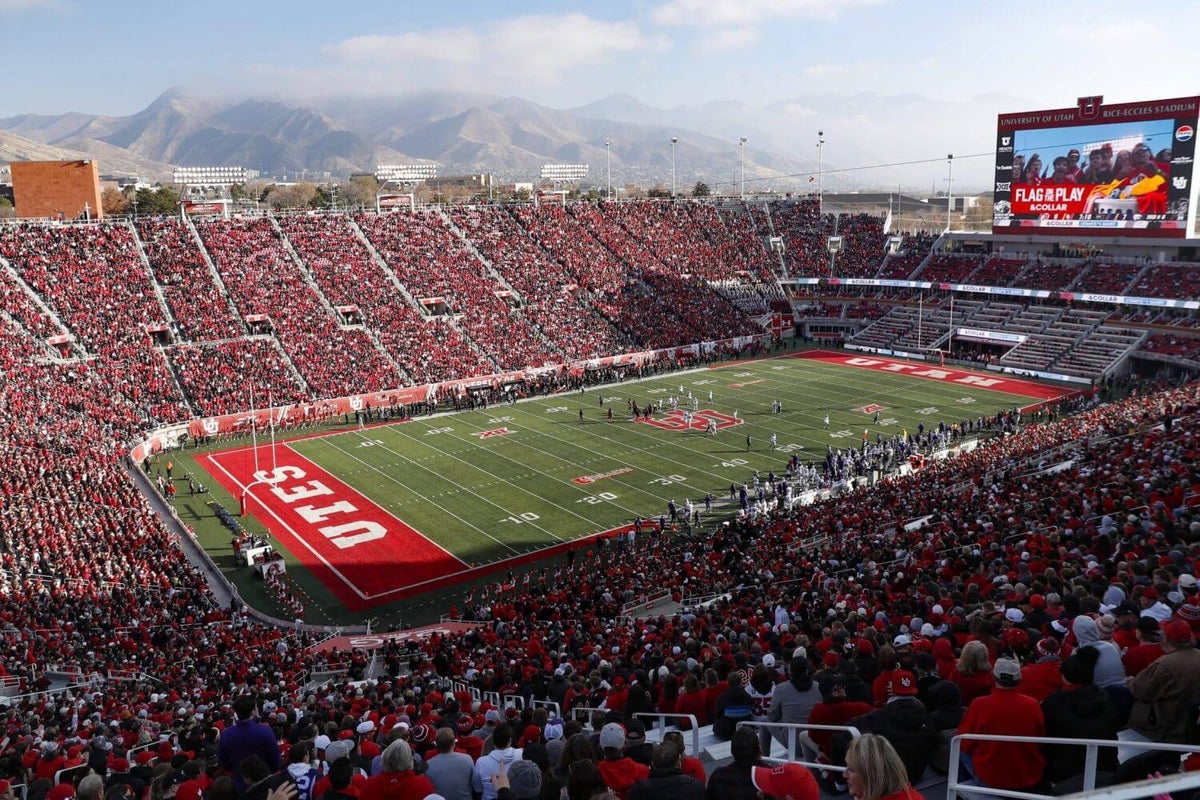
By Matt Baker, Justin Williams and Stewart Mandel
Utah took college sports’ biggest step into private equity yet Tuesday when it approved a plan to partner with a private investment firm, Otro Capital, which would have an ownership stake in a new, for-profit business to fund Utes athletics and increase revenue.
The first-of-its-kind partnership comes with risks, and the terms must still be finalized after receiving unanimous approval Tuesday from the university’s board of trustees. But Utah administrators billed it as a nine-figure venture that could stabilize the Utes in a period of nationwide college athletics upheaval. It’s also the clearest window yet into a complex model schools across the country have been assessing for more than two years, a model with dynamic risks and rewards that could transform the heart of major college athletics.
“The upside is the difference between surviving and thriving,” university CFO Anthony Wagner said.
Here’s how the private-equity partnership would work and how it fits into the national landscape:
How will this work?
The school started a new company called Utah Brands & Entertainment. The Utes will own most of this company, but Otro Capital will also own part of it. The new company will handle some things most athletic departments do (like ticketing, events, sponsorships and NIL) but try to do them even better to make more money for the school and the investment firm.
The Utes would remain in control of big decisions like hiring/firing coaches and scheduling. Although the company will distribute NIL payments to players, the Utes would still control who gets how much.
The company will be under the university’s foundation and chaired by the Utes’ athletic director. On a potential seven-person board, the athletic director and three other Utah foundation members would be joined by two members from Otro Capital and another university supporter/investor.
The company would submit audits to Utah’s trustees, and the university would have the ability to buy back its share of the company from Otro Capital.
During a panel discussion at the SBJ Intercollegiate Athletics Forum on Tuesday, NCAA president Charlie Baker called the deal “really well thought out and really well designed” because the school still controls athletics’ decision-making process. Yahoo! Sports reported Tuesday that the Utes cleared the proposal with the NCAA.
How much money is involved?
No specific dollar figures were mentioned during the board presentation and discussion, but school president Taylor Randall said the platform will allow the Utes to raise “hundreds of millions of dollars over time.”
“This is not a one-time transaction,” Randall said.
That said, the partnership is expected to include a significant initial transaction. Athletic director Mark Harlan called a “short-term solution” of capital something “that’s very important” for the program. Trustees discussed the possibility of a seven-year term to the partnership.
Why did Utah jump at this deal before any other school/league?
The Utes were caught between the rising costs of college sports and the growing gap between the SEC/Big Ten and everyone else. When schools were allowed to start paying players directly this year, that added a $20.5 million expense for Utah and every other team that wants to compete nationally. That expense is harder for schools in the Big 12 and ACC to fund because, as Harlan said, they’re “certainly tens of millions behind other conferences.”
Utah administrators said they did not want to raise student fees to fund athletics. They didn’t want to cut sports or cut academic/research programs, either. Because the status quo, Randall said, “jeopardized the future” of Utah as a powerful program, the Utes decided to become the first program to make this move.
“There’s equal risk of actually not doing anything,” Randall said.
What are the risks?
Because financial details are either not yet finalized or not public, we can’t fully assess them. But generally, private equity groups don’t get into partnerships to lose money. What happens if this venture doesn’t make as much as both sides expect?
Foundation CEO David Anderson acknowledged a “tension” between commercial success and the university’s mission. Utah administrators said in the presentation that the school would be able to veto a sponsorship opportunity that doesn’t align with its values, but how might that work in practice?
A rosier risk is that Utah undervalued itself because it’s the first program to make a deal like this. Anderson told the board that if the deal becomes below market value, Otro Capital will effectively have to match the new numbers.
Who is Otro Capital?
It describes itself as an “operator-led private equity firm with deep expertise” in sports, media and entertainment. The portfolio for the New York-based firm includes FlexWork Sports (a marketing/event group focused on youth camps) and a stake in the Formula One racing team BWT Alpine.
One of Otro’s co-founders, Alec Scheiner, was the Cleveland Browns’ president from 2012 to ’16. The other, Brent Stehlik, worked in pro sports with NFL, MLB and NHL franchises.
Is this the start of a trend?
Probably.
A few schools (like Kentucky and Clemson) have already formed companies to handle some of the business of college athletics. Utah simply took that idea a step further by adding an outside investor to the mix. The Utes aren’t the only program in these financial straits, so don’t be surprised if others follow to the same proposed solution.
What’s the broader relationship between private equity/capital and college sports?
Schools and conferences have been looking into outside money for a long time; Utah’s deal has been in the works for two years.
Florida State seriously explored a similar idea in 2023 but stopped short of executing anything. The Big 12 previously considered conference-wide private equity and capital deals in ’24 and early ’25 but never garnered enough support among its members. “We’re just not ready to jump in just yet,” Big 12 commissioner Brett Yormark told Front Office Sports this May.
The Big Ten spent more than a year exploring similar opportunities before a nontraditional investor emerged this summer: UC Investments, a non-profit public pension and arm of the UC system, offered Big Ten members $2.4 billion in capital in exchange for a 10 percent stake in a newly formed company that would hold the league’s media and sponsorship rights. That deal is now on hold due to public opposition from two members, Michigan and USC. Michigan board chairman Mark Bernstein has called the proposal akin to “a payday loan.”

Gov. Ron DeSantis criticized the current structure of college football’s name, image, and likeness (NIL) policies and players’ use of the transfer portal to move to different schools in an exclusive interview with The Floridian publisher Javier Manjarres.
“This whole NIL and transfer portal has got to be worked out a little bit,” DeSantis said. “If they’re selling your jersey with your name on the back, you should get money for it if they are using your name, image, and likeness.”
Gov. DeSantis signed a bill allowing college athletes to profit from their name, image, and likeness back in 2020. It was later amended to allow schools, coaches, and athletic departments to assist athletes in the NIL process so Florida could stay on an even playing field with other states that had adopted similar policies.
While the governor has advocated for more player rights, he critcized the use of college football’s transfer portal, which has arguably overrun the sport with player transformers and fans wondering who stayed at their flagship school from year to year.
According to a report from NBC Sports, the number of FBS [Football Bowl Subdivision] transfers increased from 1,561 in 2018-19 to over 3,700 in last year’s cycle. FBS transfers from scholarship players also significantly rose over the past several years.
“To then say, I played three games, coach, I need more NIL money, or I’m going to transfer to another school, that’s almost like they have more rights than pro athletes do,” DeSantis commented. “I think there needs to be some reform of that.”
Gov. Ron DeSantis is a big sports fan. His son, Mason, is also a big fan of the Florida State Seminoles, with the governor often sharing predictions from his son on the outcome of the Noles’ football games on social media.
However, the governor played it fair when speaking about one of Florida State’s chief rivals, the University of Miami, and their rightful spot in the College Football Playoff (CFP).
“The Hurricanes should be in the college football playoff,” DeSantis suggested.
At the time, the governor argued that the team’s strength of schedule, their head-to-head win against the University of Notre Dame, which had been ahead of Miami in the rankings for months despite the team’s win, along with each school’s scoring margin against common opponents, was enough to lift the Canes into the final rankings.
Miami beat Notre Dame 27-24 in Week 1 of the season. In addition, the Hurricanes defeated three common opponents (NC State, Pittsburgh, Stanford) by a larger margin than the Irish.
Both teams also played Syracuse, with the Irish winning by 63 points, while the Hurricanes won by 28.
The governor was right. Miami was selected to be in the CFP last Sunday. The 10th-seed Hurricanes will play the 7th-seed Texas A&M Aggies in the first round of the playoff in College Station on Dec. 20.
DeSantis also advocated for the Fighting Irish to get in, but they were not selected in the final rankings.
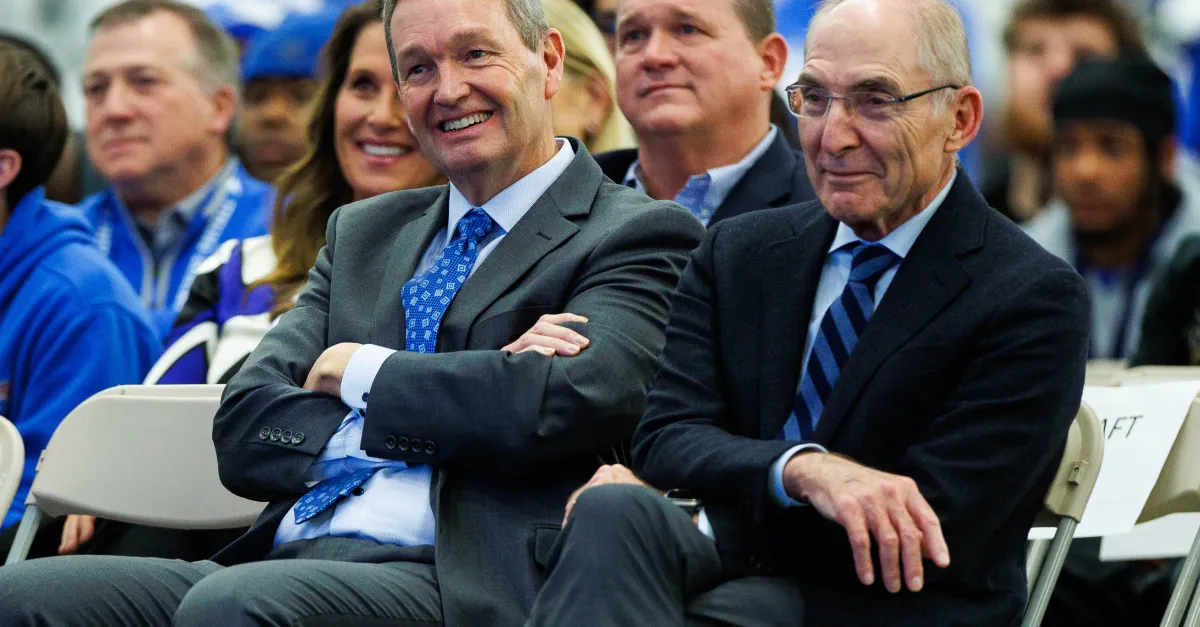
In talking to sources, JMI, in conjunction with the UK basketball staff, is requiring prospective student-athletes to sign away NIL rights that would normally be untouched at any other school. A highly structured brand partnership agreement is something uncommon at other schools, but it is something Kentucky has pursued in accordance with JMI, making this arrangement unique to the current landscape of college basketball recruiting.
“I will say that Kentucky is the only school I’ve dealt with that even has anything remotely like this in their contracts,” one anonymous source said
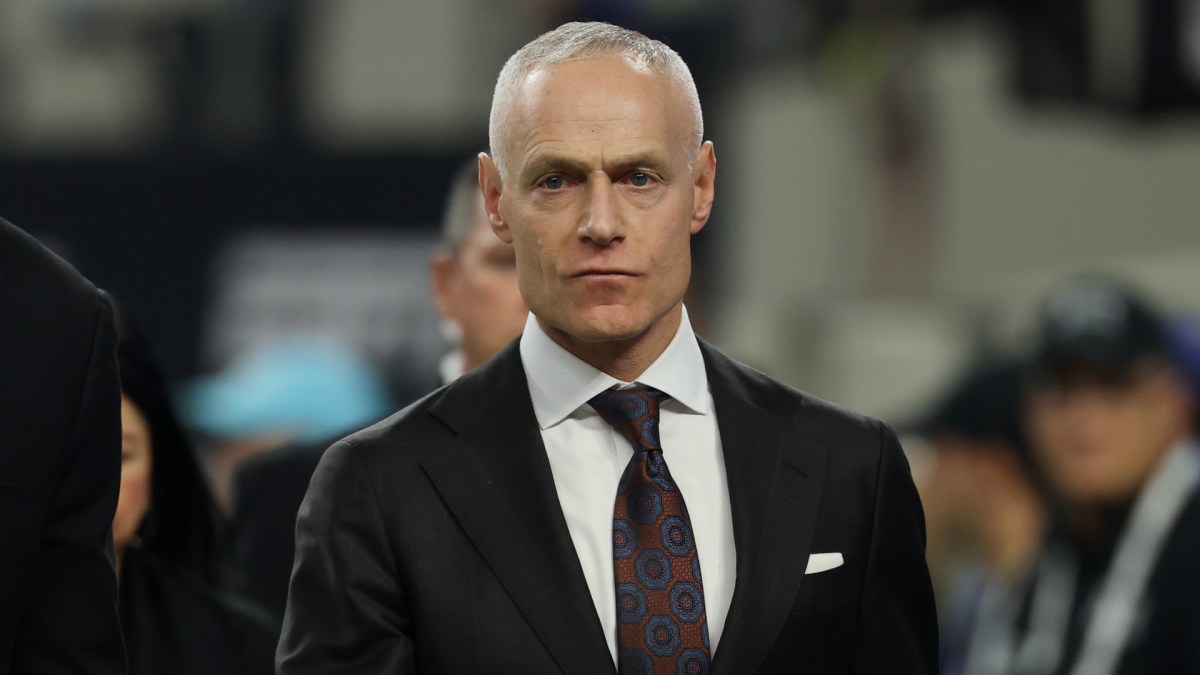
LAS VEGAS — Big 12 commissioner Brett Yormark publicly backed his ACC counterpart Tuesday after Notre Dame’s athletics director tore into the league over the Irish being left out of the College Football Playoff.
Notre Dame AD Pete Bevacqua has openly questioned the ACC’s support after Miami — an ACC member — jumped the Irish for the final at-large CFP berth. Bevacqua told “The Dan Patrick Show” on Monday that Notre Dame’s relationship with the ACC sustained “permanent damage.”
His decision to go after the league so forcefully, and so publicly, didn’t sit well with Yormark.
“Pete’s behavior has been egregious,” Yormark said Tuesday during a panel at the Intercollegiate Athletics Forum in Las Vegas. “It’s been egregious going after [ACC commissioner] Jim Phillips when they saved Notre Dame during COVID. We all knew, and it was very transparent — [CFP committee chairman] Hunter [Yurachek] was very transparent about it, that as Notre Dame and Miami got closer together, head-to-head would be a factor.”
Notre Dame AD says ACC did ‘permanent damage’ to relationship with push for Miami over Irish
Robby Kalland

In 2020, Notre Dame was granted temporary ACC membership to play a full football schedule during the shortened season.
“I think [Bevacqua] is totally out of balance in his approach, and if he were in the room, I’d tell him the same thing,” Yormark said Tuesday.
In the penultimate CFP rankings, BYU sat between Notre Dame and Miami but fell to Texas Tech in the Big 12 Championship Game, giving the committee room to take a hard look at the Hurricanes and Irish. Miami’s season-opening win over Notre Dame became the decisive wedge that pushed the Hurricanes into the field.
Bevacqua argued the ACC “singled out” two-loss Notre Dame as it worked to elevate Miami.
“We were mystified by the actions of the conference to attack their biggest business partner in football and a member of their conference in 24 of our other sports,” Bevacqua said Monday.
Phillips rejected that assertion.
“The University of Notre Dame is an incredibly valued member of the ACC, and there is tremendous respect and appreciation for the entire institution,” Phillips said in a statement Monday. “With that said, when it comes to football, we have a responsibility to support and advocate for all 17 of our football-playing member institutions, and I stand behind our conference efforts to do just that leading up to the College Football Playoff Committee selections on Sunday.
“At no time was it suggested by the ACC that Notre Dame was not a worthy candidate for inclusion in the field. We are thrilled for the University of Miami while also understanding and appreciating the significant disappointment of the Notre Dame players, coaches and program.”
Notre Dame declined a bowl invitation after the school was left out of the playoff.
Yormark was a proponent for BYU’s inclusion in the playoff, but said he understood why the Cougars were not included in the field after suffering a second loss to Texas Tech.
“I think overall, they did the right job,” Yormark said. “It’s progress over perfection. The selection process will never be perfect. And our goal as commissioners and the management committee is how do we improve upon it?”
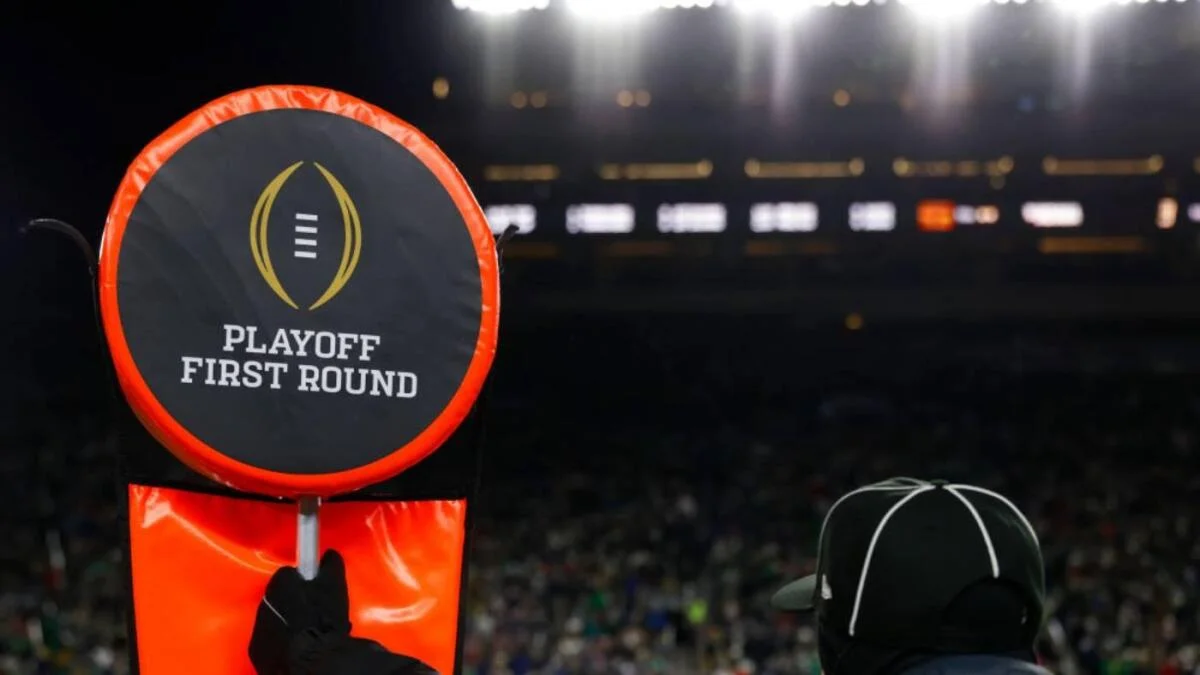
LAS VEGAS — The ACC has found itself in the College Football Playoff crossfire in two of the past three seasons, and now the league is pushing for swift changes to the format.
ACC commissioner Jim Phillips on Wednesday called for an immediate expansion of the 12-team playoff and said he wants the CFP to examine whether it should scale back the weekly rankings released during the five weeks leading up to Selection Sunday.
The window to expand before the 2026-27 season is closing fast. ESPN granted CFP leaders an extension until Jan. 23 to finalize a decision. The prevailing expectation had been that the playoff would stay at 12 teams because the 10 FBS conferences and Notre Dame have been unable to reach consensus on a 16-team (or larger) model.
“I would prefer not to wait another year, but I only speak for the ACC,” Phillips said Wednesday after a speaking engagement at the Intercollegiate Athletics Forum.
Notre Dame’s fury over its exclusion from this year’s CFP helped change the tone. Athletic director Pete Bevacqua accused the ACC of pushing for Miami to be selected over the Irish. Notre Dame has a football scheduling partnership with the ACC and is a full member of the conference in 24 other sports. Bevacqua said Monday the school’s relationship with the ACC suffered “permanent damage” because of what he believed were ACC attacks on Notre Dame’s résumé.
Conference commissioners met Tuesday in Las Vegas to discuss the playoff, but no format agreement emerged. Big 12 commissioner Brett Yormark told CBS Sports he also prefers expansion now rather than waiting until 2027-28. The SEC remains focused on a 16-team format, an SEC spokesperson told CBS Sports.
“We have good teams being left out,” said Phillips, “I think we have that responsibility to make sure that we get to a number that we feel better about, that either we believe anybody after that wouldn’t necessarily win [a national championship], or we at least cut into that margin. And I don’t know what we can get done in the next six weeks, but we’re committed to staying together and working together and working with the management committee to figure this thing out.”
Phillips reiterated his opposition to any format that awards disproportionate automatic qualifiers to the power leagues. The Big Ten recently proposed a 16-team model that would give both the Big Ten and SEC four AQs each, while the ACC and Big 12 would receive two apiece.
The Big Ten and SEC control the votes needed to set the future format, but the sides have yet to reach an agreement on any structure beyond 12 teams. The Big Ten floated a 24-team model earlier this fall, but it failed to gain SEC support — though several SEC athletic directors remain intrigued by the concept, industry sources told CBS Sports.
Phillips: CFP’s weekly rankings ‘disruptive’
Phillips is also pushing to reevaluate the CFP’s weekly rankings shows on ESPN. The committee’s top 25 is currently unveiled in each of the five weeks before Selection Sunday. The group drew criticism this year for keeping Miami below Notre Dame until flipping them in the final week, citing the Week 1 head-to-head result.
“The weekly shows draw a lot of interest. They’re incredibly disruptive and very hard for the schools and the conferences,” Phillips said. “And I understand why we do the shows, and it’s part of the agreement with ESPN. but it causes great anxiety throughout. We have to find a better way moving forward as it relates to some of that, some of that pre-information.”
Phillips said it is unclear whether any adjustments can be made under ESPN’s contract, and commissioners did not address the issue during Tuesday’s meeting.
College football’s weekly reveal schedule is unique. By contrast, the NCAA basketball tournaments release a top-16 preview one month before Selection Sunday, before the field is selected in March.
“You’ve gotta believe that those 16 teams are gonna be in the field at 68, right?” Phillips said. “So there’s less pressure there, and it’s a fun thing and kind of a way to create interest with a month to go before Selection Sunday.”
ACC will explore changes to tiebreaker protocol
Part of the disruption in the ACC’s playoff push this season was the logjam at the top of its regular-season standings. Miami, the highest-ranked ACC team in the CFP, did not reach the ACC Championship because of the league’s five-way tiebreaker policy. Virginia and Duke met in the title game, with the five-loss Blue Devils emerging as the ACC champion, placing more uncertainty on whether the power conference would be left out of the CFP completely this month.
Phillips wants to explore tweaking the tiebreaker policy and implementing CFP rankings into the protocol.
“Who knew that we would get to the seventh tiebreaker with five teams that were 6-2?” he said. “It’s just the stars aligned in a way that nobody predicted, but no one should throw shade on Duke. They earned the right. Everybody had a chance to be part of that tiebreaker, and they played great. They won the league. They held the trophy. So I was super happy for Duke. It worked out the way it was supposed to work out relative to that’s the tiebreaker we put in place, but we’ll come back together. It would be smart of us to now also have a CFP maybe component in there, in the tiebreaker.”
The ACC eliminated divisions in 2023, before the additions of Cal and Stanford in an expansion to 17 teams, further complicating a large league without divisions.
Phillips suggested all conferences follow similar tiebreaker protocols, citing the power conferences all set to play nine conference games starting next season. The ACC and SEC recently voted to move from eight to nine conference games.
“Maybe there’s something that allows less confusion about what everybody’s tiebreaker is in college football,” Phillips said.

Troy Aikman Says Quiet Part Out Loud About Dirty State Of College Football

The risks and rewards of Utah’s private equity plans: Will others around college sports follow?

Kalin Badgley Excels in Baseball While Defying Gender Norms – The562.org

Capitals Street Hockey League Coming to Germantown

DeSantis Talks College Football, Calls for Reforms to NIL and Transfer Portal · The Floridian

Alaska Youth Education in Shooting Sports gun show this weekend | Local News
Cincinnati Enquirer names 2025 girls volleyball all-city teams

Racing Hall of Famer Bobby Rahal part of team to build North Florida Motorsports Park in Nassau County

Pitt volleyball to host 2026 Opening Spike Classic

New details on JMI deal with UK and its negative impact on recruiting

Lionel reveals the best-selling NASCAR diecasts of 2025

Nebraska Huskers Dominate All-Region Volleyball Honors

Goodbye SW racetrack, hello Auburn Motorsport Park

Pitt volleyball among four elite programs set for 2026 Opening Spike Classic

Major NASCAR sponsor speaks out amid antitrust trial

First Tee Winter Registration is open

Fargo girl, 13, dies after collapsing during school basketball game – Grand Forks Herald

CPG Brands Like Allegra Are Betting on F1 for the First Time

Volleyball Recaps – November 18

F1 Las Vegas: Verstappen win, Norris and Piastri DQ tighten 2025 title fight

Two Pro Volleyball Leagues Serve Up Plans for Minnesota Teams

Sycamores unveil 2026 track and field schedule

Utah State Announces 2025-26 Indoor Track & Field Schedule

Redemption Means First Pro Stock World Championship for Dallas Glenn

Texas volleyball vs Kentucky game score: Live SEC tournament updates

Bowl Projections: ESPN predicts 12-team College Football Playoff bracket, full bowl slate after Week 14

Jo Shimoda Undergoes Back Surgery

Robert “Bobby” Lewis Hardin, 56

How this startup (and a KC sports icon) turned young players into card-carrying legends overnight

Indiana’s rapid ascent and its impact across college football

 Why a rising mid-major power with an NCAA Tournament team opted out of revenue-sharing — and advertised it
 NBA Legend Michael Jordan to Join NBC Sports as Special Contributor
 Falcons mailbag
 Portal Update – Basketball and Gymnastics Take Hits
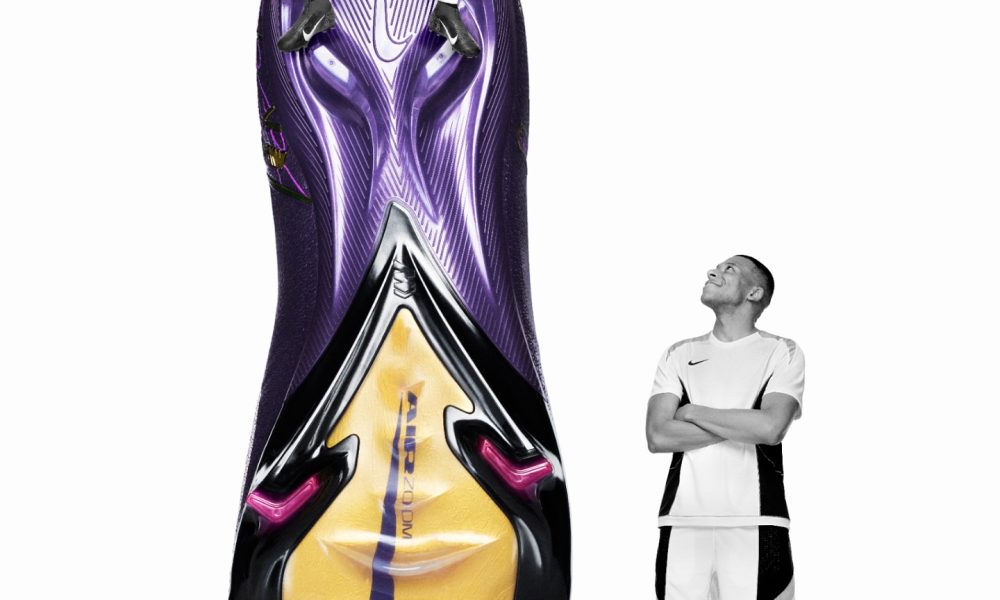 has always dreamed in Mercurial. Now his initials are on the boots.
The new Kyl…
has always dreamed in Mercurial. Now his initials are on the boots.
The new Kyl…
-
 Rec Sports2 weeks ago
First Tee Winter Registration is open
-
 Rec Sports2 weeks ago
Fargo girl, 13, dies after collapsing during school basketball game – Grand Forks Herald
-
 Motorsports2 weeks ago
CPG Brands Like Allegra Are Betting on F1 for the First Time
-
 Motorsports2 weeks ago
F1 Las Vegas: Verstappen win, Norris and Piastri DQ tighten 2025 title fight
-
 Sports2 weeks ago
Two Pro Volleyball Leagues Serve Up Plans for Minnesota Teams
-
 Sports2 weeks ago
Utah State Announces 2025-26 Indoor Track & Field Schedule
-
 Sports2 weeks ago
Sycamores unveil 2026 track and field schedule
-
 Motorsports2 weeks ago
Redemption Means First Pro Stock World Championship for Dallas Glenn
-
 Sports2 weeks ago
Texas volleyball vs Kentucky game score: Live SEC tournament updates
-
 NIL1 week ago
Bowl Projections: ESPN predicts 12-team College Football Playoff bracket, full bowl slate after Week 14