
NIL
‘Why be jealous?’: In the NIL age, a new archetype for a college backfield

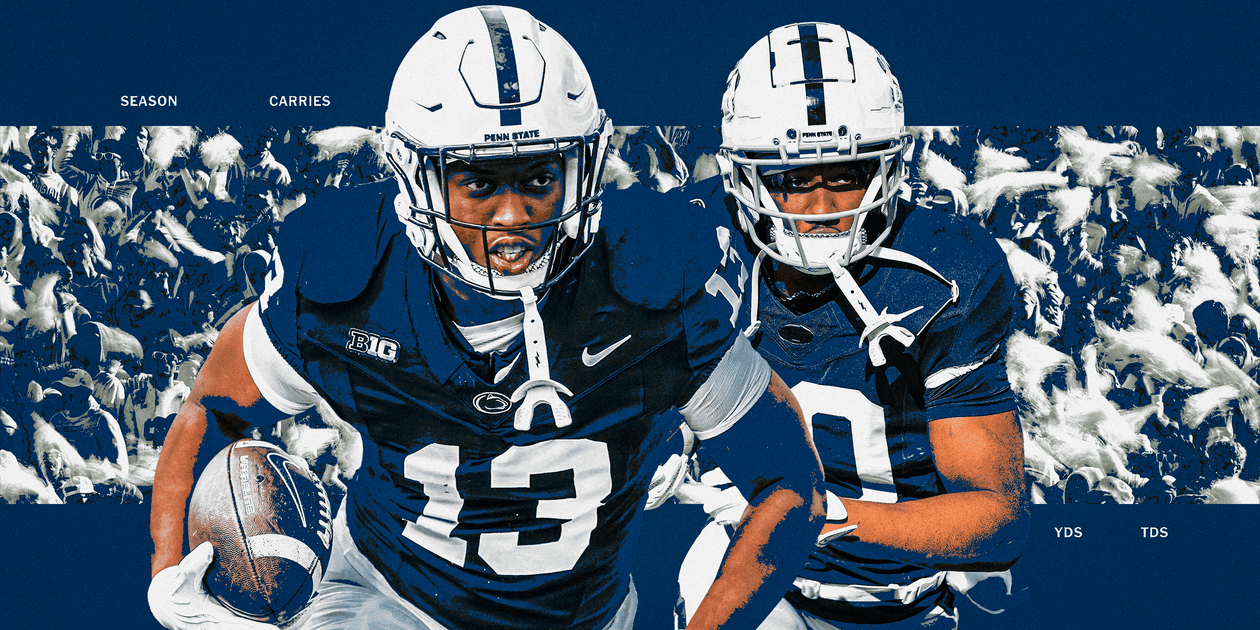
STATE COLLEGE, Pa. — By the end of the longest college football season in history, two pairs of running back teammates had crossed the quintessential position threshold of 1,000 yards gained in a single campaign. One of those duos left Columbus, Ohio, following a national championship to embark on NFL careers this fall. The other is here, on a sleepy Wednesday in late July, doing important but mundane things at the Lasch Football Building.
There is physical testing to establish mileposts before Penn State officially begins practice. There is a confab with their new position coach. There’s an audience with a visitor in a meeting room, which, like most everything else, the pair handles together and with a premium on syllables spoken.
Notably, there is no slate of appearances for various media outlets and league stakeholders inside a casino. The program has sent its starting quarterback, Drew Allar, along with a center and a safety to the day’s Big Ten media day carnival appearance in Las Vegas. This tracks: A defining dynamic of college football in 2025 is Kaytron Allen and Nick Singleton being here, and not somewhere else.
And, here, they might have the most successful season a modern college running back can possibly have. They give Penn State’s own national championship talk its legs while having, most likely, no chance to win a Heisman Trophy. They might end up occupying the top two spots on their school’s all-time rushing chart while ending up without any official recognition as the best player at his position in college football this year. While the Nittany Lions will lean into formational creativity and dispatch Allen and Singleton to the field at the same time, to do different things, most of the time it’s one or the other and not both.
And that’s exactly the point. Lots of yards and fewer hits. Diversified skill sets and limited exposure. A year for the ages in college without sacrificing years when they’re aging in the pros. Juxtaposition at one position, on purpose.
Here sits the archetype for a college backfield, literally side-by-side. They can’t be in each other’s way if everything they want is in front of them.
“He pushes me, and I push him,” Allen says. “That’s all that matters, for real.”
An acknowledgement: Elite tandems at the running back position are nothing new.
College football’s history is rooted in mythological backfields of old — Notre Dame’s Four Horsemen, Army’s Mr. Inside and Mr. Outside — and contemporary examples have powered the sport’s recent juggernauts. Reggie Bush and LenDale White gave Pete Carroll’s USC its flash and power from 2003 to 2005. In 2017, Nick Chubb and Sony Michel helped Georgia to a national championship appearance, which the Bulldogs lost to an Alabama team with two future first-round picks at the position in Josh Jacobs and Najee Harris, neither of whom started.
None of them played in an era when staying was harder than going.
Across four years of prep football, Allen and Singleton combined for nearly 11,000 yards rushing. They arrived at Penn State from different places — Allen refined via three seasons at IMG Academy, Singleton going the traditional route at a large Pennsylvania high school — with the same upbringing: They did not have to share much, if at all. They were playmakers. They were given the ball, a lot.
Going on a budget, from there, is not easy. A running back might make that read and juke right out of town to another program. Allen and Singleton have endured and thrived in the same spot, and chose to continue to do so when they could be in NFL training camps at this very moment, like Ohio State’s TreVeyon Henderson and Quinshon Judkins, the only other pair of running backs to top the 1,000-yard mark together in the transfer-portal era. That has a lot to do with friendship and history and, yes, the ability to profit as a college player.
It’s also a telling acknowledgement that, at least at this position in this time, less can amount to much more. “You got two guys that want the same thing,” Penn State running backs coach Stan Drayton says. “It can be a bad deal, right? But you make them understand that there’s going to be enough reps, enough touches that they’re going to both get to complement each other. They’re going to keep their tread on the tires for each other. And they’re both going to eat.”
A backfield timeshare, especially one featuring two All-America-level players, does seem like an arrangement college offenses should follow in 2025 if the idea is ensuring the near-and-long-term success of said players. But it is not the only way.
We know this due to what happened in 2024, when Ashton Jeanty recorded a nation-high 374 carries for Boise State, finished second in the Heisman Trophy balloting and got drafted sixth overall by the Las Vegas Raiders. In 2025, Notre Dame’s Jeremiyah Love might be the closest approximation to anything like that, as The Athletic’s No. 6 overall pro prospect and the first back off the board in The Athletic’s recent Heisman Trophy Fantasy Draft. But even Love didn’t record more than 16 carries in a single game as a sophomore. While his 10 carries in a season-opening loss at Miami are currently a point of consternation, there’s nevertheless no plan to grind him into turf pellets even if he’s possibly the best at his position in program history.
Notre Dame undoubtedly needs Love to be great in order to be great, period. But Love being great also means Love being available. “Being able to play all game, every game, to me is a successful season,” Irish running backs coach Ja’Juan Seider says. “I don’t put a number on what the stat line is. Because if (Love) is healthy, I think that stat line is going to be high.”
The workhorse is not dead, though he looks a little more like a unicorn. Math is math. More carries mean more opportunities for contact. More contact means more vulnerability to injury, minor or otherwise. Injuries, accumulated over time, can whittle years off a career. If there is a path to minimizing exposure while maximizing production and preserving earning potential, even if it means watching award ceremonies from home, it’s probably worth following.
This assumes, of course, that you can get players accustomed to being the center of the universe to recognize the other stars in orbit.

Both Nick Singleton, above, and Kaytron Allen could surpass Evan Royster’s Penn State career rushing record of 3,932 yards. (Scott Taetsch / Getty Images)
The prevailing line at Penn State is that Kaytron Allen and Nick Singleton didn’t need to buy in. They always bought in.
In it together, from the start, as 2022 enrollees thrust into the same spaces on the field and off of it (they’re still roommates four years on). Evidence to support the claim is circumstantial and a little apocryphal, but it does exist. Singleton remembers one grueling sled-pushing session before their freshman season and feeling very much like he didn’t have enough left to get the apparatus across the finish line. Allen then got in his ear and made sure he did. That fall they each broke the Penn State freshman record for rushing touchdowns — first Singleton, then Allen. Most significantly in the age of roster flux and NIL chasing, neither sought a greater share elsewhere.
It has been a little bit of anything-you-can-do-I-can-do-better all along, but probably closer to anything-he-can-do-I-can-do-too in the final appraisal.
Touchdown Kaytron Allen!!
After review, the TD was upheld.@PennStateFball takes a 17-0 lead. pic.twitter.com/ZgjEaFMX6D
— CBS Sports College Football 🏈 (@CBSSportsCFB) August 30, 2025
“Everybody comes from different things,” Allen says. “Everybody’s struggles are different. So everybody’s life is different. But it’s about, how can we come together to help each other get to where we want to be, as brothers? Of course we’re competing. But at the end of the day, we’re brothers.”
“Early on in practice, they had a couple viral clips where Kaytron is running over players and stuff like that, and Nick feels like he’s gotta go make a play,” assistant running backs coach Charles Walker says. “It’s just day in and day out. And they’ve done it on such a big stage every week. You don’t know if you’re gonna ever be around it again.”
Still, there has to be a reason to add to a combined 1,058 carries and 5,789 yards of tread at the college level, and getting compensated for the effort only goes so far. That spigot will shut off and the next one doesn’t turn on without a good reason to. Time, for a running back, is too valuable a commodity to misallocate.
Kaytron Allen career stats
| Season | Carries | Yds | Avg | TDs |
|---|---|---|---|---|
|
2022 |
167 |
867 |
5.2 |
10 |
|
2023 |
172 |
902 |
5.2 |
6 |
|
2024 |
220 |
1,108 |
5.0 |
8 |
|
2025 |
8 |
43 |
5.4 |
1 |
Nick Singleton career stats
| Season | Carries | Yds | Avg | TDs |
|---|---|---|---|---|
|
2022 |
156 |
1,061 |
6.8 |
12 |
|
2023 |
171 |
752 |
4.4 |
8 |
|
2024 |
172 |
1,099 |
5.4 |
12 |
|
2025 |
8 |
19 |
2.4 |
2 |
So what Penn State offered Allen and Singleton in 2025 is something like a post-graduate year, an immersion in an MFA program: Master of Football Arts.
Much of the structure was familiar. Their first year in offensive coordinator Andy Kotelnicki’s scheme was a rousing success, not least because Kotelnicki had a couple decades of experience with two-back rotations at both Buffalo and Kansas while concluding, almost before he arrived, that Allen and Singleton both needed the ball. That required diversifying their skill sets so they could get those touches in as many ways as possible while also spending a decent amount of time on the field together. “You can’t just take another running back, put ’em on the field and the only thing you do is line them up right next to the quarterback,” Kotelnicki says. “You need to be able to move them.”
So they’d set to work on route-running and blitz pickup and lead blocking and more — extra work on the JUGS machine post-practice was a new habit. In the end, Singleton led the Big Ten in all-purpose yards (1,805) while Allen amassed 1,205 of his own.
As it happens, running backs who can do a lot more than one thing are attractive to NFL roster constructors. At Penn State, the plan wouldn’t change in 2025; the coaching staff more or less takes regular votes to establish a hierarchy for offensive touches, and Allen and Singleton remain atop the list.
If anything, a year of data and experience would help soup up the vehicle. The finer Allen and Singleton’s skills, the more elaborate Kotelnicki could get in his scheming. “How much I’ve been able to put on their plate and how they’ve handled it — it’s been really impressive,” Kotelnicki says. “Like, we’ve been doing some sh— with them.”
Head coach James Franklin’s solution to a potential stick in the spokes — running backs coach Ja’Juan Seider taking the job at Notre Dame a month after Allen and Singleton announced they’d come back to Penn State — was an old head who could lean into NFL-like structures and demands and create an enticing value for a couple of players who had reason to expect it upon their return.
Stan Drayton was available after a three-seasons-and-out tenure as Temple’s head coach and three decades with running back instruction as his primary medium. Previous experience with high-level two-back rotations at Ohio State and Texas, plus a pair of stops as an NFL assistant, recommended him as a hire who could create some constructive discomfort for a pair of established stars.
Almost immediately, Drayton identified nuanced flaws. Allen and Singleton absorbed too many hits from safeties. They weren’t identifying blitzers quickly enough to meet them at the line of scrimmage. And so on. The critiques might’ve sent Allen and Singleton’s eyebrows to the ceiling. But Drayton had done this before, with Ezekiel Elliott and Carlos Hyde at Ohio State and Bijan Robinson and Roschon Johnson at Texas. The Penn State stars knew those names. So they knew enough to listen.
“No one is perfect,” Singleton says. “You’re always trying to find ways every year to get better. Calling us out for all that just shows there’s still work to be done.”
Drayton has required them to pick up a dry-erase marker, walk to the front of the meeting room and draw up plays he calls out. It unnerves and challenges a pair of accomplished players in a productive way. “Right now,” Drayton says, “they are being trained to be coordinators.”
It demands they know the roles and responsibilities of all 11 players in the formation, and how a defense might react to them, which should speed up their in-game information-processing … and thereby potentially reduce wear-and-tear if they can predict who’s coming from where.
And yes, it’s what NFL front offices will expect Allen and Singleton to do next spring in the pre-draft process. Might as well go through dress rehearsals now. It all amounts to a value-add beyond instruction on blitz-pickup technique or running a crisper route from the slot.
“There’s a timing to every play,” Drayton says. “And if you are processing it, you’re going to play slow and take hits. But if you are studying it to slow the game down, then the game will slow down. And you’ll play fast and you’ll play past hits.”
In all, it’s a convincing argument to be happy.
Envy is a blight, and Penn State’s otherwise taciturn tailbacks demonstrate something like a flinch of anger at the suggestion that it ever crept into their shared space. “Why be jealous over your brother when he’s always got your back?” Allen says.
But a human nevertheless needs reasons to be satisfied. And a very good running back in 2025 needs to understand why splitting time with another very good running back makes sense. A redefinition of success — shooting for the intercept of production and longevity — has to take.
Here, right where Kaytron Allen and Nick Singleton are, it evidently has. They will get touches. They probably will make a lot of those touches. To wit: Both recorded eight carries in a season-opening rout of Nevada, accounting for three touchdowns combined, with Singleton adding a 22-yard reception to the mix. Penn State may win a lot more games, maybe even a national title, as a result of the arrangement. Its star tailbacks will then presumably have a chance to make a lot more money, and possibly for a lot longer than they might if they had to do this alone.
Why run from that?
(Illustration: Demetrius Robinson / The Athletic; photos: Scott Taetsch / Getty Images)

The metrics — near the bottom of the SEC in as many categories as you could count — were enough to make your stomach churn and there was nothing available over-the-counter to aid Shane Beamer and his team’s recovery.
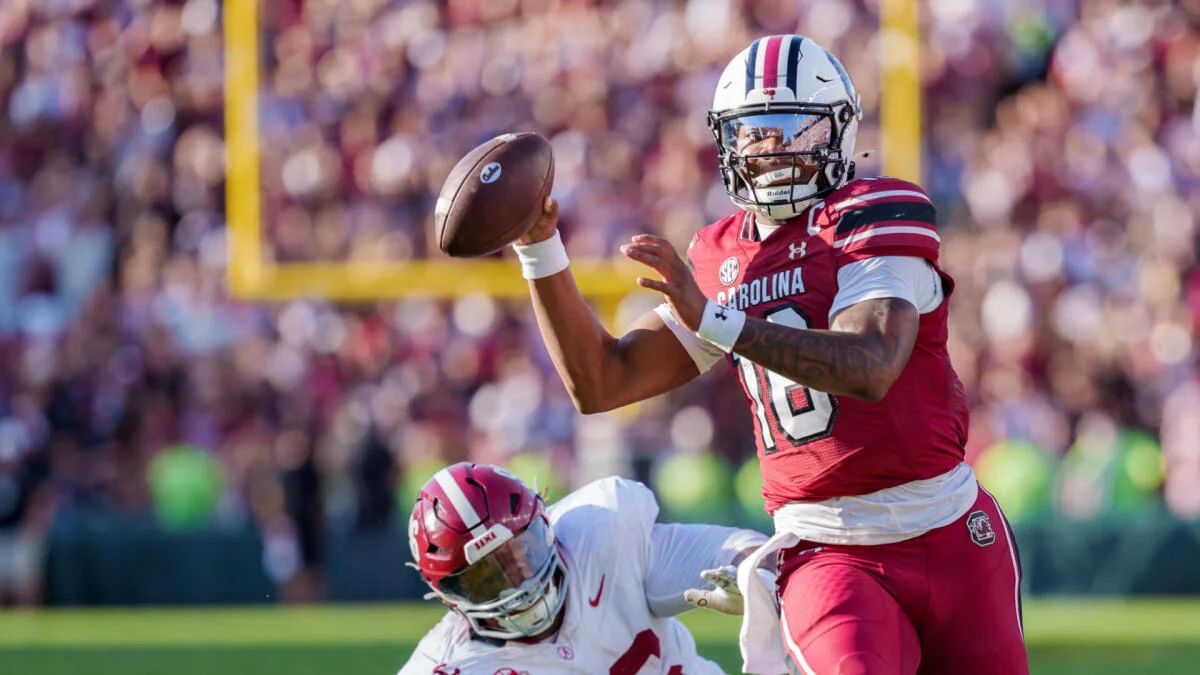
After flying home from a road loss to Ole Miss earlier this season, South Carolina’s fifth-year coach severed ties with offensive coordinator Mike Shula, signaling change that commenced a string of events highlighted this month by the arrival of Kendal Briles as the Gamecocks’ new offensive director, two additional staffers and LaNorris Sellers’ pivotal return at quarterback.
Sellers announced Monday he was “running it back” with the Gamecocks, putting an end to questions there were other programs in the mix.
With Beamer’s potential tenure-defining decision, the Briles-Sellers pairing means South Carolina is scheduled to press the issue offensively for the first time since the Steve Spurrier era, the height of the program’s success. And with the ink finally drying on Sellers’ updated terms, the Gamecocks’ offseason outlook is considerably more positive than it looked after the season ended with a disheartening loss to Clemson that slapped South Carolina with a 4-8 final record to end a season that began with so much hope.
“This job is not for on-the-job training,” Beamer said on his OC hire this month. “When you talk about someone that has done it in this league and done it in other conferences at a high level, has done it with multiple personnel, different styles of quarterbacks, it’s really impressive. Offensively, explosive, wants to run the ball.
“Go back in 2021-2022, his offense in Arkansas was one of three offenses in the entire nation that averaged over 230 yards a game, rushing and passing. They protect the quarterback, which we need to do a better job of. We need to do a better job of protecting the football and being explosive, and he certainly can do that.”
For teams in schematic transition like the Gamecocks, figuring out the quarterback situation was the first step in getting the ball rolling toward putting together an early two-deep and determining where else this program needed help in the talent department.
Behind Sellers’ decision to stay
Multiple sources told CBS Sports during Sellers’ conversations with South Carolina about re-signing that the quarterback’s return would impact roster construction and how this team looks in 2026. Sellers isn’t the type to give ultimatums, but he at least needed to know who he would be working alongside next fall and what the plan was for the offensive line and strengthening that unit moving forward.
There was significant worry, at least from inside the program, that the Palmetto State native could leave this cycle for another program. During the negotiation process, Sellers wanted assurances — more than fair for a player who was sacked 42 times as a sophomore and would’ve likely been a first-round pick in April had South Carolina not been historically bad offensively this season.
Beamer needed to get his offensive coordinator hire right, plain and simple. Sellers could have tested the market. At the end of the season, it was believed by national sources that Sellers had three options: Stay, go pro, or transfer.
Beamer said last week that conversations between Sellers and Briles were positive and he felt strongly about the return of his top offensive player despite nothing being finalized in terms of an NIL and revenue share-based contract until now. Sellers’ decision to stay put for next season reset the quarterback transfer market, giving way to players like Florida’s D.J. Lagway and Nebraska’s Dylan Raiola making themselves available this cycle, among others.
Figures will not be released, but CBS Sports was told through a source that Sellers’ 2026 contract far exceeds his previous deal, which was $1.7 million for 2025.
Last summer, Sellers’ father told The Athletic that his son fetched an NIL offer from an interested team worth $8 million for two years. That matched the reported figure ex-Tulane signal caller Darian Mensah agreed to at Duke. This offer surfaced after Sellers became just the third freshman in FBS history to throw for 2,500 yards and rush for 500 yards, joining Johnny Manziel and Jalen Hurts.
“He was offered all kinds of crazy numbers,” Norris Sellers said in May 2025. “I told him he could say, ‘I’m gonna stay or I’m gonna go.’ By my two cents: It was to get into college on a scholarship, play ball, get our degree and go on about our business. This NIL deal came later. We didn’t come here to make money. We came here to get our education, play ball. And with schools calling, we’re not gonna jump ship because they’re offering more than what we’re getting. If it ain’t broke, don’t fix it.
“You’re 19. You don’t need ($8 million). You’re in a great spot. There were several talks, but it never really crossed his mind (to leave). It’s a challenge with colleges offering younger guys that kind of money. Who’s gonna say no to $8 million for two years? They’re gonna be swayed if you don’t have the right people in your corner.”
Since that sizable offer last offseason, CBS Sports has learned Sellers’ family and representation has taken a more “NFL mindset” ahead of his final college season and confidence that he would develop into a Day 1 draft pick for 2027 was the most pressing matter in this decision with terms secondary.
Transformation offensively in Columbia
The Gamecocks endured major decline across several categories this season under the direction of Shula offensively, leading to multiple staff changes from Beamer and the decision to bring an entirely new scheme to the program under Briles.
The historic regression in 2025 offensively nearly cost Beamer his job. Reported to be among the initial candidates for the Virginia Tech vacancy from sources at both programs, Beamer reaffirmed his commitment to South Carolina and called the Gamecocks his “dream job” before saying he planned on sticking around to help the program get things back on track.
After the loss in Oxford against Ole Miss dropped South Carolina to 3-6, the belief from sources inside the program was Beamer would get the remainder of the season and the first half of the 2026 campaign before being evaluated as long as significant changes were made offensively. Part of that was due to Beamer’s raise and extension signed last January that raised his buyout by nearly $20 million.
Athletic director Jeremiah Donati confirmed Beamer’s safety a few weeks later prior to the finale against Clemson. The slate’s been wiped clean for Briles, who brought offensive line coach Randy Clements with him from TCU and had a say in signing off on the hire of Penn State’s Stan Drayton as South Carolina’s new running backs coach.
Even marginal improvements should mean the Gamecocks are a bowl-team again in 2026, at minimum, which should increase the runway for Beamer after moving to a nine-game conference schedule. Negative factors like bad offensive line development, head-scratching third-down decisions and seemingly no sense of game flow snap to snap should be behind South Carolina since Beamer made on-field results with these new additions as a priority.
Sellers is close with Appalachian State coach Dowell Loggains, who called plays during the quarterback’s first two seasons on campus after coming over from Arkansas. That included Sellers’ redshirt year in 2023 when he was the understudy of Spencer Rattler, whose 19 touchdown passes that season is the most in a single campaign at South Carolina since Jake Bentley’s 27 in 2018. Loggains and Briles previously worked under Sam Pittman with the Razorbacks where K.J. Jefferson was a successful multi-year starter behind center.
Sellers is an ideal fit for Briles’ scheme and almost a carbon copy of Jefferson from a size standpoint, albeit a bit more lean. The expectation is South Carolina’s 2026 attack will mirror much of how Arkansas looked in 2022 when the Razorbacks finished second in the SEC in rushing with much of that total going through their quarterback in Briles’ third season as OC.
At his best, Sellers would be a more polished and physically-gifted version of Jefferson under Briles, but that will depend on how quickly he familiarizes himself with the scheme and where to go with the football.
Too often during the 2025 season, Sellers looked unsure of himself from the pocket and lacked confidence, perhaps a product of Shula’s pro-style, overly-complicated ideas. When Sellers was able to freelance somewhat under Loggains in 2024, he was one of college football’s most prolific playmakers over the second half of the season and nearly led the Gamecocks to their first playoff appearance.
Briles noticed those abilities on film before moving his family from Texas to South Carolina, he said.
“I’m not going to go out there and ask him to do something he’s not great at, so we’re going to build the offense around him and the rest of the personnel and do the things that he’s really good at,” Briles said during his introductory press conference. “So we want him to be comfortable. He’s out there with people running full speed at him, probably in a bad attitude, and trying to get after him. So we’re going to do the things that he feels really comfortable with, and I’m excited to work with him. He seems like a great kid.”
***
One aspect of Sellers’ game that was significantly hampered this season by play-calling and scheme was his prowess as a run-threat. He was hand-cuffed by Shula’s directives and painted as a pocket-passer when Sellers was not comfortable in that role. Processing was a struggle at times, this coming after South Carolina’s former OC said during the spring his plan for Sellers was to enhance his abilities as a runner while keeping him upright.
Sellers finished second on the team in rushing with 166 carries for 674 yards and seven touchdowns as a first-year starter in 2024 compared to 270 yards and five scores this season, more than half of that production coming in wins over Kentucky and Coastal Carolina.
Getting back to what Sellers does best — gutting opposing defenses with his arm and legs — is paramount for Briles and this new-look scheme to find success.
The following statistical projection was provided to CBS Sports by Matrix Analytical, an analytics company that has assisted in several coaching searches around college football this cycle through the use of data models, statistical projections and measurable efficiencies.
Matrix Analytical
Offensive PPA (Predicted Points Added) is a per play statistic, commonly used in determining overall success rate for play-callers. A positive PPA means the play improved the team’s scoring chances and is a measure of points added (or lost) on each play compared to the predicted value. These categories from a unit-wide standpoint are expected to significantly rise under Briles for the Gamecocks as well as this team’s passing game situation.
Most assume the Air Raid is pass-heavy, but it’s moreso dependent on personnel and Briles’ interpretation of this offense does not mean the Gamecocks are going to throw it 40 times a game. It’s different, obviously, from Lane Kiffin’s run-to-set-up-pass spread he perfected at Ole Miss, but it still flows through the quarterback’s decision-making ability and Briles will have a proven, mobile player back there setting things up.
Sellers should have confidence in what South Carolina returns from its wideout room, too. While no announcement has been made, multiple sources tell CBS Sports top-threat Nyck Harbor (30 catches, 618 yards, six TDs) is expected to re-sign and the Gamecocks are in good hands with Vandrevius Jacobs, Jayden Sellers and Donovan Murph, too.
For the most part, Briles’ offense from a wideout standpoint is not sum-of-its-parts based like we’ve seen in recent years at South Carolina, sans former first-rounder Xavier Legette. Each of the past two seasons at TCU and going back to Briles’ tenure at Arkansas, there were three, clear go-to players at the position with targets, catches, yards and touchdowns essentially revolving around three players. He utilizes the tight end as well and Brady Hunt is back for the Gamecocks.
Wide receiver is one position group where the Gamecocks would like to add a ‘high-end’ weapon in the transfer portal to accompany the rest of what’s returning under assistant coach Mike Furrey, who called plays during three games this season as interim OC following Shula’s firing.
***
Peering deeper into the additions of Clements and Drayton, that duo could be more consequential than the Briles signing for the Gamecocks. Clements comes to South Carolina widely-regarded as top-tier considering Beamer’s decision to push interim offensive line coach Shawn Elliott back to his original tight ends spot.
With more than two decades of college experience at the line of scrimmage, Clements helped usher the most remarkable era in Baylor history during Art Briles’ tenure as coach as the leader up front for the Bears. Clements was the offensive line coach and run game coordinator during three straight double-digit win seasons from 2013-15 and later joined Briles for one year at Houston in 2018 before assisting Kiffin at Ole Miss in 2020 and Mack Brown at North Carolina thereafter.
Drayton helped develop developed Ezekiel Elliott and J.K. Dobbins at Ohio State, where he coached units that ranked No. 1 in Rush Success Rate and No. 1 in Power Success, via Matrix Analytical’s metrics. Drayton, who worked at Mississippi State with Beamer in 2004, spent this season at Penn State. Nittany Lions running back Kaytron Allen and Nicholas Singleton combined for 1,852 yards and 28 touchdowns on the ground.
Drayton’s brief stay at Penn State came after a three-year, unsuccessful tenure as Temple’s head coach. Speaking with those inside the industry for background on this story, the blame was placed elsewhere on Drayton’s run-game imbalance and overall struggles with the Owls.
“That data is misleading,” one source said. “(Those) issues were program-wide resource constraints, not coaching deficiency.”
Where Clements and Drayton should bring the most substantial, immediate help is protecting Sellers and generating some semblance of discipline in the run game. South Carolina’s rushing offense ranked 120th this season at 111.9 yards per game, second-worst among Power programs in third-down conversion rate (31.8%) and 133rd in total sacks allowed (43).
Beamer’s confidence level draws Brian Kelly parallels
Here’s the thing about Beamer: no one knows this program better or is more confident the 2026 campaign will look nothing like the warts of this past season. His recent bold declaration that South Carolina would be a playoff team is gutsy considering the financial impact drops considerably when it’s time for Donati to re-evaluate and assess around this time next year.
“I hate that we’ve gone through this,” Beamer said after South Carolina’s 28-14 loss to Clemson to end November. “I hate it for the seniors that don’t come back. But I can one billion percent promise you this. When we have a hell of a season in 2026 and when I’m doing this press conference after the Clemson game next year and we finished a regular season because of the success that we’re going to have next season, I know we will.
“We’re going to look back at this season and say, ‘it sucked going through it, but because of what we went through in ’25, it led us to what we just did in ’26.'”
To Beamer’s credit and moreso his point despite a 4-8 finish, this was a team that nearly knocked off several elite opponents this season despite anemic numbers offensively. The Gamecocks led fourth-ranked Alabama as a three-touchdown underdog late in the fourth quarter before Germie Bernard’s two touchdowns in the final 2.5 minutes gave the Crimson Tide a 29-22 victory and torched Texas A&M for 30 first-half points on the road before losing in historic letdown fashion.
In all, South Carolina went 0-4 against four playoff teams with an average margin of loss at 10.7 points per game.
Beamer’s guarantee is similar to what former LSU coach Brian Kelly said last November when he guaranteed the Tigers would reach the national championship game in 2025 after his regular-season finale win against Oklahoma. Like Beamer’s Gamecocks, LSU was a preseason top-15 team with playoff aspirations before failing to meet expectations and finishing unranked.
“We’re taking receipts and we’ll see you at the national championship (in 2025),” Kelly said, unknowingly scripting his eulogy that would come to fruition in October after the Tigers pulled the plug on his tenure.
Beamer’s name will be near the top of most preseason hot-seat lists next summer, though the situation at South Carolina is more akin to turning the knob on the thermostat compared to the three-alarm fire that was unfolding in Baton Rouge early this season following LSU’s loss to Ole Miss.
The Tigers exhausted resources and went all-in on a portal-infused roster after re-signing its star quarterback, Garrett Nussmeier, which is exactly the plan for the Gamecocks with Sellers in tow when the free-agency window officially opens on Jan. 2.
Balance in transfer portal
This is the second pivotal transfer cycle for Darren Uscher, South Carolina’s director of player personnel and recruiting who was hired last summer. He’s tasked with ensuring the salary numbers for next year’s roster fit relative to NIL/revenue share standards and establish first observations on potential portal targets that may assist the team.
The Gamecocks’ 2025 portal class was ranked 15th overall by 247Sports, but didn’t include as many impactful players as the previous group, which featured former SEC Defensive Player of the Year Kyle Kennard, running back Rocket Sanders and linebacker Demetrius Knight.
Beamer said last week while he hadn’t given player deadlines on making a decision on next season following exit meetings, he reiterated his desire for knowing “ASAP” and the program would not “sit around and wait forever” on yes or no’s with the portal opening next month.
In other words, the Gamecocks are trying to figure out how much money they need to earmark for retention and the balance of what’s going toward a new crop of signees from the transfer market. Beamer’s plan is to attack portal where he deems fit with difference-makers. Depth is built through South Carolina’s already-established roster.
“It’s not like we need to go outside (and get) 40 portal guys and flip this roster,” Beamer said earlier this season. “We don’t.”
While the Gamecocks need reinforcements on Briles’ side of the football, the defense loses a significant portion of its production as well, including several starters in the secondary. Safety Jalen Kilgore and cornerback Brandon Cisse both have declared for the NFL Draft as potential first-rounders and there are other positions of need there, notably edge and linebacker.
South Carolina’s play defensively this season under Clayton White gave the Gamecocks a fighting chance in several games despite the offense’s dreadful numbers. South Carolina led the SEC in takeaways and ranked fifth in red zone defense, accolades that went relatively unnoticed considering the unfortunate spotlight elsewhere.
If Beamer and his recruiting staff can fill a few notable holes in the roster, it’s going to make the situation much more conducive to success for Sellers and his three new coaches.
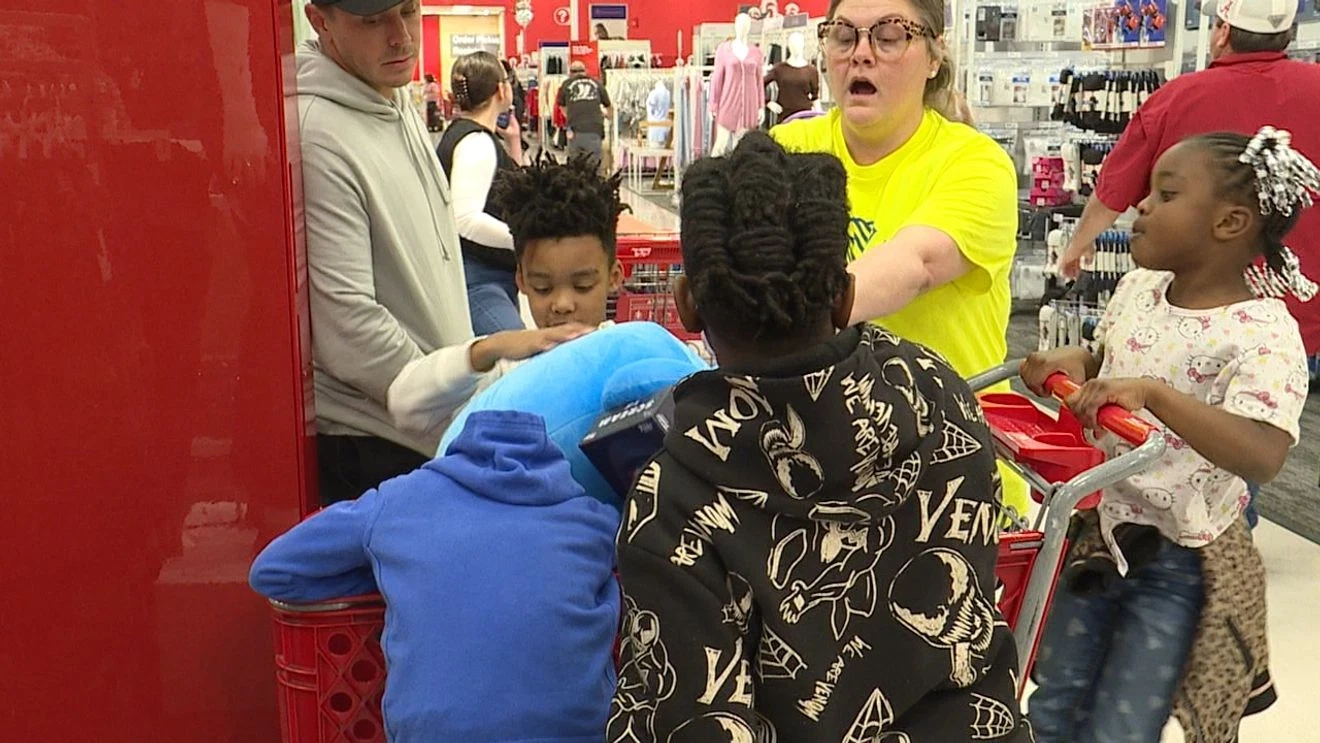
TUSCALOOSA, Ala. — On Monday, December 22, Brailsford — the starting center for the Alabama Crimson Tide — hosted a Holiday Shopping event at the Target on 13th Avenue East in Tuscaloosa. Using his own NIL money, Brailsford treated ten children from underserved communities to a Christmas shopping spree, giving each child a gift card to shop for themselves.
“I really wanna make their day,” Brailsford said. “I mean, that’s what this is really about for me.”
The children moved eagerly through the aisles, selecting toys and gifts while checking items off their Christmas lists.
Brailsford said the event was funded entirely through his own NIL earnings.
The sophomore has already made an impact on the field this season, earning SEC Offensive Lineman of the Week honors multiple times. Off the field, he said giving back has always been important to him.
Adopted as a baby, Brailsford said he grew up with enough, even if his family did not have much.
“We didn’t necessarily have a lot, but we had enough,” he said. “Being able to give back to kids that don’t always have that opportunity at Christmas is something special to me.”
Brailsford is currently studying social work and said he hopes to work with children after school in the future.
“I really want to be able to get into that field and help kids in any way I can,” he said.
While he continues to gain recognition on the football field, Brailsford said moments like the holiday shopping event are just as meaningful.
“I feel like I’m good at helping people,” he said. “That’s something that fulfills me. It’s my purpose in a way.”
For the children involved, the shopping trip was more than just receiving gifts. It was an experience shared with a role model who hopes to continue giving back long after the holidays are over.
Indiana’s rise from perennial Big Ten bottom feeders into national title contenders has been one of college football’s most compelling stories in 2025.
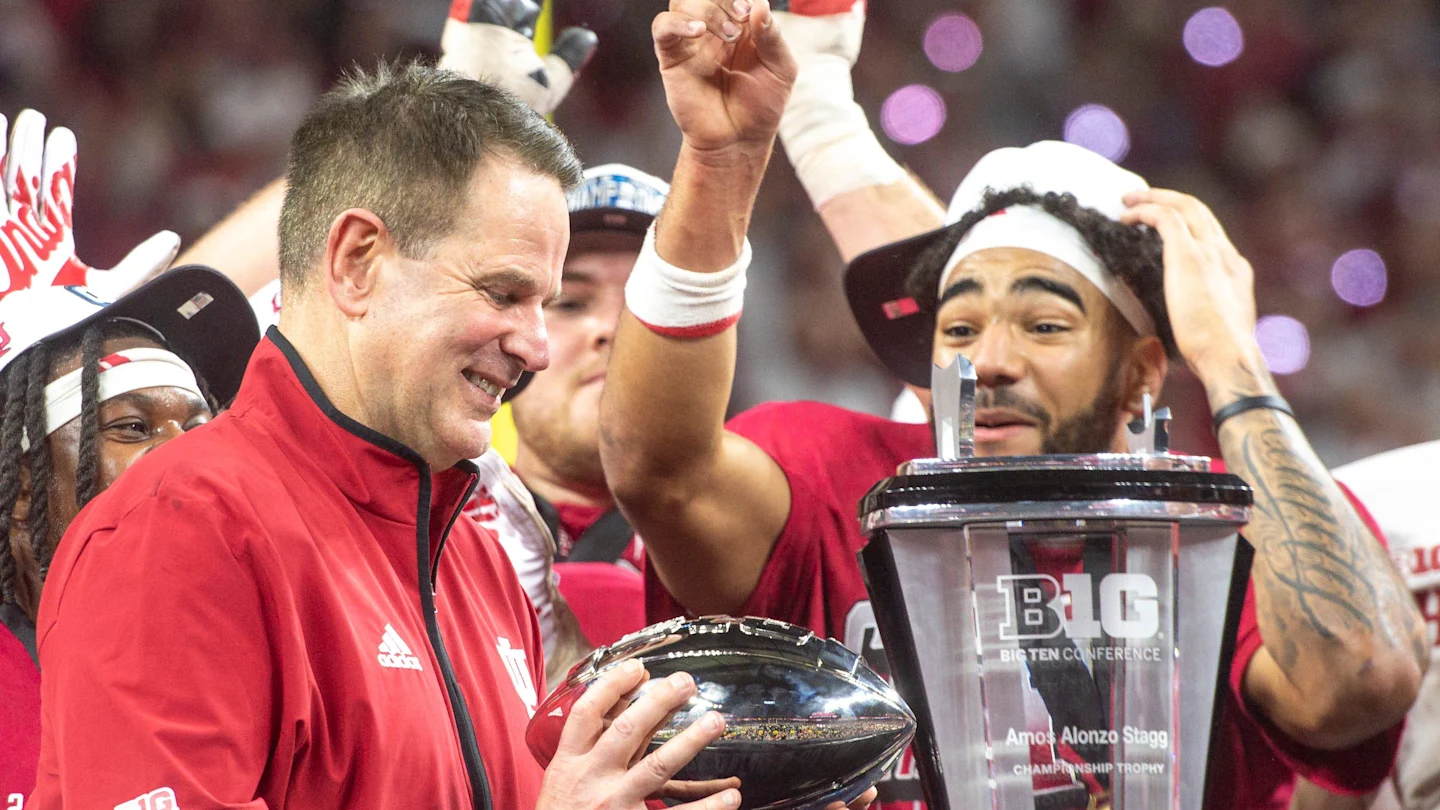
Under second-year head coach Curt Cignetti, the Hoosiers finished the regular season undefeated at 13-0, captured the program’s first Big Ten title since 1967, and earned the No. 1 seed in the College Football Playoff.
Quarterback Fernando Mendoza capped the breakthrough season by winning the school’s first-ever Heisman Trophy, throwing for 2,980 yards with 33 touchdown passes and a 71.5% completion rate that helped propel Indiana into national contention.
That success now intersects with a separate transfer-cycle storyline: North Texas quarterback Drew Mestemaker, the FBS passing leader (4,129 yards, 31 touchdowns, 70.2% completion rate), is likely to enter the transfer portal when the window opens in January.
On a December 19 episode of “College Football Insiders,” CBS Sports’ Chris Hummer connected the dots.
“He can be somebody you can build your program around for multiple years,” Hummer said. “I’ve heard the same about Indiana. I think they do have a significant interest in Drew Mestemaker, and I think he would be a really good fit for their system.”

Mestemaker is a former walk-on who emerged as the nation’s passing leader this season as a redshirt freshman, posting multiple 300-yard performances and a 608-yard outing in North Texas’ 54–20 win over Charlotte, a game that set single-game passing yardage records for both the school and the American Athletic Conference.
His breakout year earned him the Burlsworth Trophy, American Athletic Conference Offensive Player of the Year honors, and first-team All-American recognition.
There are clear reasons the fit is being discussed publicly.
Indiana has demonstrated a clear willingness to use transfers to accelerate competitiveness, most notably with Kurtis Rourke’s arrival as a graduate transfer in 2024, followed by Mendoza’s move from Cal.
Both quarterbacks produced elite statistical seasons that propelled the Hoosiers to winning campaigns.
If Mendoza ultimately declares for the 2026 NFL Draft, which is widely expected, Indiana would need either an internal successor or a portal option who can step in at Power-5 level speed.
Mestemaker’s profile checks several boxes: production, track record under a pro-style system, and remaining eligibility.
Read More at College Football HQ
- SEC program listed as highest-valued college football team with $1.4 billion valuation
- Major college football head coach denies receiving offer for Michigan job
- $5 million quarterback market predicted amid transfer portal frenzy
- ESPN silent after celebrity guest picker misses College GameDay
NIL
Adam Breneman Highlights Why College Football Will Fail Under Greg Sankey’s Leadership Amid Transfer Portal, NIL Issues
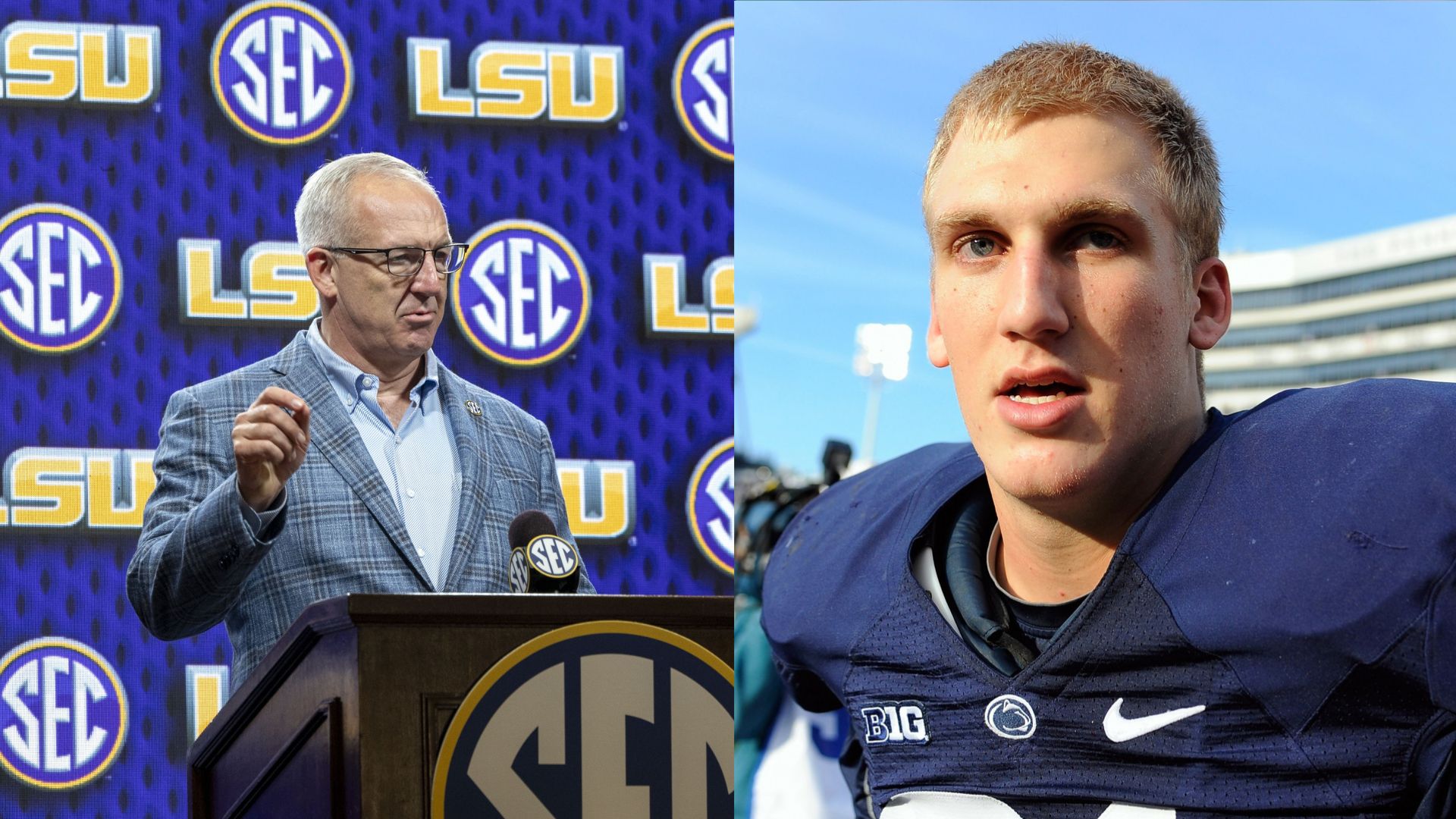
Former Penn State tight end Adam Breneman, on the Will Ventures podcast, revealed his true feelings on the current landscape of college football and the implications of the decisions made by some leaders in the game.
Breneman, on his podcast appearance, highlighted how no one’s actually in charge of college football, whilst also strongly advocating for a college football commissioner.
“No one’s actually in charge of college football. We need a college football commissioner”, Breneman stated on the podcast.
Despite college football not having a designated commissioner, SEC commissioner Greg Sankey is one of the most powerful college football figures and is often touted to be in charge of college football as a whole.
Breneman further revealed that Sankey is also in charge of other sports like golf, diving, lacrosse, and men’s & women’s basketball, stating that college football needs a commissioner who will make decisions for the betterment of college football, implying that it’s tough to do that while you have other things on your plate.
“Greg Sankey is also in charge of golf and swimming and diving and men’s basketball and women’s basketball and lacrosse has to make the best decisions for those sports as well. No one’s actually in charge of college football”, Breneman highlighted.
“We need a college football commissioner who actually is in charge of college football and can make decisions for college football because what’s best for college football is not what’s best for men’s basketball”, he further elaborated.
The former ASU tight end coach’s comments come on the backdrop of college football going through a turbulent period as far as player transfers, NIL issues, and the overall backlash the playoff committee is facing as far as the selection of the 2025 playoff teams is concerned.
Greg Sankey Pushes for Expansion to a 16-Team College Football Playoff
Sankey recently appeared on The Rich Eisen Show this December, emphasizing the need to adopt a 16-team playoff format, potentially moving away from the current 12-team format, while also keeping in mind other conferences and their playoff qualification, which was a point of contention amongst analysts and fans alike.
Meanwhile, the college football portal, which is set to officially open in January 2026, has already seen a record number of entries, with the likes of star QBs like DJ Lagway and Dylan Raiola entering, potentially fueled by NIL incentives.
Read More:
College Sports Network has you covered with the latest news, analysis, insights, and trending stories in college football, men’s college basketball, women’s college basketball, and college baseball!
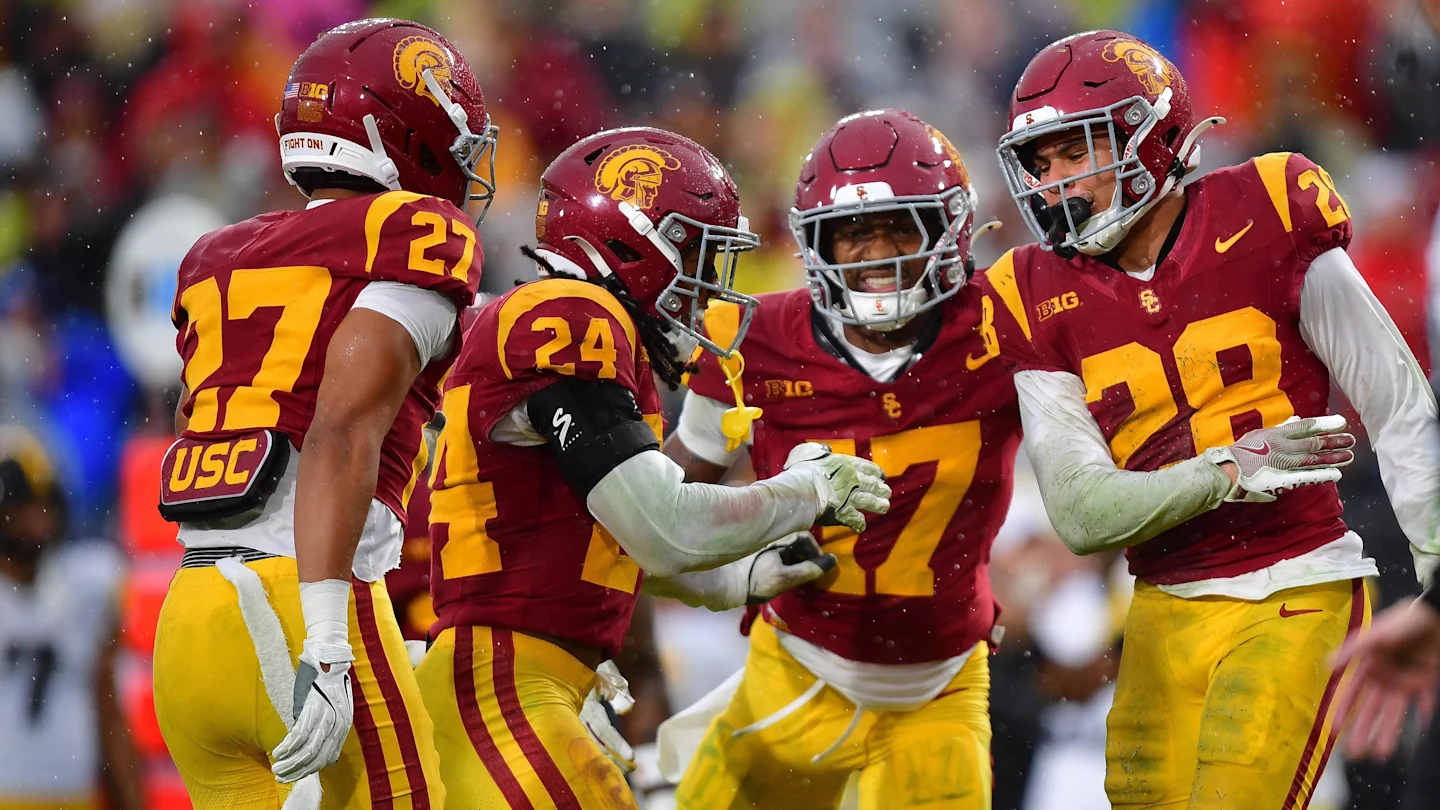
USC defensive tackle Devan Thompkins, a 6-5, 290-pound veteran who started 12 games in 2025, announced his intention to enter the NCAA transfer portal on December 17.
Thompkins finished the 2025 season with 31 combined tackles (18 solo), three sacks, two pass breakups, and a forced fumble; across three seasons at USC, he compiled 56 total tackles (32 solo), 4.5 sacks, and five pass breakups.
Those figures made him one of the more productive interior linemen on a unit that struggled at times but improved to finish ranked and bowl-eligible.
USC closed the 2025 regular season 9–3 (7–2 Big Ten) and will face TCU in the Valero Alamo Bowl on December 30, a season that left the program ranked inside the top 25 (No. 16) but short of College Football Playoff contention.
The Trojans’ record and bowl bid reflect progress under head coach Lincoln Riley while also exposing lingering gaps across the roster.
Those gaps have since been amplified, as Thompkins’ departure brings USC’s total number of players set to test the transfer market to 15.

The list of known departures is sizable and spread across position groups.
According to 247Sports, the 15 players who have announced portal entries include: WR DJ Jordan, RB Bryan Jackson, CB Braylon Conley, DE Gus Cordova, OL Makai Saina, S Steve Miller, LB Matai Tagoa‘i, DL Carlon Jones, S Anthony Beavers Jr., OL Micah Banuelos, LB Garrison Madden, RB Harry Dalton, WR Prince Strachan, TE Walker Lyons, and Thompkins.
That grouping hits starters across the trenches, secondary, and skill positions — areas that will require immediate replacements via the portal, incoming freshmen, and retained depth.
After a successful five-year run at Oklahoma from 2017 to 2021, Riley took over as USC’s head coach in November 2021 and has delivered steady results built on quarterback development, high-powered offenses, and aggressive recruiting, highlighted by USC securing the No. 1-ranked 2026 recruiting class.
The current exodus provides the latest test for Riley as USC works to build toward a stronger Big Ten finish in 2026.
Read More at College Football HQ
- College Football Playoff team has ‘significant interest’ in 4,000-yard QB
- College football quarterback enters transfer portal after 4,000-yard season
- No. 1 ranked transfer portal player predicted to join College Football Playoff team
- SEC program listed as highest-valued college football team with $1.4 billion valuation
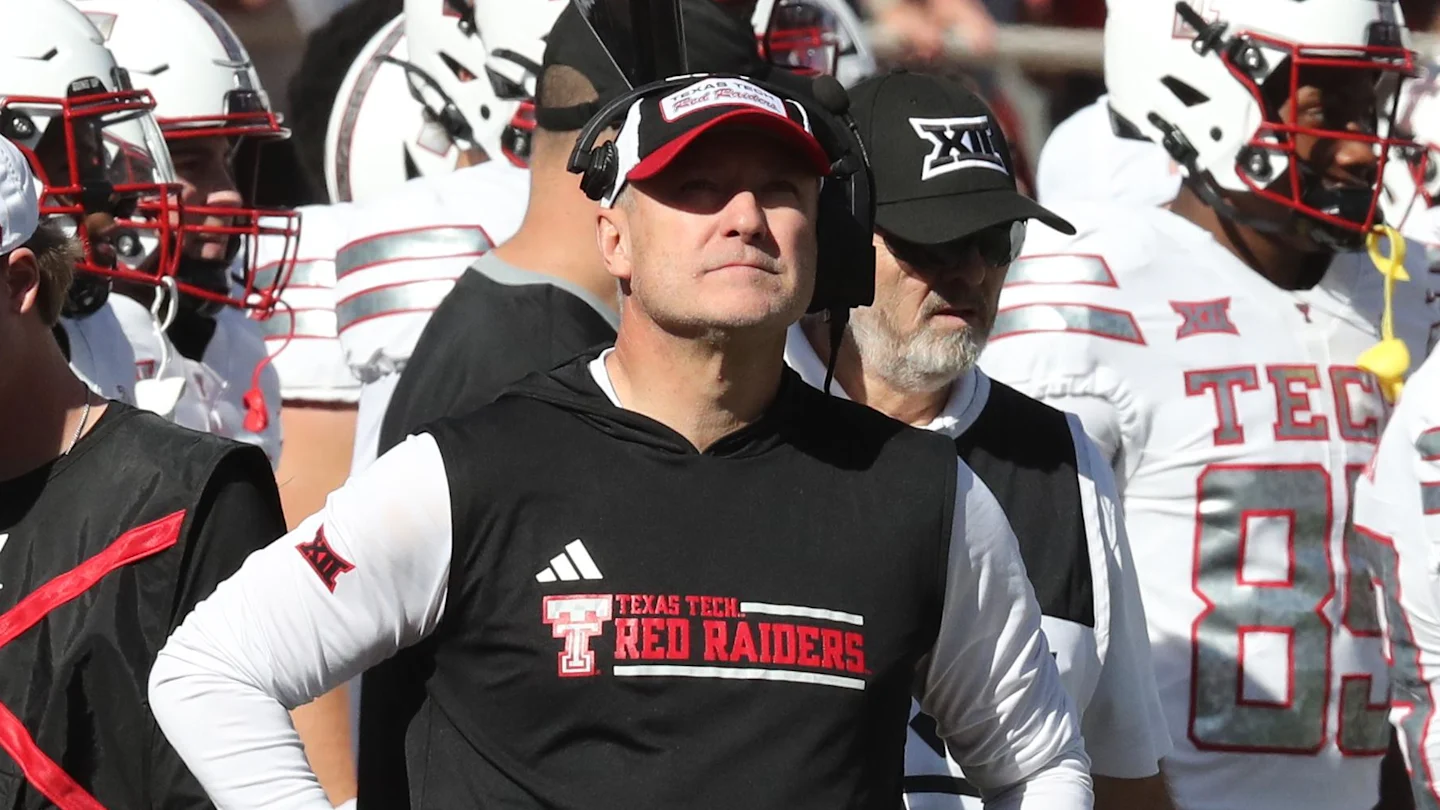
Texas Tech Red Raiders coach Joey McGuire spoke to the media ahead of the Orange Bowl against the Oregon Ducks, and McGuire was quite complimentary of Oregon coach Dan Lanning and the Ducks program. Much has been made about Texas Tech’s increased spending in the name, image, and likeness (NIL) era of college football, and similarities between the Red Raiders and the Ducks have come up ahead of their College Football Playoff matchup.
Powered in part by Nike co-founder and philanthropist Phil Knight, Oregon’s rise in the college football world has been a unique one. On the other hand, Texas Tech’s NIL collective is led by billionaire booster Cody Campbell, whose investment into the Red Raiders program has helped the team climb up the ranks.
What Joey McGuire Said About Oregon and Texas Tech
McGuire was asked to compare Oregon’s rise to Texas Tech’s, and the Red Raiders coach gave a thoughtful answer:
“First, they’ve done a good job of hiring coaches, and Dan (Lanning) was a slam dunk. Second, you know, they made it cool to be an Oregon Duck,” McGuire said. “I mean, they’ve got every uniform known to man, and players love that. So I think we’re really fortunate with Adidas, our partnership with Adidas and Patrick Mahomes, that we’re doing the same thing. We’ve got some some great looks.”

“And then, they have a great booster in Phil Knight that really said, ‘Hey, we’re going to go win at the highest level, and there’s no excuses whenever it comes to finance.’ You know, you turn around, and I think that we’ve shown that we’re doing that, and I think we’re really comparable,” McGuire continued.
“We’ve got guys that have really stepped up and done a great job. I kind of call them the big five whenever you talk about Cody and John and Mike, Dusty, and Gary. I mean, those guys have, along with everybody else in Red Raider Nation, but those guys really led the charge. And so whenever you’re talking, we’re kind of comparable on and off the field in this team. They’ve just done it for a little bit longer and that’s what we’re trying to do,” McGuire continued.

Oregon Ducks’ Sustained Success
As mentioned by McGuire, Oregon has been on the cutting edge of college football uniforms as well as facilities, thanks in part to the program’s relationship with Knight and Nike. In the NIL era, fans often mistake how often Nike is involved in recruiting other than the brand power that Oregon has. Still, Ducks quarterback Dante Moore and wide receiver Dakorien Moore have NIL deals with Nike.
MORE: Oregon Ducks vs. Texas Tech Playoff Betting Odds Make A Clear Statement
MORE: Oregon Loses Two More Players to Transfer Portal Amid College Football Playoff Run
MORE: Dan Lanning’s Frustration Could Ignite Oregon vs. Texas Tech
SIGN UP FOR OUR NEWSLETTER HERE!
Under the leadership of Oregon coach Dan Lanning, Oregon has had success on the recruiting trail and in the transfer portal, bringing in top prospects like Moore and Moore. Other contributors on the Ducks’ current roster came through the portal, including safety Dillon Thieneman, defensive lineman Bear Alexander, and offensive linemen Alex Harkey, Emmanuel Pregnon, and Isaiah World.

While financial stability and resources are paramount in the current era of college football, Lanning has also created a culture at Oregon that is seemingly built to last. After the Ducks’ dominant win over James Madison in the first round of the CFP, Lanning and his team were quick to acknowledge that they can play better.
Oregon and Texas Tech will kickoff from Miami, Florida, in the Orange Bowl at 9 a.m. PT on New Year’s Day.
Montgomery Advertiser All-Area volleyball — Teams, player of the year

LaNorris Sellers returning to South Carolina: What it means for Shane Beamer, Gamecocks
What’s next for Texas A&M volleyball? Defending its title in 2026

A celebration of success | News, Sports, Jobs

Omaha volleyball star visits 2-year-old namesake awaiting heart transplant

Advocacy Groups Warn Against Kalshi’s Gambling Push

Letter: Sports complex at Pendleton would mean higher taxes

Alabama Football Player Uses NIL Money to Give Tuscaloosa Kids a Brighter Christmas

Volleyball Adds Transfer Kameron Stover to Roster for 2026

College Football Playoff team has ‘significant interest’ in 4,000-yard QB

Utah Volleyball Adds Three Transfers to the 2026 Roster

Orange Bowl Committee and AutoNation Unveil New $600,000 STEAM Center in Miami Gardens

Lambda Legal 2025 Recap: 8 Key Moments

Johan Dulfer Announced as Next Hartford Volleyball Head Coach

PARTICIPATING TEAMS ANNOUNCED FOR THE ECNL INTERNATIONAL TOURNAMENT, POWERED BY COACHES’ VOICE AND IN ASSOCIATION WITH EVERTON INTERNATIONAL ACADEMY

First Tee Winter Registration is open

Fargo girl, 13, dies after collapsing during school basketball game – Grand Forks Herald

CPG Brands Like Allegra Are Betting on F1 for the First Time

F1 Las Vegas: Verstappen win, Norris and Piastri DQ tighten 2025 title fight

Sycamores unveil 2026 track and field schedule

Utah State Announces 2025-26 Indoor Track & Field Schedule

Two Pro Volleyball Leagues Serve Up Plans for Minnesota Teams

SoundGear Named Entitlement Sponsor of Spears CARS Tour Southwest Opener

Jo Shimoda Undergoes Back Surgery

Bowl Projections: ESPN predicts 12-team College Football Playoff bracket, full bowl slate after Week 14

Redemption Means First Pro Stock World Championship for Dallas Glenn

Texas volleyball vs Kentucky game score: Live SEC tournament updates

Robert “Bobby” Lewis Hardin, 56

How this startup (and a KC sports icon) turned young players into card-carrying legends overnight

Black Bear Revises Recording Policies After Rulebook Language Surfaces via Lever





-
 Motorsports2 weeks ago
SoundGear Named Entitlement Sponsor of Spears CARS Tour Southwest Opener
-
 Rec Sports3 weeks ago
Black Bear Revises Recording Policies After Rulebook Language Surfaces via Lever
-
 Motorsports2 weeks ago
Donny Schatz finds new home for 2026, inks full-time deal with CJB Motorsports – InForum
-

 Rec Sports2 weeks ago
How Donald Trump became FIFA’s ‘soccer president’ long before World Cup draw
-
 Rec Sports2 weeks ago
David Blitzer, Harris Blitzer Sports & Entertainment
-
 Motorsports2 weeks ago
JR Motorsports Confirms Death Of NASCAR Veteran Michael Annett At Age 39
-
Sports2 weeks ago
Elliot and Thuotte Highlight Men’s Indoor Track and Field Season Opener
-
Sports2 weeks ago
West Fargo volleyball coach Kelsey Titus resigns after four seasons – InForum
-
 Motorsports2 weeks ago
Rick Ware Racing switching to Chevrolet for 2026
-

 Sports2 weeks ago
Women’s track and field athletes win three events at Utica Holiday Classic