
Sports
Why Savannah Bananas tickets cost more than Dodgers vs. Yankees

In a region where baseball is king, the long-awaited rematch of last year’s World Series between the Dodgers and Yankees is unfolding. Ohtani. Judge. Two of the game’s best, facing off once more.
But just down the 5 Freeway in Anaheim, the home of Disney, the hottest ticket in baseball this weekend belongs to a stilted pitcher, juggling infielders and a yellow-suited, top hat-wearing carnival barker.
For back-to-back nights, more than 45,000 fans packed the Big A to see the Savannah Bananas — a team born from a small-time collegiate summer team that became a tour de force that has forever changed baseball. It was one stop during the Bananas’ most audacious barnstorming effort since their baseball traveling show hit the road just a few years ago.

The Savannah Bananas celebrate amid confetti after beating the Firefighters at Angel Stadium on Friday.
(Luke Johnson / Los Angeles Times)
These tickets were only available through a lottery — reserved months in advance. And when they went on sale, all were gone in an instant. The only way in was through the resale market, where just hours before first pitch on Friday, the lowest price (fees and taxes included) for a pair of tickets on StubHub was $209.52.
Meanwhile, two lowest price StuHub tickets for the Dodgers versus Yankees game were available for $171.72.
All for the sake of “Banana Ball.”
This baseball game is a ballyhoo. One rooted in the thrills, energy and pageantry of early 20th-century carnivals, but with a 21st-century twist — the atmosphere of a TikTok reel brought to life. It’s the showmanship of Ringling Brothers Circus combined with the athletic flair of the Harlem Globetrotters.
But above all, it’s a brand built on Walt Disney’s blueprint— not just to entertain, but to make the audience feel.
“When you look at all the touch points — the joy, the fun, the dancing, the celebrating — and think about all the different stages, just like Walt, we think about all the stages: from the parking lot to the plaza, to the upper deck, to the dugouts,” said Bananas owner Jesse Cole, the man in the top hat. “How do we make someone feel something?”
Instead of lounging in a cushy, air-conditioned owner’s suite, Cole is in the dugout hours before showtime — a Disney-like archetype, his energy as vibrant as his layered, all-yellow suit, braving the afternoon heat.

Savannah Bananas founder and owner Jesse Cole leads the crowd in a cheer as his team takes on the Firefighters at Angel Stadium on Friday.
(Luke Johnson / Los Angeles Times)
“Nonstop,” Cole said, describing Banana Ball in a nutshell. Refusing to sit, not wanting to lose an ounce of edge, he added, “It’s all about energy. We want to give people energy, delivering it every second, from the moment we open the gates at two o’clock until the last fan leaves at 11.”
While gates opened at 2 p.m., fans began arriving as early as 11 a.m. — clamoring for a shot at Banana-themed merchandise, many leaving the team tents with bags in both hands. In the parking lot, two young boys passed the time playing catch, gloves in hand.
As the afternoon wore on and the temperature climbed to 91 degrees, crowds trudged through the heat, some seeking refuge beneath the oversized Angels helmets at the stadium entrance, all for a chance to meet their favorite Banana Ballers. At the pregame plaza party, fans collected autographs, posed for photos and presented handmade gifts to players.

Savannah Bananas mascot Split marches through the crowd before the team’s game against the Firefighters at Angel Stadium Friday.
(Luke Johnson / Los Angeles Times)
When the gates opened, the LaCaze family pointed out their 9-year-old daughter’s favorite player, David “DR” Meadows. Decked out in her signed Meadows jersey, Carrigan LaCaze ran into his arms, with glove and oversized baseball clutched tightly and began speaking with him as if they were old friends.
“I ran to DR, and we started hugging and just started talking for a while because I missed him,” Carrigan LaCaze said. “Tomorrow is actually one year on the dot since I met him.”
A Christmas road trip planned around the holidays, the family of four traveled across three states from their home in Alexandria, La., to Anaheim for two reasons: to visit Disneyland and see the Bananas. It was their second game — the family first saw the Bananas in the club’s hometown of Savannah, Ga., when Carrigan, who is battling cystic fibrosis, was granted a Make-A-Wish experience so meaningful it was a no-brainer to relive it.
“It’s great,” her father, Pierre LaCaze, said of the player interactions. “We’ve gotten to keep track with some of them during the course of the year. We come back, we see them again. You know they’re truly about the fans.”

Rainer Easton, 11, tries to catch a yellow “Banana Ball” from the stands before the Savannah Bananas take on the Firefighters at Angel Stadium on Friday.
(Luke Johnson / Los Angeles Times)
The Bananas don’t sell tickets. They sell connections, moments and memories.
For Cole, meetings are a constant brainstorming session on how to keep fans engaged and interacting. That’s how he measures success. He says when the focus shifts to transactions, the game begins to lose its meaning.
“Our success is not judged by revenue,” Cole said. “It’s not judged by sales. It’s judged by the moments we create.”
But the numbers don’t lie.
The last time the Bananas came to Southern California, they played in front of 5,000 fans at LoanMart Field in Rancho Cucamonga in 2023 — a far cry from now selling out 18 major league ballparks and three football stadiums with capacities over 70,000.

Fans fill the stands as the Savannah Bananas take on the Firefighters in front of a sold out crowd Friday at Angel Stadium.
(Luke Johnson / Los Angeles Times)
Attendance has soared year after year. Last season, the Bananas drew one million fans. This year, that number is expected to double, with more than three million people on the waitlist for their ticket lottery. Every game since February has sold out and every date in June and July is as well.
Michael and Melinda Schulteis, a husband and wife from Mission Viejo, were there the last time the Bananas came to town. When they heard the team was returning, they knew they couldn’t miss it.
“The intimate atmosphere at the last event was great,” Melinda Schulteis said. “But I’m curious, because they do such a good job putting on events, what touches are they going to add to still keep it close and intimate and give us another great experience?”
As the Bananas’ success and reach have grown, spilling out from cozy minor league parks into stadiums not built for intimacy, the games still feel like family gatherings. Whether serenading players with stadium anthems like Bon Jovi’s “Livin’ on a Prayer” or the waving of phone lights to Coldplay’s “Yellow,” the crowd moves in sync, no matter the tune.
While they’re a privately owned team and don’t disclose revenue figures, they’ve confirmed generating millions. Much like their box office appeal, their social media reach extends into the millions as well.

The Savannah Bananas perform a kick line before taking on the Firefighters at Angel Stadium on Friday.
(Luke Johnson / Los Angeles Times)
Their antics — choreographed dances, lip-synced walk-ups, backflip outfield catches — have attracted nearly 10 million followers on TikTok, almost double the combined total of the Dodgers and Angels. That viral mastery, and the parasocial bonds it fosters, is part of what makes every game feel tight-knit.
With his glove by his side, hoping to catch a foul ball for an out — one of the many offbeat rules of Banana Ball — Michael Schulties was disappointed he missed his favorite player, RobertAnthony Cruz, whom he first discovered on social media through his baseball coaching channel, better known as “Coach RAC.”
Cruz, who drew the longest meet-and-greet line, is a former minor leaguer in the Nationals’ farm system and a local — born just an hour away in Fontana. The game was a homecoming for Cruz, who joined the Bananas in 2023.
With more than 70 family members and friends in attendance — and even more social media direct messages asking for tickets — playing in big league stadiums has become a dream come true, especially for a former minor leaguer whose baseball ambitions nearly died when he never got the call to the show.

Savannah Bananas pitcher Correlle Prime delivers at Angel Stadium on Friday.
(Luke Johnson / Los Angeles Times)
Behind all the gimmicks, wackiness and absurdity, the roster is still filled with ballplayers — many of them with unrealized MLB dreams — now finding a second life through Banana Ball. And for Cruz, it’s the happiest he’s ever been in the sport.
“I never would have imagined playing in this capacity,” Cruz said. “Banana Ball didn’t even exist when I was pursuing my dream of professional baseball. To be here, to see a sold-out crowd at a stadium that I went to growing up all the time, it’s very special.”
As the team travels the nation, sold-out crowds and newfound stardom have become the norm for Cruz.
“I’m not surprised by anything anymore,” Cruz said. “If you told me that we’re playing on the moon next year, I’d be like, ‘All right, cool. Let me know when and where, and I’ll be there’ … I wouldn’t be surprised if this thing continues to grow at an unprecedented rate.”
Despite their growing success, the Bananas’ brand of baseball remains polarizing — an easy target for detractors of zaniness, gatekeepers of fun and opponents of pizzazz who either don’t understand it or refuse to see its appeal.
“Anybody that criticizes this, we’re not for them,” Cole said. “There’s tradition in baseball, perfect. They’ve got Major League Baseball. … For people that want to come out and have fun, not take themselves too seriously and see something they’ve never seen before — and hopefully see the greatest show in sports — we built something for you.”
The formula works. And again, the numbers don’t lie.

The Savannah Bananas’ Jackson Olson celebrates a Troy Glaus base hit while the Bananas take on the Firefighters at Angel Stadium on Friday. Comedian Bert Kreischer celebrated behind the Bananas in the dugout.
(Luke Johnson / Los Angeles Times)
Yes, the Savannah Bananas’ brand of baseball is far too outlandish ever to be compared to the major leagues — from flaming baseballs, rump-shaking umps and dress rehearsals. That’s the point. It all feels like something conjured from the wildest dreams of the late Bill Veeck’s imagination found a home, in a good way.
With many of the Banana Ball’s 11 rules — like an automatic strike when hitters step out of the box or ejecting bunting hitters because bunting “sucks” — are grounded in some sports-based logic, the innovations remain sacrilegious to baseball purists.
But for a fleeting moment in December, Major League Baseball and Banana Ball were almost linked.
In Banana Ball, the Golden Batter rule allows teams, once per game, to send their best hitter to the plate regardless of where they fall in the batting order.
MLB commissioner Rob Manfred caused a stir when he floated a potential seismic rule by floating, making an offhand comment about the golden batter rule. Manfred later clarified it was merely “a very preliminary conversation” among members of the league’s competition committee and had not been formally discussed by the full ownership group.
A far-fetched idea, but Manfred has ushered in sweeping changes, from the widely praised pitch clock to the more contentious extra-inning “ghost runner.”
“Anything that’s best for the fans, I’m all in,” Cole said of its potential. “I know Major League Baseball won’t do it because of traditions, but … we’ve had a lot of fun doing it.”

The Firefighters run on the field before taking on the Savannah Bananas at Angel Stadium on Friday.
(Luke Johnson / Los Angeles Times)
But MLB would be behind the Bananas, who already introduced their version of the rule last season with a typical flair and showmanship. Their spin on it is a batter summoned from the dugout wearing a James Brown-esque cape and a gleaming golden helmet — an honor that went to Joe Lytle, who came to bat in the top of the ninth for the Bananas’ Anaheim opponent, the Firefighters.
Ultimately, in a game where the score isn’t the end-all, be-all — but the fun is — the Bananas beat the Firefighters 5–2.
Like any other Bananas game, the festivities took center stage. It began with the “First Peel,” a signature ceremony in which a young fan bites into a banana to declare whether it’s good or bad — setting the tone for the night.
Heisman Trophy winner and USC legend Matt Leinart threw out the ceremonial first spiral (because, of course, he did). And in true fashion, Angels World Series MVP Troy Glaus made a surprise cameo as a pinch hitter.
But what was more important was the trip to Anaheim, a fitting one for Cole and Co.
The team that opened its season lip-syncing “Be Our Guest” from the Disney classic “Beauty and the Beast” — and its owner, cut from the same theatrical cloth as Disney — were celebrated a visit to the Happiest Place on Earth — Disneyland.

Savannah Bananas founder and owner Jesse Cole provides color commentary during the baby race between innings at Angel Stadium on Friday.
(Luke Johnson / Los Angeles Times)
Greeted by fans in yellow gear, Cole’s creation — the Bananas — marched in step down Main Street U.S.A., alongside Walt’s own — Mickey Mouse, Goofy, Donald Duck.
“When I walked underneath the castle and over the bridge and in front of thousands of people, they were all there for us,” Cole said. “Then I look and see Walt’s statue, holding the hand of Mickey, and I see that and I’m like, ‘This is special.’”
It was a full-circle moment for Cole, who became “immersed in the magic” after his first trip to Disney World as a kid — and who now says, “In a perfect world, I’d play catch with Walt on Main Street.” Serendipity.
“For me, that was an emotional moment — to know that we have worked so hard to create something that means something to people, that they come from all over the country just for a chance to see us,” Cole added.
More to Read

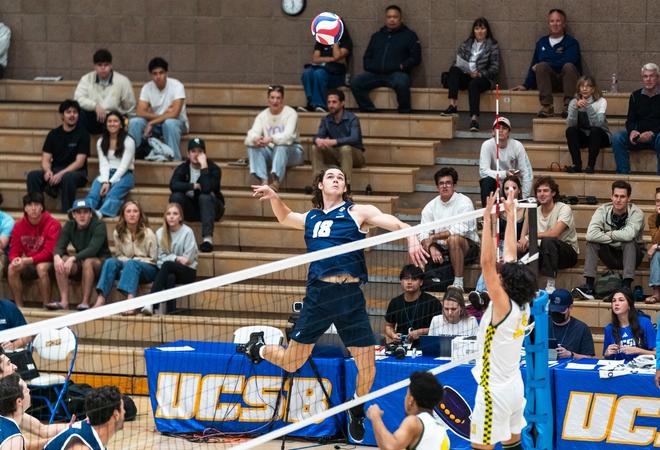
SANTA BARBARA, Calif. – The UC Santa Barbara Men’s Volleyball team served off their 2026 campaign with a victory over Kentucky State, taking down the Thorobreds 3-0 on Thursday afternoon in their first match of the ASICS Invitational.
Redshirt freshman Raglan Kear took to the court for the first time in his collegiate career and crushed, leading the team with six kills and two block assists. Veteran Owen Loncar also launched six kills, and both hit .455.
Ben Pearson followed up with four kills as well as three service aces, tying his career high in the stat. The team as a whole totaled 11 aces. Cole Schobel tossed 19 assists and led the team in digs with seven.
Santa Barbara put up six block assists and George Bruening locked a solo block. Andreas Schuetz matched Kear’s two assists and had two aces of his own.
HOW IT HAPPENED
After leading for the entirety of the set, the Gauchos emerged from the first 25-14. The Thorobreds stayed within reasonable distance through 10-6, but the Gauchos made headway and ended the set with an 11-point lead.
Kentucky State also stayed tight through the second set’s first era, but by 17-10, Santa Barbara had made their move. The Thorobreds only scored three more points before the Gauchos claimed the set 25-13.
The Gauchos secured their highest win margin in the third, clinching it 25-12. With a 17-11 lead, the Blue and Gold went on a seven-point run that forged their way to victory.
UP NEXT
The Gauchos continue their Robertson Gymnasium-based tournament, facing Maryville University on Friday, Jan. 9 at 4:30 and Harvard on Saturday, Jan 10 at 7:00 p.m.
Box Score
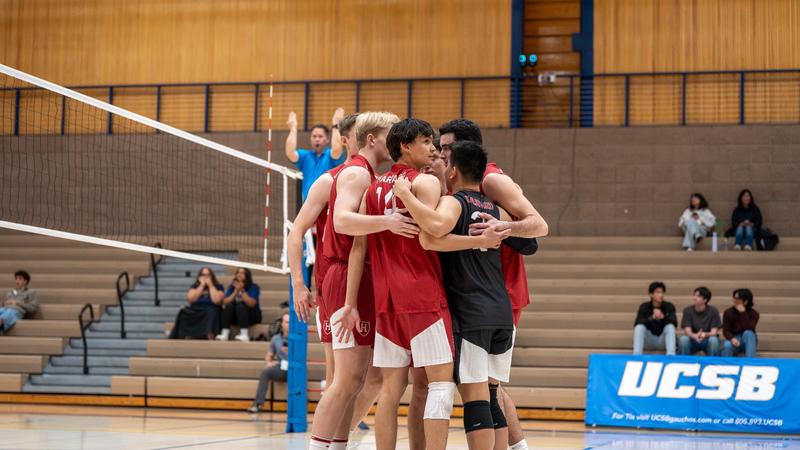
CAMBRIDGE, Mass. – Harvard Men’s Volleyball opened its 2025 season with a loss to UC Irvine on Thursday night at the ASICS Tournament, hosted by UC Santa Barbara.
The Crimson showed flashes of offensive efficiency throughout the match, highlighted by a strong second set in which Harvard finished with a .360 kill percentage. Sawyer Nichols led the team with six kills, while Quinn Bishop followed with five to pace the attack.
Zach Berty, Brian Thomas, and Owen Woolbert also contributed offensively, each recording multiple kills as Harvard spread production across the lineup. One of the Crimson’s key strengths on the night was its ability to navigate UC Irvine’s block, with swings frequently deflecting off the hands for out-of-bounds points and helping extend rallies.
The match also marked the first career appearances for Eric Su and Kai Gan, who both saw action in the season opener. Adrian Shevchuk delivered a strong performance at setter, effectively distributing the offense and keeping Harvard’s attack in rhythm throughout the match. Thomas Phung was a standout in the back row, making multiple vital saves to keep points alive and allow Harvard to stay competitive in extended rallies.
Despite The Crimson’s best efforts, UC Irvine claimed the win in three sets.
Harvard Highlights
Harvard will look to carry forward its offensive efficiency and rally control as they face CSUN on Friday, January 9th at 5:00pm ET.

GOLETA, Calif. — Junior Jalen Phillips led all hitters with 15 kills and sophomore Hank Kaufman added a career-high 14 as CSUN opened the 2026 season with a four-set victory over Maryville (Mo.) at the Asics Invitational on Thursday night at UCSB’s Rob Gym.
The Matadors pulled away late to win 25-23, 25-20, 23-25, 25-21, hitting an efficient .318 (50-16-107) as a team. Sophomore Owen Douphner made his first career start at setter and posted 39 assists, three kills, four digs, one ace, and one block.
CSUN was out-aced (5-3) and out-blocked (6-5) by the Saints, but wound up posting 37 team digs to 34 for Maryville. The Matadors, who totaled 50 kills to the Saints’ 49, also forced Maryville into 22 hitting errors as the Saints hit .235 (49-22-115) as a team.
Phillips, who finished with a match-high 18.0 points, hit .300 on 30 swings and was effective from the service line with one ace. Kaufman hit .429 on 28 swings to go with four digs and a pair of assists. Sophomore Joao Avila added nine kills (.250), and Shane Nhem chipped in seven kills on 14 errorless swings to hit .500.
CSUN controlled the first two sets behind a balanced offense and steady sideout play, then responded after Maryville extended the match with a strong third set. The Matadors hit .217 in the fourth set while limiting the Saints to a .000 clip in the fourth to seal the win.
Maryville was led by Aiden Whitemountain and Makai Scott, who each had 10 kills to lead the Saints.
CSUN improves to 1-0 on the season, while Maryville dropped its opener to fall to 0-1.
HEAD COACH THEO EDWARDS SAID
“It’s nice to get the first one out of the way. Maryville is a fantastic team; they did some really nice things and challenged us. Hank (Kaufman) was fantastic, hitting over .400 and Shane (Nhem) was really efficient and at times had some really nice blocks at the net. I felt that Jalen (Phillips) was good too, especially coming off an injury, he hit .300 and looked at times like himself, which was nice to see.”
UP NEXT
CSUN plays its second match of the 2026 Asics Invitational on Friday, taking on Harvard at 2 p.m. at Rob Gym on the UCSB campus.
#GoMatadors


Stoll, who will oversee the Falcons’ sprint, hurdle and relay squads, joins the Academy program following a successful athletic and coaching career at the NCAA DIII level. A three-time All-American and 11-time all-conference athlete at Heidelberg University, Stoll coached six All-Americans and 33 all-conference performers during stops at North Park University (assistant coach, 2023-25) and North Central College (graduate assistant, 2022-23).
In addition to Stoll, Air Force’s 2026 staff will include two Academy graduates and one former assistant coach. 1Lt Michelle Roca, a 2022 USAFA graduate and the program record-holder in the 400-meter hurdles, will assist with the Falcons’ hurdle squad, while serving at nearby Schriever SFB. 1Lt AJ Kedge (Class of 2023) will continue to serve as the program’s recruiting coordinator and assist with the distance squad. Currently stationed at Hanscom AFB, Kedge will be returning to USAFA this spring. Scott Irving, who oversaw the Falcons’ throwing program for 14 years (1999-2013) and was the coach behind Air Force’s two NCAA titles in the javelin, will rejoin the staff to assist the squad’s current lineup of javelin throwers.
The remainder of the Falcons’ track and field staff includes Cole (men’s middle distance, distance), head coach Scott Steffan (jumps, combined events), assistant coach Laura Bowerman (women’s middle distance, distance), and assistant coach Kyle Lillie (rotational throws), while former cross country coach Mark Stanforth will continue to assist with the distance program.
Back in athletics
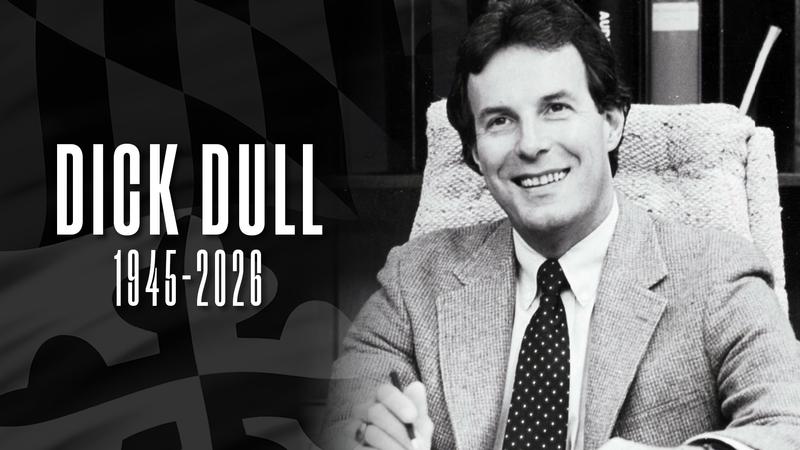
Dull’s professional fortunes turned around in 1995 when he became athletic director at the University of Nebraska Kearney, a Division II school. In 1998 he took the same position at Moravian College, a Division III school in Bethlehem, Pennsylvania. He returned to Division I sports when he became athletic director at Cal State Northridge in May 1999.
Dull worked at Northridge until 2007, when he moved back east to take the athletic director’s job at Belmont Abbey College, a Division III school near Charlotte, North Carolina. He held the job through the summer of 2008.
Dull never returned to College Park to attend a Maryland basketball game after he resigned as athletic director. But he did see the team play in the NCAA Elite Eight at Stanford University in 2001. Then-Maryland Athletic Director Debbie Yow gave Dull tickets to the game. He said he enjoyed seeing old friends, such as broadcaster Johnny Holliday and former Sports Information Director Jack Zane. “You reach a point where you hold resentment and you hurt yourself,” he explained. “I’m a stronger person now because of it. I look at the horizon, and say ‘It can’t get any worse than that.’ ”
Dull tried to return to Maryland as an athletics administrator in 2008 when he interviewed for the position of executive director of the M Club. Nelligan, the long-time women’s gymnastics coach, served on the search committee. “Everybody loved his presentation,” says Nelligan. “And I thought he would have been a very strong candidate to unite that part of the department. But I also felt that he would always have to answer questions about Lenny. His legacy will always be tied to that.”
Dull was not selected. After giving his presentation, Dull stopped by Nelligan’s office and the two old friends talked for about an hour. Dull wanted to know how Nelligan was doing personally and asked for updates on mutual friends. A short time later, Dull sent a letter to Nelligan, thanking him for a tour of Comcast Center and making sure his buddy was OK with the fact that he didn’t get the job. “He’s had to live with this Bias thing for a long time,” Nelligan says. “He does deserve to live with some closure.”
In late 2009, during a phone conversation I had with Dull, he asked when I would write his book, saying that his story has never been told. In 2010, when I decided to write my book about the legacy of Bias–the first person I called was Dull.
When he said he would cooperate I felt invigorated about the project. He had not talked at length about how the death of Bias had impacted him. I trusted his perspective and wisdom and felt he would talk with intelligent, measured introspection about how the Bias death affected his life, and provide insight into how the athletic department dealt with the tragedy. “It’s about time the real story was told,” he told me.
But after we had several discussions on how to proceed, Dull surprised me with an email in May 2010, saying he would not participate, that he needed to continue to put “this saga behind [me].” I was disappointed, but I understood his decision. I knew from brief discussions I had with Dull during the late 1980s and into the 1990s how difficult the transition was for him after Bias died. Dull and I did have a lengthy, but incomplete discussion about the Bias death in 2003 for my first book about Maryland athletics, Tales from the Maryland Terrapins, and those comments are used in the book and in this story.
In August 2010, Dull accepted a position as a project manager in the athletic department at Hood College in Frederick, Maryland, about 45 minutes from College Park. He helped raise funds for new athletic facilities at the school. The man who hired him, Hood athletic director Gib Romaine, was the defensive coordinator for Ross at Maryland and was later a fundraiser there.
In April 2011, Dull attended a reunion of former Maryland athletic department employees, some of whom had worked with him in the 1980s, at a Ledo Restaurant in College Park. It marked the first time I had seen Dull in about a quarter of a century. Typically, he mingled mostly in the background, quietly chatting with friends. And typically, he offered comfort when I asked him if he was okay with me moving forward with the book. He encouraged me to complete the project. We talked little else about it, preferring to focus instead on positive memories we both shared from our days at Maryland.
Costello also attended that reunion. This week he recalled fond memories of Dull. “I’m a very type “A’ person, but Dick was always very calm,” he said. As an example, Costello told of how the two approached a conflict differently during a track team practice when Costello was head coach. “We had signs all over the track saying it was closed during our practice,” said Costello. “A guy was jogging in lane 1 and I told him the track was closed. He kept going. I’m getting a little pissed. I said, listen buddy, it’s your last lap. Dick walked up to me and said, ‘calm down, it looks like he’s not going to be running much longer.” Soon after the runner left the track.
Dull enjoyed photography, often traveling long distances to attend Formula 1 auto races, documenting the trip with his camera. For a time Dull traveled alone annually to Reykjavik, Iceland. He told me once that the city was his favorite place to visit.
Costello recalled he never once saw Dull wear a pair of jeans. “Even when we went fishing, he’d wear Izod shirts,” he said, with a laugh. Dull worked as a proctor when he lived with other athletes in Ritchie Coliseum. And Costello recalled the time Dull turned him in to coach Kehoe for violating a team rule. “He wasn’t rowdy at all,” said Costello. “And he coached the way he lived. Very technical and smooth.”
The job at Hood College was Dull’s last. Shortly before his wife Sally passed away in 2016, Dull moved back to Charlotte to live near his stepson, Erik, and his family.

No. 1 ranked transfer portal QB medically evaluated by major college football programs

Men’s Basketball vs Saint John’s University on 1/7/2026 – Box Score

Men’s Volleyball Opens Season With Sweep, Kear Stuns in First Career Outing

Money Is Ruining Sports At All Levels

BACKGROUNDER: Supreme Court to Hear Oral Arguments for West…

Men’s Volleyball Falls to UC Irvine in Season Opener

Annual PCL post-season boys basketball tournament planned at Woodbridge –

No. 11 CSUN Defeats Maryville in Season-Opening Four-Set Win

Washington QB Demond Williams Jr. Reverses Course, Returns to Huskies

Demond Williams Will Return to Washington Despite Contract Dispute

Transfer portal drama is overshadowing the actual College Football Playoff

Samuel, Kosgei Named to Bowerman Preseason Watch List – New Mexico Lobos

Air Force Track & Field Announces 2026 Coaching Staff

Miami vs. Ole Miss score, live updates: Trinidad Chambliss puts Rebels ahead with TD pass

Former Maryland AD Dick Dull Passes Away

SoundGear Named Entitlement Sponsor of Spears CARS Tour Southwest Opener

DeSantis Talks College Football, Calls for Reforms to NIL and Transfer Portal · The Floridian

Stempien to seek opening for Branch County Circuit Court Judge | WTVB | 1590 AM · 95.5 FM

#11 Volleyball Practices, Then Meets Media Prior to #2 Kentucky Match

Nascar legal saga ends as 23XI, Front Row secure settlement

Maine wraps up Fall Semester with a win in Black Bear Invitational

Ross Brawn to receive Autosport Gold Medal Award at 2026 Autosport Awards, Honouring a Lifetime Shaping Modern F1

Princeton Area Community Foundation awards more than $1.3 million to 40 local nonprofits ⋆ Princeton, NJ local news %

Sunoco to sponsor No. 8 Ganassi Honda IndyCar in multi-year deal

Downtown Athletic Club of Hawaiʻi gives $300K to Boost the ’Bows NIL fund

WNBA’s Caitlin Clark, Angel Reese and Paige Bueckers in NC, making debut for national team at USA camp at Duke
NASCAR, 23XI Racing, Front Row Motorsports announce settlement of US monopoly suit | MLex

Woods, Ogunribido Named CCIW Women’s Indoor Track & Field Student-Athletes of the Week

Hope College Tops MIAA Commissioner’s Cup Fall Update

Nike Signs 10 LSU Athletes to NIL deals





-

 Rec Sports6 days ago
Five Youth Sports Trends We’re Watching in 2026
-

 Sports2 weeks ago
Badgers news: Wisconsin lands 2nd commitment from transfer portal
-

 Sports3 weeks ago
Is women’s volleyball the SEC’s next big sport? How Kentucky, Texas A&M broke through
-
 Sports2 weeks ago
Kentucky VB adds an All-American honorable mention, loses Brooke Bultema to portal
-

 Rec Sports3 weeks ago
NBA, Global Basketball Community Unite for World Basketball Day Celebration
-
 NIL3 weeks ago
$2.1 million transfer portal QB predicted to join College Football Playoff team
-
 Motorsports2 weeks ago
BangShift.com IHRA Acquires Historic Memphis Motorsports Park In Millington Tennessee. Big Race Weekend’s Planned For 2026!
-
 Motorsports3 weeks ago
NASCAR, IndyCar, and F1 Share These Race Days in 2026
-
 NIL3 weeks ago
I’m deeply disturbed by what just happened with BYU’s football coach
-

 Sports2 weeks ago
Texas A&M volleyball’s sweep of Kentucky attracts record viewership