
NIL
Wisconsin Badgers promote Eli Wilke to basketball operations coordinator


The University of Wisconsin men’s basketball program is turning to an in-house option to fill a key role on its staff.
Nick Osen first reported, and a team spokesperson confirmed to BadgerNotes, that Eli Wilke, who spent last season as a graduate manager, has been promoted to Basketball Operations Coordinator.
“Extremely blessed for this new role and opportunity here at Wisconsin,” Wilke said. “Excited for what Year 2 brings!”
Wilke, a Beaver Dam native, joined the program last year as a graduate manager and made a name for himself with his work on scouting reports and in helping identify transfer portal fits. He also played a role in running the team’s summer camps, serving as assistant camp director.
The operations coordinator role in college basketball is often the glue position that keeps a program running smoothly. It typically involves managing travel logistics, overseeing day-to-day scheduling, coordinating with compliance, and assisting with recruiting support and scouting preparation. While it’s not considered an on-court coaching job, it’s an essential role for the behind-the-scenes efficiency of a program.
Before coming to Madison, Wilke worked with the Minnesota men’s basketball program for two years as an undergraduate, gaining some hands-on experience in recruiting and scouting. He graduated with distinction in sports management with a leadership minor and came to the University of Wisconsin to pursue a master’s degree in sports leadership.
This promotion is another notable internal hire for head coach Greg Gard.
Not only does Wilke understand the day-to-day flow of the program, but he’s already proven to be a valuable set of eyes in the areas of scouting and roster construction, which are aspects that have arguably never been more important in today’s version of college basketball.
More importantly, Gard has stressed that culture is what steadies the program in a transient era, from coaches down to players. The Badgers don’t chase approval or outside validation. Instead, they keep their focus inward, stay connected, and let the daily work speak for itself.
And really, Wilke’s promotion is part of a bigger story that’s taken place in Madison. Gard has been deliberate in reshaping his staff over the past year, building a structure that looks more like a professional organization than a traditional college program, which meant new roles were needed.
It started last offseason, when Gard carved out a full-time role for Kirk Penney. The former Badgers star has been credited with revamping the team’s offense using European-style ball screen concepts that gave Wisconsin a new identity. NBA veteran Greg Stiemsma was brought on as Director of Player Development from the Spurs, a move Gard called invaluable for bringing pro-level training and game-day prep to the roster.
Gard also went outside the program to replace assistant Dean Oliver, bringing in Saint Leo head coach Lance Randall. Randall brought three decades of experience and a reputation for his connections across Wisconsin, nationally, and even internationally, which were ties that Gard believes will directly strengthen recruiting efforts and expand reach.
When longtime staffer Kyle Blackbourn left for a head coaching job at Rockhurst University, Isaac Wodajo was hired as Director of Recruiting and Scouting in his place, giving Wisconsin someone uniquely skilled in evaluating talent and reconstructing rosters in the portal era.
Perhaps the most noteworthy evolution came with Marc VandeWettering, a valuable longtime staffer, being promoted to General Manager. Gard has leaned on him to handle so many of the realities that exist in modern college basketball, such as managing NIL conversations, dealing with agents, helping manage funds, networking with collectives, monitoring the transfer portal, and balancing a roster that requires constant upkeep.
“This job has changed so much with all the other moving parts. You’re more of a CEO than you are a coach now,” Gard said. “There’s so much more that goes into it now that wasn’t a part of it 10 years ago.”
Taken together, the additions of Penney, Stiemsma, Wodajo, VandeWettering, and now Wilke give Gard a staff built to handle the demands of the modern era. College basketball has never looked more like the pros, and Wisconsin is building the infrastructure to match.
Just as important, those hires slot in alongside Associate Head Coach Joe Krabbenhoft and assistant Sharif Chambliss to round out a staff that distributes responsibilities in a way that allows Gard to function as the CEO he needs to be. At the same time, he’s surrounded by a trusted group of people he knows well, which lets him keep his thumb on things.
Despite the uncertain times, the Badgers have adapted and continue to reward the individuals behind the scenes who put in the work needed to make this program what it is. Wilke now joins a growing list of internal hires proving that commitment doesn’t go unnoticed in Madison.
We appreciate you taking the time to read our work at BadgerNotes.com. Your support means the world to us and has helped us become a leading independent source for Wisconsin Badgers coverage.
You can also follow Site Publisher Dillon Graff at @DillonGraff on X.


As Curt Cignetti and Indiana put together a storybook run to the national championship game, Mark Cuban watched closely. He has made multiple donations to his alma mater’s football program, including one ahead of this year’s transfer portal cycle.
Cuban graduated from Indiana in 1981 before becoming an entrepreneur and owner of the Dallas Mavericks. Over the last two years, since Cignetti arrived in Bloomington, he has contributed to the school amid the Hoosiers’ historic turnaround.
SUBSCRIBE to the On3 NIL and Sports Business Newsletter
But when Cuban cuts checks for IU, he told SiriusXM College Sports Radio he doesn’t ask for much in return. Simply, he just wants one thing: to win.
“I just say the same thing all the time. … I just say, ‘Win, motherf—ers,’” Cuban said ahead of Friday’s Peach Bowl. “That’s it.”
Indiana has certainly done that this year. The Hoosiers improved to 15-0 with the Peach Bowl win over Oregon, which they dominated from the start. IU forced three turnovers from Dante Moore, including a pick-six on the first play of the game, en route to the 56-22 victory at Mercedes-Benz Stadium. That sent Indiana to the national title game, where Miami will await Jan. 19.
Mark Cuban: ‘I’m the luckiest dude in the world’
Prior to Curt Cignetti’s arrival, Indiana was the losingest program in college football history and had never won 10 or more games in a season. But over the last two years, the Hoosiers are 26-2 with two College Football Playoff appearances – and they still have one more game to go.
For Mark Cuban and other alumni, it’s an opportunity to show out and support. The IU faithful seemingly took over Mercedes-Benz Stadium for Friday’s game, proving the power of having the largest alumni base in the country.
“Look, I’m the luckiest dude in the world,” Cuban said. “To be able to be in this situation – and I know they’ll be good to me and all that kind of stuff. I get the nice suite. I have to pay for it, but at least I get first crack at it. The reward is, when we win, every Hoosier fan everywhere – my buddies, my boys. I played rugby at IU, so all my teammates, a bunch of them are here. They flew in from all over.
“All my buddies that I grew up with, went to IU with, lived with in Dallas. They’re all here. They all flew down. Come on, now. You don’t live forever. These are the moments.”

The NCAA transfer portal is now in its final week for college football players to enter their names in search of a new school for the 2026 season. The portal officially opened on Jan. 2 and will close on Jan. 16.
More than 4,000 players from all different areas of the college football world have decided to transfer to new programs next season in the weeks after the 2025 season’s end. Much of the shuffling on the Power Four level involves the search for better NIL compensation or quicker paths to playing time.
One significant Power Four name on the move is former Missouri defensive end Damon Wilson II. He will have two seasons of eligibility remaining at his third school.

The 6-foot-4, 250-pounder began his college football journey with Kirby Smart at Georgia in 2023. Wilson used his redshirt that season, making two tackles to go with half a sack in the Bulldogs’ games against Florida and Ole Miss.
The Bulldogs featured Wilson in 12 of their 14 games in the 2024 season. He made 22 total tackles along with three sacks and a pair of forced fumbles, assisting Georgia in a run that featured an SEC Championship victory and College Football Playoff appearance.
Wilson transferred to Missouri in the 2025 offseason. In 12 games with the Tigers, he made 23 tackles and compiled a team-high nine sacks, a fumble recovery, two pass breakups and an interception.
247Sports and On3 consider Wilson a top 10 prospect and the consensus No. 2 defensive end in the 2026 portal cycle. Pete Nakos of On3 reported four different linkages between Wilson and Power Four schools on Saturday.
LSU
Lane Kiffin has established a reputation as one of the biggest users of the transfer portal in college football. So far, LSU has 18 commitments in Kiffin’s first portal class.
LSU has already made two acquisitions at defensive end from the SEC ranks in the portal cycle. Wilson would be the most proven addition to that position group should he commit to the Tigers out of the portal.
Miami

One of the most important tasks for the Hurricanes this offseason will be replacing a pair of dominant defensive ends, Reuben Bain Jr. and Akheem Mesidor. The run to the 2025 College Football Playoff national championship has reduced much of Miami’s portal activity to visits in the first week of the portal’s window.
If proximity to the hometown is important, Miami is the closest of the four schools to Wilson’s hometown of Venice, Florida. Though Venice and Miami are on different coasts of Florida, the drive takes a little more than 3 hours.
Ohio State
The Buckeyes are another College Football Playoff team seeking defensive end talent for its 2026 roster. With Caden Curry running out of eligibility and Beau Atkinson likely to head to the NFL draft, Ohio State is working the portal to find new options.
CJ Hicks is heading for USF, and Kenyatta Jackson Jr. will likely remain at Ohio State another season. The Buckeyes have yet to add a defensive end from the portal, despite adding players at other positions.
Texas Tech

The Red Raiders began scouring the NCAA transfer portal for talent the moment it opened. Some notable acquisitions include quarterback Brendan Sorsby (Cincinnati), defensive lineman Mateen Ibirogba (Wake Forest) and linebacker Austin Romaine (Kansas State).
If NIL compensation is a driving factor in Wilson’s decision, Texas Tech is a strong fit. However, the Red Raiders have already acquired defensive ends Adam Trick (Miami, OH), Amarie Fleming (Allen) and Trey White (San Diego State), so playing time could be more sparse for Wilson there.
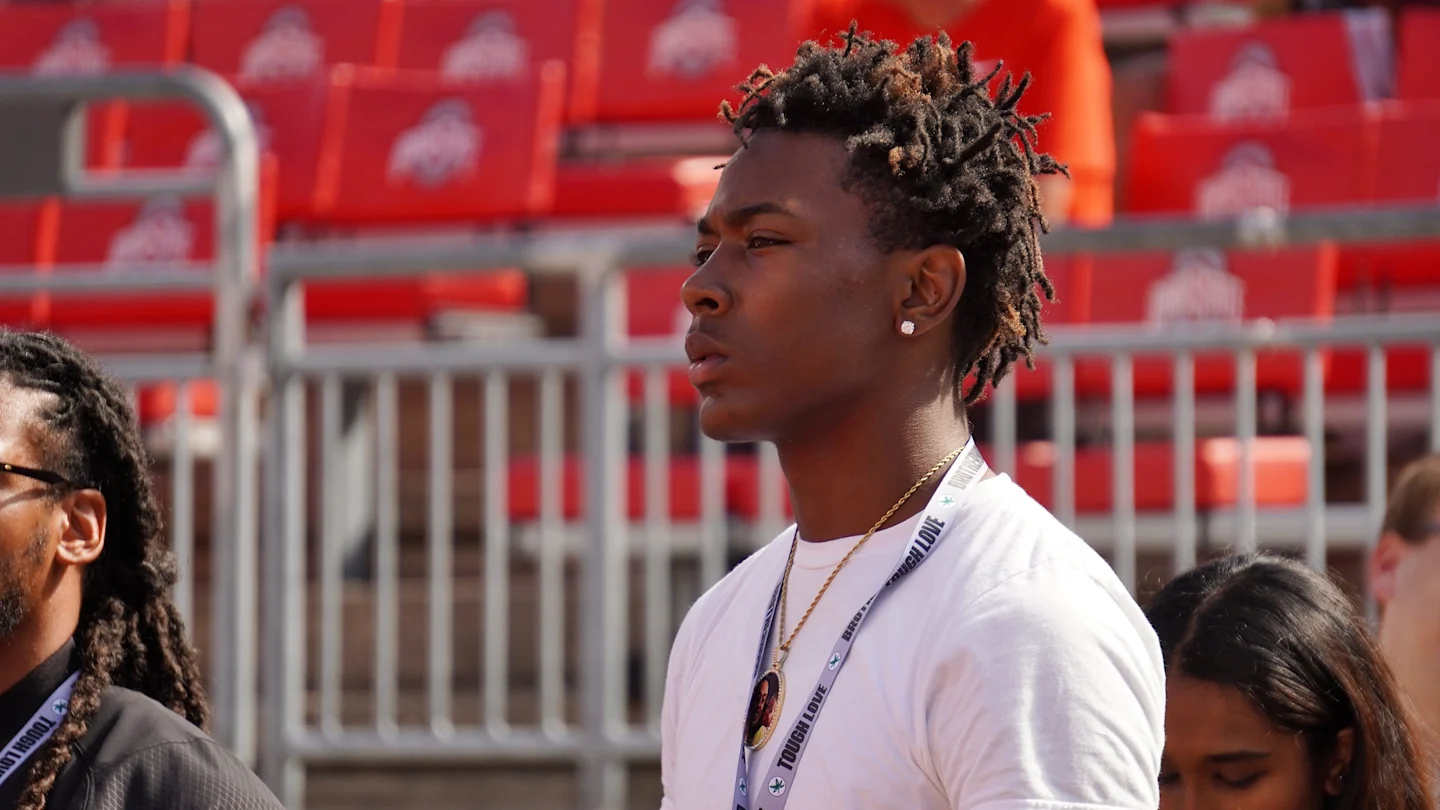
Two of the biggest programs are college football got some transfer portal bad news as one of the top players in the portal reportedly made his commitment on Saturday. Neither Ohio State nor LSU will lack for talented football players in 2026, but one player each school had reportedly coveted is moving on.
Penn State transfer Chaz Coleman has reportedly made his commitment to Tennessee on Saturday morning. Coleman, who had been ranked as the No. 3 player in the portal by On3sports and the No. 5 player by 247sports, had long been linked to Ohio State as a recruiting favorite. On the other hand, LSU had received a recent visit from Coleman. But neither school was able to land him away from the Volunteers.
Coleman was a four-star recruit out of Ohio in the class of 2025. He took official visits to Kentucky, Penn State, and then Ohio State in the final days before the early signing period, but chose to sign with Penn State. The 6’4″ EDGE has bulked up to near 250 pounds, but saw little action in his season at Penn State, making eight tackles in nine games. He’ll have three years of remaining eligibility.
Favorites Come up Empty on Coleman
Ohio State had long been considered the favorite to sign Coleman. Pete Nakos of On3 tied Coleman to Ohio State early in the portal process. Coleman visited Ohio State last week and the vast majority of On3 prediction were for the Buckeyes.
LSU, on the other hand, was thought to be more of a last-minute option for Coleman. He visited Lane Kiffin and the Tigers first, before heading to Tennessee and OSU, and many thought LSU had positioned itself as a switch-over option from the Buckeyes.
Tennessee, on the other hand, has several former Penn State defensive coaching now on staff, with former coordinator Jim Knowles and co-coordinator Anthony Poindexter joining the Vol staff. Tennessee is clearly making good use of this connection, as Coleman is the third Penn State transfer that the Vols have snagged, with linebacker Amare Campbell and lineman Xavier Gilliam also on board.
The remaining EDGE market
The EDGE market is narrowing with the early commitment of John Henry Daley to Michigan and Coleman heading to Tennessee. LSU and Ohio State might move on to Missouri transfer Damon Wilson II. Oklahoma State’s Wendell Gregory could be another option there, although many are linking Gregory to Missouri at this time. The market on top EDGE talent is thinning out and two surprising teams came up empty on Chaz Coleman.

The transfer portal is really bringing out some of the wildest recruiting tools from college football programs.
For example, on Saturday, both UCF and Houston posted photos on social media aimed at players in the transfer portal to advertise there is “no state income tax” in either Florida or Texas.
It’s certainly a big, bold strategy for both programs to take with the portal deadline approaching on Jan. 16. They could use any advantage at their disposal right now as they try to keep pace with the rest of the Big 12.
BYU is the only program in the conference behind Houston and UCF in 247Sports’ transfer portal rankings.
NIL
What is Fernando Mendoza ‘s NIL Deals in 2026 – Salary with the Indiana Hoosiers and Career Earnings

With just minutes to go before the Peach Bowl showdown between the No. 1 undefeated and undisputed Indiana Hoosiers and the Oregon Ducks, all eyes are on Heisman QB Fernando Mendoza to see if he can pull off one last miracle. While he’s locked in for the biggest test of his career, some folks are wondering just how much the QB1 is actually bringing home for taking the Indiana Hoosiers to their best ever season before he heads to the NFL.
Fernando Mendoza’s Contract Breakdown
Fernando Mendoza is right in the middle of the new age of college football where players actually get paid by their schools. He doesn’t have an old-school professional contract yet, but he does have a binding agreement with Indiana University through a new revenue-sharing plan. This is separate from the money he makes from his various endorsement deals with big names like Adidas and Dr Pepper. It’s how the top guys get their cash flow now – a mix of school money and brand deals.
Advertisement
Actually looking back on the last five years, Fernando has been busy just being a world-class student and certified player. He played for the UC Berkeley Golden Bears from 2022 through 2024, becoming a full-time starter in 2023 and graduating from the Haas School of Business last summer with a degree in business administration. Explains why his post-game pressers are gems.

December 06, 2025: Indiana quarterback Fernando Mendoza 15 holds up MVP trophy after NCAA, College League, USA football game action between the Indiana Hoosiers and the Ohio State Buckeyes at Lucas Oil Stadium in Indianapolis, Indiana. /CSM Indianapolis United States of America – ZUMAc04_ 20251206_zma_c04_714 Copyright: xJohnxMersitsx
However, the big leap of faith came with his transfer to Indiana for the 2025 season. It came with around $2 million worth of greens.
The real money jump is still in the future. Fernando is expected to enter the 2026 NFL Draft after this season wraps up. Right now, all the experts think he’ll be the number one pick overall. If that happens, he will finally sign a true professional contract with an NFL team that could be worth well over $55 million. That’s when his current college earnings will look like small pennies compared to his pro salary!
Advertisement
What is Fernando Mendoza’s salary?
Because of NCAA rules, Fernando doesn’t get a “salary” from his school, so his bank account grows through Name, Image, and Likeness (NIL) deals instead. Think of it as a collection of high-paying side hustles rather than one steady paycheck from the university. Since NIL only became a thing in 2021, he went from earning nothing early in his career to a millionaire this season.
Right now, analysts estimate Fernando Mendoza’s total net worth to be somewhere between $800k and $1.5 million. It’s a bit of a moving target because of things like taxes and how some of that money might be structured in trusts. His NIL earnings jumped from $1.6 million to the current $2.6 million after taking his Hoosiers to 14-0, including first outright Big 10 title since 1955.
Fernando Mendoza’s NIL Deal Net Worth/ Sponsors
Fernando has some pretty big-name sponsors backing him. He’s signed deals with major brands like Dr Pepper, T-Mobile, and even Epic Games (you know, the Fortnite folks). Can’t forget his biggest one. Adidas contract. Last month, Mendoza took it to his Linkedin to flex his Three stripes deal,“Excited to share that I’ve accepted an opportunity to join adidas!
Advertisement
I’m very grateful for everyone who has supported me along the way and excited to bring my passion for sport, leadership, and work ethic to the Three Stripes. Let’s get to work.”
He also has partnerships with Keurig, Rent-A-Center, and Royal Canin. The exact length of these individual contracts isn’t made public, but they’re all part of what makes up his impressive total earning potential. But here’s a rough estimation:
(Mind, this is just a rough estimation to give you an idea.)
Fernando Mendoza’s NIL welfare
What’s really cool is that Fernando is using his fame for good. He’s pledged to donate all of his NIL earnings to the Mendoza Hope Fund, which supports after-school programs and scholarships. Plus, he launched a “Mendoza Mania” merchandise line, and all the money from that goes to the National MS Society, a cause close to his heart because his mother has MS (Multiple Sclerosis).
Advertisement
The truth is, he turned his college years into a multimillion-dollar platform. All that while staying humble enough to give back to charity. Whether he beats Oregon today or not, he has already won the financial game and the hearts of the state of Indiana by putting a basketball-first program on the CFP semifinals map. It’s only a matter of time before his NFL career takes off.
The post What is Fernando Mendoza ‘s NIL Deals in 2026 – Salary with the Indiana Hoosiers and Career Earnings appeared first on EssentiallySports.
NIL
Stephen A. Smith: ‘There’s some mediocrity within the SEC’ after missing national title game once again
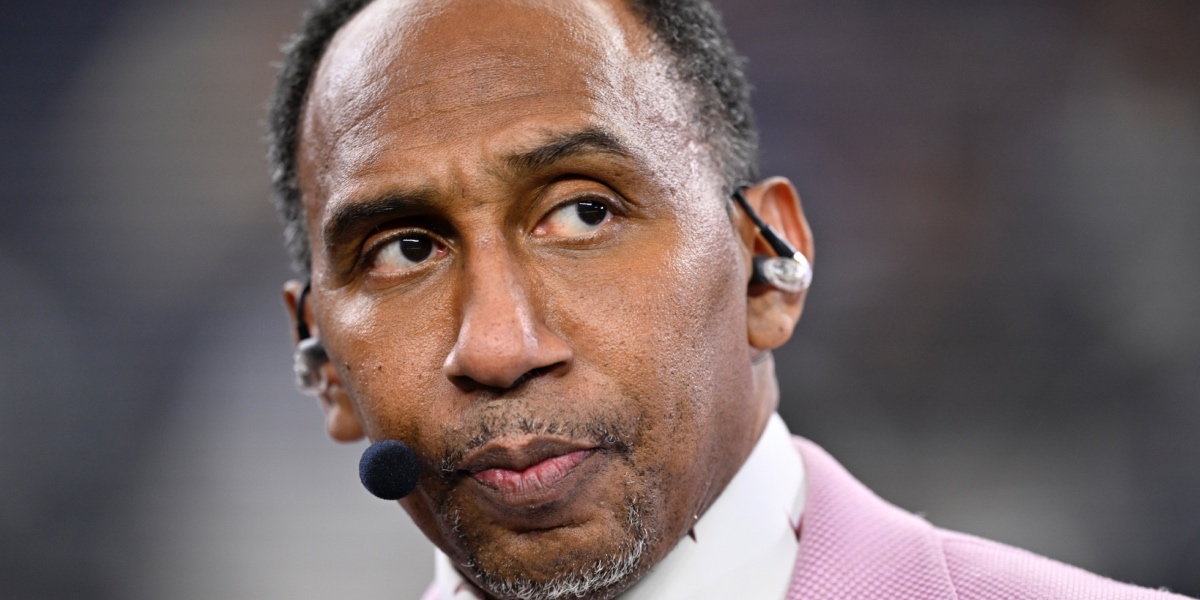
The Southeastern Conference will once again be absent from the national championship stage. ESPN’s Stephen A. Smith believes the issue runs far deeper than a single postseason loss.
Following Ole Miss’ defeat to Miami in the College Football Playoff semifinals, Smith delivered a pointed critique of the SEC on First Take, arguing that the conference’s long-held dominance has eroded in the modern NIL and transfer portal era. The loss marked the third consecutive season the SEC will miss the national title game, an unthinkable outcome just a few years ago.
“They ain’t feeling you anymore,” Smith stated. “When you look at the absence of depth, why? Because players are choosing to go elsewhere. It ain’t just the second-stringers anymore. You got some all-world players saying, ‘We don’t have to be in the SEC anymore the way that we used to.’”
Smith pointed to the growing national parity as evidence that the SEC’s grip on elite talent has loosened. With players now empowered by NIL opportunities and immediate eligibility via the transfer portal, Smith argued that the conference no longer holds the same gravitational pull it once did.
“We’ll go to the Big Ten, we’ll go to the Big 12, we’ll go to the ACC,” Smith stated. “You see some of these cats in Miami, how are they looking? Think about that for a second here.”
Beyond roster movement, Smith also questioned whether the SEC still boasts the same sideline advantage it once did. He specifically referenced the transition at Alabama, where Kalen DeBoer replaced Nick Saban, calling the shift a clear inflection point.
“He’s a good coach,” Smith said of DeBoer. “He just ain’t in the same class as Nick Saban. So, there’s a precipitous drop off there.”
Moreover, Smith argued the landscape began changing when Georgia won back-to-back national titles, exposing a widening gap between the league’s elite and the rest of the conference. From there, he rattled off programs he believes no longer resemble their former selves, including Auburn, Arkansas, Florida and LSU.
“This ain’t the days of Urban Meyer,” Smith explained. “They don’t have Tim Tebow in Florida. They don’t look the same.”
While acknowledging that the SEC remains powerful, Smith concluded that its mystique has faded. Where the league once featured five or six national title-caliber programs, he now sees a conference filled with teams that look increasingly beatable.
“There’s some mediocrity within the SEC Conference,” Smith concluded. “The allure is gone. They’re a powerful conference, but the allure that they once had has been eviscerated. Period.”
As the College Football Playoff moves forward without an SEC team competing for the title once again, Smith’s comments underscore a growing national conversation. Whether college football’s most dominant league is still setting the standard, or simply chasing it.

Intramurals | Calvin University

Mark Cuban reveals message to Indiana after donating to football program

Building their future, one brick at a time | News, Sports, Jobs

Men’s Volleyball vs UBCO on 1/9/2026 – Box Score

HS ROUNDUP: Schimelfenig leads West past Scranton in City Rivalry game | Football

Eagles fall short against Pioneers on “Bubba’s Youth Day” | Sports

Commodore Success Continues Saturday – Vanderbilt University Athletics – Official Athletics Website

Penn State Men’s Volleyball Beats Mount Olive 3-1 In Season Opener

Bobcats boys basketball bags 2026 opener by 17

South Carolina Dominates in Home Opener – University of South Carolina Athletics

Weird and funky: No. 8 BYU men’s volleyball sweeps Saint Francis to open season | News, Sports, Jobs

Former 5-star prospect linked to four major college football programs

ZAJDEL EARNS 1ST PLACE AS MEN’S AND WOMEN’S INDOOR TRACK & FIELD CONCLUDE SOUTHERN TIER INVITE

Men’s Volleyball Sweeps Vanguard For First Win Of The 2026 Season

Spartans Capture a Pair of Event Titles at Wolverine Invitational

Stempien to seek opening for Branch County Circuit Court Judge | WTVB | 1590 AM · 95.5 FM

#11 Volleyball Practices, Then Meets Media Prior to #2 Kentucky Match

Maine wraps up Fall Semester with a win in Black Bear Invitational

Ross Brawn to receive Autosport Gold Medal Award at 2026 Autosport Awards, Honouring a Lifetime Shaping Modern F1

Nascar legal saga ends as 23XI, Front Row secure settlement

Princeton Area Community Foundation awards more than $1.3 million to 40 local nonprofits ⋆ Princeton, NJ local news %

Downtown Athletic Club of Hawaiʻi gives $300K to Boost the ’Bows NIL fund

Sunoco to sponsor No. 8 Ganassi Honda IndyCar in multi-year deal

WNBA’s Caitlin Clark, Angel Reese and Paige Bueckers in NC, making debut for national team at USA camp at Duke

Badgers news: Wisconsin lands 2nd commitment from transfer portal

Nike Signs 10 LSU Athletes to NIL deals

Five Youth Sports Trends We’re Watching in 2026

Three Clarkson Volleyball Players Named to CSC Academic All-District List

Beach Volleyball Unveils 2026 Spring Schedule – University of South Carolina Athletics

Kentucky AD explains NIL, JMI partnership and cap rules





-
 Sports3 weeks ago
Badgers news: Wisconsin lands 2nd commitment from transfer portal
-
 Rec Sports1 week ago
Five Youth Sports Trends We’re Watching in 2026
-
 Sports2 weeks ago
Kentucky VB adds an All-American honorable mention, loses Brooke Bultema to portal
-

 Motorsports3 weeks ago
Dr. Patrick Staropoli Lands Full-Time O’Reilly Ride with Big Machine Racing
-

 Rec Sports3 weeks ago
NBA, Global Basketball Community Unite for World Basketball Day Celebration
-
 Sports2 weeks ago
2025 Volleyball Player of the Year: Witherow makes big impact on Central program | Nvdaily
-

 Motorsports2 weeks ago
BangShift.com IHRA Acquires Historic Memphis Motorsports Park In Millington Tennessee. Big Race Weekend’s Planned For 2026!
-
 Sports2 weeks ago
Colorado volleyball poised to repeat success
-
NIL2 weeks ago
Fifty years after IU’s undefeated champs … a Rose Bowl
-

 NIL3 weeks ago
Insider Reveals Biggest Reason Behind Colorado’s Transfer Portal Mass Exodus