






Connect with us
https://yoursportsnation.com/wp-content/uploads/2025/07/call-to-1.png

Rec Sports

Women's Flag Football to be Added, Swimming Dropped from Sports Lineup

Published

on

Women's Flag Football to be Added, Swimming Dropped from Sports Lineup

Changes are coming to the lineup of intercollegiate sports offered at Guilford College as women’s flag football will be added in 2026-27 and women’s swimming is being discontinued this fall. The changes are related to a review of college-wide programs.

Flag football is one of the fastest growing sports in the country. At least 65 NCAA schools are sponsoring flag football at either the club or varsity levels this year. And according to the National Federation of State High School Associations, flag football has become increasingly popular with about 500,000 girls under the age of 17 in the U.S. participating. Flag football has also been added as a sport for the 2028 Summer Olympics in Los Angeles.

The search for a women’s flag football head coach and the recruiting of student-athletes to compete next year at Guilford will begin in the fall.  

In recent years, women’s swimming has struggled to meet NCAA minimum requirements for sports sponsorship with limited student participation. Women’s swimming has been a part of the intercollegiate program since 2004. Guilford does not sponsor men’s swimming.

“We are very grateful to all current and past women’s swimmers for their dedication to their sport and to the College,” said Bill Foti, Director of Athletics. “We regret there was not more interest in women’s swimming over the years, and our goal in reallocating resources is increased athletic participation for women student-athletes at Guilford overall.”

With the changes, Guilford will sponsor 12 women’s sports and 10 men’s sports, all competing at the NCAA Division III level, with 434 students participating.

Rec Sports

2025 NFL Rookie Report: Browns’ youth movement underway in fantasy football stretch run

Published

on


The 2025 rookie class brings a lot of fantasy football uncertainty. Having a new pool of players to plug into fantasy football lineups is exciting, but their immediate usage and trends may not display their full fantasy potential just yet. Here, I aim to give you an update on how rookies are doing and their fantasy values.

With three-quarters of the NFL season complete, the Browns have built a rookie-heavy offense as the set of rookies that can contribute to fantasy playoff pushes is becoming more defined.

NFL: Chicago Bears at Philadelphia Eagles

Eric Samulski breaks down his full defense rankings for the 2025 fantasy football playoffs

Rookie Quarterback Check-In

Cam Ward, Tennessee Titans

Ward continues to struggle through a season that has seen his head coach fired and injuries to multiple offensive weapons. The offensive personnel is already subpar for the Titans and Ward is completing 59.7 percent of his passes for 2,351 yards, seven touchdowns, six interceptions, and -0.20 EPA per play. He is sandwiched between the Browns rookie quarterbacks with that number, good for No. 44 among quarterbacks with 50 plays. Ward is a Dynasty-only fantasy quarterback with SuperFlex consideration in deep leagues.

Jaxson Dart, New York Giants

At this point, Dart is the best rookie quarterback from the 2025 class. He is the only rookie with a positive EPA per play, completing 63.6 percent of his passes for 1,556 yards, 11 touchdowns, and three interceptions across eight starts, adding 337 yards and seven scores as a rusher. Without Malik Nabers and Cam Skattebo, it’s difficult to see a QB1 upside weekly on a struggling Giants team. However, rushing upside and his 6.8 yards per attempt put him on the fantasy QB1 borderline for the fantasy playoffs.

Tyler Shough, New Orleans Saints

Since taking over as starter for the Saints, Shough has five touchdowns, three interceptions, and three games of over 230 passing yards. It has not been a breakout-worthy performance with a wide range of play, including over 7.0 yards per attempt his first two starts, and under 6.5 yards per attempt his last two. Chris Olave is Shough’s top target and the generous passing volume as the Saints play from behind makes Shough a fantasy QB2.

Shedeur Sanders/Dillon Gabriel, Cleveland Browns

Gabriel suffered a concussion in Week 11 and Sanders took over the starting role. Sanders has gotten the reigns for now and averages 6.6 yards per attempt, completing 50.8-percent of his passes for 405 yards, two touchdowns and two interceptions. His arm is an improvement over Gabriel’s 5.1 yards per attempt but Sanders is still not fantasy-viable. Both Browns rookies have an EPA per play mark under -0.15 and sack rates over 8.0 percent. The Browns’ franchise quarterback is not likely on the roster, but rookies have the reigns to the offense for now. Sanders is a high-end QB3 while the Browns offense has a few more rookies to be discussed later in this piece.

Running Backs

RB Rookie Report 2025 3Q.png

Workhorses

A few rookie running backs have locked in on a lead role and heavy workload this season. Carrying a high-volume workload, Ashton Jeanty continues to run behind one of the worst offensive lines in the NFL. According to Sumer Sports, his 18.23 percent tackled-for-loss rate is worst among running backs with at least 60 carries. Despite this, his volume yields 4.5 targets per game and a low-end RB1 fantasy output. Jeanty will remain on the RB1 borderline for the fantasy playoffs.

With the Browns on their third quarterback, Quinshon Judkins has been a consistent presence. He is averaging just under 20 touches per game and is a versatile back. Scoring four wildcat touchdowns, Judkins is one of Cleveland’s top offensive playmakers. Set to return from an ankle fracture in Week 14, Omarion Hampton will be running behind a banged-up offensive line but will have heavy opportunity against an Eagles defense missing Jalen Carter. He saw at least 17 touches in Weeks 3-5 prior to his injury and is slated to get a heavy dose of touches again. Judkins and Hampton are in the low-end RB2 range moving forward.

Ashton Jeanty, Las Vegas Raiders
181 carries, 635 rushing yards, 43 receptions, 251 receiving yards, 8 total touchdowns, 14.8 PPR Fantasy points per game

Quinshon Judkins, Cleveland Browns
196 carries, 758 rushing yards, 17 receptions, 88 receiving yards, 7 total touchdowns, 13.2 PPR FPPG

Omarion Hampton, Los Angeles Chargers
66 carries, 314 rushing yards, 20 receptions, 136 receiving yards, 2 total touchdowns, 15.4 PPR FPPG

Starters

A few rookies are in starting and streaming territory. Since J.K. Dobbins went down, RJ Harvey has seen at least 14 touches in back-to-back games. The Broncos will always have a committee, but Harvey’s receiving usage of three targets per game boosts his budding fantasy value. TreVeyon Henderson scored five touchdowns in two games in Weeks 10-11 without Rhamondre Stevenson. With Stevenson returning, he is back to a backfield split, but still has seen at least 14 touches in the last two games. Henderson and Harvey have low-end RB2/FLEX upside heading into the fantasy playoffs.

Meanwhile, Kyle Monangai splits a bruising Bears backfield with D’Andre Swift. Woody Marks leads Nick Chubb in the Texans backfield and Devin Neal has the starting Saints role as Alvin Kamara deals with a knee injury. Monangai’s receiving upside is capped while Marks and Neal are a step down skill-wise from Harvey and Henderson. These three are in the RB3/FLEX range.

RJ Harvey, Denver Broncos
74 carries, 279 rushing yards, 31 receptions, 222 receiving yards, eight total touchdowns, 10.8 PPR FPPG

TreVeyon Henderson, New England Patriots
129 carries, 625 rushing yards, 32 receptions, 199 receiving yards, six total touchdowns, 11.4 PPR FPPG

Kyle Monangai, Chicago Bears
121 carries, 591 rushing yards, 10 receptions, 97 receiving yards, five total touchdowns, 9.1 PPR FPPG

Woody Marks, Houston Texans
134 carries, 486 rushing yards, 18 receptions, 188 receiving yards, four total touchdowns, 9.1 PPR FPPG

Devin Neal, New Orleans Saints
31 carries, 108 rushing yards, 15 receptions, 86 receiving yards, zero touchdowns, 3.8 PPR FPPG

Handcuffs

The backs to keep as handcuffs are becoming more apparent as roles solidify towards the end of the season. Dylan Sampson and Ollie Gordon are the clear next backs up for their respective teams. Bhayshul Tuten has been getting goal-line/short-yardage usage for the Jaguars, playing 25-30 percent of offensive snaps the last few weeks. LeQuint Allen has a small pass-catching role as well; Tuten is a valuable handcuff behind Travis Etienne while Allen’s role should also be noted. Lastly, Jacory Croskey-Merritt has lost his starting role with the Commanders and is only a handcuff to Chris Rodriguez for now.

Dylan Sampson, Cleveland Browns

Ollie Gordon, Miami Dolphins

Bhaysul Tuten/LeQuint Allen, Jacksonville Jaguars

Jacory Croskey-Merritt, Washington Commanders

Los Angeles Rams v Carolina Panthers - NFL 2025

Ranking and evaluating all of Week 14’s top plays at quarterback, running back, receiver, tight end, kicker and defense.

Wide Receivers

WR Rookie Report 2025 3Q.png

Starters & Streamers

The group of rookie receivers fantasy managers are considering for fantasy lineups is getting narrow. Emeka Egbuka’s usage has remained high with six straight games of at least eight targets since Week 7. However, his fantasy output has seen just one double-digit PPR game over that span as he deals with a hamstring injury. Tetairoa McMillan is the WR1 for the Panthers and ranks No. 20 among wide receivers with a 77.9 PFF receiving grade. His 7.5 targets per game give him a solid fantasy floor. Both Egbuka and McMillan rank top-12 among receivers in air yards and are WR2 options for the fantasy playoffs.

The Texans have utilized Jayden Higgins more frequently as the season has gone on. At least five targets in each game from Weeks 10-13 have put him ahead in the Texans’ WR2 role. Luther Burden has also seen an increase in usage, getting at least 20 snaps in every game since the Bears’ Week 9 bye. He is seeing designed touches and usage in the first half, before tapering off in the less-scripted second half. Higgins and Burden belong on fantasy rosters with legitimate WR3/4 upside for the stretch run.

Emeka Egbuka, Tampa Bay Buccaneers
14.2 PPR FPPG, caught 52-of-101 targets for 791 yards and six touchdowns

Tetairoa McMillan, Carolina Panthers
13.5 PPR FPPG, caught 57-of-98 targets for 826 yards and six touchdowns

Jayden Higgins, Houston Texans
7.7 PPR FPPG, caught 32-of-50 targets for 359 yards and four touchdowns

Luther Burden, Chicago Bears
6.1 PPR FPPG, caught 26-of-34 targets for 328 yards and one touchdown

Deep Leagues & Dynasty Stashes

Though fantasy managers are not racing to start these receivers in fantasy, they are worth a look with burgeoning roles. Pat Bryant saw seven targets in Week 13 and is looking to battle Troy Franklin and Courtland Sutton for meaningful targets on the Broncos. Matthew Golden has failed to carve out a larger role on the Packers but should be rostered for dynasty purposes amid a murky receiver room. Jaylin Noel is looking to take over the Texans’ slot role from Christian Kirk heading into next season. Chimere Dike and Elic Ayomanor each get starting snaps for a Titans offense that will be better next season (it must be better next season!). Isaac TeSlaa scored four touchdowns on eight receptions this season. The list goes on…

Pat Bryant, Denver Broncos

Matthew Golden, Green Bay Packers

Jaylin Noel, Houston Texans

Chimere Dike/Elic Ayomanor, Tennessee Titans

Isaac TeSlaa, Detroit Lions

Tez Johnson, Tampa Bay Buccaneers

Jaylin Lane, Washington Commanders

Tre Harris, Los Angeles Chargers

Tight Ends

Starters

The tight end position has seen a growing number of rookies make contributions throughout the season. Tyler Warren remains at the top of this list for the Colts, though his production has waned. The Colts are facing better defenses with an injured Daniel Jones (leg), but Warren still ranks No. 3 among tight ends in yards after catch per reception, No. 5 in targets, and gets a steady 52 snaps per game. He is a mid-range TE1.

With at least four targets in every game since Week 7, Colston Loveland warrants starting consideration. Oronde Gadsden broke out with four straight double-digit fantasy games Weeks 6-9, but has struggled recently as blocking tight ends are taking some of his snaps since Chargers LT Joe Alt’s season-ending injury. Harold Fannin Jr. is another one of the Browns rookies that is contributing this season. He is averaging a steady 6.2 targets per game as the team’s leading receiver. Loveland, Gadsden, and Fannin sit on the TE1 borderline for the fantasy playoffs.

Tyler Warren, Indianapolis Colts
13.1 PPR FPPG, caught 58-of-78 targets for 684 yards and four touchdowns

Colston Loveland, Chicago Bears
8.2 PPR FPPG, caught 31-of-44 targets for 406 yards and three touchdowns

Oronde Gadsden, Los Angeles Chargers
10.1 PPR FPPG, caught 38-of-51 targets for 534 yards and two touchdowns

Harold Fannin Jr., Cleveland Browns
9.9 PPR FPPG, caught 51-of-74 targets for 505 yards and three touchdowns

Streamers & Stashes

A few young tight ends can be stashed on deep benches or given a look for dynasty purposes. Mason Taylor has had spike weeks, but inconsistencies amidst a subpar Jets quarterback situation. Gunnar Helm is getting increased usage since Week 11, with three straight games of at least five targets and 20 routes run.

Mason Taylor, New York Jets

Gunnar Helm, Tennessee Titans

The Injured

RB Cam Skattebo, New York Giants
101 carries, 410 rushing yards, 24 receptions, 207 receiving yards, seven total touchdowns, 16.0 PPR FPPG

WR Travis Hunter, Jacksonville Jaguars
9.1 PPR FPPG, caught 28-of-45 targets for 298 yards and one touchdown

WR Tory Horton, Seattle Seahawks
8.1 PPR FPPG, caught 13-of-22 targets for 161 yards and five touchdowns

Various Stats from Sumer Sports, Pro Football Focus, and FTN


Link

Continue Reading

Rec Sports

Peak View church reaches out to FFPD

Published

on


By Pete Gawda

“Jesus told us to love our neighbors,” said Senior Pastor Jon Gleason of Peak View Baptist Church. “We believe in interacting with the community.”

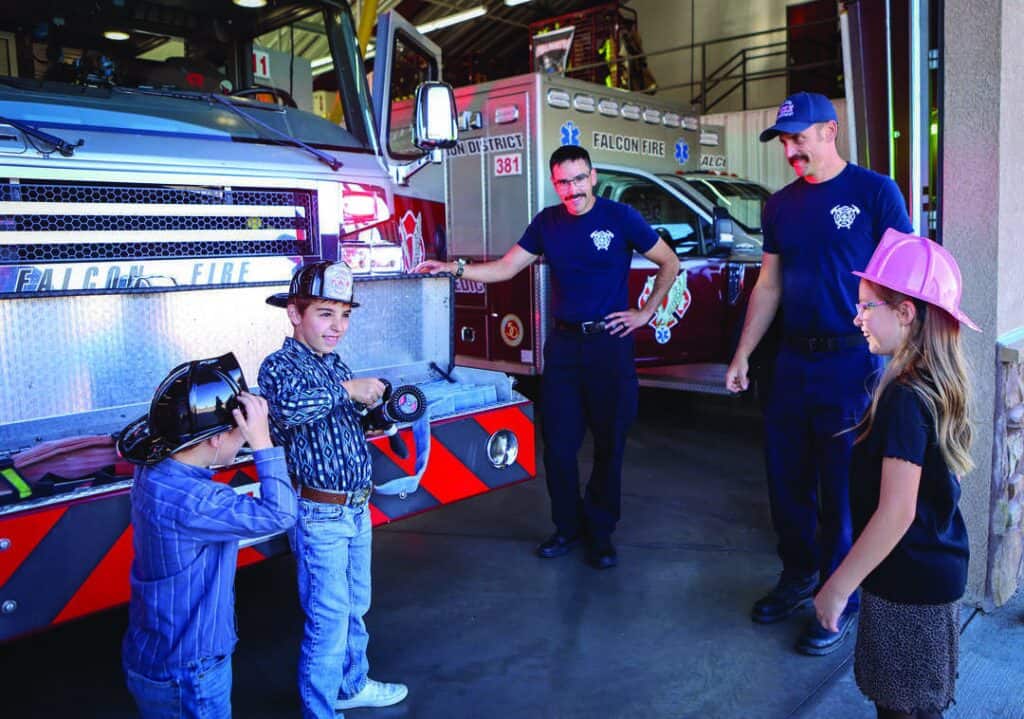
The church has been putting that belief into action in practical ways. Most recently, in November, Peak View provided 80 pounds of ribeye steak and all the trimmings — vegetables, salads and tea — to serve complete meals for all three shifts of Falcon firefighters at each Falcon fire station. Church members also wrote 72 handwritten notes of encouragement and supplied devotional literature for the crews.

Associate Pastor Kevin King, who led the project, said it was a way to share the Gospel while showing support for firefighters. He noted that several firefighters are part of the Peak View congregation and that firefighting is a demanding job.

Deputy Chief Jeff Petersma expressed appreciation for the church’s efforts, saying the gesture showed firefighters that the community cares and recognizes their work.

“This isn’t just one church,” Gleason added. Peak View partnered with local businesses to make the project possible. Sponsors included Breaking Barriers Fitness, Christian Brothers Automotive, County Commissioner Carrie Geitner, East Side Modern Dentistry, Falcon Family Eye Care, Ice Cryospa and Medspa, Life Network, Nana’s Kitchen, Paul Davis Restoration (Colorado Springs) and Splash Bath.

The church organizes a different community outreach each month. Previous efforts have included participating in the Monument Fourth of July parade, helping sponsor a youth basketball camp and showing appreciation for educators through a Donuts for Teachers program.

Peak View also connects with the community by serving lunch on Sundays to anyone who wants to attend. The church meets at Falcon High School at 10 a.m.; they break for lunch around noon and gathers again afterward for a short afternoon service.

A young boy sits inside a fire truck, wearing a t-shirt with a car graphic and holding a firefighter helmet on his head.

Jeremy Skiver, sporting a firefighter helmet, is having fun in the firefighter truck’s drivers seat.

Two firefighters stand near a fire truck, smiling at two boys and a girl who are trying on helmets and interacting with the equipment.

Nathaniel Scalf, Jameson Scalf and Charlie King learning all about the fire house from FFPD firefighters.

StratusIQ Fiber Internet Falcon Advertisement


Link

Continue Reading

Rec Sports

From Jr Refs to MOA: Fairfield’s Six Young Officials Are Changing the Game | Local News

Published

on


On winter nights in Fairfield, when the band is loud and the student section louder, it is easy to focus on the players in uniform and forget about the three people in stripes who hold the whole thing together.  In Fairfield, six of those officials have a story worth telling.

All six began in the 127 Sports Intensity Junior Referee program. Today, as registered members of the Montana Officials Association (MOA), they are working meaningful junior high school games and assorted youth basketball games,  while still walking the same hallways as the students they officiate.

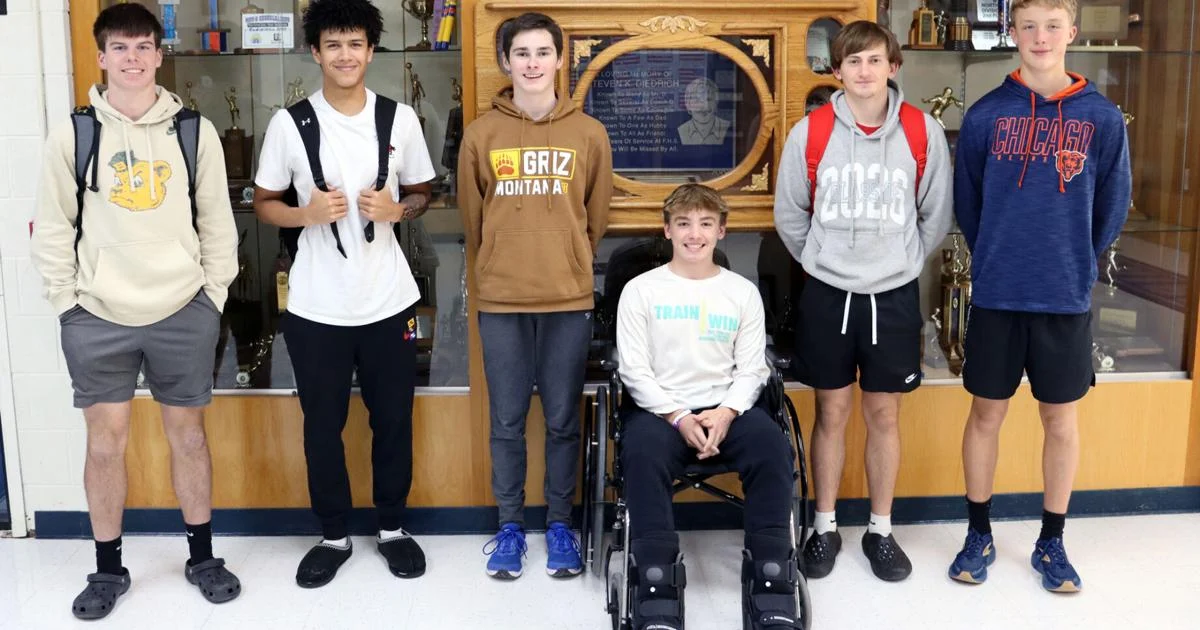
They are: Deron Lear, Senior (Grade 12); Travis Cartwright, Senior (Grade 12); Reed Von Stein, Senior (Grade 12); Cameron Keel, Freshman (Grade 9); Ryan Mathison, Freshman (Grade 9) and Beckett Rau, Freshman (Grade 9)

Individually, they are teenagers. Collectively, they are something far more rare: a homegrown officiating crew that has quietly become one of the Fairfield Basketball Club’s most important assets.


A Long Road from First Whistle to Varsity Floor

None of this happened by accident.

These six officials started where nearly every official dreams of never returning: elementary and middle school gyms. They learned to blow the whistle with conviction in front of parents sitting 10 feet away. They figured out how to explain calls to kids still learning to dribble. They worked youth tournaments when the rest of their friends were just watching from the bleachers.

Over time, game by game, they logged a large number of assignments across: youth and Fairfield Basketball Club games; Junior high schedules; weekend and holiday tournaments; summer league and camp games.

Most people see one game at a time. These six see a season as a stack of opportunities to improve. They have spent evenings and Saturdays in gyms from Fairfield to neighboring communities, not for highlight reels, but for the quiet satisfaction of getting the game right.


Training, Evaluation, and the Standard They Chose

The JR REF program gave them a runway: clinics on mechanics and positioning, instruction on signals and rules, guidance on how to handle coaches and game situations with composure. But they didn’t stop at “good enough for youth ball.”

They sought out more—more feedback, more instruction, more accountability.

Each of these officials has been evaluated by college-level evaluators, people who work regularly with officials well beyond the high school ranks. Those evaluations have done more than check a box; they have confirmed what some Fairfield fans have already seen from the bleachers: they move with purpose and proper mechanics; they communicate clearly and respectfully with coaches and players; they adjust when they receive feedback, rather than defending bad habits; they carry themselves like professionals in a place that is not always friendly to officials.

To be a teenager and willingly invite that level of scrutiny is unusual. To respond to it by earning MOA status is impressive. It signals that if any of them choose to pursue officiating at higher levels, they already understand what the profession demands.


WEB-JR-REF-Clinic_Dahl_Frick_2025-(2).jpg

 Fairfield’s Answer to a Statewide Problem

Across Montana—and the country—the story is the same: not enough officials. Games are rescheduled, junior varsity contests are shortened, and assignors spend long nights begging for one more crew to cover one more gym.

127 Sports Intensity has chosen a different response: grow its own.

These six MOA officials are a direct result of that decision. The impact is felt every week: games get covered. With a larger, local pool of trained officials, Fairfield Schools and the Fairfield Basketball Club are better positioned to keep schedules intact; expectations stay consistent. Officials who have grown up in the system understand local standards, rivalries, and what Fairfield basketball means to the community; younger athletes see a new path. When a fifth grader watches a high school student officiate, the message is simple: this is something I could do, too.

In an era where the question is often “Where will we find officials?” Fairfield can answer, at least in part, “We are developing them right here.”


More Than a Side Job

Yes, officiating pays. For teenagers, it is a better-than-average way to earn money.

But framing it only as a side job undersells what is actually happening.

By stepping onto the floor in stripes, Deron Lear, Travis Cartwright, Reed Von Stein, Cameron Keel, Ryan Mathison, and Beckett Rau are learning high-level, real-world skills long before many of their peers: managing conflict in emotionally charged environments; communicating with adults and peers under pressure; making immediate, public decisions and living with the result; handling criticism and staying composed when the gym disagrees

Those are leadership skills. They will matter in college classrooms, workplaces, and communities long after the last horn sounds on their high school careers.


A Blueprint for

the Future of Officiating

There is a larger lesson inside Fairfield’s story.

If high school sports want a sustainable future, then communities will need more than short-term fixes and recruitment slogans. They will need pipelines—programs that introduce officiating early, train young people well, give them real experience, and then guide them into associations like the MOA.

These six names—Deron Lear, Travis Cartwright, Reed Von Stein, Cameron Keel, Ryan Mathison, and Beckett Rau—represent more than the current officiating crew. They represent proof that when a community invests intentionally in young officials, the payoff shows up on the scoreboard, in the stands, and in the long-term health of the sport itself.

Fairfield’s players may supply the highlights.

But on many nights, its officials are supplying something just as valuable: a future where the games can go on, called by people who learned to love this work in the very same gyms where they now toss the ball in the air and blow the opening whistle.

The Next Wave: Jr Ref Clinic Participants

The story does not end with the six MOA officials. Behind them stands a growing group of Jr Ref clinic graduates—young students who have already taken their first steps with a whistle and a rulebook in hand.

These are the Jr Ref participants from last year:

Kohl Barnett, Kyla Cooley, Eli Cowgill, Willa Cowgill, Colton Dahl, Conley Dahl, Kingston Egbert, Natalie Harrell, Grace Helmer, Paige Helmer, Kale Hinderager, Nora Hinderager, Bryce Hooper, Cameron Keel, Madison Keel, Edan Keller, Eve Keller, Angus Lidstrom, Ryan Mathison, Easton Misner, Brynn Neuman, Aundra Passmore, Charlotte Pearson, Jack Rasmussen, Natalie Rasmussen, Beckett Rau, Calder Rosenkrance, Carsten Rosenkrance, Brendon Schenk, Reed Von Stein, Gretta Wilson, Samuel Woodhouse.

Some of these names—Cameron Keel, Ryan Mathison, Beckett Rau, and Reed Von Stein—have already climbed from that list into the MOA ranks. The rest are at various points on the same path: learning mechanics, working youth games, absorbing feedback, and discovering what it means to be the steady voice in a noisy gym.

For Fairfield, this group is more than a roster; it is the future.

In the seasons ahead, many of these Jr Refs will work more games, clean up their positioning, sharpen their signals, and grow more confident in their decision-making. Some will decide that officiating is something they want to pursue seriously. When they do, they will not have to guess how to get there—they will have six living examples in Deron, Travis, Reed, Cameron, Ryan, and Beckett showing them exactly what is possible.

If the first wave of MOA officials proves that Fairfield can grow its own referees, this Jr Ref cohort is proof that the pipeline is alive and working. With every clinic they attend and every youth game they officiate, they move one step closer to joining the MOA ranks themselves—and to ensuring that, in Fairfield, the games will always have someone ready to toss the ball, blow the whistle, and get things started.


Link

Continue Reading

Rec Sports

Is pickleball destined to become sanctioned AIA high school sport?

Published

on


by Matthew Singer, Cronkite News
December 5, 2025

TEMPE – At recreation centers across the world, the sound is unmistakable – it’s the sharp pop of plastic ball meets paddle. What was once a quiet hobby for a few is now filling courts.

Even at the high school level.

What started as a friendly competition on Bainbridge Island near Seattle in 1965, pickleball is the fastest growing sport in the country for four consecutive years, according to a study by the Sports and Fitness Industry Association.

It does not discriminate by age, wealth or athletic skill level. It is why a sport often associated with the senior community is now popular among many, including among high school athletes.

“There are tons of high school clubs,” said Riley Palmer, director of pickleball at Dink and Dine Pickle Park in Mesa. “I’m a junior competitive club coach for Monster Athlete as well, and they had over 180 kids, 18 teams. It is picking up with a lot of speed, hopefully quickly becoming an Olympic sport.”

The facility is set to host the first high school pickleball state championships for more than 20 club teams Saturday and Sunday. Competition includes boys and girls singles, doubles and mixed doubles. 

The event reflects pickleball’s growing popularity, although for some, it’s less about the product  and more about the journey.

“Because we see if we can get kids off their phones and get them out here and encourage them to be social, making new friends, meeting new people,” Palmer said.

With pickleball growing so fast, is it destined to become a sanctioned Arizona Interscholastic Association high school sport?

If so, it is a multi-step process that will take time.
“So if the school’s been playing a sport for a certain while and they say, ‘We want to be part of the AIA oversight,’ the schools will make an application,” said Seth Polansky, the AIA’s director of media services. “We’ll send in an agenda item for an executive board meeting and our executive board will hear the case and see if they want to add it or not.”

If the board decides it wants to add the sport, it will go into “emerging status,” which means that it has no sanctioned championship in the beginning.

“Basically, they’ll be playing by the rules they play with and then the AIA would oversee it for typically two years,” Polansky said. “So after year one and seeing how things are going, AIA staff would send surveys out to the other member schools: ‘If we were to add this sport, would you add it, too?’”

Kenny Cail, commissioner and chairman of National High School Club Pickleball, would like to speed up the process.

“I write letters to schools,” Cail said.  “I write to their student councils, their counselors, to their principals and I tell them about the benefits of pickleball. I tell them about how, at the collegiate level last year, there were around 41 teams in the national tournament, and this year they have 250-something teams.”

Cail, a former high school football and wrestling coach, knows firsthand the importance of sports in young kids’ lives and would love to see the popularity of the sport continue to grow.

“You could see the kids progress,” Cail said. “They had teammates that lasted a lifetime. They had purpose in their life. The problem with sports is that it’s not there for everybody. It’s generally for only the best. And you want to make kids count. And when they count, they get connected to their schools. 

“So to make kids connect, let’s try to find a sport that doesn’t require you to be the strongest, the tallest, the biggest, a certain body type or anything like that. And pickleball is that sport.”

Cail, a big proponent of Title IX, the federal legislation that requires equal access and resources for women’s sports in schools that receive federal money,  sees the value of pickleball as a coed sport.

“It’s a great Title IX sport because it’s not separate but equal, but you can have mixed doubles,” Cail said. “And your partner could be a girl. In eigth grade or junior high, you might want to learn how to speak to girls. So that’s a real benefit.

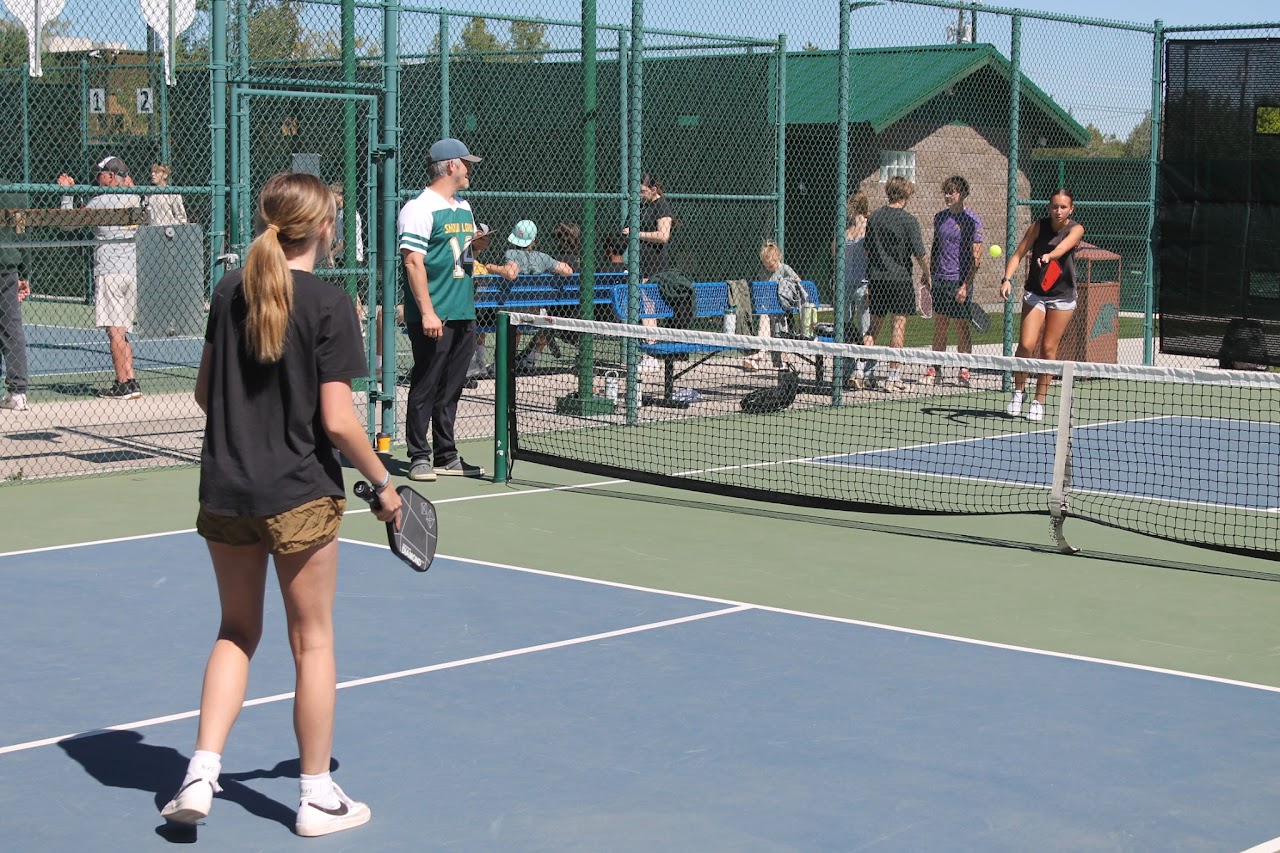
Teenagers fill the courts at a recent high school tournament at Spitfire Pickleball in Idaho Falls, Idaho. (Photo courtesy of Jalen Fuhriman)

“When I was in college, I was a wrestler, but I was on NAU’s committee for Title IX. And they thought I’d stand up for men’s wrestling, but I stood up for Title IX instead. And I said, it’s important for everybody, and we need to have more equalization for women in our communities and in our lives.”

Cail acknowledges a wait is involved to make pickleball a Title IX sanctioned AIA sport but thinks “ it’s going to move fast. Not as fast as I want it to go. But when I talked to the AIA, they said it might take seven years until they make it a varsity sport, but I think it’s going to change immediately when the NCAA decides to make it a collegiate sport.”

Although the sport is not presently on the AIA’s radar, the organization has moved quickly in the past to add sports when participation numbers support it. Girls flag football, for example, was added only a few years after its inception because of widespread interest.

In late 2022, enough schools rallied to make girls flag football a sanctioned sport, bypassing the “emerging status” period.

“And the path that I think I see is that schools or kids can be taught pickleball just before the tournaments,” Cail said. “And then they’re told if you want to represent our school, have your mom and dad pay the entry fee, go to the tournament, drive you there. Then the school’s not involved, but it’ll develop.

“They’ll still be competing for their school, and that’s a big plus. And they won’t get AIA backing until the AIA sees value in that. And right now, I don’t think they do. We’re going to emphasize parents creating the sport in the school system, so they need to push for it.”

The interest from teenagers reflects the widespread popularity of the sport.

“I’ve been playing with my kids since they were 7, but I can also get out there and play with my dad, who’s almost 80,” Palmer said.

It is a way to exercise and stay active for both seniors and youth.

“Any time you take a population that is more sedentary and they come into a sport and they’re active, the benefits are good, overall,” Palmer said. “Cardio health, mental health, they’re looking at it going, ‘This is definitely something that we love to promote,’ and they want to see it grow, too.”

While a distinct youth movement has made the average age about 35, adults and seniors have been a major part of pickleball’s initial growth.

“I see the amount of players growing as the kids are getting very into it now and as they grow up with it and keep playing,” said Wendi Sobelman, an avid pickleball player. “I’m watching 12-year-olds play in tournaments.

“So I think a lot more people are going to get into it now that the ‘youngins’ are because they used to think it’s just for the older crowd.”

Pickleball enthusiasts will say that the game is easy to learn and play for anyone, regardless of age.

“Whether you are older or younger, you can actually play together because a lot of it has to do with where you’re placing the ball,” Palmer said. “So physically, it’s very engaging, and you can make of it how much you want. I could have a match where it’s a 2-mile match, or I could be playing a little bit more conservative.”

The level of strategy needed for the sport makes it easy to play. And it depends more on touch, reflexes and court positioning than pure athleticism.

“The game actually takes a lot of strategy because you’re playing on a much smaller court,” Palmer said. “It’s about a third of the size of a tennis court. So you have less time to react. You still have a ball that goes really fast. But if you can kind of see where the ball could go and place it away from somebody, then you have a good chance.”

Although the low difficulty of the sport is a major draw, other facets keep players come back for more.

“Creating a social group and getting to meet new people grows the sport,” said Caiden Hardy, who works for Center Court Pickleball Club. “It just gets you out on the court.”

Regardless of the timeline pickleball faces to become a sanctioned high school sport, most believe it will continue to grow at an exponential rate due to the community it has already built, and its uniqueness.

“I would just say, give it a try,” Palmer said. “I’ve never had anyone – and I’ve taught over 3,500 people – leave and say, ‘I didn’t like that.’”

This <a target=”_blank” href=”https://cronkitenews.azpbs.org/2025/12/05/pickleball-high-school-arizona-aia/”>article</a> first appeared on <a target=”_blank” href=”https://cronkitenews.azpbs.org”>Cronkite News</a> and is republished here under a <a target=”_blank” href=”https://creativecommons.org/licenses/by-nd/4.0/”>Creative Commons Attribution-NoDerivatives 4.0 International License</a>.

<img id=”republication-tracker-tool-source” src=”https://cronkitenews.azpbs.org/?republication-pixel=true&post=98679″ style=”width:1px;height:1px;”><script> PARSELY = { autotrack: false, onload: function() { PARSELY.beacon.trackPageView({ url: “https://cronkitenews.azpbs.org/2025/12/05/pickleball-high-school-arizona-aia/”, urlref: window.location.href }); } } </script> <script id=”parsely-cfg” src=”//cdn.parsely.com/keys/cronkitenews.azpbs.org/p.js”></script>


Link

Continue Reading

Rec Sports

Jaycees Christmas Parade planned for Dec. 13 | News

Published

on


Link

Continue Reading

Rec Sports

Town Council splits 4-3, approves master plan for Luter Sports Complex

Published

on


Bebermeyer, however, contended the focus on baseball and softball could spur additional tourism dollars from requests to host tournaments at the existing first phase baseball and softball fields, which town Parks and Recreation Department staff have frequently had to turn away when those fields are reserved by SRA. Under the SRA’s lease agreement, it has first right of refusal to use the baseball and softball fields.

“There is a whole area of sports tourism that we’re not tapping into and baseball is one of those and people will travel far and wide for that,” Bebermeyer said.

Stallings, during the Nov. 17 meetings, said town staff made the decision “to focus on what we do really well.”

“The baseball field inquiries are pretty steady every week,” Parks and Recreation Director Amy Novak said at the Nov. 17 meetings. “The football field rentals come every couple of months.”

“Most of the other sports are served pretty well in other parts of the community,” Stallings said. “We looked at soccer, and clearly Nike Park’s got that really well taken care of,” referring to the Isle of Wight County facility in Carrollton.

Bowman noted the plan could be changed later by the current council or a future council.

“This just gives me a first starting point as far as the footprint is concerned,” Bowman said. “I am in no way, by endorsing this plan, saying that this is etched in stone.”

The master plan shows a full-size baseball field and two additional softball fields in the proposed second phase, plus several additions to the first phase, including a 70-yard flag football and practice field, a T-ball field, additional batting cages and parking, and a walking trail to connect the first and second phases.

A representative from Kimley-Horn said at the Nov. 17 meetings that the firm had looked into adding a second football field but abandoned that plan after determining it would only be able to accommodate a 100-yard field if it lacked end zone buffers. Stallings said the buildable acreage in the second phase is constrained by topography and wetlands.

The master plan also shows the potential addition of press boxes at the football field and at the proposed second baseball and softball complex.

The plan shows the second phase having its own parking lot with over 200 spaces. An additional 170-plus parking spaces would be added to the 2018 phase, some of which would be near the site of the circa-1840s Wombwell house the town demolished in 2021.

Additional parking at the Wombwell site had been part of a 2023 plan to add a 3,800-square-foot building to the park that would house maintenance equipment for all town-owned parks. The town defunded that project and reallocated its earmarked federal COVID-19 relief funds to instead go toward the two-story concession and bathroom facility the town built in 2024 adjacent to the football field after the cost estimate for the maintenance building soared to over $1 million. The master plan still shows space at the former Wombwell site for the maintenance building’s future construction.


Link

Continue Reading

Most Viewed Posts

Trending