Connect with us
https://yoursportsnation.com/wp-content/uploads/2025/07/call-to-1.png

Rec Sports

You know you’re upper-middle-class when these 7 childhood activities were considered “normal” – VegOut

Published

on


Childhood memories are time capsules.

The bike rides. The birthday parties. The after-school routines.

But those snapshots also tell quiet stories about money.

Because what feels “normal” in one family can look like luxury in another. And what feels like luxury to some can look like baseline expectation to others.

For upper-middle-class kids, this showed up not in the obvious ways—like giant houses or private jets—but in the smaller, everyday activities that stacked up into a lifestyle.

These weren’t just hobbies. They were markers of class, dressed up as childhood rites of passage.

Here are seven activities that seemed ordinary at the time, but now scream upper-middle-class privilege in hindsight.

1. Attending summer camp (the overnight kind, not the church basement kind)

For many kids, summer meant free-range days at home—riding bikes, eating popsicles, and staying out until the streetlights came on.

For upper-middle-class kids, it meant duffel bags packed with bug spray, tie-dye T-shirts, and an entire month in the woods at overnight camp.

This wasn’t just “daycare.” It was a curated experience. Canoeing, horseback riding, archery, improv skits by a campfire.

You came home sunburned, mosquito-bitten, and with a stack of friendship bracelets from kids named Skyler and Brooke.

At the time, you thought everybody had campfire songs memorized by age 10. Later, you realized camp tuition was more than some families spent on groceries in a month.

And while it built memories, it also built networks. Camp was childhood social capital disguised as s’mores.

2. Taking private music or dance lessons

Most kids met music in the form of a plastic recorder at school—struggling through “Hot Cross Buns.”

But upper-middle-class kids were spending Tuesday nights at piano lessons and Saturday mornings in ballet studios.

Private lessons weren’t just hobbies. They were investments. Your parents weren’t expecting Carnegie Hall, but they were hoping “violin since age six” would sparkle on a college application.

Lessons came with all the trimmings: recital outfits, sticker-covered sheet music, squeaky metronomes, and the faint smell of rosin dust on violin bows.

You thought it was normal to have a calendar filled with practice sessions. Only later did you realize those sessions were a quiet flex of disposable income.

And here’s the kicker: the real lesson wasn’t music or dance. It was discipline, structure, and performance—the hidden curriculum of the upper-middle class.

3. Family ski trips

For most kids, snow meant sledding on a trash can lid and hoping your gloves would dry before school.

For upper-middle-class kids, it meant family expeditions to ski resorts with overpriced hot chocolate and rental gear that cost more than a month’s utilities.

Ski trips were presented as “family bonding,” but they were also highly visible status markers. Lift tickets weren’t cheap, and ski school for kids was practically its own tuition.

You grew up thinking frostbitten toes, goggle tans, and shouting “pizza, french fry!” down the bunny hill were universal winter memories.

Only later did you realize skiing wasn’t just recreation—it was a cultural password. A way of saying, “We don’t just survive winter. We vacation in it.”

And when you told classmates about your trip to Aspen or Vail, you thought you were sharing stories. In reality, you were revealing class.

4. Playing “travel sports”

Neighborhood soccer on the weekends was one thing. But if you were spending Fridays packing suitcases for tournaments three states away, you were firmly in upper-middle-class territory.

Travel teams weren’t just sports. They were lifestyles. Hotel stays, tournament fees, new uniforms every season, and entire weekends built around kids’ schedules.

You didn’t just play soccer—you had team banquets. You didn’t just swim—you joined clubs with annual dues.

For you, youth sports meant road trips, fast food eaten in minivan back seats, and parents who could take time off to drive you across state lines.

Looking back, it’s obvious: not every family had the money, the jobs, or the cars to make that happen.

But at the time? You thought every kid had trophies engraved with “Regional Invitational.”

Travel sports weren’t just about athletics. They were early lessons in competition, ambition, and what it meant to “invest” in a child.

5. Going on international vacations

Plenty of kids thought Disney World was the ultimate trip. For upper-middle-class kids, passports were stamped before puberty.

Vacations weren’t just getaways. They were “cultural experiences.” Spring break in Italy. Winter holidays in London. Summers in the Caribbean.

Parents framed it as educational: see the world, broaden your horizons, appreciate history. And you went along with it—eating croissants in Paris without realizing the quiet privilege of simply being there.

Later, you realized most kids spent spring break with Blockbuster rentals and frozen pizza. Meanwhile, you were getting guided tours of ancient ruins.

Travel wasn’t just leisure—it was identity. A way of normalizing the idea that the world was accessible, navigable, and yours to experience.

And when your classmates asked about your trip, you thought you were just telling stories. Really, you were broadcasting class.

6. Extracurriculars stacked like a résumé

For many kids, after school meant cartoons, bikes, and maybe a frozen snack.

For upper-middle-class kids, it meant rushing from debate club to swim practice to SAT prep—all before dinner.

Free time wasn’t free. It was scheduled. Structured. Monetized.

By age 12, your calendar looked like a pre-college portfolio. Theater, science fairs, volunteer work.

Parents framed it as “keeping you busy.” In reality, it was résumé building disguised as enrichment.

And while you might have resented missing TV time, those activities built confidence, skills, and networks.

Looking back, you realize this wasn’t random. It was strategic parenting. A way of stacking the deck in your favor—years before you even applied to college.

7. Having a “playroom”

For many kids, toys spilled across the living room and bedrooms doubled as play zones.

For upper-middle-class kids, there was an entire designated space: the playroom.

This wasn’t just a corner of the house. It was a full room lined with cubbies, bean bags, and shelves stacked with board games and VHS tapes.

At the time, you thought it was completely normal to have a space dedicated solely to toys. Only later did you realize: an extra room is one of the clearest signs of privilege.

The playroom wasn’t just practical. It was symbolic. It meant space to spare.

And every time a new friend came over and gasped, you thought they were impressed by the toys. In reality, they were registering the quiet luxury of square footage.

The bigger picture

None of these activities made you better. They just revealed class.

Upper-middle-class kids grew up assuming certain luxuries were universal, when in fact they were subtle lessons in privilege.

Ski trips, recitals, travel teams, and playrooms didn’t just fill time. They built identities—teaching confidence, entitlement, and comfort in spaces others couldn’t access.

Meanwhile, kids from other backgrounds developed grit, independence, and resourcefulness from entirely different norms.

Class shapes childhood in ways we rarely recognize until adulthood. What feels “normal” is really cultural coding.

Closing thoughts

So if you look back and realize your childhood was stacked with camps, lessons, and international trips, here’s the truth: you weren’t just making memories.

You were living in a carefully constructed ecosystem of class. One that quietly signaled status while you thought you were just having fun.

And those childhood activities? They still tell on you.

What’s Your Plant-Powered Archetype?

Ever wonder what your everyday habits say about your deeper purpose—and how they ripple out to impact the planet?

This 90-second quiz reveals the plant-powered role you’re here to play, and the tiny shift that makes it even more powerful.

12 fun questions. Instant results. Surprisingly accurate.



Link

Continue Reading
Click to comment

Leave a Reply

Your email address will not be published. Required fields are marked *

Rec Sports

‘Batter Up!’ Dos Pueblos Little League Calling for Youth Baseball Umpires | Sports

Published

on


Dos Pueblos Little League is recruiting middle school and high school baseball players to umpire Little League games this season.

Prior umpiring experience is preferred, but not required. Dos Pueblos Little League has an Umpire Board member who will help with training, but baseball knowledge is a must.

Gear also provided and Little League umpires can earn $40 per game or receive volunteer service hours.

Umpiring Little League is “a great way to build leadership skills and stay involved in the game,” organizers said.

To apply, email presidentdpll@gmail.com.


Link

Continue Reading

Rec Sports

Vote now for the Freep Buffalo Wild Wings Boys Athlete of the Week

Published

on


Dec. 23, 2025, 5:08 a.m. ET


Link

Continue Reading

Rec Sports

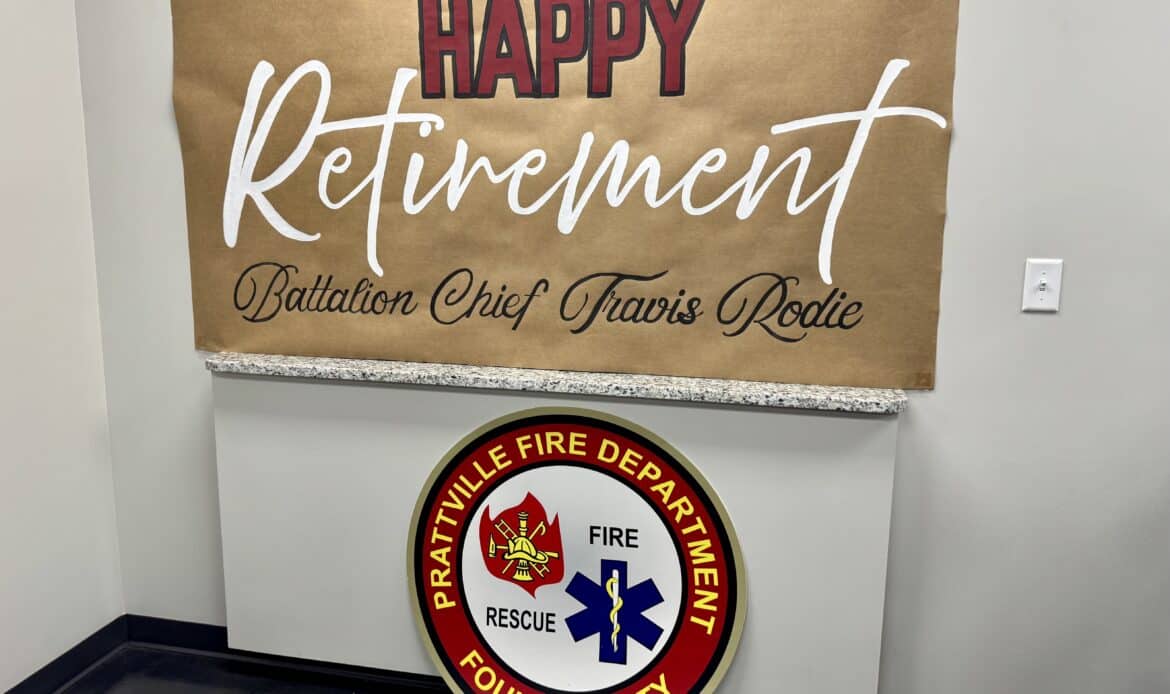
Prattville Fire’s Battalion Chief Travis Rodie Retires After 26 Years Of Service

Published

on


Addie McCluskey

Elmore Autauga News

Prattville Fire Department’s (PFD’s) Battalion Chief Travis Rodie celebrated his retirement, Dec. 22, 2025, at Stanley Gann Training Center, marking the end of a 26-year career of dedicated service.

Mayor Bill Gillespie presented Rodie with a token, recognizing his selfless leadership and long-standing commitment to the citizens of Prattville.

“Chief Rodie has done so much for our community,” said Gillespie. “One person can’t do everything, but one person can make a difference, and he’s done it from the top down.”

Assistant Chief Ricky Roberts also highlighted Rodie’s commitment to the community, which he said has extended far beyond PFD, including his service in the U.S. Air Force and his time coaching local youth sports.

“You’ll never meet a more dedicated employee than Travis,” said Roberts. “When given a task, whether he liked it or not, he would always get it done. His work ethic is unmatched. He’s championed physical fitness, invested deeply in public education, and consistently advocated for every single member of this department for 26 years.”

In the days leading up to his retirement, Rodie made a point to visit each fire station, offering encouragement and sharing lessons he hoped would stay with his colleagues long after his departure.

“There are three things I try to teach my grandchildren that I will leave you with today,” said Rodie. “All you need to be successful in this world is to be smart, be kind, and be strong.”

Rodie concluded the ceremony by calling his final class of recruits forward for one last tradition: 20 team pushups. As they counted each repetition, the emotion in the room was unmistakable — a fitting tribute to a leader whose impact will be measured not just in years served, but in the people he shaped and the legacy he leaves behind.


Link

Continue Reading

Rec Sports

Gregory Dean Craig, 62, Otwell

Published

on


Gregory Dean Craig, 62, of Otwell, passed away December 19, 2025, in Huntingburg.

He was born June 11, 1963, to Jerry and Patty (Hayes) Craig in Washington, Ind.

Greg had worked as a land surveyor for Nerco and Phoenix Natural Resources. He spent 18 years with the Pike County Sheriff’s Department and currently works in the parts department at Farbest Foods.

Greg was kind, hardworking, and loved his family fiercely. He told his wife he loved her every single day. He prayed for each member of his family every day while driving to work. He was often quiet but felt things deeply. He especially loved being “Pap” to his grandson, Barin. He delighted in doing things with him and loved it while on vacation when Barin, who loved the beach, wanted to leave it to have a campfire with Pap.

Greg was happiest while fishing or hunting and loved being at “The Last Resort”. Going on a little fishing trip with his dad or his son, Clint, was a special treat. He coached both his children in youth sports and supported everything they did. They knew he always had their back. He also took great pride in keeping his lawn in pristine condition.

Greg was a collector at heart, whether it was fishing lures, plastic worms, or Batman figures for Clint. When Clint was born, he bought a rattletrap lure to start his collection. He owned possibly the most extensive beer memorabilia collection around and was so proud of his “museum”.

Greg is survived by his wife of 38 years, Jody (Booth) Craig; daughter, Allyson Michelle (Jim) Bowers, or “Ally Shell” as Greg called her; son, Clint Matthew (Kelsey Barrett) Craig, or “Slappy” as Greg called him; grandchildren, Barin, Klaire, and Kameryn Bowers; mother, Patty Craig; brother, Brent (Jamie Williams) Craig; uncles, Gordon Craig and Roger Chamness; an aunt, Patsy Gilham; and several cousins.

He is preceded in death by his father, Jerry Craig; grandparents, Marion and Anita Jean Hayes and Luther and Norma Craig; aunt, Debbie Chamness; and his mother in law, Sharon Booth.

Services for Greg will take place at 2 p.m. EDT on Friday, December 26, 2025, at Harris Funeral Home in Petersburg, with visitation time from 10 a.m. EDT until service time.

Burial will follow at Otwell Cemetery.

Harris Funeral Home is entrusted with care.


Link

Continue Reading

Rec Sports

Jack Ryan: Baseball fields are all gone, but the memories survive

Published

on


On a cool and sunny Friday afternoon, I finally did what I’d been meaning to do for several weeks.

I drove over to Edgewood Park to have a look at the former Dixie Youth Baseball fields. After several years of being unused, McComb officials recently removed the fencing around each field along with several buildings on the property.

It’s an inglorious ending to a place that introduced thousands of local children to baseball and softball, and drew hundreds of their family members and friends on summer evenings to watch the games.

But now it’s gone. I parked my car and looked out at the property, trying to recall the location of the various fields.

Everything has been removed. The concession stand, the overhead press boxes behind each home plate, the storage buildings, the fences, the dugouts, the bleachers, the cinder blocks. I couldn’t tell for sure, but it looked like even the sidewalks were gone.

One overhead light lay on its former field, where the minor league used to play. There were three vehicles on the property, with guys completing the removal work, including a truck and a backhoe.

I don’t blame the city for clearing the property. It had been overgrown for several years until the city board approved the cleanup.

Nor do I blame the McComb Exchange Club for merging its youth baseball operations with Summit several years ago and moving to the Windsor Gay Youth Complex, which has more space than Edgewood Park did. Times change, and decisions have to be made.

In fact, Pike County once had three Dixie Youth Baseball locations, in McComb, Magnolia and Summit.

The Dairy Belt leagues in Magnolia were the first to close, pretty much going the way of all the dairy farms that Southwest Mississippi used to have. And then McComb DYB left Edgewood Park, where it had been since it started in 1958, for Summit.

Mary Ann and I were regulars at youth baseball games from 1994 to 2008, if my math is correct. Though it could be aggravating at times for parents trying to make sure their kids got to where they were supposed to be, the upside to Dixie Youth Baseball far outweighed any hassles.

The baseball fields are gone, but the memories remain. Every family has them, and here are some of my favorites:

• Coaching T-ball was comically fun. I remember one year, a player insisted on sitting down in the base path whenever he was in the field. I would have to go lift him up to move him out of the way.

• John’s junior league team Sonic won the championship in 1997. It was a close race with another team.

This team was a great group of kids, and they had good coaches and especially a fun group of parents. And the Sonic on Delaware Avenue, to their credit, donated a bunch of hamburgers for the team party.

• Thomas struggled at the plate in his first few games of minor league, when players graduated to a live pitcher instead of the junior league machine.

I pulled out my VCR tape of “The Empire Strikes Back” — this was the summer of 2000 — and had him watch Yoda’s tutorials of Luke Skywalker. A Jedi must feel the Force; it surrounds us. Believe in what you can do. And the very next game, he got a hit.

• When Audrey was in the softball leagues, one year I had these comical trash-talking contests with friends whose daughters were on another team. Audrey, it turned out, was a decent player. A sign of her future on the high school volleyball team.

When Audrey, our youngest, finished her last year of Dixie Youth, I was glad to be free of spending two nights or four nights a week at the park. I planned to go back once in a while to see what was going on, but I never did.

This would be the right place to thank all the Exchange Club members and other volunteers who do the hard work of running Dixie Youth. They all are champs.

Looking out at the empty space on Friday, it had to look a lot nicer than it did when the property wasn’t being used and the weeds had taken over. So I’m OK with starting from scratch on what is a pretty large piece of Edgewood Park.

A soccer league has asked to use the property, and I hope they, or some kind of youth sports group, gets it. The place has six decades of history, and that ought to continue.


Link

Continue Reading

Rec Sports

Chicago ARF celebrates championship season for local Homenetmen and AYF youth

Published

on


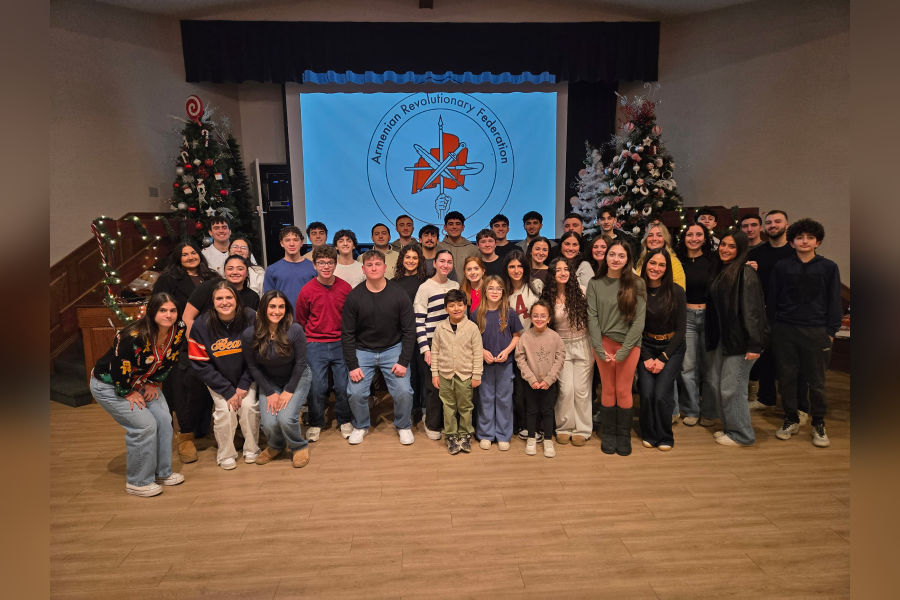
GLENVIEW, Ill. — On Saturday, Dec. 20, the Chicago “Christapor” Gomideh of the Armenian Revolutionary Federation (ARF) hosted a special evening at Shahnasarian Hall in the Armenian Community Center in Glenview to celebrate Armenian youth, athletic excellence and the enduring values that guide the Armenian community.

The evening began with a shared dinner, creating a warm and welcoming atmosphere for fellowship and celebration. The Gomideh expressed its sincere gratitude to all who contributed to the preparation, serving and cleanup, whose efforts ensured a smooth and enjoyable start to the night.

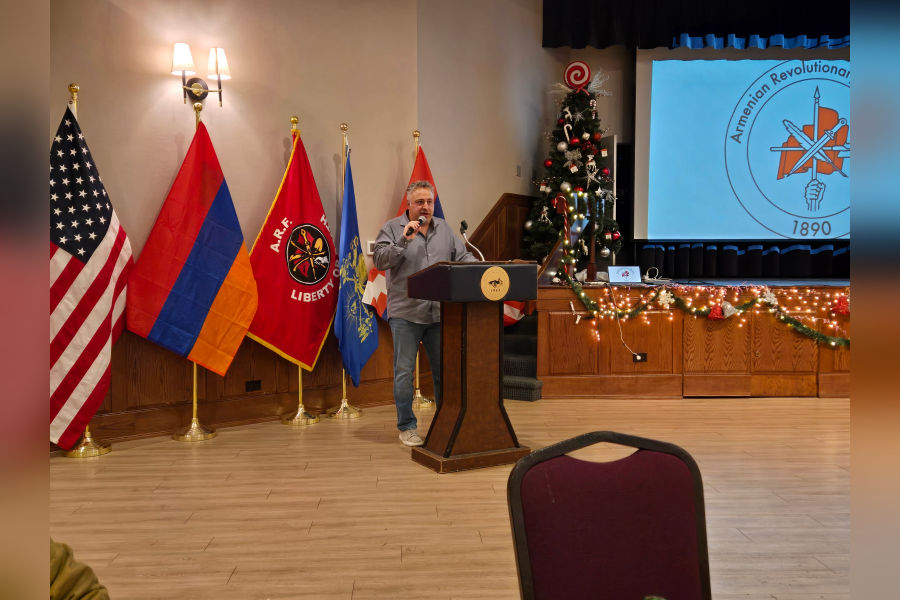
The program formally opened with welcoming remarks by Hagop Soulakian, chairman of the Chicago “Christapor” Gomideh. He welcomed the athletes and members of Homenetmen Chicago and the Chicago Ararat AYF Juniors and Seniors, along with their families, and congratulated both organizations on their recent championship victories.

The Homenetmen Chicago athletes were recognized for winning the 2025 Navasartian Games, followed just one week later by the Chicago Ararat AYF Juniors, who captured the 2025 Junior Olympic Championship. These back-to-back victories were highlighted as a source of pride for the entire community and as evidence of discipline, preparation and teamwork.

Hagop Soulakian, chairman of the Chicago “Christapor” Gomideh

In his remarks, Soulakian emphasized that these achievements extend beyond athletics. “Winning championships does not happen by chance,” he stated. “It begins with ideas, preparation and planning. It requires hard work and sacrifice. But above all, championships are won through unity.”

He then connected these athletic principles to the mission and values of the ARF through the symbolism of its coat of arms. He explained that the pen represents ideas, education and thoughtful preparation; the shovel symbolizes disciplined work and consistent effort; the sword honors sacrifice and courage; and the fist unites all of these elements through collective strength. “Just as in athletics,” he noted, “ideas, hard work and sacrifice only lead to victory when they are bound together as one. That belief — unity through shared purpose — is exactly what the ARF stands for.”

To conclude the program, the ARF invited all Homenetmen athletes and AYF members to the front of the hall, where each was presented with a Zinanishan pin. The pin was offered as both a token of appreciation for their hard work and a reminder of the principles required to succeed not only on the field, but within the Armenian community and in service to the nation.

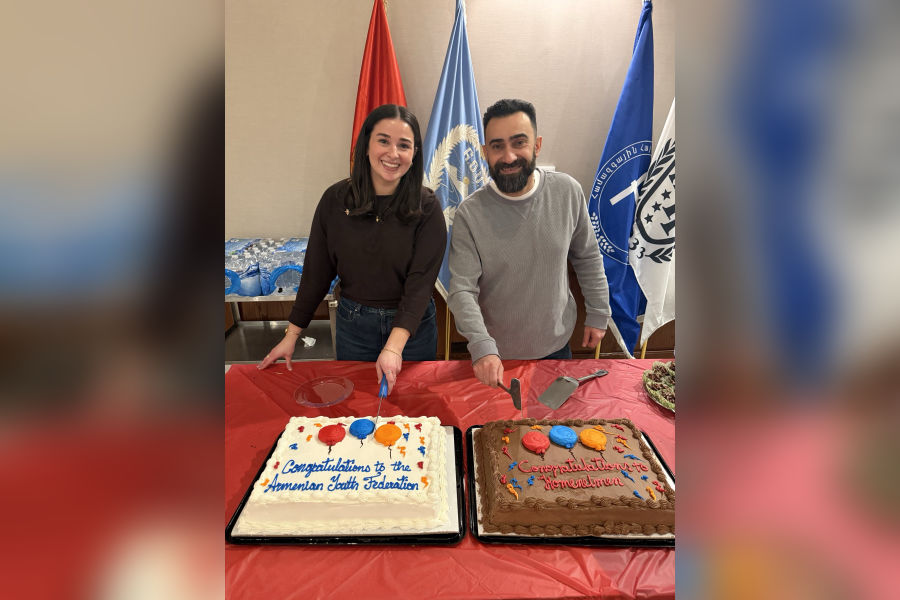
Khajak Arakelian (right), chair of Homenetmen Chicago, and Aleena Surenian (left), chair of the Chicago Ararat AYF, cut the cake.

The evening continued with a special cake-cutting ceremony led by Khajak Arakelian, chair of Homenetmen Chicago, and Aleena Surenian, chair of the Chicago Ararat AYF, marking the shared celebration between the organizations. Following the ceremony, it was announced that Chicago will host the 2027 AYF Senior Olympics. The announcement was met with enthusiasm and pride, as hosting the Senior Olympics is both a significant responsibility and a meaningful honor for the local community. The opportunity reflects the confidence placed in Chicago’s organizations and volunteers and further underscored the evening’s theme of youth leadership, organizational strength and collective commitment to the future.

Organizers expressed hope that the evening fostered renewed appreciation for all those who helped make the celebration joyful and meaningful, while reinforcing the importance of unity, service and continued investment in youth. As emphasized throughout the night, the young people honored at this event represent more than championship teams; they are future leaders of the Armenian community. As Soulakian reminded those gathered, “Our survival has never been accidental; it has always been the result of resilience, unity, and an unbreakable commitment to our nation.”


Link

Continue Reading

Most Viewed Posts

Trending