
Connect with us
https://yoursportsnation.com/wp-content/uploads/2025/07/call-to-1.png

Motorsports

Zane Smith earns first NASCAR Cup pole with monster lap at Talladega

Published

on


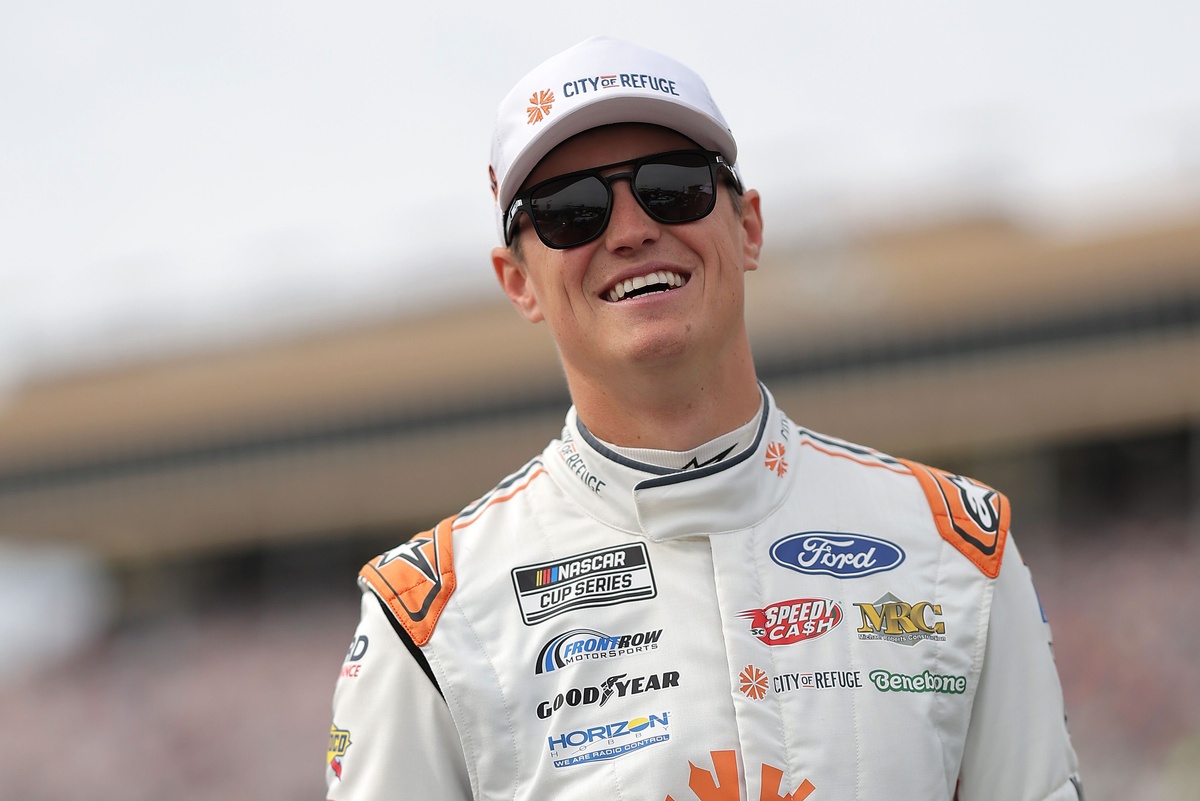
Front Row Motorsports isn’t unfamiliar with the front row at superspeedways, but it’s not a place we’ve ever seen Zane Smith before today. Driving the No. 38 Ford Mustang, he was the fastest man at Talladega in both rounds of qualifying, earning his first career pole in his 55th career start. Crew chief Ryan Bergenty was ecstatic and actively celebrating on pit road as his car rocketed to the top of the time charts.

Smith’s previous best start in the Cup Series is only seventh, coming at Atlanta earlier this year. His lap time at Talladega was simply stunning, beating the No. 8 Richard Childress Racing Chevrolet of Kyle Busch by over a tenth (0.132s).

Advertisement

“I wish I could take a lot of the credit for it, but truthfully, just a really fast FRM Ford,” said Smith. So cool — a pole-sitter in the Cup Series. That’s awesome. Just a huge shoutout to all of these guys. They’ve been doing an awesome job this year. Long race tomorrow, but a great starting spot, so I’m super stoked for this.”

Busch on the front row

Busch was the highest-qualifying Chevrolet, earning his first front row start since winning pole position at Dover one year ago. “That feels pretty good,” said Busch. “Great job by these guys … great start for RCR and our Chevrolet. Austin [Dillon] is right up there too. Looking forward to it. Obviously, it’s good to start up front. Hopefully you can hold that position and keep it up front.

“All about trying to score some stage points and stay out of the melee. You never know where that comes from. Heck, it could even come from behind you and you can be in it. But a solid start to the weekend. Just again proves that the RCR guys, when it comes to the plate racing stuff, we’re on top of that. I feel good about coming to these places, so I appreciate all of the hard work.”

Where the rest of the contenders line up

Joey Logano qualified third, Ryan Preece Ford, and Austin Dillon fifth. Chris Buescher, Austin Cindric, Josh Berry, Ryan Blaney, and Ty Gibbs filled out the remainder of the top ten.

Advertisement

Advancing into the final round of qualifying were seven Fords, two Chevrolets, and on Toyota. Gibbs was the lone representative for Toyota and also the last driver to advance, beating teammate Christopher Bell by 0.012s. Joe Gibbs Racing earned pole position in this year’s Daytona 500, but 500 pole-sitter Chase Briscoe was only 17th in Talladega qualifying.

Some other notable names starting deeper in the field include Bubba Wallace in 20th, Brad Keselowski 22nd, Kyle Larson 25th, Tyler Reddick 26th, Chase Elliott 30th, Ross Chastain 32nd, and Ricky Stenhouse Jr. — the most recent winner at Talladega — only reaching 35th on the grid. The good news for Stenhouse is that he also started outside the top-30 when he won that race last fall.

Single-car qualifying around the 2.66-mile superspeedway was completed without any mechanical issues or on-track incidents.

1

38


Ford

1

52.565


182.174

2

8


Chevrolet

1

+0.132

52.697

0.132

181.718

3

22


Ford

1

+0.135

52.700

0.003

181.708

4

60


Ford

1

+0.135

52.700

0.000

181.708

5

3


Chevrolet

1

+0.171

52.736

0.036

181.584

6

17


Ford

1

+0.196

52.761

0.025

181.498

7

2


Ford

1

+0.215

52.780

0.019

181.432

8

Wood Brothers Racing

21


Ford

1

+0.230

52.795

0.015

181.381

9

12


Ford

1

+0.268

52.833

0.038

181.250

10

54


Toyota

1

+0.386

52.951

0.118

180.846

11

20


Toyota

1

+0.266

52.927

0.013

180.928

12

41


Ford

1

+0.280

52.941

0.014

180.881

13

11


Toyota

1

+0.322

52.983

0.042

180.737

14

71


Chevrolet

1

+0.330

52.991

0.008

180.710

15

34


Ford

1

+0.334

52.995

0.004

180.696

16

24


Chevrolet

1

+0.367

53.028

0.033

180.584

17

19


Toyota

1

+0.400

53.061

0.033

180.472

18

48


Chevrolet

1

+0.422

53.083

0.022

180.397

19

16


Chevrolet

1

+0.423

53.084

0.001

180.393

20

23


Toyota

1

+0.461

53.122

0.038

180.264

21

10


Chevrolet

1

+0.462

53.123

0.001

180.261

22

6


Ford

1

+0.478

53.139

0.016

180.207

23

35


Toyota

1

+0.496

53.157

0.018

180.146

24

99


Chevrolet

1

+0.530

53.191

0.034

180.030

25

5


Chevrolet

1

+0.550

53.211

0.020

179.963

26

45


Toyota

1

+0.561

53.222

0.011

179.926

27

4


Ford

1

+0.603

53.264

0.042

179.784

28

77


Chevrolet

1

+0.637

53.298

0.034

179.669

29

42


Toyota

1

+0.676

53.337

0.039

179.538

30

9


Chevrolet

1

+0.684

53.345

0.008

179.511

31

Beard Motorsports

62


Chevrolet

1

+0.720

53.381

0.036

179.390

32

1


Chevrolet

1

+0.738

53.399

0.018

179.329

33

51


Ford

1

+0.756

53.417

0.018

179.269

34

43


Toyota

1

+0.842

53.503

0.086

178.981

35

47


Chevrolet

1

+0.873

53.534

0.031

178.877

36

88


Chevrolet

1

+0.877

53.538

0.004

178.864

37

7


Chevrolet

1

+0.902

53.563

0.025

178.780

38

78


Chevrolet

1

+1.442

54.103

0.540

176.996

39

44


Chevrolet

1

+3.010

55.671

1.568

172.011

To read more Motorsport.com articles visit our website.


Link

Continue Reading
Click to comment

Leave a Reply

Your email address will not be published. Required fields are marked *

Motorsports

Danica Patrick ‘blown away’ by response to American flag – Motorsport – Sports

Published

on


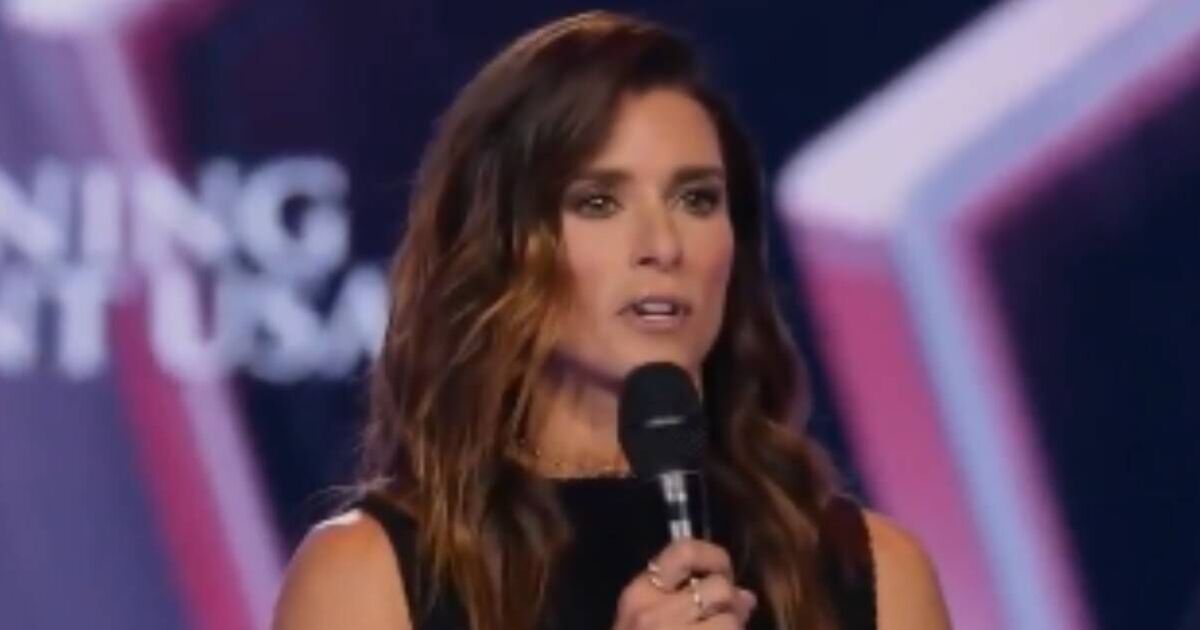
Danica Patrick has revealed that she was “blown away” by the negativity and labels she faced after expressing her love for the American flag. Patrick, a former IndyCar and NASCAR star, entered the political arena a couple of years ago, first attending Turning Point USA’s AmericaFest in 2023 as a spectator, before being invited to speak at the political organization’s “United for Change” campaign rally in support of President Donald Trump in October 2024.

Just two days before the November 5 election, Patrick was tapped by Trump to speak at one of his rallies in the final days of the Presidential election, where he was securing his return to the White House for a second non-consecutive term, after defeating Vice President Kamala Harris. However, it was Charlie Kirk’s Turning Point that helped inspire the former motorsports star to step into the realm of politics.

A few months after the founder’s assassination in Utah, Patrick was invited to speak again in front of thousands at TPUSA’s latest political conference. Following Kirk’s death, Patrick was one of many who grieved the passing of the political giant and was compelled to help carry on his legacy.

On stage on Saturday, Patrick revealed how she was “blown away” by labels placed on her for expressing her love for the American flag after stepping into the political arena. To some, she was a MAGA Republican, and not an American first.

“Who else’s first political event? Not just AmFest, but has anyone been to? This was the first one, and I was so blown away, just the energy and the people,” Patrick said. Like, it’s palpable to just be in the room.

Sign up to our NASCAR newsletter here.

“And so it led me on a journey that I couldn’t have expected, of which led me to speaking at AmFest last year, which I think you saw some pictures up here. And the point of that conversation for me was how blown away I was that saying I love this country or loving the American flag, wearing the American flag, meant somehow that I was a MAGA Republican and wasn’t just American.

And I said that the job is not done until that means I’m American, right, to be able to just say I love this country. It should be that easy.”

Patrick also claimed she was a Native American in a past life. She explained how she visited a “regression therapist” to help her discover more about her history. “So I want to share a story with you, and it’s a little bit of a unique story – I did a past-life regression,” she began. “I don’t know if anyone knows what that is, but it occurred to me that maybe somebody wouldn’t.

“So a past-life regression is when you meet with a past-life regression therapist, you get into a very meditative state, very relaxed, and they guide you through being able to access memories to your past lives.

“And I was somewhere in like Nevada or Utah, and I was a Native American. And I had a stick, and I left my tribe. And I journeyed south, and I was on my way to what would have been like original L.A. when it was first sort of civilized.” She then noted that her intention with sharing the bizarre experience was that it showed how those in attendance should live their lives.

“… And the message was that I could be killed for doing what I loved and what was meant for me and my passion, or I could die inside anyway,” she continued. “And that the mission is to stand true to what it is that you want to do and the mission at hand, and let it play out. And I think you guys have probably all heard what Charlie Kirk wanted to be remembered for.”


Link

Continue Reading

Motorsports

“The Struggle Never Really Ends”: When Ross Chastain Revealed the Dark Reality of Funding in NASCAR

Published

on


Unlike mainstream sports that thrive on open fields and basic equipment, motorsports demands far more than raw talent and free afternoons. It requires machinery, beginning with go-karts for young drivers, along with teams, transport, crews, and a steady stream of sponsorship capable of covering staggering expenses. For drivers without a deep-rooted racing lineage, that climb becomes even steeper. Ross Chastain understands that reality better than most.

While Chastain’s father had some familiarity with grassroots racing as a hobby, the family’s livelihood came from watermelon farming, a demanding trade that left little room to bankroll a national racing career. Chastain grew up surrounded by agriculture rather than asphalt.

An eighth-generation farmer from southern Florida, he followed a lineage of fields and harvests, with his father, grandfather, uncle, and generations before them tied to watermelon production. That heritage instilled work ethic and resilience, but it did not come with the financial runway typically associated with professional racing paths.

In 2017, when Chastain began dipping his toes into NASCAR competition on a part-time basis, the financial gap became impossible to ignore. While driving JD Motorsports’ No. 4 Chevrolet in the Xfinity Series, he spoke candidly with Inc. about the numbers behind the dream. His father’s farming operation could support occasional starts in Trucks or Late Models, but the cost of NASCAR racing at higher levels gave a wake-up call. The family immediately searched for ways to bridge the gap and their first stop came naturally.

They approached the National Watermelon Promotion Board, which had previously supported their Late Model efforts, though those contributions covered modest budgets. Melon 1, a distributor and broker, stepped in as well, providing noteworthy backing. Even with that help, the funding puzzle remained incomplete.

Chastain recalled a moment that crystallized the challenge. One evening, the family pulled up a blank image of a race truck on a computer screen and began penciling in potential sponsors. They listed names they believed might contribute five thousand dollars, two thousand five hundred dollars, or perhaps ten thousand dollars.

Before long, the realization hit. The truck simply did not have enough space to fit every name required to cover the costs. “So we figured we might be able to run one race, but after that we would be out of people and money,” he admitted.

He confessed that “That struggle never really ends.” Even while competing nearly full-time, the grind of funding continued. Chastain explained that his team ran thirty-three races each year near the highest level of the sport, yet sponsorship conversations never stopped.

Their vice president of marketing stayed glued to the phone, constantly searching for partners. Progress came, but the financial weight remained severe. “For my team to be competitive costs about $50,000 a race,” he said.

Chastain acknowledged that the figure sounded enormous, yet it remained conservative compared with bigger organizations. Teams like Roush, Gibbs, or Dale Earnhardt Jr.’s operation operated in a different financial universe, often spending between $150,000 and $175,000 per race.

Drivers unable to reach those numbers simply raced with what they could gather, understanding that money directly translated into speed.

Today, Chastain’s circumstances look different. As a Cup Series driver for Trackhouse Racing, sharing the garage with talents such as Shane van Gisbergen and rising prospect Connor Zilisch, his footing has grown firmer. Strong performances over recent seasons have elevated his profile, probably easing the constant scramble for backing.

Link

Continue Reading

Motorsports

2025 O. Bruton Smith Awards: Speedway Motorsports Honors Promoter, Speedway of the Year, and Innovation

Published

on


The engines have cooled, and the grandstands are quiet, but for the team at Speedway Motorsports, the work never truly stops. As the 2025 season officially comes to a close, the industry giant took a moment to pause and recognize the men and women who keep the gears turning behind the scenes.

In a company-wide town hall that felt less like a corporate meeting and more like a family reunion, Speedway Motorsports leadership handed out its most prestigious hardware. It was a day to celebrate the grit, creativity, and sheer determination that define the sport. From the high banks of Bristol to the safety command centers in Dover, the winners of the O. Bruton Smith Award, Promoter of the Year, Speedway of the Year, and Acceleration Award represent the absolute best of the business.

A Salute to Safety: The O. Bruton Smith Award

There is perhaps no greater honor within the company than the award bearing its founder’s name. The O. Bruton Smith Award isn’t just about performance metrics. It’s about character. It’s for the person who embodies the drive, enthusiasm, and heart that Bruton Smith used to build an empire.

This year, that honor went to Jim Hosfelt, the Vice President of Safety and Security at Dover Motor Speedway. If you know race day, you know that safety and security are the invisible foundations of the entire experience.

When fans walk through the gates, they expect to be safe. It’s a massive responsibility, and Hosfelt has shouldered it with a quiet, professional intensity since joining the Monster Mile in 2014.

Hosfelt’s Stint With Dover Motor Speedway

Hosfelt isn’t your average security executive. He’s a Cumberland, Maryland native who spent a quarter-century in law enforcement, retiring as the Chief of Police for the Dover Police Department. He’s an Air Force veteran and a graduate of the FBI National Academy.

When Speedway Motorsports acquired Dover in 2021, they quickly realized they had a star on their hands. Hosfelt didn’t just manage Dover. He stepped up as the Director of Safety and Security for the entire company, acting as the critical link between the tracks, NASCAR, and federal agencies.

Speedway Motorsports COO Mike Burch put it best when he noted that while Hosfelt’s work is often low-profile, it is arguably the most vital thing the company does. Ensuring families can come to a race, feel safe, and go home with happy memories is a heavy burden, and Hosfelt carries it with grace.

Channeling a Legend: Promoter of the Year

The H.A. Humpy Wheeler Promoter of the Year award is special. Humpy was the P.T. Barnum of stock car racing, a man who believed that if you weren’t thinking big, you weren’t thinking at all.

Jerry Caldwell, the President and General Manager of Bristol Motor Speedway, proved he has that same wild spark of creativity in 2025. Caldwell took home the hardware after pulling off one of the most audacious crossovers in sports history: The Speedway Classic.

Turning “The Last Great Colosseum” into a baseball diamond sounded crazy on paper. But Caldwell and his team didn’t just make it work. They made history. The event shattered records, selling over 91,000 tickets, the highest single-event sales figure in Major League Baseball history.

It was a massive swing that connected for a home run, proving that Bristol isn’t just a race track; it’s a global entertainment destination. Marcus Smith noted that Humpy Wheeler himself would have loved the ambition behind building a stadium inside a speedway.

The Gold Standard: Las Vegas Wins Speedway of the Year

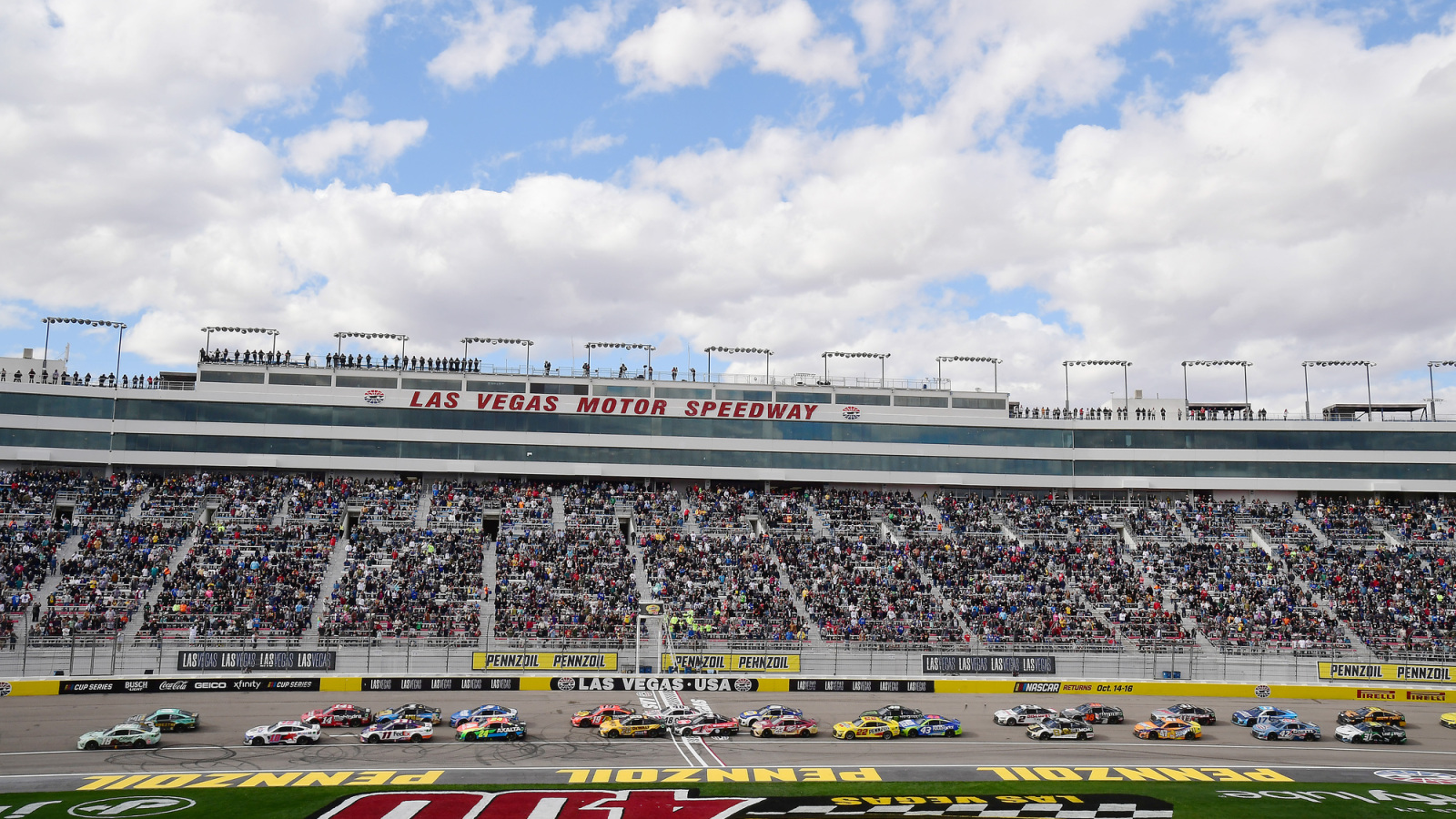
Consistency is the hardest thing to achieve in the sports business, yet Las Vegas Motor Speedway makes it look routine. For the 11th time in 14 years, the Las Vegas team took home the Speedway of the Year award. This year was unique for the Vegas crew.

They navigated a significant leadership transition as longtime boss Chris Powell retired, passing the baton to Patrick Lindsay. Usually, a changing of the guard leads to a momentary dip in momentum, not in Vegas. Under Lindsay’s leadership, the track continued its dominance, excelling in attendance, fan friendliness, and financial performance.

To edge out 10 other world-class facilities is no small feat. It requires firing on all cylinders from corporate sales to operations. The fact that Las Vegas continues to hoard this trophy speaks volumes about the culture of excellence embedded in that team.

Gaining Momentum: The Acceleration Award

For the second year running, Sonoma Raceway claimed the Acceleration Award. This recognition is all about year-over-year growth, taking what you have and making it significantly better. Accepted by GM Brian Flynn, the award highlighted Sonoma’s impressive strides in 2025.

The raceway has turned its Turn 11 facility into a hub of activity, driving up track rentals and finding new ways to monetize the beautiful California property. It wasn’t just about making more money, though. It was about smart operations. The team implemented cost-efficiency measures that streamlined the business without sacrificing the fan experience.

Final Thoughts

As 2025 closes, these awards serve as a reminder that while the cars are the stars on Sunday, it’s the people working on Monday morning who keep the sport alive and thriving. Cheers to many more years of success.



Link

Continue Reading

Motorsports

‘Emergency landing’ text sent before plane crash that killed Greg Biffle, 6 others, NTSB confirms

Published

on


Emily Mikkelsen and Michaela Ratliff

STATESVILLE, N.C. (WGHP) — Officials offered an update Saturday after a deadly plane crash that claimed the life of NASCAR star Greg Biffle and six other people, including his children, on Thursday morning.

The Statesville Regional Airport confirmed a crash just after 10 a.m. Thursday on social media.

NASCAR said that the seven people who died in the crash were Greg Biffle, his wife Cristina Grossu, their son Ryder Jack and his daughter from a previous marriage Emma Elizabeth. Craig Wadsworth, as well as Dennis Dutton and his son Jack Dutton, were also killed in the crash.

The NTSB says a preliminary report should be available within 30 days, but a full report will take closer to a year.

During a conference on Friday, the NTSB said that initial findings showed that the plane took off, turned west and then turned again, back towards the airport. It was flying low, according to witnesses, and then it hit the approach lighting at the airport and trees before coming to rest near a runway and catching fire. The debris field is described as very large and scattered. The crash happened about ten minutes after takeoff.

At Saturday’s conference, officials confirmed that they still do not know the cause of the crash.

“We do not know the circumstances which led the aircraft… to attempt to return to the airport, but that is the focus of our investigation,” officials said.

They also confirmed that a text reading “Emergency landing” was sent from someone on the plane.

“I can confirm that the NTSB is aware of one brief text from a passenger on board the aircraft to a family member that read, and I quote, ‘Emergency landing.’”

“We are not aware of any other communications from passengers on board the aircraft to those on the ground.”

The NTSB also says that at this time, it does not know who the pilot of the plane was.

You can watch the news conference in the video player above.


Link

Continue Reading

Motorsports

William Byron Faces a Primary Sponsor Setback Ahead of the 2026 Season

Published

on


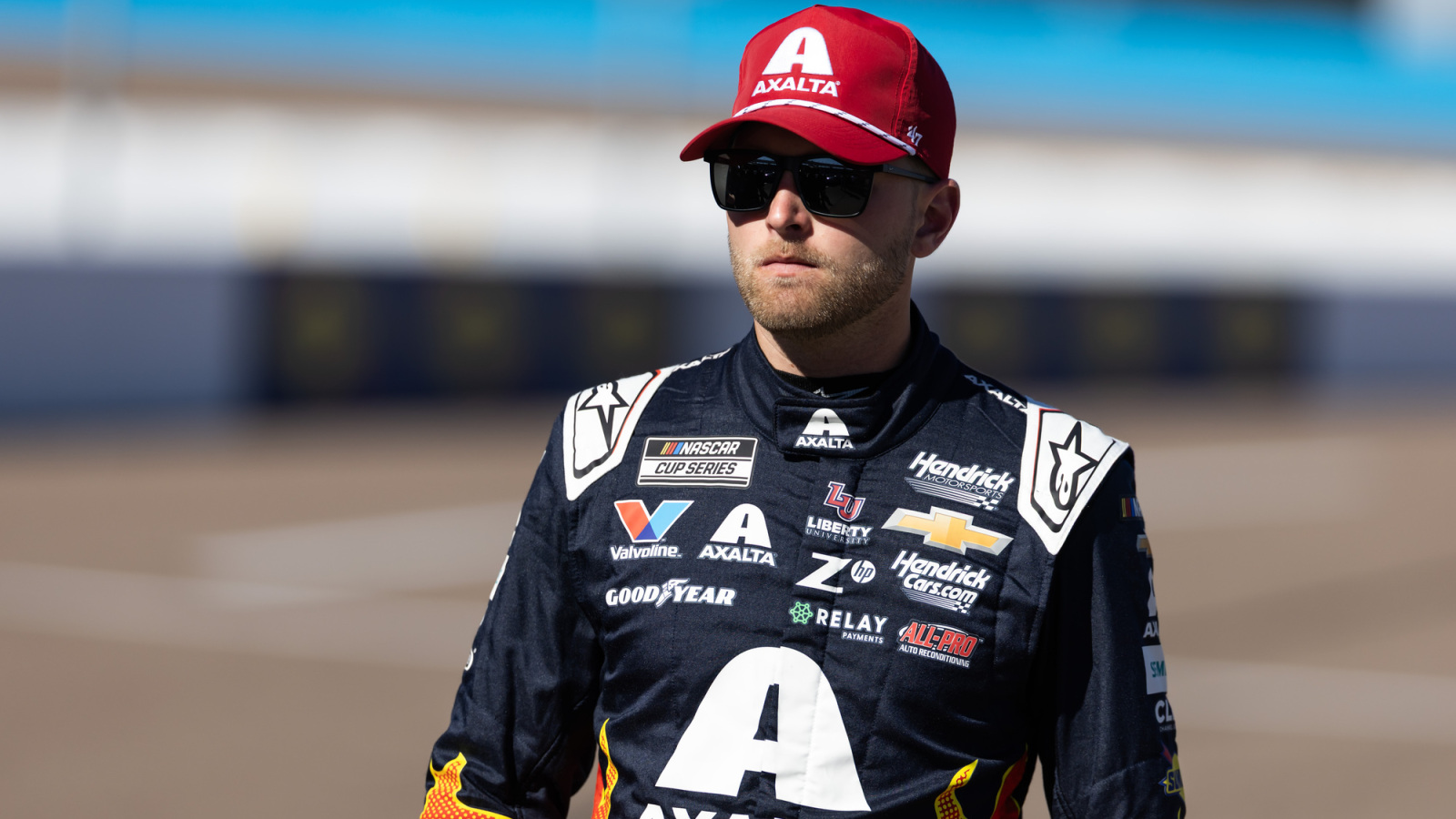
William Byron emerged as one of the better drivers in the 2025 season, especially after winning the regular season championship. Byron even managed to make it into the Championship-4, but a last-moment incident caused him to lose out on the title win. Now, with the 2026 season start right around the corner, the #24 driver is facing a massive sponsorship setback with Liberty University.

Notably, Liberty University has been backing William Byron for more than a decade now. The educational institution has been sponsoring him since his junior NASCAR days, as he continued to achieve success leading up to the Cup Series. Even for the 2026 season, Liberty was believed to continue the alliance, but potentially at a reduced commitment with the HMS star.

Liberty University had sponsored 12 of William Byron’s races in the 2024 season. But it was significantly cut down to just six races in the 2025 season. Now, for the 2026 season, the educational institute is sponsoring him for just three races. This might mean that the sponsor is looking to back out of the deal completely in the near future, following Byron’s championship-less streak in the Cup Series.

The three races that William Byron will be supported by Liberty University are the Watkins Glen Race, Indianapolis Motor Speedway, and the Martinsville Speedway over the 2025 season. The three-race sponsorship means that the number of races sponsored is cut down to half of what it was in the previous season. As such, Byron must look for other primary sponsors for more races to continue to fund his Cup Series dream with Hendrick Motorsports.


Link

Continue Reading

Motorsports

Shadows in the F1 Dyno Rooms: The 2026 Compression Whisper

Published

on


In the dim glow of the dyno cells at Brackley and Milton Keynes, alarming whispers had started circulating weeks before the Christmas lights went up in 2025. Formula 1’s 2026 power unit regulations were meant to usher in a new era: more sustainable, more electric, and—crucially—more equal.

–by Mark Cipolloni–

The FIA had dropped the geometric compression ratio of the internal compression engine portion of the overall F1 power unit from 18:1 to 16:1, a deliberate step to curb outright power from the internal combustion engine while ramping up the hybrid contribution to nearly 50/50.

But in the high-stakes world of F1 engine development, rules are never just words on paper. They are battlegrounds.

The rumor began as a quiet murmur among technicians: two power unit manufacturers—Mercedes and Red Bull Powertrains—had allegedly cracked a way to bend the new limit without breaking it.

The key? Thermal expansion.

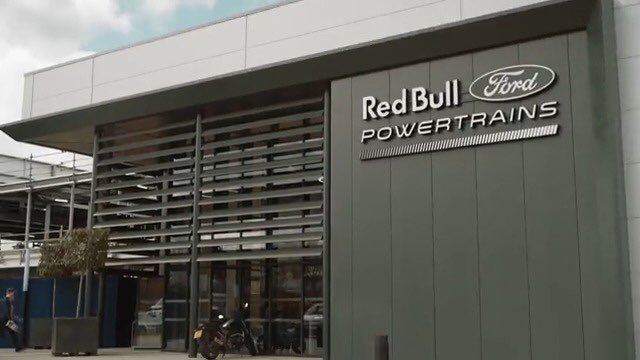
Red Bull Ford Powertrains building

By crafting connecting rods (or possibly other components in the piston assembly) from exotic alloys that swell dramatically when the engine hits full operating temperature, the piston could be pushed fractionally higher at top dead center during a hot run. On the cold dyno bench, where the FIA measures compression statically at ambient temperature, the ratio stays safely at 16:1.

But on track, under race conditions, that clever expansion could squeeze the combustion chamber tighter—effectively restoring an 18:1 ratio and unlocking an extra 15 horsepower, or roughly three-tenths of a second per lap.

It was brilliant, if true. And infuriating to the others.

Ferrari’s engineers, poring over their own dyno data in Maranello, were the first to raise the alarm. “If they’re doing this,” one senior figure reportedly told the FIA technical working group, “it’s not just an advantage—it’s a gulf.”

Honda, preparing to supply Aston Martin, and Audi, gearing up for their debut with Sauber, echoed the concern. They lobbied for clarification, arguing that the rules’ static measurement method—unchanged since the hybrid era—left a loophole wide enough to drive a turbo through.

The FIA’s response was measured: “The regulations clearly define the maximum compression ratio and the method for measuring it, based on static conditions at ambient temperature.”

They acknowledged thermal expansion as a natural phenomenon but noted no hot-condition testing was required, or even possible. Yet behind closed doors, discussions intensified. Some feared protests at the first race in Australia; others worried that if the “trick” was allowed, rivals wouldn’t have time to retrofit stronger pistons and rods without compromising reliability.

In the paddock, the rumor grew legs. Anonymous sources pointed fingers at Mercedes’ meticulous engineering culture and Red Bull’s aggressive development under their new in-house program. One engineer joked, “It’s like the old days of blown diffusers—clever, but someone always cries foul.” Another dismissed it as mind games: “Spread enough doubt, and you slow your rivals down chasing ghosts.”

As the first pre-season test approached in late January 2026, the tension was palpable. Teams will be arriving at Barcelona in January with engines humming at new volumes, but eyes will on the dyno logs. Would the FIA demand hot measurements? Would they close the loophole? Or would the clever ones start the season with an invisible edge?

In F1, the line between genius and cheating is often drawn in microns. And in 2026, that line just got a little hotter.


Link

Continue Reading

Most Viewed Posts

Trending