
NIL
2025 MAC college football projections, preview

-

Bill Connelly
“There’s a lot of people talking about Group of 5, Power 4, the money and the resources and NIL. It’s about the players and it’s about lining up and banging heads and [may] the best man win. You saw that [Saturday].” — Northern Illinois athletic director Sean Frazier, after the Huskies’ 2024 upset of Notre Dame.
The MAC is proof that a big tent can produce occasionally incredible things. As college football keeps trending toward closing up shop and distributing more money to fewer schools, and as the idea of a so-called “super league” — one that would either limit or completely eliminate opportunities for MAC-level schools — continues to waft around, this league and its teams keep trying to find ways to make noise. NIU’s big moment in 2024 proved that, given enough opportunities, they can still do so. In the past 25 seasons, MAC teams have scored 78 wins over power-conference teams, and while nearly half of those have come from NIU (14), Bowling Green (12) and Toledo (11), 14 current and former MAC programs have posted at least one.
Current circumstances are making things awfully difficult, though. The bottom half of the MAC has always been pretty shaky, and 2024 was no exception: MAC teams occupied four of the bottom 15 slots in the year-end SP+ rankings, which also ranked 0-12 Kent State as the worst FBS team in four years. Then came a brutal offseason in which (A) NIU arranged to leave for the Mountain West in 2026, (B) MAC teams got hit harder than anyone else by the transfer portal and general attrition (the MAC’s 41.1% returning production average was more than 12 percentage points below the national average), (C) the reigning conference champion (Ohio) lost head coach Tim Albin to a Charlotte program that has had just one winning season ever in FBS, and (D) Bowling Green head coach Scot Loeffler left for an NFL position coach job in the spring.
In a college football universe with NIL money and unrestricted transfers, continuity is growing increasingly difficult in MACtion country. But the conference still boasts some proven coaches and high-level talent, and stars will inevitably emerge. Let’s preview the MAC!
Throughout the summer, Bill Connelly will preview every FBS conference, ultimately including all 136 FBS teams. The previews will include 2024 breakdowns, 2025 previews and team-by-team capsules.

2024 recap
NIU stole the early headlines, but injuries and offensive struggles rendered Thomas Hammock’s Huskies an afterthought in the conference race. By midseason, it became increasingly clear that Ohio and Miami (Ohio) were the MAC’s safest bets. Miami beat Ohio 30-20 in the regular season, but the Bobcats’ offense ignited from there, averaging 36.7 points during a season-ending seven-game winning streak that included a 38-3 throttling of Miami in the MAC championship game.
Continuity table
The continuity table looks at each team’s returning production levels (offense, defense and overall), the number of 2024 FBS starts from both returning and incoming players and the approximate number of redshirt freshmen on the roster heading into 2025. (Why “approximate”? Because schools sometimes make it very difficult to ascertain who redshirted and who didn’t.) Continuity is an increasingly difficult art in roster management, but some teams pull it off better than others.
From Miami corner Raion Strader (Auburn) to Bowling Green running back Terion Stewart (Virginia Tech) to NIU quarterback Ethan Hampton (Illinois) to Ball State tight end Tanner Koziol (Houston) to a number of high-level Ohio defenders, MAC teams lost numerous stars to power-conference schools. In all, eight MAC teams (including four with new head coaches) rank in the bottom 18 in returning production.
Toledo and Buffalo mostly avoided the same fate, however. The Rockets and Bulls both rank in the top 50 in returning production, and during an intriguing nine-win season in which his Bulls improved from 119th to 87th in SP+, second-year Buffalo head coach Pete Lembo was able to build a solid base of redshirt freshmen as well.
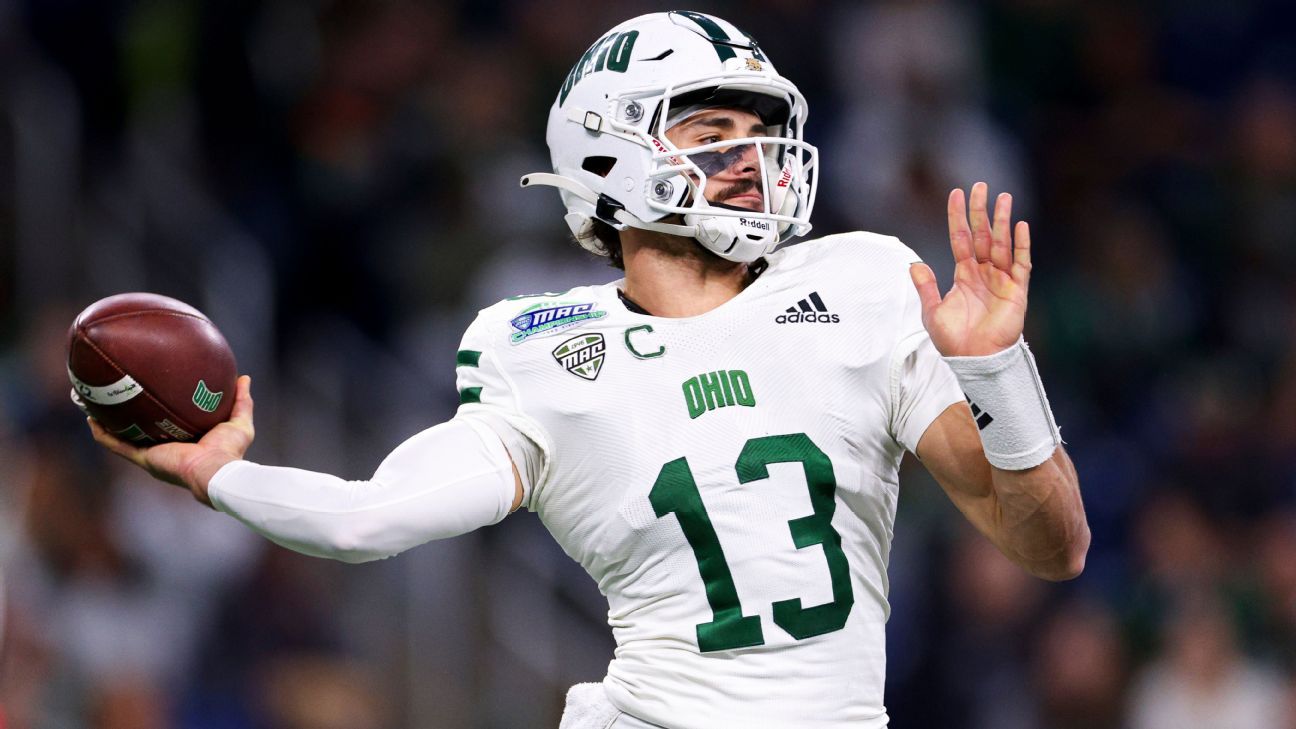
Despite losing Albin, Ohio attempted continuity by promoting offensive coordinator Brian Smith to head coach, and he was able to hold on to at least a few key pieces, including quarterback Parker Navarro, left tackle Davion Weatherspoon and safety DJ Walker. SP+ suggests that might be enough to keep the Bobcats in MAC contention.
2025 projections
Only four teams start out with top-100 projections, and they make sense: They’re the two who played in the title game last year (Ohio and Miami) and the two who return the most from 2024 bowl teams (Toledo and Buffalo). The odds of at least one of those teams clicking and playing at a top-50 or top-60 level are pretty good.
The odds are also pretty good that the bottom portion of the conference is going to be awfully poor. UMass returns to the MAC with a new coach (former Rutgers assistant Joe Harasymiak) and almost no expectations, and four of the bottom five slots in the recent SP+ projections went to MAC teams.
(* Akron is ineligible for the postseason due to APR issues.)
The aforementioned four top-100 teams have a combined 65% chance of winning the conference title. But I guess that means there’s still a greater than one-in-three chance of an underdog run, huh?
Five best games of 2025
Here are the five conference games that feature (A) the highest combined SP+ ratings for both teams and (B) a projected scoring margin of less than 10 points.
Oct. 11: Toledo at Bowling Green. Most of the MAC’s biggest games take place once the conference shifts to midweek MACtion games in November, but this will be an early tone-setter between a talented Toledo team with a navigable early schedule and a BGSU team with quite a few question marks and an intriguing new head coach in Eddie George.
Nov. 4: Miami (Ohio) at Ohio. Last year’s two best teams jockey for position. Miami is a projected favorite in the five games preceding this one.
Nov. 12: Toledo at Miami (Ohio). Two MACtion weeks, two huge games for Chuck Martin’s RedHawks.
Nov. 19: Miami (Ohio) at Buffalo. Make that three huge games in three weeks for Miami.
Nov. 28: Ohio at Buffalo. Buffalo’s schedule offers up a massive opportunity: After the season opener against Minnesota, Lembo’s Bulls are projected favorites in 10 straight games before Ohio visits over Thanksgiving weekend.
Conference title (and, technically, CFP) contenders
 Toledo Rockets
Head coach: Jason Candle (10th year, 73-40 overall)
2025 projection: 72nd in SP+ (77th offense, 63rd defense), 8.8 average wins, 6.4 conference wins
It feels impossible to adequately evaluate Jason Candle. On one hand, despite running the program with more consistent investment and high-quality recruiting than any conference mate, he’s won only two MAC titles in 10 years. It’s always going to feel like the title rate should be higher than that for the Rockets.
On the other hand, Candle’s Rockets have won 11 games twice and have taken down Arkansas, Iowa State, BYU, Mississippi State and Pitt (the last two were both in 2024). His next win will be his 74th at UT, passing Gary Pinkel’s total for the most in school history. He fielded some awesome offenses early in his tenure, and when the Toledo defense crumbled a few years ago, he made a fantastic defensive coordinator hire (Vince Kehres) to right the ship. He’s never finished with a losing record. Basically, he’s been good enough to keep his job but not quite good enough to get hired away by power-conference programs. And with solid continuity (especially at QB and in a very good secondary), it sure feels like he’ll have a chance at a third MAC title this season. After a season-opening visit to Kentucky, the Rockets are projected favorites in every remaining game.
Beating Mississippi State (by 24!) and Pitt but losing to Akron, among others, certainly suggests things went sideways for a bit last year. The main reason was an offense that slipped to 88th in offensive SP+, the worst ranking of the Candle era. The Rockets scored 15 or fewer in four MAC games, losing all four, and the run game was the primary culprit: The Rockets were just 124th in rushing success rate. The line was leaning on youngsters, and the RBs didn’t break nearly enough tackles.
Candle didn’t make any major staff changes but brought in four offensive line transfers, plus running backs Chip Trayanum (Kentucky) and Kenji Christian (NC A&T), to shore things up. If those moves work, the passing game, featuring veteran quarterback Tucker Gleason, last year’s leading receiver Junior Vandeross III and NIU transfer Trayvon Rudolph — and, perhaps, sophomore and former star recruit Zy’marion Lang — could be the primary beneficiary.
There are fewer questions on defense, where Kehres’ unit has averaged a 55.0 defensive SP+ ranking over the last three seasons. Granted, every starter in the front six is gone, but end Malachi Davis and tackle Martez Poynter are sturdy veterans, and the portal brought players like end Louce Julien (6.5 TFLs at UMass) and linebacker Hudson Miller (five starts at Purdue). The secondary was the strength of the UT defense last year, and five of last year’s top seven return, including a dynamite nickel back in Braden Awls. Sophomore transfers Amare Snowden and Braedyn Moore, both former blue-chippers from Wisconsin, could contribute quickly too.
 Ohio Bobcats
Head coach: Brian Smith (first year)
2025 projection: 80th in SP+ (83rd offense, 79th defense), 7.4 average wins, 5.7 conference wins
Ohio won 10 games under Tim Albin in both 2022 and 2023 but lost an incredible 10 starters, led by quarterback Kurtis Rourke (Indiana) and all-conference tackle Kurt Danneker (Baylor), to power-conference transfers. It was an absolute bounty of talent walking out the door. And then the Bobcats won 11 games and a MAC title in 2024. It was easily one of the best coaching performances of the season. But instead of attempting to pull off a similar magic act in 2025, Albin left for a new project at Charlotte, and OC Brian Smith moved up to the bigger office.
In quarterback Parker Navarro (2,423 passing yards, 1,143 non-sack rushing yards in 2024), left tackle Davion Weatherspoon, safety DJ Walker and corner Tank Pearson, plus returning running back Sieh Bangura (who transferred to Minnesota in 2024 but returned), Smith kept some proven pieces in Athens, and by MAC standards, continuity levels aren’t too bad. But the concept of the double-dip is still a scary one. They still must replace their leading receiver, at least three starting offensive linemen, at least four rotation linemen and basically every linebacker for the second straight season. Even if you survive major turnover once, having to do so year after year — and while changing head coaches, no less — certainly brings about more opportunities for regression.
Bangura’s return is a welcome one; he and Navarro form one of the most proven MAC backfields, but they’ll have an awfully new line in front of them. Those responsible for only 20 of last year’s 70 OL starts are back, and four transfers, including small-school starters Nick Marinaro (Dartmouth) and Josh Waite (Shippensburg), might have to make immediate contributions. Leading receiver Coleman Owen is gone too, potentially leaving a big-play void.
Smith wisely held on to defensive coordinator John Hauser, whose first Bobcat defense kept opponents both inefficient and nonexplosive in 2024.
Like Toledo, Ohio boasts far more proven entities in the back than in the front. The combination of Walker, Pearson, nickel Adonis Williams, transfers Rickey Hyatt Jr. (South Alabama) and Ronald Jackson Jr. (Montana) and perhaps a youngster like sophomore Tony Mathis should keep quarterbacks frustrated. But senior tackle Bralen Henderson will see lots of new rotation pieces around him. Senior ends Kaci Seegars and Walter Bob Jr. should be solid up front, but depth is an obvious concern. No returning or incoming linebacker logged more than 17 snaps in 2024.
 Buffalo Bulls
Head coach: Pete Lembo (second year, 9-4 overall)
2025 projection: 91st in SP+ (104th offense, 78th defense), 7.7 average wins, 5.5 conference wins
Ohio’s optimistic projection is based quite a bit on the Bobcats’ strong recent history. Buffalo, however, seems to have quite a bit more in the “proven entities” department. Pete Lembo was Ball State’s head coach from 2011-15 and engineered as many bowl trips (two) as the program has seen in the nine years since his departure. He engineered immediate improvement in his return to MAC life too, and now leading rusher Al-Jay Henderson, leading receiver Victor Snow, three starting O-linemen and 12 of 17 defenders with at least 200 snaps all return. The large load of redshirts should assure solid depth.
The defense didn’t grade out any better than the offense last year, but it seems to have fewer question marks in 2025. End Kobe Stewart and linebackers Red Murdock and Dion Crawford combined for 42.5 tackles for loss, 37 run stops and 20 sacks last season — no one else in this conference boasts that kind of play-making star power. The return of 300-pound senior George Wolo (injured in 2024) should assure the requisite size up front. The secondary gave up too many big plays last season (especially considering the quality of the pass rush), but returning seven of last year’s top eight DBs and adding both a young power-conference transfer (Arizona State corner Keontez Bradley) and a small-school star (Shepherd safety Miles Greer) offers more options.
The offense has a bit more to prove, but size should help: From a pure height-and-weight standpoint, the depth chart should look like something from a power conference. Henderson measures in at 6-foot-0, 210 pounds, wideouts Nik McMillan (6-1, 224) and Chance Morrow (6-6, 195) could play big roles, and two potential all-MAC guards, Trevor Brock and Tyler Doty, average 6-6 and 325 pounds between them. Snow, a former walk-on, is a little guy in the slot (5-8, 165), but he proved steady and durable in 2024, catching at least four passes in nine games.
Note that I haven’t said a word about the quarterback position yet. With C.J. Ogbonna gone, offensive coordinator Dave Patenaude will likely be choosing between 2024 backup Gunnar Gray and, more likely, journeyman Ta’Quan Roberson. Roberson has thrown for 2,188 career yards and was decent at UConn (one of his three former schools) in 2023. He should be able to lean on a solid run game, but Ogbonna was capable of big plays here and there, and Roberson has averaged just 10.3 yards per completion in his career. MAC contention will probably require more than that.
A couple of breaks away from a run
 Miami (Ohio) RedHawks
Head coach: Chuck Martin (12th year, 65-67 overall)
2025 projection: 96th in SP+ (135th offense, 35th defense), 6.5 average wins, 4.7 conference wins
Chuck Martin was designed in a lab to frustrate me. He eschews analytics as it pertains to fourth downs. (The RedHawks went for it just 11 times in 101 fourth-down opportunities, a 10.9% go rate that ranked 133rd in FBS.) He is all-in on the “play not to lose” game management approach, and it’s contributed to a 22-31 career record in one-score finishes since he began at Miami in 2014. He’s old-school in a lot of unhelpful ways.
He’s also one hell of a program builder. He took over when Miami was at a particularly low ebb, and he has built things brick by brick.
Miami, 2014-15: 5-19 record, 120.0 average SP+ ranking
Miami, 2016-22: 40-40 record, 93.9 average SP+ ranking
Miami, 2023-24: 20-8 record, 63.5 average SP+ ranking
Martin and his remarkably consistent staff — in 11 years, he’s had two offensive coordinators and three defensive coordinators — identify and develop talent well, play physical and reasonably uncomplicated ball, put major focus on special teams and create the highest floor of any MAC team.
We’re going to find out a lot about the stability of said floor in 2025. At this point I trust Martin to continue to produce solid two-deeps with athleticism that exceeds their recruiting rankings. But … damn, did the RedHawks lose a lot this offseason: Every primary offensive starter is gone, as are basically 5.5 of the starters in the defensive front six. The secondary remains mostly intact, but ace cornerback Raion Strader left for Auburn.
Martin inked only three defensive transfers — a solid show of faith in last year’s backups and potential stars like edge rusher Adam Trick and safety Silas Walters. But the offense underwent a portal overhaul: quarterback Dequan Finn (Toledo/Baylor), five receivers (including former Notre Dame blue-chipper Deion Colzie), two tight ends and three offensive linemen came aboard. Finn, running backs Kenny Tracy (injured in 2024) and Jordan Brunson should form the base of a strong run game if the offensive line holds up, and the defense gets the benefit of the doubt. But losing this much production is almost a guarantee of regression. We’ll see if Martin’s program-building prowess can prevent a collapse.
 Northern Illinois Huskies
Head coach: Thomas Hammock (seventh year, 32-38 overall)
2025 projection: 106th in SP+ (133rd offense, 61st defense), 6.3 average wins, 4.5 conference wins
Like many evaluation-and-development guys, Thomas Hammock was relatively slow to embrace portal life. NIU’s head coach brought in just 15 total transfers from 2022-24, but he’s grabbed 13 this offseason. He needed reinforcements just about everywhere he looked. The Huskies’ classic upset of Notre Dame drove an eight-win season — NIU’s third winning year in four — but Hammock’s Huskies lost their starting quarterback, their top two running backs, their top four pass catchers, five of their top six offensive linemen, and 11 of 16 defenders with at least 200 snaps (including the top four defensive tackles). Defensive coordinator Nick Benedetto left for Fresno State, too.
For a wobbly offense, this turnover could be seen as an opportunity for renewal. NIU ranked 115th in offensive SP+ for each of the last two seasons; the run game was decent last season, but the Huskies ranked 103rd in yards per dropback with no discernible explosiveness in the passing game. Hammock made an inspired coordinator hire, bringing in Quinn Sanders, the University of Charleston head coach who oversaw the No. 1 offense in Division II (per SP+). Charleston combined a relentless run game with over-the-top passing; one could see how that might be appealing to the physicality-minded Hammock.
Hammock brought in quarterback Jackson Proctor, a decent dual-threat from Dartmouth, but QB appears to be Josh Holst’s job to lose. The sophomore was strong in the Huskies’ 28-20 bowl win over Fresno State, and sophomore RB Telly Johnson Jr. became the go-to back late in the season. That’s a good starting point, but only one returning receiver gained more than 60 receiving yards, and the line will be loaded with sophomores and juniors. It’ll be big, though: Hammock has established a nice pipeline of guys listed at 6-foot-4 or taller and 300 pounds or heavier.
It’s harder to make light of the defensive turnover. NIU has averaged a top-40 defensive SP+ ranking over the last two seasons but basically returns 2.5 starters on that side of the ball. Defensive end Roy Williams and corner Jacob Finley are solid starting points on the perimeter, but new coordinator Rob Harley might need smaller-school transfers like tackle Dasean Dixon (Albany) and safety Jasper Beeler (Saginaw Valley State) to thrive quickly. Otherwise the two-deep will be loaded with freshmen and sophomores.
 Bowling Green Falcons
Head coach: Eddie George (first year)
2025 projection: 111th in SP+ (98th offense, 121st defense), 5.3 average wins, 4.0 conference wins
Scot Loeffler was starting to get somewhere. After going just 7-22 in his first three seasons at BGSU, he hovered around .500 each year from 2022 to 2024, but the underlying numbers (122nd in SP+ in 2022, 94th in 2023, 77th in 2024) suggested excellent progress. In 2024, the Falcons had their best offense in nine years and their best defense in 11. But Loeffler left to become the Philadelphia Eagles’ QBs coach in late February — an understandable but extremely inconvenient move.
BGSU made an intriguing replacement hire, however, in Eddie George, the Ohio State legend and, more recently, author of a nice revival at Tennessee State. After going 15-18 in his first three seasons at TSU, his Tigers jumped to 9-4 with a first FCS playoff bid last fall. He brought both TSU coordinators with him (OC Travis Partridge, DC Brandon Fisher), and after Loeffler had already added 15 transfers in the winter, George signed another 10.
Translation: This is going to be a new team. BGSU’s 59 returning starts are the third lowest in a turnover-heavy conference, and 47 of those starts are from one unit (OL). The defense returns basically 0.5 starters (safety Darius Lorfils, who started six games).
I’m really intrigued by some of the defensive newcomers, though. Defensive tackle Eriq George (son of the coach) had 12.5 TFLs for TSU, and linebacker Gideon Lampron had 26.5 TFLs at Dayton. Corners Mark Cannon Jr. (Illinois State) and Jalen McClendon (TSU) combined for four picks and 32 pass breakups. Throw in some youngsters with strong recruiting rankings — defensive lineman Collins Acheampong (UCLA), linebacker Andrew Hines (Wake Forest), safety Jay’Quan Bostic (Toledo), corner Key’on Washington (West Virginia) — and George might have something here.
The offense might not have quite as much upside, but experience could produce a high floor. The line indeed returns four starters, all seniors, and veterans Drew Pyne (Mizzou) and Justin Lamson (Stanford) will compete at QB. The skill corps, however, is a total mystery. Tight end Arlis Boardingham (Florida) is athletic, and receivers Brennan Ridley (Hampton) and Allen Middleton (Southern Illinois) combined for 1,018 receiving yards as FCS freshmen, but it’s hard to determine who might see a ton of the ball in 2025.
 Central Michigan Chippewas
Head coach: Matt Drinkall (first year)
2025 projection: 117th in SP+ (127th offense, 102nd defense), 5.3 average wins, 4.0 conference wins
Matt Drinkall inherits personnel from a team that won only 13 games in its last three years under Jim McElwain, and he might institute a pretty big stylistic shift with unproven offensive personnel. This doesn’t feel like the start of an “a couple of breaks away from a run” tale. But a friendly schedule and actual defensive continuity — a rare commodity in this conference — might make the Chippewas improvement candidates.
Drinkall brings NAIA success to the table — he improved Kansas Wesleyan from 2-9 to 13-1 with a playoff semifinal run over five years in Salina — and he was asked by Jeff Monken to modernize Army’s option attack following rule changes in 2023. The changes didn’t really take, and he was demoted to Army O-line coach in 2024, but the Iowa grad still has Midwestern ties and an interesting offensive background.
We probably won’t see much of an option attack with incumbent Joe Labas the likely starting QB. Labas started half of 2024 before a season-ending injury; his full-season numbers (seven TDs, seven INTs) were colored by a horrid, five-INT performance against Florida International, but he wasn’t much of a runner regardless. The return of slot man Tyson Davis (injured in 2023) assures at least one experienced wideout, but no other returnee had more than 66 receiving yards in 2024, and Tulane transfer Trey Cornist is officially the most proven running back … with 149 rushing yards last year. Drinkall is an O-line guy, and CMU should have good size up front, plus maybe some help from FCS transfers John Iannuzzi (Columbia) and Jacob Russell (Valpo).
Veteran Sean Cronin, most recently Army’s D-line coach, takes over as defensive coordinator, and his No. 1 task is bringing stability to a dramatically all-or-nothing unit: CMU ranked 11th nationally in stuff rate and 13th in sack rate but gave up a spectacular number of big plays. Linebackers Jordan Kwiatkowski and Dakota Cochran (combined: 23.5 TFLs) are thrilling, and safety Caleb Spann thrives near the line of scrimmage. They are undeniable playmakers, and cornerback Kalen Carroll (Cincinnati) is one of the conference’s few incoming power-conference starters. But glitches were devastating in 2024, and Cronin will likely dial the risk profile back a bit.
 Eastern Michigan Eagles
Head coach: Chris Creighton (12th year, 57-75 overall)
2025 projection: 113th in SP+ (116th offense, 111th defense), 5.1 average wins, 3.5 conference wins
Chris Creighton has been pulling off .500ish seasons at EMU for long enough that we’re forgetting how impressive going .500 at EMU really is. The Eagles won five games just three times in the 24 seasons before Creighton’s arrival from Drake in 2014, and now they’ve bowled six times in the past nine years. Collapsing from 5-2 to 5-7 last year, thanks to both epic injury issues and close defeats, was a genuine disappointment instead of a roundabout accomplishment.
With so many MAC programs dealing with major turnover, this would feel like an opportunity for Creighton and EMU … if they weren’t dealing with the same thing. The Eagles return only four players who started more than five games last season, though the injuries meant that quite a few of the returnees saw the field. That’s especially true on defense, where 11 returnees started at least once. Still, Creighton brought in seven defensive transfers (plus four JUCOs) to assure a rebound for a unit that collapsed from 67th to 115th in defensive SP+. New playmakers need to emerge, but defensive end Jefferson Adam made 5.5 TFLs in just 185 snaps, and nickel back Barry Manning had three run stops and two pass breakups in 193 snaps; both could become stars with starter-level playing time.
The offense collapsed to 130th in offensive SP+ in 2023 but rebounded a bit last year despite 18 guys starting at least one game. Only six of those 18 return, but I’m intrigued by newcomers like quarterback Cameron Edge (Maryland) and running back James Jointer Jr. (Liberty), and receiver Terry Lockett Jr. is one of the league’s more explosive returning wideouts. The bar for further improvement is pretty low — just keep guys semi-healthy, and you could return to the top 100.
Since Creighton’s arrival, only NIU has played in more one-score games among MAC teams than EMU — almost surprising considering EMU’s fast-paced offense and fourth-down willingness — and that dynamic probably won’t change in 2025: Ten of the Eagles’ 12 games are projected within single digits, and six of the last eight are projected within a touchdown. Win the close ones they didn’t win last year, and 2025 will be pretty exciting.
Just looking for a path to 6-6
 Western Michigan Broncos
Head coach: Lance Taylor (third year, 10-15 overall)
2025 projection: 118th in SP+ (112th offense, 117th defense), 4.8 average wins, 3.5 conference wins
After back-to-back losing seasons for a seemingly stalling WMU program, 2024 brought some positivity: Thanks primarily to a 5-1 record against teams ranked in the triple digits in SP+, Lance Taylor’s Broncos eked out six wins and a bowl bid.
In terms of balancing efficiency and explosiveness, the WMU offense was one of the more well-rounded in the conference.
Walt Bell’s offense is predicated around strong rushing and quick passing; it’s an obvious concern that only 2.5 starters return (tight end Blake Bosma, guard John Hofer and receiver and seven-game starter Malique Dieudonne), but junior running back Jalen Buckley (683 yards, nine TDs) is good, Bosma (88% catch rate) is an efficiency cheat code, and Taylor brought in intriguing power-conference transfers such as running back Cole Cabana (Michigan), receiver Christian Leary (Alabama/Georgia Tech) and linemen Raheem Anderson (Michigan) and Hunter Whitenack (Illinois). Quarterback Hayden Wolff is gone, but I think either sophomore Broc Lowry or JC All-American Brady Jones will fill in pretty well there.
The defense hasn’t yet generated any traction under Taylor, who is on his third coordinator in three years. New DC Chris O’Leary was a Notre Dame analyst and, in 2024, the safeties coach for Jim Harbaugh’s L.A. Chargers. This feels like a high-ceiling, low-floor hire, and O’Leary’s success in 2025 will be derived primarily from a number of smaller-school transfers, the most intriguing of which are probably defensive end Kershawn Fisher (Nicholls), linebacker Sefa Saipaia (Ferris State), corner Jordon Thomas (Eastern Kentucky) and safety Marvin Smith (Alabama A&M). Returning safety Tate Hallock is a keeper, but newcomers will tell the tale.
 Akron Zips
Head coach: Joe Moorhead (fourth year, 8-28 overall)
2025 projection: 132nd in SP+ (131st offense, 120th defense), 4.5 average wins, 3.2 conference wins
In three years at Akron, Joe Moorhead has proved to be a pretty solid talent evaluator, and going 4-8 in 2024 — after the Zips went a combined 7-47 from 2019-23 — was an undeniable success. But hard jobs remain hard in perpetuity; Moorhead hasn’t made any progress on offense (average offensive SP+ ranking: 126.7), the Zips’ APR scores have dropped enough to get them banned from the postseason (not that six wins was particularly likely anyway), and Moorhead’s primary reward for solid talent identification is that said talent has been plucked away: Seven Zips transferred to power-conference teams this offseason.
It’s kind of a lost year already, in other words. But in Michael Johnson Jr. (Syracuse), running back Chris Gee (Colgate), O-lineman Allen Jones Jr. (West Alabama), prolific linebacker Cam Hollobaugh (Walsh), safety Mehki Flowers (Penn State) and others, Moorhead’s 2025 transfer haul has decent upside. So, too, might returnees like veteran quarterback Ben Finley, 6-foot-7 defensive end Bruno Dall, linebacker Shammond Cooper (injured in 2023) and junior corner Elijah Reed.
Akron is a projected favorite in only three games but is a projected one-score underdog in five others — overachieving against projections just a little could make this a decent season, even if bowling is already off the table.
 Ball State Cardinals
Head coach: Mike Uremovich (first year)
2025 projection: 134th in SP+ (123rd offense, 131st defense), 3.4 average wins, 2.5 conference wins
After the slow rise and equally slow fall of the eight-year Mike Neu era, Mike Uremovich takes the reins at BSU. The NIU grad and former Temple and NIU offensive coordinator knows the MAC and has crafted success from limited Midwestern resources at both NAIA’s St. Francis (Illinois) and FCS’ Butler. His 2024 Butler team ranked 35th in SP+, easily the highest in the non-scholarship Pioneer Conference.
Uremovich’s offense is generally built around adapting to player strengths, and the primary strength of his 2025 Cardinals might be versatility. Senior quarterback Kiael Kelly is a better athlete than passer, and running back transfer Qua Ashley (Kennesaw State) caught 28 balls out of the backfield last year. Throw in slot man (and punt returner) Qian Magwood and 5-foot-8 Bucknell WR transfer Eric Weatherly, and you’ve got a set of bouncy and versatile, if not particularly large, skill-corps guys. They could also have the largest pair of tackles in the MAC with returnee Chris Hood (6-foot-10!) potentially pairing with Butler transfer Adam Dolan (6-foot-8), for whatever that’s worth.
Despite BSU’s defensive collapse, Uremovich kept coordinator Jeff Knowles in place, and with good reason: He was Uremovich’s DC at Butler in 2023. The defensive front returns disruptive options in linebacker Joey Stemler and tackle Darin Conley, but a poor secondary has been overhauled. Uremovich brought in 10 defensive transfers, but only three are seniors — this might be a multiyear rebuild on D.
 UMass Minutemen
Head coach: Joe Harasymiak (first year)
2025 projection: 13th in SP+ (119th offense, 135th defense), 3.5 average wins, 2.2 conference wins
It’s been a pretty directionless FBS run for UMass. The Minutemen spent their first four FBS seasons in the MAC before choosing independence over all-sports membership, but after nine years and just 18 wins, they’re back. At head coach, they’ve tried veteran retreads (Mark Whipple, Don Brown) and young hotshots (Walt Bell), and nothing has generated traction. Now it’s time to go Full Rutgers. Massachusetts native Joe Harasymiak takes over after three years as Greg Schiano’s defensive coordinator at RU. Schiano is the ultimate, obsessive “skip no steps” program builder, and one can see the appeal to such an approach at UMass.
Harasymiak brought in 34 transfers, but while a few of them are seniors who could contribute quickly — quarterback Grant Jordan (Yale), offensive lineman Mike Entwistle (Harvard), defensive end Josh Nobles (Jackson State), linebacker Timmy Hinspeter (Rutgers), safety Malcolm Greene (Virginia) — some of the more intriguing players on the roster are underclassmen.
Redshirt freshman quarterback AJ Hairston could fend off both Jordan and Utah transfer Brandon Rose for playing time at QB, while transfers like running back Rocko Griffin (UTSA), receiver Tyree Kelly (USF), tackle Malachi Madison (Virginia Tech), linebacker Nick Hawthorne (Boise State) and disruptive safeties Kendall Bournes (Concord) and Zeraun Daniel (Georgetown) are all juniors or younger.
This is going to take some time. UMass is a projected favorite in only one 2025 game, but hey, when you’ve averaged only two wins per season in FBS, the bar for progress is awfully low.
 Kent State Golden Flashes
Interim head coach: Mark Carney
2025 projection: 136th in SP+ (134th offense, 133rd defense), 2.8 average wins, 2.2 conference wins
If the bar is low at UMass, it’s just laying on the floor at Kent State. Under head coach Kenni Burns, the Golden Flashes went just 1-23 in two seasons, but it’s actually even worse than that: In my year-end, all-division SP+ rankings, they not only ranked a distant last among the 134 FBS teams, they ranked 227th overall, behind 79 FCS teams and 14 Division II teams. They would have been well below average in the FCS’ Missouri Valley Football Conference. Hell, they’d have been fourth in D2’s GLIAC. This was an utterly atrocious football team.
That just means there’s nowhere to go but up, right? Even with Burns getting dismissed at just about the most awkward possible time of year (mid-April) and offensive coordinator Mark Carney taking over as interim head coach, it’s going to be almost impossible to be that bad again.
I’m not going to try to sell you on the merits of transfers like quarterback CJ Montes (Fordham), offensive lineman Jamarcus Hill (Southeast Missouri), defensive end Jamond Mathis (Southern Illinois) and defensive tackle Thomas Aden (Pitt) or genuinely decent returnees like guard Dustyn Morell or nickelback Canaan Williams. I’m just going to note that, with so many other MAC teams facing major turnover, Kent State could be close enough to the rest of the pack to win a game or two. And when the bar is set at “midtier GLIAC team,” it’s pretty easy to maybe show a sign or two of progress.

The NCAA transfer portal will feature hundreds of players across all levels of college football in the 2026 offseason.
Prominent quarterbacks have begun to declare their intent to enter the transfer portal in the weeks before it opens. DJ Lagway, Josh Hoover, Rocco Becht and Dylan Raiola are among the Power Four quarterbacks who will be at a new school in 2026.
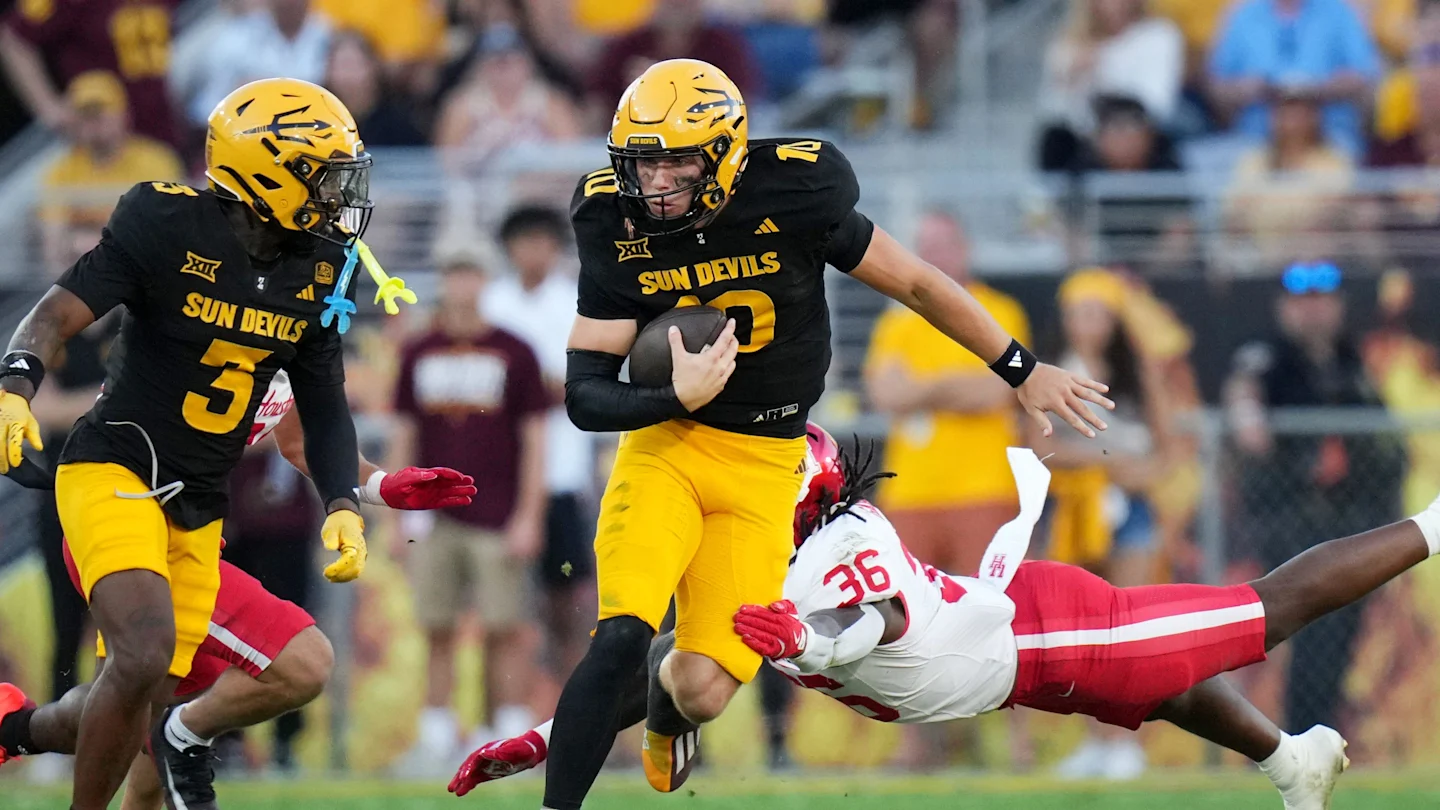
One of the first Power Four quarterbacks that decided to enter the transfer portal was Arizona State quarterback Sam Leavitt. He will have two seasons of eligibility at his next school.
One program linked to Leavitt when he enters the portal is Oregon. Leavitt is from West Linn, Oregon, just south of Portland and an hour and a half drive from Eugene by interstate highway.
Oregon has not started a quarterback that it recruited from high school for an entire season since Justin Herbert in 2019. Bo Nix, Dillon Gabriel and Dante Moore (transferred back) all came to the Ducks via the transfer portal.
The 6-foot-2, 205-pounder began his college football career at Michigan State in 2023. He played in a maximum of four games to keep his redshirt for the Spartans, passing for 139 yards, two touchdowns and two interceptions on 15-of-23 passing.

Leavitt transferred to Arizona State in the 2024 offseason. He started every game for the Sun Devils while accumulating 2,885 passing yards, 24 touchdowns and six interceptions while rushing for 443 yards and five touchdowns en route to their Big 12 Championship victory and subsequent College Football Playoff appearance.
The Big 12 named Leavitt its Freshman of the Year and Second-Team All-Big 12 for his heroics. The conference also named him as its Newcomer of the Week on multiple occasions. He finished 2024 with the most passing yards by a freshman in a season in Arizona State history.
Leavitt’s 2025 season was cut to just seven games due to injuries. He passed for 1,626 yards, 10 touchdowns and three interceptions while rushing for 306 yards and five touchdowns.
The Sun Devils will not start Leavitt in their bowl as he has declared his intent to leave. Arizona State (8-4, 6-3) will face ACC champion Duke (8-5, 6-2) in the Tony the Tiger Sun Bowl in El Paso, Texas on Dec. 31 (3 p.m. EST, CBS).
The NCAA transfer portal will officially open for all college football players looking for new destinations on Jan. 2, 2026. The portal will stay open until Jan. 16, 2026.
The way college football operates in the NIL/revenue-sharing era has moved a lot closer to the NFL model, and one high-profile program is acknowledging that in a very public way.
USC has been announcing on social media that players have “re-signed” with the program, essentially acknowledging that all college football players are free agents each year now, thanks to the transfer portal and the ability to chase better compensation elsewhere.
A big one for the Trojans this week was quarterback Jayden Maiava’s decision to return to USC rather than pursue the NFL draft this year or a bigger payday from another school, but USC has publicized the return of more than two dozen players in this way — from starters to little-used freshmen and even its kicker.
Jayden Maiava has re-signed with the USC Trojans. pic.twitter.com/jLI0S6hPKh
— USC Football ✌️ (@uscfb) December 16, 2025
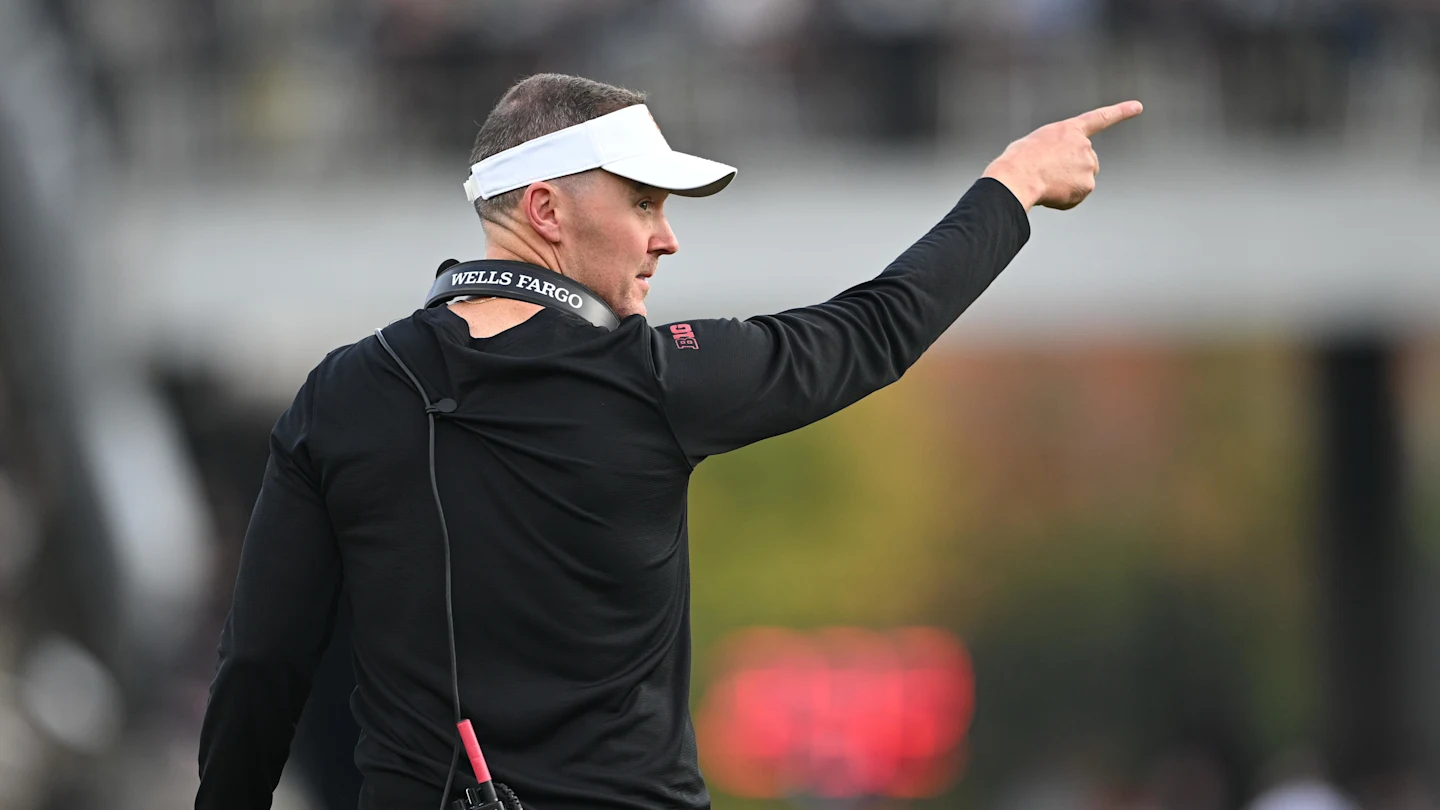
Coach Lincoln Riley was asked about this new approach for his program.
“I think that’s something that should be celebrated. In this day and age, it’s almost more like an NFL team. Like, it’s an accomplishment to be welcomed back, and then on top of that, when you do have that option, it’s something that should be celebrated by a school or a program that somebody wants to continue on what’s being built or what they’ve already started at that place,” Riley said.
“… It’s changed so much on all accounts. It’s changed a lot for the players. It’s obviously changed a lot for us.”
USC overhauled its player personnel/recruiting department a year ago by hiring general manager Chad Bowden away from Notre Dame and building a new staff for him. Bowden has a reputation for thinking outside the box, so this was likely an idea that he and his staff came up with for the Trojans.
College football analyst Adam Breneman chimed in with his thoughts on USC’s “creative” approach to roster management.
“To me, USC has always been known for creativity. They’re in Los Angeles, the creative capital of the world, that’s where great things happen, and a great job here by USC’s creative department, having this idea. I think we’ll see teams around the country copy this, announcing the re-signing of players to new contracts for the upcoming season with NIL and rev-share deals,” Breneman said.
“Chad Bowden, the USC general manager, is ahead of his time. He’s innovative, he thinks forward, he’s proactive, and his staff clearly has something here, really great with announcing the re-signing of the roster at USC. What a great idea.”
USC may have indeed started something with this, as Missouri announced the return of star running back Ahmad Hardy in the same way.
More schools are following USC’s lead with re-signings https://t.co/ri5GnwgqjJ
— Ryan Kartje (@RyanKartje) December 20, 2025

Amid the spectacle of the College Football Playoff’s opening weekend — and the nagging sense that we’re watching a sport we no longer love — here’s the uncomfortable question no one in power seems eager to answer:
Is college football slowly turning off the very fans who built it?
The other day on our radio show, we asked a simple poll question: “What’s your excitement level for this year’s College Football Playoff?” The result wasn’t close. The runaway winner was: “Mild at best.”
No, it wasn’t a scientific poll by any means. But it was taken in a college-football-crazed state, in a city that hosts three bowl games, from listeners who have spent decades scheduling fall Saturdays around kickoff times. These are not casuals. These are the lifers.
And they sound tired.
College football has always thrived on passion — irrational, inherited passion. We fell in love with this sport because we were loyal to our hometown or home-state schools. Because our dads and moms went there. Because our grandparents wore the colors. Because even when our teams were bad, they were ours. We believed players loved our schools the way we did. We believed coaches were stewards of something bigger than themselves.
That belief is gone.
What we’re left with now is a sport that feels increasingly transactional, untethered from its own history, and openly hostile to the idea of loyalty. The transfer portal and NIL didn’t just change college football — they rebranded it. Players are no longer student-athletes growing into men within a program; they’re year-to-year contractors shopping their services to the highest bidder. And coaches are no longer culture builders; they’re free agents with obscene contracts and super-agents who are already negotiating new deals with new teams by midseason.
Lane Kiffin didn’t even wait for the College Football Playoff selection committee to put his Ole Miss team in the 12-team field before bolting for his next big job. Think about it: the head coaches from three CFP teams will be elsewhere next season, meaning in the most important tournament in the sport that a quarter of its leaders already had one foot out the door before the playoff even started.
That’s not continuity. That’s chaos.
And the collateral damage is everywhere. Bowl games — once the measuring stick of success — are now disposable. This year alone, Notre Dame opted out because it got snubbed by the CFP committee while Kansas State and Iowa State opted out because they lost their coaches. Bowls used to mean something. They were a reward, a destination, a final chapter. Now they’re an inconvenience.
Missouri coach Eli Drinkwitz didn’t mince words when he said earlier this week: “College football is sick.” He warned that the sport is “cracking” — not metaphorically, but structurally. Rules without consequences. Participation agreements nobody honors. Tampering without punishment. Freedom without guardrails.
UCF coach Scott Frost went even further. He said the quiet part out loud: “It’s broken.” And for that honesty, he was attacked. Not because he was wrong — but because he threatened those who benefit from the disorder. Frost described a world where participation agreements are ceremonial, salary caps are fiction and booster money determines competitive balance more than coaching or development ever could.
That’s not college football. That’s the NFL without contracts, unions or rules.
Minnesota coach P.J. Fleck summed it up best: “College football does not have any of what the NFL has in place. … I don’t think the general public actually knows what it looks like when you peel back the onion.”
And that’s the point. Fans (and coaches) are finally peeling it back — and they don’t like what they see.
Conferences now stretch from coast to coast, stripping the sport of its regional soul. Rivalries that once defined generations are disappearing in favor of television windows. Which brings us to a fair question for UCF fans: With USF no longer on your schedule, who’s your big rival? Answer: You don’t have one.
A sense of place used to matter in college football. Geography mattered. Identity mattered. Tradition mattered. Now everything is optimized for TV inventory and gambling markets.
Don’t get me wrong, college football is still idiot-proof. It will march on. ESPN needs the programming. Sportsbooks need the content. Saturdays will still be filled with games, spreads and parlays. The machine will not stop.
But what happens when the true fans — the ones who stayed and cheered through the losing seasons, NCAA sanctions and decades of irrelevance — start checking out emotionally? When excitement becomes obligation? When loyalty feels foolish?
We’re already seeing the signs. Fans less invested in bowls. Fans less connected to rosters that turn over annually. Fans who no longer recognize their own conferences. Fans who watch out of habit, not hope.
This isn’t about opposing player compensation. Players deserve to be paid. It’s not about nostalgia for unpaid labor or closed systems. It’s about structure, fairness and meaning. A sport without rules isn’t freedom — it’s anarchy. And anarchy is exhausting.
College football was never supposed to be perfect. It was supposed to be personal. It was supposed to mean something beyond the scoreboard. It was supposed to connect campuses, communities and generations.
Right now, it feels like a sport in disarray where even coaches and administrators are just hopeless spectators to its unraveling. It’s so bad that they are begging the federal government to get involved. Can you name another multi-billion-dollar business that actively seeks governmental regulation?
The scariest part isn’t that coaches like Frost and Drinkwitz are speaking up.
It’s that we longtime fans are starting to quietly nod along and wonder why we’re still watching.
Yes, the College Football Playoff arrived this weekend and it’s never been bigger.
But, sadly, the sport itself has never felt emptier.
Email me at mbianchi@orlandosentinel.com. Hit me up on social media @BianchiWrites and listen to my new radio show “Game On” every weekday from 3 to 6 p.m. on FM 96.9, AM 740 and 969TheGame.com/listen
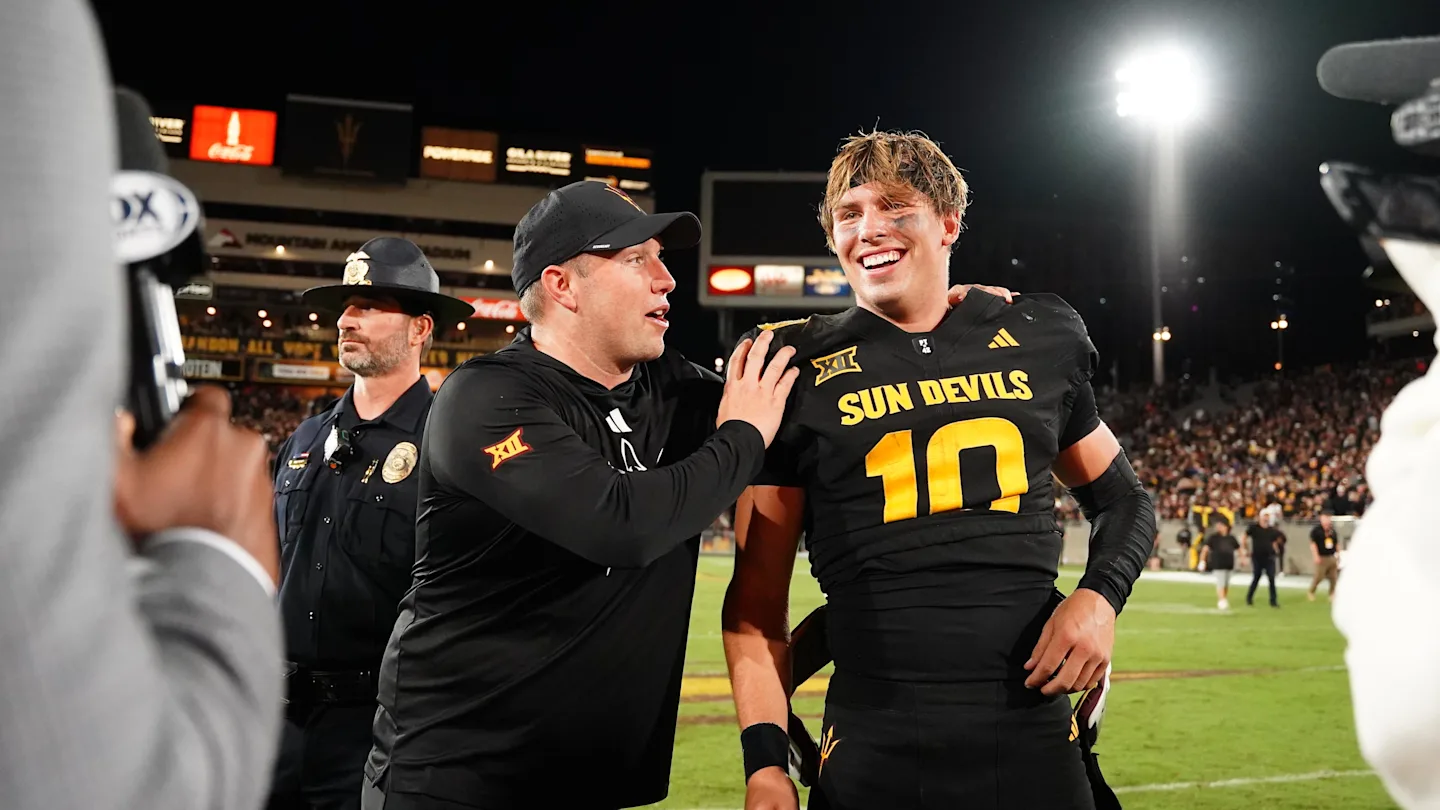
Aftter helping propel Arizona State to its first College Football Playoff run in 2024, quarterback Sam Leavitt is officially preparing to test the transfer market.
Multiple outlets report Leavitt intends to enter the portal when the window opens in January, and early lists of suitors already include Oregon, Indiana, LSU, and Miami.
Leavitt’s 2025 season was cut short by a persistent foot injury that required surgery and ended his year after seven appearances.
Despite limited time, he finished the campaign with 1,628 passing yards, 10 touchdowns and three interceptions, and leaves Tempe with a two-year body of work that includes a 2024 breakout season (2,885 passing yards, 443 rushing yards, 29 total TDs).
ASU closed 2025 at 8–4 under coach Kenny Dillingham, going 6-3 in Big 12 play.
On Wednesday, Mike Golic Jr. weighed in on potential transfer portal destinations, explicitly linking Leavitt to Miami as a natural schematic fit.
“Sam Leavitt, to me, would be a fascinating fit at the University of Miami. We reckon Carson Beck is going to be out after this playoff run, and when I look at Sam Leavitt’s game, I think about the Miami offense they ran with Cam Ward, an offense predicated on the quarterback’s ability to drop back, create, and make plays with both his arm and his legs. That feels like a very easy comparison.”

The Hurricanes went 10-2 this season and enter the postseason with a quarterback (Beck) who posted 3,072 passing yards and 25 passing touchdowns with a 74.7% completion rate.
However, despite Beck’s productive year as the starter and Miami’s CFP berth, the senior quarterback is widely expected to move on after the season, opening a potential vacancy at one of college football’s biggest brands.
Leavitt combines a CFP start, redshirt-sophomore eligibility, mobility, and a nationally ranked NIL valuation (estimated at $2.1 million), positioning him as one of the portal’s most attractive quarterbacks.
Read More at College Football HQ
- $2.1 million QB ranked as top quarterback in college football transfer portal
- $87 million college football coach predicted to accept Michigan head coaching job
- Top transfer portal QB reportedly receives ‘multiple offers’ over $4 million
- Kirby Smart sends strong message on Nick Saban before College Football Playoff
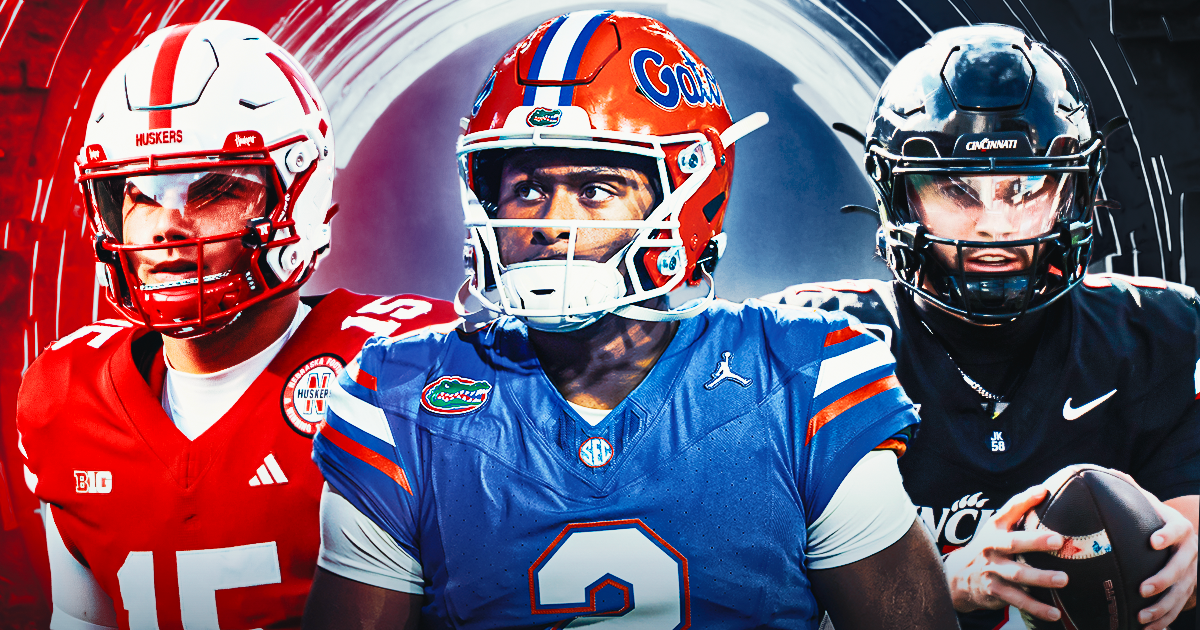
Although the transfer portal doesn’t open until Jan. 2, the quarterback market is starting to take shape. Multiple high-profile signal-callers announced their plans to hit the portal, and ESPN’s Pete Thamel reported how much the top QBs could make.
Thamel reported the “tip-top” of the quarterback market could reach $5 million. For comparison, Duke quarterback Darian Mensah was one of the highest-paid players in the country this past season at $4 million, On3’s Pete Nakos previously reported.
SUBSCRIBE to the On3 NIL and Sports Business Newsletter
Multiple big-name schools are expected to be looking for a quarterback in the portal this year, and names such as Brendan Sorsby, Dylan Raiola and Josh Hoover are already front-and-center. As a result, the market could surge, Thamel said.
“This market looks robust already, guys. … I made some calls today. Sources told me the tip-top of this quarterback market, financially, could reach $5 million for one season,” Thamel said Friday on ESPN College GameDay. “Look, it’s supply and demand. You have all those guys. Sorsby’s been linked early to Texas Tech. Dylan Raiola, there’s some smoke to Louisville, although maybe a playoff team jumps in late there. There’s been early links between Indiana and Hoover, assuming that [Fernando] Mendoza goes pro.
“Look, this is what’s going to drive the market. Oregon may lose Dante Moore, Miami’ll be in the quarterback market, so will LSU. So when you really take a look at what’s going to drive this quarterback market, it’s going to be the most expensive in the history of college football.”
Quarterback remains one of the biggest positions in the transfer portal, especially considering the recent success. Seven of the last nine Heisman Trophy winners have been transfers, including Mendoza this year. DeVonta Smith and Bryce Young are the only ones to stay with their own program at Alabama and win the award during that time.
Last year’s transfer quarterbacks were also among the highest-paid players in college football, On3 previously reported. Mensah’s $4 million payday was part of a two-year, $8 million deal at Duke. At Miami, Carson Beck inked a deal worth between $3 and $3.2 million, but up to $6 million with incentives.
The NCAA transfer portal window officially opens Jan. 2, meaning that’s when players’ names will start to appear. It will stay open for two weeks, closing Jan. 16.

The perception of bowl games and their significance to college football programs and players has undergone a rapid shift over the last decade.
In the current age of the sport, teams are turning down postseason bids while the transfer portal is filling up before most bowl games even kick off.
That’s just the reality of the situation. Normally, it’s the needy who are hit the hardest as G6 schools and poorly constructed FBS programs have their rosters raided.
Just take a look at what’s happening at UTSA.
UTSA’s Jeff Traylor: ‘I Hate What’s Going On In College Football’
Since transitioning to the FBS over a decade ago, UTSA has established itself in the Conference USA and the American Conference.
Head coach Jeff Traylor has led the program to six consecutive bowl games. That includes an up-and-down campaign in 2025, when the Roadrunners started 0-2 and won two of their final three games to finish 6-6.
UTSA is a week away from taking on FIU in the First Responder Bowl on December 26.
Going into the matchup, the Roadrunners could be without as many as 20 players. Many of those losses are due to the portal.
“We’ll be a shell of ourselves, but whoever we got out there, we’re going to go out there and play the best we can,” Traylor said, according to KENS 5’s Vinnie Vinzetta. “It’s just the numbers are so big with all the tampering. All the agents, it’s coaches too, it’s all of them. Our kids are being promised such incredible numbers, they’re getting lured into the portal.
“I just hope all the things those coaches and agents are promising they’re going to do for my kids. I hate it because I really want to coach them in a bowl game, but they’re getting leveraged out of it,” Traylor continued. “Their agents are telling them, they’ve got to not play in the bowl, they’ll get this number, they don’t play in the bowl [they’ll get this number].”
“I hate what’s going on in college football. I just think the numbers have gotten so large. You’re talking about teams that have $26 million to $40 million, and the number’s just too big, and who knows if they’re being told the truth? It’s sad, it really is sad,” Traylor added. “I never thought we’d be punished for making a bowl game by being leveraged, that if you don’t give them a certain number, they’re not going to play in a bowl.

Traylor is focused on the players still with the team, but he couldn’t help but recognize that college football looks a lot different than it did in his first season on the job.
“I’m going to celebrate the kids we have left, whoever that is, we’re going to go out there and play our tails off, and I’m very grateful for them,” Traylor said. “Again, I hate we’re talking about the 10 to 15 that probably are not going to play in the game, or 20, whatever that number ends up being. We should be talking about the 90 to 85 that are going to play with their teammates.”
“It’s like I just woke in another world as compared to where we were six years ago,” Traylor added.
Is there a way to combat what’s going on? Not really. There have been calls for coaches to report instances of tampering.
Most of the time, it’s hard for the people in charge to get the specifics of whose saying what.
“There’s no such thing as tampering. Coaches talk to players, agents talk to players,” Traylor said. “Oh, then turn them in, coach. You think those players are going to give me the coach that’s actually talking to them? Why? It’s driving the price up. The more they get driven up, the price goes up higher and higher.
“As long as there’s people gonna pay it, who’s going to stop it? What’s going to stop this? What’s going to stop it? Only the freedom of process is going to stop because when there’s no money left, what are we going to all do?”
As of December 19, four players who started multiple games for UTSA have announced plans to enter the transfer portal, including cornerbacks Davin Martin and KK Meier, defensive end Kenny Ozowalu, and defensive tackle Chidera Otutu.
More attrition is possible in the next seven days.
Read more on College Football HQ
• $45 million college football head coach reportedly offers Lane Kiffin unexpected role
• Paul Finebaum believes one SEC school is sticking by an ‘average’ head coach
• SEC football coach predicts major change after missing College Football Playoff
• Predicting landing spots for the Top 5 college football transfers (Dec. 17)

No. 1 transfer portal quarterback predicted to join major college football program

Epic Boat Rentals & Motorsports Repair Expands Jet Ski Rental

Paulson Leads UMD Men’s Basketball in 80-65 Victory Over UMary

Toyota GR Corolla Rally Car Will Take on American Rally Championship in 2026

Legacy of Portland youth basketball coach lives on

This college football team is creatively approaching NIL like NFL free agency
Details for Purdue volleyball coach Dave Shondell’s new contract

2025 All-Area Volleyball Coach of the Year: Cissna Park’s Josh Landon | Sports

Fargo students use their swimming experience to help teach youth – InForum
Kentucky ‘playing with joy’ heading into NCAA volleyball title match

How Dallas Converts Sporting Events Into Long-Term Economic Growth

College Football Playoff is here, but sport’s soul is gone

2025 AVCA All-American | First Team At the AVCA Major League Volleyball All-America / Players of the Year Banquet presented by Nike, Elia Rubin was recognized as a 2025 AVCA All-American First Team selection. Reflecting on the honor, Rubin shared: “It’s such a huge honor. Being surrounded by so many amazing people makes it even more special. We were a young team, and every day brought a different challenge—but that’s what made it so much fun.” Rubin emphasized the importance of enjoying the journey and credited her teammates and coaches for creating a season defined by growth, connection, and joy. Congratulations to Elia Rubin on an outstanding season and First Team All-American recognition.

2025 Mirror Girls Volleyball All-Stars | News, Sports, Jobs

Grizzly Youth Academy graduates largest-ever class of cadets

First Tee Winter Registration is open

Fargo girl, 13, dies after collapsing during school basketball game – Grand Forks Herald

CPG Brands Like Allegra Are Betting on F1 for the First Time

F1 Las Vegas: Verstappen win, Norris and Piastri DQ tighten 2025 title fight

Sycamores unveil 2026 track and field schedule

Two Pro Volleyball Leagues Serve Up Plans for Minnesota Teams

Utah State Announces 2025-26 Indoor Track & Field Schedule

SoundGear Named Entitlement Sponsor of Spears CARS Tour Southwest Opener

Redemption Means First Pro Stock World Championship for Dallas Glenn

Jo Shimoda Undergoes Back Surgery

Bowl Projections: ESPN predicts 12-team College Football Playoff bracket, full bowl slate after Week 14

Texas volleyball vs Kentucky game score: Live SEC tournament updates

Robert “Bobby” Lewis Hardin, 56

How this startup (and a KC sports icon) turned young players into card-carrying legends overnight

Indiana’s rapid ascent and its impact across college football






-
 Motorsports1 week ago
SoundGear Named Entitlement Sponsor of Spears CARS Tour Southwest Opener
-
 NIL3 weeks ago
Bowl Projections: ESPN predicts 12-team College Football Playoff bracket, full bowl slate after Week 14
-
 Motorsports2 weeks ago
Donny Schatz finds new home for 2026, inks full-time deal with CJB Motorsports – InForum
-

 Rec Sports2 weeks ago
How Donald Trump became FIFA’s ‘soccer president’ long before World Cup draw
-

 Rec Sports2 weeks ago
Black Bear Revises Recording Policies After Rulebook Language Surfaces via Lever
-
 Sports3 weeks ago
Men’s and Women’s Track and Field Release 2026 Indoor Schedule with Opener Slated for December 6 at Home
-

 Motorsports3 weeks ago
Michael Jordan’s fight against NASCAR heads to court, could shake up motorsports
-
 Rec Sports2 weeks ago
David Blitzer, Harris Blitzer Sports & Entertainment
-
 Motorsports2 weeks ago
JR Motorsports Confirms Death Of NASCAR Veteran Michael Annett At Age 39
-
 Motorsports2 weeks ago
Rick Ware Racing switching to Chevrolet for 2026