
NIL
College sports lurches forward, hoping to find a level playing field with fewer lawsuits

MIRAMAR BEACH, Fla. (AP) — On the one hand, what this new version of cash-infused college sports needs are rules that everybody follows.
On the other, they need to be able to enforce those rules without getting sued into oblivion.
Enter the College Sports Commission, a newly created operation that will be in charge of counting the money, deciding what a “fair market” deal for players looks like and, if things go well, helping everyone in the system avoid trips to court whenever a decision comes down that someone doesn’t like.
With name, image, likeness payments taking over in college, this group will essentially become what the NCAA committee on infractions used to be – the college sports police, only with the promise of being faster, maybe fairer and maybe more transparent.
In a signal of what the CSC’s most serious mission might be, the schools from the four biggest conferences are being asked to sign a document pledging not to rely on state laws – some of which are more permissive of payments to players — to work around the rules the commission is making.
“We need to get out of this situation where something happens, and we run to our attorney general and file suit,” said Trev Alberts of Texas A&M, one of 10 athletic directors who are part of another group, the Settlement Implementation Committee, that is helping oversee the transition. “That chaos isn’t sustainable. You’re looking for a durable system that actually has some stability and ultimate fairness.”
In this new landsacpe, two different companies will be in charge of two kinds of number crunching.
The first, and presumably more straightforward, is data being compiled by LBi Software, which will track how much schools are spending on every athlete, up to the $20.5 million cap each is allowed to distribute in the first year of the new arrangement expected to begin July 1.
This sounds easy but comes with the assumption that universities – which, for decades, have sought to eke out every edge they can, rulebook or no – will provide accurate data.
“Over history, boosters have looked for ways to give their schools an advantage,” said Gabe Feldman, a sports law professor at Tulane. “I think that will continue even with the settlement. It’s anyone’s guess as to how that manifests, and what the new competitive landscape looks like.”
Adding some level of transparency to the process, along with the CSC’s ability to deliver sanctions if it identifies cheaters, will be key to the new venture’s success.
“There’s legal risk that prohibits you from doing that,” Alberts said. “But we want to start as transparent as we can be, because we think it engenders trust.”
Good intentions aside, Alberts concedes, “I don’t think it’s illogical to think that, at first, it’s probably going to be a little wonky.”
Some of the wonkiest bookkeeping figures to come from the second category of number crunching, and that involves third-party NIL deals. The CSC hired Deloitte to run a so-called clearinghouse called “NIL Go,” which will be in charge of evaluating third-party deals worth $600 or more.
Because these deals aren’t allowed to pay players simply for playing – that’s still technically forbidden in college sports — but instead for some service they provide (an endorsement, a social media shoutout and so forth), every deal needs to be evaluated to show it is worth a fair price for what the player is doing.
In a sobering revelation, Deloitte shared with sports leaders earlier this month that around 70% of third-party deals given to players since NIL became allowable in 2021 would have been denied by the new clearinghouse.
All these valuations, of course, are subject to interpretation. It’s much easier to set the price of a stock, or a bicycle, than the value of an athlete’s endorsement deal. This is where things figure to get dicey. Though the committee has an appeals process, then an arbitration process, ultimately, some of these cases are destined to be challenged in court.
“You’re just waiting to see, what is a ‘valid business purpose’ (for an NIL deal), and what are the guidelines around that?” said Rob Lang, a business litigation partner at Thompson Coburn who deals with sports cases. “You can see all the lawyer fights coming out of that.”
In fact, elements of all this are ripe to be challenged in court, which might explain why the power conferences drafted the document pledging fealty to the new rules in the first place.
For instance, Feldman called a law recently enacted in Tennessee viewed by many as the most athlete-friendly statute in the country “the next step in the evolution” of state efforts to bar the NCAA from limiting NIL compensation for athletes with an eye on winning battles for recruits and retaining roster talent.
“What we’ve seen over the last few years is states trying to one-up each other to make their institutions more attractive places for people to go,” he said. “This is the next iteration of that. It may set up a showdown between the schools, the NCAA and the states.”
Greg Sankey, the commissioner of the Southeastern Conference, said a league spanning 12 states cannot operate well if all those states have different rules about how and when it is legal to pay players.
The SEC has been drafting legislation for states to pass to unify the rules across the conference. Ultimately, Sankey and a lot of other people would love to see a national law passed by Congress that does that for all states and all conferences.
That will take months, if not years, which is why the new committee drafted the document for the schools to sign.
“We are all defendant schools and conferences and you inherently agree to this,” Alberts said of the document. “I sat in the room with all of our football coaches, ‘Do you want to be governed?’ The answer is ‘yes.’”
___
AP college sports: https://apnews.com/hub/college-sports
Copyright 2025 The Associated Press. All rights reserved. This material may not be published, broadcast, rewritten or redistributed without permission.

Jan. 9, 2026, 1:23 p.m. ET
- Chris Wash has resigned from his position as UCF basketball’s general manager.
- The resignation is effective immediately and was made to prioritize pressing family health matters.
- Wash joined the UCF staff in June 2025 after working as a talent evaluator and NIL agent.
Chris Wash has resigned from his role as UCF basketball’s general manager and special assistant to head coach Johnny Dawkins, effective immediately, according to a press release from OG6 Sports Management.
Wash, who joined the staff in June 2025, made the decision prior to the team’s Jan. 6 game at Oklahoma State in order to “prioritize pressing family matters, including a recent health diagnosis within his immediate family that requires his time, focus and presence.”
Per the statement, Wash is “grateful for the opportunity to have been part of the UCF basketball program and appreciates the understanding and professionalism shown throughout this process. He looks forward to returning to the sport in the future when circumstances allow.”
A former national talent evaluator, Wash previously served as an NIL agent for college football and basketball athletes. He worked for more than a decade as a loan officer prior to entering the college athletics space.
UCF, currently ranked No. 25 in the AP poll, has a 12-2 record on the season and will host Cincinnati at 5 p.m. Sunday, Jan. 11.
Jan. 9, 2026, 3:31 p.m. ET
GLENDALE, AZ — There was some strange symmetry to it all, a torch passing no one saw coming.
Miami, everyone, is built and playing like an SEC team.
The SEC, meanwhile, just polished off a postseason where it lost a conference-record eight games against other conferences.
“We line up, and we want to punish you on offense and defense,” said Miami defensive end Akheem Mesidor. “You’re going to have to play your absolute best game to beat us.”
Well, well. Now who does that sound like?
Here’s a hint: the bully on the block that has fallen, and can’t seem to figure out why or how to get back up.

From dominating college football with 14 national titles since 2003, to the fateful irony of the SEC brought back to the pack by its own greed.
The SEC wanted Texas and Oklahoma, wanted to drastically change the conference footprint of the sport, and then sat and watched while the Big Ten panicked and did the same, while the Pac-12 was eaten and eliminated (it ain’t the same now, people), and while the Big 12 and ACC were relegated to second citizens.
The SEC, along with the Big Ten, then grabbed control of the postseason and threatened to take their ball and go home unless everyone fell in line. They want more access to the postseason, and they’ll surely receive the lion’s share of revenue from what could be a near $2 billion annually expanded College Football Playoff. Like it or not.
They wanted unregulated NIL and free player movement, or at the very least, did next to nothing to stop it. They, along with every other FBS university, knew for 16 months that states of California and Florida had passed bills that would become law in June of 2021 — and did nothing about it.
They punted, and begged Congress for help. Imagine that, two self-interested and wildly dysfunctional entities trying to figure out a massively complex financial and structural problem.
What could go wrong?
The bigger question is, what did they think the rest of college football would do? Certainly not sit and take it.
There are millionaires and billionaires who love their universities and are obsessive about winning. Throw open the doors to NIL and free player movement — and legalized big booster involvement — and watch how quickly the SEC looks like the ACC.
Watch how quickly Alabama comes back to the pack, and Georgia can’t get out of the quarterfinals in the CFP. How quickly LSU and Florida and Texas A&M spend hundreds of millions of dollars to fire coaches and start over.
More to the point, watch how quickly the deep-pocket Cody Campbells of the world begin to simply play by the rules laid out by the SEC and Big Ten ― and build teams that look and play like SEC teams of the past.
Want to know why Texas Tech won the Big 12 for the first time in school history, and won a school-record 12 games? It had one of the best defensive lines in the nation, and a Top 5 scoring defense.
Want to know how Miami has finally found itself again after more than two decades of stumbling around like NC State? The Canes have the best defensive line in the nation, with two edge rushers who will be Top 15 NFL Draft picks.
Remember all of those nasty and dominating defensive lines at Alabama and Georgia, all of those NFL draft picks? Nothing defined SEC dominance, SEC national titles, quite like physical, game-changing defensive linemen.
Now they’re leaving high school and/or the transfer portal for the highest bidder. The idea of playing for the SEC, while certainly tempting, is quickly trumped by another zero at the end of a paycheck.
“More options for players, that’s the big thing,” said Miami safety Keionte Scott. “If it’s not working for whatever reason at another place, there are options.”
It wasn’t working for Scott at Auburn, which hasn’t found an answer since firing Gus Malzahn after the 2020 season. So Scott became one of six transfer starters on Miami’s defense — including the entire secondary — and is now a game away from a national championship.
Meanwhile, the SEC hasn’t looked further away from winning it all ― having gone three straight seasons without playing in the national championship game for the first time since 2000-2002.
Go ahead and expand the CFP to 16 or 20 or 24 teams. Go ahead and continue to declare players don’t want to be employees, and avoid the one thing that could deliver some semblance of control to a player procurement process with no guardrails — just because you don’t want to share more money when collectively bargaining.
And Indiana, with the largest alumni base in college football, will continue to spend its way out of the NCAA cellar. Will beat Georgia to sign Heisman Trophy-winning quarterback Fernando Mendoza.
Miami, with its deep pocket boosters begging for a return to glory, will do the same.
So will Texas Tech and Utah and BYU and SMU and … see where this is headed?
Right to the end of SEC dominance.
Matt Hayes is the senior national college football writer for USA TODAY Sports Network. Follow him on X at @MattHayesCFB.
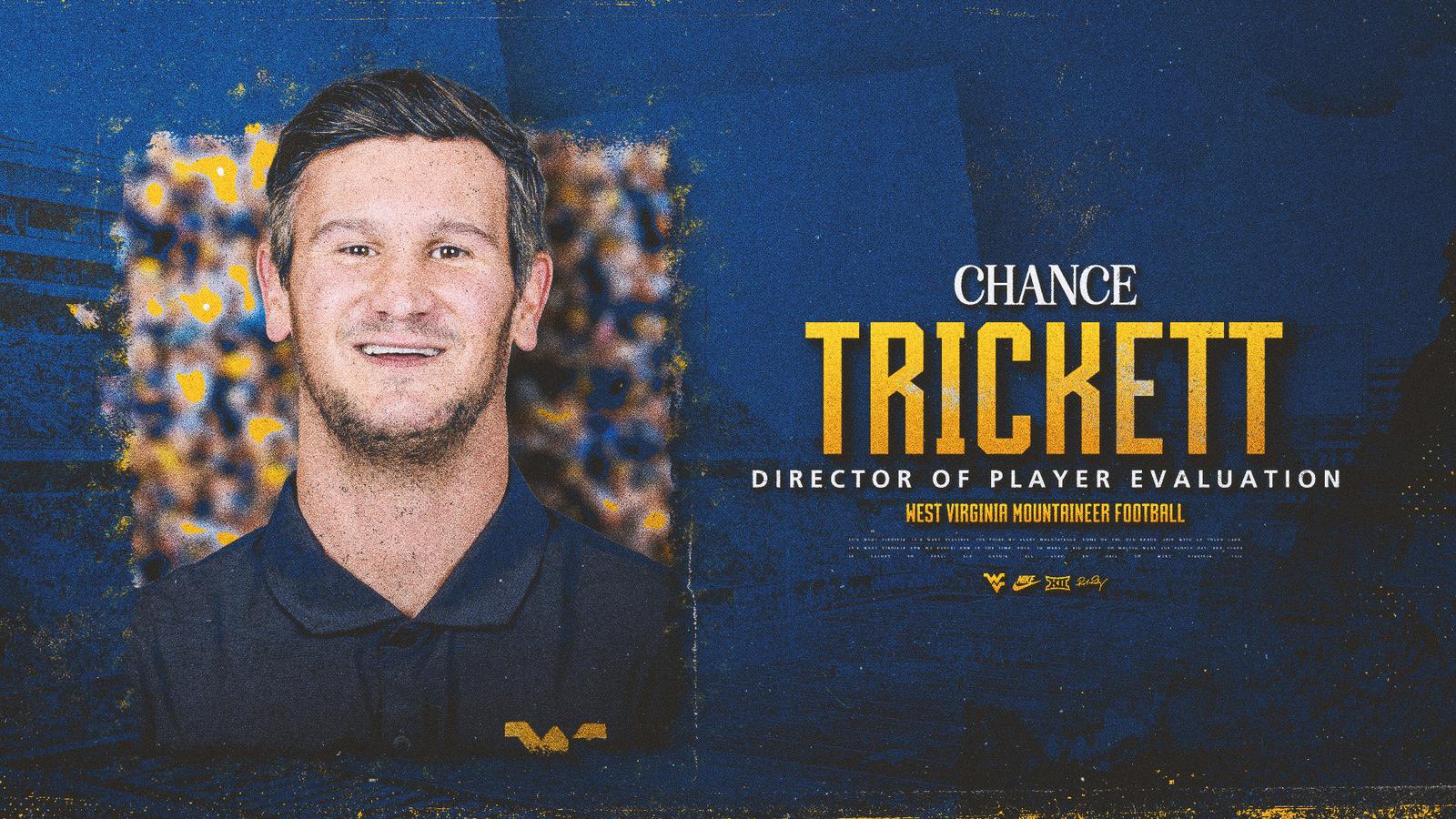
“Chance has built an outstanding resume of scouting, evaluating and recruiting experience at the FBS, Power Four and NFL levels,” Rodriguez said “His wide-spread experience and knowledge in these areas, along with being a West Virginia football legacy, will make an immediate impact in our program.”
Throughout his career, Trickett has experience leading player evaluation, roster construction and long-term talent strategy at the college and NFL levels. He has proven his ability to build multi-year roster plans, aligning evaluation with financial strategy, integrating and leveraging analytics and networks to identify top prospects and cultural long-term fits. He has a strong network across high school, college, financial and agency circles with a track record of identifying undervalued talent and maximizing roster efficiency.
Trickett joins the WVU football staff after spending almost 10 years as a college area scout in the Los Angeles Rams organization. He served one year as the director of football recruiting at Louisiana Tech and was at Florida State for two years as a recruiting assistant.
While with the Rams, he led comprehensive player evaluations integrating film, analytics, verified measurables and psychological/cognitive components to support draft board construction and roster strategy decisions. He also produced in-depth positional value assessments and roster impact reports for multi-year draft planning and contract strategy. He developed internal valuation reports and roster strategy that models and mirrors current NIL/college market structures. He also integrated advanced scouting technology to enhance accuracy in player projection and long-term roster planning.
Trickett was awarded the BART List Award for scouting excellence in 2025 and given the “inside the league” scout/agent organization’s Best Draft Award in 2024.
A native of Morgantown, he earned his bachelor’s degree from Florida State in 2011.
Trickett, and his wife, Ashley, have two children, Tristan and Matthew.

The decision to head to the NFL instead of returning to college can be a complicated choice. Massive NIL payouts, potential NFL landing spots, and the solidity of a returning team are several factors that go into the stay-or-go calculus.
But with the 2026 NFL Draft QB class looking a bit thin already, some are second-guessing one QB’s plan to return to school.
Ole Miss QB Trinidad Chambliss is in the middle of requesting another year of college eligibility from the NCAA. Chambliss is claiming that he missed the 2022 season due to respiratory health issues and is thus seeking one more year to play. His NIL value is likely to end up at several times the $665,000 estimate from On3sports.
ESPN broadcaster Chase Daniel second-guessed Chambliss’s decision to return to school. “Trinidad Chambliss should absolutely think abotu entering the draft after the way he’s played in the #CFBPlayoff,” Daniel Tweeted. “Light QB draft,” he also noted.
The 2026 NFL Draft class is highlighted by Indiana’s Fernando Mendoza and, should he enter, Oregon’s Dante Moore. Many are projecting both of those quarterbacks at or near the top of the Draft. But after Mendoza and Moore, things get increasingly cloudy.
Alabama’s Ty Simpson has indicated his plan to enter the Draft. Other veteran QBs like Carson Beck and Cade Klubnik figure to be in the picture. But it’s entirely plausible that NFL teams could view Chambliss as the No. 3 or No. 4 QB prospect in the 2026 NFL Draft class.

Chambliss rose to prominence seemingly from nowhere in 2025. He sat for two years at Division II Ferris State and then played mostly as a reserve in 2023. In 2024, though, he passed for 2,901 yards and 26 scores while rushing for 1,019 yards and 25 scores on the ground while leading Ferris State to the national title.
He began 2025 as the backup for Ole Miss’s Austin Simmons. But an ankle injury in Week 2 gave Chambliss a chance to play and he didn’t relinquish the job. Chambliss wound up passing for 3,937 yards and 22 touchdowns against just three interceptions. He ran for an additional 527 yards and eight touchdowns.
Of course, an adverse NCAA ruling might leave Chambliss with no real choice but to go pro. He has inked a tentative NIL deal with Ole Miss based on the premise that he will be given eligibility. That deal has been indicated as likely worth several million dollars. But Daniel thinks even better NFL money could be in Chambliss’s future… if he seeks it.
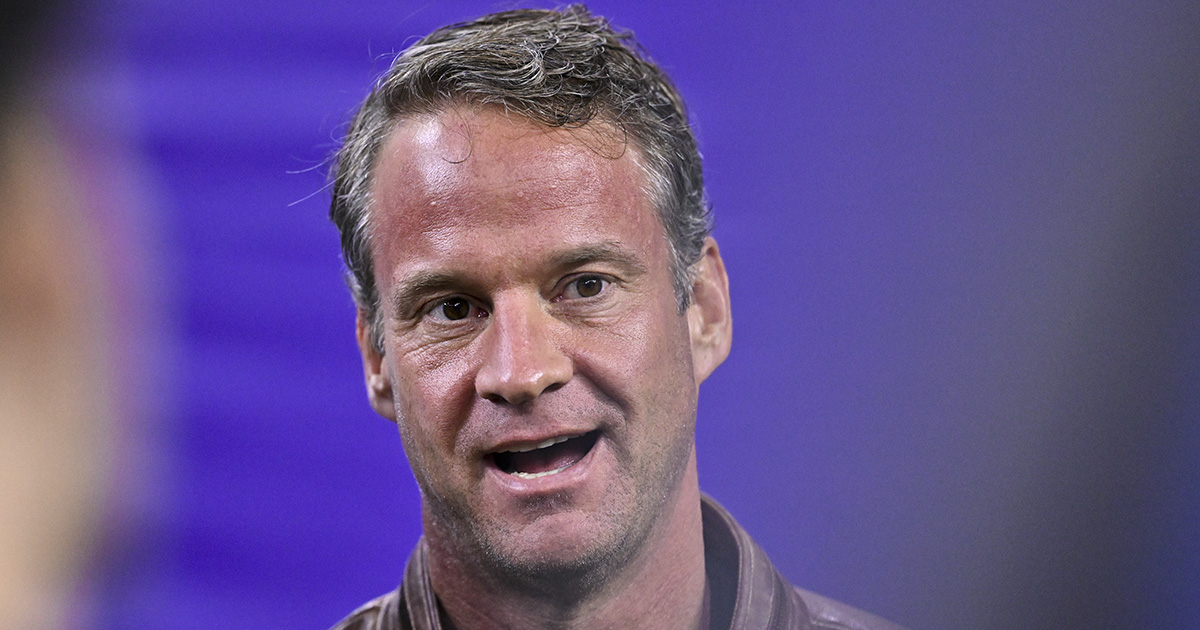
Thursday night, Ole Miss’ run in the College Football Playoff came to an end. The Rebels fell to Miami in the final seconds of the Fiesta Bowl.
With the loss, Lane Kiffin will officially receive a $500,000 payout from LSU within 30 days of the end of Ole Miss’ campaign. That was the amount he was due from Ole Miss, per the terms of his contract, and LSU said it would honor it in his deal with the Tigers. The school included “ancillary benefits” in Kiffin’s agreement after his high-profile departure from Ole Miss.
Ole Miss’ advancement in the College Football Playoff bracket increased Kiffin’s payout, which LSU is due to pay 30 days after the Rebels’ postseason run ends. It would have gone up even more if Ole Miss won the title. Here is how the structure is written out in his deal at LSU.
- Ole Miss first-round game participation: $150,000
- Ole Miss quarterfinal appearance: $250,000
- Ole Miss semifinal appearance: $500,000
- Ole Miss CFP national championship appearance: $750,000
- Ole Miss CFP national championship win: $1 million
With Thursday’s loss, Ole Miss’ season ended in the College Football Playoff semifinal. As a result, Kiffin is due $500,000. If the Rebels pulled off a win, that figure would have grown to $750,000.
“Coach will be entitled to receive a payment in an amount equal to the amount Coach would have been entitled to receive had he remained Head Coach at Coach’s immediate prior employer and coached the prior employer’s football team through the 2025-26 CFP,” Lane Kiffin’s contract at LSU reads. “… If applicable, the payment under this section may be paid from affiliated foundation funds and shall be paid within 30 days following the prior employer’s team being eliminated from the 2025-26 CFP.”
Miami holds on to beat Ole Miss in Fiesta Bowl
Ole Miss trailed Miami 17-13 at halftime of the College Football Playoff semifinal at the Fiesta Bowl, but mounted a charge in the fourth quarter. The Rebels were able to capitalize on multiple Hurricanes miscues and took their first lead of the game, 19-17, with seven minutes to play.
Miami responded with a touchdown from Malachi Toney, but Ole Miss punched back. After a pass interference penalty extended the drive, Trinidad Chambliss hit Dae’Quan Wright for a touchdown and got the two-point conversion to make it a 27-24 Rebels lead with 3:13 to go.
The Hurricanes didn’t go down easily, though. Carson Beck ran in the go-ahead touchdown with 18 seconds left to make it a 31-27 Miami lead, giving Ole Miss one more shot. But Chambliss’ final Hail Mary fell short, sealing the Hurricanes’ victory and sending the program to the national title game.
However, Miami won’t have to go far for the championship game. The game will be at Hard Rock Stadium Jan. 19. The Hurricanes now wait to find out if they will play Oregon or Indiana.
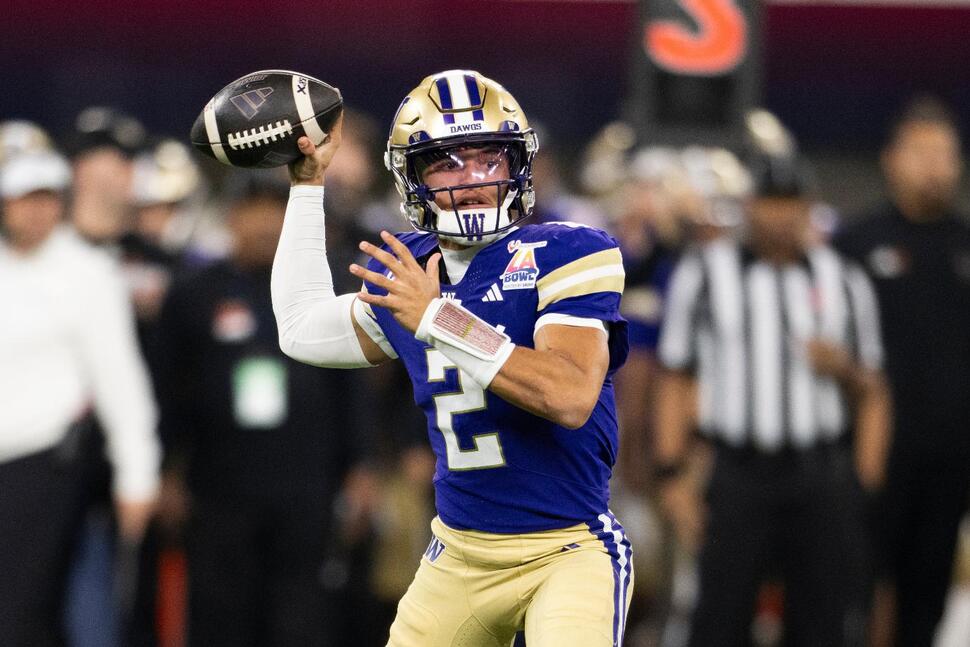
A quarterback reportedly reneging on a lucrative deal to hit the transfer portal, only to return to his original school. Another starting QB, this one in the College Football Playoff, awaiting approval from the NCAA to play next season, an expensive NIL deal apparently hanging in the balance. A defensive star, sued by his former school after transferring, filing a lawsuit of his own.
“It gets crazier and crazier. It really, really does,” said Sam Ehrlich, a Boise State legal studies professor who tracks litigation against the NCAA. He said he might have to add a new section for litigation against the NCAA stemming just from transfer portal issues.
“I think a guy signing a contract and then immediately deciding he wants to go to another school, that’s a kind of a new thing,” he said. “Not new kind of historically when you think about all the contract jumping that was going on in the ’60s and ’70s with the NBA. But it’s a new thing for college sports, that’s for sure.”
Washington quarterback Demond Williams Jr. said late Thursday he will return to school for the 2026 season rather than enter the transfer portal, avoiding a potentially messy dispute amid reports the Huskers were prepared to pursue legal options to enforce Williams’ name, image and likeness contract.
Edge rusher Damon Wilson is looking to transfer after one season at Missouri, having been sued for damages by Georgia over his decision to leave the Bulldogs. He has countersued.
Then there is Ole Miss quarterback Trinidad Chambliss, who reportedly has a new NIL deal signed but is awaiting an NCAA waiver allowing him to play another season as he and the Rebels played Thursday night’s Collge Football Playoff semifinal against Miami. On the Hurricanes roster: Defensive back Xavier Lucas, whose transfer from Wisconsin led to a lawsuit against the Hurricanes last year with the Badgers claiming he was improperly lured by NIL money. Lucas has played all season for Miami. The case is pending.
Court rulings have favored athletes of late, winning them not just millions in compensation but the ability to play immediately after transferring rather than have to sit out a year as once was the case. They can also discuss specific NIL compensation with schools and boosters before enrolling and current court battles include players seeking to play longer without lower-college seasons counting against their eligibility and ability to land NIL money while doing it.
Ehrlich compared the situation to the labor upheaval professional leagues went through before finally settling on collective bargaining, which has been looked at as a potential solution by some in college sports over the past year. Athletes.org, a players association for college athletes, recently offered a 38-page proposal of what a labor deal could look like.
“I think NCAA is concerned, and rightfully so, that anything they try to do to tamp down this on their end is going to get shut down,” Ehrlich said. “Which is why really the only two solutions at this point are an act of Congress, which feels like an act of God at this point, or potentially collective bargaining, which has its own major, major challenges and roadblocks.”
The NCAA has been lobbying for years for limited antitrust protection to keep some kind of control over the new landscape — and to avoid more crippling lawsuits — but bills have gone nowhere in Congress.
Collective bargaining is complicated and universities have long balked at the idea that their athletes are employees in some way. Schools would become responsible for paying wages, benefits, and workers’ compensation. And while private institutions fall under the National Labor Relations Board, public universities must follow labor laws that vary from state to state; virtually every state in the South has “right to work” laws that present challenges for unions.
Ehrlich noted the short careers for college athletes and wondered whether a union for collective bargaining is even possible.
A harder look at contracts
To sports attorney Mit Winter, employment contracts may be the simplest solution.
“This isn’t something that’s novel to college sports,” said Winter, a former college basketball player who is now a sports attorney with Kennyhertz Perry. “Employment contracts are a huge part of college sports, it’s just novel for the athletes.”
Employment contracts for players could be written like those for coaches, he suggested, which would offer buyouts and prevent players from using the portal as a revolving door.
“The contracts that schools are entering into with athletes now, they can be enforced, but they cannot keep an athlete out of school because they’re not signing employment contracts where the school is getting the right to have the athlete play football for their school or basketball or whatever sport it is,” Winter said. “They’re just acquiring the right to be able to use the athlete’s NIL rights in various ways. So, a NIL agreement is not going to stop an athlete from transferring or going to play whatever sport it is that he or she plays at another school.”
There are challenges here, too, of course: Should all college athletes be treated as employees or just those in revenue-producing sports? Can all injured athletes seek workers’ compensation and insurance protection? Could states start taxing athlete NIL earnings?
“What’s going on in college athletics now is trying to create this new novel system where the athletes are basically treated like employees, look like employees, but we don’t want to call them employees,” Winter said. “We want to call them something else and say they’re not being paid for athletic services. They’re being paid for use of their NIL. So, then it creates new legal issues that have to be hashed out and addressed, which results in a bumpy and chaotic system when you’re trying to kind of create it from scratch.”
Employment contracts would not necessarily allow for uniform rules with an athlete able to go to transfer when terms have been met. Collective bargaining could include those guidelines.
“If the goal is to keep someone at a school for a certain defined period of time, it’s got to be employment contracts,” Winter said.
Copyright 2026 The Associated Press. All rights reserved. This material may not be published, broadcast, rewritten or redistributed.
Photos You Should See – December 2025


Ross Chastain’s 2026 paint scheme released (Busch Light)

“It is Different Than Other Sports”: Jeff Gordon Explains How Hendrick Motorsports’ Partnership Is a Perfect Fit

U.S. Women’s National Team Welcomes Back Rob Browning as Assistant Coach

Viking Motorsports Partners with DUDE Wipes & FUNKAWAY – Speedway Digest

SSU alum goes from student-athlete to the voice of Levi’s Stadium
Trans Youth in Sports Conversation Guide
UCF Knights basketball general manager Chris Wash resigns

Mountaineers Gear Up for UNC Asheville Collegiate Opener at Tryon International

Demons get five named to Academic All-Southland volleyball team

What is the IHRA’s vision after track acquisition spree?

Track & Field Heads Down to Columbia for Gamecock Opener

12 RedHawks Recognized as Academic All-MAC

ESPN presents LOVB’s 2026 professional volleyball season

Youth basketball season postponed a week due to delays in team jersey shipping –

Track & Field Opens Indoor Season Saturday at Leonard Hilton Memorial Invitational

DeSantis Talks College Football, Calls for Reforms to NIL and Transfer Portal · The Floridian

#11 Volleyball Practices, Then Meets Media Prior to #2 Kentucky Match

Stempien to seek opening for Branch County Circuit Court Judge | WTVB | 1590 AM · 95.5 FM

Ross Brawn to receive Autosport Gold Medal Award at 2026 Autosport Awards, Honouring a Lifetime Shaping Modern F1

Maine wraps up Fall Semester with a win in Black Bear Invitational

Nascar legal saga ends as 23XI, Front Row secure settlement

Princeton Area Community Foundation awards more than $1.3 million to 40 local nonprofits ⋆ Princeton, NJ local news %

Downtown Athletic Club of Hawaiʻi gives $300K to Boost the ’Bows NIL fund

Sunoco to sponsor No. 8 Ganassi Honda IndyCar in multi-year deal
NASCAR, 23XI Racing, Front Row Motorsports announce settlement of US monopoly suit | MLex

WNBA’s Caitlin Clark, Angel Reese and Paige Bueckers in NC, making debut for national team at USA camp at Duke

Hope College Tops MIAA Commissioner’s Cup Fall Update

Nike Signs 10 LSU Athletes to NIL deals

Badgers news: Wisconsin lands 2nd commitment from transfer portal

Rock sending small group to Akron Friday night





-
 Sports2 weeks ago
Badgers news: Wisconsin lands 2nd commitment from transfer portal
-

 Rec Sports1 week ago
Five Youth Sports Trends We’re Watching in 2026
-

 Sports3 weeks ago
Is women’s volleyball the SEC’s next big sport? How Kentucky, Texas A&M broke through
-
 Sports2 weeks ago
Kentucky VB adds an All-American honorable mention, loses Brooke Bultema to portal
-

 Rec Sports3 weeks ago
NBA, Global Basketball Community Unite for World Basketball Day Celebration
-

 Motorsports2 weeks ago
Dr. Patrick Staropoli Lands Full-Time O’Reilly Ride with Big Machine Racing
-

 Motorsports3 weeks ago
NASCAR, IndyCar, and F1 Share These Race Days in 2026
-

 Motorsports2 weeks ago
Kyle Larson opens door to 24 Hours of Daytona comeback – Motorsport – Sports
-

 Sports2 weeks ago
Texas A&M volleyball’s sweep of Kentucky attracts record viewership
-

 Motorsports2 weeks ago
BangShift.com IHRA Acquires Historic Memphis Motorsports Park In Millington Tennessee. Big Race Weekend’s Planned For 2026!