Group H: Spain, Cape Verde, Saudi Arabia and Uruguay | 2026 FIFA World Cup Draw

Group H is set for the 2026 FIFA World Cup, featuring Spain, Cape Verde, Saudi Arabia and Uruguay.


There has been a recent spate of articles about the growing trend of families being heavily invested in youth sports — the money, the time, the travel.
Whether you are reading Matthew Yglesias, Katherine Goldstein, Jessica Grose or the many others weighing in on the topic, the consensus is: This is a big shame! It’s killing the fun of youth sports. It’s ruining community. It makes parenting harder than it needs to be. It’s a waste of families’ time and money. And worse, it’s a big industry run by companies preying on kids’ dreams.
I have a lot of thoughts about this.
The point of this piece is not to defend travel teams as a positive development in American life. But rather to explain they are a completely rational outcome in the 21st century. And if you want to complain about it, I think you’re fundamentally misunderstanding why so many families choose to be involved in highly competitive sports, and you’re missing a chance to focus on the real problems at hand (read all the way to the conclusion for those).
Before I get going, my disclosures: My elementary school-aged sons play in local sports leagues, but not on travel teams. They have twice played in highly competitive tournaments hosted by U.S. Kids Golf. But I have spoken to a lot of people about their experiences with travel teams — from a friend who is an immigrant whose son played competitive soccer to get a scholarship to a private school, to friends and family whose kids play in travel baseball and softball.
In his piece “High-pressure youth sports is bad for America,” Matt Yglesias writes:
The basic issue here is that everyone’s individual decisions about this stuff ends up impacting the rest of the community … If none of your kid’s friends are on some travel soccer team, then everything is fine…But … people are generally conformists. If you’re interested in soccer and your friends who are interested in soccer join the travel team, then you want to join the travel team. And soon it’s not just the top one or two players from each cohort on travel teams, it’s everyone who can afford to be…. These leagues are not part of some federal program to maximize the quality of American athletes. They are for-profit entities that are making money by charging families to play. So while entry into the leagues is somewhat selective and involves tryouts, the incentive is to avoid setting the bar too high. This is not a question of selecting the most talented 1 percent of young athletes and bringing them into elite programs, it’s about selecting an above-average kid whose parents are willing to pay.
Yglesias isn’t the only one to say that there’s a lot of peer pressure to participate in travel sports and to be frustrated by the lack of options to do otherwise. Jessica Grose, a New York Times parenting columnist, bemoans that her kid’s only recreational swim options in NYC are a highly competitive swimming team or non-competitive swim classes.
I find these two major parts of the arguments against travel teams pretty frustrating. First of all, raising kids is filled with tons of moments where you have to say, “That’s not what we do in this family,” and explain why you live differently. There’s tons of peer pressure around phones, social media, and the like, for example.
But more importantly, it’s like these folks have never considered that they might have to create the thing they want to exist! Not all of society’s goods are being created and maintained by other people! You might have to start a recreational league if that’s what you really want!
Our family belongs to a WhatsApp group of about 15 families who play “sandlot” baseball — a pick-up game essentially — on Sunday afternoons at a public park. Kids bring their gear; some parents drop off; others stay and pitch or ump; others sit on the sidelines and read or drink beer. This is relatively easy to replicate. For sports that require facilities that have to be rented, that is tougher, but also manageable if you can split the cost to rent a tennis court, or an indoor soccer field. This is also how it works for adults who play recreational sports without a paid league. It’s not that hard to figure out!
The next main argument you’ll see is about the level of competition. On the one hand, writers seem to be arguing that these sports are just too competitive and they’re forcing kids to drop out of sports prematurely.
On the other hand, writers seem to be arguing that the teams aren’t competitive enough, they let mediocre talent participate, and so they’re misleading kids and parents because most of these kids won’t amount to much anyway.
To support the notion that it’s too competitive, Yglesias and just about everyone who writes about youth sports trots out statistics about the precipitous drop in sports participation after elementary school. Here’s Yglesias:
Pushing selective, expensive, and intense leagues younger and younger down the age pipeline undermines so much of what is valuable about sports. Project Play found that “the average child today spends less than three years playing a sport, quitting by age 11.”
The statistic I’ve seen most frequently is that 70 percent of kids stop playing organized sports by age 13.
But while there’s plenty of correlation here, where is the data showing causation?
Do kids stop playing sports because they get too competitive? Or could it possibly be that middle school brings a host of other challenges and new opportunities that compete for kids’ time and attention?
Ages 11 to 13 is also a time when many children are first experiencing puberty. Not only are their bodies rapidly changing, but their brains are completely being rewired. A kid who loved sports before puberty might not like them at all after puberty. Starting in middle school, many schools provide after school programming such as theater or band, which may be a better fit for a kid’s interests. Is that high-pressure sports leagues’ fault or just a function of a kid maturing and changing?
Puberty is also a time when many kids start to prioritize socializing over other activities to maintain friendships and achieve a kind of status in a peer group. Spending a Saturday on a sports team might not seem as fun — or as high status — as hanging out with friends. The sense of FOMO alone may be reason for kids to drop organized sports.
This is all to say that kids probably drop out of sports for a lot of reasons that have nothing to do with the fact that travel leagues exist.
If you want more kids to play sports and kids to play sports longer, worry less about criticizing competitive sports leagues than about advocating for strong sports programs at their public schools. At my kids’ public school, all the sports programs are produced ad hoc by volunteers, very modestly paid teachers, or outside sports programs that pick up from the school. The fact that most (urban) public schools don’t have budgeted sports programs should be your target, not highly competitive sports leagues.
As for wishing that playing sports would not be so competitive, this strikes me as wishful thinking. The world’s population has literally doubled in the past 50 years. It’s really competitive out there. For everyone and for everything.
Rather than say we need to pull back from competitive sports writ large, I actually think it’s important to get some exposure therapy to this highly competitive world at times. In my own family’s case, participating in those two U.S. Kids Golf tournaments was really important. Usually my kids are receiving unsolicited compliments at driving ranges, giving us all the impression they’re amazing golfers. But at those events, I stood at the driving range watching other kids in pure shock and awe. The kids were truly outstanding. My kids, for the first time in their lives, looked and felt like inconsistent amateurs by comparison.
What we saw at those tournaments, and which I think Yglesias and others are missing in using the word “competitive” is that the bar to entry for most high-level sports is not some 1 percent of talent, and it’s not (just) about money. It is full-on dedication that you simply cannot buy.
For the U.S. Kids Golf tournaments, we showed up 20 minutes early to warm up at the driving range. The kids who won played the whole course the day before, taking notes and getting prepared.
While putting in the time needed to compete in sports at a high level may seem excessive to some people, in fact it may be an early lesson about the level of dedication required to excel at something you love. Too many people go through life thinking “I could have been a contender” with no idea what it takes to truly be one.
It’s this sheer amount of time competitive sports takes up that is another cause for concern to some writers. Katherine Goldstein posits that parents being so heavily involved in their kids’ sports are draining our neighborhoods of social connection and a sense of community. She writes in her piece, “Are Kids’ Activities Stopping Parents From Finding Community”:
The stone-cold reality is that you will have difficulty investing in meaningful, fulfilling communities if your time, money, and bandwidth are mainly spent funding, coordinating, and driving to kids’ sports practices and games (or fill-in-the-blank activity).
But here’s a counter-narrative. According to data from American Enterprise Institute, college-educated parents are the “civic super heroes” of our communities, and married parents without college degrees are more likely to be civically involved than others.
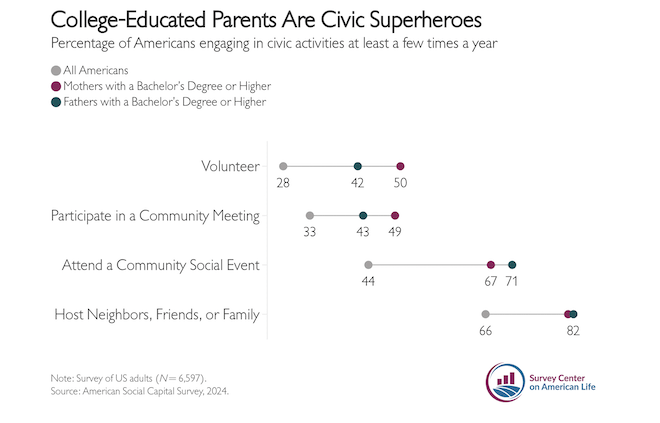
If you use Goldstein’s logic above, parents should have less time to be involved in their communities. But it turns out parents do more for their communities, because perhaps parenting makes people more efficient with their time and more concerned about their communities’ future.
I just don’t buy that parents who spend a lot of time on their kids’ sports are necessarily less involved in their communities than other parents. It’s certainly not been what I’ve witnessed in my own life. The dad who volunteered with me last week on a school project has a daughter in travel baseball, and he and his wife also organize the best block party every summer in my neighborhood. It just seems pretty possible that people who are invested in their kids’ sports are also highly invested in their communities.
Or if they’re uninvested in their communities, they’re no different than most others. Because, if 70 percent of kids drop sports by age 13, then 70 percent of high school parents should be the paragons of community investment and social connection … but where are all those community-oriented parents of older kids? We can see the counterfactual all over the place. People aren’t engaging in community for a bunch of reasons that have nothing to do with being focused on their kids’ sports.
Another argument that is used all over the place to criticize travel teams is that most of these kids don’t even go on to play college sports, not to mention in professional sports leagues.
Yglesias writes:
Arguments against the intensity of youth sports come from some of the articles that have exposed the myths that many parents are sold that travel team sports will have some kind of benefit for them.
And Goldstein writes:
Roughly just 0.2 percent of high school athletes receive any amount of college scholarship for their sport.
Minor fact check: if you look at the actual publication, it actually says 2 percent of high school athletes get some amount of funding. But regardless, perhaps Goldstein doesn’t realize that college scholarships aren’t the only big money anymore.
First of all, there’s middle school and high school scholarships that many students pursue. Many of the people who I know who play on travel teams are playing with kids from working class backgrounds who see this as a legitimate pathway to improve their educational opportunities.
But if you’ve followed any of the kids who are at the top of their game, the real money is in NIL. (Name, image and likeness). I went down a kids junior golf Instagram rabbit hole for a few days after those sobering tournaments, and at the absolute minimum, kids who do well in competitions get new gear for free. But many also get sponsorship dollars for promoting gear, even in elementary school.
In other words, certainly many people aren’t going to recoup a fraction of the money invested in these sports leagues. But some do.
But beyond that, the sports industry is huge and growing. At a time when the knowledge economy seems to be on the brink of a slow extinction, investing in sports and other hobbies (as I’ve written before) makes a lot of sense. Many kids may not go on to become professional athletes, but will get a taste for and an intimate understanding of the sports industry.
Lastly, playing sports at a competitive level often correlates with corporate success. In a piece outlining his study on the sports-to-CEO connection, Jonathan Rhodes found that two-thirds of Fortune 500 CEOs played sports at a collegiate level:
Deloitte found that over 70 percent of corporate executives were former college athletes. A 2023 study showed that an astonishing 93 percent of female executives earning over $100K had sporting backgrounds. Cornell University’s research painted a similar picture: 80 percent of Fortune 500 executives and 94 percent of C-suite women were collegiate athletes.
Playing sports at a high level meant these people were capable of “commitment to excellence, the resilience that turns setbacks into comebacks, and the burning passion shaped through experience that propels individuals beyond their perceived limits.”
I am not writing this defense of highly competitive youth sports because I am happy about the outsized influence that sports have in our world. I live in Philadelphia, perhaps the most sports-obsessed city in the country. Last year when the Eagles won the Super Bowl, a week after the School District made a bad snow day call when it had only rained, I wrote an op-ed about how we should not close down schools for the Eagles parade. Everyone I know told me not to publish it. In Philadelphia, this is how you get canceled: by saying anything negative about the Eagles.
We live in a fallen country that I believe has become more and more sports-obsessed the worse our politics, pop culture, and morale has become. And yet, I can understand why.

When I went to those U.S. Kids Golf events, I saw families that were extremely dedicated to their exceptional children. I saw a world where rules mattered and were followed with absolute precision. I saw a world where inborn talent, money and nepotism can only influence things so much. Yes, they can definitely get you in the door, but they will not keep you in the room. What matters is an ability to weather the highs and lows that come with competition.
We should be learning these lessons in experiences outside of sports. In our lives as students and professionals and family members and friends. And yet, unlike in regular life, in sports, there is no ghosting, no awkward silence, no flaking out. If you quit, you lose. In sports, there are strict schedules and codes of conduct and chants and music at a ballpark that sometimes makes you feel like you’re in a rave. It’s all almost enough to make you forget about everything that isn’t right with the world these days.
But things are pretty bad these days. As I said at the outset of the piece, if you’re going to be mad about highly competitive sports and travel teams, I think you should set your sights higher.
And one of the things I think is really bad with our sport obsessed world is sports betting. As the Washington Post editorial board wrote last year:
The average credit score in states that legalized sports betting decreased by 0.3 percent — and by one percent, three times the average, in states that allow online sports betting … This implies that a relatively small group of intensive users — “problem gamblers” — are suffering major damage to their credit scores, dragging down the overall average … The results were larger for young men from lower-income counties in those states. Meanwhile, states that legalized sports betting saw significant increases in bankruptcy filing rates and debt collections. Debt consolidation loans went up 8 percent by dollar value, and auto loan delinquencies increased 9 percent.
Richard V Reeves from the American Institute for Boys and Men shows that it’s particularly bad for young men from low-income areas.
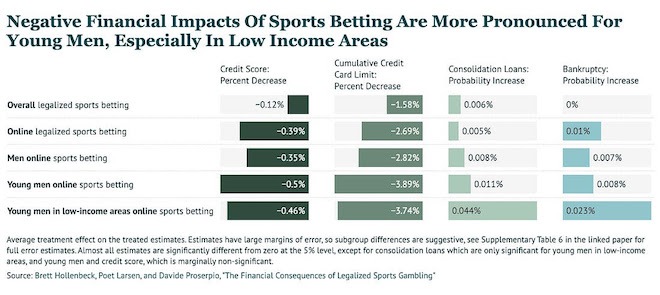
Instead of sticking it to your neighbor, advocate for more regulation on sports betting. Perhaps start in your state by reaching out to your congressperson, senator and governor about this important issue.
And there’s also the other way in which our sports obsession is hindering our cities: Professional sports organizations — the MLB, NFL, MBA, etc. — are seeking subsidies to build or renovate their stadiums. If you live in one of these cities, take a stand against this fiscal mismanagement.
Finally, and perhaps most crucially, you can get involved in making public sports programs better in your local community. In her piece complaining about the cost of youth sports, Jessica Grose gave the examples of Cambridge, Massachusetts, “which reinvigorated its rec soccer league, doubling the number of registered players from 2014 to 2022. The city invested in better uniforms and coaching … The parks and recreation department also tried to make sure that the rec leagues could use the city’s fields at preferred times, rather than travel teams getting those choice slots.”
But as Grose noted, changes like this don’t just happen. It takes “a concerted effort from parents, local governments and, hopefully, private businesses that can contribute to the cause.”
Diana Lind is a writer and urban policy specialist. This article was also published as part of her Substack newsletter, The New Urban Order. Sign up for the newsletter here.
 MORE FROM THE NEW URBAN ORDER
Probably not a travel team, but a photo of kids geared up for a football game by Ben Gorman for Unsplash.
Updated Jan. 2, 2026, 7:24 p.m. ET
It’s time to dust off the annual ’49 football trophy’ that will once again be hoisted in the air on Thanksgiving Day.
The long-standing, 90-year high school holiday rivalry between Joseph Case and Somerset Berkley is officially back on this coming November. The last time the two schools met was in 2022 when the Raiders defeated the Cardinals, 50-14.
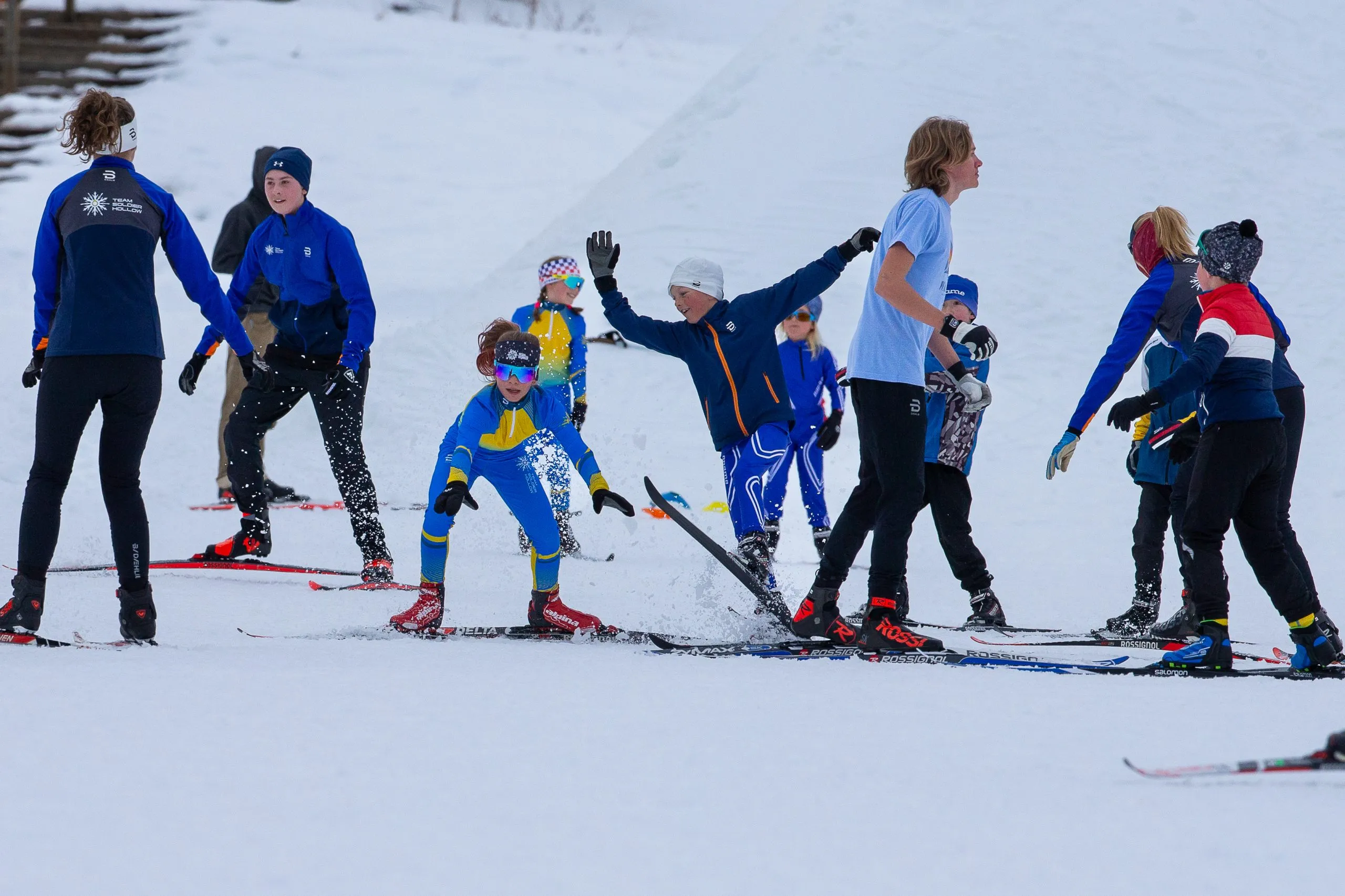
Returning this month, the Soldier Hollow Kickers and Gliders program aims to introduce more youth across the Wasatch Back to cross-country skiing, with renewed efforts focused on reaching families in the local Latino population.
The beginner-focused program is designed for children ages 6 to 11 runs from Jan. 6 through Feb. 26, with sessions held Tuesdays and Thursdays from 4 to 5:30 p.m. at Soldier Hollow’s Sports Discovery Center, located at 2002 South Olympic Drive in Midway.
“Kids will learn the basics of skiing through purposeful play, games and drills. All participants get free hot chocolate to warm back up after each practice,” said Gerrit Garberich, senior sports manager and head comp BIA Coach.
Last winter, Garberich and Luke Bodensteiner, Soldier Hollow’s general manager and chief of sport development for the Utah Olympic Legacy Foundation, began a discounted registration initiative aimed at increasing participation among Latino families.
That initiative set aside 20 spots for Latino participants at a discounted rate of $25 supported by the Wasatch Community Foundation and the Wasatch Latino Coalition. Additionally the program offers needs-based scholarships to all families.
Program leaders have pointed to longstanding underrepresentation of Latino families in local skiing programs as a key reason for expanding outreach and reducing barriers.
“Last year we had 95 kids participate in our program but only four took advantage of the $25 registration for the Latino community,” said Garberich.
Organizers recognized that challenges such as transportation and communication have limited participation in the past and said they are working to improve outreach and access for Latino families this season.
Transportation was not offered last year due to a lack of available bus drivers — a limitation organizers said may have affected participation. This winter, the program has secured two bus drivers in hopes of increasing access and enrollment.
Free transportation will be available for registered participants, with a program bus picking up children at 3:40 p.m. from the southeast portion of the Wasatch Recreation Center parking lot and returning them to the same location at approximately 5:45 p.m.
The goal is to reduce common barriers, organizers said — which include cost, equipment and transportation — that can prevent families from accessing winter sports.
The program provides all ski equipment, including skis, boots and poles. Families are asked to send children dressed for winter conditions, including windproof or snow pants, base layers, a warm jacket, hat, gloves, neck gaiter, warm socks and a water bottle.
Registration is now open, with separate links available in English and Spanish. Families seeking Spanish-language registration and access to the reduced $25 rate for Latino participants are encouraged to use the Spanish registration link, while general registration is available through the English link.


Barre3
Embrace strength, cardio and mindfulness all at once with a session at this Bethesda studio. As anyone who’s done barre can attest, those subtle movements inspired by ballet training look deceptively easy but deliver major results. The workouts take you through low-impact isometric moves, bursts of cardio, and breath work that’s meant to center your mind. Everyone, from beginner to expert, is welcome at Barre3, which is known locally for its popular classes, with about a dozen offered per day.
4829 Cordell Ave., Bethesda, 240-858-6101, barre3.com
Chevy Chase Athletic Club
This 20,000-square-foot club sprawls across the 18th floor of the Barlow Building in Friendship Heights, offering penthouse views of downtown D.C. as you lift, spin or power walk. Its squash program is the biggest in the area, including private and group classes, clinics, tournaments and more. Various personal training options zero in on youth sports, seniors’ balance and flexibility, and all-around fitness.
5454 Wisconsin Ave., Chevy Chase, 301-656-8834, myccac.com
City and County Recreation Centers
Want to work out on the cheap or even for free? Montgomery County has 22 recreation centers with workshops, clinics, drop-in programs, sports, open gym and special events. A fitness center pass is free with proof of county residency and gets you access to gym equipment, open gym and more. Some classes, ranging from golf to pickleball, are available for a fee, and a pass to the county’s four indoor pools and seven outdoor pools costs $400 per year for county residents. There are also city rec centers for a small fee in Gaithersburg and in Rockville, where the Rockville Swim & Fitness Center offers day passes and membership packages for residents and nonresidents.
Montgomery County: montgomerycountymd.gov/rec/facilities/recreationcenters; Gaithersburg: gaithersburgmd.gov/recreation; Rockville: rockvillemd.gov/398/swim-fitness-center
CrossFit Bethesda
If the idea of walking into a huge gym—where you don’t really know how to work the machines or, well, do much of anything—fills you with dread, consider a more personalized workout routine at CrossFit Bethesda. Coaches and classmates quickly get to know your name as you all run through barbell squats and kettlebell swings together. Variety is the name of the game here, so if boredom with the same old, same old is what’s killing your desire to work out, CrossFit might be a good fit—the high-intensity fitness approach combines elements of weightlifting, cardio and even gymnastics.
4848 Cordell Ave., Bethesda, 301-381-5855, crossfitbethesda.com
Equinox Bethesda
One of 111 Equinox clubs around the globe, this is a posh place for getting fit, equipped with such luxuries as a saltwater pool and a spa for facials and massages. Group classes, which are unlimited for members, include cycling, barre, Pilates and high-intensity interval training (HIIT). Equinox also prides itself on a top-notch personal training program.
4905 Elm St., Bethesda, 301-652-1078, equinox.com
extendYoga
You can do your sun salutations and asanas at this studio, or from the comfort of your home in virtual classes, as teachers lead you through sessions with an emphasis on the vinyasa flow style. Choose from about six classes per day. As part of its mission to make yoga welcoming to all, Extend offers Repped, an “inclusive yoga series” aimed at underserved groups; past months have been devoted to Muslim and Asian American Pacific Islander communities.
12106 Wilkins Ave., North Bethesda, 301-881-3330, extendyoga.com

Hotworx Bethesda
Eight small saunas that can accommodate up to three people each make up this boutique fitness studio, part of a national chain. Classes—taught by instructors via TV screens in the saunas—combine heat, infrared energy and exercise with the goal of maximizing the calories burned in shorter bursts of time. Choose from sessions such as 30-minute hot yoga or hot Pilates, or 15-minute HIIT workouts such as cycling. The studio is open 24/7 to accommodate busy schedules.
4830 Rugby Ave., Bethesda, 301-966-3924, hotworx.net
Life Time
Billed as “Potomac’s first athletic country club,” that Life Time location is all about breaking a sweat in style. Locker rooms decked out in wood and marble, and accented with flowers, feel reminiscent of a high-end hotel bathroom (they also have steam rooms, saunas and a whirlpool). Tend to your whole body, head to toe, at the spa, and recharge at the cafe with a seasonally changing menu. The Gaithersburg location (billed as “Gaithersburg’s only athletic country club”) offers swanky spa services, too, and also boasts two indoor and two outdoor pools. At both Life Time spots, children ages 3 months through 11 years can hang in the Kids Academy while you get your workout in.
1151 Seven Locks Road, Potomac, 240-314-7022; 10121 Washingtonian Blvd., Gaithersburg, 301-569-5100; my.lifetime.life

Onelife Fitness
The basketball courts are a major draw at some of the Onelife gyms; you can play pickup, just shoot around, or join one of the camps, classes, leagues or organized games. (Note: The Pike & Rose, Germantown and Olney locations don’t have courts.) Cutting-edge equipment, a wide range of group fitness classes, and amenities such as pools, whirlpools and saunas at several locations are good reasons to work out here. Overdid it just a bit? Many locations offer red light therapy (which reduces pain and inflammation), HydroMassage (for loosening tight muscles and alleviating pain) or compression therapy (to decrease muscle soreness and inflammation) on-site.
4400 Montgomery Ave., Bethesda, 301-656-9570; 20500 Seneca Meadows Parkway, Germantown, 240-686-4500; 17821 Georgia Ave., Olney, 301-358-6698; 11594 Old Georgetown Road (Pike & Rose), Rockville, 301-245-3908; 1407 Research Blvd., Rockville, 240-599-8383; onelifefitness.com
Orangetheory Fitness
Newbies and seasoned athletes alike are welcome here—Orangetheory workouts are for all fitness levels. This popular chain takes you through instructor-led classes that differ from traditional HIIT classes because of their adaptability—you can raise or lower your intensity based on your fitness level and goals for the day. That’s aided by a system that tracks your body in real time, showing you your heart rate at all times and helping you adjust accordingly. The cardio part of the workout includes treadmills, rowers and other equipment.
7955 Woodmont Ave., Bethesda, 301-565-0366; 622 Center Point Way, Gaithersburg, 301-250-1060; 18205 Hillcrest Ave., Olney, 443-221-6700; 1601 Rockville Pike, Suite 210A (Congressional Plaza), Rockville, 240-380-3311; 12435 Park Potomac Ave., Suite R-10, Potomac, 301-265-5050; 8455 Fenton St., Silver Spring, 301-798-7433; orangetheory.com

Pink Moon
Moms are the raison d’être for this wellness center that opened in Bethesda in May 2025. Pilates and total-body toning classes are the main draws, as are yoga sessions—some of which even incorporate your little ones, from babies through preschoolers. Child care is also offered for kids ages 6 months to 6 years from 9:15 a.m. to 2:15 p.m. on weekdays. If you’re new to working out or easing back into it postpartum, don’t worry—they’re all about inclusivity here.
7610 Old Georgetown Road, Plaza Level, Bethesda, 240-222-1146, pinkmoonmoms.com
Soldierfit
Atten-hut! Boot camp classes are the centerpiece here; the Rockville location reserves half of its 10,000 square feet for those sessions, aimed to strengthen you both physically and mentally. The 50-minute workouts are structured military-style, but the idea is to build camaraderie, too—Soldierfit encourages you to think of its trainers as your “friendly drill sergeants.” There’s also cardio and other workout equipment if you prefer to go it alone.
12241 Nebel St., Rockville, 240-669-8298; 1 E. Diamond Ave., Gaithersburg, 301-407-1800; 12210 Plum Orchard Drive, Suite 206, Silver Spring, 301-751-3163; soldierfit.com
SoulCycle
Cyclists, you may just find your tribe at the Bethesda outpost of this popular chain of spin studios. High-energy music—maybe Taylor Swift, ’90s throwbacks or hip-hop, depending on the class—pumps from the speakers as instructors lead you through the choreography. Hooked? You can buy your own SoulCycle bike for at-home workouts and pedal along with classes you stream live.
4931 Elm St., Bethesda, 301-803-7685, soul-cycle.com
The St. James Performance Club
Grapevine your way to better health in the step aerobics class, challenge yourself to a boot camp-style routine in the pool, or sculpt your body on the gym equipment at this offshoot of The St. James’ mega sports complex in Virginia. Whatever your workout, refuel afterward with a tropical acai bowl or a pineapple-mango smoothie at Vim & Victor, a chef-curated wellness bar.
6828 Wisconsin Ave., Bethesda, 240-507-5366, thestjames.com
Urban Boxing Bethesda
Some days you just want to slam a fist into something. Do that here and get a full-body workout at the same time. The plethora of classes offered in this gritty but well-equipped studio include boxing of course—but also kickboxing, Muay Thai, Brazilian jiujitsu, mixed martial arts, sparring and yoga. All experience levels are welcome, and some boxing classes are for kids only.
4834 Cordell Ave., Bethesda, 301-656-2186, urbanboxingbethesda.com
YMCA
Dink and lob at the Y, which has a happening pickleball program—you can play, take classes or sign up for clinics. Spice up your fitness routine with a new class, from belly dancing to Zumba. Or dive into the indoor or outdoor pool (swimming classes are offered for kids, teens and adults). Bonus: Cooking classes with an emphasis on nutrition are offered for kids, adults, seniors and families. Nutrition counseling is also available for members.
YMCA Bethesda-Chevy Chase, 9401 Old Georgetown Road, Bethesda, 301-530-3725; YMCA Silver Spring, 9800 Hastings Drive, Silver Spring, 301-585-2120; ymcadc.org
This appeared in the 2025-2026 Insider’s Guide.

A parent said to me recently, “We don’t have time for anything anymore. Every season is another sport, another camp, another commitment.” That comment stuck with me, because it echoes what many parents have shared with me over the years. One parent told me how, in their experience with youth sports, certain activities began taking priority over everything else not because kids loved them more, but because families had already invested so much money that stepping back didn’t feel like an option.
Hockey and dance were early examples. Those weren’t just sports; they were major financial commitments that shaped the entire family’s schedule and budget. Another family we know has a son who eventually signed with the LA Kings. When he received his signing bonus, he bought his dad a new truck. He told him, “You wore your truck out taking me to practices and games all those years.” It was a heartfelt gesture, but it also shows the level of sacrifice families feel obligated to make long before they know whether any of it will pay off.
Even the outdoors, the place many of us turned to for simplicity, isn’t immune from this shift. Several people have told me how fishing, once the most accessible pastime around, has become another high‑cost, high‑pressure pursuit. Multiple locators with forward‑facing sonar, spot‑lock trolling motors, specialized tackle, and the vehicle to tow the boat have turned a “fishing boat” into a serious investment. What used to be a quiet day on the water has become yet another arena where gear and competition creep in. Parents also tell me they feel pressure to keep spending, keep traveling, and keep their kids committed year‑round, sometimes chasing the child’s dream, sometimes chasing their own. That’s not new, and it’s not going away. But it does feed into a culture where families feel they have to keep up, spend more, and sacrifice more.
Meanwhile, the simple things, the things that used to define childhood, are getting squeezed out. Those last crisp days of pheasant season. Walking a woods line for squirrels or rabbits. Wandering a field with a dog and no real agenda. Summer mornings on the lake. These moments have been replaced by “mandatory” camps, weekend tournaments, and off‑season practices that leave no room for anything else. One parent told me, “My own grandsons have so much going on that it’s almost impossible for them to find time to fish with Grampa.” Not because they don’t want to but because their schedules don’t leave room for unstructured time, family traditions, or simply being outdoors for the fun of it.
If we want kids to stay active in sports and still grow up with the outdoor traditions so many of us value, we need to bring back some balance. Let them rest. Let them wander. Let them fish with their grandparents. Let them be kids again.
Gary Korsgaden lives in Pelican Rapids, Minn.

From 2008 to 2012, Spain absolutely dominated the international soccer scene— winning two European championships (2008, 2012) and a World Cup title (2010). In 2024, the Spanish took home another Euros title, and are currently the top-ranked team in the official FIFA rankings.
Despite losing to Portugal in the UEFA Nations League final, the team is filled with a perfect blend of youth and experience with talent at every position. All eyes will be Lamine Yamal, the 18-year old sensation that took the world by storm last year with his dominant play at the Euros.
How they Qualified:
Spain qualified for the 2026 FIFA World Cup by finishing atop Group E in UEFA qualifying, securing one of Europe’s automatic spots for the expanded 48-team field. They put together a consistent, high-scoring campaign and remained in control of the group throughout, ultimately clinching first place ahead of Turkey and the other contenders.
World Cup Group Stage Schedule:
Group H is set for the 2026 FIFA World Cup, featuring Spain, Cape Verde, Saudi Arabia and Uruguay.
Previous World Cup appearances:
What is Spain’s Best Finish in the World Cup?
Who’ll be Spain’s Key Players at the World Cup?
Lamine Yamal is a right-winger for FC Barcelona and one of Spain’s most productive young internationals. He became the youngest player ever to represent Spain and played a major role in their EURO 2024 title, contributing both goals and assists throughout the tournament. His breakout season with Barcelona included consistent La Liga and Champions League production, and he finished runner-up for the Ballon d’Or, the highest placement ever for a teenager.
Pedri is a central midfielder for FC Barcelona and has been a regular for Spain since breaking through in 2021. He won the UEFA Euro 2020 Young Player of the Tournament, was named to the Team of the Tournament, and played in the 2022 World Cup. Known for his passing accuracy, ball retention and ability to control tempo, he remains one of Spain’s most important midfield pieces.
Rodri is Spain’s first-choice holding midfielder and an anchor for Manchester City, where he has won multiple Premier League titles, the UEFA Champions League and several domestic trophies. He captured the Ballon d’Or, becoming one of the few Spanish players in history to win the award. Rodri was central to Spain’s EURO 2024 triumph and has accumulated more than 50 caps, providing elite defensive coverage, distribution and tactical stability heading into 2026.
Who is Spain’s Manager for the World Cup?
Luis de la Fuente is Spain’s head coach and has been in charge of the senior national team since 2022 after previously managing multiple Spanish youth sides, including the U-19, U-21 and Olympic teams. He guided Spain to the EURO 2024 title, becoming the first Spain manager since Vicente del Bosque to win a major tournament. Known for balancing possession-based play with a more direct attacking approach, de la Fuente has integrated a strong mix of youth and experience into the squad and enters the 2026 World Cup cycle with a stable core and proven results at both youth and senior levels.
Spain’s All-Time Leading Scorer:
Spain’s All-Time Caps Leader:
Spain’s Team Nickname:
About the Country:
Want great stories delivered right to your inbox? Create or log in to your FOX Sports account and follow leagues, teams and players to receive a personalized newsletter daily!
Published 11:09 am Friday, January 2, 2026
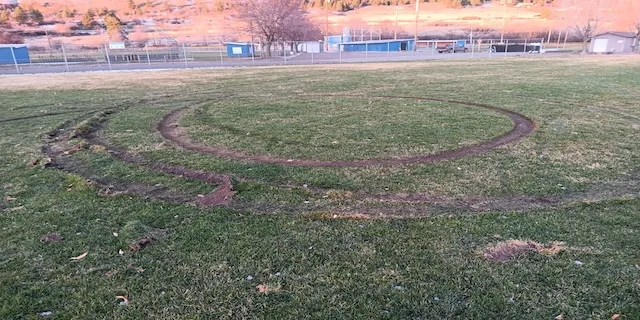
LA GRANDE — La Grande Parks and Recreation is seeking information regarding significant damage at both Pioneer Park and Benton Park.
Parks and Recreation Director Stu Spence announced on Friday, Jan. 2, that a vehicle, or possibly vehicles, caused the damage at both parks.
“It’s always frustrating when people damage places meant for kids and families,” Spence said. “Due to the nature of the damage, repairs will need to wait until spring, and the affected areas may take more than a year to fully recover.”
The damage at Pioneer Park happened sometime during the night of Dec. 30, at the soccer field near the pavilion, according to the press release. Similar damage was done during the night of Dec. 31 to the play field at Benton Park.
Youth sports programs and families throughout the community heavily use both of the parks. Parks and Rec will continue to assess the sites, Spence said, and develop a plan to repair the damage as conditions allow.
Anyone with information regarding these incidents is encouraged to contact Parks and Rec or the La Grande Police Department.



Ross Brawn to receive Autosport Gold Medal Award at 2026 Autosport Awards, Honouring a Lifetime Shaping Modern F1


Stempien to seek opening for Branch County Circuit Court Judge | WTVB | 1590 AM · 95.5 FM

Princeton Area Community Foundation awards more than $1.3 million to 40 local nonprofits ⋆ Princeton, NJ local news %

Downtown Athletic Club of Hawaiʻi gives $300K to Boost the ’Bows NIL fund


Kentucky AD explains NIL, JMI partnership and cap rules


PRI Show revs through Indy, sets tone for 2026 racing season


Young People Are Driving a Surge in Triathlon Sign-Ups

Three Clarkson Volleyball Players Named to CSC Academic All-District List


Teesside youth discovers more than a sport


Central’s Meyer earns weekly USTFCCCA national honor