
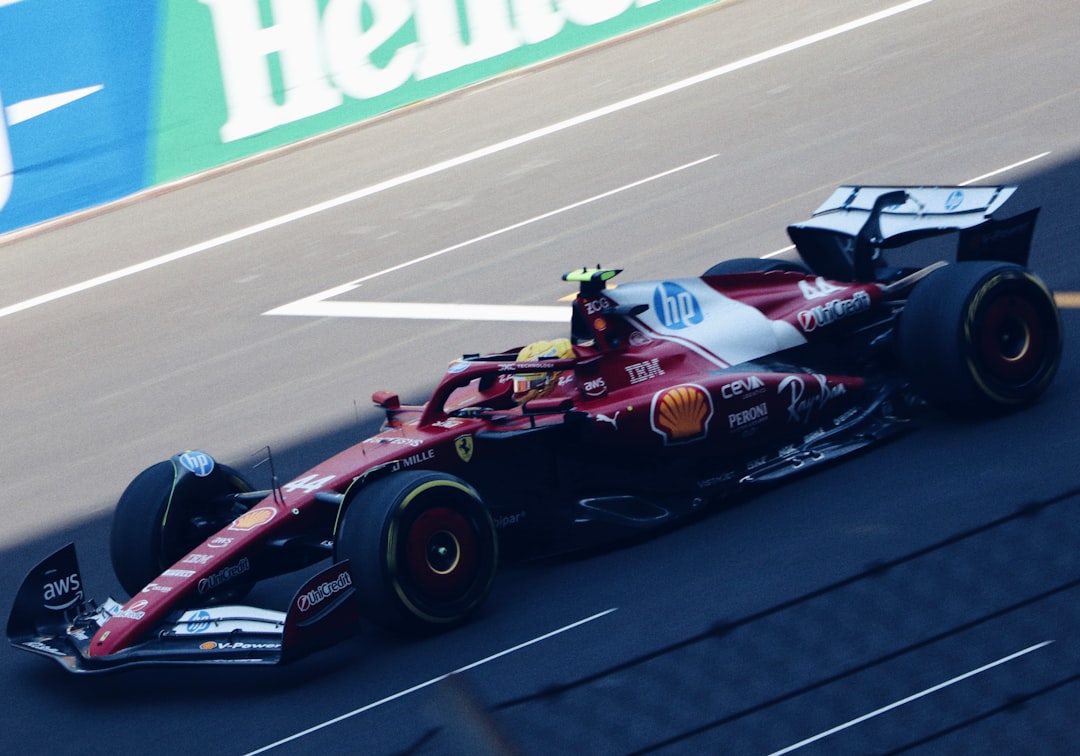

The Formula 1 championship standings have become the most unpredictable battleground in motorsport this season, with the title race swinging wildly as teams and drivers push their machines to the absolute limit. As the final third of the 2024 campaign unfolds, the margins separating championship contenders have narrowed to razor-thin margins, where a single misstep could spell disaster. With historic records trembling and new legends in the making, this season’s title fight isn’t just about speed—it’s about survival, strategy, and sheer nerve.
Breaking News & Key Facts: The Current F1 Championship Standings
The latest Formula 1 championship standings reveal a high-stakes drama unlike any in recent memory. Entering the penultimate race of the season in Abu Dhabi, defending champion Max Verstappen leads the drivers’ championship with 372 points, but a mere 18 points separate him from Charles Leclerc in second place. Lewis Hamilton, now in his 18th season, sits third with 334 points, followed closely by Lando Norris at 318 points. The constructors’ championship remains equally volatile, with Red Bull Racing holding a precarious 32-point lead over Ferrari, while McLaren lurks just 8 points behind in third place. Notably, Fernando Alonso, the 43-year-old veteran, has defied expectations by securing 148 points and a surprise fifth-place finish in the standings—a testament to both his skill and Aston Martin’s resurgence. The 2024 season has seen five different race winners across the first 21 races, reflecting the competitive parity that has redefined this era of Formula 1.
Background & Context: A Season of Unprecedented Parity and Strategy
This season’s championship battle is unfolding within a broader context of Formula 1’s evolving dynamic. The introduction of ground-effect aerodynamics in 2022, combined with the 2023 sprint race format expansion, has fundamentally altered race strategies and overtaking opportunities. The 2024 season has been particularly marked by the resurgence of Ferrari, who, after years of underperformance, have reclaimed their status as title contenders with a high-downforce, late-braking approach that suits their aggressive driving style. McLaren’s rise from the midfield to championship contention under team principal Andrea Stella has been one of the season’s biggest surprises, driven by a relentless focus on car development and driver confidence. Meanwhile, Mercedes’ struggles with porpoising in early-season tests forced a mid-season redesign that has yet to translate into consistent podiums. Historically, the F1 championship standings have rarely been this volatile in the final third of the season. Since the introduction of the current points system in 2010, only three seasons have seen the drivers’ championship decided in the final race. This year, the title could hinge on factors as unpredictable as tire degradation in Qatar’s desert heat or a safety car in Las Vegas. The 2024 season also marks the first time since 2012 that four different teams have won races in the first 21 rounds, underscoring the depth of competition.

Expert Analysis & Impact: What the Standings Mean for the Future of F1
The current Formula 1 championship standings are more than just a snapshot—they represent a turning point for the sport’s competitive landscape. Analysts suggest that the narrow margins in both titles reflect a new era where parity is not just desired but engineered by regulatory bodies like the FIA. The rise of McLaren and Aston Martin signals a potential shift away from the dominance of Red Bull and Mercedes, which has defined much of the hybrid era. For Verstappen, a fourth consecutive title would cement his legacy as one of the sport’s greats, but Leclerc’s relentless consistency poses a real threat. Meanwhile, Hamilton’s pursuit of an eighth title would break every record in the book, proving that age is no barrier to excellence. The constructors’ championship battle has broader implications for team budgets and driver recruitment in 2025, as smaller teams like Alpine and Williams scramble to secure top talent amid financial constraints. From a technical standpoint, the 2024 season’s high-downforce cars have rewarded precision and adaptability, forcing teams to rethink their approach to race preparation. Looking ahead, the F1 championship standings suggest that the 2025 season could be even more unpredictable, with Pirelli introducing new tire compounds designed for higher degradation—further amplifying the role of strategy in deciding races.
Reactions & Expert Opinions: The Voices Shaping the Title Race
The Formula 1 championship standings have sparked a wave of reactions across the paddock and among fans. Red Bull team principal Christian Horner acknowledged the pressure, stating, ‘We knew this season would be tough, but no one expected the championship to be this close this late. Every point matters now.’ Meanwhile, Leclerc’s Ferrari teammate Carlos Sainz called the current fight ‘the most exciting title race in years,’ adding, ‘We’re racing for something bigger than ourselves—this could change the future of Ferrari.’ McLaren’s Norris, a title outsider, has become a fan favorite after his breakthrough performances, with former champion Jenson Button tweeting, ‘Lando’s pace is undeniable, and McLaren deserve every bit of this success.’ Social media has erupted with debates over whether Verstappen’s Red Bull is still the fastest car, with memes circulating about ‘the 2024 version of 2012’—a reference to the unpredictable season that saw Alonso win the title. Fans have also highlighted Alonso’s remarkable season, with hashtags like #AlonsoForever trending after his podium in Singapore. Pundits like Sky Sports’ Ted Kravitz have noted that the late-season swing in the standings is reminiscent of 2008, when Lewis Hamilton won the title by a single point in Brazil. The global fanbase is more engaged than ever, with attendance records broken at the US Grand Prix and record-breaking viewership for the sprint race in Miami.

What to Watch Next: The Road to the Abu Dhabi Finale
The final two races of the 2024 season promise fireworks. In Las Vegas, the street circuit’s unpredictable surface and limited overtaking opportunities make pit strategy critical. A poor qualifying position could be fatal, as seen in 2022 when Verstappen lost the championship lead after a first-lap collision. Qatar’s Losail International Circuit, with its high-speed corners and DRS zones, favors teams with strong tire management—exactly where Ferrari and McLaren excel. The sprint race in Abu Dhabi will be a decisive warm-up for the main event, where the top 10 finishers score points. Key dates to watch include the final practice sessions on December 5, qualifying on December 6, and the grand prix on December 7. In the constructors’ battle, Red Bull needs to avoid a double DNF (Did Not Finish) scenario, while Ferrari must maximize points in both races to overtake. For the drivers’ title, any mistake by Verstappen in Las Vegas could hand Leclerc a lifeline, while Hamilton’s challenge hinges on McLaren’s ability to out-develop Mercedes in race trim. Off-track, the FIA’s decision on the 2026 regulation changes—set to be formalized in December—will dominate discussions, with teams already lobbying for adjustments that could reshape the championship landscape.
Frequently Asked Questions
How are the F1 championship standings calculated?
The Formula 1 championship standings are determined by a points system where the top 10 finishers in each race earn points (25 for a win, 18 for second, 15 for third, down to 1 for tenth). Additional points are awarded for the fastest lap (1 point) and sprint race finishes (8 for first, 7 for second, etc.). The standings are cumulative, with the driver and constructor with the most points at the end of the season declared champions.
Can a driver still win the championship if they finish outside the top 10 in the final race?
Yes, a driver can still win the championship if they finish outside the top 10 in the final race, provided their closest rival also scores zero points. For example, if a driver in second place retires due to a crash or mechanical failure, while the leader finishes 15th without scoring points, the second-place driver could claim the title.
What happens if two drivers have the same number of points at the end of the season?
If two drivers finish the season with the same number of points, the FIA uses a tiebreaker system. First, the number of wins is compared. If still tied, the results of head-to-head races are considered. If the tie persists, the driver with the most second-place finishes is favored, followed by third-place finishes, and so on. Constructors follow a similar tiebreaker system.
Final Thoughts
The Formula 1 championship standings have delivered a season of unparalleled drama, where every point is a battle and every race a potential game-changer. As the title race hurtles toward its climax in Abu Dhabi, the sport’s global audience is witnessing history in the making—a testament to Formula 1’s enduring ability to surprise, inspire, and electrify. Whether Max Verstappen secures his fourth crown, Charles Leclerc ends Ferrari’s 40-year drought, or an outsider like Norris or Alonso pulls off the impossible, one thing is certain: the 2024 Formula 1 championship will be remembered as a masterclass in resilience and rivalry.
Images are sourced from the original RSS news feed or from Unsplash (free-to-use photography), credited as shown beneath each image.
⚠️ DMCA Notice: If you own content on this page used without permission, contact us and we will resolve it within 24 hours.
