

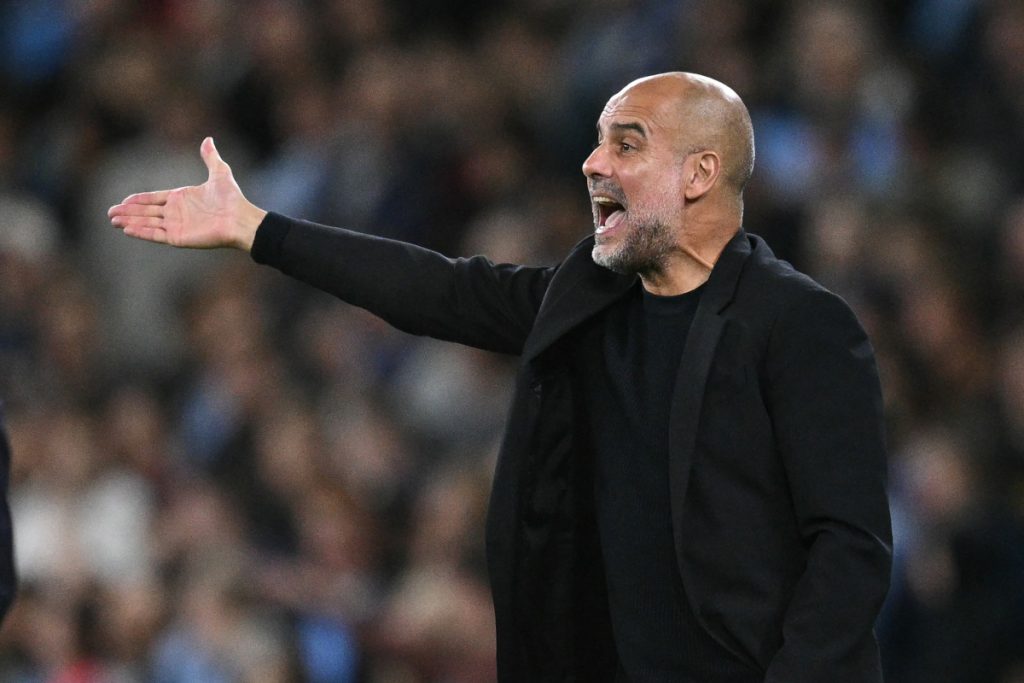
Pep Guardiola’s next chapter in football could see him swap the confines of the Etihad Stadium for the green field of international duty, with fresh speculation linking the Manchester City maestro to a high-profile national team role—specifically, the Italy bench. According to Italian outlet La Gazzetta dello Sport, the Spaniard has emerged as a prime candidate to lead the Azzurri after his impending exit from Manchester City, casting a spotlight on a potential managerial transition that could redefine both his career and Italian football.
Breaking News: Italy Target Guardiola as Next National Team Manager
Sources close to the Italian Football Federation (FIGC) have indicated that Pep Guardiola is being seriously considered as the next manager of the Italy national team, with his tenure at Manchester City set to conclude at the end of the 2024-25 season. The 54-year-old tactician, fresh off a historic treble with City in the 2022-23 campaign, has cultivated a reputation as one of football’s most innovative and successful managers. His potential move to Italy would mark a significant shift from club football to international duty, a transition that has been both coveted and contentious in recent years. The FIGC’s interest in Guardiola comes amid a broader reevaluation of Italy’s managerial strategy following their Euro 2024 group-stage exit—a performance that exposed vulnerabilities in their setup and ignited debates over the federation’s long-term vision.
The timing of this speculation is particularly intriguing, as Italy’s quest to restore its status as a footballing powerhouse remains fraught with challenges. The Azzurri, once a beacon of defensive solidity and tactical mastery, have struggled to recapture their former glory in recent tournaments, culminating in a disappointing showing at Euro 2024. Guardiola’s appointment, if realized, could signal a bold new direction for the national team, one that emphasizes possession-based football and high pressing—a philosophy that has defined his club successes. However, the move is not without its hurdles. Guardiola has repeatedly expressed his commitment to Manchester City until the end of his contract, and his willingness to take the Italy job remains uncertain. Moreover, the FIGC would need to navigate logistical and political challenges, including securing his release from his current contract and aligning with Italy’s federative structures.
Background: Guardiola’s Legacy and Italy’s Managerial Crisis
To understand the gravity of this potential shift, it’s essential to examine Pep Guardiola’s illustrious club career and Italy’s tumultuous recent history in international football. Guardiola’s tenure at Manchester City has been nothing short of revolutionary, transforming the club from a perennial Premier League also-ran into a global footballing juggernaut. Under his guidance, City secured three consecutive Premier League titles (2021-22, 2022-23, 2023-24), a historic Champions League triumph in 2023, and multiple domestic cups, including the FA Cup and League Cup. His tactical acumen, characterized by intricate positional play, high pressing, and fluid attacking transitions, has set a new benchmark for modern football management. A move to Italy’s national team would require Guardiola to adapt his philosophy to the constraints of international football—namely, the limited time for training camps and the need to integrate players from diverse club backgrounds.

Italy’s footballing landscape, meanwhile, has been marked by instability and unmet expectations. Despite winning Euro 2020 and the Nations League in 2021, the Azzurri’s performance at Euro 2024 exposed deep-seated issues, including a lack of cohesion, defensive vulnerabilities, and an overreliance on older players. The federation’s recent managerial carousel—featuring the short-lived tenures of Roberto Mancini and Luciano Spalletti—has done little to address these concerns. Enter Guardiola, whose appointment could represent a clean break from the past. His ability to instill a cohesive, attacking style of play could rejuvenate Italy’s fortunes, particularly as the nation gears up for the 2026 World Cup in the United States, Canada, and Mexico. However, the FIGC’s decision-making process is notoriously complex, and Guardiola’s potential candidacy would likely face scrutiny from stakeholders who may favor a more traditional Italian managerial profile.
Expert Analysis: What Guardiola’s Italy Move Could Mean for Both Parties
The prospect of Pep Guardiola taking the helm of the Italy national team is a tantalizing one, but it is not without significant implications for both the manager and the Azzurri. From Guardiola’s perspective, a national team role would represent a new challenge, one that tests his adaptability outside the controlled environment of club football. International management demands a different skill set—prioritizing squad harmony, managing egos, and working with limited preparation time. Guardiola has previously expressed his desire to manage a national team, noting in interviews that international duty appeals to him as a way to contribute to his home nation or adopt a new footballing culture. Italy, with its rich footballing heritage and tactical sophistication, would provide an ideal platform for such a transition.
For Italy, Guardiola’s appointment could be a game-changer. The Azzurri have long been associated with defensive pragmatism, but Guardiola’s brand of football—rooted in possession, pressing, and positional play—could revitalize the team’s identity. His track record of developing young talent and maximizing the potential of his squads suggests that he could elevate Italy’s performance in major tournaments. Analysts have pointed to the Azzurri’s struggles in transitioning between defensive and attacking phases as a critical weakness, and Guardiola’s systems could address this issue head-on. Moreover, his arrival could attract top Italian talents who might otherwise prioritize club commitments over international duty. However, the transition would not be seamless. Guardiola’s high-intensity style requires significant fitness levels, and Italy’s aging squad may struggle to adapt. Additionally, the political dynamics within the FIGC could pose obstacles, as power struggles and bureaucratic hurdles have historically complicated managerial appointments.
Reactions and Expert Opinions: Divided Views on Guardiola’s Potential Italy Move
The news of Pep Guardiola’s potential candidacy for the Italy national team role has sent ripples through the footballing world, eliciting strong reactions from fans, pundits, and insiders alike. Italian football legend Alessandro Del Piero, speaking to Sky Sport Italia, acknowledged Guardiola’s managerial brilliance but questioned the feasibility of his appointment. “Pep is a genius, there’s no doubt about that,” Del Piero remarked. “But managing a national team is very different from managing a club. The level of commitment from players is different, and the time you have to prepare is limited. It’s not impossible, but it’s a huge challenge.”
Former Italy manager Arrigo Sacchi, known for his defensive masterclass with the Azzurri in the 1990s, offered a more optimistic take, stating that Guardiola’s tactical innovations could revitalize Italian football. “Italy needs to evolve,” Sacchi told Gazzetta dello Sport. “Guardiola’s approach is modern and exciting. If he can bring that to the national team, it could change everything for us.”

On social media, reactions have been equally divided. Some Italian fans have embraced the idea of Guardiola leading the Azzurri, praising his track record and forward-thinking approach. Others, however, have expressed skepticism, citing Italy’s traditional preference for defensive-minded managers and the challenges of integrating Guardiola’s philosophy into an aging squad. Meanwhile, Manchester City supporters have shared mixed feelings, with some acknowledging the club’s need to plan for life after Guardiola, while others hope he will remain at the Etihad for the foreseeable future. The speculation has also sparked discussions about Guardiola’s legacy at Manchester City, with many wondering how his departure could impact the club’s future ambitions in the Premier League and Champions League.
What to Watch Next: Key Dates and Potential Scenarios
As the speculation around Pep Guardiola’s potential move to the Italy national team intensifies, several key dates and scenarios will shape the narrative in the coming months. First and foremost, the end of the 2024-25 Premier League season—scheduled for May 2025—will be a critical juncture. Guardiola’s contract with Manchester City expires at the end of this season, and his future decisions will likely hinge on whether he secures another club role or pivots toward international football. If he opts for the latter, the FIGC will need to move swiftly to engage in contract negotiations, as the timeline for appointing a new manager ahead of the 2026 World Cup is tight.
Another factor to watch is Italy’s performance in the Nations League and friendlies leading up to the World Cup. A strong run of results could bolster the FIGC’s confidence in pursuing Guardiola, while continued struggles might prompt a rethink of their managerial strategy. Additionally, the political landscape within the FIGC will be under scrutiny, as internal power struggles could influence the decision-making process. Guardiola’s potential arrival would also set off a chain reaction in the managerial market, with Manchester City likely to begin their search for a successor promptly.
For Italy fans, the next six to twelve months will be pivotal in determining whether the Azzurri can secure one of the game’s greatest managerial talents. If Guardiola does take the job, the 2026 World Cup in North America could become a stage for Italian football’s resurgence, with a squad featuring talents like Nicolo Barella, Federico Chiesa, and incoming young stars potentially flourishing under his guidance. Conversely, if the FIGC opts for a different path, Italy may face another cycle of managerial instability, further delaying their return to the pinnacle of international football.
Frequently Asked Questions
Why is Pep Guardiola linked to the Italy national team job?
Pep Guardiola is linked to the Italy national team job due to his impending departure from Manchester City at the end of the 2024-25 season, combined with Italy’s ongoing search for a managerial identity post-Euro 2024. According to La Gazzetta dello Sport, the Italian Football Federation views Guardiola as a prime candidate to revitalize the Azzurri with his possession-based, high-pressing philosophy. His potential appointment would mark a significant departure from Italy’s traditional defensive style and could redefine the national team’s approach ahead of the 2026 World Cup.
What are the challenges Guardiola would face as Italy manager?
Guardiola would face several challenges as Italy manager, including the limited preparation time for international football, the need to integrate players from diverse club backgrounds, and the physical demands of his high-intensity style. Italy’s aging squad may struggle to adapt to his tactical demands, and the federation’s internal politics could complicate his tenure. Additionally, balancing club and country commitments for players remains a persistent issue, and Guardiola’s ability to manage egos and foster team cohesion would be tested in a high-pressure environment.
How would Guardiola’s appointment impact Italy’s 2026 World Cup hopes?
Guardiola’s appointment could significantly bolster Italy’s 2026 World Cup hopes by instilling a modern, attacking style of play and improving squad cohesion. His tactical innovations could address Italy’s recent struggles in transitional phases, and his ability to develop young talent could inject fresh energy into the squad. However, the transition would require time, and Italy’s success would depend on their ability to adapt to Guardiola’s philosophy quickly. If executed well, his leadership could position Italy as serious contenders for the World Cup, while a rocky start might prolong their rebuilding phase.
Final Thoughts
Pep Guardiola’s potential move to the Italy national team represents a fascinating crossroads in modern football, blending ambition, innovation, and uncertainty. For the Azzurri, his appointment could signal a bold new era, one that prioritizes creativity, pressing, and tactical evolution—a stark contrast to Italy’s recent conservative approaches. For Guardiola himself, the challenge of managing a national team offers a chance to leave an indelible mark on football beyond club competitions, though it comes with significant risks. As the 2026 World Cup looms on the horizon, the coming months will be crucial in determining whether this speculative dream becomes a reality. One thing is certain: if Pep Guardiola does take the reins of the Italy national team, the footballing world will be watching closely—eager to see whether his magic can work its spell on the international stage.
📡 Source: Sports RSS | Original Story
Images are sourced from the original RSS news feed or from Unsplash (free-to-use photography), credited as shown beneath each image.
⚠️ DMCA Notice: If you own content on this page used without permission, contact us and we will resolve it within 24 hours.