
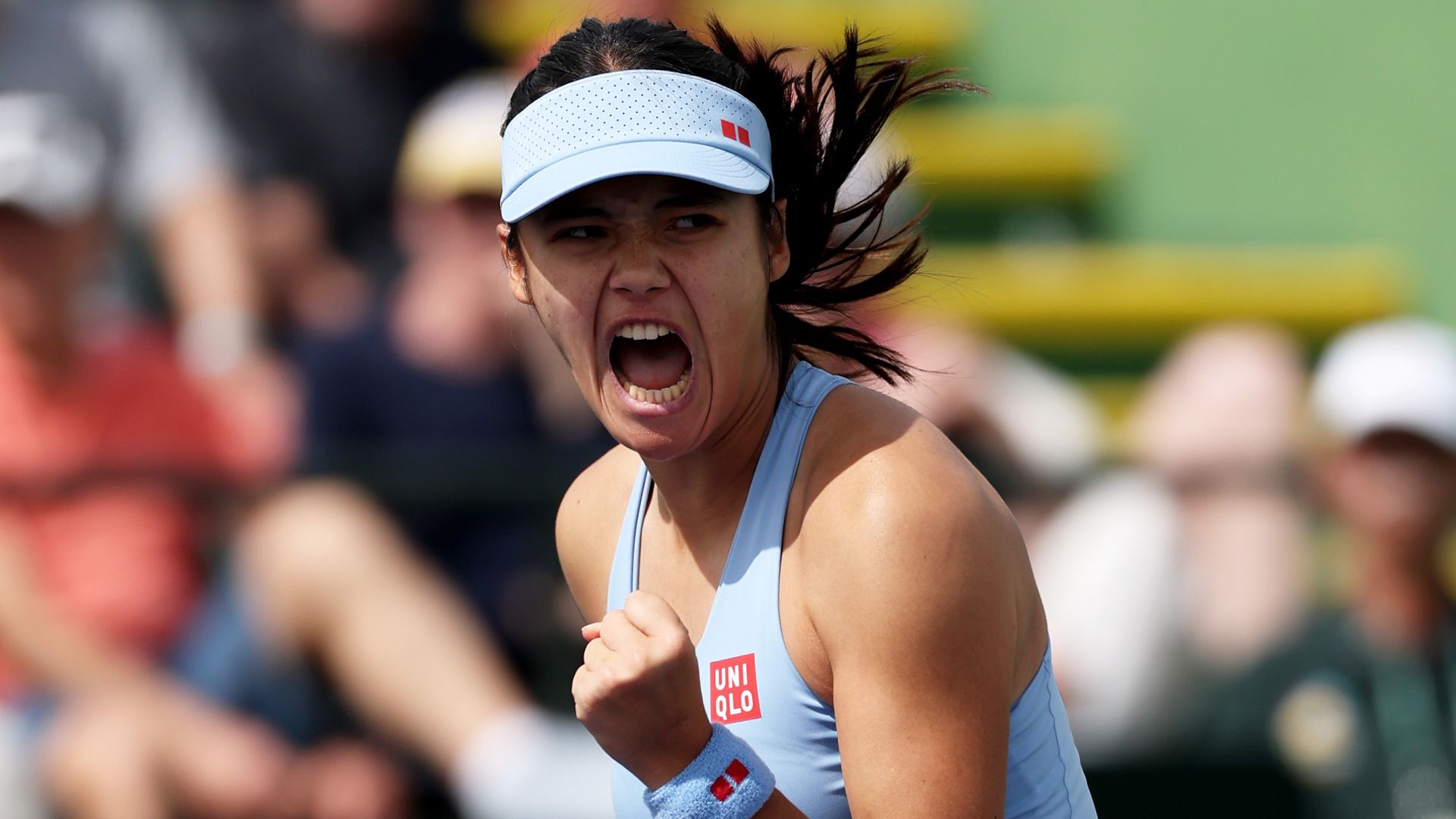

Emma Raducanu’s future on the WTA Tour could hinge on a coaching decision that could reshape her career trajectory. Marion Bartoli, the 2013 Wimbledon champion and Sky Sports analyst, has offered a blunt but constructive suggestion to the 21-year-old British star: follow the blueprint that has propelled Aryna Sabalenka to the summit of women’s tennis. In an era where coaching instability has plagued top players, Bartoli argues that Raducanu’s best path forward lies in stability, patience, and a long-term partnership with a single mentor. The timing of this advice couldn’t be more relevant, as Raducanu continues to navigate the challenges of returning to the top 50 following her injury-riddled 2023 season.
Emma Raducanu’s Coaching Dilemma: A Pattern of Inconsistency
Emma Raducanu’s rise to prominence in 2021 was nothing short of meteoric. At just 18, she captured the US Open title as a qualifier, becoming the first British woman to win a Grand Slam in 44 years. However, her post-US Open journey has been marred by inconsistency, injuries, and a revolving door of coaching staff. Since her breakthrough, Raducanu has worked with at least six different coaches, including Torben Beltz, Andrew Bettles, and most recently, Nick Cavaday. This instability has coincided with a decline in form, culminating in her dropping outside the top 100 at the end of 2023. Bartoli, who herself faced coaching challenges early in her career, believes Raducanu’s potential remains untapped due to this lack of continuity. “Emma is a player of immense talent, but when you change coaches so frequently, you lose the rhythm and the trust that comes with a long-term relationship,” Bartoli stated during a Sky Sports segment. “Aryna Sabalenka’s success wasn’t built overnight. It took time, stability, and a coach who understood her game implicitly.”
The Sabalenka Blueprint: Stability Breeds Success
Aryna Sabalenka’s transformation from a powerful but erratic player to the 2023 Australian Open and US Open champion is a testament to the power of coaching stability. Since teaming up with Anton Dubrov, Sabalenka has not only refined her aggressive baseline game but also added tactical depth and mental resilience. Dubrov, a former professional player, has been Sabalenka’s coach since 2018, and their partnership has been a cornerstone of her resurgence. The results speak for themselves: Sabalenka has won three Grand Slam titles, reached the world No. 1 ranking, and dominated the 2023 season with an 80% win rate in matches played. Bartoli draws a direct parallel between Sabalenka’s journey and Raducanu’s, emphasizing that both players rely on power and precision from the baseline. “Emma’s game is built on her ability to dictate play from the back of the court, just like Aryna’s,” Bartoli explained. “But to maximize that potential, she needs a coach who can help her refine her shot selection, improve her movement, and build a winning mentality. Sabalenka’s success proves that this approach works.”
Why Bartoli’s Advice Could Be Raducanu’s Turning Point
Marion Bartoli’s own career trajectory offers a compelling case study in the importance of coaching stability. After a series of early coaching changes that stunted her progress, Bartoli finally found her footing with coach Didier Michon in 2007. The partnership lasted until her retirement in 2013, during which she won Wimbledon and reached five other major finals. Bartoli’s experience underscores a critical truth in professional tennis: success is often less about talent alone and more about the synergy between player and coach. For Raducanu, the timing of Bartoli’s advice is crucial. With the 2024 clay and grass court seasons approaching, the British star is under immense pressure to regain her form and secure her place in the top 50. A stable coaching environment could provide the consistency needed to rebuild her confidence and refine her game. “Emma has all the tools to be a top player, but she needs to stop looking for quick fixes,” Bartoli noted. “Aryna’s story is proof that patience and trust in one system can lead to extraordinary results.”
Industry Experts Weigh In: Is Bartoli’s Proposal the Answer?
The tennis world has been quick to react to Bartoli’s suggestion, with analysts and former players divided on whether Raducanu should heed the advice. Former British No. 1 Anne Keothavong praised Bartoli’s perspective, stating, “Marion has been through every stage of this journey, from early promise to Grand Slam success. Her insight into the mental and tactical aspects of the game is invaluable, and if Emma is serious about returning to the top, she needs to listen.” However, others argue that Raducanu’s situation is unique. “Emma has always been a player who marches to the beat of her own drum,” said tennis commentator and former WTA player Jo Durie. “While stability is important, forcing her into a one-size-fits-all coaching model might not be the answer. She may benefit more from a rotating team of specialists rather than a single coach.” Social media has also chimed in, with fans split between those advocating for a long-term commitment and those who believe Raducanu’s creativity thrives in a more fluid environment. A viral tweet from a tennis analyst summed up the divide: “Stability vs. adaptability—Emma Raducanu’s next move will define her career.”

What’s Next for Raducanu? Key Decisions and Upcoming Challenges
As Emma Raducanu considers her next steps, the tennis calendar offers little time for indecision. The 2024 Australian Open is just weeks away, followed by the WTA 1000 events in Dubai, Indian Wells, and Miami. These tournaments will serve as a litmus test for Raducanu’s progress and the effectiveness of her current setup. If she opts to change her coaching structure, the question remains: will she follow Bartoli’s advice and commit to a single mentor, or will she explore a hybrid model that combines stability with specialized expertise? Bartoli’s suggestion extends beyond just Raducanu, however. It serves as a broader commentary on women’s tennis, where coaching instability is a recurring theme. Players like Ons Jabeur and Coco Gauff have also cycled through multiple coaches in recent years, raising questions about the sustainability of such approaches. For Raducanu, the path forward is clear: either embrace the Sabalenka model of long-term partnership or risk repeating the same cycles of inconsistency that have defined her career thus far. The stakes couldn’t be higher, and the clock is ticking.
Frequently Asked Questions
Why does Marion Bartoli believe Emma Raducanu needs a long-term coach like Aryna Sabalenka?
Marion Bartoli argues that frequent coaching changes disrupt a player’s development. Sabalenka’s success with Anton Dubrov, who has been her coach since 2018, proves that stability allows for tactical refinement and mental growth. Bartoli cites her own career journey as evidence, emphasizing that long-term partnerships enable players to fully exploit their strengths and address weaknesses systematically.
What are the key differences between Emma Raducanu’s and Aryna Sabalenka’s playing styles?
While both players are known for their powerful baseline games, Sabalenka relies on raw aggression and deep groundstrokes, whereas Raducanu combines power with greater variety in her shot selection. Sabalenka’s style is more straightforward and physically demanding, while Raducanu’s game incorporates slice, drop shots, and net approaches. Bartoli believes Raducanu could benefit from Sabalenka’s coaching approach to harness her power more effectively while adding tactical discipline.
How has Emma Raducanu’s career been impacted by coaching instability?
Since her US Open triumph in 2021, Raducanu has worked with six different coaches, each bringing a distinct philosophy to her game. This lack of continuity has coincided with injuries, a decline in form, and a drop from the top 100 rankings. Bartoli argues that the absence of a consistent coaching voice has stifled Raducanu’s progress, making it difficult to build the rhythm and confidence needed to compete at the highest level.
Final Thoughts
Emma Raducanu stands at a crossroads in her young career, and Marion Bartoli’s advice offers a compelling roadmap to rediscovering her potential. While the allure of quick fixes and different perspectives is understandable, Bartoli’s wisdom—rooted in her own triumphs and struggles—highlights the undervalued power of stability. By taking a leaf out of Aryna Sabalenka’s coaching manual, Raducanu could unlock the consistency and confidence required to return to the upper echelons of women’s tennis. The journey won’t be easy, but if history is any indication, those who dare to embrace patience and commitment often reap the greatest rewards. For Raducanu, the choice is hers, but the clock is ticking, and the stakes have never been higher.
📡 Source: Sports RSS | Original Story
Images are sourced from the original RSS news feed or from Unsplash (free-to-use photography), credited as shown beneath each image.
⚠️ DMCA Notice: If you own content on this page used without permission, contact us and we will resolve it within 24 hours.
