
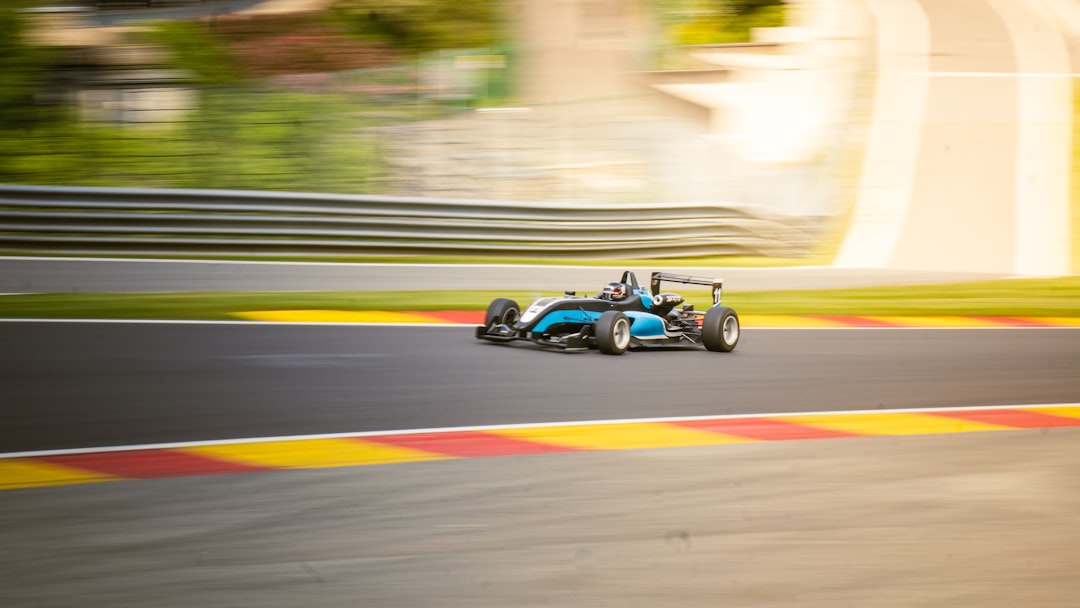

The dream of standing atop the Formula 1 podium is one of the most intoxicating fantasies in motorsport. For every Lando Norris or Oscar Piastri who steps out of a kart and into the pinnacle of racing, there are hundreds who never make the leap. The journey from grassroots karting to an F1 seat is not just a test of skill—it’s a brutal financial and emotional gauntlet that separates ambition from reality.
From Karting to the Pinnacle: The Financial Gauntlet
The path to F1 is paved with invoices, sponsorship pitches, and sleepless nights. According to the Federation Internationale de l’Automobile (FIA), the cost of developing a professional single-seater driver from karting to F1 can exceed $5 million. This figure accounts for karting championships, junior formulas like F3 and F2, private testing, engineering support, and travel expenses across multiple continents. Former F2 driver Callum Ilott, who raced alongside current F1 drivers including Nyck de Vries, has spoken candidly about the financial strain. “In F2, you’re not just racing; you’re fundraising,” Ilott told Autosport in 2023. “Every race weekend costs around €150,000 to €200,000. If you don’t bring in sponsorship, you’re effectively paying to work.”
The Tier 1 junior formulas—F2 and F3—are where many drivers either break through or break the bank. In 2023, the budget cap for F2 teams was €360,000 per car, but that figure only covers race operations, not driver budgets. Drivers are expected to cover their own salaries, travel costs, and often, part of their teammates’ expenses. This creates a pyramid where only those with deep pockets or headline-sponsoring families can realistically compete at the top. The situation is even more dire in F1 junior series like Formula Regional European Championship (FRECA), where teams charge up to €500,000 per season just for a seat, with no guarantee of progression.
The Hidden Costs: Testing, Travel, and Time
Beyond the visible expenses like race entry fees and equipment, the invisible costs are what often sink aspiring drivers. Travel logistics alone can devour a budget. A full F3 or F2 season requires 18-20 race weekends across Europe, the Middle East, and sometimes Asia. Factor in flights, accommodation, and shipping for the team car and equipment, and the total logistical bill can reach €300,000 annually. Many drivers rely on family backing to cover these costs, but for those without such support, the alternative is often debt or abandonment of the dream.
Physical conditioning is another financial sinkhole. F1 and its feeder series demand drivers to be peak athletes. Many juniors invest in personal trainers, nutritionists, and even psychologists to handle the pressure. The McLaren Driver Development Programme, which has produced talents like Stoffel Vandoorne and Nyck de Vries, requires participants to meet strict fitness benchmarks—benchmarks that come with gym memberships, recovery tech, and performance monitoring tools costing tens of thousands per year. “You’re not just driving fast; you’re training like an Olympian,” explained a former F2 engineer who requested anonymity. “If you skip a session, you’re losing weeks of progress your rivals are making.”
Time is the ultimate non-renewable resource in motorsport. A driver who peaks at 22 may still have a shot in F1, but those who wait until 25 or older often find the door closed. This creates a race against the clock that begins in childhood. Karting championships, which cost €20,000 to €50,000 per season, start as early as age 8. By 16, drivers are expected to have secured scholarships or family backing worth hundreds of thousands just to stay competitive. For many families, this means years of sacrifice—skipping vacations, second mortgages, or even relocation to be closer to racing hubs like Italy or the UK.

Surviving the System: Sponsorships and Shortcuts
The harsh reality is that talent alone isn’t enough. In 2023, Alpine’s F1 Academy sent several drivers into F3 with budgets exceeding €1 million per season. For comparison, the average F3 budget without academy support was around €400,000. Sponsorship is the oxygen of junior motorsport, and securing it requires more than just a fast lap time. Drivers must leverage personal networks, social media presence, and often, their own personal brand. “I got my first major sponsor when I was 14,” recalled former F2 driver Roy Nissany. “It wasn’t because I was the fastest; it was because I had a YouTube channel with 50,000 subscribers. Sponsors want followers, not just lap times.”
Some drivers pursue unconventional routes to bypass the financial barrier. The IndyCar ladder has become a popular alternative for Europeans seeking F1, thanks to the IndyCar-to-F1 pipeline established by Marcus Ericsson and Romain Grosjean. In 2024, Callum Ilott made the switch to IndyCar, citing the financial sustainability as a key factor. “In America, teams pay you to drive,” he said. “You don’t have to beg for sponsorship. You can focus on racing.” However, this route comes with its own set of challenges, including adapting to oval racing, a style alien to most European drivers.
The rise of esports has also opened new pathways. F1’s annual F1 Esports Series has produced virtual talents who earn contracts in the real-world junior programs. While esports can serve as a gateway, it’s not a guaranteed shortcut—only a handful have transitioned from virtual to real-world racing. The physical demands of F1 remain the ultimate hurdle.
The Human Cost: Sacrifice and Mental Health
The financial burden isn’t the only price paid. The emotional toll of chasing F1 is often overlooked in glossy brochures and highlight reels. Drivers speak of loneliness, burnout, and the pressure of living up to expectations. “I remember driving to a race in Hungary in a borrowed car because I couldn’t afford to fly,” shared a junior driver who asked to remain anonymous. “My teammate’s dad was in the stands watching, while I was sitting in the pits, eating a sandwich I’d made at 5 AM. That’s the moment you realize whether this is a dream or an obsession.”
Mental health has become a growing concern in motorsport. The FIA has introduced mandatory psychological evaluations for drivers in its junior programs, but the stigma around seeking help persists. Many fear admitting vulnerability could cost them a seat. “You’re taught to push through pain, to ignore tiredness, to never complain,” explained sports psychologist Dr. Sarah Jones. “But when the body and mind break, the consequences can be catastrophic. We’ve seen too many careers end not because of speed, but because of burnout.”
Social media amplifies the pressure. Junior drivers are expected to maintain a polished public image, balancing training, racing, and content creation. Those who fail to curate their brand risk losing sponsors, even if their on-track performance is strong. The rise of TikTok and Instagram influencers in motorsport means today’s drivers are expected to be content creators first, racers second. “You spend more time editing videos than you do analyzing telemetry,” joked one F3 driver. “If you’re not posting, you’re invisible.”

What the Future Holds: Can the System Be Fixed?
Reform is slowly trickling into the F1 pyramid, but change is glacial. The FIA’s budget cap in F2 and F3, introduced in 2023, aims to level the playing field by capping team expenditures at €360,000 per season. However, the cap doesn’t address driver budgets, leaving the financial burden largely unchanged. “It’s a start, but it’s not enough,” said former F1 driver and team principal Jarno Trulli. “Drivers still need to find €500,000 just to get a seat in F3. The cap helps the teams, but it doesn’t help the drivers.”
Some teams are experimenting with new models. Prema Racing, one of the most successful junior teams, has introduced a driver development fund to subsidize costs for its junior drivers. Red Bull’s junior program offers structured financial support, but it comes with strings attached—drivers must sign long-term contracts and commit to the team’s ethos. “It’s not charity,” explained Helmut Marko. “It’s an investment. We want drivers who are not just fast, but who fit our culture.”
Yet, for every success story, there are countless others lost in the shuffle. The F1 grid of 2024 features only 20 seats, and the pathway to them grows narrower each year. The average age of an F1 debutant has dropped to 22, meaning the window for late bloomers is virtually nonexistent. This raises an uncomfortable question: Is F1 becoming an exclusive club where only the wealthy can afford to join?
What to Watch Next: The Pipeline and Rising Talent
As the 2024 F2 and F3 seasons reach their climax, all eyes will be on the drivers fighting for F1 seats in 2025. Oliver Bearman, who made his F1 debut with Ferrari in 2024, is the poster child of the new generation. But behind him, a crop of 17- and 18-year-olds are racing in FRECA, chasing the dream with budgets that would terrify most families. Keep an eye on Franco Colapinto, who dominated F3 in 2023 and is poised for an F2 seat in 2024. His rise highlights a shift—talent is still the ultimate currency, but the cost of entry is reaching stratospheric levels.
For aspiring drivers, the message is clear: start early, secure funding early, and be prepared to sacrifice everything. The road to F1 is not a sprint; it’s a marathon where most runners never cross the finish line. The sport’s governing bodies must do more to widen the pathway, but in the meantime, the dream remains a privilege reserved for the few who can afford it.
Frequently Asked Questions
How much does it cost to become an F1 driver from scratch?
The total investment required to progress from karting to an F1 seat typically ranges between $3 million and $7 million. This includes karting championships (€5,000 to €20,000 per season), junior formula budgets (€200,000 to €500,000 per season in F3/F2), testing costs, travel, and engineering support. The high end of this range assumes no family sponsorship or external funding, which is rare. Most drivers rely on a combination of personal wealth, family backing, and sponsorship deals to offset these costs.
Are there any alternative pathways to F1 besides the traditional junior ladder?
Yes, several alternative routes exist, though none are guaranteed. The IndyCar series has become a viable option for Europeans, with drivers like Marcus Ericsson and Romain Grosjean transitioning to F1 after success in America. Esports, particularly F1’s official esports series, has produced a handful of real-world drivers, such as Frederik Rasmussen, who earned a seat in FRECA. Another pathway is through endurance racing, where drivers like Nyck de Vries made the jump from the World Endurance Championship (WEC) to F1. However, these routes require adaptability and often, a willingness to leave the traditional European motorsport ecosystem behind.
What role do sponsors play in a junior driver’s journey?
Sponsors are often the deciding factor in whether a junior driver survives the financial gauntlet. Securing a title sponsor can cover 50% to 80% of a driver’s annual budget, allowing them to focus on performance rather than fundraising. Sponsors look for drivers with strong personal brands, social media presence, or connections to influential families. For example, drivers like Lando Norris and George Russell leveraged their family networks and personal charisma to secure early deals. Without sponsorship, drivers are forced to rely on personal wealth or take on significant debt, which can derail their careers before they reach F1.
Final Thoughts
The dream of becoming an F1 driver is one of the most compelling narratives in sports—a story of speed, precision, and unrelenting ambition. Yet, beneath the glamour of podiums and champagne lies a harsh reality: the financial and emotional toll of chasing that dream is prohibitive for all but a select few. The Formula 1 pyramid is a machine designed to test more than just talent—it scrutinizes bank accounts, mental resilience, and sheer willpower. For those who make it, the reward is unparalleled. For those who don’t, the journey leaves scars deeper than any crash. The brutal truth is that Formula 1 is not just a sport; it’s a luxury, and only those who can afford the price of admission will ever stand a chance of claiming a seat on the grid.
📡 Source: Sports RSS | Original Story
Images are sourced from the original RSS news feed or from Unsplash (free-to-use photography), credited as shown beneath each image.
⚠️ DMCA Notice: If you own content on this page used without permission, contact us and we will resolve it within 24 hours.
