

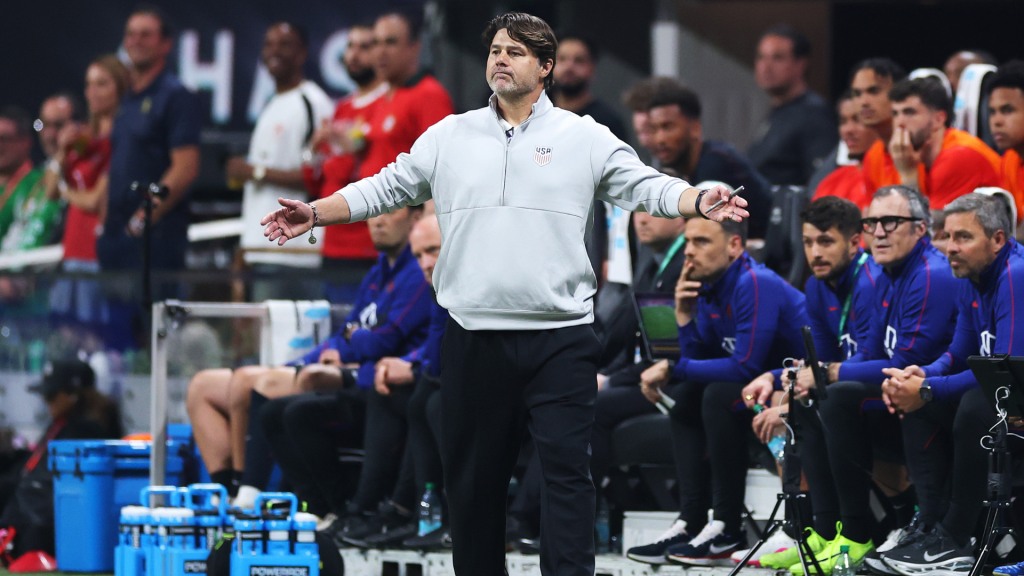
The United States Men’s National Team (USMNT) faces its most critical week yet as Mauricio Pochettino prepares to unveil his final World Cup roster on May 26. Following the team’s latest international friendly, several unanswered questions demand immediate clarification before the tournament’s official squad submission deadline. With Senegal and Germany standing between the USMNT and Qatar 2024, every roster decision carries amplified significance.
Breaking News: Final Preparations and Key Observations
In their most recent outing, the USMNT delivered a mixed performance against a determined Canadian side, with the match ending 1-1 at Gillette Stadium. Pochettino deployed a fluid 4-3-3 formation, yet concerns emerged around defensive vulnerabilities and midfield cohesion. Notably, Weston McKennie and Yunus Musah struggled to impose their usual influence, while Gio Reyna’s absence due to injury raised further selection dilemmas. With only two friendlies remaining before the May 26 roster announcement, Pochettino faces an unprecedented tightrope walk between form, fitness, and long-term tactical vision.
The squad announcement comes just days before the USMNT’s final tune-up matches against Senegal on June 1 and Germany on June 5. These fixtures will serve as the final proving ground for fringe players, with at least three spots expected to be fiercely contested among defenders, midfielders, and backup strikers. The timing also coincides with the release of UEFA Champions League finalists, which may influence Pochettino’s decisions regarding club form.
Background: The Road to Qatar 2024 and Pochettino’s Challenges
Mauricio Pochettino assumed the USMNT head coach role in January 2023, inheriting a squad brimming with talent but lacking consistent cohesion. His tenure has been marked by tactical experimentation, including shifts between a high-pressing 4-2-3-1 and a more conservative 4-3-3. The team’s performance at the 2022 World Cup in Qatar, where they advanced to the Round of 16 before falling to the Netherlands, provided a foundation but left room for improvement in attacking transitions and defensive structure.
The 2024 World Cup squad announcement arrives at a pivotal moment for US soccer. With a golden generation including players like Christian Pulisic, Tyler Adams, and Folarin Balogun, expectations are stratospherically high. However, injuries to key personnel, including Pulisic’s recent ankle issue, have complicated Pochettino’s preparations. Additionally, the absence of European-based stars due to club commitments has forced the coach to rely more heavily on MLS-based talent, raising questions about readiness against top-tier international competition.

Expert Analysis: The Five Critical Questions Pochettino Must Answer
As the roster deadline approaches, five pressing questions dominate the USMNT discourse. First, who will partner Tyler Adams in midfield? With Yunus Musah and Weston McKennie vying for spots, Pochettino must decide whether to prioritize energy or technical quality. Second, the striker position remains unsettled; while Haji Wright has impressed, Balogun’s club form at Monaco suggests he may earn a starting role, leaving room for a third-choice specialist like Jozy Altidore or Ricardo Pepi.
Third, the depth at full-back is a major concern. With Sergiño Dest and Antonee Robinson as starters, questions linger over who will fill the backup roles, with Miles Robinson and Shaq Moore appearing on the fringes. Fourth, the goalkeeper situation demands clarity; Matt Turner’s consistency is unquestioned, but backup choices between Ethan Horvath and Zack Steffen could impact tactical flexibility. Finally, the inclusion of young talents like Cade Cowell and Tim Weah hinges on their ability to deliver in high-pressure scenarios, raising the stakes for their upcoming performances.
Pochettino’s decisions will be scrutinized not just for immediate impact but for their long-term implications. A conservative roster might ensure cohesion but risk lacking the firepower to progress deep into the tournament. Conversely, an adventurous selection could unlock potential but expose defensive frailties under pressure. The coach’s ability to balance these factors will define the USMNT’s World Cup ambitions.
Reactions and Expert Opinions: The Nation Divided
Fan reactions on social media have been particularly vocal this week, with debates raging over the inclusion of long-serving players versus promising newcomers. Supporters of veteran presence, such as Walker Zimmerman and Kellyn Acosta, argue for their leadership in high-stakes moments, while advocates for youth point to the energy and hunger of players like Cowell and Brenden Aaronson. The USMNT’s official Twitter account has amplified these discussions, posting highlights and polls to engage the fanbase directly.
Pundits have offered contrasting views. Former USMNT coach Bruce Arena suggested that “Pochettino must prioritize players who can adapt quickly to tactical shifts,” emphasizing versatility as a key criterion. Meanwhile, ESPN analyst Taylor Twellman cautioned against “overloading the squad with players from the same club,” highlighting the need for diverse tactical solutions. On the ground, journalists at training sessions have noted the intensity of the final preparations, with players arriving early and staying late to fine-tune their roles.
The media’s focus has also extended to the psychological aspect, with sports psychologists reportedly working with the squad to manage pre-tournament anxiety. The collective weight of expectation is palpable, as fans and analysts alike await Pochettino’s roster announcement as a definitive statement of intent.

What to Watch Next: Key Dates and Predictions
The countdown to the World Cup roster announcement is now measured in days. The USMNT’s final friendlies against Senegal on June 1 and Germany on June 5 will serve as the ultimate test for fringe players. These matches will help Pochettino gauge fitness levels and tactical adaptability, particularly in the absence of injured stars like Pulisic and Puljujärvi.
Following the roster announcement, the USMNT will head to Austria for four days of final preparations, including closed-door scrimmages. The squad is expected to converge at the Red Bull Arena in Salzburg for high-altitude training, a strategic move to simulate conditions in Qatar. Analysts predict that Pochettino will include at least three uncapped players to provide fresh legs and tactical surprise options, with names like Cade Cowell and Sam Surman frequently mentioned.
Looking ahead, the World Cup kicks off on November 20, with the USMNT opening against England on June 25 (rescheduled due to FIFA’s winter tournament timing). Pochettino’s roster choices will be scrutinized immediately, particularly in the group stage where performances against England, Iran, and Wales will set the tone for the tournament. The pressure is immense, but so is the potential for the USMNT to make history on the global stage.
Frequently Asked Questions
Why is the USMNT’s World Cup roster announcement so closely watched?
The announcement carries immense significance due to the golden generation of USMNT players and their historic World Cup run in 2022. With expectations soaring and injuries complicating selections, every roster decision is scrutinized for its potential to either elevate the team’s performance or expose vulnerabilities. The roster also reflects Pochettino’s tactical vision and ability to manage egos and egos within a diverse squad of MLS and European-based players.
How will Pochettino balance veteran presence with youth development in the roster?
Balancing experience with youth is a delicate act that Pochettino must navigate carefully. Veterans like Walker Zimmerman and Kellyn Acosta provide leadership and defensive stability, while young talents like Cade Cowell and Tim Weah offer energy and unpredictability. Pochettino’s approach will likely involve including several MLS-based players, given their familiarity with the USMNT’s tactical system and their physical readiness for the World Cup’s demands.
What are the biggest risks in Pochettino’s World Cup roster selections?
The primary risks include over-reliance on a few key players, defensive vulnerabilities, and the lack of a proven clinical finisher. Pochettino must ensure that his midfield and defensive units are cohesive and capable of handling top-tier international attacks. Additionally, the absence of injured stars like Christian Pulisic and Brenden Aaronson puts pressure on backup players to deliver in high-pressure scenarios. The risk of tactical inflexibility is also a concern, as the USMNT must adapt to different opponents and game states during the tournament.
Final Thoughts
The USMNT’s World Cup roster announcement represents more than just a list of players—it is a statement of identity, ambition, and tactical intent. Mauricio Pochettino’s final selections will shape the team’s narrative for the 2024 World Cup, testing his ability to harmonize talent, form, and long-term vision. As fans and analysts dissect every name, the overriding question remains: can this generation of American players surpass the Round of 16 achievement of 2022? With the roster deadline looming, the stakes could not be higher, and the answers will soon be revealed.
📡 Source: Sports RSS | Original Story
Images are sourced from the original RSS news feed or from Unsplash (free-to-use photography), credited as shown beneath each image.
⚠️ DMCA Notice: If you own content on this page used without permission, contact us and we will resolve it within 24 hours.