

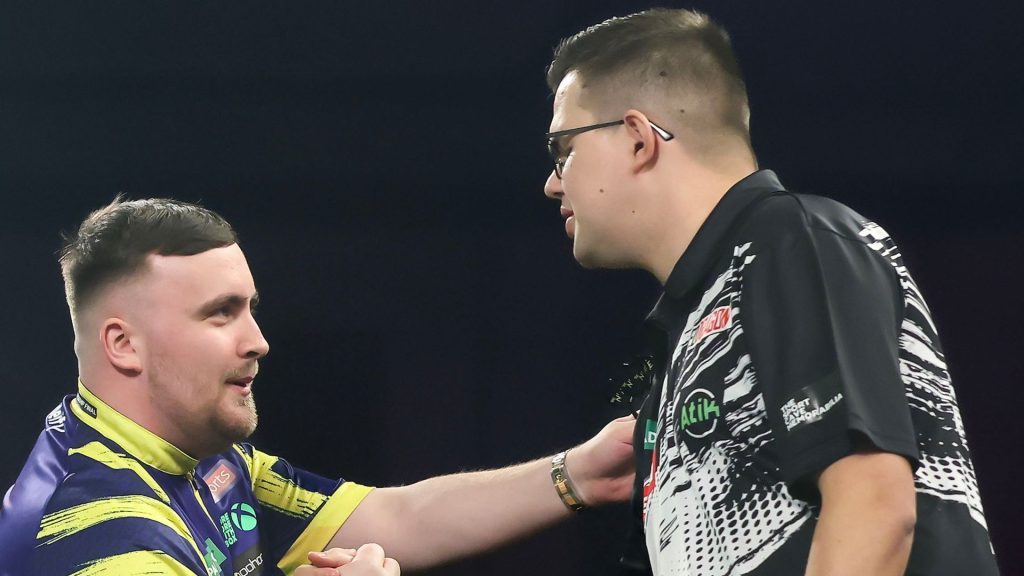
The explosive feud between Luke Littler and Gian van Veen has intensified after the 18-year-old darts prodigy revealed why he publicly labelled his Dutch opponent a “cry baby” following their fiery Premier League Darts clash in Manchester. Littler’s candid admission sheds light on the psychological battles that often unfold on the oche, where mental resilience can be as critical as precision.
Breaking News: Littler Accuses Van Veen of Giving Up
The confrontation between Luke Littler and Gian van Veen during their Premier League Darts match in Manchester on April 11, 2024, has left the darts community buzzing. Littler, the youngest player in Premier League history, dominated the early exchanges but saw Van Veen crumble under pressure in the final legs. Littler’s frustration boiled over on social media, where he tweeted, “Van Veen is a cry baby,” accusing the Dutchman of losing his composure when the match reached its climax. The tweet, which has since gone viral, has sparked a polarizing debate about sportsmanship and mental fortitude in competitive darts.
Replay footage from the match reveals Van Veen missing crucial doubles in the deciding legs, while Littler, despite some early misses, maintained his focus. Officials confirmed that Littler’s final dart in the ninth leg—a double-16 to secure victory—was the turning point. Van Veen, visibly agitated, could be seen muttering to himself after the miss, a moment Littler later described as “giving up.”
Background: The Rise of Luke Littler and Van Veen’s Struggles
Luke Littler’s meteoric rise in the darts world has been nothing short of spectacular. At just 16, he became the youngest qualifier for the Premier League Darts in history, shattering records set by legends like Phil Taylor and Michael van Gerwen. His aggressive playing style, combined with an uncanny ability to stay calm under pressure, has drawn comparisons to the late, great Eric Bristow. Littler’s recent performances, including a stunning run to the semi-finals of the 2024 World Darts Championship, have cemented his status as the future of the sport.
In contrast, Gian van Veen has faced a more tumultuous journey. Despite his immense talent, which saw him reach the top 16 in the world rankings, Van Veen has struggled with consistency and mental resilience. His 2024 season has been marred by several high-profile collapses, including a shocking first-round exit at the World Championship. Mental health advocates in darts have pointed to the immense pressure of competing at the elite level, where a single missed dart can shift the trajectory of a career. The Van Veen-Littler feud, however, has brought these struggles into the spotlight, raising questions about how players manage their emotions in high-stakes situations.
The Premier League Darts series, now in its 19th season, has always been a platform for both triumph and drama. Past feuds, such as the one between Phil Taylor and Raymond van Barneveld in 2007, have become legendary, blending sporting excellence with personal rivalries. Littler’s comments about Van Veen reflect a new era in darts, where youthful confidence clashes with the weight of expectation.

Expert Analysis: The Psychology Behind the Controversy
The feud between Littler and Van Veen offers a fascinating case study in the psychology of competitive darts. Dr. Sarah Thompson, a sports psychologist specializing in performance under pressure, explains that darts is a sport where “the mind is the most powerful weapon.” She notes that Littler’s ability to remain composed, even after missing darts, is a hallmark of elite performers. “In darts, mental resilience isn’t just about staying calm—it’s about believing in your ability to recover from mistakes,” Thompson says. “Littler’s confidence is palpable, and that’s what sets him apart from his peers.”
For Van Veen, the criticism from Littler may serve as a wake-up call. Darts psychologist Mark Williams emphasizes that mental toughness is a skill that can be developed. “Players like Van Veen need to understand that setbacks are part of the process. Littler’s comments, while harsh, might be the catalyst he needs to refocus his mental approach,” Williams argues. The Premier League Darts, with its global audience and intense scrutiny, is the perfect stage for such psychological battles. As Littler continues to rise, Van Veen faces a pivotal moment: will he use this as motivation to improve, or will the pressure overwhelm him further?
Looking ahead, the darts community is divided. Some fans argue that Littler’s comments were justified, pointing to Van Veen’s repeated struggles in high-pressure situations. Others, however, believe that the young prodigy’s words crossed a line, especially in a sport that prides itself on camaraderie and respect. The debate underscores the evolving nature of darts, where mental fortitude is now as much a part of the spectacle as the physical skill.
Reactions & Expert Opinions: The Darts World Reacts
The fallout from Littler’s “cry baby” comment has been swift and divisive. On social media, fans have taken sides, with some supporting Littler’s honesty and others condemning his lack of sportsmanship. “Luke Littler is just speaking the truth. Van Veen folded when it mattered most,” tweeted a user with over 50,000 followers. Another fan countered, “Everyone wants a villain, but Littler’s comments were uncalled for. Darts should be about respect, not trash talk.”
Former World Darts Champion Gary Anderson weighed in on the controversy, stating, “Littler’s got a lot of nerve calling someone a cry baby, but he’s not wrong about the misses. Van Veen’s got to toughen up if he wants to compete at this level.” Anderson’s comments reflect a growing sentiment in the darts community: that mental resilience is as important as technical skill. Former PDC Chairman Barry Hearn added, “Darts is a mental game. Littler’s comments might sting, but they’re a reality check for players who struggle under pressure.”

The official response from the Professional Darts Corporation (PDC) has been measured, urging players to maintain sportsmanship. PDC CEO Andy Anson stated, “We encourage all players to conduct themselves with dignity, both on and off the oche. While passion is part of the sport, respect must always come first.” The controversy has, however, reignited discussions about the need for mental health support in darts, with calls for the PDC to implement structured programs for players.
What to Watch Next: The Road Ahead for Littler and Van Veen
The Premier League Darts season is far from over, and the fallout from the Littler-Van Veen feud could have lasting implications. For Luke Littler, the focus remains on his performance. With a string of potential top-four finishes in the remaining weeks, he is poised to cement his reputation as the next superstar of darts. His clash with Michael van Gerwen in the coming weeks will be a true test of his mental fortitude against a seasoned veteran who thrives under pressure.
For Gian van Veen, the path forward is less clear. His next match, against Gerwyn Price, could be a turning point. Price, known for his icy demeanor, could either exacerbate Van Veen’s struggles or serve as a reminder of the resilience needed to compete at the highest level. Mental health experts suggest that Van Veen may benefit from a brief hiatus to regroup, though the demands of the Premier League schedule make that unlikely. The PDC’s upcoming World Cup of Darts, where Van Veen will represent the Netherlands, could also be a platform for redemption—or further scrutiny.
Beyond these two players, the darts world is watching closely. The rise of young talents like Littler signals a generational shift, while veterans like Van Veen face the challenge of adapting or fading into obscurity. The Premier League Darts, with its mix of high-energy matches and off-court drama, remains the perfect stage for these stories to unfold. As the season progresses, one thing is certain: the mental battles of darts will continue to captivate audiences worldwide.
Frequently Asked Questions
Why did Luke Littler call Gian van Veen a “cry baby”?
Luke Littler publicly labelled Gian van Veen a “cry baby” after their Premier League Darts match in Manchester, where Van Veen appeared to lose his composure and miss crucial doubles in the final legs. Littler’s comments reflected his frustration at Van Veen’s perceived lack of mental resilience during high-pressure moments. The incident has sparked a broader debate about the psychological demands of professional darts and the importance of maintaining composure under pressure.
How has Gian van Veen responded to Littler’s criticism?
Gian van Veen has not issued a formal response to Luke Littler’s “cry baby” comment, but the Dutchman’s body language during their match and subsequent social media silence suggest he may be reflecting on his performance. Van Veen has a history of struggling with consistency in crucial moments, and this latest setback could either serve as motivation for improvement or further exacerbate his mental challenges. The darts community is divided on whether Littler’s words were justified or unnecessarily harsh.
What does this feud mean for the future of darts?
The feud between Luke Littler and Gian van Veen highlights the growing importance of mental resilience in professional darts. As younger players like Littler rise to prominence, the sport is becoming more competitive and psychologically demanding. The controversy also underscores the need for better mental health support for players, particularly those facing immense pressure at the elite level. Whether this feud will inspire Van Veen to improve or further derail his career remains to be seen, but it has certainly added a dramatic new layer to the Premier League Darts narrative.
Final Thoughts
Luke Littler’s revelation about why he called Gian van Veen a “cry baby” has thrust the often-overlooked psychological battles of darts into the spotlight. As the sport evolves, mental toughness will be the defining factor separating champions from contenders. While Littler’s confidence and focus propel him toward superstardom, Van Veen’s struggles serve as a sobering reminder of the pressures that come with elite-level competition. The Premier League Darts, with its blend of high-stakes drama and raw emotion, continues to captivate audiences and redefine what it means to be a champion—both on and off the oche.
📡 Source: Sports RSS | Original Story
Images are sourced from the original RSS news feed or from Unsplash (free-to-use photography), credited as shown beneath each image.
⚠️ DMCA Notice: If you own content on this page used without permission, contact us and we will resolve it within 24 hours.