

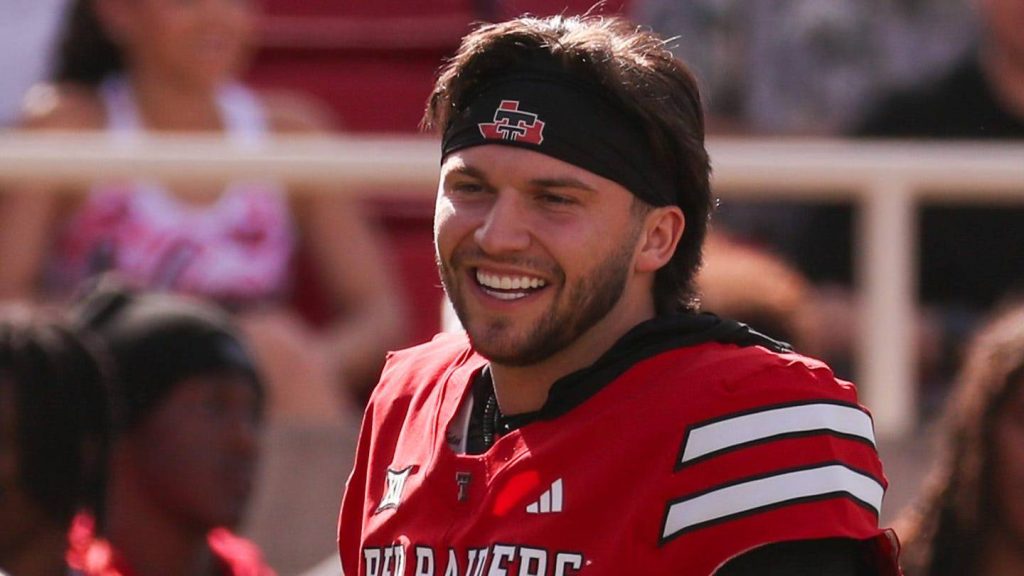
The Brendan Sorsby saga keeps finding new ways to test college football’s power structure. The latest development: the Big Ten is not expected to impose a conference-wide ban on playing Texas Tech, according to a report from The Athletic — even though some of the league’s own athletic directors pushed for exactly that.
A quick recap of how college football got here. Sorsby, Texas Tech’s quarterback, admitted to placing thousands of wagers in violation of the NCAA’s gambling rules, including bets on his own team during his time at Indiana. The NCAA ruled him ineligible. Then a Texas judge granted an injunction allowing him to play this season anyway — another courtroom defeat for an NCAA that has spent the past five years watching its enforcement power erode one ruling at a time.
Texas Tech’s decision to play Sorsby while the injunction stands has split the sport. Some administrators see a program exploiting a legal loophole around the one rule — sports betting — that nearly everyone in college athletics agrees must hold firm. Others see a school simply following a court order.
Inside the Big Ten, frustration ran hot enough that multiple athletic directors reportedly wanted the conference to refuse to schedule Texas Tech in all sports. The league office, per the report, won’t go that far. A blanket boycott would have been an extraordinary escalation: one Power 4 conference collectively blackballing a member of another, over a player neither league office has authority to discipline.
But individual schools aren’t waiting for permission. Nebraska has instructed coaches across its entire athletic department not to schedule the Red Raiders, and two other schools had already confirmed they won’t play Texas Tech. That patchwork response may end up being the real story — scheduling, unlike eligibility, is one of the few levers schools still fully control.
For young athletes watching this unfold, the underlying issue is worth understanding. The NCAA’s gambling rules exist to protect the integrity of competition, and betting on your own team is the brightest of bright lines in any sport, at any level. What the courts are now sorting out isn’t whether those rules matter, but who actually has the power to enforce them — and right now, the honest answer is that nobody seems entirely sure.
That uncertainty is the thread connecting Sorsby to nearly every major college sports fight of this decade. Until Congress, the courts, or a restructured NCAA settles where enforcement authority lives, expect more standoffs like this one — and more schools deciding for themselves who they will and won’t share a field with.
Source: Sports Illustrated