

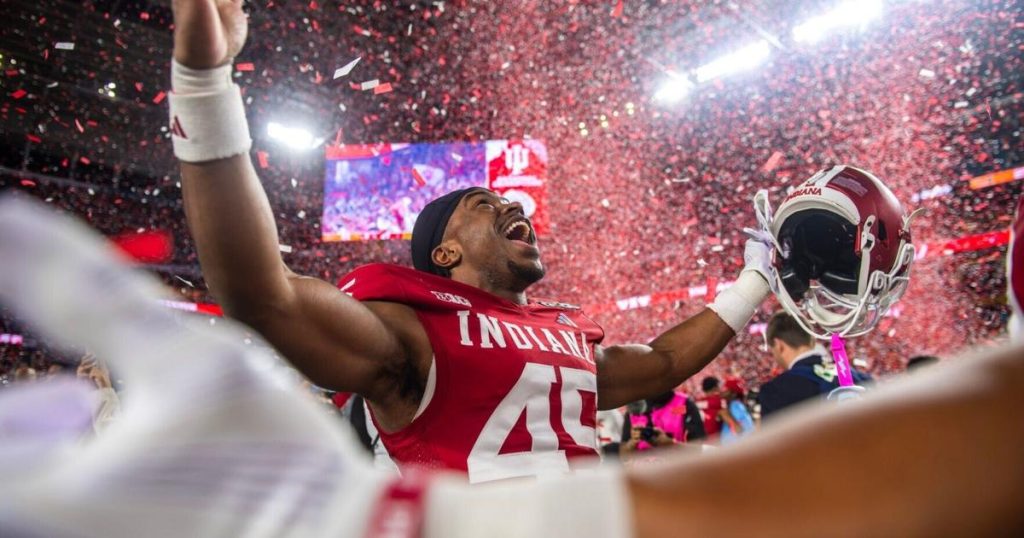
If you judged college football purely by its offseason headlines, you would assume the sport was on life support. Eligibility lawsuits. Transfer portal tampering accusations. NIL clearinghouse backlogs. Conference realignment that redrew the map and erased a century of rivalries. A federal government that keeps getting invited into the room. By any normal standard, this much dysfunction should be fatal.
And yet, as a recent opinion column making the rounds this week argues, college football remains the most resilient property in American sports — still king, chaos and all.
The dysfunction is real
Texas A&M athletic director Trev Alberts once put it memorably: “College football doesn’t have a revenue problem, it has a budget problem.” The money pouring into the sport has never been greater, but nearly every attempt to manage it has backfired. Administrators spent decades trying to keep television billions away from players, lost that fight in court, then stumbled through building a system to pay them — a system now defined by overwhelmed clearinghouses, dueling lawsuits, and collectives operating in gray areas. Expansion was supposed to strengthen conferences; instead it effectively dissolved the Pac-12 as we knew it. The expanded College Football Playoff was supposed to settle arguments; instead, a selection committee still hand-picks the field, which means the arguments never end. Now the sport’s leaders are asking Congress — not exactly a model of efficiency — to write the rules they could not write themselves.
Why none of it sticks
So why does the sport keep growing through all of this? Because college football’s foundation was never its governance — it was always its tribes. The traditions, the campus settings, the regional identities, the generational loyalty: Bevo, Touchdown Jesus, the Horseshoe, The Grove. Fans do not show up on fall Saturdays because they trust the system. They show up because the team is woven into who they are. That is a moat no amount of administrative bungling has managed to drain.
There is also a counterintuitive lesson in the chaos itself. The offseason controversies — portal drama, NIL bidding wars, eligibility fights — function like a year-round storyline machine. College football has accidentally become a 12-month sport, dominating conversation even in June.
What it means for the next generation
For high school athletes and their families, the takeaway is double-edged. The opportunities have never been bigger: real earning power, genuine mobility, and leverage that previous generations of players could only dream about. But the structure around those opportunities is still being built mid-flight, and the adults in charge have a long track record of getting it wrong on the first try. Navigating modern college football means embracing the opportunity while keeping eyes wide open about the instability underneath it.
The games return in less than three months. History says all will be forgiven the moment they do.
Source: Channel 3000